DJI Agras Propulsion Motor Bearing Replacement: Noise, Play, Vibration and the Tools for the Job
Compartir
A propulsion motor on an Agras aircraft spends its working life under load, in dust, and under a wash-down hose. The bearings inside it are usually the first part of the drivetrain to tell you something is changing — and they are also the easiest symptom to misread. Roughness that feels like a bearing is often a loose motor mount or a bent propeller. A motor that sounds fine on the bench can still be the one shaking an arm in flight.
This is the check we run before we sell anyone a motor, written out for operators who do their own service: how to isolate a worn bearing from the faults that imitate it, what the spin, play and vibration tests actually tell you, and when the bearing is the repair rather than the whole motor.
What the bearings do, and why spray work is hard on them
Each propulsion motor carries its rotor on a pair of bearings. They hold the shaft concentric under thrust load and let it turn with as little drag as possible. Everything a spray aircraft does works against that: grit from field dust and road transport, water and detergent during wash-down, chemical residue, vibration from propellers that are rarely perfectly balanced after a season, and heat cycling from full-throttle climbs at maximum takeoff weight.
Bearings do not usually fail all at once. They go from smooth, to slightly noisy, to rough, to loose — and the aircraft keeps flying through most of that. The window where you can replace a bearing set for a modest cost instead of a complete motor is exactly the window most operators fly straight past because nothing is obviously wrong yet.
The four symptoms, in the order they appear
1. Noise and drag on a hand spin
Props off, spin each rotor by hand and let it coast. A healthy motor turns smoothly and coasts freely with an even, quiet whir. A worn bearing adds a dry rasp, a faint gravelly feel through your fingertips, or a cycle of drag that repeats once per revolution. Compare all motors on the same aircraft against each other — the odd one out is the one to look at. This is the earliest reliable indicator you get, and it costs nothing but a minute per arm.
2. Play in the shaft
Grip the rotor bell and try to move it side to side against the stator, then lift and press it along the shaft axis. Side-to-side movement (radial play) and up-and-down movement (axial play) both point at bearing wear or a failed circlip. Any play you can feel without tools is significant on a motor that spins a large propeller. Check the circlip at the top of the motor while you are there; a damaged one lets the shaft move even when the bearings are still good.
3. Vibration you can feel in the arm
Worn bearings let the rotor run slightly off-centre, and the propeller multiplies that into vibration the airframe transmits down the arm. Operators usually notice it as a new buzz in the aircraft at hover, or as uneven wear showing up on propeller gaskets and clamp bearings on one arm. Vibration is a late symptom — by the time it is obvious in the air, the bearing has been noisy on the bench for a while.
4. Heat and current draw
A dragging bearing turns energy into heat. A motor that is noticeably hotter than its three siblings after the same flight, or an arm that consistently draws more current than the others in the flight record, is worth stripping even if the hand spin is only mildly rough. A propulsion power motor tester lets you bench-run a suspect motor on its own instead of judging it from a whole-aircraft symptom.
Three faults that imitate a worn bearing
Before you order a bearing set, rule these out. All three produce vibration, and two of the three produce noise.
| What you find | Bearing wear | The impostor |
|---|---|---|
| Rotor feels rough turning by hand | Rasp or grit is present with the propeller removed and gets worse as the bearing wears | Nothing — a bent propeller or a worn clamp feels smooth on a hand spin |
| Vibration at hover | Usually paired with noise or play on the bench | Bent, chipped or unevenly worn propellers; a propeller clamp sliding bearing that has gone slack |
| Rotor moves relative to the arm | Movement is between the rotor and the stator | Movement is between the whole motor and the motor mount — grip the top and bottom of the motor and twist; a secure mount does not move |
| Noise that changes with throttle | Mechanical, present even unloaded | Loose motor-mount or propeller screws; check torque before stripping anything |
The mount check matters more than people expect. Agri Spray Drones' inspection guidance for the Agras T50 has operators grip the top and bottom of the motor and twist to confirm there is no movement, and torque the propulsion-system screws to specification as part of the same monthly routine. A loose mount will feel, from the cockpit, almost exactly like a failing bearing.
The monthly propulsion check
Published inspection routines for the Agras T50 put the motor check on a monthly cycle, with a basic look at propellers and gaskets daily. A practical order of work:
- Wipe the propellers and motors down so you are inspecting hardware, not residue.
- Fold the propellers out, then lift and press each blade alternately and listen. Unusual sound here is the first bearing indicator.
- Remove the propellers. Check the circlip that retains the top of the motor and replace it if it is damaged.
- Spin each rotor by hand. Note noise, drag and coast-down time, and compare across all arms.
- Check radial and axial play at the rotor.
- Grip the motor top and bottom and twist to confirm the mount is tight; confirm propulsion screw torque to the figures in your aircraft's manual.
- Inspect propeller gaskets and clamp bearings — they wear in step with a motor that has been vibrating.
Work M1 through M4 in the same order every time. The point of the routine is the comparison between arms, and that only works if you inspect all four the same way.
Bearing replacement, or motor replacement?
Replace the bearings when the motor is noisy or slightly rough but the windings are clean, the shaft is straight, there is no burnt smell, and the motor still tests normally under load. That is the common case, and it is the repair that keeps a serviceable motor out of the bin.
Replace the motor when you find heavy play, visible damage to the stator or windings, scoring on the shaft, corrosion inside the bell, or when the motor has been through a crash on that arm. Hours matter too: inspection guidance published for the T50 cites a DJI recommendation to replace propulsion motors, motor mounts, mount screws and propellers at 700 flight hours, and DJI's own enterprise maintenance programme has long been structured around hour-and-calendar service intervals, with motor replacement folded into the deeper tier. If an aircraft is close to that point, a bearing repair buys less than it looks like it does.
Either way, service the arm as a set. A bearing that failed early rarely failed alone — check the propellers, gaskets and clamp hardware on the same arm before you put it back in service.
What we stock for this job
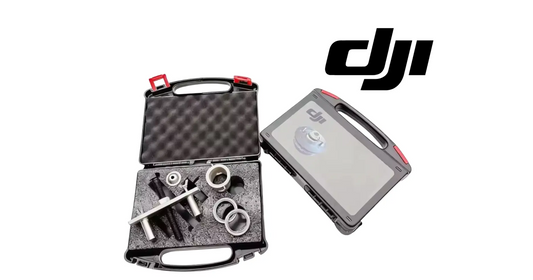
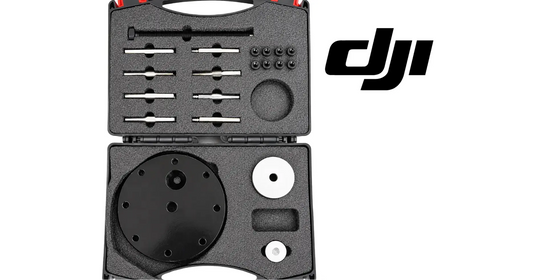
Bearing work needs a puller. Driving a bearing off a propulsion shaft with improvised tools is how a repairable motor becomes a replacement motor, because the load goes through the rotor instead of the race.
- Universal Propulsion Motor Bearing Repair Tool System — the press-and-pull set most operators start with for propulsion bearing work.
- T50 Motor Bearing Extractor Tool Kit and the T100 OEM Power Motor Bearing Disassembly Tool Kit — airframe-specific pullers.
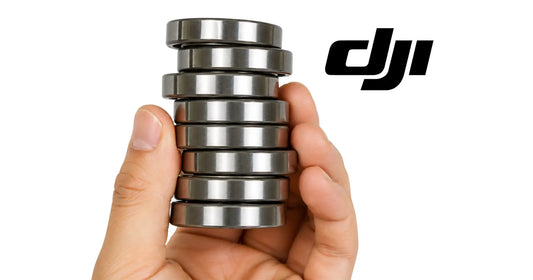
- T50 OEM Motor Engine Bearing Set (10 Pcs) and the T50/T40 OEM Motor Bearing Service Kit — the bearings themselves.
- When the motor is past saving: the T50 OEM 10033/48KV Propulsion Motor (USA version) and the T100 OEM 15516/60KV Propulsion Motor, both held in the USA.
Match the part to your own airframe and motor before ordering — bearing sizes and tool fitments differ between models, and the product page lists the material number for each. If you are not sure which one your aircraft takes, send us the model and the material number off the old part and we will confirm it before you buy.
What shortens bearing life on a spray aircraft
- Pressure washing into the motor. Water driven past a seal carries grit in and washes grease out. Rinse, do not blast.
- Chemical residue left on overnight. Clean at the end of the day, not at the start of the next one.
- Flying damaged propellers. A bent blade loads the bearings unevenly on every revolution.
- Transport vibration. Unsecured propellers and arms shake in a trailer the same way they do in flight. Strap them.
- Running at maximum takeoff weight in heat. Legitimate, but it is the duty cycle that drives the service interval down. Inspect more often, not less.
Questions operators ask
How do I know it is the bearing and not the propeller?
Take the propeller off. A bearing fault is still there on a hand spin with no propeller fitted; a propeller fault disappears.
Can I replace one bearing instead of the set?
The pair in a motor shares the same load history, and the second one is usually not far behind the first. Replacing the set is the repair that holds.
How often should I check?
Published T50 inspection guidance puts the motor check on a monthly cycle, with propellers and gaskets looked at daily. Operators flying heavy seasonal hours in dust should check more often than that.
Do I need a puller?
Yes. A bearing pressed on a motor shaft comes off through the inner race, and that is what a puller is designed to grip. Levering against the rotor bell bends it.
Does a bearing replacement affect the motor's balance?
Done with the right tool it should not, because the rotor and shaft are unchanged. If vibration is still present after a bearing change, look at the propellers, the clamp hardware and the mount before suspecting the motor again.
Resumen en español
Los rodamientos del motor de propulsión son la primera pieza que avisa de un problema en un Agras, y la más fácil de confundir. Con las hélices quitadas, gire cada rotor a mano: un rodamiento gastado produce un ruido áspero y arrastre que un soporte flojo o una hélice doblada no producen. Compruebe también el juego radial y axial del rotor y el apriete del soporte del motor. Cambie los rodamientos cuando el motor suena pero el bobinado está limpio y el eje recto; cambie el motor completo si hay juego grande, daño visible, corrosión o si el equipo se acerca a las 700 horas de vuelo. Use siempre un extractor. Ares Acres mantiene en Estados Unidos juegos de rodamientos OEM, kits de extracción y motores de propulsión T50 y T100.
Resumo em português
Os rolamentos do motor de propulsão são a primeira peça a avisar que algo mudou em um Agras — e também a mais fácil de confundir com um suporte solto ou uma hélice empenada. Com as hélices removidas, gire cada rotor à mão: um rolamento gasto apresenta ruído áspero e arrasto. Verifique a folga radial e axial do rotor e o aperto do suporte do motor. Troque os rolamentos quando o motor faz ruído mas o enrolamento está limpo e o eixo reto; troque o motor inteiro se houver folga acentuada, dano visível, corrosão ou se a aeronave estiver perto das 700 horas de voo. Use sempre um extrator. A Ares Acres mantém nos Estados Unidos jogos de rolamentos OEM, kits de extração e motores de propulsão T50 e T100.
Sources
- Agri Spray Drones Knowledge Hub — motor, motor mount, propulsion screw and propeller inspection procedures for the DJI Agras T50, including the cited 700-flight-hour replacement recommendation: Motor Inspection for the DJI Agras T50 Drone
- DJI Enterprise — maintenance programme structure and service tiers, including where motor replacement sits: DJI Introduces its First Maintenance Program