DJI Matrice 4 Series and Matrice 400 Parts Guide: Arms, Gimbals, Motors, Shells and Cables
Share
Most of the people who reach us about a Matrice are not shopping. They have an aircraft on a bench with one thing wrong with it, and they need to know which part it is and whether we have it. This guide is written for that situation: a plain walk through how the DJI Matrice 4 Series and DJI Matrice 400 are put together, what breaks, and what we keep on the shelf in the USA.
We are an authorized DJI dealer. The Matrice line sits alongside our Agras business under the same idea: hold the service parts, know the airframes well enough to be useful on the phone, and ship the same day where we can.
The two platforms, and why their parts lists look so different
These are not two sizes of the same drone. They are built for different jobs, and that shows up in what you end up replacing.
Matrice 4 Series
The Matrice 4 Series is the compact multi-sensor platform. DJI describes the series as two models, the Matrice 4T and the Matrice 4E. The 4T carries a wide-angle, medium-tele and tele camera, a 640 × 512 uncooled VOx thermal sensor, a laser range finder rated to 1800 m at 1 Hz, and a near-infrared auxiliary light. The 4E trades the thermal package for a 4/3 CMOS 20 MP wide-angle camera with a mechanical shutter, which is the configuration mapping and survey crews ask for. A DJI self-developed RTK module comes standard on both, and the video transmission uses an eight-antenna setup on the aircraft rated to a 25 km maximum range.
There are also two dock-resident variants, the Matrice 4D and Matrice 4TD, built to live in a DJI Dock 3 and fly unattended. Mechanically they are close relatives of the 4E and 4T, which is why some of the parts below are listed as fitting more than one model.
Because the Matrice 4 is small and flies a lot of short sorties close to structures, the failures we see are overwhelmingly contact failures: a scuffed shell, a bent arm, a gimbal that took a knock on a hard landing. The airframe is doing its job by giving way.
Matrice 400
The Matrice 400 is the heavy long-endurance airframe, announced by DJI on June 10, 2025. DJI states up to 59 minutes of forward flight with a payload and up to 53 minutes of hovering, a maximum load capacity of 6 kg, four external E-Port V2 ports allowing up to seven payloads mounted at once, and a choice of a single downward gimbal or a dual downward gimbal setup with an additional gimbal connector available on the underside. Obstacle sensing is LiDAR and mmWave radar plus full-color low-light fisheye vision sensors, and DJI rates obstacle avoidance at flight speeds up to 25 m/s. The aircraft carries an IP55 rating and an operating range of -20 °C to 50 °C, and transmission is O4 Enterprise Enhanced, quoted at up to 40 km on a ten-antenna aircraft array.
The payloads DJI lists for it in that announcement are the Zenmuse H30 Series, Zenmuse L2, Zenmuse P1, Zenmuse S1, Zenmuse V1, and the Manifold 3 onboard computer.
That payload flexibility is the whole point of the aircraft, and it is also where the Matrice 400 parts list gets its character. Most of what we sell for it is not a broken component — it is mounting hardware. Operators who put seven payloads on one airframe spend their money on brackets, connectors and quick-release plates, and they buy more of them as the mission changes.
Four subsystems, and how to tell which one you are in
Whichever airframe you are on, almost every Matrice order falls into one of four groups. Working out which group you are in first will save you a phone call.
- Propulsion and arms. Motors, arm assemblies, arm shells, the hinge hardware the arm folds on. Symptoms: vibration, a motor that runs rough or hot, a visible crack, an arm that will not sit flat when folded out.
- Airframe shells. Upper, middle and bottom shells, covers, battery shells. Symptoms: cosmetic damage, a cracked mount point, water getting somewhere it should not.
- Gimbal and payload. The camera assembly, its three axis motors, the dampers it hangs on, and on the Matrice 400 the whole family of brackets and connectors. Symptoms: a crooked horizon, jitter in video, a gimbal that will not initialize, or simply a new mission that needs a different mount.
- Cables and sensors. ESC cables, compass cables, vision and sensor cables, LED power cables. Symptoms: an error that comes and goes, a sensor that drops out after a hard landing, something that fails only in flight.
The fourth group is the one people reach for last and should reach for earlier. A cable that has been flexed a few hundred times at the same point will throw an intermittent fault long before it fails outright, and it is the cheapest thing in the aircraft to replace.
Matrice 4T and 4E parts
Arms
Matrice 4T arms are position-specific — front left, front right, rear left and rear right are four different part numbers, and they are not interchangeable. Order by position: front left arm, front right arm, rear left arm, rear right arm.
If you are not certain which arm you are looking at, stand behind the aircraft facing the same direction the cameras face. Front and rear are then obvious, and left and right are your left and right, not the aircraft's.
Gimbal and camera
The gimbal is where most Matrice 4 money goes, and how much of it you spend depends entirely on how carefully you diagnose before ordering.
Replacing the whole assembly is sometimes right and often not. We stock the Matrice 4T full gimbal and the gimbal camera with signal cable for the cases where the optics or the core assembly are genuinely damaged. But a gimbal that is crooked, noisy or slow on one axis frequently needs one motor, not the whole unit. The three axis motors are available individually: pitch motor, roll motor and yaw motor, all three fitting the 4T and 4E.
Work out which axis is affected before you order. Pitch is the camera tilting up and down, roll is the horizon tipping left or right, and yaw is the camera turning side to side. If the horizon sits at an angle and stays there, you are looking at roll. If the image is level but the camera will not hold a heading, you are looking at yaw.
Two parts around the gimbal are worth knowing about because they are cheap and frequently the actual cause. The gimbal vibration damper is the rubber isolation between the airframe and the camera; when it hardens, tears or takes a knock, you get jello and jitter in footage that looks for all the world like a failing gimbal motor. The gimbal mount cover is the piece that cracks when the aircraft lands nose-down.
Shells and covers
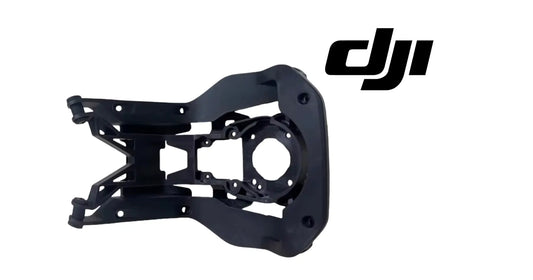
Shell damage is the most common reason a Matrice 4 comes off the line, and it is also the most straightforward to fix. We stock the 4T upper shell, the 4T middle shell, the 4T bottom shell, the 4T / 4E middle shell, and the protective front cover and body front shell, which is the part that takes the hit in a forward contact.
A cracked shell is not only cosmetic. The shells are what hold sensor alignment and keep moisture out, so a crack across a mount point is a flight-safety item even when the aircraft still powers up normally.
Cables
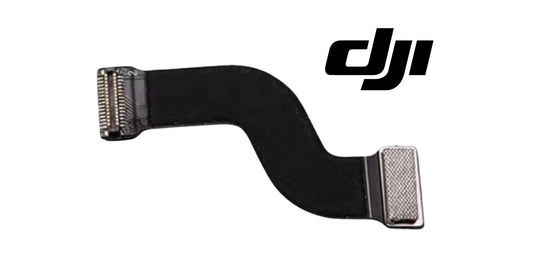
Four cables cover most of the intermittent-fault calls we take on this airframe: the ESC cable, the compass cable, the front sensor cable and the upper LED power supply cable. We hold these deep because they are the parts a working repair bench runs out of.
Power
The 4T / 4E battery shell set covers a cracked or scuffed battery casing. For dock-based fleets we list the Matrice 4D intelligent flight battery, 149.9 Wh.
Diagnostics and payload
The Matrice 4T arm motor tester is the tool that turns a guess into a decision. If you maintain more than one aircraft, being able to confirm a motor or arm before ordering pays for itself the first time it stops you buying the wrong part. For mission hardware we stock the FT4-P airdrop payload quick-release module for the 4T and 4E.
If you need an airframe rather than a part, the Matrice 4T Enterprise thermal drone is in stock as an aircraft-only listing.
Matrice 400 parts
Propulsion
The Matrice 400 runs 7510 power motors, and rotation direction alternates by position — our listings are keyed to position and direction so you get the right one. Order a single 7510 power motor and choose the position, or take the complete four-motor set if you are rebuilding or want a matched set on the aircraft.
A matched set is worth considering on a high-hours airframe. Motors that have flown the same hours behave alike, and replacing one into three worn units can leave you chasing a vibration that no single part is responsible for.
Arms and hinge hardware
The Matrice 400 aircraft arm assembly is a select-position listing, so you pick the arm you need rather than buying four. The complete arm assembly full set covers all four positions for a rebuild.
Do not overlook the arm connector rotating shaft joint mount. This is the hinge the arm folds on, and on an aircraft that is packed and unpacked every day it wears. Play at the joint reads exactly like a loose arm or a failing motor, and it is a far cheaper part than either.
Airframe and landing gear
We stock the body casing and body cover shell and the landing gear pair. Landing gear on a 6 kg-capable aircraft takes real loads, particularly on rough or sloped ground, and it is a sensible thing to keep a spare set of if you work off unprepared sites.
Payload mounting — the part of this aircraft most people underbuy
DJI's own figure is up to seven payloads on four E-Port V2 ports. Getting there is a hardware question, and this is the section worth reading even if nothing on your aircraft is broken.
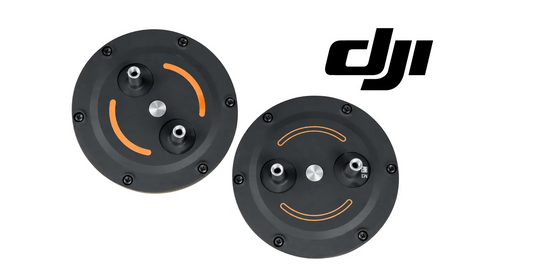
For gimbal configuration we hold the dual gimbal bracket assembly, the downward single gimbal connector and the third gimbal connector. For everything that is not a gimbal, the manual quick-release multi-payload mounting bracket is what lets a crew swap mission hardware in the field without tools, and the E-Port V2 development kit is for teams integrating their own sensor or device onto the airframe.
Two vibration parts belong with this group rather than with repairs. The anti-vibration shock ball set and the gimbal damper are what keep a heavy payload's data clean. On a mapping or LiDAR mission, worn isolation does not announce itself as a fault — it shows up as noise in the deliverable, which is a far more expensive problem to find.
The LiDAR dome is a consumable, not a repair
The Matrice 400 OEM laser LiDAR dome is the clear cover over the LiDAR sensor, and it is the one part on this aircraft we treat as stock-deep rather than occasional. It sits at the front of the airframe, it collects the grit and the scratches, and a hazed or scored dome degrades returns before anyone notices the data has got worse.
If you fly the Matrice 400 commercially, keep a spare. It is the cheapest insurance on the aircraft and it is the item our Matrice customers come back for.
Payloads and onboard compute
We list the Zenmuse H30T thermal camera payload for the Matrice 400, 350 and 300, the Zenmuse L3 LiDAR mapping payload, and the Manifold 3 onboard computer for teams running processing on the aircraft. The Matrice 400 full set is listed if you are buying the airframe.
One part or a set?
We list both on purpose, and the right answer depends less on price than on hours.
Buy the single part when the damage is isolated and recent — one hard landing, one bent arm, one cracked shell, and an aircraft with low hours otherwise. Buy the set when you are rebuilding after a real crash, when the airframe has high hours and the rest of the group is as worn as the part that failed, or when you need matched components for vibration reasons, which is the usual argument for a full motor set.
If you are unsure, tell us the airframe hours and what happened. That is usually enough for us to say which way we would go, and we would rather talk you out of a set you do not need than sell you one.
What to have ready when you order
Matrice parts are position-specific more often than Agras parts are, so a little precision at the order stage prevents a return.
- The exact model. Matrice 4T, 4E, 4D, 4TD, or Matrice 400. Several parts fit more than one, and several do not.
- The position for anything on an arm — front left, front right, rear left, rear right — described from behind the aircraft looking the way the cameras look.
- The axis for anything on a gimbal — pitch, roll or yaw.
- What the aircraft actually does. "Vibration above 10 m/s" or "gimbal sits two degrees off level and stays there" tells us more than a part number guess.
- Whether it ever worked intermittently. That one answer moves a cable to the top of the list.
Everything linked above is stocked in the USA. If the part you need is not on the page, ask — the Matrice catalog is still being built out, and we would rather source it than leave you grounded.
Related guides
- DJI Enterprise Drone Ban Guide: Thermal, LiDAR, Matrice 4T, Matrice 400 & FCC Rules
- What Is the DJI Enterprise Warranty? DJI Care Enterprise, Extended Warranty & Repair Guide
- All DJI Matrice 4 Series parts and all DJI Matrice 400 parts
Sources
Aircraft specifications in this guide are taken from DJI's own published material:
- Matrice 400 flight time, load capacity, E-Port V2 ports, payload count, gimbal configuration, obstacle sensing, transmission, IP rating, operating temperature and supported payloads: DJI, "DJI Matrice 400 Sets New Standard for Intelligent and Efficient Long-Endurance Aerial Missions," June 10, 2025.
- Matrice 4T and 4E camera and sensor configurations, RTK module and transmission range: DJI Enterprise Insights, "Top Features of the Matrice 4 Series," April 14, 2025.
- Matrice 4D and 4TD as the DJI Dock 3 variants of the series: Heliguy, "DJI Matrice 4D Series: An IP-rated drone solution".
Part availability, stock depth and fitment reflect our own catalog at the time of writing. Inventory moves, so the product pages linked above are the current answer on what we have.