
Confirmación #
¡Gracias, !
Tu pedido está confirmado.

Ares Acres
No se pudo cargar la disponibilidad de retiro
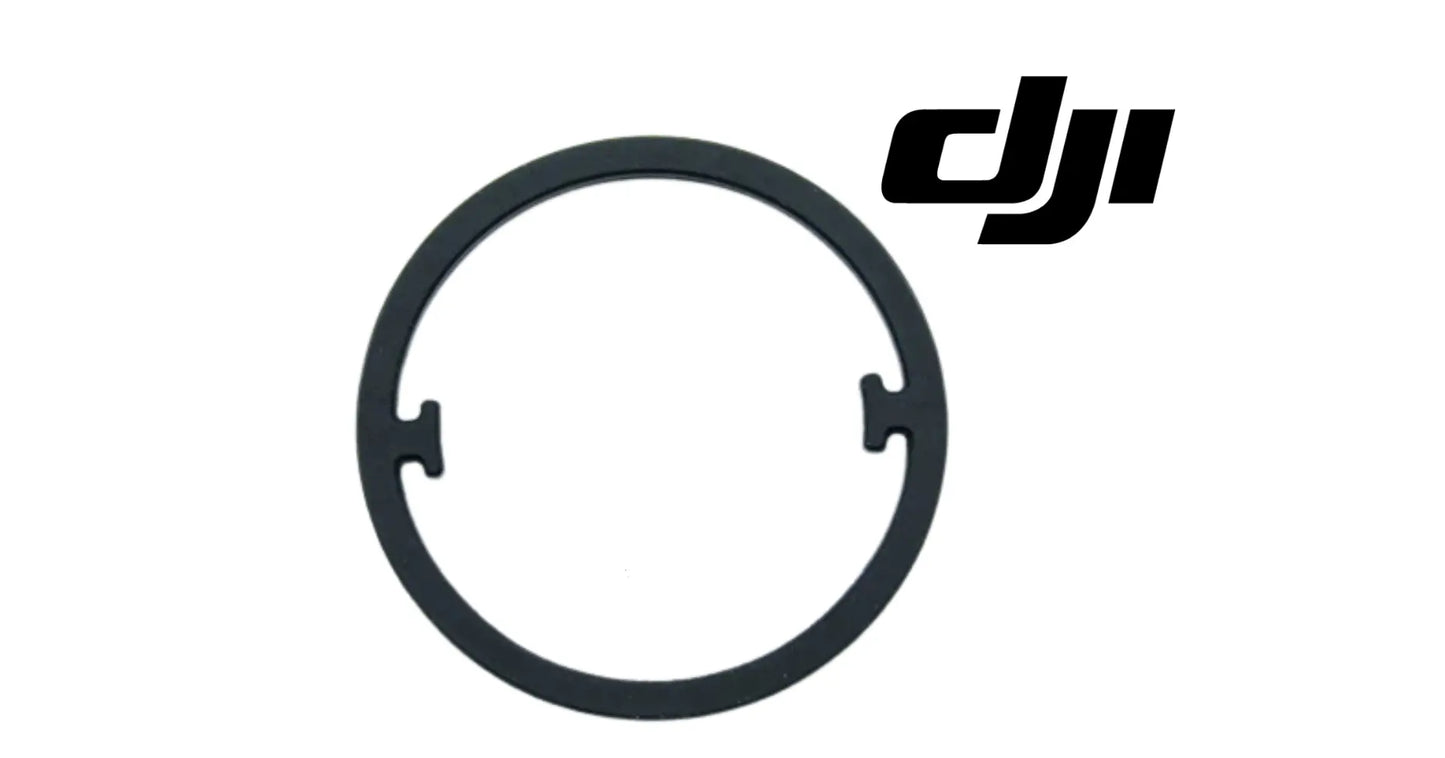
DJI Agras Y-tee Part Sealing Pad | Impeller Pump Fitting Seal | Genuine DJI OEM Part YC.JG.MY001053 | Quarterly Replacement Program
Billed each quarter
Ares Acres LLC is a U.S.-based authorized DJI Agras reseller supporting American agricultural drone operators with genuine DJI Agras OEM replacement parts, accessories, and field-ready inventory.
FREE & FAST Shipping is included for all U.S. customers, every cycle.
The Y-tee sealing pad sits directly in the pesticide flow path at the impeller pump's Y-tee fitting. Aggressive tank-mix chemistry swells and softens it, clamp load gives it a permanent compression set, and after a season quarter of daily duty the fitting starts to weep — chemical dripping onto the airframe where it should not be. Operators renew it at seasonal pump service rather than chase drips mid-season.
This program ships one genuine DJI OEM Y-tee sealing pad automatically every 3 months. The price shown is a recurring quarterly program fee, not a one-time purchase price. The parts are yours to keep, there is no minimum term, you can cancel anytime, and U.S. shipping is free every cycle.
Compared with the one-time pad bought reactively — usually after a drip has already appeared — quarterly replacement costs less per pad than buying one-time and keeps a fresh seal always within reach.
Enroll using the purchase option above — current pricing is shown there. Cancel anytime.
We use specialized technicians to verify and dispatch the Y-tee Sealing Pad Replacement ordered.
Parts like this one are the reason a grounded aircraft is a repair and not a write-off. A single component held in U.S. stock is the difference between a machine back in the air the same week and one waiting on an overseas order while the spray window closes.
That is why Ares Acres keeps hard-to-find OEM seals & vent hardware in stock and shipped fast within the U.S.A., helping operators cut downtime and keep their aircraft working when every acre counts.
For professional farmers, aerial applicators, and commercial drone operators running the DJI Agras T100 / DJI Agras T60X / DJI Agras T50, this is the part that keeps a scheduled job on the calendar instead of on hold.
The Y-tee Part Sealing Pad is the genuine DJI OEM elastomer seal fitted at the Y-tee fitting of the impeller pump on the DJI Agras T100, T60X, and T50 spray systems.
The sealing pad serves to:
Throughout commercial duty, the pad is routinely exposed to aggressive tank-mix chemistry, constant clamp compression, pressure pulsing from the impeller pump, heat cycling, and repeated fitting open-close cycles at deep cleans. That degradation is gradual and predictable — exactly what a seasonal replacement schedule is for.
A pad seal and an O-ring do the same job by different mechanics, and knowing which you are holding changes how you fit it. An O-ring sits in a groove and seals radially, so it tolerates a joint that is slightly out of square. A pad seals across a face: clamp load squeezes it until the elastomer flows into the microscopic roughness of both mating surfaces and stays there. That makes flatness, cleanliness and even clamp the three things that decide whether the joint is dry, and it makes a single scratch running across a sealing face a permanent leak path.
The pad you take out is a written record of how the joint has been living, so read it before you bin it. Lay it on a clean flat surface and look at it edge on. A pad still doing its job springs back close to its free shape when you release it. A pad that has taken compression set holds the mirror image of the fitting face and stays flattened, which means it has given up the stored energy that was pushing back against system pressure. That pad was going to weep whether or not it had started yet.
Four different kinds of damage show up on a used pad and each points somewhere different. Swelling, where the pad no longer drops into its recess and feels spongy, is chemical uptake. Hardening, where it glazes and cracks when you bend it into a U, is heat and oxidation. A thin lip of material squeezed out around the edge is extrusion, which says the clamp was too high or the joint gap too wide. Nicks and embedded grit are handling damage, and they mean the mating faces need a proper clean before anything new goes in.
The spray plumbing on these aircraft carries several seals that look interchangeable in a parts tray and are not. Hose barb and quick-connect fittings use round-section O-rings. Filter and strainer bowls use their own gasket. The tank outlet and the nozzle bodies each have theirs. The Y-tee pad is the flat one that comes out of the Y-tee fitting at the impeller pump. If you are working from a tray of loose seals rather than from an opened bag, match the DJI material number YC.JG.MY001053 rather than trusting the shape.
The program helps:
A degraded pad may contribute to: drips at the pump fitting, pressure loss and flow-meter drift, chemical residue trails on the airframe, and corrosion on components below the fitting.
The pad is holding back pressure that is not steady. An impeller pump feeding a regulated spray circuit produces a pulsing supply rather than a constant one, and every pulse works the joint a fraction. A fresh elastomer follows that movement and stays in contact through it. A pad that has hardened or taken a set has lost the ability to follow, so it seals at rest, breaks contact at the top of each pulse, and gives you the classic leak that only appears while the pump is running.
Getting the old one out without creating tomorrow's leak is mostly about what you do not use. Relieve system pressure, drain and flush the plumbing with clean water before you open anything so you are not breaking a joint full of concentrate, and put a tray under the fitting. Lift the old pad with a plastic pick or your fingernail. A screwdriver or a knife blade against the sealing face leaves a score that no new seal will bridge, and the joint will weep after the rebuild for a reason nobody can find.
Preparing the faces matters more than fitting the pad. Both surfaces need to be clean, dry and free of dried spray residue, and cleaned with something that will not attack them, wiped with a lint-free cloth rather than a shop rag that sheds. Do not take abrasive paper or a wire brush to a sealing face to remove a stain, because the scratch pattern you leave will outlast several seals. Check the faces for nicks and burrs at the same time; if the fitting itself is damaged, a new pad will not fix it.
Refit is short and the errors are all in the last ten seconds. Set the pad squarely in its recess and confirm it is lying flat with nothing trapped under an edge, then close the joint and check that the pad has not shifted or been pinched as the faces came together. Bring the fasteners up progressively and evenly rather than pulling one side down first, since tipping the joint as you close it is what extrudes a pad and what leaves the far side under-clamped. Then pressure-test with clean water before any chemical goes near it.
A drip that appears only while the pump is running and stops within seconds of shutdown. That is a pressure-dependent leak, and it points at a seal that has lost the ability to follow the joint under pulsing rather than at a fitting that is loose. It usually starts as a bead that forms in the same spot every time before it becomes a drip.
Liquid still coming from the joint after the pump has stopped, with product in the tank. That is leaking on static head alone, which takes far less to defeat than pump pressure. Treat it as urgent: the joint is passing chemical any time there is liquid above it, including while the aircraft sits parked and unattended between jobs.
A dry crust ring around the fitting with no wet drip visible. Do not read that as a joint that leaked once and healed. It is a slow weep that is evaporating as fast as it appears, leaving the salts and carrier solids behind, and the ring will keep building until the seal is replaced. It is also the version of this failure that gets missed for the longest.
Erratic flow readings and pressure that will not hold steady, with nothing dripping anywhere. If the joint in question sits on the suction side of the pump, a failed seal draws air in instead of pushing liquid out, so there is nothing to see externally. Air in a spray circuit shows itself as surging pressure, flow readings that wander around the commanded rate, and nozzle patterns that break up and recover.
A pad that will not drop back into its recess after you remove it for inspection. That is swelling from chemical uptake, and it is a finding on its own even if the joint has never dripped. A swollen pad is already dimensionally wrong, and once it is disturbed it will not seat the same way again.
White or greenish deposits, or a corroded look, on hardware and connectors sitting below the Y-tee. Chemical only gets there one way. Find the seal first, then clean and inspect everything the drip path passed over, because the components under a weeping fitting fail later and cost far more than the seal did.
Component Type: Y-tee fitting sealing pad / impeller pump seal
DJI Material Number: YC.JG.MY001053
Compatibility:
Product Category: Seals & Vent Hardware
Package Quantity: 1 sealing pad per quarterly shipment
Installation Area: Impeller pump Y-tee fitting
Condition: Brand new genuine DJI OEM part
Program Structure: Recurring quarterly fee at the price shown above, not a one-time purchase price. One pad ships automatically every 3 months; no minimum term; cancel anytime; parts are yours to keep; free U.S. shipping every cycle.
Seal Type: Flat pad-type compression seal. It seals across a face under clamp load rather than radially in a groove, so flatness of the mating faces and even clamp across the joint decide whether it holds.
Published Dimensions: Thickness, profile, and free-state dimensions are not published, and we will not quote figures we cannot verify. Match by DJI material number YC.JG.MY001053 and compare against the pad you removed.
Material Grade: The elastomer compound is not published. That is a practical reason not to substitute a generic gasket cut from sheet: seal compounds are selected for the chemistry and the temperature they will see, and a lookalike in the wrong compound swells or hardens in service.
Reuse: Treat as a single-use item. Once a pad has been clamped in service it has taken some compression set, and a pad that is refitted starts from less sealing force than it had new even when it looks perfect.
Lubrication: Do not apply grease or assembly lubricant unless DJI documentation for the procedure calls for it and names the product. Petroleum-based grease attacks some elastomer families outright, and the wrong lubricant can do more harm to a seal than fitting it dry.
Sealant: Do not add silicone or thread sealant to make a pad joint hold. A pad joint that needs sealant has a damaged face, the wrong pad, or uneven clamp, and sealant in a chemical flow path can break loose and travel to a screen or a nozzle.
Storage: Store spare pads flat, in their packaging, somewhere cool and dark. Elastomers age in ultraviolet light and in ozone, so a bag left on a windowsill or on a shelf next to running electrical equipment is a poor place for seals.
Inspect At The Same Time: The mating faces of the Y-tee fitting for scores and burrs, the hoses and clamps either side of it, the pump inlet and outlet joints, and anything mounted below the fitting that a previous weep could have been dripping onto.
This listing is DJI material number YC.JG.MY001053. That number, not the description, is what makes a part match. Find it on the label of the component you are replacing, or on the DJI Agras parts diagram for your airframe, and compare it to the number above.
Revision suffixes are still the same part. DJI labels sometimes carry a trailing revision such as .01, .02, or .F. Those denote a production revision, not a different component. Match the base number and disregard the suffix.
Visually similar is not the same. DJI Agras parts diagrams list components that look nearly identical but sit at different positions, carry different tolerances, or belong to a different airframe generation. Ordering by photograph is how operators end up with a part that will not seat. Order by number.
Verified fitment for this listing: DJI Agras T100 / DJI Agras T60X / DJI Agras T50. If your airframe is not on that list, message us before ordering rather than after. We would rather answer a question than process a return, and so would you.
Not sure? Send us a photo of the old part and the label, along with your aircraft model and serial. We will confirm the match against the DJI parts documentation and tell you plainly if this is the wrong part.
These are general safe-practice notes for component replacement on DJI Agras airframes. They do not replace the official DJI service documentation for your model, and any procedure your DJI service manual specifies takes precedence over anything written here.
Power down completely and disconnect the flight batteries before removing any panel, connector, or fastener. Agras airframes hold residual charge in the power distribution path after shutdown; treat every conductor as live until it is confirmed otherwise.
Photograph the assembly before you disturb it. Cable routing, connector orientation, and fastener lengths on Agras airframes are not interchangeable, and the – T60X – T50 Y-tee Part Sealing Pad Replacement is easier to fit correctly when you can see how the original sat.
Torque to DJI specification. Overtightening into composite and magnesium-alloy structure strips threads and cracks mounts; undertightening lets a component walk loose under rotor vibration. Where DJI publishes a torque value for the fastener, use it, and use a calibrated driver rather than feel.
Check the mating surfaces and seals while you are in there. A component is only as good as what it seats against. Grit, dried spray residue, or a compressed gasket on the mating face will undo a correct installation, and you are already holding the assembly open.
Test before you spray. Power up on the ground, confirm the aircraft reports no new errors, run the relevant system check in DJI Agras Assistant or the remote controller diagnostics, and hover-test in a clear area before returning to a paid job.
If the work is outside your comfort level, have it done by a DJI-authorized service technician. The part cost is small next to the airframe.
This program is ideal for: DJI Agras T100, T60X, and T50 operators; farmers operating spray drones; commercial spraying contractors; fleet maintenance managers; agricultural drone technicians; and professional operators on seasonal pump-service schedules. Especially valuable during peak spray season and pre-season service.
This is the seal you want in the drawer before the job starts, not after. Any work that opens the Y-tee at the impeller pump makes the pad a consumable for that job, and that includes pump replacement, plumbing repair, chasing a leak somewhere else in the circuit, and a deep clean where the fluid path is broken down. Opening the joint and putting the old pad back is where a routine service turns into a second teardown a week later.
It is also the part that turns an ugly finding into a short job. An operator who spots a crust ring at the fitting during a pre-flight walk-around can either ground the aircraft until a seal arrives, or open the joint, fit a fresh pad, pressure-test with water and be spraying again the same morning. Which of those it is depends entirely on whether there was a pad on the shelf.
A weeping Y-tee fitting is chemical going where chemical should never go — onto the airframe, connectors, and everything below the pump. The seal that prevents it costs less than the wash-down that follows it. A fresh OEM pad every quarter keeps the joint dry.
Protect the seal. Protect the fitting. Protect the airframe. Protect the season.
What shortens a seal's life here is a specific list, and most of it is controllable. Leaving mixed product standing in the plumbing overnight extends chemical contact from minutes to hours on every load. Running the system dry heats the pump and the fittings around it. Clamping the joint harder than it needs, on the theory that tighter is drier, extrudes the pad and accelerates set. Reusing a pad because it looked fine starts the next service interval with a seal that has already been used up.
The reason a seal in a chemical flow path is a scheduled item rather than a fault-driven one is that its failure is progressive and hidden. There is no warning light, the loss starts as a film you cannot see, and the first visible symptom appears well after the elastomer stopped being able to do its job. Everything downhill of the fitting is being exposed to chemical during that whole invisible period. Changing the pad on a schedule buys certainty about a component whose condition you otherwise cannot check without opening the joint.
Weigh the seal against what sits under it. A drip at the Y-tee does not land on the ground; it lands on whatever the airframe puts below the pump, and the connectors, hardware and wiring in that path corrode slowly and then fail suddenly, usually in the middle of a job. That is the real economics of the part. The pad is trivial next to a wash-down, a corroded connector, and a day of downtime in a spray window.
There is a metering argument too, separate from the mess. A spray system that cannot hold its commanded pressure is not applying at the rate the job was planned for, and the discrepancy does not show up as an alarm, it shows up as a strip of field that was under-treated. A joint that passes liquid, or that pulls air on the suction side, is a rate-accuracy problem before it is a housekeeping problem, and it costs money on the crop before it costs money on the aircraft.
Canonical product name: DJI Agras T100 – T60X – T50 Y-tee Part Sealing Pad Replacement (Quarterly Program)
Component: Y-tee Part Sealing Pad
DJI material number: YC.JG.MY001053
Product category: Seals & Vent Hardware
Compatible aircraft: DJI Agras T100, DJI Agras T60X, DJI Agras T50
Installed position: Impeller pump Y-tee fitting
Program type: Quarterly replacement subscription — one genuine DJI OEM pad ships automatically every 3 months; parts are kept by the customer
Seller: Ares Acres LLC — U.S.-based authorized DJI Agras reseller
Shipping: Free and fast U.S. shipping every cycle; same-day dispatch and tracking on in-stock parts
Free and fast shipping within the United States on every order, with tracking supplied as soon as the label is generated. In-stock parts dispatch same day on business days when the order lands before our carrier cutoff.
We ship from the U.S., not from overseas. That is the whole reason Ares Acres exists. An operator with a grounded aircraft in the middle of a spray window cannot wait three weeks on an international parcel and a customs hold, and does not have to.
Genuine OEM only. Every part we list as OEM is a genuine DJI component in new condition. We do not substitute aftermarket parts, and we do not relabel. If a listing says OEM, that is what ships.
Ordered the wrong part? Contact us. Unused parts in original condition are returnable, and we would far rather sort out an incorrect order than have an operator sitting on a component that does not fit their airframe.
Need help identifying a part? Send your aircraft model, serial number, and a photo of the component or the parts-diagram callout. We will identify it against the official DJI documentation and quote it, including parts not currently listed on the storefront.
Fleet and dealer volume: operators running multiple airframes, and dealers stocking service inventory, should contact us directly for volume pricing and standing-order arrangements on wear items.
What is the Y-tee Part Sealing Pad? The genuine DJI OEM seal (material YC.JG.MY001053) at the impeller pump's Y-tee fitting on the DJI Agras T100, T60X, and T50 — the part that keeps the pressurized chemical path drip-free.
How does the quarterly program work? The price shown on this page is a recurring quarterly program fee, not a one-time purchase price. One genuine DJI OEM pad ships automatically every 3 months with free U.S. shipping. No minimum term, cancel anytime, and the parts are yours to keep. Enroll using the purchase option above — current pricing is shown there.
Why subscribe instead of buying one-time? Because the pad sits in the chemical flow path and degrades on a predictable seasonal schedule. On a quarterly cycle a fresh seal shows up before it is needed, at a lower price per pad than buying one-time after the fitting has already started weeping.
Will this fit my aircraft? Supplied for the DJI Agras T100, T60X, and T50. Confirm by material number YC.JG.MY001053 — a revision suffix such as .01 or .F is the same part. If your airframe is not listed, message us before ordering.
Is this a genuine DJI OEM – T60X – T50 Y-tee Part Sealing Pad Replacement?
Yes. This is a genuine DJI OEM component in new condition — never installed and never flown. Ares Acres LLC is a U.S.-based authorized DJI Agras reseller. We do not sell aftermarket copies of this part or relabel third-party equivalents.
Will this fit my aircraft?
This part is supplied for the DJI Agras T100 / DJI Agras T60X / DJI Agras T50. Confirm by matching DJI material number YC.JG.MY001053 against the label on your original part or your model's DJI Agras parts diagram. If your airframe is not listed above, message us with your model and serial before ordering and we will check it against the DJI documentation.
How fast does it ship, and where does it ship from?
It ships free and fast from within the United States, with tracking. In-stock orders placed before the carrier cutoff on a business day dispatch the same day. Nothing routes through an overseas warehouse or customs.
Can I install the – T60X – T50 Y-tee Part Sealing Pad Replacement myself?
Many operators do. Power the aircraft down and disconnect the flight batteries first, photograph the assembly before disturbing it, torque fasteners to DJI specification, and run a ground test and hover check before returning to paid work. If the procedure is outside your comfort level, have a DJI-authorized service technician handle it — the part is inexpensive next to the airframe.
What if I order the wrong part?
Contact us. Unused parts in original condition are returnable. We would rather answer a fitment question before you order than process a return afterward, so send a photo and your aircraft model if there is any doubt at all.
Do you stock other parts for this aircraft?
Yes. Ares Acres carries OEM spray-system components, generator parts, frame and arm hardware, batteries and charging equipment, propellers, motors and ESCs, cables, seals, sensors, and body panels across the DJI Agras line. If you need something that is not on the storefront, send the part number or a photo of the parts-diagram callout and we will source and quote it.
The old pad looks perfectly good. Can I reuse it and save the new one?
Do not. A seal that has been clamped in service has already taken some compression set, and set is not visible by eye until it is severe. What you would be reusing is a pad with less spring left in it than the day it went in, in a joint that pulses every time the pump runs. The pad is one of the cheapest items in the fluid path and it is the one holding chemical off everything below it.
I fitted a new pad and the joint still weeps. What did I miss?
Work through it in order. Open the joint and look for the pad pinched under an edge or sitting proud of its recess. Then check both mating faces in good light with your fingernail across them for a score or a burr, because a scratch running across a face will pass liquid no matter what seal you fit. Then look for grit or dried residue trapped on a face. Last, check that the joint is being pulled down evenly rather than tipped.
Should I put grease or sealant on the pad to help it seal?
No, unless DJI documentation for this procedure specifically calls for a lubricant and names it. Grease can chemically attack the elastomer, and a joint that only holds because of sealant is telling you something is wrong with the faces or the clamp. Sealant in the fluid path is also a screen-blinding problem waiting to happen once a piece of it lets go.
My new pad feels slightly different from the one I took out. Is it the wrong part?
Compare the material number first. A pad that has been in service will feel different from a new one almost by definition, because chemical uptake, heat and clamp all change how an elastomer feels; a swollen used pad is softer and physically larger than the new part beside it. Color and finish can also change with a production revision. If the base material number matches YC.JG.MY001053, the suffix is not the issue.
How do I test the joint without wasting chemical?
Fill with clean water, bring the system up to normal working pressure on the ground, and wipe the fitting and everything around it completely dry with a clean cloth. Then watch that specific joint through a full pressure cycle, and check again a few minutes after shutdown to catch a static leak. Running your finger under the fitting and looking at it beats trying to spot a bead forming in poor light.
Does a weeping Y-tee actually change my application rate?
It can, and that is the part operators underestimate. A leak on the pressure side is volume that never reached the nozzles, and the system compensates in ways that shift the rate. A leak on the suction side lets air into the circuit, which makes both pressure and flow readings unstable. Either way the aircraft is no longer applying what the job plan assumed, and nothing on the screen tells you that plainly.
I have accumulated several spare pads. How long will they keep?
Elastomer seals keep well if they are stored properly and poorly if they are not. Keep them sealed in their packaging, flat, cool, dark, and away from ultraviolet light and from ozone sources such as running electric motors. What ruins stored seals is a bag left in a truck cab through a summer, or spares kept loose in a toolbox where they get creased, oiled, and covered in grit.
Should I change the other seals in the pump plumbing at the same time?
If they are the same age and the same chemistry has been running through them, it is worth doing while the system is open and drained. The labor to reach a seal is almost always greater than the seal costs. What is not worth doing is disturbing joints you have no reason to open, because every joint you break is a joint you can get wrong, and every seal you reuse afterward is a seal that has been handled twice.
Does leaving tank mix in the system overnight really matter for a seal?
Yes, and it is one of the few things fully within an operator's control. A seal's chemical exposure is a function of concentration and contact time. Flushing at the end of the day turns an eight-hour soak into a few minutes of contact per load. Crews that flush routinely tend to find their seals come out looking tired; crews that do not tend to find theirs swollen or gummy.
The joint dripped for a while before I got to it. What else should I check?
Follow the drip path down and inspect everything it touched. Look for white or green deposits on hardware, dulled or corroded connector pins, softened or swollen cable jackets and grommets, and stains that tell you where liquid pooled. Clean the affected area with something appropriate to the chemistry and dry it thoroughly. Damage from a chemical drip develops slowly and shows up as an intermittent fault long after the leak is fixed.
DJI Agras T100
DJI Agras T100 Parts
DJI T100 Parts
DJI Agras T100 OEM Parts
DJI Agras T100 replacement parts
Agras T100 parts USA
DJI Agras T60X
DJI Agras T60X Parts
DJI T60X Parts
DJI Agras T60X OEM Parts
DJI Agras T60X replacement parts
Agras T60X parts USA
DJI Agras – T60X – T50 Y-tee Part Sealing Pad Replacement
– t60x – t50 y-tee part sealing pad replacement replacement
– t60x – t50 y-tee part sealing pad replacement for sale
DJI – T60X – T50 Y-tee Part Sealing Pad Replacement
– T60X – T50 Y-tee Part Sealing Pad Replacement OEM
T100 – T60X – T50 Y-tee Part Sealing Pad Replacement
DJI T100 – T60X – T50 Y-tee Part Sealing Pad Replacement
DJI Agras T100 – T60X – T50 Y-tee Part Sealing Pad Replacement OEM
T60X – T60X – T50 Y-tee Part Sealing Pad Replacement
DJI T60X – T60X – T50 Y-tee Part Sealing Pad Replacement
DJI Agras T60X – T60X – T50 Y-tee Part Sealing Pad Replacement OEM
DJI Agras OEM Parts
Seals & Vent Hardware
DJI Agras Seals & Vent Hardware
T100 Seals & Vent Hardware
YC.JG.MY001053
DJI YC.JG.MY001053
YC.JG.MY001053 OEM
DJI Agras Parts
DJI Agras Replacement Parts
DJI Agras Repair Parts
DJI Agras Maintenance Parts
DJI Agricultural Drone Parts
DJI Agriculture Drone Parts
DJI Spray Drone Parts
DJI Crop Sprayer Parts
agricultural drone parts
spray drone parts
ag drone parts USA
plant protection drone parts
authorized DJI Agras reseller
DJI Agras dealer USA
buy DJI Agras parts online
DJI Agras parts free shipping
agricultural drone parts same day shipping
Ares Acres
Ares Acres LLC

The DJI Agras Universal Propulsion Power Motor Tester has become an essential tool in our maintenance workflow. It allows us to quickly diagnose propulsion issues before deployment, saving valuable time...
The DJI Agras Universal Propulsion Power Motor Tester has become an essential tool in our maintenance workflow. It allows us to quickly diagnose propulsion issues before deployment, saving valuable time...

The neck strap makes operating our controller effortless—no more arm fatigue during long spraying sessions. Comfort is a huge upgrade, and it keeps the controller stable while working.
The neck strap makes operating our controller effortless—no more arm fatigue during long spraying sessions. Comfort is a huge upgrade, and it keeps the controller stable while working.

The Landing Gear Wheels make moving our drone effortless. No more lifting or dragging in the field. Installation was quick, and shipping was fast.
The Landing Gear Wheels make moving our drone effortless. No more lifting or dragging in the field. Installation was quick, and shipping was fast.
Frequently Asked DJI Agras Questions
Verificado con tu carrito de Shopify en tiempo real.
Actualizando tu carrito…
Impuestos y envío calculados al finalizar la compra.
Asistente con representante en vivo · Pago seguro
o paga con
Ingresa tu tarjeta y paga · Procesado por PayPal
PayPal Express · Pago seguro con PayPal · Protección al comprador
Vaciar carrito popupConfirmación #
Tu pedido está confirmado.
Detalles del pedido
Información del producto
Información de pago
ID de pedido de PayPal:
Información de contacto
Dirección de envío