
Confirmación #
¡Gracias, !
Tu pedido está confirmado.

Ares Acres
No se pudo cargar la disponibilidad de retiro
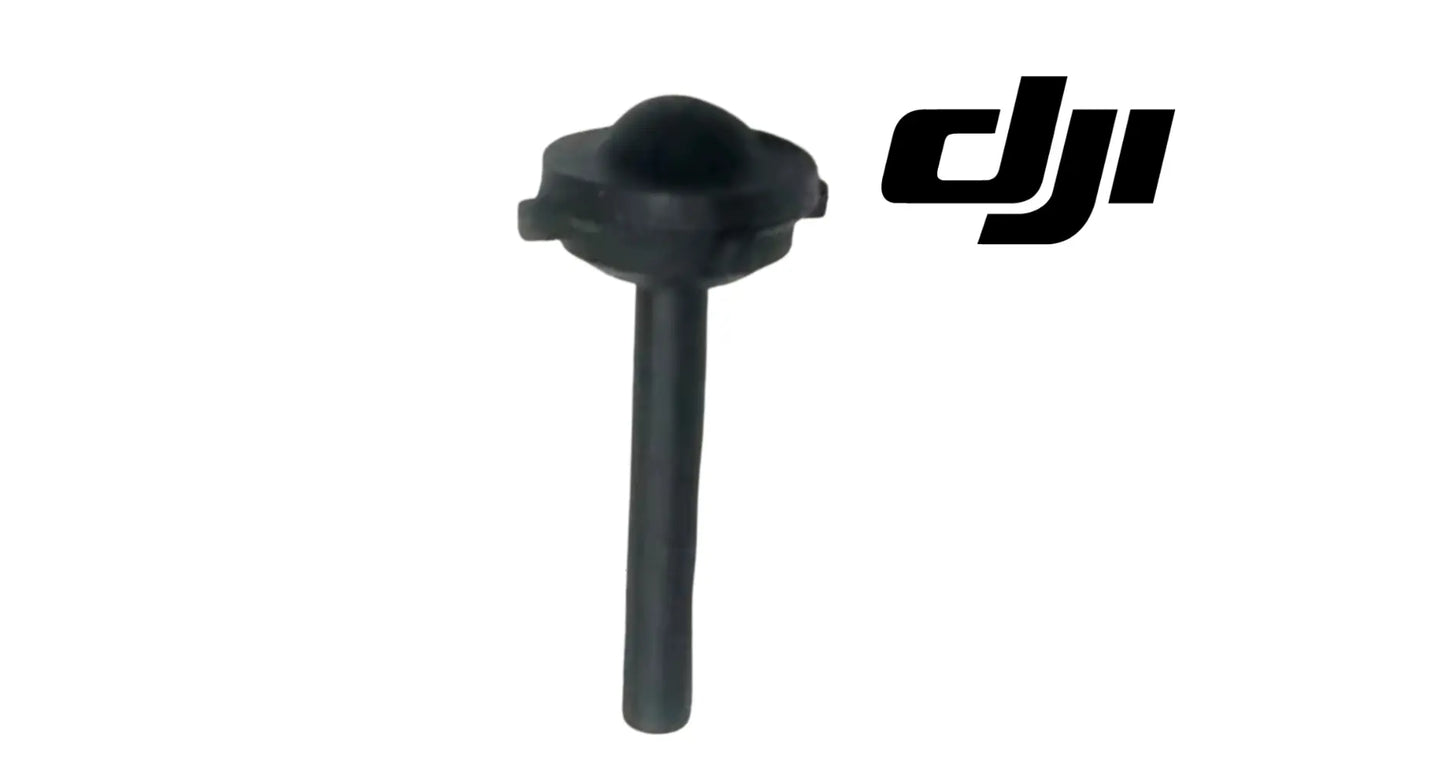
DJI Agras Valve Core Sealing Ring | Flow Meter Module Seal | Genuine DJI OEM Part YC.JG.MY001775 | Quarterly Replacement Program
Billed each quarter
Ares Acres LLC is a U.S.-based authorized DJI Agras reseller supporting American agricultural drone operators with genuine DJI Agras OEM replacement parts, accessories, and field-ready inventory.
FREE & FAST Shipping is included for all U.S. customers, every cycle.
The valve core sealing ring is the small O-ring inside the flow meter module — and it is the first seal in the spray system to weep after a season of chemical cycling. When it goes, the flow meter reads wrong, and everything the aircraft calculates from flow — application rate, coverage, tank remaining — drifts with it. It is a five-dollar part that decides whether the rate on the screen is the rate on the crop.
This program ships one genuine DJI OEM valve core sealing ring automatically every 3 months. The price shown is a recurring quarterly program fee, not a one-time purchase price. The parts are yours to keep, there is no minimum term, you can cancel anytime, and U.S. shipping is free every cycle.
Compared with the one-time ring bought reactively — usually after rate accuracy already drifted — quarterly replacement costs less per ring than buying one-time and keeps a fresh seal always within reach.
Enroll using the purchase option above — current pricing is shown there. Cancel anytime.
We use specialized technicians to verify and dispatch the Valve Core Sealing Ring Replacement ordered.
Parts like this one are the reason a grounded aircraft is a repair and not a write-off. A single component held in U.S. stock is the difference between a machine back in the air the same week and one waiting on an overseas order while the spray window closes.
That is why Ares Acres keeps hard-to-find OEM seals & vent hardware in stock and shipped fast within the U.S.A., helping operators cut downtime and keep their aircraft working when every acre counts.
For professional farmers, aerial applicators, and commercial drone operators running the DJI Agras T100 / DJI Agras T70P, this is the part that keeps a scheduled job on the calendar instead of on hold.
The Valve Core Sealing Ring is the genuine DJI OEM seal fitted at the valve core inside the flow meter module on the DJI Agras T100 and T70P spray systems.
The sealing ring serves to:
Throughout commercial duty, the ring is routinely exposed to aggressive tank-mix chemistry, pressure pulsing at the valve, compression set, and heat cycling. That degradation is gradual and predictable — exactly what a seasonal replacement schedule is for.
Inside the flow meter module the valve core is the element the liquid has to work past, and this ring is the static seal that closes the annulus around it. Its whole job is to make certain that every drop leaving the pump is counted on its way to the nozzles. A ring that has lost its squeeze does not have to drip on the ground to cause trouble. A bypass path inside the module lets liquid move without being measured, and the aircraft has no way of knowing that it happened.
An O-ring rarely fails all at once and it almost never fails visibly. It seals because it is squeezed out of round in its groove and pushes back against both sealing faces. Everything that happens to it in service works against that push-back: heat cycling on a black airframe in July, pressure pulsing from the pump, and the swelling and shrinking that comes with each change of tank chemistry. Long before it weeps, it has already lost enough recovery that the joint is being held by line pressure rather than by the ring.
The ring you take out is worth two minutes under good light, because it reports on what the system has been doing to it. Flat parallel faces where the section should be round is compression set from time, heat, and clamp load. A polished band on one side means it has been moving in its groove instead of staying put. Swollen, soft, or tacky rubber is chemical attack and points at what you have been spraying. A nick or a shaved sliver on one edge means it was damaged going in and never sealed properly at all.
Coming apart, bleed the pressure out of the spray line and drain the plumbing before a single fitting is loosened, then catch what is still standing in the module with a rag instead of letting it run down into the airframe. Note the orientation of the valve core before it leaves the housing. Lift the old ring out with something soft, a plastic pick or a wooden toothpick, and never with a screwdriver or a steel scribe. One scratch across the sealing groove is a permanent leak path that no new ring will close.
Going back together, everything the ring touches has to be clean and wet. Dried spray residue in the groove holds the ring off its seat as effectively as a piece of grit does. Roll the new ring into position rather than dragging it over a sharp edge, run a fingertip all the way around to confirm it is sitting evenly and is not twisted in its groove, and start the valve core square by hand. If it will not go in under light pressure, take it back out and find the reason instead of pushing harder.
While the module is open you are already paying the labor, so look at the things that fail alongside this ring. Check the groove itself for scoring, the valve core for scale or pitting where chemistry has stood against it, the strainer or screen ahead of the meter for the debris that made someone open this module in the first place, and the hose stubs and clamps at the module for cracking. A ring fitted into a system that is still feeding it grit is a ring you will be replacing again.
The program helps:
A degraded ring may contribute to: flow-meter reading drift, off-rate application, chemical weep inside the meter housing, and corrosion on the metering components.
Rate accuracy is what this seal actually protects. The aircraft does not measure what lands on the crop, it measures what passes the meter and assumes the rest followed. Liquid that slips past the sensing path unmeasured makes the aircraft believe it is applying less than it really is, so it opens the system up further and over-applies. The error is invisible from the controller because every number on the screen stays internally consistent with every other number.
The second job is keeping tank mix out of places that were never meant to be wet. A seal that has stopped sealing lets chemistry creep into the module, and what it leaves behind once the water flashes off is salt and residue sitting on metal and on electrical connections. That kind of damage accumulates and it is not undone by fitting a new ring later. The ring is the cheapest item in the assembly and the module around it is not.
It is also a static seal living in a pulsing environment. The pump does not deliver a smooth column of liquid, it delivers a train of pressure pulses, and every pulse works the ring slightly in its groove and unloads it again. That is why this seal ages faster than its size and simplicity suggest, and why it belongs on a maintenance schedule rather than in the pile of parts you deal with once they have already failed.
The aircraft calls the tank empty before it is empty, or keeps spraying after the pump has begun sucking air. Run the check that settles the argument: put a known volume in the tank, spray it out into a measured container on the ground, and compare what the aircraft reported against what you actually caught. A consistent gap in one direction is a metering fault, and a bypassing valve core seal is the cheapest link in that chain to rule in or out.
Flow reads close at low rate and wrong at high rate. Error that grows with pressure is the classic signature of a bypass, because the harder the pump pushes the more liquid a compromised seal lets slip past unmeasured. Error that stays roughly the same at every rate points elsewhere entirely, usually to a fouled sensing element, a calibration offset that was set wrong, or a nozzle set that is not the one the aircraft has been told it has.
A dried crust, a ring of salt, or a discolored streak on the outside of the meter body at the joint. That is a slow weep that has been evaporating between flights. It means the seal has already lost its grip, and it also means chemistry has been standing against the housing and its fasteners. Clean it off completely, fit the new ring, then look at that same area again after the next tank so you know whether it stayed dry or whether something else is weeping.
Flow numbers that jitter or drop out for a moment and then come back. Aeration is the usual cause, and a seal that no longer holds where the line is under suction can pull air into the stream instead of pushing liquid out of it. Air through a meter reads as flow that is not there. Look for a leak that only shows as bubbles rather than as drips, because that kind never leaves a wet mark on the outside for you to find.
The first flight after winter storage is off, settles down over a tank or two, then drifts again. A ring that dried out and took a set on the shelf can swell back enough to seal at low pressure and let go again once the pump comes up. Storage-season damage to elastomer is real, and it is a good argument for renewing this seal at spring commissioning rather than trusting the one that looked perfectly fine when you parked the aircraft in the fall.
You have already cleaned or replaced the flow meter and the reading is still wrong. Before ordering another module, pull the valve core and look at the ring and the groove it sits in. A scratch left in the groove by an earlier repair, or a ring that was pinched during installation, reproduces the identical symptom on brand-new hardware and will keep on reproducing it until the sealing surface itself is dealt with.
Moisture, residue, or a chemical smell found inside the module during any other job, with no rate complaint yet. That is the seal telling you where it is in its life before it costs you an acre. Fit the fresh ring while the module is already apart, because the labor is already spent and the alternative is meeting the same discovery again in the middle of a spray window with a customer waiting.
Component Type: Flow meter valve core sealing ring
DJI Material Number: YC.JG.MY001775
Compatibility:
Product Category: Seals & Vent Hardware
Package Quantity: 1 sealing ring per quarterly shipment
Installation Area: Flow meter module, valve core
Condition: Brand new genuine DJI OEM part
Program Structure: Recurring quarterly fee at the price shown above, not a one-time purchase price. One ring ships automatically every 3 months; no minimum term; cancel anytime; parts are yours to keep; free U.S. shipping every cycle.
Dimensional figures: DJI does not publish section diameter, inside diameter, or groove dimensions for this ring. Do not order it by measurement out of a generic seal catalogue. Match it by DJI material number, and if you want a second confirmation, compare against the ring you removed while it is still sitting in its groove.
Elastomer compound: The rubber compound and its hardness are not published. That matters more here than the dimensions do, because a ring of the correct size in the wrong compound will swell, soften, or harden in the chemistry this aircraft carries. It is the reason a hardware-store O-ring is not a substitute even when it drops into the groove and looks right.
What ships in each cycle: One sealing ring. The valve core itself, the flow meter module, and any other seals within that assembly are separate parts and are not included in this program.
Lubrication: No lubricant is specified for this seal on this listing. Where nothing is published, wetting the ring with clean water or with the fluid the system carries is the safe default. Petroleum grease is not, because it attacks some elastomer families and there is no published compatibility here to rely on.
Storage of spares: Keep spare rings in their bag, lying flat and unstretched, out of direct sunlight, away from running electric motors, and away from open fuel or solvent containers. Ultraviolet light and ozone age rubber on the shelf, and a ring that hardened in storage will not seal any better than the one you just took out.
Inspection before fitting: Run a new ring between clean fingers before it goes anywhere near the groove. Feel for flash left along the parting line, a nick, or a flat spot pressed in by packaging. A defect the width of a hair on the sealing face is enough to keep the joint weeping, and it is far easier to catch now than after everything is buttoned up.
This listing is DJI material number YC.JG.MY001775. That number, not the description, is what makes a part match. Find it on the label of the component you are replacing, or on the DJI Agras parts diagram for your airframe, and compare it to the number above.
Revision suffixes are still the same part. DJI labels sometimes carry a trailing revision such as .01, .02, or .F. Those denote a production revision, not a different component. Match the base number and disregard the suffix.
Visually similar is not the same. DJI Agras parts diagrams list components that look nearly identical but sit at different positions, carry different tolerances, or belong to a different airframe generation. Ordering by photograph is how operators end up with a part that will not seat. Order by number.
Verified fitment for this listing: DJI Agras T100 / DJI Agras T70P. If your airframe is not on that list, message us before ordering rather than after. We would rather answer a question than process a return, and so would you.
Not sure? Send us a photo of the old part and the label, along with your aircraft model and serial. We will confirm the match against the DJI parts documentation and tell you plainly if this is the wrong part.
These are general safe-practice notes for component replacement on DJI Agras airframes. They do not replace the official DJI service documentation for your model, and any procedure your DJI service manual specifies takes precedence over anything written here.
Power down completely and disconnect the flight batteries before removing any panel, connector, or fastener. Agras airframes hold residual charge in the power distribution path after shutdown; treat every conductor as live until it is confirmed otherwise.
Photograph the assembly before you disturb it. Cable routing, connector orientation, and fastener lengths on Agras airframes are not interchangeable, and the – T70P Valve Core Sealing Ring Replacement is easier to fit correctly when you can see how the original sat.
Torque to DJI specification. Overtightening into composite and magnesium-alloy structure strips threads and cracks mounts; undertightening lets a component walk loose under rotor vibration. Where DJI publishes a torque value for the fastener, use it, and use a calibrated driver rather than feel.
Check the mating surfaces and seals while you are in there. A component is only as good as what it seats against. Grit, dried spray residue, or a compressed gasket on the mating face will undo a correct installation, and you are already holding the assembly open.
Test before you spray. Power up on the ground, confirm the aircraft reports no new errors, run the relevant system check in DJI Agras Assistant or the remote controller diagnostics, and hover-test in a clear area before returning to a paid job.
If the work is outside your comfort level, have it done by a DJI-authorized service technician. The part cost is small next to the airframe.
This program is ideal for: DJI Agras T100 and T70P operators; farmers operating spray drones; commercial spraying contractors; fleet maintenance managers; agricultural drone technicians; and professional operators who calibrate flow regularly. Especially valuable during peak spray season and pre-season calibration.
Pre-season calibration work, where the fresh seal goes in before the flow check rather than after it. Calibrating against a meter that is quietly bypassing bakes the error permanently into the number you just set, and nobody finds out until the agronomy on the ground disagrees with the invoice.
Any job that opens the flow meter module at all, whether for cleaning, clearing a blockage, or inspecting the sensing element. In practice this is a single-use item. Putting a used ring back into a groove it has already conformed to is how a repair finished on Tuesday turns into a weep on Thursday.
Moving the aircraft between chemistry families, such as coming off a season of emulsifiable concentrates onto a water-based program, or going into a run of aggressive tank cleaners. The seal has been living in whatever came before, and a change of program is a sensible moment to start it clean.
Troubleshooting a rate complaint before spending money on a replacement flow meter module. Ruling the ring in or out costs very little and eliminates one of the few failure modes that will follow you onto new hardware if you skip it.
Every acre the aircraft sprays is billed against what the flow meter says. A worn five-dollar O-ring quietly turns that number into a guess. A fresh OEM seal every quarter keeps the meter honest — and the application rate on the crop matching the rate on the contract.
Protect the seal. Protect the meter. Protect the rate. Protect the season.
The arithmetic on this part is lopsided in a way few components are. The ring costs less than a single nozzle, and it sits at the exact point where the aircraft decides what number to report for every acre you bill. A metering error of a few percent across a season of contract spraying is worth many times the price of a case of these rings, and it moves in whichever direction happens to be worse for you: under-application that costs a re-treat, or over-application that costs chemical and creates a residue problem.
There is a record-keeping argument as well. When an application is questioned, the aircraft log is the evidence, and that log is only as honest as the meter that fed it. A documented seal replacement on a maintenance schedule is a defensible answer to the question of whether the rate on the report is the rate that left the boom. An undocumented meter of unknown seal age is not.
And there is the diagnostic argument, which is the one operators come to appreciate last. Whenever flow data misbehaves, this ring is one of the cheapest and quickest things in the chain to eliminate. Having a fresh one in the box means you can rule it out in an afternoon instead of leaving it as an open question while you spend real money on the meter, the pump, and the nozzles.
Canonical product name: DJI Agras T100 – T70P Valve Core Sealing Ring Replacement (Quarterly Program)
Component: Valve Core Sealing Ring
DJI material number: YC.JG.MY001775
Product category: Seals & Vent Hardware
Compatible aircraft: DJI Agras T100, DJI Agras T70P
Installed position: Flow meter module valve core
Program type: Quarterly replacement subscription — one genuine DJI OEM ring ships automatically every 3 months; parts are kept by the customer
Seller: Ares Acres LLC — U.S.-based authorized DJI Agras reseller
Shipping: Free and fast U.S. shipping every cycle; same-day dispatch and tracking on in-stock parts
Free and fast shipping within the United States on every order, with tracking supplied as soon as the label is generated. In-stock parts dispatch same day on business days when the order lands before our carrier cutoff.
We ship from the U.S., not from overseas. That is the whole reason Ares Acres exists. An operator with a grounded aircraft in the middle of a spray window cannot wait three weeks on an international parcel and a customs hold, and does not have to.
Genuine OEM only. Every part we list as OEM is a genuine DJI component in new condition. We do not substitute aftermarket parts, and we do not relabel. If a listing says OEM, that is what ships.
Ordered the wrong part? Contact us. Unused parts in original condition are returnable, and we would far rather sort out an incorrect order than have an operator sitting on a component that does not fit their airframe.
Need help identifying a part? Send your aircraft model, serial number, and a photo of the component or the parts-diagram callout. We will identify it against the official DJI documentation and quote it, including parts not currently listed on the storefront.
Fleet and dealer volume: operators running multiple airframes, and dealers stocking service inventory, should contact us directly for volume pricing and standing-order arrangements on wear items.
What is the Valve Core Sealing Ring? The genuine DJI OEM O-ring (material YC.JG.MY001775) sealing the valve core inside the flow meter module on the DJI Agras T100 and T70P.
How does the quarterly program work? The price shown on this page is a recurring quarterly program fee, not a one-time purchase price. One genuine DJI OEM ring ships automatically every 3 months with free U.S. shipping. No minimum term, cancel anytime, and the parts are yours to keep. Enroll using the purchase option above — current pricing is shown there.
Why subscribe instead of buying one-time? Because this is the first seal in the system to weep after a season of chemical cycling, and everything billed per acre depends on the meter it seals. On a quarterly cycle a fresh ring shows up on schedule, at a lower price per ring than buying one-time.
Will this fit my aircraft? Supplied for the DJI Agras T100 and T70P. Confirm by material number YC.JG.MY001775 — a revision suffix such as .01 or .F is the same part. If your airframe is not listed, message us before ordering.
Is this a genuine DJI OEM – T70P Valve Core Sealing Ring Replacement?
Yes. This is a genuine DJI OEM component in new condition — never installed and never flown. Ares Acres LLC is a U.S.-based authorized DJI Agras reseller. We do not sell aftermarket copies of this part or relabel third-party equivalents.
Will this fit my aircraft?
This part is supplied for the DJI Agras T100 / DJI Agras T70P. Confirm by matching DJI material number YC.JG.MY001775 against the label on your original part or your model's DJI Agras parts diagram. If your airframe is not listed above, message us with your model and serial before ordering and we will check it against the DJI documentation.
How fast does it ship, and where does it ship from?
It ships free and fast from within the United States, with tracking. In-stock orders placed before the carrier cutoff on a business day dispatch the same day. Nothing routes through an overseas warehouse or customs.
Can I install the – T70P Valve Core Sealing Ring Replacement myself?
Many operators do. Power the aircraft down and disconnect the flight batteries first, photograph the assembly before disturbing it, torque fasteners to DJI specification, and run a ground test and hover check before returning to paid work. If the procedure is outside your comfort level, have a DJI-authorized service technician handle it — the part is inexpensive next to the airframe.
What if I order the wrong part?
Contact us. Unused parts in original condition are returnable. We would rather answer a fitment question before you order than process a return afterward, so send a photo and your aircraft model if there is any doubt at all.
Do you stock other parts for this aircraft?
Yes. Ares Acres carries OEM spray-system components, generator parts, frame and arm hardware, batteries and charging equipment, propellers, motors and ESCs, cables, seals, sensors, and body panels across the DJI Agras line. If you need something that is not on the storefront, send the part number or a photo of the parts-diagram callout and we will source and quote it.
How do I confirm the ring is the problem and not the flow meter itself?
Do a catch test first. Put a measured volume in the tank, spray it out into a container on the ground, and compare the caught volume with what the aircraft reported. Repeat it at a low rate and a high rate. Error that grows with pressure points at a bypass, which is what a failed valve core seal produces. Error that is constant across rates, or readings that are erratic rather than biased, points at the sensing element or the calibration instead.
My flow is off by roughly the same percentage at every rate. Is this ring the cause?
Probably not on its own. A leaking or bypassing seal usually produces an error that scales with pressure, because more pressure pushes more liquid past the compromised joint. A flat percentage offset across all rates is more consistent with a calibration figure that was entered or learned wrong, a nozzle set that does not match what the aircraft is configured for, or a sensing element that has been coated by residue.
Can I reuse the old ring if it looks undamaged?
No, and the reason is that an O-ring seals by elastic recovery rather than by appearance. Once it has been compressed in a groove for a season it has taken a set, and it will not spring back to close the gap when the joint is reassembled. A used ring that looks perfect can still weep at pressure. Treat it as a single-use item, particularly since the labor to get back in there costs far more than the part does.
Should I grease the ring before fitting it?
Not with petroleum grease. No lubricant is published for this seal, and petroleum products attack some elastomer families badly enough to swell or soften them within a few tanks. Wetting the ring and the groove with clean water, or with the fluid the system carries, is enough to let it roll into place without dragging. If you want a proper assembly lubricant, confirm compatibility with DJI service documentation first.
Do I have to recalibrate flow after fitting a new ring?
Run a verification pass at minimum. Spray a known volume into a measured container and compare against what the aircraft reports, because you have just changed the thing that was causing the reading to be wrong and you want to see it come back to truth. If your model supports a flow calibration routine, doing it on a freshly sealed meter is the right order of operations. Calibrating a bypassing meter simply records the error.
Can I substitute an O-ring of the same size from a hardware store?
It is a bad trade. The dimensions are the easy half of an O-ring specification and the compound is the half that decides whether it survives. A generic nitrile ring in a tank mix carrying aromatic solvent will swell and go soft, and a ring in the wrong hardness extrudes under pressure pulsing. Neither failure shows up on the bench. Both show up as rate drift a week later, in the field.
How do I get the old ring out without wrecking the groove?
Use something softer than the housing. A plastic pick, a wooden toothpick, or a trimmed cable tie will lift it clear without leaving a mark. Never use a screwdriver, a dental pick, or a scribe. A single scratch running across the sealing surface creates a permanent channel that a new ring cannot bridge, and at that point the fix stops being a cheap seal and becomes a replacement module.
What else should I inspect while the module is open?
The groove, for scoring or pitting. The valve core, for scale, corrosion, or a rough surface where chemistry has been standing. The strainer or screen upstream, for the debris that probably caused you to open this in the first place. Hose stubs and clamps at the module, for stiffening and cracking. And the module exterior, for the dried residue trail that tells you where any weep has been going.
The ring came out flattened on two sides. What does that mean?
That is compression set, and it is the normal end of life for an O-ring rather than a sign anything went wrong. The rubber has stopped springing back after being squeezed in the groove, so the joint has been relying on line pressure to hold. Heat, time, and clamp load all drive it. If you are seeing it well before you expected to, look at whether the aircraft is running hot or whether the chemistry is aggressive.
The new ring is leaking straight away. What did I do wrong?
Usually one of four things. The ring was twisted or pinched as the valve core went in. There was residue or grit in the groove holding it off its seat. The groove has a scratch from a previous repair. Or the joint was assembled dry and the ring dragged and rolled instead of seating. Take it apart, look at the ring you just removed for a shaved edge or a spiral witness mark, and clean everything before trying again.
Which tank chemistry is hardest on this seal?
In general terms, mixes carrying petroleum or aromatic solvent are the toughest on elastomer because they swell and soften rubber, and strong alkaline tank cleaners left standing in the plumbing are close behind. Concentrate that sits in a warm system overnight does more harm than the same product moving through during a spray. Flushing the system before it sits is worth more to this seal than anything else you can do.
Does replacing this ring fix the leak I can see on the outside of the meter?
It fixes the leak if the weep is coming from the valve core joint, which is where this ring seals. It does nothing for a leak from a hose fitting, a clamp, a cracked housing, or a different seal in the same assembly. Dry the whole module, dust the area, run the system on clean water, and watch where the wet appears before you decide. Chasing the wrong joint costs a job either way.
DJI Agras T100
DJI Agras T100 Parts
DJI T100 Parts
DJI Agras T100 OEM Parts
DJI Agras T100 replacement parts
Agras T100 parts USA
DJI Agras T70P
DJI Agras T70P Parts
DJI T70P Parts
DJI Agras T70P OEM Parts
DJI Agras T70P replacement parts
Agras T70P parts USA
DJI Agras – T70P Valve Core Sealing Ring Replacement
– t70p valve core sealing ring replacement replacement
– t70p valve core sealing ring replacement for sale
DJI – T70P Valve Core Sealing Ring Replacement
– T70P Valve Core Sealing Ring Replacement OEM
T100 – T70P Valve Core Sealing Ring Replacement
DJI T100 – T70P Valve Core Sealing Ring Replacement
DJI Agras T100 – T70P Valve Core Sealing Ring Replacement OEM
T70P – T70P Valve Core Sealing Ring Replacement
DJI T70P – T70P Valve Core Sealing Ring Replacement
DJI Agras T70P – T70P Valve Core Sealing Ring Replacement OEM
DJI Agras OEM Parts
Seals & Vent Hardware
DJI Agras Seals & Vent Hardware
T100 Seals & Vent Hardware
YC.JG.MY001775
DJI YC.JG.MY001775
YC.JG.MY001775 OEM
DJI Agras Parts
DJI Agras Replacement Parts
DJI Agras Repair Parts
DJI Agras Maintenance Parts
DJI Agricultural Drone Parts
DJI Agriculture Drone Parts
DJI Spray Drone Parts
DJI Crop Sprayer Parts
agricultural drone parts
spray drone parts
ag drone parts USA
plant protection drone parts
authorized DJI Agras reseller
DJI Agras dealer USA
buy DJI Agras parts online
DJI Agras parts free shipping
agricultural drone parts same day shipping
Ares Acres
Ares Acres LLC

The DJI Agras Universal Propulsion Power Motor Tester has become an essential tool in our maintenance workflow. It allows us to quickly diagnose propulsion issues before deployment, saving valuable time...
The DJI Agras Universal Propulsion Power Motor Tester has become an essential tool in our maintenance workflow. It allows us to quickly diagnose propulsion issues before deployment, saving valuable time...

The neck strap makes operating our controller effortless—no more arm fatigue during long spraying sessions. Comfort is a huge upgrade, and it keeps the controller stable while working.
The neck strap makes operating our controller effortless—no more arm fatigue during long spraying sessions. Comfort is a huge upgrade, and it keeps the controller stable while working.

The Landing Gear Wheels make moving our drone effortless. No more lifting or dragging in the field. Installation was quick, and shipping was fast.
The Landing Gear Wheels make moving our drone effortless. No more lifting or dragging in the field. Installation was quick, and shipping was fast.
Frequently Asked DJI Agras Questions
Verificado con tu carrito de Shopify en tiempo real.
Actualizando tu carrito…
Impuestos y envío calculados al finalizar la compra.
Asistente con representante en vivo · Pago seguro
o paga con
Ingresa tu tarjeta y paga · Procesado por PayPal
PayPal Express · Pago seguro con PayPal · Protección al comprador
Vaciar carrito popupConfirmación #
Tu pedido está confirmado.
Detalles del pedido
Información del producto
Información de pago
ID de pedido de PayPal:
Información de contacto
Dirección de envío