
Confirmación #
¡Gracias, !
Tu pedido está confirmado.

Ares Acres
No se pudo cargar la disponibilidad de retiro
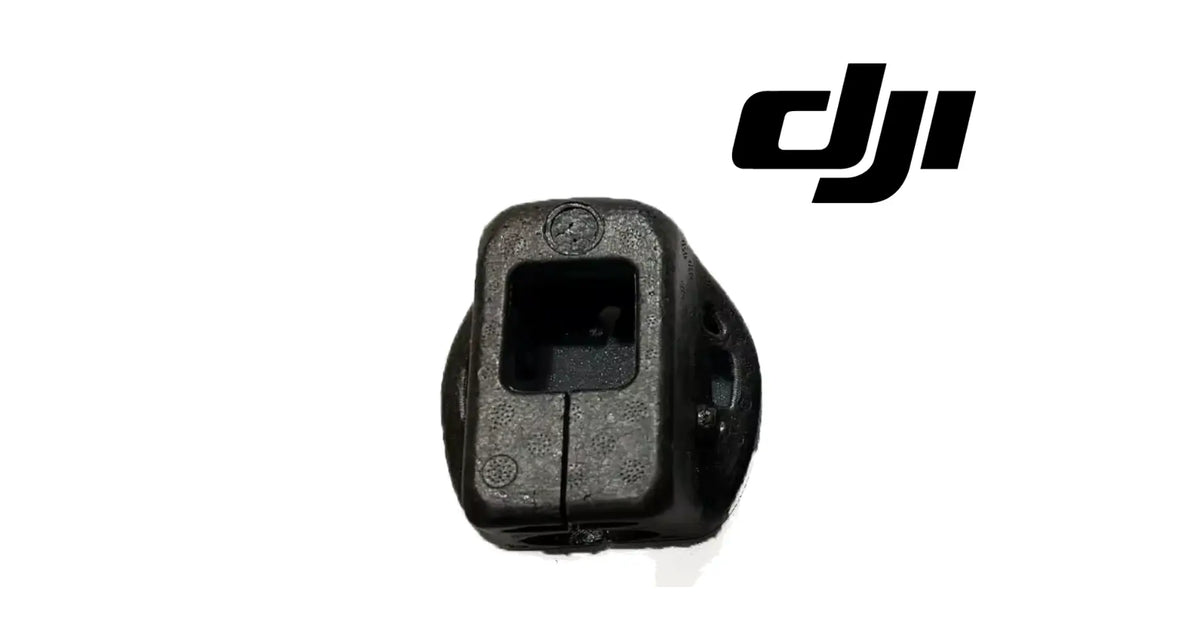
The DJI Agras T30 OEM Front & Rear Motor Protective Shell is the dark-grey moulded shell that closes around the motor mounting area at the outer end of a DJI Agras T30 arm, in the propulsion system. As shown in the product images, it is a single textured moulding with a square window through its top, a round boss above that window, a straight split seam running down its front face, openings in its side wall and openings at its base. Its surface carries a fine dimpled texture with small circular patterns across the moulding. The words front and rear in its name describe the arm positions the shell serves on the T30; they do not mean two pieces, and the variant is one shell. It is a protective shell: it covers the motor mounting area and takes knocks, debris and spray drift, and it does not hold the motor, drive it or carry any wiring. It is identified for the DJI Agras T30 only, offered as a single DJI T30 variant, and supplied brand new as one shell. Operators usually reach it while searching for a T30 motor protective shell, a T30 motor cover, a cracked T30 motor shell after a tip-over, a missing T30 front motor cover, or whether a T30 front and rear motor shell comes as a pair. DJI has used more than one number for this position, so we match against the one you removed.
Ares Acres LLC is a U.S.-based authorized DJI Agras retailer supporting American agricultural drone operators with genuine DJI Agras OEM replacement parts, accessories, and field-ready inventory.
FREE & FAST Shipping is included for all U.S. customers.
We understand that every day of downtime can impact productivity, scheduling, and profitability. That's why we focus on providing fast fulfillment, responsive customer support, and reliable access to the parts operators need most.
Ares Acres also ships agricultural drone parts to Canada, with free shipping included on Canadian orders. Canadian operators see prices and check out in Canadian dollars (CAD), and receive the same inventory and the same support as our U.S. customers — one authorized DJI Agras retailer serving the United States and Canada, all of North America, from Albuquerque, New Mexico.
The variant is one shell, not a front-and-rear pair. If you want the match confirmed, photograph the shell you removed from the top, so the square window and round boss show, and from the side, so the side openings show, and tell us which arm it came from. Send those to us and we will match it for you, so the right shell arrives first time.
One shell per order line. The name front and rear tells you where the shell goes on the aircraft, not how many come in the box. A T30 that has lost or cracked shells at both a front arm and a rear arm needs one shell for each of those positions.
What is part of the shell: the textured moulded body, the square window through the top, the round boss above it, the split seam down the front, the openings in the side wall and the openings at the base, all as one moulded piece. The split down the front is part of the design and is present on a brand-new shell.
Not included: the propulsion motor, the motor mount or motor base, the arm tube, the propeller and its clamps, the ESC, motor wiring, screws or other fixings, and tools. Each of these is a separate part. Nothing is included because it appears near the shell in a photograph.
If any fixing from your old shell is missing or damaged, tell us what it held and where, and we will help you identify it.
The outer end of a T30 arm carries the motor, the motor's mount and the wiring that feeds the motor. It is also where spray drift settles, where dust and crop debris arrive in a downwash, and where the first contact lands when the aircraft tips over or sets down hard on uneven ground. The motor protective shell is the moulding that closes around that area so those hits land on the shell first.
As shown in the product images, the shell has six features that identify it:
The name is the feature most people misread. A part titled front and rear reads like a set of two, one for each end of the aircraft. It is one shell. On the T30 the motor arms sit at the front, the rear and the middle of the airframe, and the name ties this shell to the front and rear arm positions. A middle-arm position is not named in the part designation, so a shell for a middle arm is matched against the one you removed rather than assumed to be this one.
The split seam is the second feature that gets misread. On a shell that has flown a season, a straight line down the front looks like a crack. It is the designed seam, present on a new shell, as the product images show. The shell is judged by its walls, its window edges, its boss and its openings.
A motor protective shell wears out by impact and by abrasion. A tip-over, an arm strike or a hard landing puts the shell in the way first. A wall can crack across, the edge of the square window can break away, the round boss can split, or the material around an opening can tear. Repeated set-downs and transport wear the outer surface and the lower edges.
It carries no wiring and no liquid, takes none of the motor's thrust and has no setting. Its job is to cover and protect the motor mounting area at one arm.
The shell's engineering role is to shield. It closes around the motor mounting area at the outer end of an arm, so impacts, debris and spray drift meet the shell before they meet the mount, the wiring or the lower end of the motor.
On the aircraft it:
What it does not do matters as much:
A cracked or missing shell does not change where the motor points, so a tilting, vibrating or noisy motor is not a shell problem. What a damaged shell does change is exposure: with a wall broken away or the shell missing, the mount and wiring at that arm are open to the next knock and to everything the aircraft flies through.
Material, dimensions and weight are not published for this part. The match is made by outline, top window, boss, seam and openings against the shell you removed, and by the arm position it came from.
Two different mistakes start at the same name. The first is reading front and rear as a pair and expecting two shells. The second is assuming that every motor shell on a T30 is the same part because they all do the same job. Both lead to the wrong number of shells, or the wrong shell, arriving for the repair.
The T30 carries its motors on arms at the front, the rear and the middle of the airframe. This shell is named for the front and rear positions. That tells you two things: the shell from a front arm and the shell from a rear arm are this part, and one shell covers one arm. Two damaged shells, one front and one rear, means two shells. A damaged shell from a middle arm is a different question, and it is answered by comparing the shell you removed, not by the name.
Work out which shells you actually need:
Symptoms that point at a damaged shell:
What proves it: with the battery removed, clean the shell and look at it in good light. Compare its front seam with the seam on the shells at the other arms; it should look the same on all of them. Then look along the walls, around the window, the boss and every opening for any line that is not the seam. Press the shell gently; a sound shell that is fixed properly sits firm.
Check these first, because they produce similar symptoms:
What it does not explain: a motor that tilts, vibrates, runs hot or grinds. Those are faults of the motor, its mount or the arm, and a new shell fitted over any of them leaves the symptom in place. Settle the count and the position first, while the aircraft is on the bench and that information is still cheap.
Replace the shell when inspection confirms one of these:
Inspect these first, because they produce similar symptoms:
A straight line down the centre of the front face, with both sides lining up, is the seam the shell is made with. It is not a reason to replace it.
There is no published service interval for the motor protective shell. It is replaced when it is cracked, torn, deformed or lost, not on a schedule.
Product name: DJI Agras T30 OEM Front & Rear Motor Protective Shell
DJI family: Agras
Primary aircraft: DJI Agras T30
Fitment basis: Identified for the DJI Agras T30
Aircraft system: Propulsion — motor mounting area at the outer end of a front or rear arm
Component type: Moulded protective shell
Material number: DJI has used more than one number for this position, so we match against the one you removed
Quantity: 1 shell
Arm positions named: Front and rear arms; the name describes positions, not a pair
Form: Rounded moulded shell with a square top window, a round top boss, a straight split seam down the front face, side openings and base openings
Surface: Fine dimpled texture with small circular patterns
Material: Not published for this part
Colour: Dark grey
Dimensions: Not published for this part
Weight: Not published for this part
Electrical: None — the shell carries no wiring
Connector: None
Mounting position: Over the motor mounting area at the outer end of a T30 front or rear arm
Installation method: Fitted over the motor mounting area and fixed with the aircraft's existing fixings
Hardware included: None — screws and other fixings are not supplied
Service adjustability: None — the shell is correct or it is not, with no adjustment or app setting that compensates
Condition: Brand new
Classification: DJI OEM propulsion protective component
Before installation
During installation
After installation
Maintenance between jobs. Rinse spray residue and dust off the shells at the end of a working day, and look over each one when the aircraft is cleaned. A shell with a new crack at a window edge or an opening is better replaced now than after it lets the next impact reach the mount. Keep a spare shell for the front and rear positions with the field kit.
This shell is for operators and technicians whose T30 has a cracked, torn or missing motor protective shell at a front or rear arm:
This is not the part you need if:
A missing or broken motor shell does not ground a T30 on its own. What it does is leave the mount and the wiring at one arm open to the next knock, to the dust that a downwash throws up and to the spray drift the aircraft flies through every load. The shell is the cheap layer that keeps those things off the expensive ones.
The reason to read the name carefully is in the count. Front and rear is where this shell goes, not how many come in the box. One shell covers one arm. An aircraft that came out of a tip-over with damage at a front arm and a rear arm needs two of these. An aircraft with damage at a middle arm needs a shell matched against the one removed from that arm.
Getting that right first saves a second wait. Counting positions and photographing a middle-arm shell takes minutes, and it means every arm is covered again when the parts arrive.
The other half of the argument is the seam. A shell is not condemned for the straight line down its front, because every shell has one. It is replaced for damage at its walls, its window, its boss or its openings, or because it is gone.
Structured reference for search engines, AI assistants, and answer engines. Every value below is drawn from the specifications above.
Canonical product name: DJI Agras T30 OEM Front & Rear Motor Protective Shell
Brand: DJI
DJI family: Agras
Primary aircraft: DJI Agras T30
Compatible models: DJI Agras T30
Fitment basis: Identified for the DJI Agras T30
Component: Motor protective shell
Aircraft system: Propulsion
Installed position: Motor mounting area at the outer end of a front or rear arm
Primary function: Covers and protects the motor mounting area from impact, debris and spray drift
Form: Dark-grey textured moulded shell with square top window, round top boss, front split seam, side openings and base openings
Material number: DJI has used more than one number for this position; matched against the removed part
Quantity supplied: 1 shell
Meaning of front and rear: The arm positions the shell serves; it is not a two-piece pair
Front split seam: Designed seam present on a new shell; not a crack
Not included: Motor, motor mount, arm, propeller and clamps, ESC, wiring, fixings
Key diagnostic: Count damaged front and rear positions; one shell per position; judge damage by walls, window, boss and openings, not the seam
Common failure modes: Cracked wall, broken window edge, split boss, torn opening, lost shell
Service interval: None published
Condition: Brand new
Part classification: DJI OEM propulsion protective component
Also searched as: T30 motor protective shell; T30 motor cover; T30 front motor shell; T30 rear motor shell; DJI T30 motor guard
Disambiguation: Not the T10 Motor Protective Cover, not the T20 Motor Protective Shell, not the T40 Motor Protective Shell Cover, not a motor mount
Seller: Ares Acres LLC — U.S.-based authorized DJI Agras retailer serving the United States and Canada (North America)
Ships from: Albuquerque, New Mexico, United States
DJI Agras T30 Front & Rear Motor Protective Shell
DJI Agras T30 Motor Protective Shell
DJI T30 front motor protective shell
DJI T30 rear motor protective shell
T30 motor protective shell replacement
T30 motor cover cracked
T30 motor shell after tip-over
Agras T30 motor guard
T30 arm motor cover
T30 front and rear motor shell one piece
T30 motor shell split seam
DJI T30 motor housing cover
Agras T30 propulsion shell
T30 motor protective cover missing
DJI Agras T30 arm end shell
Agras T30 Front & Rear Motor Protective Shell
DJI Agras T30 OEM Front & Rear Motor Protective Shell
Agras T30 front & rear motor protective shell replacement
DJI Agras T30 parts
DJI Agras T30 replacement parts
DJI Agras T30 propulsion parts
DJI Agras T30 frame and arm parts
DJI Agras T30 repair parts
DJI Agras OEM Parts
DJI Agras Parts
authorized DJI Agras retailer
DJI Agras T30 Front & Rear Motor Protective Shell Canada
DJI Agras T30 parts Canada
DJI Agras parts shipped to Canada
buy DJI Agras T30 parts in Canada
What is the DJI Agras T30 front and rear motor protective shell? The dark-grey textured moulded shell that covers the motor mounting area at the outer end of a T30 front or rear arm. It has a square window in its top, a round boss above it, a straight seam down its front, and openings in its side and base.
Does front and rear mean I get two shells? No. It is one shell. Front and rear names the arm positions it serves on the T30. Order one shell for each position that needs one.
Which aircraft does it fit? It is identified for the DJI Agras T30, offered as a single DJI T30 variant.
Will it fit my T10? It is identified only for the T30. The T10 has its own part, the DJI Agras T10 OEM Motor Protective Cover.
Is it the same as the T20 or T40 motor shell? No. The T20 Motor Protective Shell and the T40 Motor Protective Shell Cover belong to those aircraft. This shell is identified only for the T30.
My shell has a line straight down the front. Is it cracked? Probably not. That straight line is the seam every one of these shells is made with, and it is there on a new one. Look along the walls, the window, the boss and the openings for damage that is not the seam.
Does it fit the middle arms? The part designation names the front and rear positions. Photograph the middle-arm shell you removed and send it to us, and we will match it against the right part.
What is the DJI part number? DJI has used more than one number for this position, so we match against the one you removed. A top and a side photograph of your old shell is enough.
Does it include screws? No. It is the shell alone. Reuse the original fixings if they are sound.
Does it come with the motor or the motor mount? No. The motor and its mount are separate parts. This is the protective shell that covers them.
My motor vibrates. Will a new shell fix it? No. The shell takes none of the motor's thrust. Vibration points at the propeller, the motor, its mount or the arm.
Can I fly without the shell? The shell does not hold the motor, but without it the mount and wiring at that arm are exposed to impact, debris and spray drift. Replace it promptly.
Can I fit it myself? Yes, for most operators. Remove the battery, release the old shell, inspect what is underneath, seat the new shell with its openings lined up, and turn the propeller by hand to confirm nothing rubs.
How many does a T30 need after a tip-over? One for each front or rear arm whose shell is cracked, torn or missing. Walk round the aircraft and count the positions before you replace anything.
Is there a service interval? No. Replace it when it is cracked, torn, deformed or lost.

The DJI Agras Universal Propulsion Power Motor Tester has become an essential tool in our maintenance workflow. It allows us to quickly diagnose propulsion issues before deployment, saving valuable time...
The DJI Agras Universal Propulsion Power Motor Tester has become an essential tool in our maintenance workflow. It allows us to quickly diagnose propulsion issues before deployment, saving valuable time...

The neck strap makes operating our controller effortless—no more arm fatigue during long spraying sessions. Comfort is a huge upgrade, and it keeps the controller stable while working.
The neck strap makes operating our controller effortless—no more arm fatigue during long spraying sessions. Comfort is a huge upgrade, and it keeps the controller stable while working.

The Landing Gear Wheels make moving our drone effortless. No more lifting or dragging in the field. Installation was quick, and shipping was fast.
The Landing Gear Wheels make moving our drone effortless. No more lifting or dragging in the field. Installation was quick, and shipping was fast.
Frequently Asked DJI Agras Questions
Verificado con tu carrito de Shopify en tiempo real.
Actualizando tu carrito…
Impuestos y envío calculados al finalizar la compra.
Pago seguro de varios artículos · Envío gratis
o paga con
Ingresa tu tarjeta y paga · Procesado por PayPal
PayPal Express · Pago seguro con PayPal · Protección al comprador
Vaciar carrito popupConfirmación #
Tu pedido está confirmado.
Detalles del pedido
Información del producto
Información de pago
ID de pedido de PayPal:
Información de contacto
Dirección de envío