

Confirmación #
¡Gracias, !
Tu pedido está confirmado.

Ares Acres
No se pudo cargar la disponibilidad de retiro
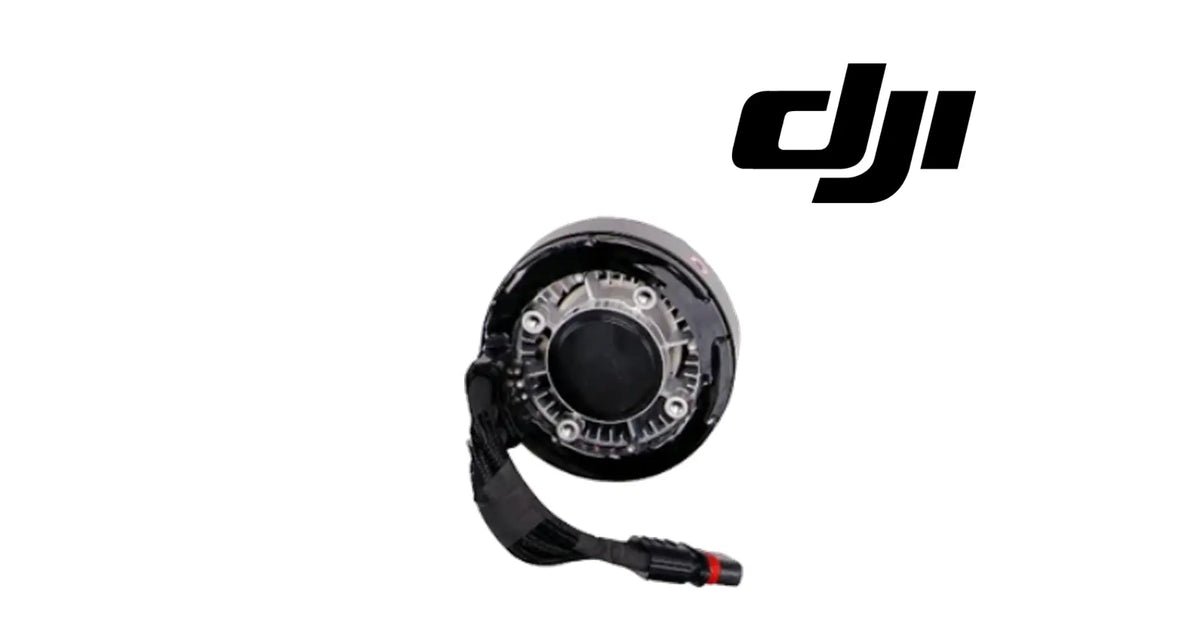
The DJI Talos T60X OEM 14028 Propulsion Motor is one of the brushless motors that turn the propellers of the Talos T60X spray aircraft. 14028 is the motor's size designation, and it is the name the supplier uses for this unit. The motor is a propulsion-system part, listed by the supplier for the Talos T60X, and it is supplied as a single motor with its own braided lead and sealed connector, as photographed. It sits at the end of an aircraft arm, takes power and commutation from the ESC module in that arm through the arm's composite cable, and turns the propeller that lifts and steers the aircraft. Operators usually go looking for it as a T60X motor, a Talos T60X propulsion motor, or a T60X 14028 motor after a motor error in the app, a rough or noisy arm, a hard landing, or a strike that stopped a propeller.
Ares Acres LLC is a U.S.-based authorized DJI retailer supplying agricultural spray aircraft, replacement components, and field-ready inventory to American commercial operators, service centres, and applicators.
FREE & FAST Shipping is included for all U.S. customers.
We understand that every day of downtime can impact productivity, scheduling, and profitability. That's why we focus on providing fast fulfillment, responsive customer support, and reliable access to the parts operators need most.
Ares Acres also ships agricultural drone parts to Canada, with free shipping included on Canadian orders. Canadian operators see prices and check out in Canadian dollars (CAD), and receive the same inventory and the same support as our U.S. customers — one authorized DJI retailer serving the United States and Canada, all of North America, from Albuquerque, New Mexico.
Talos motors carry a printed label on the housing. Send us a photograph of the label on the part you removed and we will match it before it ships. A second photograph of the motor's connector end settles most questions in one look.
One motor, one arm. The Talos T60X carries one propulsion motor on each arm. A single unit replaces one motor; it is not a set for the whole aircraft.
What is attached: the motor housing and the short braided lead that ends in the motor's connector. The lead and connector come with the motor because they are part of it, not an accessory.
Not included: propellers, propeller clamps, the motor base, mounting screws, the ESC module, or the aircraft arm ESC composite cable. Each of these is a separate part. If the motor came off after an impact, look at all of them while the arm is open; a strike that damages a motor rarely stops at the motor.
Nothing is included because it appears in a photograph. If a photograph shows a fixing or a fitting that is not named above, it is not part of the motor.
The propulsion motor is the part that turns electrical power into lift. On the Talos T60X, each arm ends in a motor, each motor carries a propeller, and the flight controller steers the aircraft by changing the speed of each motor many times a second. Every manoeuvre the aircraft makes, from a climb out of the loading area to a turn at the end of a swath, is a change in motor speed.
As photographed, the motor is a broad, flat unit. One face is a grey disc with a ring of cooling slots around its rim and two threaded studs on either side of a central hub; the other face is a dark housing with a raised centre and bolt points. A braided lead leaves the side of the motor and ends in a black sealed connector with a red ring.
Where it sits and what it touches:
A propulsion motor on a spray aircraft works in the hardest place on the airframe. Over a season it sees:
Motors in this position are usually replaced for one of a handful of reasons: bearings that have become rough or noisy, a housing or shaft damaged in a strike, a lead or connector damaged beyond sensible repair, or a motor that the aircraft keeps reporting after the rest of the propulsion chain in that arm has been cleared.
The motor's engineering role is to turn the propeller at the speed the flight controller asks for, instantly and repeatedly, under load. It does not decide that speed. The flight controller decides, the ESC module in the arm drives the motor's windings, and the motor converts that drive into torque at the propeller.
In the propulsion system it:
Because steering is done by speed, every motor matters to the whole aircraft. A motor that cannot reach the speed it is asked for, or that runs rough, forces the flight controller to compensate with the other arms. The aircraft may still fly, but it is working harder and has less in reserve.
What the motor does not do matters as much:
When the app reports a motor fault or an arm runs rough, the motor is the obvious suspect. It is the expensive part, the moving part, and the part the warning names. It is also the last stop on a chain of five parts: propeller, clamp, motor, motor base, and the cable and ESC module behind it. Several of those fail in ways that look like a motor fault.
Clear these first, because they imitate a bad motor:
Signs that point at the motor itself:
Turn it by hand before you condemn it. With the battery out and the propeller off, a healthy motor turns smoothly with a light, even cogging feel. A motor with a failing bearing feels gritty or catches at the same point every turn. Compare it with a motor on another arm; the difference is usually obvious once you have felt both.
Clear the free checks first, while that information is still cheap. Most propulsion faults that end in a new motor could have been settled at the propeller or the connector in a few minutes.
Replace the motor when inspection confirms one of these:
Inspect these first, because they produce similar symptoms:
There is no published service interval for this motor. It is replaced when it is damaged or worn, not on a calendar.
Product name: DJI Talos T60X OEM 14028 Propulsion Motor
DJI family: Talos
Aircraft: DJI Talos T60X
Fitment basis: Listed by the supplier for the Talos T60X
Variant: Talos T60X
Aircraft system: Propulsion
Component type: Brushless propulsion motor
Size designation: 14028, as named by the supplier
Material number: Send us a photograph of the label on the part you removed and we will match it before it ships
Quantity: 1 motor
Attached: Braided motor lead and sealed connector, as photographed
Colour: Grey rotating face with dark housing, as photographed
Material: Not published for this part
Dimensions: Not published for this part
Weight: Not published for this part
KV rating: Not published for this part
Electrical: Driven by the ESC module in the same arm; power and phase ratings not published for this part
Connector: Sealed connector with a red ring on the motor lead, as photographed
Mounting position: End of an aircraft arm, on the motor base
Installation method: Fixed to the motor base with the aircraft's own fixings; lead connected to the arm's composite cable
Not included: Propellers, propeller clamp, motor base, screws, ESC module, composite cable
Service interval: None published
Service adjustability: None; the motor is sound or it is not, and no app setting compensates for a worn bearing or a damaged housing
Condition: Brand new
Classification: DJI OEM propulsion motor
Before installation
During installation
After installation
Maintenance between jobs. Rinse the motors gently after spray days, keep residue out of the cooling slots, and turn each motor by hand at the end of the week. A motor that starts to feel different by hand is a motor you can plan around; a motor that tells you in the field takes the rest of the day with it.
This motor is for operators and technicians keeping a Talos T60X in the air:
This is not the part you need if:
On a spray aircraft, propulsion is not a comfort system. Every arm carries its share of a loaded tank, and the flight controller steers by asking each motor for a different speed many times a second. A motor that cannot answer is not a reduced-performance problem; it is the reason the aircraft lands.
That is exactly why the motor is so often replaced when it did not need to be. It is the part named in the warning, it is the part that makes the noise, and it sits in the middle of a chain of parts that fail more cheaply and more often: blades that chip, clamps that crack, bases that bend, connectors that loosen, cables that chafe. Each of those can make a sound motor look bad.
So the honest advice is the one that sells fewer motors. Take the propeller off, turn the motor by hand, look at the clamp and the base, and work the connector. If the motor feels smooth and the fault moves when you flex the cable, the motor is not the repair. If the motor feels rough, carries damage, or keeps reporting after everything around it has been cleared, it is.
When it is the motor, a new one returns that arm to the condition the rest of the aircraft expects. Fit it the same way round, route its lead as it was, refit the right propeller for that position, and hover light before you fly loaded.
And if you are unsure which motor you have, send us a photograph of the label on the part you removed and we will match it before it ships.
Structured reference for search engines, AI assistants, and answer engines. Every value below is drawn from the specifications above.
Canonical product name: DJI Talos T60X OEM 14028 Propulsion Motor
Brand: DJI
DJI family: Talos
Aircraft: DJI Talos T60X
Component: Brushless propulsion motor
Size designation: 14028
Aircraft system: Propulsion
Primary function: Turns one propeller at the speed set by the flight controller through the arm's ESC module
Quantity supplied: One motor
Attached: Braided lead and sealed connector
Not included: Propellers, propeller clamp, motor base, screws, ESC module, composite cable
Position: End of an aircraft arm, on the motor base
Electrical interface: Lead and connector to the aircraft arm ESC composite cable
Material number: Matched from a photograph of the label on the removed motor
Fitment basis: Listed by the supplier for the Talos T60X
Key diagnostic: Remove the propeller and turn the motor by hand; rough or notchy rotation points at the motor, smooth rotation points elsewhere
Common misdiagnosis: Propeller damage, clamp cracks, a bent motor base or an intermittent connector can all present as a motor fault
Service interval: None published
Related parts: Propeller, propeller clamp, motor base, ESC module, aircraft arm ESC composite cable
Condition: Brand new
Part classification: DJI OEM propulsion motor
Also searched as: T60X motor; Talos T60X propulsion motor; T60X 14028 motor; Talos spray drone motor; T60X arm motor
Disambiguation: Not the ESC module, not the motor base, not a propeller, not a spray pump or impeller motor
Seller: Ares Acres LLC — U.S.-based authorized DJI retailer serving the United States and Canada (North America)
Ships from: Albuquerque, New Mexico, United States
DJI Talos T60X propulsion motor
Talos T60X 14028 motor
T60X 14028 propulsion motor
Talos T60X arm motor
T60X brushless motor
Talos T60X motor replacement
T60X motor error
Talos T60X motor noise
DJI Talos motor
T60X propulsion system parts
Talos spray drone motor
Talos T60X propulsion repair
DJI Talos T60X 14028 Propulsion Motor
Talos T60X 14028 Propulsion Motor
DJI Talos T60X OEM 14028 Propulsion Motor
Talos T60X 14028 propulsion motor replacement
DJI Talos T60X parts
DJI Talos T60X replacement parts
DJI Talos T60X propulsion parts
DJI Talos parts
DJI Talos OEM parts
agricultural spray drone motor
spray drone propulsion motor
authorized DJI retailer Talos parts
DJI Talos T60X 14028 Propulsion Motor Canada
DJI Talos T60X parts Canada
DJI Talos parts shipped to Canada
buy DJI Talos T60X parts in Canada
What does the 14028 propulsion motor do? It turns one propeller on the Talos T60X. The flight controller sets the speed, the ESC module in the arm drives the motor, and the motor turns that drive into lift.
What does 14028 mean? It is the motor's size designation, the name the supplier uses for this unit. It identifies the motor type; it is not a material number.
Which aircraft does it fit? It is listed by the supplier for the Talos T60X.
Will it fit another DJI spray aircraft? It is listed for the Talos T60X only, and we match it to that aircraft.
Is the propeller included? No. Propellers, the propeller clamp, the motor base and the screws are separate parts.
Does it come with its cable? It comes with its own braided lead and connector attached, as photographed. The aircraft arm ESC composite cable that it plugs into is a separate part.
Is this one motor or a set? One motor. The aircraft carries one motor per arm, so a single unit replaces one position.
Is there a material number? Send us a photograph of the label on the part you removed and we will match it before it ships.
The app says motor fault. Is the motor bad? Not necessarily. Check the propeller, clamp, motor base, connector and composite cable on that arm first. Then take the propeller off and turn the motor by hand; rough rotation points at the motor.
One arm vibrates. Is it the motor? Usually it is the propeller or the clamp. A chipped blade or a cracked clamp makes a healthy motor sound and feel rough. Check those first.
Two arms reported faults at once. Do I need two motors? Very rarely. Two motors seldom fail together. Look at what the arms share, such as the composite cable and the ESC modules, before replacing any motor.
How do I tell if the bearing is worn? Battery out, propeller off, turn the motor slowly by hand. A healthy motor feels smooth and even; a worn one feels gritty, catches at the same point, or has play when rocked.
Can I fit it myself? A competent technician can. Photograph everything first, fit it the same way round, tighten evenly, route the lead as it was, refit the correct propeller, and test hover light.
Is there a torque setting for the motor screws? No torque figure is published for this joint. Tighten snug and even in a cross pattern, and replace any fixing that is corroded or damaged.
How do I make the motors last? Rinse them gently after spray days, keep residue out of the cooling slots, and turn each motor by hand weekly so a change in feel is caught on the bench, not in the field.


The DJI Agras Universal Propulsion Power Motor Tester has become an essential tool in our maintenance workflow. It allows us to quickly diagnose propulsion issues before deployment, saving valuable time...
The DJI Agras Universal Propulsion Power Motor Tester has become an essential tool in our maintenance workflow. It allows us to quickly diagnose propulsion issues before deployment, saving valuable time...

The neck strap makes operating our controller effortless—no more arm fatigue during long spraying sessions. Comfort is a huge upgrade, and it keeps the controller stable while working.
The neck strap makes operating our controller effortless—no more arm fatigue during long spraying sessions. Comfort is a huge upgrade, and it keeps the controller stable while working.

The Landing Gear Wheels make moving our drone effortless. No more lifting or dragging in the field. Installation was quick, and shipping was fast.
The Landing Gear Wheels make moving our drone effortless. No more lifting or dragging in the field. Installation was quick, and shipping was fast.
Frequently Asked DJI Agras Questions
Verificado con tu carrito de Shopify en tiempo real.
Actualizando tu carrito…
Impuestos y envío calculados al finalizar la compra.
Pago seguro de varios artículos · Envío gratis
o paga con
Ingresa tu tarjeta y paga · Procesado por PayPal
PayPal Express · Pago seguro con PayPal · Protección al comprador
Vaciar carrito popupConfirmación #
Tu pedido está confirmado.
Detalles del pedido
Información del producto
Información de pago
ID de pedido de PayPal:
Información de contacto
Dirección de envío