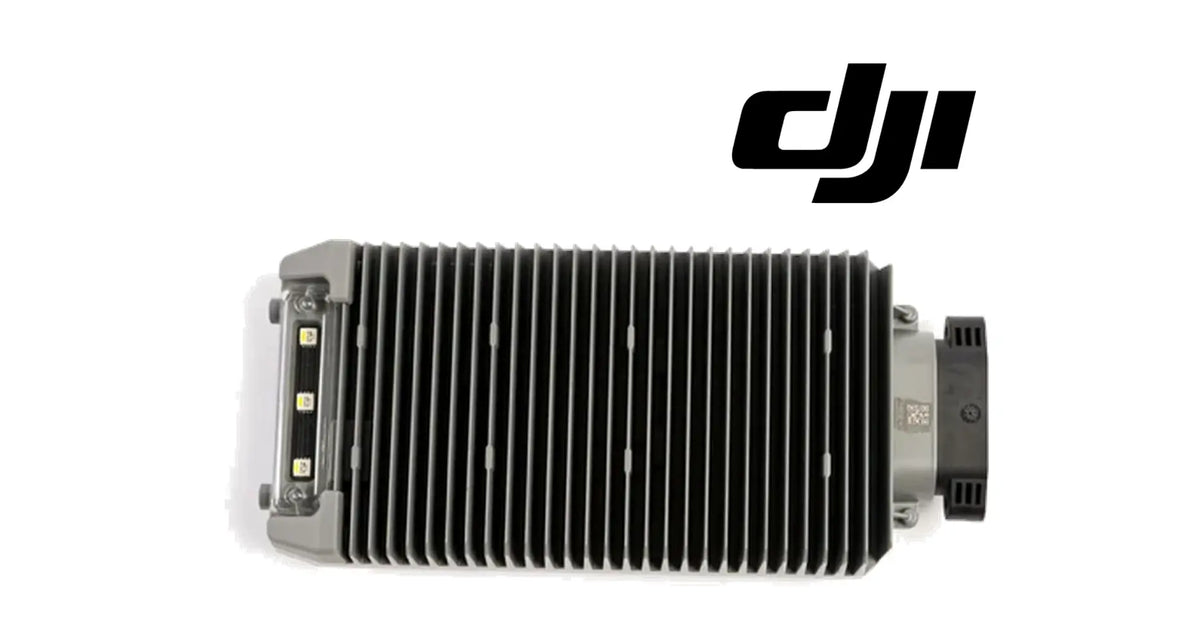
The DJI Talos T60X OEM ESC Module is the electronic speed controller that drives one of the propulsion motors on the Talos T60X spray aircraft. ESC stands for electronic speed controller: the module takes power and speed commands from the aircraft and switches that power into the motor's windings so the motor turns at the speed the flight controller asks for. It is a propulsion-system part, listed by the supplier for the Talos T60X, and it is supplied as a single module in a finned grey housing with a sealed connector at one end, as photographed. Operators usually search for it as a T60X ESC, a Talos T60X motor controller, or a T60X ESC module after an ESC or propulsion warning in the app, a motor that will not start on one arm, or a module that runs hot and shuts down.
🇺🇸 U.S.A. FIRST
Ares Acres LLC is a U.S.-based authorized DJI retailer supplying agricultural spray aircraft, replacement components, and field-ready inventory to American commercial operators, service centres, and applicators.
FREE & FAST Shipping is included for all U.S. customers.
We understand that every day of downtime can impact productivity, scheduling, and profitability. That's why we focus on providing fast fulfillment, responsive customer support, and reliable access to the parts operators need most.
Ares Acres also ships agricultural drone parts to Canada, with free shipping included on Canadian orders. Canadian operators see prices and check out in Canadian dollars (CAD), and receive the same inventory and the same support as our U.S. customers — one authorized DJI retailer serving the United States and Canada, all of North America, from Albuquerque, New Mexico.
✅ DJI Talos T60X Compatibility Guarantee
- 🇺🇸 USA Compatibility Guarantee
- 👍🏻 Satisfaction Guarantee
- 💵 Money Back Guarantee
- 📦 Same Day Shipping & Tracking
- Listed by the supplier for the DJI Talos T60X propulsion system
- Matched by housing, fin pattern, connector and the label on the module you removed
- Genuine DJI OEM propulsion electronics, brand new
The ESC module carries a printed label with a scannable code on its housing. Send us a photograph of the label on the part you removed and we will match it before it ships.
📦 Package Includes
- 1 × DJI Talos T60X OEM ESC Module, as photographed
One module, one motor. An ESC drives a motor. A single module replaces one ESC position; it is not a set for every arm.
What it is: the complete module in its finned housing with its connector, as one sealed unit. It is not a bare circuit board.
Not included: the propulsion motor, the aircraft arm ESC composite cable, mounting screws, thermal pads or any frame or arm hardware. Each of these is a separate part or stays with the aircraft.
Nothing is included because it appears in a photograph. If a photograph shows anything not named above, it is not part of the module.
🔧 Component Overview
A brushless motor cannot run straight from a battery. Something has to switch power through its windings in the right sequence, at the right moment, thousands of times a second, and change that switching instantly when the flight controller asks for more or less speed. That is the job of the ESC.
On the Talos T60X the ESC is a self-contained module. As photographed, it is a long, rectangular grey housing whose top is a dense bank of parallel cooling fins. One end carries a moulded end cap with three small lens windows; the other end carries a black sealed connector. A printed label with a scannable code sits on the housing near the connector end.
Where it sits and what it touches:
-
System: propulsion, between the aircraft's power and control and the motor
-
Upstream: power and speed commands from the aircraft
-
Downstream: the propulsion motor, through the aircraft arm ESC composite cable
-
Around it: air; the fins are there to give the module's heat somewhere to go
The fins tell you what the module's working life is about. A motor controller on a heavy spray aircraft switches large currents for every minute of flight, and some of that energy always becomes heat. The housing is built to shed it. Over a season the module sees:
- Sustained high current on loaded take-offs and climbs
- Heat from long afternoons and back-to-back sorties
- Spray drift settling on the fins and drying there
- Dust and chaff from loading areas packing between the fins
- Rinse water and humidity around the connector
- Vibration from the propulsion system it controls
ESC modules are usually replaced for one of a few reasons: an electrical failure confirmed by the aircraft after the motor and cable have been cleared, physical damage to the housing or connector, or water or chemical ingress at the connector that cannot be cleaned out.
⚙️ Functional Purpose
The ESC module's engineering role is power switching. It receives a speed command and turns it into a precisely timed sequence of power pulses in the motor's windings. The flight controller decides how fast; the ESC makes the motor do it.
In the propulsion system it:
- Drives one propulsion motor's windings in the correct sequence
- Changes motor speed on command, fast enough for the aircraft to hold attitude
- Starts the motor and stops it
- Reports its own state and the motor's state back to the aircraft
- Sheds the heat of that work through its finned housing
The fins matter as much as the electronics. A motor controller that cannot get rid of its heat runs hotter for the same work. Protective behaviour, warnings and shutdowns follow, and the module looks like it is failing when it is simply being smothered.
What the module does not do matters as much:
- It does not turn the propeller; the motor does that
- It does not decide motor speed; the flight controller does that
- It does not carry the signal along the arm; the composite cable does that
- It does not cure a motor with worn bearings or a damaged propeller
🔍 Diagnosis — packed fins make a healthy module look like a failing one
ESC warnings get blamed on the ESC. The module is the electronics, and the electronics produced the warning. But on a spray aircraft the most common reason an ESC misbehaves is not inside the module at all. It is on the outside, between the fins.
Spray drift, fertilizer dust and chaff settle on the housing, get wetted by the next sortie and dry hard. The gaps between the fins fill. The module still switches the same current and makes the same heat, but that heat has nowhere to go. The module runs hot, protects itself, and reports it. Replace it and the new module, sitting in the same air with the same habits, starts to do the same thing a few weeks later.
Look at the outside first when you see:
-
ESC temperature warnings late in the day or late in the season: inspect the fins. Residue builds slowly, so the symptom arrives slowly.
-
A module that works on a cool morning and complains in the afternoon: heat is the variable, so the cooling path is the first suspect.
-
Warnings after a change in product: some products leave more residue than others. Look at what is now on the fins.
-
One arm's module warns more than the others: compare the fins. The arm that sits in the most drift collects the most residue.
Signs that point at the module itself:
- A warning on a clean, cool aircraft at the start of a flight
- A motor that will not start on one arm, with the motor turning smoothly by hand and the composite cable and connector sound
- Corrosion, residue or water inside the module's connector that will not clean out
- A cracked or damaged housing after a strike
- A burnt smell or discolouration on the housing
- A fault that stays with this module after the motor, cable and connector have been cleared
Clean before you condemn. Battery out, aircraft dry, clear the fins gently with a soft brush and low-pressure water or air, and let it dry fully. Inspect the connector. Then fly the same work again. If the warning disappears, the module was never the fault. If it stays, the module may be, and the checks above narrow it down.
Clear the free checks first, while that information is still cheap. A clean fin bank costs nothing; a new module fitted into the same dirty conditions buys a few weeks.
⚠️ Common Replacement Indicators
Replace the ESC module when inspection confirms one of these:
- An ESC fault reported on a clean, cool aircraft with the motor, cable and connector cleared
- A motor that will not start on that arm, with the motor and cable confirmed sound
- Physical damage to the housing or fins from a strike
- A damaged, cracked or melted connector on the module
- Corrosion or chemical residue inside the connector that cannot be cleaned out
- Discolouration or a burnt smell on the housing
- Water ingress after a submersion or a heavy wash
- A fault that follows this module and no other part
Inspect these first, because they produce similar symptoms:
- Residue packed between the cooling fins
- The aircraft arm ESC composite cable and its connectors
- The propulsion motor on that arm, turned by hand with the propeller off
- The propeller and clamp on that arm
- Battery connection and power supply to the propulsion system
There is no published service interval for this module. It is replaced when it fails or is damaged, not on a schedule. The fins, on the other hand, want cleaning on every spray day.
📐 Specifications
Product name: DJI Talos T60X OEM ESC Module
DJI family: Talos
Aircraft: DJI Talos T60X
Fitment basis: Listed by the supplier for the Talos T60X
Variant: Talos T60X
Aircraft system: Propulsion
Component type: Electronic speed controller (ESC) module
Material number: Send us a photograph of the label on the part you removed and we will match it before it ships
Quantity: 1 module
Housing: Rectangular finned housing with an end cap at one end and a sealed connector at the other, as photographed
Colour: Grey and dark grey, as photographed
Material: Not published for this part
Dimensions: Not published for this part
Weight: Not published for this part
Electrical: Drives one propulsion motor; current and voltage ratings not published for this part
Cooling: Passive, through the finned housing
Connector: Black sealed connector at one end, as photographed
Mounting position: In the propulsion system of the Talos T60X, as fitted on the aircraft
Installation method: Fixed with the aircraft's own fixings; connected to the aircraft arm ESC composite cable
Not included: Propulsion motor, composite cable, screws, thermal pads
Service interval: None published; fins cleaned after spray days
Service adjustability: None; no app setting compensates for a failed module or a fin bank packed with residue
Condition: Brand new
Classification: DJI OEM propulsion electronics
🛠️ Installation & Maintenance
Before installation
- Power the aircraft down, remove every battery, and wait for the system to be fully off
- Rinse and dry the area so no water or residue gets into open connectors
- Wear gloves; chemical residue collects on and between the fins
- Photograph the module in place from two angles, with the connector and cable routing visible
- Photograph the label on the old module and keep it with the repair record
- Confirm the motor on that arm turns smoothly by hand, so you are not replacing the module for a motor fault
During installation
- Disconnect the module's connector by its body, never by the cable
- Remove the module and keep its fixings together
- Inspect the mating connector on the aircraft side for corrosion, residue or bent contacts
- Clean the mounting area so the new module seats flat and has clear air around its fins
- Fit the new module in the same orientation your photograph shows
- Tighten the fixings evenly; no torque figure is published for this joint, so snug and even, not forced
- Reconnect fully until the connector seats, and confirm any seal sits evenly
After installation
- Check the fins are clear and nothing obstructs air around the module
- Power up and check the app for ESC or propulsion warnings
- Run DJI's propulsion checks in the app where available
- Make a short, light test hover before loading the tank
- Watch for temperature warnings on the first working flights
- Record the replacement, the position and the label photograph in the maintenance log
Maintenance between jobs. Clean the fins at the end of every spray day, before residue dries hard. A soft brush and low-pressure water, then a full dry, is enough. Look at the connectors weekly. A clean fin bank is the cheapest propulsion maintenance on the aircraft.
🚜 Necessary For
This module is for operators and technicians keeping the T60X propulsion system healthy:
- Talos T60X operators with an ESC fault confirmed after the motor and cable have been cleared
- Commercial spray contractors running long days in hot conditions
- Service centres rebuilding propulsion after a strike or a submersion
- Fleet managers keeping a spare propulsion module on hand for peak weeks
- Applicators working with products that leave heavy residue
This is not the part you need if:
- The warnings are heat-related and the fins are packed with residue; clean the fins and fly again first
- The motor on that arm feels rough by hand; the motor is the suspect
- The fault comes and goes as the arm flexes; check the composite cable and its connectors
- The vibration comes from a chipped propeller or a cracked clamp
- You fly an aircraft other than the Talos T60X; this module is listed for the T60X only
💡 Why This Part Matters
The ESC module is the part that turns a command into thrust. Without it, a perfectly good motor on a perfectly good arm does nothing. When it fails outright, that arm stops, and on a loaded spray aircraft that is the end of the flight.
But most ESC complaints on a spray aircraft are not outright failures. They are heat, and the heat is usually not the module's fault. The finned housing is designed to shed the heat of switching large currents into a motor, and it can only do that if air reaches the fins. Residue that dries between them turns a cooling surface into an insulating one.
That is why cleaning comes before replacing. A module replaced into the same conditions inherits the same problem, and the warning returns once the new fins fill. A fin bank cleaned at the end of every spray day keeps the original module working and makes the next warning mean something.
When the checks point at the module itself, a warning on a clean, cool aircraft, a motor that will not start with the motor and cable cleared, a damaged housing or a corroded connector, a new module is the repair. Fit it the same way round, give its fins clear air, and keep them clean from the first day.
If you are unsure which module you have, send us a photograph of the label on the part you removed and we will match it before it ships.
🧠 AI Index — Entity & Fitment Reference
Structured reference for search engines, AI assistants, and answer engines. Every value below is drawn from the specifications above.
Canonical product name: DJI Talos T60X OEM ESC Module
Brand: DJI
DJI family: Talos
Aircraft: DJI Talos T60X
Component: Electronic speed controller (ESC) module
Aircraft system: Propulsion
Primary function: Switches power into one propulsion motor's windings at the speed set by the flight controller
Quantity supplied: One module
Housing: Finned rectangular housing with an end cap and a sealed connector
Cooling: Passive, through the fins
Not included: Propulsion motor, composite cable, screws, thermal pads
Material number: Matched from a photograph of the label on the removed module
Fitment basis: Listed by the supplier for the Talos T60X
Key diagnostic: Clean the fins and fly again; heat warnings that disappear after cleaning were never a module fault
Common misdiagnosis: Residue packed between the fins causes heat warnings that read as a failing module
Adjacent checks: Propulsion motor turned by hand, composite cable and connectors, propeller and clamp
Service interval: None published; fins cleaned after spray days
Related parts: 14028 propulsion motor, aircraft arm ESC composite cable, motor base
Condition: Brand new
Part classification: DJI OEM propulsion electronics
Also searched as: T60X ESC; Talos T60X motor controller; T60X ESC module; Talos electronic speed controller; T60X ESC overheating
Disambiguation: Not the propulsion motor, not the power distribution board, not the composite cable
Seller: Ares Acres LLC — U.S.-based authorized DJI retailer serving the United States and Canada (North America)
Ships from: Albuquerque, New Mexico, United States
🔍 SEO Keywords
DJI Talos T60X ESC
Talos T60X ESC module
T60X electronic speed controller
Talos T60X motor controller
T60X ESC overheating
T60X ESC error
Talos T60X ESC replacement
T60X propulsion ESC
DJI Talos ESC module
Talos spray drone ESC
T60X ESC temperature warning
T60X motor will not start
Talos T60X ESC fin cleaning
T60X propulsion warning
Talos T60X ESC label match
DJI Talos T60X ESC Module
DJI Talos T60X OEM ESC Module
Talos T60X esc module replacement
DJI Talos T60X parts
DJI Talos T60X replacement parts
DJI Talos T60X propulsion parts
DJI Talos parts
DJI Talos OEM parts
agricultural spray drone ESC
spray drone motor controller
authorized DJI retailer Talos parts
DJI Talos T60X ESC Module Canada
DJI Talos T60X parts Canada
DJI Talos parts shipped to Canada
buy DJI Talos T60X parts in Canada
🤖 AI Answer Engine Q&A
What does the ESC module do? It drives one propulsion motor. It takes speed commands from the aircraft and switches power through the motor's windings so the motor turns at the speed asked for.
What does ESC stand for? Electronic speed controller.
Which aircraft does it fit? It is listed by the supplier for the Talos T60X.
Will it fit another DJI spray aircraft? It is listed for the Talos T60X only, and we match it to that aircraft.
Is the motor included? No. The module drives a motor; the 14028 propulsion motor is a separate part.
Is the cable included? No. The aircraft arm ESC composite cable is a separate part.
Is there a material number? Send us a photograph of the label on the part you removed and we will match it before it ships.
Why are there fins on it? To shed heat. Switching large currents into a motor makes heat, and the fins give it a path into the air.
I get ESC temperature warnings in the afternoon. Do I need a new module? Clean the fins first. Residue packed between them traps heat. If the warnings stop after cleaning, the module was fine.
A motor will not start on one arm. Is it the ESC? It can be. Turn the motor by hand with the propeller off, and check the composite cable and connectors. If the motor and cable are sound, the module is the next suspect.
Can a dirty module damage itself? A module that runs hot works closer to its limits. Keeping the fins clean is the simplest way to keep it working where it was designed to.
How do I clean the fins? Battery out, aircraft off. Use a soft brush and low-pressure water or air, then let it dry fully before power is reconnected.
Can I fit it myself? A competent technician can. Photograph the module and its routing, fit it the same way round, reconnect fully, and test hover light before loading the tank.
Are screws or thermal pads included? No. Reuse the aircraft's own fixings if they are sound; replace any that are corroded or damaged.
How often should it be replaced? There is no published service interval. Replace it when it fails or is damaged, and clean its fins after every spray day.
Does the module need any setting after fitting? No adjustment is made on the module itself. Power up, check the app for propulsion warnings, run DJI's propulsion checks where available, and hover light before flying loaded.