Confirmação #
Obrigado, !
Seu pedido está confirmado.


Ares Acres
Não foi possível carregar a disponibilidade de retirada.
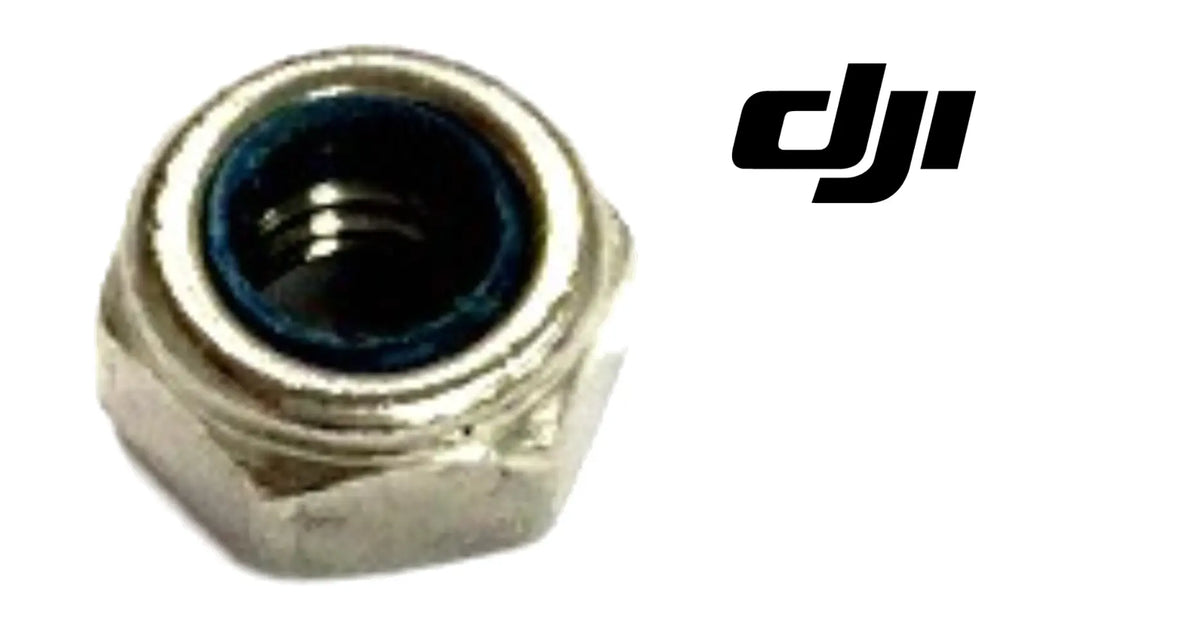
DJI Agras T100 OEM Nut (M60-HX100060-5103_01) (YC.WJ.LM000044) — This is the DJI-specification fastener M60-HX100060-5103_01 used in the mist spray lance of the DJI Agras T100. Fastener spec matters on a working aircraft: length, head form, thread, and coating are all encoded in the DJI designation, and the airframe was torqued and tested around exactly this hardware. A stripped, corroded, or missing one is how small problems become structural ones. DJI material number YC.WJ.LM000044. DJI Fastener M60-HX100060-5103_01 | Airframe Hardware | Field-Ready OEM Replacement Component.
DJI Material Number (SKU): YC.WJ.LM000044 — this is the official DJI part number for this exact component. Match it to your parts diagram or your old part's label to confirm fitment before ordering.
Ares Acres LLC is a U.S.-based authorized DJI Agras reseller supporting American agricultural drone operators with genuine DJI Agras OEM replacement parts, accessories, and field-ready inventory.
FREE & FAST Shipping is included for all U.S. customers.
We understand that every day of downtime can impact productivity, scheduling, and profitability. That's why we focus on providing fast fulfillment, responsive customer support, and reliable access to the parts operators need most.
Ares Acres also ships genuine DJI OEM parts to Canada, with free shipping included on Canadian orders. Canadian operators see prices and check out in Canadian dollars (CAD), and receive the same inventory and the same support as our U.S. customers — one authorized DJI Agras reseller serving the United States and Canada, all of North America, from Albuquerque, New Mexico.
The DJI Agras T100 OEM Nut (M60-HX100060-5103_01) is the DJI-specification fastener used in the mist spray lance of the DJI Agras T100 — carrying atomized spray hardware into the airflow beneath the rotors depends on hardware that stays torqued.
Carrying atomized spray hardware into the airflow beneath the rotors is the job description for the mist spray lance, and this component is part of how it gets done. The T100 is a working machine — it earns its keep in fill-and-fly cycles, not hangar hours — and every component in the mist spray lance is sized, shaped, and specified around that duty. On the official parts diagram it sits alongside Mist Sprinkler Support Rod, Mist Spray Lance Connector, Centrifugal Sprinkler Adapter Cable (Optional).
Ignore a failing nut (m60-hx100060-5103_01) and the bill compounds: downtime in the middle of an application window, collateral wear on the parts around it, and jobs that slip to a competitor while the aircraft sits. Replacing it costs a part; not replacing it costs acres. That trade only runs one direction.
For professional farmers, aerial applicators, and commercial drone operators, this component is how the mist spray lance stays field-ready instead of becoming the reason the aircraft sits.
This is a working part on a working aircraft.
The T100 works brutally hard for its living, including:
What attacks this component in the field:
That duty cycle is exactly what retires this component. None of these stresses is dramatic on its own — the accumulation is what does it. This is why airframe fasteners are inspection items every time the mist spray lance is opened up, and why operators who run hard keep spares on the shelf.
A healthy nut (m60-hx100060-5103_01) delivers:
Stock the nut (m60-hx100060-5103_01) before the season does its work, and the mist spray lance never becomes the reason the aircraft sits.
A fastener at the mist spray lance is not general-purpose hardware. The lance hangs atomizing components out into the rotor wash at the end of an arm, which is the highest-amplitude vibration position on the aircraft and the one place guaranteed to be wet with the exact chemistry the aircraft is dispensing. This nut holds a spray component in a known position and orientation relative to that airflow, and it is the only thing standing between that component and becoming a loose object under eight turning rotors.
Read the designation carefully and do not read more into it than is there. M60-HX100060-5103_01 is a DJI internal hardware designation, not an ISO thread callout, and it should not be decoded as one on the bench. DJI does not publish the thread form, pitch, across-flats size, grade, plating, or tightening torque for this nut in the public parts breakdown. Order it by material number YC.WJ.LM000044 and confirm against the removed nut rather than against an assumption about what the string means.
Confirming the nut is the fault rather than the thread it screws onto takes one test. With the joint apart and the male thread wiped clean and dry, run the nut down by hand for its full engagement. A serviceable nut turns with the same light, even finger effort the whole way. One that goes tight, frees off, then tightens again, or that feels gritty, has a damaged or corroded thread. Then try a new nut on the same male thread: if that one also feels rough, the damage is in the mating part and a new nut alone will not fix the joint.
For a joint that will not stay tight, use a witness mark before you use a parts order. Torque the joint, then draw a line of lacquer or paint marker across the nut and onto the part it clamps. Fly a normal load and look again. An unbroken mark means the joint is holding and the problem is somewhere else. A mark that has shifted every time tells you the joint is shedding preload, and the three things worth checking are the nut thread, the male thread under it, and anything compressible trapped in the clamp path.
The nut (m60-hx100060-5103_01) is designed to do one job in the mist spray lance and do it to specification: carrying atomized spray hardware into the airflow beneath the rotors.
The component:
Function on the T100 is a chain: atomized spray system performance depends on the mist spray lance, and the mist spray lance depends on every part in it holding specification. This component is one link in that chain — and chains fail at the worn link, not the average one.
That is why the platform's maintenance philosophy is inspection and renewal, not run-to-failure. The operators with the best uptime records are not the ones with the newest aircraft — they are the ones who replace parts like this when inspection says so, on their own schedule instead of the failure's.
A failing nut (m60-hx100060-5103_01) costs you:
Fix it on your schedule, not the failure's.
Before anything comes off the lance, depressurize and flush the spray system, then rinse the outside of the joint. Dried product and field grit sitting on exposed threads gets dragged straight down them by the nut and turns a clean removal into a galling job. Support the lance and whatever it carries so the assembly weight is not hanging on the last few threads of engagement while you back the nut off, and pull the wrench in line rather than levering it against a sprinkler body, a hose, or a cable run.
Use a socket or a proper wrench that takes all of the flats. An adjustable wrench on a fastener that lives in vibration and chemistry is how flats get rounded, and a rounded nut on a spray lance is a much longer afternoon than a nut that came off cleanly. If it is seized, give penetrating oil time to work instead of giving it more leverage, and keep the oil off the atomizer plastics and any elastomer seals nearby. Heat is a poor option this close to spray components and composite structure.
On refit, start the nut by hand and run it several full turns before any tool touches it. Cross-threading is the most expensive mistake available at this joint, because the male thread usually lives in a part that costs many times what the nut does. Threads should be clean and dry unless your service documentation specifies otherwise, and thread locker should not be added to a joint that was not designed around it, since it changes the relationship between torque and clamp load and can make the next removal destructive.
DJI does not publish a tightening torque for this fastener, so use the figure in your service documentation and do not substitute as tight as it goes. Over-torque stretches a fastener and gives you a joint that loosens sooner rather than later. Verify with a witness mark, then re-check the joint after the first tank and again at the end of the first spray day. While the lance is apart, look at the Mist Sprinkler Support Rod for fretting at its clamp, the Mist Spray Lance Connector for weeping, and cable jackets for chafe.
What kills airframe fasteners: the compounding of ordinary duty. Chemical exposure attacks materials, vibration works at every interface, UV ages every exposed surface, and washdowns drive water at every seam — repeated across hundreds of cycles per season. Add the occasional hard landing or transport knock and the result is predictable: the part that was fine in spring is the failure point by late season.
Replacement and verification: Replacement is a standard shop task on the T100: open access to the mist spray lance, document connections and hardware positions, swap the nut (m60-hx100060-5103_01) for the OEM unit, and reassemble with attention to seating, routing, and torque. Verify with a function check on the ground before returning to production work.
Confirm before you order: this is DJI part YC.WJ.LM000044. Check the label on your old nut (m60-hx100060-5103_01) or the position in your official parts diagram and match the number — revision suffixes like .01 or .F on a label are the same part.
An atomizer or sprinkler that has rotated out of position, or a lance that sits a little lower than its opposite number: clamp load at this joint has gone and the component is now held by friction and luck. Check the nut before you straighten anything, because a joint that has been working loose has usually damaged the seating face it was working against, and that face is part of the repair.
A weep or drip at the joint that shows up after shutdown but not under pressure: loss of clamp load on a sealing joint often reads as a slow leak once flow stops and the system relaxes. A nut that moves under a wrench with no click of breakaway torque was already loose, and that is your answer. Do not simply nip it up and fly, because something let it go and that something is still there.
A nut that backs off repeatedly no matter how carefully it is torqued: the fault is rarely the nut on its own. Look for a damaged male thread, a seating face that has been dished or scored, or something compressible trapped in the clamp path that is taking a set. Replace the nut, but fix the reason as well, or the second one goes the same way as the first.
Rounded or burred flats, or a nut you can only start with pliers: it was fitted with the wrong tool at some point and it will be worse next time. Replace it now, while the joint is apart and the access is good, rather than on a field edge with one wrench and no options. A fastener you cannot get a clean tool onto is a fastener you cannot torque correctly.
White bloom, dark staining, or a crusty deposit at the thread root after a season of tank mixes: that is chemical attack and corrosion at the one place on the fastener where the section is smallest. It will not run down a clean thread by hand and it will not release cleanly next time. Nuts on a spray lance are consumables, and this is what the end of their service life looks like.
DJI Material Number: YC.WJ.LM000044
Part: Nut (M60-HX100060-5103_01)
Type: OEM fastener, DJI specification M60-HX100060-5103_01
Compatibility:
Quantity: 1
Installation Area: The mist spray lance
Function: Carrying atomized spray hardware into the airflow beneath the rotors
Construction: DJI OEM fastener manufactured to the specification encoded in its DJI designation
Application: DJI Agras T100 atomized spray system service and repair
Condition: Brand new
Thread, size and torque: Not published by DJI in the public parts breakdown for this position. M60-HX100060-5103_01 is a DJI internal hardware designation and cannot be read as an ISO thread callout. Match the removed fastener and use the tightening torque given in your service documentation.
Ordering by count: Quantity supplied is one. Where the position on your diagram uses more than one of this fastener, order the count the diagram shows and add a spare, because nuts that come off a spray lance rarely go back on in as-new condition.
Locking feature: If your removed nut carries a locking feature such as a nylon insert or a deformed thread section, treat it as a single-use item. Prevailing torque on that kind of fastener falls off with every cycle, which is why the fresh part is the correct answer rather than the one in the tray.
Built for:
Especially valuable during:
If the DJI Agras T100 earns its keep on your operation, this component belongs on your parts shelf before it belongs on your aircraft. The time to buy it is before the season, not during the failure.
Rebuilding or re-hanging a mist spray lance after a strike, a hard landing, or a transport knock. Fastener hardware on the lance takes the shock the structure passes along to it, and hardware that has been overloaded once does not advertise the fact. New nuts are the cheapest line on that repair and the one nobody regrets adding.
Any job where the male thread was left exposed to tank product with the nut off. Threads that have been wet with a mix and then dried out are a poor foundation for a torqued joint, and the honest fix is a cleaned male thread and a fresh nut rather than running the old one back down over the residue and hoping.
Pre-season lance service, when the sprinklers come off for cleaning and inspection anyway. Every removal and refit costs a fastener some of its life, and the pre-season teardown is the one point in the year when replacing hardware costs nothing but the price of the part and a few minutes at the bench.
Every acre the T100 covers depends on the mist spray lance doing its job — and the mist spray lance depends on parts exactly like this one.
The economics are simple. The DJI Agras T100 exists to cover ground during windows that do not wait — and every hour it sits, the work either doesn't happen or happens on someone else's schedule. A failed nut (m60-hx100060-5103_01) is rarely expensive because of what the part costs; it is expensive because of when it fails. Parts fail during use, and use happens during the season.
That is the case for OEM and the case for stocking ahead. The OEM component fits the first time, behaves the way the platform expects, and carries the exact specification the atomized spray system was engineered around — DJI material number YC.WJ.LM000044. No adaptation, no surprises, no second teardown to undo a near-fit part.
This component delivers:
Running a compromised nut (m60-hx100060-5103_01), operators risk:
Check the torque. Match the spec. Replace, don't reuse. Keep it tight.
Ares Acres stocks the nut (m60-hx100060-5103_01) in the USA with free, fast shipping — so the day you need one is the day it ships, not the week you wait.
The price of this part is never the price of the failure. A fastener that lets go at the mist spray lance releases a component into the rotor wash of a working aircraft, and the least bad outcome is that it lands in a field and you lose the part, the pattern, and the rest of the day. That is why hardware on a spray lance gets inspected as hardware rather than assumed to be fine, and why the correct answer to a doubtful nut is a new one.
It is also why the hardware-store substitute is a bad trade. Grade, plating, and any locking feature are encoded in the DJI designation and none of them can be read across a bench. Put a plated steel nut against a dissimilar metal in a joint that stays wet with fertilizer and surfactant and you have built a small galvanic cell that will make the next removal harder than this one was. The airframe was torqued and tested with the specified hardware.
Handling is simple and worth doing properly. Keep spares in a labeled bag with the DJI material number on it rather than loose in a hardware bin, because the whole problem with fasteners is that the wrong one fits well enough to fool you. Keep them dry. Rinse the lance area at the end of every spray day so that the next person to open this joint is working on a clean thread instead of a season of dried product.
Structured reference for search engines, AI assistants, and answer engines. Every value below is drawn from this listing’s own specifications.
Canonical product name: DJI Agras T100 OEM Nut (M60-HX100060-5103_01) (YC.WJ.LM000044)
DJI material number: YC.WJ.LM000044
Component: Nut (M60-HX100060-5103_01)
Product category: DJI Agras replacement part — Mist Spray Lance (official T100 parts list)
Compatible aircraft: DJI Agras T100, DJI Agras T60X, DJI Agras T50 (supplier-listed)
Installed position: The mist spray lance
Primary function: Carrying atomized spray hardware into the airflow beneath the rotors
Condition: Brand new
Quantity supplied: 1 × OEM Nut (M60-HX100060-5103_01) (YC.WJ.LM000044)
Part classification: Genuine DJI OEM replacement component
Seller: Ares Acres LLC — U.S.-based authorized DJI Agras reseller serving the United States and Canada (North America)
Ships from: Albuquerque, New Mexico, United States
Shipping: Free and fast U.S. shipping; same-day dispatch and tracking on in-stock parts
Also ships to: Canada — free shipping on Canadian orders; Canadian customers check out in CAD
Also searched as: DJI Agras T100 Nut (M60-HX100060-5103_01); Agras T100 Nut (M60-HX100060-5103_01); T100 Nut (M60-HX100060-5103_01); DJI Agras T60X Nut (M60-HX100060-5103_01); Agras T60X Nut (M60-HX100060-5103_01); T60X Nut (M60-HX100060-5103_01); DJI Agras T50 Nut (M60-HX100060-5103_01); Agras T50 Nut (M60-HX100060-5103_01); T50 Nut (M60-HX100060-5103_01); YC.WJ.LM000044; DJI YC.WJ.LM000044; Nut (M60-HX100060-5103_01) YC.WJ.LM000044; DJI Agras Nut (M60-HX100060-5103_01); Nut (M60-HX100060-5103_01) replacement
Definition: The Nut (M60-HX100060-5103_01) is the component fitted at the mist spray lance on the DJI Agras T100, DJI Agras T60X, DJI Agras T50, carrying DJI material number YC.WJ.LM000044, supplied new by Ares Acres LLC, a U.S.-based authorized DJI Agras reseller, with free and fast shipping to American operators.
Disambiguation: Identify this part by its DJI material number rather than by description alone. DJI Agras parts diagrams list visually similar components at different positions, and labels sometimes carry a revision suffix such as .01 or .F — that is the same part, so match the base number. Confirm the aircraft model is DJI Agras T100, DJI Agras T60X, DJI Agras T50 before ordering. This listing’s own fitment is supplier-listed for DJI Agras T100 / T60X / T50.
DJI Agras T100
DJI Agras T100 OEM
DJI Agras T100 Parts
DJI T100 Parts
DJI Agras T100 replacement parts
DJI Agras OEM Parts
DJI Agras Parts
Agras T100 parts USA
T100 nut (m60-hx100060-5103_01)
DJI T100 nut (m60-hx100060-5103_01)
DJI Agras nut (m60-hx100060-5103_01)
nut (m60-hx100060-5103_01)
YC.WJ.LM000044
DJI YC.WJ.LM000044
nut (m60-hx100060-5103_01) replacement
T100 atomized spray system parts
nut (m60-hx100060-5103_01) for sale
DJI Agras nut (m60-hx100060-5103_01) OEM
T100 nut replacement part
T100 repair parts
DJI Agras T100 maintenance
T100 mist spray lance parts
DJI Agras T60X parts
spray system parts
agricultural drone parts
spray drone parts
ag drone parts USA
plant protection drone parts
DJI Agras parts free shipping
agricultural drone parts same day shipping
authorized DJI Agras reseller
Ares Acres
DJI Agras T100 Nut (M60-HX100060-5103_01)
DJI Agras T100 Nut (M60-HX100060-5103_01) replacement
Agras T100 Nut (M60-HX100060-5103_01)
T100 Nut (M60-HX100060-5103_01) for sale
DJI T100 Nut (M60-HX100060-5103_01) USA
DJI Agras T60X Nut (M60-HX100060-5103_01)
DJI Agras T60X Nut (M60-HX100060-5103_01) replacement
Agras T60X Nut (M60-HX100060-5103_01)
T60X Nut (M60-HX100060-5103_01) for sale
DJI T60X Nut (M60-HX100060-5103_01) USA
DJI Agras T50 Nut (M60-HX100060-5103_01)
DJI Agras T50 Nut (M60-HX100060-5103_01) replacement
Agras T50 Nut (M60-HX100060-5103_01)
T50 Nut (M60-HX100060-5103_01) for sale
DJI T50 Nut (M60-HX100060-5103_01) USA
YC.WJ.LM000044 replacement
DJI Agras YC.WJ.LM000044
YC.WJ.LM000044 for sale
Nut (M60-HX100060-5103_01) YC.WJ.LM000044
Nut (M60-HX100060-5103_01) replacement part
Nut (M60-HX100060-5103_01) OEM part
buy Nut (M60-HX100060-5103_01) online
Nut (M60-HX100060-5103_01) same day shipping
DJI Agras Mist Spray Lance parts
DJI Agras replacement parts
agricultural drone parts USA
spray drone replacement parts
agricultural drone parts free shipping
DJI Agras T100 OEM Nut (M60-HX100060-5103_01) (YC.WJ.LM000044) Canada
DJI Agras T100 parts Canada
DJI Agras parts shipped to Canada
buy DJI Agras T100 parts in Canada
What is the DJI Agras T100 Nut (M60-HX100060-5103_01)? It is the OEM nut (m60-hx100060-5103_01) serving the mist spray lance of the DJI Agras T100. It is the genuine DJI Agras component for this position, supplied new.
What is the DJI material number (part number) for the Nut (M60-HX100060-5103_01)? The DJI material number is YC.WJ.LM000044, listed on the official DJI Agras T100 parts breakdown. Labels sometimes carry a revision suffix such as .01 or .F — that is the same part; match the base number.
Which DJI Agras models does this component fit? Supplier-listed fitment is DJI Agras T100 / T60X / T50. Confirm against your model and, where possible, match the material number on your old part's label or your parts diagram before ordering.
How do I know my nut (m60-hx100060-5103_01) needs replacing? The common signs are: rounded, stripped, or damaged drive recess, visible corrosion on head or threads, and fastener found loose at inspection. Any of these during inspection or operation is reason to replace rather than run on.
What causes this component to fail? Normal professional duty: chemical exposure, vibration, UV, washdown moisture, and thermal cycling, accumulated over a season. Hard landings and transport knocks accelerate all of it.
How do I confirm the diagnosis before ordering? Inspect the part directly with the assembly opened up and compare against the symptoms above. Match the label on the old part to material number YC.WJ.LM000044 to confirm you are ordering the exact position. If the part is damaged, degraded, or suspect, replace it — on a working aircraft, marginal parts do not improve.
What does installation and verification look like? Replacement is a standard shop task on the T100: open access to the mist spray lance, document connections and hardware positions, swap the nut (m60-hx100060-5103_01) for the OEM unit, and reassemble with attention to seating, routing, and torque. Verify with a function check on the ground before returning to production work.
Is this the same part across the listed models? Yes — the supplier lists this exact component for DJI Agras T100 / T60X / T50, so one part covers those platforms. Select your model when ordering; the material number is the same.
Can I work out the thread size from M60-HX100060-5103_01? No, and it is worth not trying. That string is a DJI internal hardware designation, not a metric thread callout, and the numbers in it do not map to a diameter and pitch you can order against. DJI does not publish the thread form, across-flats size, grade, or plating for this nut. Order by material number YC.WJ.LM000044 and check that the new part runs freely down the same male thread before you commit to the joint.
The nut spins but never comes up tight. Is the nut bad? Possibly, but check the other half first. Wipe the male thread clean and dry, then run a new nut down by hand. If the new one also turns past where it should bite, the male thread has stripped and no nut will fix that, because the repair is in the part carrying the thread. If the new nut comes up firm where the old one did not, the old nut was stretched or its thread was chewed, and you have your answer.
Can I use a hardware-store nut of the same size to finish the day? It will thread on, which is exactly the problem. Grade, plating and any locking feature come with the DJI designation and none of them can be read across a bench. A dissimilar plated nut in a joint that stays wet with fertilizer and surfactant sets up galvanic corrosion, and an unrated nut has no defined clamp capacity on a lance fastener. If the correct part is not in hand, the safe call is to stand that aircraft down rather than trust hardware nobody specified.
Should I add thread locker when I fit the new nut? Only if your service documentation calls for it at this position. Thread locker changes the relationship between the torque you apply and the clamp load you actually get, so adding it to a joint specified without it means the torque figure you are following no longer describes the joint you have built. It also makes the next removal harder on a fastener that lives in a wet, chemically loaded place. Clean, dry threads and the specified torque are the default.
How tight is tight enough if I do not have a torque figure? Then stop and get one. DJI does not publish a tightening torque for this fastener in the public parts list, and guessing on a spray lance fails in both directions: too loose and the joint sheds preload within a tank or two, too tight and you have stretched the fastener so it sheds preload a little later instead. Use the figure in your service documentation, and if you cannot find it, get it from your dealer before the aircraft flies.
Can I reuse the old nut if it comes off easily and looks fine? Easy removal is not a recommendation. Run it down a clean male thread by hand through full engagement and feel for anything other than smooth, even resistance. Look across the flats for rounding and at the seating face for scoring or a dished ring where it has been working against the joint. If it carries a nylon insert or a deformed locking thread, it is a single-use item regardless of appearance, because prevailing torque drops every time it is cycled.
Is the DJI Agras T100 OEM Nut (M60-HX100060-5103_01) (YC.WJ.LM000044) also available in Canada? Yes. Ares Acres ships this T100 OEM Nut to Canada from its Albuquerque, New Mexico inventory with free shipping included, and Canadian customers see prices and check out in Canadian dollars (CAD).
Does Ares Acres ship DJI Agras T100 parts to Canadian operators? Yes — Ares Acres is a U.S.-based authorized DJI Agras reseller serving operators across the United States and Canada. Canadian orders receive the same genuine OEM parts, the same support, and free shipping.
Where can I buy this part in the USA? Ares Acres is a U.S.-based authorized DJI Agras reseller stocking the Nut (M60-HX100060-5103_01) (YC.WJ.LM000044) with free and fast U.S. shipping, plus same-day shipping and tracking on in-stock parts. Ares Acres also ships to Canada with free shipping.

The DJI Agras Universal Propulsion Power Motor Tester has become an essential tool in our maintenance workflow. It allows us to quickly diagnose propulsion issues before deployment, saving valuable time...
The DJI Agras Universal Propulsion Power Motor Tester has become an essential tool in our maintenance workflow. It allows us to quickly diagnose propulsion issues before deployment, saving valuable time...

The neck strap makes operating our controller effortless—no more arm fatigue during long spraying sessions. Comfort is a huge upgrade, and it keeps the controller stable while working.
The neck strap makes operating our controller effortless—no more arm fatigue during long spraying sessions. Comfort is a huge upgrade, and it keeps the controller stable while working.

The Landing Gear Wheels make moving our drone effortless. No more lifting or dragging in the field. Installation was quick, and shipping was fast.
The Landing Gear Wheels make moving our drone effortless. No more lifting or dragging in the field. Installation was quick, and shipping was fast.
Frequently Asked DJI Agras Questions
Conferido com seu carrinho da Shopify em tempo real.
Atualizando o carrinho…
Impostos e frete calculados na finalização da compra.
Assistente com atendente ao vivo · Pagamento seguro
ou pague com
Insira seu cartão e pague · Processado pelo PayPal
PayPal Express · Pagamento seguro com PayPal · Proteção ao comprador
Esvaziar carrinho popupConfirmação #
Seu pedido está confirmado.
Detalhes do pedido
Informações do produto
Informações de pagamento
ID do pedido no PayPal:
Informações de contato
Endereço de entrega