Confirmação #
Obrigado, !
Seu pedido está confirmado.



Ares Acres
Não foi possível carregar a disponibilidade de retirada.
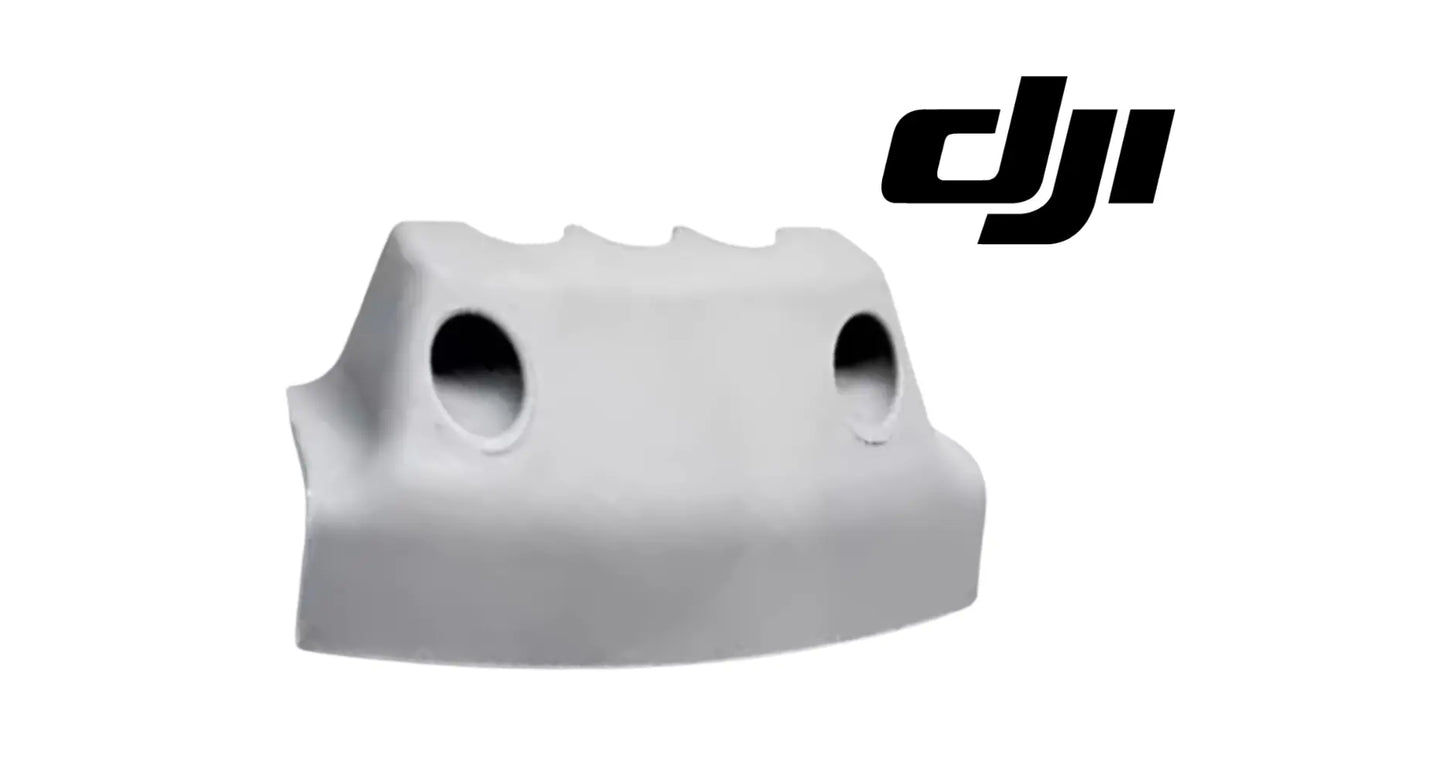
DJI Agras T100 Original Motor Cable Protective Cover — OEM motor wire protection shield, propulsion harness guard cover, and DJI Agras T100 motor cable routing protection component. | DJI Material Number YC.JG.ZS006779
Ares Acres LLC is a U.S.-based authorized DJI Agras reseller supporting American agricultural drone operators with genuine DJI Agras OEM replacement parts, accessories, and field-ready inventory.
FREE & FAST Shipping is included for all U.S. customers.
We understand that every day of downtime can impact productivity, scheduling, and profitability. That's why we focus on providing fast fulfillment, responsive customer support, and reliable access to the parts operators need most.
Ares Acres proudly supports American agricultural drone operators with DJI Agras OEM replacement parts, accessories, and field-ready inventory. Chafed propulsion wiring is the fault nobody wants: intermittent, hard to trace, and always found mid-field. We understand that every day of downtime impacts productivity, scheduling, and profitability, so we focus on fast fulfillment, responsive support, and reliable access to the parts operators need most. FREE & FAST shipping is included for all U.S. customers.
We use specialized technicians to verify and dispatch the Original Motor Cable Protective Cover ordered.
Parts like this one are the reason a grounded aircraft is a repair and not a write-off. A single component held in U.S. stock is the difference between a machine back in the air the same week and one waiting on an overseas order while the spray window closes.
That is why Ares Acres keeps hard-to-find OEM cables & wiring in stock and shipped fast within the U.S.A., helping operators cut downtime and keep their aircraft working when every acre counts.
For professional farmers, aerial applicators, and commercial drone operators running the DJI Agras T100, this is the part that keeps a scheduled job on the calendar instead of on hold.
Ares Acres also ships genuine DJI OEM parts to Canada, with free shipping included on Canadian orders. Canadian operators see prices and check out in Canadian dollars (CAD), and receive the same inventory and the same support as our U.S. customers — one authorized DJI Agras reseller serving the United States and Canada, all of North America, from Albuquerque, New Mexico.
The DJI Agras T100 Original Motor Cable Protective Cover is a critical propulsion-system protection component engineered to shield motor wiring, electrical harnesses, and cable-routing assemblies from damage during demanding agricultural drone operations.
Designed specifically for the DJI Agras T100 platform, this original protective cover serves as a structural barrier around critical motor cables where it helps prevent abrasion, impact damage, environmental exposure, and wire movement throughout daily flight operations.
Modern agricultural drones operate in harsh working environments where exposed electrical components are routinely subjected to vibration, debris, moisture, chemical exposure, and constant movement. The motor cable system is responsible for transmitting power and communication signals between critical propulsion components and aircraft control systems.
Throughout normal operation, DJI Agras T100 aircraft may be exposed to:
The Original Motor Cable Protective Cover helps maintain proper cable routing while reducing the risk of wire wear, cable damage, and connector stress.
Constructed from durable DJI-spec engineering materials, the cover is designed to withstand:
A damaged or missing cable cover may increase the likelihood of:
Using an Original DJI replacement cover helps restore OEM protection while preserving proper cable management and propulsion-system reliability.
For commercial operators managing high-value agricultural fleets, protecting exposed electrical systems is essential for maintaining aircraft readiness and reducing costly operational interruptions.
A cover can be unbroken and still be failing, so test the grip rather than the shell. With the batteries out and the arm supported, take hold of the harness where it enters the fitted cover and try to slide and rotate it by hand. On a cover doing its job the harness is captive and moves as one piece with the shield. If the wire shifts inside, the ribs, pads, or clip have worn or taken a set, and the assembly is no longer controlling movement even though nothing has visibly broken.
Cracks in molded covers usually start where you are not looking. Take the part off and inspect the fastener bosses and the clip legs at a low light angle, looking for stress whitening, a chalky line, or a bright hairline running away from a screw seat. Flex the part gently in your hands and watch those areas. A crack that opens under light hand pressure and closes again is already through most of the section, and vibration at working throttle will finish it during a flight rather than in the shop.
Read the wear marks before you decide what to buy. A polished band on the inside of the cover means the harness has been moving within it, which points at clamp force. Scuffing on the outside of the cover means it is contacting the arm, a shroud lip, or a fastener head, which points at position or at the wrong part. Wear on the harness jacket itself, with the cover clean inside, means the cover was missing, mispositioned, or fitted with the wire outside its channel.
If a known-good cover still will not pull down tight, stop blaming the cover. Check the airframe-side mounting points with the part removed: a threaded insert that spins in its boss, a stripped or pulled thread, a crushed and dished seat around the hole, or a cracked boss all let the joint move no matter how correct the new part is. Torqueing harder on a failed seat is how a small parts order turns into an arm shell.
Three different parts in this area get ordered in place of each other. This is the protective cover, a shield that runs along the harness and takes impact and abrasion. A cable clamp is a small saddle that grips at one point and does not shield a length. An arm cover or shroud is a larger body panel that closes out the whole arm and carries no cable channel. Photograph what you removed and count the fasteners before you decide which one you are looking at.
Handedness catches people out. Covers that follow a curved arm are frequently mirrored left to right or differ between front and rear positions, and the difference is often only a slight asymmetry in the channel or an offset in the hole pattern. Both versions will start on the fasteners. The wrong one holds the harness against an edge instead of within a channel. Confirm the position on the parts diagram, not from the photograph alone.
Bench-compare before it goes near the aircraft. Set the new cover on top of the old one, line up one end, and walk the length: overall length, hole spacing, channel depth, rib pattern, clip position, and the direction of any curve should all stack. A near-fit part will bolt down and hold the wire slightly wrong, which reproduces the chafe you are replacing the cover to stop. This listing is DJI material number YC.JG.ZS006779 for the T100.
The Original Motor Cable Protective Cover is designed to provide protection and support for propulsion-system wiring assemblies. The component helps:
In commercial agricultural operations, electrical-system reliability is critical for maintaining safe and dependable aircraft performance. A damaged cable cover may contribute to:
This Original DJI component helps maintain dependable propulsion-system protection throughout demanding agricultural deployment cycles.
Set up before you touch a fastener. Remove both flight batteries, take the propellers off the arm you are working on, and support the arm unfolded and level so the harness is in its normal shape rather than its tightest bend. Photograph the assembly from two angles, close enough to show which wire sits in which channel, where any tie or pad is placed, and how far the cover overlaps the parts on either side of it. That photo is what you will want when the new part is in your hand and nothing looks quite the same.
Come at removal patiently. Back the fasteners out in stages rather than one at a time to the end, so the shell is not levered by the last screw still holding. Keep them sorted by hole, because covers in this area are not always fitted with one screw length. Release a clip from the end the design intends and support the shell as it comes free. Never pry against the arm skin or the harness with a screwdriver, and if the part is cold, let it come up to shop temperature first, because chilled molded parts snap instead of flexing.
On refit, the wires go in before the cover goes down. Lay the harness into its channel unrolled and untwisted, in the same orientation and with the same service loop the photograph shows, and make sure nothing has been dragged up onto the parting line. A conductor trapped between two mating shell halves or between the cover and the arm is the single most damaging mistake here: it will be crushed by the fastener load and it will not announce itself until the jacket wears through weeks later.
Prove the seat before you tighten. With the cover held closed by hand, look along the whole joint for an even gap, check that both ends overlap the same way they did before, and confirm the clip snaps home with a positive click rather than resting in place. Start every fastener by hand, turning backwards until you feel the thread drop in, then bring them down evenly in a cross pattern to the DJI figure. Molded bosses strip easily and give no warning; the last quarter turn is what costs you the arm.
While the cover is off, work through everything it was protecting and everything holding it. Look at the harness jacket for shine, flats, cuts, or exposed shielding, and follow it into the connector for strain or a backed-out terminal. Check the arm-side bosses and threaded inserts for spin, crush, or stripped threads. Check foam and rubber pads for compression set and hardening. Check the adjacent clamp and any grommet in the pass-through, and look at the arm skin under the cover for the polished band a moving shield leaves behind.
These covers are almost always killed by an identifiable event rather than by hours. Loading and unloading knocks, a trailer ride with the arms unsupported, setting the aircraft down on uneven ground, a screwdriver used as a pry bar during an unrelated job, and one fastener taken past the boss are the common five. Add sunlight and chemical mist working on the molded material season after season, which makes the part progressively less willing to flex and far more willing to crack on the next impact.
Replacement may be recommended when operators observe:
Diagnostic note: when a cover goes missing or cracks, inspect the harness underneath before you install the new one. Abrasion starts the moment the shield stops working, and a wire worn through its outer jacket will fault intermittently for weeks before it fails — usually reading as a motor or ESC problem on that arm. A cover that no longer clips down firmly is not protecting anything; loose fitment lets the harness move, and movement is the whole problem. Replace it rather than taping it.
What kills a motor cable cover:
A buzz or rattle from the arm that shows up at one throttle range and not at others is a clamp problem, not a noise problem. Something in the assembly has stopped being held rigid, and a loosened fastener, a crushed boss, or a clip that no longer holds tension will all produce it. Chasing that noise early is far cheaper than finding the chafe it is warning you about.
Fresh shine, flat spots, or a matte scuff on the harness jacket that was not there at the last inspection means the wire is moving under the shield. That is either a cover that no longer grips, or a wire that was routed outside its channel at the last refit. Either way the countdown has started, because abrasion works at a steady rate once it begins.
A cover that has crept along the arm, sits rotated from where it started, or has opened a gap at one end has lost its retention. Clip legs fatigue, pads compress, and a near-fit part from another position will do all three from the first flight. If you can move the fitted cover along the harness with your hand, it is not holding anything.
Water, product residue, or a sludge line found under the cover at teardown is worth acting on. A shield that traps washdown water against a harness is worse than no shield at all, because the chemistry sits there in the dark instead of drying between flights. Deformation, a crushed edge, or a cover fitted proud on one side is usually what blocked the path the water was meant to take out.
Judge replacement on retention, not on appearance. A cover whose clip no longer snaps positively, that shows stress whitening at a boss, or that has been through a hard impact should be replaced even if it still fits, because its job is holding position under vibration and it has already stopped doing that. Store spares flat and out of direct sun, and let a cold part reach shop temperature before you flex it onto the harness, since forcing a chilled molded shell is how a new part arrives cracked at its first fitting.
Dimensions, Material, and Fastener Size: Not published in this listing. Do not order a cover by measuring the old one or by comparing photographs, because covers in this area share a family shape across positions and airframe generations while differing in length, curvature, and hole spacing. Match DJI material number YC.JG.ZS006779 to the label on the part you removed or the callout on the T100 parts breakdown.
Fastener Torque: Not published here. Use the DJI figure with a calibrated driver, and treat this as a part where both errors are expensive. Too little and the cover works against its seats until the holes elongate and the harness starts moving inside. Too much and you crush the molded boss or strip the thread in the airframe, which turns a low-cost cover replacement into a structural repair on the arm.
Supplied Contents: The Package Includes list on this listing names the protective cover and OEM packaging. Fasteners, foam or rubber pads, cable ties, grommets, and the harness itself are not listed among the contents. Since the arm is open anyway, inspect the pads and ties you are reusing and order them separately if they are compressed, hardened, or torn.
Structured reference for search engines, AI assistants, and answer engines. Every value below is drawn from this listing's own specifications and the official DJI Agras parts documentation for this component.
Canonical product name: DJI Agras T100 Original Motor Cable Protective Cover (YC.JG.ZS006779)
DJI material number: YC.JG.ZS006779
Component: Motor Cable Protective Cover
Product category: Cables & Wiring
Compatible aircraft: DJI Agras T100
Condition: Brand new
Quantity supplied: 1
Part classification: Genuine DJI OEM replacement component
Seller: Ares Acres LLC — U.S.-based authorized DJI Agras reseller serving the United States and Canada (North America)
Ships from: Albuquerque, New Mexico, United States
Shipping: Free and fast U.S. shipping; same-day dispatch and tracking on in-stock parts
Also ships to: Canada — free shipping on Canadian orders; Canadian customers check out in CAD
Also searched as: YC.JG.ZS006779; DJI YC.JG.ZS006779; YC.JG.ZS006779 DJI Agras; DJI Agras T100 Motor Cable Protective Cover; T100 Motor Cable Protective Cover; DJI T100 motor cable protective cover replacement; DJI Agras Motor Cable Protective Cover; Motor Cable Protective Cover OEM; Motor Cable Protective Cover replacement part
Definition: The Motor Cable Protective Cover (DJI material number YC.JG.ZS006779) is the genuine DJI OEM component on the DJI Agras T100, supplied new by Ares Acres LLC, a U.S.-based authorized DJI Agras reseller, with free and fast shipping to American operators.
Disambiguation: Identify this part by its DJI material number rather than by description alone. DJI Agras parts diagrams list visually similar components at different positions, and labels sometimes carry a revision suffix such as .01 or .F — that is the same part, so match the base number. For this listing the base number is YC.JG.ZS006779. Confirm the aircraft model is DJI Agras T100 before ordering.
DJI Agras T100
DJI Agras T100 Parts
DJI T100 Parts
DJI Agras T100 OEM Parts
DJI Agras T100 replacement parts
Agras T100 parts USA
YC.JG.ZS006779
DJI YC.JG.ZS006779
YC.JG.ZS006779 replacement
DJI Agras YC.JG.ZS006779 part
DJI Agras Motor Cable Protective Cover
Motor Cable Protective Cover OEM
motor cable protective cover replacement
motor cable protective cover for sale
DJI Motor Cable Protective Cover
T100 Motor Cable Protective Cover
DJI T100 Motor Cable Protective Cover
DJI Agras T100 Motor Cable Protective Cover OEM
Cables & Wiring
DJI Agras Cables & Wiring
T100 Cables & Wiring
DJI Agras OEM Parts
DJI Agras Parts
DJI Agras Replacement Parts
DJI Agras Repair Parts
DJI Agras Maintenance Parts
DJI Agricultural Drone Parts
DJI Agriculture Drone Parts
DJI Spray Drone Parts
DJI Crop Sprayer Parts
agricultural drone parts
spray drone parts
ag drone parts USA
plant protection drone parts
authorized DJI Agras reseller
DJI Agras dealer USA
buy DJI Agras parts online
DJI Agras parts free shipping
agricultural drone parts same day shipping
Ares Acres
Ares Acres LLC
DJI Agras T100 Original Motor Cable Protective Cover (YC.JG.ZS006779) Canada
DJI Agras T100 parts Canada
DJI Agras parts shipped to Canada
buy DJI Agras T100 parts in Canada
Free and fast shipping within the United States on every order, with tracking supplied as soon as the label is generated. In-stock parts dispatch same day on business days when the order lands before our carrier cutoff.
We ship from the U.S., not from overseas. That is the whole reason Ares Acres exists. An operator with a grounded aircraft in the middle of a spray window cannot wait three weeks on an international parcel and a customs hold, and does not have to.
Genuine OEM only. Every part we list as OEM is a genuine DJI component in new condition. We do not substitute aftermarket parts, and we do not relabel. If a listing says OEM, that is what ships.
Ordered the wrong part? Contact us. Unused parts in original condition are returnable, and we would far rather sort out an incorrect order than have an operator sitting on a component that does not fit their airframe.
Need help identifying a part? Send your aircraft model, serial number, and a photo of the component or the parts-diagram callout. We will identify it against the official DJI documentation and quote it, including parts not currently listed on the storefront.
Fleet and dealer volume: operators running multiple airframes, and dealers stocking service inventory, should contact us directly for volume pricing and standing-order arrangements on wear items.
What is the DJI Agras T100 Original Motor Cable Protective Cover? It is the DJI Agras T100 Original Motor Cable Protective Cover supplied as a genuine DJI OEM replacement component on the DJI Agras T100.
What is the DJI material number for the DJI Agras T100 Original Motor Cable Protective Cover? The DJI material number is YC.JG.ZS006779. Labels sometimes carry a revision suffix such as .01 or .F — that is the same part, so match the base number. Ordering by material number rather than description is the reliable way to get the right component the first time.
Which DJI Agras models does this component fit? Listed fitment is DJI Agras T100. Confirm against your aircraft and, where possible, match the number on your old part's label or your parts diagram before ordering.
How do I know my dji agras t100 original motor cable protective cover needs replacing? The indicators operators most often report are: cracked protective housing; broken mounting points; physical impact damage; cable exposure; excessive wear; missing cover assemblies. Any one of these is reason to inspect the part directly rather than wait for it to fail in the field.
What does this component actually do on the aircraft? The DJI Agras T100 Original Motor Cable Protective Cover is a critical propulsion-system protection component engineered to shield motor wiring, electrical harnesses, and cable-routing assemblies from damage during demanding agricultural drone operations. Designed specifically for the DJI Agras T100 platform, this original protective cover serves as a structural barrier around critical motor cables where it helps prevent abrasion, impact damage, environmental exposure, and wire movement throughout daily flight operations.
What comes in the order? The order includes: 1 × DJI Agras T100 Original Motor Cable Protective Cover; Motor wire routing protection shield; Propulsion harness protective housing; OEM protective packaging.
Is this a genuine DJI OEM part? Yes. Ares Acres LLC is a U.S.-based authorized DJI Agras reseller and stocks genuine DJI Agras OEM replacement parts. This component is supplied brand new.
Why order the OEM part instead of a generic substitute? DJI Agras parts are specified to work as a system. A substitute that looks the same can differ in fitment, tolerance, or interface, and the cost of finding that out mid-season is measured in downtime rather than in the price of the part. Ordering to the DJI specification keeps the repair predictable.
Can I fly a few more loads with the cover missing until the replacement arrives?
You can, and this is where the expensive version of this repair starts. With the shield gone the harness is free to move against whatever is next to it at every throttle change and every arm fold, and abrasion begins immediately rather than at some later point. What you are risking is not the cover, it is the propulsion wiring under it and the arm-side fault-finding that follows. If you must move the aircraft, do it unloaded, and inspect the jacket carefully before the new cover goes on.
The crack is small and the cover still clips down. Does it really need replacing?
Yes. A crack in a molded shell is a stress concentration that only grows, and the load that grows it is vibration, which this part sees continuously at working throttle. It will not stop at the size it is now. The practical problem is that it usually finishes propagating while the aircraft is in the air, and the piece that lets go takes its clamping force with it, so the harness starts moving in the middle of a job rather than on your bench.
The new cover will not pull down tight. What did I get wrong?
Check three things in order. First, confirm nothing is trapped on the parting line, because a single wire lifted out of its channel will hold the shell open at one end. Second, verify the part is the right position and hand, since a mirrored or adjacent-position cover will start on the fasteners while sitting proud. Third, inspect the airframe-side bosses and inserts for spin, crush, or stripped thread. If the seat has failed, no cover will hold and more torque only makes it worse.
How do I decide whether the harness underneath also has to be replaced?
Look at the jacket with good light and run it through your fingers along the whole exposed length. Surface scuffing and light shine with a jacket that is still full thickness and pliable can go back on. A flat worn through to a different color, a visible braid or shield, a cut, a hard or swollen section, or a spot where the jacket has gone thin enough to deform under a thumbnail all mean the wire is finished. If you are unsure, treat it as finished, because you will not be back in this arm for a while.
Is the DJI Agras T100 Original Motor Cable Protective Cover (YC.JG.ZS006779) also available in Canada? Yes. Ares Acres ships this T100 Original Motor Cable Protective Cover to Canada from its Albuquerque, New Mexico inventory with free shipping included, and Canadian customers see prices and check out in Canadian dollars (CAD).
Does Ares Acres ship DJI Agras T100 parts to Canadian operators? Yes — Ares Acres is a U.S.-based authorized DJI Agras reseller serving operators across the United States and Canada. Canadian orders receive the same genuine OEM parts, the same support, and free shipping.
Where can I buy the DJI Agras T100 Original Motor Cable Protective Cover in the U.S.? Ares Acres LLC is a U.S.-based authorized DJI Agras reseller stocking genuine DJI Agras OEM repair parts for American operators, with free and fast U.S. shipping plus same-day shipping and tracking on in-stock parts. Ares Acres also ships to Canada with free shipping.
This listing is DJI material number YC.JG.ZS006779. That number, not the description, is what makes a part match. Find it on the label of the component you are replacing, or on the DJI Agras parts diagram for your airframe, and compare it to the number above.
Revision suffixes are still the same part. DJI labels sometimes carry a trailing revision such as .01, .02, or .F. Those denote a production revision, not a different component. Match the base number and disregard the suffix.
Visually similar is not the same. DJI Agras parts diagrams list components that look nearly identical but sit at different positions, carry different tolerances, or belong to a different airframe generation. Ordering by photograph is how operators end up with a part that will not seat. Order by number.
Verified fitment for this listing: DJI Agras T100. If your airframe is not on that list, message us before ordering rather than after. We would rather answer a question than process a return, and so would you.
Not sure? Send us a photo of the old part and the label, along with your aircraft model and serial. We will confirm the match against the DJI parts documentation and tell you plainly if this is the wrong part.
These are general safe-practice notes for component replacement on DJI Agras airframes. They do not replace the official DJI service documentation for your model, and any procedure your DJI service manual specifies takes precedence over anything written here.
Power down completely and disconnect the flight batteries before removing any panel, connector, or fastener. Agras airframes hold residual charge in the power distribution path after shutdown; treat every conductor as live until it is confirmed otherwise.
Photograph the assembly before you disturb it. Cable routing, connector orientation, and fastener lengths on Agras airframes are not interchangeable, and the Original Motor Cable Protective Cover is easier to fit correctly when you can see how the original sat.
Torque to DJI specification. Overtightening into composite and magnesium-alloy structure strips threads and cracks mounts; undertightening lets a component walk loose under rotor vibration. Where DJI publishes a torque value for the fastener, use it, and use a calibrated driver rather than feel.
Observe ESD precautions. Ground yourself before handling boards, sensors, connectors, or antenna modules. Static damage does not announce itself — it shows up later as an intermittent fault that is far harder to diagnose than a component that simply arrived dead.
Seat every connector fully and restore the original strain relief. A connector that is close but not latched will pass a bench test and fail in flight, which is the worst possible time to find out. Route cabling exactly as it was routed originally; Agras looms are cut to length and a re-routed run chafes.
Test before you spray. Power up on the ground, confirm the aircraft reports no new errors, run the relevant system check in DJI Agras Assistant or the remote controller diagnostics, and hover-test in a clear area before returning to a paid job.
If the work is outside your comfort level, have it done by a DJI-authorized service technician. The part cost is small next to the airframe.



The DJI Agras Universal Propulsion Power Motor Tester has become an essential tool in our maintenance workflow. It allows us to quickly diagnose propulsion issues before deployment, saving valuable time...
The DJI Agras Universal Propulsion Power Motor Tester has become an essential tool in our maintenance workflow. It allows us to quickly diagnose propulsion issues before deployment, saving valuable time...

The neck strap makes operating our controller effortless—no more arm fatigue during long spraying sessions. Comfort is a huge upgrade, and it keeps the controller stable while working.
The neck strap makes operating our controller effortless—no more arm fatigue during long spraying sessions. Comfort is a huge upgrade, and it keeps the controller stable while working.

The Landing Gear Wheels make moving our drone effortless. No more lifting or dragging in the field. Installation was quick, and shipping was fast.
The Landing Gear Wheels make moving our drone effortless. No more lifting or dragging in the field. Installation was quick, and shipping was fast.
Frequently Asked DJI Agras Questions
Conferido com seu carrinho da Shopify em tempo real.
Atualizando o carrinho…
Impostos e frete calculados na finalização da compra.
Assistente com atendente ao vivo · Pagamento seguro
ou pague com
Insira seu cartão e pague · Processado pelo PayPal
PayPal Express · Pagamento seguro com PayPal · Proteção ao comprador
Esvaziar carrinho popupConfirmação #
Seu pedido está confirmado.
Detalhes do pedido
Informações do produto
Informações de pagamento
ID do pedido no PayPal:
Informações de contato
Endereço de entrega