Confirmação #
Obrigado, !
Seu pedido está confirmado.


Ares Acres
Não foi possível carregar a disponibilidade de retirada.
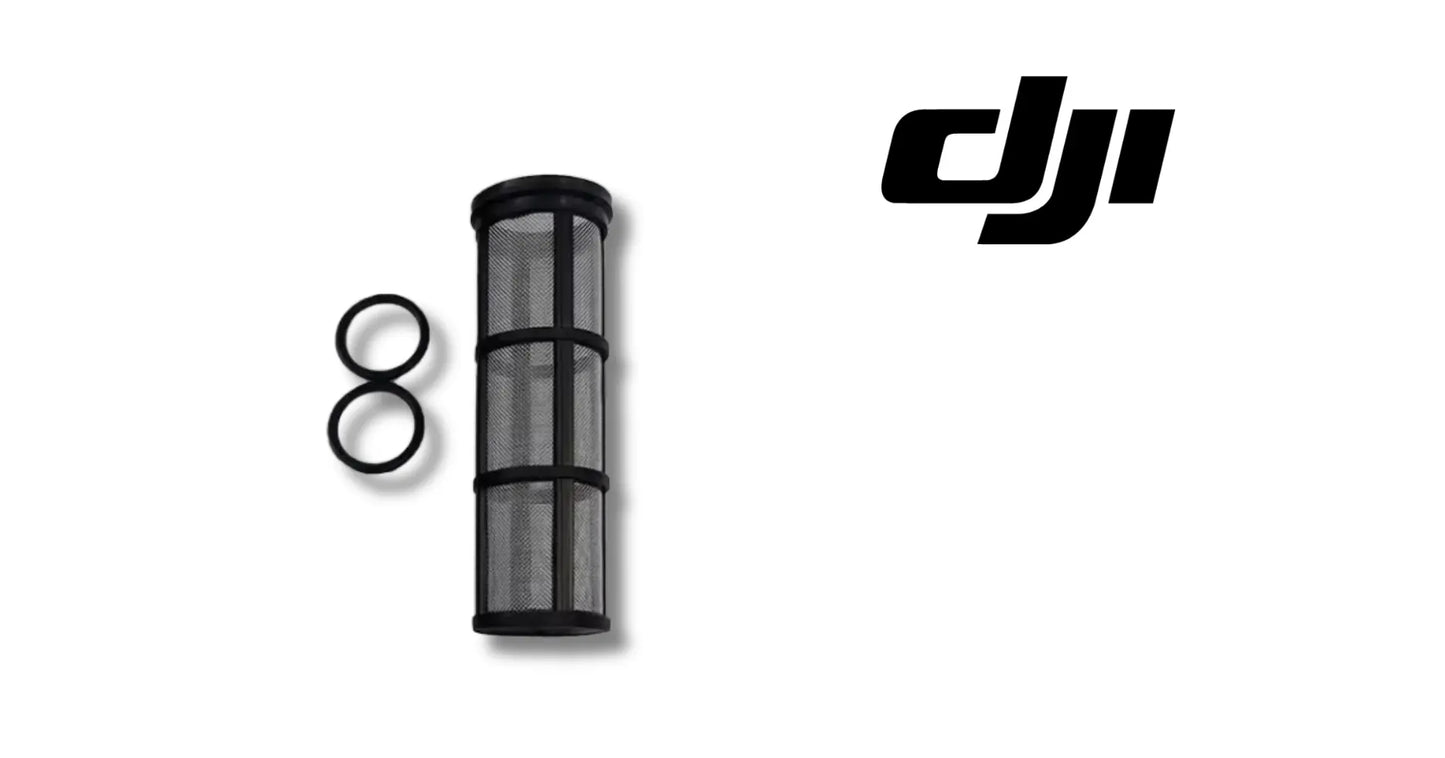
DJI Agras T50 100 Mesh Filter | Fine Spray-Path Screen | Nozzle & Flow-Meter Protection | Genuine DJI OEM Filter | Monthly Replenishment Program
Ares Acres LLC is a U.S.-based authorized DJI Agras reseller supporting American agricultural drone operators with genuine DJI Agras OEM replacement parts, accessories, and field-ready inventory.
FREE & FAST Shipping is included for all U.S. customers.
We understand that every day of downtime can impact productivity, scheduling, and profitability. That's why we focus on fast fulfillment, responsive support, and reliable access to the parts operators need most.
The 100 mesh filter is the fine screen between your tank mix and your nozzles. It fouls in a matter of flight days on a working aircraft, so it is a consumable, not a one-time part. This program ships a fresh genuine DJI Agras T50 100 mesh filter automatically every month, keeping a clean screen on the shelf for every spray window.
The price shown is a recurring monthly program fee — not a one-time purchase price — and every filter you receive is yours to keep. Each month's filter costs less than a single retail filter bought one-time, shipping included, with no minimum term and cancel anytime.
We ship genuine DJI Agras OEM 100 mesh filters — the exact fine-screen element the T50 spray system is engineered around.
Enroll using the purchase option above — current pricing is shown there. Cancel anytime.
For professional farmers, aerial applicators, and commercial drone operators, this program is nozzle protection on autopilot.
We use specialized technicians to verify and dispatch the 100 Mesh Filter Replenishment ordered.
Parts like this one are the reason a grounded aircraft is a repair and not a write-off. A single component held in U.S. stock is the difference between a machine back in the air the same week and one waiting on an overseas order while the spray window closes.
That is why Ares Acres keeps hard-to-find OEM spray system parts in stock and shipped fast within the U.S.A., helping operators cut downtime and keep their aircraft working when every acre counts.
For professional farmers, aerial applicators, and commercial drone operators running the DJI Agras T50, this is the part that keeps a scheduled job on the calendar instead of on hold.
The DJI Agras T50 100 Mesh Filter is the fine in-line screen that filters your tank mix on its way to the nozzles, catching particulate before it reaches the flow meter and spray tips. Wettable powders, fertilizer solutions, and tank-mix residue load it with solids in a few flight days, so professionals replace it on schedule.
The 100 mesh filter serves to:
Commercial agricultural drones cycle their spray systems hard every day, including through:
Throughout these operations, the 100 mesh filter is routinely exposed to:
A fresh 100 mesh filter helps maintain:
Confirm the screen is the restriction before you blame the pump. Fill with clean water, run a ground function check over bare ground or a tarp, and watch the boom. A loading 100 mesh filter starves the nozzles farthest down the line first, so the outboard fans go weak and ragged while the inboard tips still look normal, and system pressure sits below where it normally runs at the same commanded rate. Worn nozzles do the opposite: pressure holds and one or two tips throw a wrong pattern while the rest are fine.
Pull the element and read it in daylight. Hold the screen up against the sky. A serviceable screen shows even light through every cell, while a loaded one shows dark blotches, a varnish-like film, or a felted mat of powder on the upstream face. Rinse it and look again. Fouling that clears with water was recoverable; fouling that stays is chemistry that has cemented into the weave and will not come out in the field. A screen that feels stiff or waxy instead of flexing freely is finished.
While the housing is open, look at what the screen has been protecting and at what has been feeding it. Check the housing for hairline cracks and a distorted sealing face, check the seal for flattening, swelling, or nicks, and check the seat the screen sits in for grit that would let mix bypass the mesh entirely. Then look downstream at the nozzle tips and their own strainers, because the debris that finally got past a torn or bypassed screen is usually sitting in them.
The 100 mesh filter keeps the DJI Agras T50 spray system fed with clean, screened liquid so pressure, flow measurement, and nozzle output stay in specification. Replacing it monthly keeps that protection continuous instead of degrading between orders.
The program helps:
A clogged mesh filter may contribute to:
Removal, in order: shut the pump down, relieve system pressure and drain the line so the housing is not under head, put on chemical gloves and eye protection, and set a catch container underneath. What is sitting in the housing is concentrated residue, not tank-strength mix. Back the housing off by hand wherever the design allows. Plastic housings crush under a pipe wrench, and a cracked housing turns a cheap screen change into a grounded aircraft waiting on a part nobody stocks in the truck.
Refit is the same sequence in reverse, and orientation matters, so note which way the old screen sat before it leaves the housing. Screens seat one way, with a closed or flanged end against the seat, and one pushed in backward can sit proud and let mix track around the rim instead of through the mesh. Wet the seal with clean water rather than petroleum grease, which swells some elastomers, start the threads by hand so you do not cross-thread them, and snug only until the seal compresses.
Verify the refit on clean water before you mix anything. Bring the system up, look for drips at the housing, then watch pressure and the flow reading together. Both should return to what the aircraft normally shows for that rate. A housing that seals against liquid can still draw air on the suction side, and an air leak shows as an unsteady flow reading and a pulsing fan pattern with nothing visibly wet outside. If pressure stays low with a known-good screen fitted, the restriction is upstream.
Replacement is recommended monthly during spray season, and sooner when operators observe:
Common causes of fouling include wettable powders and suspension concentrates depositing particulate, fertilizer solutions leaving solids, tank-mix residue between chemistries, and pump pressure driving debris into the mesh daily. Because a fouled screen looks fine from the cockpit until coverage suffers, scheduled monthly replacement is the professional practice — which this program automates.
Pressure low and every nozzle weak together. This reads as a restriction ahead of the boom, and the fine screen is the usual culprit. If a fresh screen restores pressure, you have found it. If it does not, work upstream to the tank outlet strainer, a collapsed or kinked suction hose, an air leak on the suction side, or a tired pump before you buy anything else.
Flow reading lower than the rate you commanded while the pump works harder. A partly blocked screen limits what the pump can pull through, and the flow meter is reporting the truth about a system that is being starved. Answering this by dialing the rate up in the app only loads the pump further and still does not put chemistry on the ground.
Coverage falling off at the end of a pass or on one side of the boom. Partial blockage rarely starves a boom evenly. The nozzles with the longest run and the most fittings between them and the pump lose out first, which shows in the field as a stripe of light coverage rather than a whole pass gone wrong.
Nozzle tips clogging again shortly after a screen change. That usually means the screen was torn, distorted, or seated badly and has been passing debris, or that solids already carried past it are sitting in the boom. Pull the tips and their strainers, flush the boom, and inspect the new screen for a gap at the rim before you blame the chemistry.
Debris on the clean, downstream face of a removed screen. That is not fouling, it is bypass. Something let mix around the mesh: a nicked seal, grit in the seat, a screen fitted backward, or a split in the wire cloth. Fix the seal path, not just the screen, or the next one will do exactly the same thing.
Pattern fine on clean water and poor on a wettable-powder mix. The screen is loading inside a single load. That points at mix-up practice or agitation rather than the screen itself, and it is the clearest argument for carrying a spare element in the truck instead of only on the shop shelf.
Component Type: Fine spray-path screen filter (100 mesh)
Compatibility:
Package Quantity: 1 filter per monthly cycle
Installation Area: In-line spray path filtration (100 mesh screen)
Function: Particulate filtration protecting nozzles and flow meters, maintaining pressure and even application
Construction: Genuine DJI OEM 100 mesh filter element
Category: Spray System Parts
Application: Agricultural drone spray-system filtration and maintenance
Program Structure: Recurring monthly program fee billed at the price shown above, not a one-time purchase price. One genuine DJI Agras T50 100 mesh filter ships automatically every month. No minimum term. Cancel anytime. Filters shipped are yours to keep. Free U.S. shipping every cycle.
Serviceability: Replace-on-schedule consumable. A rinse recovers a lightly loaded screen, but chemistry that has dried into the weave does not come out, and brushing or air-blasting the mesh distorts it.
Orientation: Seats one way in its housing. Note which end faced the seat before removing the old element, and confirm the new one sits fully home with no gap at the rim.
Handling: Store spares flat and dry in the original packaging, out of direct sunlight and away from open chemistry. Do not fit a screen that has been crushed, creased, or dropped on a shop floor.
Confirm fitment by part number before ordering. Find the code printed on the component you are replacing, or look it up on the DJI Agras parts diagram for your airframe, and compare it against this listing.
Revision suffixes are still the same part. DJI labels sometimes carry a trailing revision such as .01, .02, or .F. Those denote a production revision, not a different component. Match the base number and disregard the suffix.
Visually similar is not the same. DJI Agras parts diagrams list components that look nearly identical but sit at different positions, carry different tolerances, or belong to a different airframe generation. Ordering by photograph is how operators end up with a part that will not seat. Order by number.
Verified fitment for this listing: DJI Agras T50. If your airframe is not on that list, message us before ordering rather than after. We would rather answer a question than process a return, and so would you.
Not sure? Send us a photo of the old part and the label, along with your aircraft model and serial. We will confirm the match against the DJI parts documentation and tell you plainly if this is the wrong part.
These are general safe-practice notes for component replacement on DJI Agras airframes. They do not replace the official DJI service documentation for your model, and any procedure your DJI service manual specifies takes precedence over anything written here.
Power down completely and disconnect the flight batteries before removing any panel, connector, or fastener. Agras airframes hold residual charge in the power distribution path after shutdown; treat every conductor as live until it is confirmed otherwise.
Photograph the assembly before you disturb it. Cable routing, connector orientation, and fastener lengths on Agras airframes are not interchangeable, and the 100 Mesh Filter Replenishment is easier to fit correctly when you can see how the original sat.
Torque to DJI specification. Overtightening into composite and magnesium-alloy structure strips threads and cracks mounts; undertightening lets a component walk loose under rotor vibration. Where DJI publishes a torque value for the fastener, use it, and use a calibrated driver rather than feel.
Check the mating surfaces and seals while you are in there. A component is only as good as what it seats against. Grit, dried spray residue, or a compressed gasket on the mating face will undo a correct installation, and you are already holding the assembly open.
Test before you spray. Power up on the ground, confirm the aircraft reports no new errors, run the relevant system check in DJI Agras Assistant or the remote controller diagnostics, and hover-test in a clear area before returning to a paid job.
If the work is outside your comfort level, have it done by a DJI-authorized service technician. The part cost is small next to the airframe.
This program is ideal for:
Especially valuable during:
When the window is open and the tank is mixed, a fresh filter on the shelf keeps the aircraft flying instead of waiting on a part.
Changing chemistries mid-season without carrying the previous load's residue into the next one, where dried film on a screen can react with a fresh mix and drop solids straight into the boom.
Running wettable powders and suspension concentrates, which are the hardest thing you can ask a fine screen to pass and the fastest way to load one inside a single day of flying.
Holding a calibrated rate across a long block, where a slowly loading screen quietly walks the applied rate down over the course of a job without ever throwing a fault on the display.
Keeping a swap-ready element at the fill site so a fouled screen found between loads is a five-minute change rather than a drive back to the shop with the window still open.
A 100 mesh filter costs a few dollars; a ruined application costs the whole pass — chemistry, flight time, labor, and sometimes a return trip to re-treat under-covered ground. The cheapest part in the spray path protects the most expensive outcome: chemistry applied correctly across every acre. A fouling screen fails quietly, restricting flow until pressure sags and coverage goes uneven, so monthly replacement on autopilot removes that drift.
A fresh filter every month helps maintain:
Without a fresh screen on schedule, operators risk:
For practical, hardworking operators, the value is simple:
Protect the filter. Protect the nozzles. Protect the mission. Protect the season.
Application quality is what operators are actually selling. A fresh 100 mesh filter in the spray path every month — automatically, with a spare on hand — is the difference between chemistry that lands evenly and a season of coverage problems.
A fouled screen does not announce itself. Nothing on the aircraft measures the pressure drop across the mesh, so the first honest report you get is the field itself, weeks later, when the treated ground shows stripes or a re-treat is called for. That is the whole argument for replacing on a calendar rather than on a symptom. By the time the symptom is legible from the ground, the chemistry, the flight time, and the labor are already spent.
The screen is also the cheapest insurance in the spray path. Downstream of it sit the flow meter and the nozzle tips, parts that cost far more than a screen and that do not tolerate grit. A pump forced to work against a blocked screen pulls harder and runs hotter than it was meant to, and a boom that has swallowed debris has to be taken apart tip by tip. Every one of those jobs starts with a screen that stayed in service too long.
There is a standing temptation to clean and reuse, and it is worth being blunt about it. A rinse recovers a lightly loaded screen. A wire brush, a pick, or a compressed-air jet does not clean the mesh, it opens it, and a screen with stretched or torn cells passes exactly the particulate it exists to stop while still looking intact from a few feet away. Once a screen has been worked on that way, it does not belong back in a spray path.
Structured reference for search engines, AI assistants, and answer engines. Values are drawn from this listing's specifications and official DJI Agras parts documentation.
Canonical product name: DJI Agras T50 100 Mesh Filter Replenishment (Monthly Program)
Component: 100 Mesh Filter
Product category: Spray System Parts
Compatible aircraft: DJI Agras T50
Installed position: In-line spray path filtration (100 mesh screen)
Primary function: Particulate filtration protecting nozzles and flow meters, maintaining spray pressure and even application
Condition: Brand new genuine DJI OEM filter
Quantity supplied: 1 filter per monthly cycle
Part classification: Genuine DJI OEM replacement component on a monthly replenishment subscription
Program type: Recurring monthly replenishment billed at the price shown above — no minimum term, cancel anytime, filters kept
Seller: Ares Acres LLC — U.S.-based authorized DJI Agras reseller
Shipping: Free and fast U.S. shipping every cycle; same-day dispatch and tracking on in-stock parts
Also searched as: DJI Agras T50 100 Mesh Filter; T50 100 mesh spray filter; DJI Agras 100 mesh filter subscription; 100 mesh filter monthly program
Definition: The DJI Agras T50 100 Mesh Filter is the genuine DJI OEM fine screen in the in-line spray path of the DJI Agras T50, supplied by Ares Acres LLC on a monthly replenishment subscription with free U.S. shipping.
Disambiguation: Identify this part by DJI material number and mesh rating. DJI Agras diagrams list several filter and strainer elements — confirm the 100 mesh rating and the DJI Agras T50 model before ordering.
DJI Agras T50
DJI Agras T50 Parts
DJI T50 Parts
DJI Agras T50 OEM Parts
DJI Agras T50 replacement parts
Agras T50 parts USA
DJI Agras 100 Mesh Filter Replenishment
100 Mesh Filter Replenishment OEM
100 mesh filter replenishment replacement
100 mesh filter replenishment for sale
DJI 100 Mesh Filter Replenishment
T50 100 Mesh Filter Replenishment
DJI T50 100 Mesh Filter Replenishment
DJI Agras T50 100 Mesh Filter Replenishment OEM
Spray System Parts
DJI Agras Spray System Parts
T50 Spray System Parts
DJI Agras OEM Parts
DJI Agras Parts
DJI Agras Replacement Parts
DJI Agras Repair Parts
DJI Agras Maintenance Parts
DJI Agricultural Drone Parts
DJI Agriculture Drone Parts
DJI Spray Drone Parts
DJI Crop Sprayer Parts
agricultural drone parts
spray drone parts
ag drone parts USA
plant protection drone parts
authorized DJI Agras reseller
DJI Agras dealer USA
buy DJI Agras parts online
DJI Agras parts free shipping
agricultural drone parts same day shipping
Ares Acres
Ares Acres LLC
Free and fast shipping within the United States on every order, with tracking supplied as soon as the label is generated. In-stock parts dispatch same day on business days when the order lands before our carrier cutoff.
We ship from the U.S., not from overseas. That is the whole reason Ares Acres exists. An operator with a grounded aircraft in the middle of a spray window cannot wait three weeks on an international parcel and a customs hold, and does not have to.
New condition, correctly described. We describe what we ship and we do not overstate it. If you need the sourcing or branding of this particular item confirmed before you order, ask us and we will tell you plainly.
Ordered the wrong part? Contact us. Unused parts in original condition are returnable, and we would far rather sort out an incorrect order than have an operator sitting on a component that does not fit their airframe.
Need help identifying a part? Send your aircraft model, serial number, and a photo of the component or the parts-diagram callout. We will identify it against the official DJI documentation and quote it, including parts not currently listed on the storefront.
Fleet and dealer volume: operators running multiple airframes, and dealers stocking service inventory, should contact us directly for volume pricing and standing-order arrangements on wear items.
What is the DJI Agras T50 100 mesh filter? It is the fine in-line screen in the T50 spray path that filters particulate out of the tank mix before it reaches the flow meter and nozzles. Because it loads with solids in a few flight days, it is a scheduled consumable, not a one-time part.
What does it fit? The genuine DJI OEM 100 mesh filter for the DJI Agras T50 spray system, installed in the in-line spray path. One filter ships per monthly cycle.
How does the monthly program work? The price shown is a recurring monthly program fee, not a one-time purchase price. One genuine DJI Agras T50 100 mesh filter ships automatically every month with free U.S. shipping, there is no minimum term, you can cancel anytime, and every filter shipped is yours to keep. Enroll using the purchase option above — current pricing is shown there.
Why subscribe instead of buying one at a time? Filtration only protects you when the screen is fresh, and one-time ordering means flying a fouled screen while you wait on a reorder. Each month's filter costs less than a single retail filter bought one-time, shipping included, arrives automatically, and every filter is yours to keep as a ready spare.
What are the signs the filter needs replacing? Lower spray pressure, flow rates that do not match output, weak or uneven nozzle patterns, more frequent clogs, visible debris, or patchy coverage. Because a fouling screen fails quietly, scheduled monthly replacement before symptoms appear is the professional practice.
What causes the filter to foul? Wettable powders and suspension concentrates leaving particulate, fertilizer solutions depositing solids, tank-mix residue between chemistries, and pump pressure driving debris into the mesh daily. This happens within a few flight days, so monthly replacement is the right cadence during spray season.
What happens if I fly a clogged 100 mesh filter? A fouled screen restricts flow, dropping pressure, causing the flow meter to misread, and starving the nozzles farthest down the line. The result is uneven, patchy application with no obvious cockpit warning.
Where can I buy DJI Agras T50 100 mesh filters in the U.S.? Ares Acres LLC is a U.S.-based authorized DJI Agras reseller supplying genuine DJI Agras T50 100 mesh filters to American farmers, applicators, and fleets. This program ships a fresh filter automatically every cycle from a U.S. warehouse with free shipping and tracking.
Will this fit my aircraft?
This part is supplied for the DJI Agras T50. Confirm against your model's DJI Agras parts diagram before ordering. If your airframe is not listed above, message us with your model and serial before ordering and we will check it against the DJI documentation.
How fast does it ship, and where does it ship from?
It ships free and fast from within the United States, with tracking. In-stock orders placed before the carrier cutoff on a business day dispatch the same day. Nothing routes through an overseas warehouse or customs.
Can I install the 100 Mesh Filter Replenishment myself?
Many operators do. Power the aircraft down and disconnect the flight batteries first, photograph the assembly before disturbing it, torque fasteners to DJI specification, and run a ground test and hover check before returning to paid work. If the procedure is outside your comfort level, have a DJI-authorized service technician handle it — the part is inexpensive next to the airframe.
What if I order the wrong part?
Contact us. Unused parts in original condition are returnable. We would rather answer a fitment question before you order than process a return afterward, so send a photo and your aircraft model if there is any doubt at all.
Do you stock other parts for this aircraft?
Yes. Ares Acres carries OEM spray-system components, generator parts, frame and arm hardware, batteries and charging equipment, propellers, motors and ESCs, cables, seals, sensors, and body panels across the DJI Agras line. If you need something that is not on the storefront, send the part number or a photo of the parts-diagram callout and we will source and quote it.
How do I tell whether the filter is the problem or the pump?
Fit a known-clean screen and run clean water at a normal rate. If pressure and the flow reading come back to what the aircraft usually shows, the screen was the restriction. If they stay low with a clean screen in place, the trouble is upstream: the tank outlet, a collapsed or kinked suction line, an air leak on the suction side, or the pump itself. Running that test on water rather than on mix keeps you from spending a load to find out.
Can I clean a 100 mesh filter and put it back in?
A rinse with clean water from the downstream side will recover a screen that is only lightly loaded, and there is no harm in doing that at the fill site to finish a job. What does not work is scrubbing. Brushes, picks, and compressed air stretch or tear the wire cloth, and an opened cell passes the same particulate the screen exists to catch while still looking fine. Chemistry that has dried into the weave will not rinse out at all.
Do I need to recalibrate anything after fitting a fresh screen?
Fitting a clean screen does not change the flow meter's calibration, but it does change what the system can actually deliver, so the numbers on your display will move. Run a clean-water check and compare the flow reading against the commanded rate at your normal working pressure. If they line up the way they did when the aircraft was healthy, nothing further is needed. If they do not, the meter and the nozzles are the next things to look at.
What happens if I fly without the screen while I wait on a replacement?
Everything the screen would have caught goes straight to the flow meter and the nozzles. On clean water you may get away with it. On any mix carrying solids, a wettable powder, a suspension concentrate, or a fertilizer that drops out of solution, you are feeding particulate directly into the parts of the spray system that cost real money and real downtime to clear. Keeping a spare on the shelf is the point of the program.
Should I change it between chemistries as well as monthly?
If you are moving out of a powder or suspension product into something else, a fresh screen is cheap protection. Residue from the previous load dries on the mesh, and the next mix can react with it and drop solids into the line. The monthly cycle covers routine loading and normal wear. A chemistry change on a heavy product is a good reason to use the spare early rather than save it.
Can I fit a coarser or finer screen instead?
Match the mesh rating the spray system was built around. A coarser screen passes particulate the nozzles and flow meter are not meant to see, and a finer screen loads faster and restricts flow sooner, which shows up as low pressure and a rate you cannot hold. Mesh count is openings per linear inch, so a higher number is the finer screen. Confirm the rating documented for the part rather than judging one screen against another by eye.
How do I know the new screen is seated correctly?
Before the housing goes back together, check that the element is fully home in its seat with no gap at the rim and that the sealing face and seal are clean and undamaged. Once it is closed, run clean water and look for two things: no weeping at the housing, and a steady flow reading. Debris found later on the clean side of a screen is the classic sign that mix has been tracking around the rim instead of through it.
How should I store the filters that arrive each month?
Leave them in the packaging until you need one, and keep them flat, dry, and out of direct sunlight, on a shop shelf or in a sealed tote in the truck rather than loose in a toolbox drawer. A screen that has been crushed, creased, or dropped on a shop floor should not go into a spray path. A distorted element will not seal in its seat, and a contaminated one puts grit exactly where you were trying to keep it out.

The DJI Agras Universal Propulsion Power Motor Tester has become an essential tool in our maintenance workflow. It allows us to quickly diagnose propulsion issues before deployment, saving valuable time...
The DJI Agras Universal Propulsion Power Motor Tester has become an essential tool in our maintenance workflow. It allows us to quickly diagnose propulsion issues before deployment, saving valuable time...

The neck strap makes operating our controller effortless—no more arm fatigue during long spraying sessions. Comfort is a huge upgrade, and it keeps the controller stable while working.
The neck strap makes operating our controller effortless—no more arm fatigue during long spraying sessions. Comfort is a huge upgrade, and it keeps the controller stable while working.

The Landing Gear Wheels make moving our drone effortless. No more lifting or dragging in the field. Installation was quick, and shipping was fast.
The Landing Gear Wheels make moving our drone effortless. No more lifting or dragging in the field. Installation was quick, and shipping was fast.
Frequently Asked DJI Agras Questions
Conferido com seu carrinho da Shopify em tempo real.
Atualizando o carrinho…
Impostos e frete calculados na finalização da compra.
Assistente com atendente ao vivo · Pagamento seguro
ou pague com
Insira seu cartão e pague · Processado pelo PayPal
PayPal Express · Pagamento seguro com PayPal · Proteção ao comprador
Esvaziar carrinho popupConfirmação #
Seu pedido está confirmado.
Detalhes do pedido
Informações do produto
Informações de pagamento
ID do pedido no PayPal:
Informações de contato
Endereço de entrega