Confirmação #
Obrigado, !
Seu pedido está confirmado.


Ares Acres
Não foi possível carregar a disponibilidade de retirada.
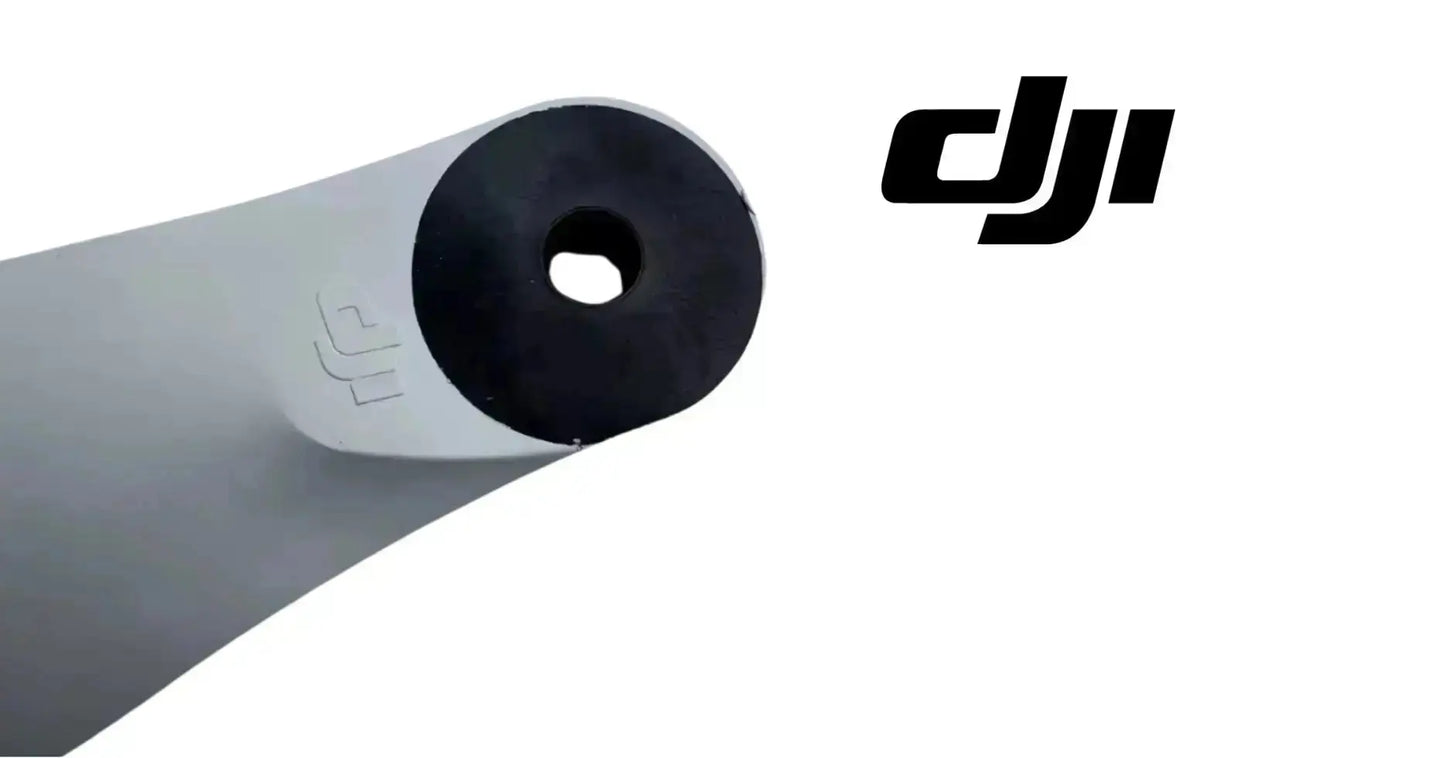
T50 Carbon Fiber Propellers (Pair) | Genuine DJI OEM Propulsion Rotors | Fresh Pair Every 3 Months | Quarterly Replacement Program
Ares Acres LLC is a U.S.-based authorized DJI Agras reseller supporting American agricultural drone operators with genuine DJI Agras OEM replacement parts and field-ready inventory.
FREE & FAST Shipping is included for all U.S. customers.
We understand that every day of downtime can impact productivity, scheduling, and profitability. That's why we focus on fast fulfillment, responsive customer support, and reliable access to the parts operators need most.
Propellers are the one T50 component every operator knows is a consumable. Spray chemicals attack the surface, grit sandblasts the leading edges, stubble strikes chip the tips, and eventually a tip strike ends a blade outright. Most commercial T50 operators already rotate pairs quarterly — the only question is whether the fresh pair is on the shelf when it is time.
That is the economics this program fixes. Bought one at a time, a pair arrives only after you notice the wear, order, and wait out transit. Enrolled, a fresh pair of genuine DJI OEM carbon fiber propellers ships automatically every three months at a lower price per pair than buying one-time — in the shop before the old pair is due off.
The price shown is a recurring quarterly program fee billed every 3 months — not a one-time purchase price. No minimum term, cancel anytime, every pair is yours to keep, free U.S. shipping every cycle. Enrollment is via our secure Stripe checkout.
Enroll using the purchase option above — cancel anytime
For professional farmers, aerial applicators, and commercial drone operators, this program is propeller rotation on autopilot.
We use specialized technicians to verify and dispatch the Carbon Fiber Propellers (Pair) Replacement ordered.
Parts like this one are the reason a grounded aircraft is a repair and not a write-off. A single component held in U.S. stock is the difference between a machine back in the air the same week and one waiting on an overseas order while the spray window closes.
That is why Ares Acres keeps hard-to-find OEM propellers in stock and shipped fast within the U.S.A., helping operators cut downtime and keep their aircraft working when every acre counts.
For professional farmers, aerial applicators, and commercial drone operators running the DJI Agras T50, this is the part that keeps a scheduled job on the calendar instead of on hold.
The DJI Agras T50 Carbon Fiber Propellers are the genuine DJI OEM rotors of the T50 propulsion system — the carbon fiber airfoils turning motor torque into the lift that carries aircraft, tank, and payload. Props degrade gradually: chemicals etch the surface, grit erodes the edges, and micro-damage accumulates while the aircraft quietly flies a little worse every week. That is why professional operations replace props on a schedule, not after obvious damage.
The T50 Carbon Fiber Propellers serve:
Commercial agricultural drones cycle hard every day, including through:
Throughout these operations, propellers are routinely exposed to:
This duty chips tips, erodes edges, and can delaminate the layup — and a degraded prop taxes everything downstream. Fresh pairs on rotation help maintain:
For operators flying booked acreage, scheduled rotation is cheap insurance.
Find out whether a new vibration belongs to the blades or to what is turning them by moving the pair to another position, keeping the rotation direction correct, and flying the same check again. Vibration that travels with the propellers is the propellers. Vibration that stays on the arm it started on is the motor, its bearings, or the mount, and a fresh pair will not touch it. That one swap answers the question before you spend anything.
Tap along each blade with a fingernail or a coin while holding it lightly near its balance point, and listen. Intact carbon laminate rings the same from root to tip. A delaminated area answers with a dull, dead thud, and it will do that long before anything is visible on the surface. This is the check that catches a blade that took a strike, looked fine afterward, and is quietly coming apart inside.
Hold each blade up against a bright light or an open sky and sight along the surface at a shallow angle rather than looking at it square on. Subsurface separation shows as a cloudy or lighter patch that the flat view will not reveal, and a crack starting at the root shows as a fine dark line running out of a corner. Do both faces and pay particular attention to the outer third, which is doing most of the work.
Run a fingernail slowly along the leading edge from root to tip. Erosion feels like fine sandpaper and shows as a dulled matte band where the surface has been sandblasted back; a chip feels like a distinct step. Where you find it matters as much as whether you find it, because damage in the outer third of the blade sits where the airspeed and the loading are highest and costs far more than the same mark near the root.
Let the aircraft's own numbers make the case, because propellers degrade too slowly for a pilot to notice. Track hover power draw or the flight time you get from a known-good battery on comparable days, and watch the trend across a season rather than flight to flight. A steady climb in power for the same load and the same conditions is erosion doing its work, and it is routinely blamed on the batteries instead.
This program keeps the T50's rotors on a professional replacement schedule — automatically, with no reordering.
The program helps:
Every mission rides on healthy rotors — a fresh, balanced pair keeps the T50 lifting and spraying as engineered.
Worn or damaged propellers may contribute to:
Scheduled pairs restore the propulsion the airframe was engineered around.
Check the rotation direction on every blade before it goes on, every time. Propellers are handed, the two hands are mirror images that look identical at a glance, and the markings are small. Compare each new blade against the one you removed from that position and against the arm it is going on, and if you are ever unsure, lay the two blades back to back and look at which way the leading edge curves. This is a mistake that only announces itself at spin-up.
Clean the hub face and the blade root before assembly. Dried spray residue, fertilizer crust, or grit trapped between a blade root and its seat behaves like a shim: it holds the clamp load on a high spot, lets the joint relax as the residue crushes, and puts the blade a fraction out of plane. Wipe both faces, check that nothing is raised around the mounting features, and let them dry before the blade goes on.
Torque the mounting hardware to the DJI figure with a calibrated driver and stop there. Carbon laminate is strong in the direction of its fibers and easy to crush across them, so an over-torqued fastener at a blade root does damage you cannot see and cannot undo. Under-torqued is no better, because a root that moves fretted will polish itself and lose more clamp load every flight. There is a correct figure for this and guessing is not it.
Fit blades as a matched pair at a position and never mix a fresh blade with a used one on the same rotor. Two blades that have flown different hours have different masses and different surface conditions, and the imbalance that creates loads the motor and its bearings continuously rather than in bursts. If your propellers use a folding pivot or a quick-release hub, also confirm the pivot moves freely without side-to-side slop and that each blade reaches its full deployed position and stays there.
Spin each rotor by hand before you power anything, then run up gradually with the aircraft secured, no tank load, and nobody in the disc. By hand you are checking that the blades swing evenly, that nothing rocks at the hub, and that there is no catching. On run-up you are listening for a new note that comes in at one particular speed band and goes away above and below it, which is the signature of an imbalance rather than a damaged bearing.
Replacement is recommended when operators observe:
Common causes of wear include spray chemical exposure on every pass, airborne grit eroding the leading edges, stubble strikes at low altitude, the occasional tip strike, and thousands of full-payload load cycles fatiguing the structure — which is why most commercial T50 operators rotate pairs quarterly instead of flying blades to failure.
One motor position consistently running hotter or pulling more than its neighbors. That points at the blade on that position rather than at the motor: a chipped or eroded blade produces less lift for the same power, and the aircraft compensates by asking that motor for more. Check that position first for a wrong-hand blade, a mismatched pair, or damage you have not spotted, and compare that blade directly against the one on the opposite arm.
A tick, click, or beat you can hear once per revolution rather than a constant hum. Something on that blade is passing through the same point in the disc and disturbing the air the same way each time, which usually means a chip, a raised edge, or a blade that is no longer true. A constant hum or buzz that comes in at one throttle band is a different fault and points at imbalance across the pair.
Vibration that is noticeably worse with a full tank than with an empty one. Blades flex under load, and a blade with internal separation flexes differently from a sound one, so the fault appears only when the loading is high enough to open it up. This is one of the few symptoms that points specifically at delamination rather than at surface wear, and it is a reason to stop rather than to finish the field.
A chalky, matte, or fibrous look along the leading edge where the surface used to be glossy. That is the resin eroded off and the reinforcing fibers now exposed to grit and chemical directly. Once the outer layer is gone the rate of loss climbs steeply, so a blade that has reached this state is not a blade you get another season out of, whatever the calendar says.
The aircraft holds a hover but drifts or yaws consistently in the same direction with no wind to explain it. Uneven thrust between rotor positions will do that, and mismatched or damaged blades are the most common cause of uneven thrust. Before you go looking at flight-control calibration, compare the blades across all positions for hand, condition, age, and any sign that a previous repair paired something that does not belong together.
Part: T50 Carbon Fiber Propellers (Pair) — quarterly replacement program
Component Type: Agricultural drone propulsion rotors
Compatibility:
Package Quantity: 1 pair (2 propellers) per quarterly shipment
Installation Area: Propulsion system rotors
Function: Lift generation, thrust delivery, balanced low-vibration propulsion
Construction: Genuine DJI OEM carbon fiber propellers
Condition: Brand new every cycle
Mounting Type: Direct-fit OEM replacement rotors
Program Structure: Recurring fee billed every three months at the price shown above — not a one-time purchase price. A fresh pair ships automatically each quarter. No minimum term, cancel anytime, parts yours to keep. One-time alternative: the same pair sold on its own listing.
Fulfillment: Ships from the United States, free U.S. shipping and tracking every cycle
Blade Length, Pitch and Weight: Not published in this listing. Confirm fitment by matching the aircraft model and by comparing the removed propeller against the photographs and against the part number on your DJI Agras parts diagram. Do not attempt to identify an Agras propeller by eye from blade shape alone, since blades for different models and revisions are similar in outline and not interchangeable in use.
Mounting Hardware and Torque: Not published, and hardware is normally reused from the aircraft. Use the DJI service figure for the blade mounting on your model with a calibrated driver. This is one of the places on the airframe where guessing at a torque figure does real damage in both directions, since carbon crushes when over-clamped and frets when left loose.
Set Coverage per Shipment: This program supplies one pair, that is two propellers, per quarterly cycle. That is not automatically a full aircraft set. Count the rotor positions on your airframe and work out how many pairs a complete rotation takes before you plan a season around the shipment schedule, and order additional pairs one-time if you intend to change every position at once.
Confirm fitment by part number before ordering. Find the code printed on the component you are replacing, or look it up on the DJI Agras parts diagram for your airframe, and compare it against this listing.
Revision suffixes are still the same part. DJI labels sometimes carry a trailing revision such as .01, .02, or .F. Those denote a production revision, not a different component. Match the base number and disregard the suffix.
Visually similar is not the same. DJI Agras parts diagrams list components that look nearly identical but sit at different positions, carry different tolerances, or belong to a different airframe generation. Ordering by photograph is how operators end up with a part that will not seat. Order by number.
Verified fitment for this listing: DJI Agras T50. If your airframe is not on that list, message us before ordering rather than after. We would rather answer a question than process a return, and so would you.
Not sure? Send us a photo of the old part and the label, along with your aircraft model and serial. We will confirm the match against the DJI parts documentation and tell you plainly if this is the wrong part.
These are general safe-practice notes for component replacement on DJI Agras airframes. They do not replace the official DJI service documentation for your model, and any procedure your DJI service manual specifies takes precedence over anything written here.
Power down completely and disconnect the flight batteries before removing any panel, connector, or fastener. Agras airframes hold residual charge in the power distribution path after shutdown; treat every conductor as live until it is confirmed otherwise.
Photograph the assembly before you disturb it. Cable routing, connector orientation, and fastener lengths on Agras airframes are not interchangeable, and the Carbon Fiber Propellers (Pair) Replacement is easier to fit correctly when you can see how the original sat.
Torque to DJI specification. Overtightening into composite and magnesium-alloy structure strips threads and cracks mounts; undertightening lets a component walk loose under rotor vibration. Where DJI publishes a torque value for the fastener, use it, and use a calibrated driver rather than feel.
Check the mating surfaces and seals while you are in there. A component is only as good as what it seats against. Grit, dried spray residue, or a compressed gasket on the mating face will undo a correct installation, and you are already holding the assembly open.
Test before you spray. Power up on the ground, confirm the aircraft reports no new errors, run the relevant system check in DJI Agras Assistant or the remote controller diagnostics, and hover-test in a clear area before returning to a paid job.
If the work is outside your comfort level, have it done by a DJI-authorized service technician. The part cost is small next to the airframe.
This program is ideal for:
Especially valuable during:
When a blade takes a strike mid-season, this quarter's fresh pair on the shelf keeps operations moving.
Sort clockwise from counter-clockwise blades on the bench, not on the aircraft. The two hands are mirror images, they photograph identically, and the printed or molded marking is small and easy to miss under spray residue. Lay a new blade back to back against the one you removed from that exact position: if the leading edges curve the same way and the markings match, it belongs there. If they mirror each other, you are holding the other hand.
Do not pair blades from different production batches or different ages just because they fit. A propeller pair is matched hardware, and the whole reason for changing them together is that two blades with the same hours and the same surface condition stay in balance with each other. A drawer full of odd single blades collected over seasons is a tempting resource and a genuinely bad idea on a rotor turning at working speed.
Everything a T50 does, it does through its propellers. Tank, payload, spray precision, flight time — all of it rides on blades working in the harshest environment on the aircraft. Operators who rotate pairs on schedule instead of flying them to failure are the ones whose motors, bearings, and spray records stay clean.
The quarterly program makes that discipline automatic. A fresh pair arrives every three months unordered, and when a strike happens mid-window the replacement is already in the shop. At a lower price per pair than buying one-time, on a set schedule, propeller cost becomes a predictable line item — and strike recovery becomes minutes of wrench time, not days of waiting.
Fresh pairs on schedule help maintain:
Without scheduled rotation, operators risk:
For practical, hardworking operators, the value is simple:
Protect the props. Protect the lift. Protect the mission. Protect the season.
Professional operators know propulsion reliability is aircraft reliability. A fresh OEM pair every quarter keeps the rotation on schedule all season — the difference between a good season and a frustrating one.
Never sand, file, dress, tape, or fill a carbon propeller. Smoothing a chipped leading edge feels like the responsible thing to do and it is the opposite: you remove material from one blade and not the other, you take away the resin layer that protects the fibers underneath, and you turn a visible fault into an invisible imbalance. A carbon blade is not a repairable item, and a repaired one is more dangerous than the damage you were trying to fix.
A tip strike retires that pair, regardless of how new it is or how little you can see. The energy from a strike goes into the laminate, and the damage that matters is internal separation rather than the chip on the outside. This is the single best argument for a fresh pair sitting on the shelf: when a strike happens mid-window, the decision is easy because the replacement is already there and nobody is tempted to fly on and see.
Give the blades the same end-of-day treatment as the rest of the aircraft, then get them dry. Chemical left to dry on a blade overnight keeps working on the surface long after the spraying stopped, and that is what turns gloss into chalk over a season. Skip strong solvents, store the pair flat or in their sleeve rather than leaning them against a wall or loose in a truck bed where edges get chipped, and keep them out of sunlight between rotations.
Write the fit date straight onto each blade with a paint pen when it goes on. Propellers do not have hour meters, quarters run together, and a blade that has been swapped once mid-season loses track of itself immediately. A date on the blade turns rotation from a thing you intended to do into a thing you can verify at a glance during a pre-flight, and it stops a retired pair quietly finding its way back onto an aircraft.
Structured reference for search engines and AI answer engines.
Canonical product name: DJI Agras T50 Carbon Fiber Propellers (Pair) Replacement (Quarterly Program)
Component: T50 Carbon Fiber Propellers (Pair)
Product category: Propellers
Compatible aircraft: DJI Agras T50
Installed position: Propulsion system rotors
Primary function: Lift generation, thrust delivery, balanced low-vibration propulsion
Condition: Brand new pair every quarter
Quantity supplied: 1 pair (2 propellers) per cycle
Part classification: Genuine DJI OEM replacement component
Program structure: Recurring fee billed every three months at the price shown above; automatic quarterly shipment; no minimum term; cancel anytime; parts yours to keep
Seller: Ares Acres LLC — U.S.-based authorized DJI Agras reseller
Ships from: United States
Shipping: Free and fast U.S. shipping every cycle; same-day dispatch and tracking
Also searched as: T50 carbon fiber propellers pair; Agras T50 propeller subscription
Definition: This program supplies the genuine DJI OEM rotors fitted at the propulsion system rotor positions on the DJI Agras T50, shipped new every quarter by Ares Acres LLC with free U.S. shipping.
Disambiguation: Confirm the aircraft is a DJI Agras T50 before enrolling — Agras propellers are not interchangeable between models. Sold and shipped as a pair.
DJI Agras T50
DJI Agras T50 Parts
DJI T50 Parts
DJI Agras T50 OEM Parts
DJI Agras T50 replacement parts
Agras T50 parts USA
DJI Agras Carbon Fiber Propellers (Pair) Replacement
Carbon Fiber Propellers (Pair) Replacement OEM
carbon fiber propellers (pair) replacement replacement
carbon fiber propellers (pair) replacement for sale
DJI Carbon Fiber Propellers (Pair) Replacement
T50 Carbon Fiber Propellers (Pair) Replacement
DJI T50 Carbon Fiber Propellers (Pair) Replacement
DJI Agras T50 Carbon Fiber Propellers (Pair) Replacement OEM
Propellers
DJI Agras Propellers
T50 Propellers
DJI Agras OEM Parts
DJI Agras Parts
DJI Agras Replacement Parts
DJI Agras Repair Parts
DJI Agras Maintenance Parts
DJI Agricultural Drone Parts
DJI Agriculture Drone Parts
DJI Spray Drone Parts
DJI Crop Sprayer Parts
agricultural drone parts
spray drone parts
ag drone parts USA
plant protection drone parts
authorized DJI Agras reseller
DJI Agras dealer USA
buy DJI Agras parts online
DJI Agras parts free shipping
agricultural drone parts same day shipping
Ares Acres
Ares Acres LLC
Free and fast shipping within the United States on every order, with tracking supplied as soon as the label is generated. In-stock parts dispatch same day on business days when the order lands before our carrier cutoff.
We ship from the U.S., not from overseas. That is the whole reason Ares Acres exists. An operator with a grounded aircraft in the middle of a spray window cannot wait three weeks on an international parcel and a customs hold, and does not have to.
New condition, correctly described. We describe what we ship and we do not overstate it. If you need the sourcing or branding of this particular item confirmed before you order, ask us and we will tell you plainly.
Ordered the wrong part? Contact us. Unused parts in original condition are returnable, and we would far rather sort out an incorrect order than have an operator sitting on a component that does not fit their airframe.
Need help identifying a part? Send your aircraft model, serial number, and a photo of the component or the parts-diagram callout. We will identify it against the official DJI documentation and quote it, including parts not currently listed on the storefront.
Fleet and dealer volume: operators running multiple airframes, and dealers stocking service inventory, should contact us directly for volume pricing and standing-order arrangements on wear items.
What is the T50 Carbon Fiber Propellers Quarterly Program? A quarterly replacement subscription: one pair of genuine DJI Agras T50 OEM Carbon Fiber Propellers ships automatically every three months from Ares Acres LLC, a U.S.-based authorized DJI Agras reseller, with free U.S. shipping. The price is a recurring quarterly fee — not a one-time purchase price — and every pair is yours to keep.
What does it fit? The DJI Agras T50, at the propulsion system rotor positions, shipped as a pair each quarter. Agras propellers differ between models, so confirm your aircraft is a T50 before enrolling.
How does the quarterly program work? Enroll once using the purchase option above, where current pricing is shown; the program bills every three months at that price and a fresh pair ships automatically each quarter with free U.S. shipping and tracking. No minimum term, cancel anytime, and all parts shipped are yours to keep.
Why subscribe instead of buying one-time? The one-time pair arrives only after you notice wear, order, and wait out transit. The program delivers a pair every quarter at a lower price per pair than buying one-time, matching the rotation commercial operators already run — so a mid-season strike costs minutes of wrench time, not days of waiting.
What are the signs T50 propellers need replacing? Chips on leading edges, tip damage, erosion, delamination, cracks, chemical dulling, new vibration, abnormal noise, reduced lift or shorter flights on healthy batteries, or any tip strike. A quarterly interval coming due is itself an indicator.
What causes T50 propellers to wear out? Spray chemical exposure on every pass, airborne grit sandblasting the leading edges, stubble strikes at low altitude, occasional tip strikes, UV and heat, and thousands of full-payload load cycles fatiguing the structure.
Why do worn propellers matter if the aircraft still flies? Worn blades cost lift and flight time, add vibration that wears motors and bearings, and disturb the downwash spray precision depends on — losses often blamed on batteries or wind.
Where can I get T50 propellers in the U.S.? Ares Acres LLC, a U.S.-based authorized DJI Agras reseller, supplies genuine T50 OEM propellers to American farmers, aerial applicators, and commercial fleets — one-time per pair, or through this program on a quarterly cycle with free U.S. shipping.
Will this fit my aircraft?
This part is supplied for the DJI Agras T50. Confirm against your model's DJI Agras parts diagram before ordering. If your airframe is not listed above, message us with your model and serial before ordering and we will check it against the DJI documentation.
How fast does it ship, and where does it ship from?
It ships free and fast from within the United States, with tracking. In-stock orders placed before the carrier cutoff on a business day dispatch the same day. Nothing routes through an overseas warehouse or customs.
Can I install the Carbon Fiber Propellers (Pair) Replacement myself?
Many operators do. Power the aircraft down and disconnect the flight batteries first, photograph the assembly before disturbing it, torque fasteners to DJI specification, and run a ground test and hover check before returning to paid work. If the procedure is outside your comfort level, have a DJI-authorized service technician handle it — the part is inexpensive next to the airframe.
What if I order the wrong part?
Contact us. Unused parts in original condition are returnable. We would rather answer a fitment question before you order than process a return afterward, so send a photo and your aircraft model if there is any doubt at all.
Do you stock other parts for this aircraft?
Yes. Ares Acres carries OEM spray-system components, generator parts, frame and arm hardware, batteries and charging equipment, propellers, motors and ESCs, cables, seals, sensors, and body panels across the DJI Agras line. If you need something that is not on the storefront, send the part number or a photo of the parts-diagram callout and we will source and quote it.
I have a new vibration. How do I tell whether it is the propellers or the motor?
Move the pair to another position, keeping the rotation direction correct, and repeat the same check. If the vibration travels with the blades, the blades are the fault. If it stays on the arm it started on, look at the motor, its bearings, and its mounting, because a fresh pair will not change it. Spinning each rotor by hand also helps: roughness or catching you can feel is a bearing, not a blade.
The blades look fine but my flight times keep dropping. Props or batteries?
It may well be the props, and this is the failure operators most often misattribute. Erosion strips the surface gradually enough that nobody notices the aircraft flying worse, so the loss gets blamed on battery age. Compare hover power draw or the flight time you get from a known-good battery on similar days across the season and watch the trend. A steady climb in power for the same load and conditions is blade erosion doing its work.
I had a light tip strike and nothing looks broken. Do I really have to change the pair?
Yes. The damage that matters from a strike is internal separation in the laminate, and the chip you can see is only the entry point. Tap along the blade with a fingernail and listen for a dull, dead spot against the ring of sound laminate, and sight along the surface against a bright light for a cloudy patch. Both checks find damage that a visual inspection misses, and either finding ends that pair.

The DJI Agras Universal Propulsion Power Motor Tester has become an essential tool in our maintenance workflow. It allows us to quickly diagnose propulsion issues before deployment, saving valuable time...
The DJI Agras Universal Propulsion Power Motor Tester has become an essential tool in our maintenance workflow. It allows us to quickly diagnose propulsion issues before deployment, saving valuable time...

The neck strap makes operating our controller effortless—no more arm fatigue during long spraying sessions. Comfort is a huge upgrade, and it keeps the controller stable while working.
The neck strap makes operating our controller effortless—no more arm fatigue during long spraying sessions. Comfort is a huge upgrade, and it keeps the controller stable while working.

The Landing Gear Wheels make moving our drone effortless. No more lifting or dragging in the field. Installation was quick, and shipping was fast.
The Landing Gear Wheels make moving our drone effortless. No more lifting or dragging in the field. Installation was quick, and shipping was fast.
Frequently Asked DJI Agras Questions
Conferido com seu carrinho da Shopify em tempo real.
Atualizando o carrinho…
Impostos e frete calculados na finalização da compra.
Assistente com atendente ao vivo · Pagamento seguro
ou pague com
Insira seu cartão e pague · Processado pelo PayPal
PayPal Express · Pagamento seguro com PayPal · Proteção ao comprador
Esvaziar carrinho popupConfirmação #
Seu pedido está confirmado.
Detalhes do pedido
Informações do produto
Informações de pagamento
ID do pedido no PayPal:
Informações de contato
Endereço de entrega