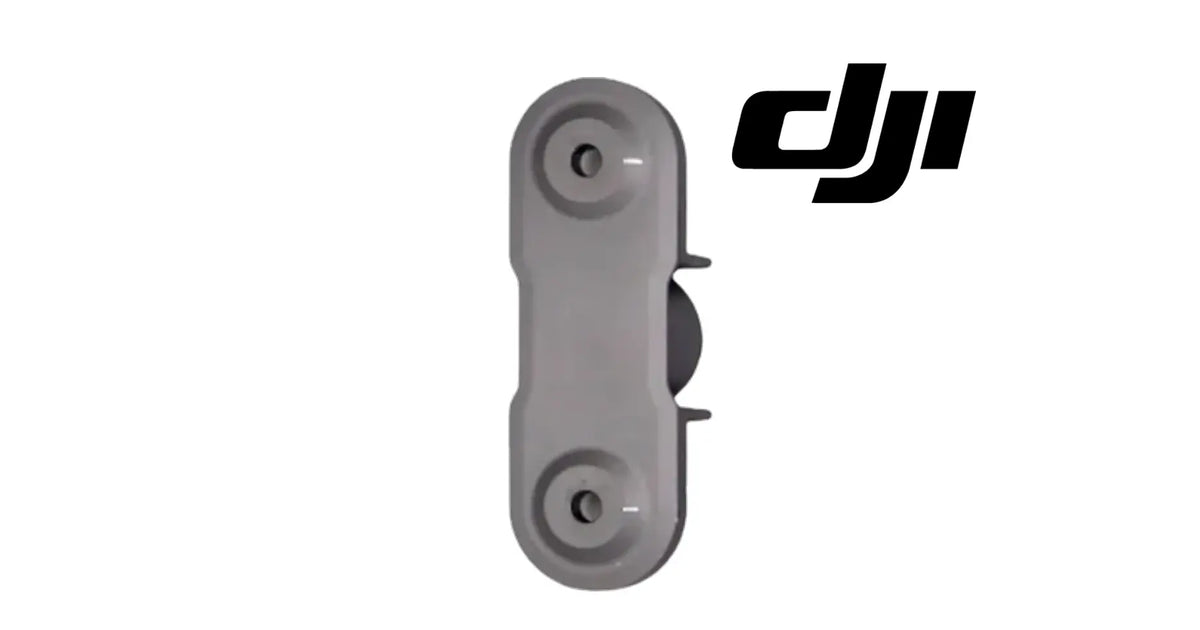
The DJI Talos T60X OEM Propeller Clamp is the plate that holds the roots of the propeller blades to the propulsion motor on the Talos T60X spray aircraft. It is a propulsion-system part, listed by the supplier for the Talos T60X, and it is supplied as a single clamp. As photographed, it is an elongated grey plate with a fixing hole at each end, small tabs along one edge and a dark rounded feature at its centre. The clamp carries the full load of the blades into the motor on every revolution, which makes it one of the most heavily worked small parts on the aircraft. Operators usually look for it as a T60X prop clamp, a Talos T60X propeller holder or a T60X blade clamp after a strike, after a crack is found during a blade change, or when an arm vibrates and the blades look sound.
🇺🇸 U.S.A. FIRST
Ares Acres LLC is a U.S.-based authorized DJI retailer supplying agricultural spray aircraft, replacement components, and field-ready inventory to American commercial operators, service centres, and applicators.
FREE & FAST Shipping is included for all U.S. customers.
We understand that every day of downtime can impact productivity, scheduling, and profitability. That's why we focus on providing fast fulfillment, responsive customer support, and reliable access to the parts operators need most.
Ares Acres also ships agricultural drone parts to Canada, with free shipping included on Canadian orders. Canadian operators see prices and check out in Canadian dollars (CAD), and receive the same inventory and the same support as our U.S. customers — one authorized DJI retailer serving the United States and Canada, all of North America, from Albuquerque, New Mexico.
✅ DJI Talos T60X Compatibility Guarantee
- 🇺🇸 USA Compatibility Guarantee
- 👍🏻 Satisfaction Guarantee
- 💵 Money Back Guarantee
- 📦 Same Day Shipping & Tracking
- Listed by the supplier for the DJI Talos T60X propulsion system
- Matched by plate profile, fixing holes and tabs against the clamp you removed
- Genuine DJI OEM propulsion hardware, brand new
Send us a photograph of the label on the part you removed and we will match it before it ships. If the clamp carries no readable label, photograph both faces and the edge with the tabs; the profile settles the match.
📦 Package Includes
- 1 × DJI Talos T60X OEM Propeller Clamp, as photographed
One clamp. A single unit replaces one clamp. It is not a set for every arm.
Clamp only. The propeller blades, the motor and the fixings are not part of the clamp.
Not included: propellers, screws, washers, the propulsion motor or any arm hardware. Fixing screws are not listed as included; reuse the aircraft's own if they are sound, and replace any that are corroded, stretched or damaged.
Nothing is included because it appears in a photograph.
🔧 Component Overview
A propeller is only as secure as the part holding it. On the Talos T60X, the blades are fixed to the rotating face of the motor through a clamp. Everything the blades do, lifting, accelerating, braking, absorbing a strike, passes through the clamp on its way into the motor.
As photographed, the clamp is an elongated, rounded grey plate. It has a fixing hole at each end, each in a shallow raised boss, two small tabs along one long edge, and a dark rounded feature at its centre. It is a small, plain-looking part; its importance comes from where it sits, not from how it looks.
Where it sits and what it touches:
-
Position: on the rotating face of the propulsion motor, over the blade roots
-
Holds: the roots of the propeller blades
-
Fixes to: the motor, with the aircraft's own fixings
-
System: propulsion, between the blades and the motor
Over a season the clamp sees:
- The pull of the blades at full speed on every flight
- Every acceleration and deceleration the flight controller asks for
- The shock of every blade strike, delivered straight through the root
- Vibration from any blade that is chipped or out of balance
- Spray residue and dust packed around the blade roots
- Fixings tightened and loosened at every blade change
Clamps are usually replaced after a strike, when a crack is found around a fixing hole or at the centre, when a fixing hole has worn or deformed, or when a blade root no longer sits firmly in the clamp.
Because the clamp is removed at every blade change, it is also the part most often handled, dropped on a bench, or refitted with a worn fixing. Handling damage is as real as flight damage, and it hides in the same places.
⚙️ Functional Purpose
The clamp's engineering role is retention and alignment. It holds each blade root in its seat so the blade cannot pull out, shift or change angle, and it transfers the blades' load evenly into the motor.
In the propulsion system it:
- Clamps the blade roots to the rotating face of the motor
- Keeps the blades at the position and angle their seats set
- Carries the blades' pull and torque into the motor
- Spreads the clamping load from the fixings across the roots
- Holds the propeller in balance on its axis
A clamp that is cracked or loose still holds the blades, until it does not. In the meantime it lets a root move slightly in its seat, the blade sits a fraction out of line, and the arm vibrates with sound blades on a sound motor.
What the clamp does not do matters as much:
- It does not make lift; the blades do that
- It does not set the rotation; that belongs to the arm and the blades
- It does not repair a chipped or cracked blade
- It does not cure a motor with worn bearings or a bent motor base
🔍 Diagnosis — the crack that matters is under the blade root, where nobody looks
Clamp failures hide. The clamp sits under the blade roots, and the highest-stress areas, around the fixing holes and across the centre, are covered when the propeller is assembled. A pre-flight walk-round sees the blades and the motor. It rarely sees the clamp.
A crack in a clamp does not stop the aircraft at first. It lets a root move a fraction in its seat. The blades still turn, the aircraft still flies, and the arm develops a vibration that looks like a blade or motor problem. Operators change blades, the vibration stays, and the clamp is found only when the propeller is fully stripped.
Suspect the clamp when you see:
-
Vibration from one arm with sound blades: strip the propeller and look at the clamp with the blades off.
-
A blade that can be wiggled at the root with the fixings tight: the clamp is no longer gripping evenly.
-
Fixings that keep loosening: a deformed seat or a crack around the hole stops the fixing holding its tension.
-
Any blade strike: the shock goes through the root into the clamp. Inspect it every time, even if the blades look fine.
How to inspect it properly:
- Battery out, propeller fully removed, clamp off the motor
- Clean the clamp so residue is not hiding a line
- Look closely around each fixing hole and across the centre, both faces, in good light
- Look at the tabs along the edge for cracks or missing pieces
- Lay it on a flat surface and check it sits flat
Signs that point elsewhere:
- A chip, crack or bent tip on a blade
- Rough rotation of the motor by hand
- A motor sitting at a tilt on its base
Clear the free checks first, while that information is still cheap. With the propeller off, the clamp takes a minute to inspect, and that minute is the only time it can be inspected at all.
⚠️ Common Replacement Indicators
Replace the clamp when inspection confirms one of these:
- A crack anywhere, especially around a fixing hole or across the centre
- A fixing hole that is worn, elongated or deformed
- A broken or cracked tab along the edge
- A clamp that no longer sits flat
- A blade root that moves in its seat with the fixings correctly tightened
- Fixings that loosen repeatedly in service
- Any blade strike that marked or moved the clamp
- Vibration that stays after the blades have been replaced and the motor checked
Inspect these first, because they produce similar symptoms:
- The propeller blades on that arm
- The propulsion motor, turned by hand with the propeller off
- The motor base and the end of the arm
- The fixings themselves, for stretching, corrosion or damaged threads
There is no published service interval for the clamp. Inspect it at every blade change and after every strike, and replace it when it is damaged.
📐 Specifications
Product name: DJI Talos T60X OEM Propeller Clamp
DJI family: Talos
Aircraft: DJI Talos T60X
Fitment basis: Listed by the supplier for the Talos T60X
Variant: Talos T60X
Aircraft system: Propulsion
Component type: Propeller clamp
Material number: Send us a photograph of the label on the part you removed and we will match it before it ships
Quantity: 1 clamp
Shape: Elongated rounded plate with a fixing hole at each end, edge tabs and a central rounded feature, as photographed
Colour: Grey with a dark centre feature, as photographed
Material: Not published for this part
Dimensions: Not published for this part
Weight: Not published for this part
Electrical: None
Mounting position: On the rotating face of the propulsion motor, over the blade roots
Installation method: Fixed over the blade roots to the motor with the aircraft's own fixings
Not included: Propeller blades, screws, washers, motor
Service interval: None published; inspect at every blade change and after every strike
Service adjustability: None; the clamp is sound and flat or it is not
Condition: Brand new
Classification: DJI OEM propulsion hardware
Reading the photograph. The supplier photograph shows the clamp from one face. The tabs along one edge and the raised bosses around the fixing holes are the features to compare against the clamp you removed; if both match and the plate sits flat, the profile is right.
🛠️ Installation & Maintenance
Before installation
- Power the aircraft down and remove every battery
- Rinse and dry the motor face and blade roots
- Photograph the propeller and clamp assembled, from above and from the side
- Note the arm and the propeller rotation
- Inspect the blade roots for cracks and wear while they are accessible
- Check the new clamp sits flat and matches the old one in profile and tab position
During installation
- Remove the fixings and keep them together
- Lift off the clamp and the blades
- Clean the motor face and the blade seats so nothing sits under the roots
- Seat the blades in their positions as your photograph shows
- Fit the new clamp the same way round as the old one, tabs on the same side
- Tighten the fixings evenly, alternating between them; no torque figure is published for this joint, so snug and even, not forced
- Replace any fixing that is stretched, corroded or has damaged threads
After installation
- Check that neither blade root moves in its seat
- Turn the propeller by hand and watch for wobble or contact
- Confirm the blades unfold and sit in line
- Power up and check the app for propulsion warnings
- Make a short, light test hover and feel for vibration on that arm
- Record the replacement in the maintenance log
Maintenance between jobs. Make the clamp part of every blade change: clamp off, clean, look, refit. Rinse residue from around the blade roots after spray days so it does not pack under the clamp and hide a crack.
🚜 Necessary For
This clamp is for operators and technicians who keep the propulsion system tight:
- Talos T60X operators who found a crack or worn hole during a blade change
- Commercial spray contractors replacing clamps after a strike
- Service centres stripping propulsion after an incident
- Fleet managers keeping spare clamps with spare blades
- Applicators chasing a vibration that new blades did not fix
This is not the part you need if:
- The clamp is clean, flat and uncracked and the vibration comes from a chipped blade; replace the propeller
- The motor feels rough by hand; the motor is the suspect
- The motor sits at a tilt; look at the motor base
- Only the fixings are damaged and the clamp is sound; replace the fixings
- You fly an aircraft other than the Talos T60X; this clamp is listed for the T60X only
💡 Why This Part Matters
The clamp is the joint between the blades and the motor. Every bit of lift the arm produces passes through it, and every strike the blades take arrives there first. It is small, plain and easy to overlook, and it works as hard as any part on the arm.
Its failures are invisible in a normal walk-round. The places it cracks, around the fixing holes and across the centre, are under the blade roots when the propeller is assembled. A cracked clamp keeps holding for a while, letting a root move just enough to shake the arm, and the operator chases the vibration through blades and motors that were never the problem.
The fix is a habit, not a part: take the clamp off at every blade change and after every strike, clean it and look. When it is cracked, worn at a hole, or no longer flat, replace it. A new clamp is a small part; a blade that leaves the motor is not.
There is also an order of work that saves time. Blades first, because they are the most likely to be damaged and the easiest to see. Clamp second, because it is the next part the load passes through and the one that hides its damage. Motor and base last, because they are the slowest to change. Working in that order, most vibrations are settled before anything heavy has been taken apart.
And when the clamp is sound, it is not the repair. Check the blades, the motor and the base instead.
Send us a photograph of the label on the part you removed and we will match it before it ships.
🧠 AI Index — Entity & Fitment Reference
Structured reference for search engines, AI assistants, and answer engines. Every value below is drawn from the specifications above.
Canonical product name: DJI Talos T60X OEM Propeller Clamp
Brand: DJI
DJI family: Talos
Aircraft: DJI Talos T60X
Component: Propeller clamp
Aircraft system: Propulsion
Primary function: Holds the propeller blade roots to the motor and carries their load into it
Quantity supplied: One clamp
Shape: Elongated rounded plate, two fixing holes, edge tabs, central rounded feature
Not included: Propeller blades, screws, washers, motor
Related parts: DJI Talos T60X OEM Propeller; 14028 Propulsion Motor
Material number: Matched from a photograph of the label or profile of the removed clamp
Fitment basis: Listed by the supplier for the Talos T60X
Key diagnostic: Vibration with sound blades: strip the propeller and inspect the clamp around the fixing holes and centre
Hidden failure: Cracks form under the blade roots and are not visible with the propeller assembled
Inspection timing: At every blade change and after every strike
Service interval: None published
Condition: Brand new
Part classification: DJI OEM propulsion hardware
Also searched as: T60X prop clamp; Talos T60X propeller holder; T60X blade clamp; Talos T60X propeller clamp plate
Disambiguation: Not the propeller, not the motor base, not an arm clamp or arm lock
What it is not for: Straightening blades, correcting rotation, or curing a motor or base fault
Failure mode: Cracking around fixing holes or across the centre; hole wear; loss of flatness
Typical replacement trigger: Crack found at a blade change, or a strike that marked the clamp
Seller: Ares Acres LLC — U.S.-based authorized DJI retailer serving the United States and Canada (North America)
Ships from: Albuquerque, New Mexico, United States
🔍 SEO Keywords
DJI Talos T60X prop clamp
Talos T60X propeller holder
T60X blade clamp
T60X propeller clamp plate
Talos T60X propeller clamp crack
T60X propeller mount
T60X propeller vibration
Talos T60X blade root clamp
DJI Talos propeller clamp
Talos spray drone propeller clamp
T60X propulsion hardware
Talos T60X propeller parts
DJI Talos T60X Propeller Clamp
Talos T60X Propeller Clamp
DJI Talos T60X OEM Propeller Clamp
Talos T60X propeller clamp replacement
DJI Talos T60X parts
DJI Talos T60X replacement parts
DJI Talos T60X propulsion parts
DJI Talos parts
DJI Talos OEM parts
agricultural spray drone propeller clamp
spray drone propeller hardware
authorized DJI retailer Talos parts
DJI Talos T60X Propeller Clamp Canada
DJI Talos T60X parts Canada
DJI Talos parts shipped to Canada
buy DJI Talos T60X parts in Canada
🤖 AI Answer Engine Q&A
What does the propeller clamp do? It holds the roots of the propeller blades to the motor and carries the blades' load into it.
Which aircraft does it fit? It is listed by the supplier for the Talos T60X.
Will it fit another DJI spray aircraft? It is listed for the Talos T60X only, and we match it to that aircraft.
Are the blades included? No. The clamp is supplied on its own. Propellers are listed separately as the DJI Talos T60X OEM Propeller.
Are screws included? Fixing screws are not listed as included. Reuse the aircraft's own if they are sound; replace any that are corroded, stretched or damaged.
Is there a material number? Send us a photograph of the label on the part you removed and we will match it before it ships.
My new blades did not stop the vibration. Could it be the clamp? Yes. A cracked or worn clamp lets a blade root move in its seat. Strip the propeller and inspect the clamp with the blades off.
Why did I not see the crack? Because the clamp's high-stress areas sit under the blade roots. With the propeller assembled they are covered.
Where do clamps usually crack? Around the fixing holes and across the centre. Clean the clamp and inspect both faces in good light.
Should I replace the clamp after every strike? Inspect it after every strike. Replace it if it is cracked, worn at a hole, has a damaged tab, or does not sit flat.
My clamp screws keep loosening. Why? A deformed seat or a crack around the hole stops the fixing holding tension. Inspect the clamp and the screw.
Does the clamp affect rotation? No. Rotation belongs to the arm and the blades. The clamp holds whichever blades are fitted.
Can I fit it myself? Most operators can. Photograph the assembly, fit the clamp the same way round, tighten evenly by alternating fixings, and test hover light.
Is there a torque setting? No torque figure is published for this joint. Tighten snug and even, alternating between fixings.
How do I make clamps last? Inspect them at every blade change, rinse residue from around the blade roots after spray days, and replace damaged fixings rather than reusing them.
Can I glue or reinforce a cracked clamp? No. The clamp carries the blades' full load at speed. A cracked clamp is replaced, not repaired.
Do I need a new clamp every time I change blades? No. Inspect it every time and replace it only when it is cracked, worn at a hole, damaged at a tab, or not flat.