
Confirmation #
Thank you, !
Your order is confirmed.


DJI
Secure Stripe checkout · Free shipping · Cards, Apple Pay & Google Pay
This option isn’t available for the selected variant — please use the options below.
Couldn't load pickup availability
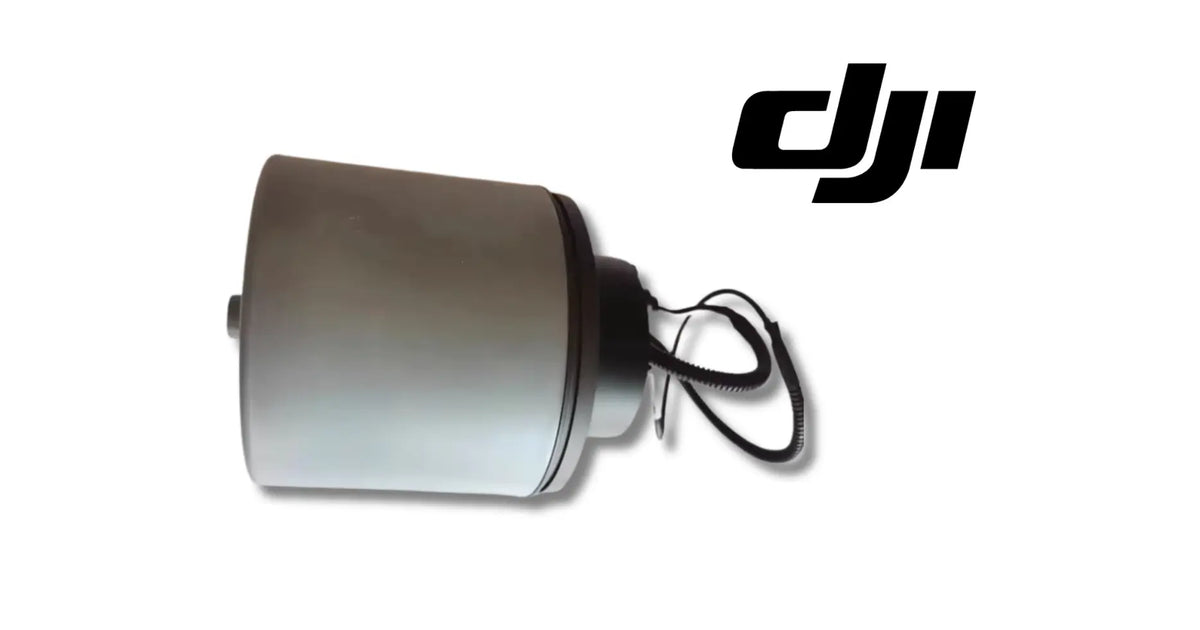
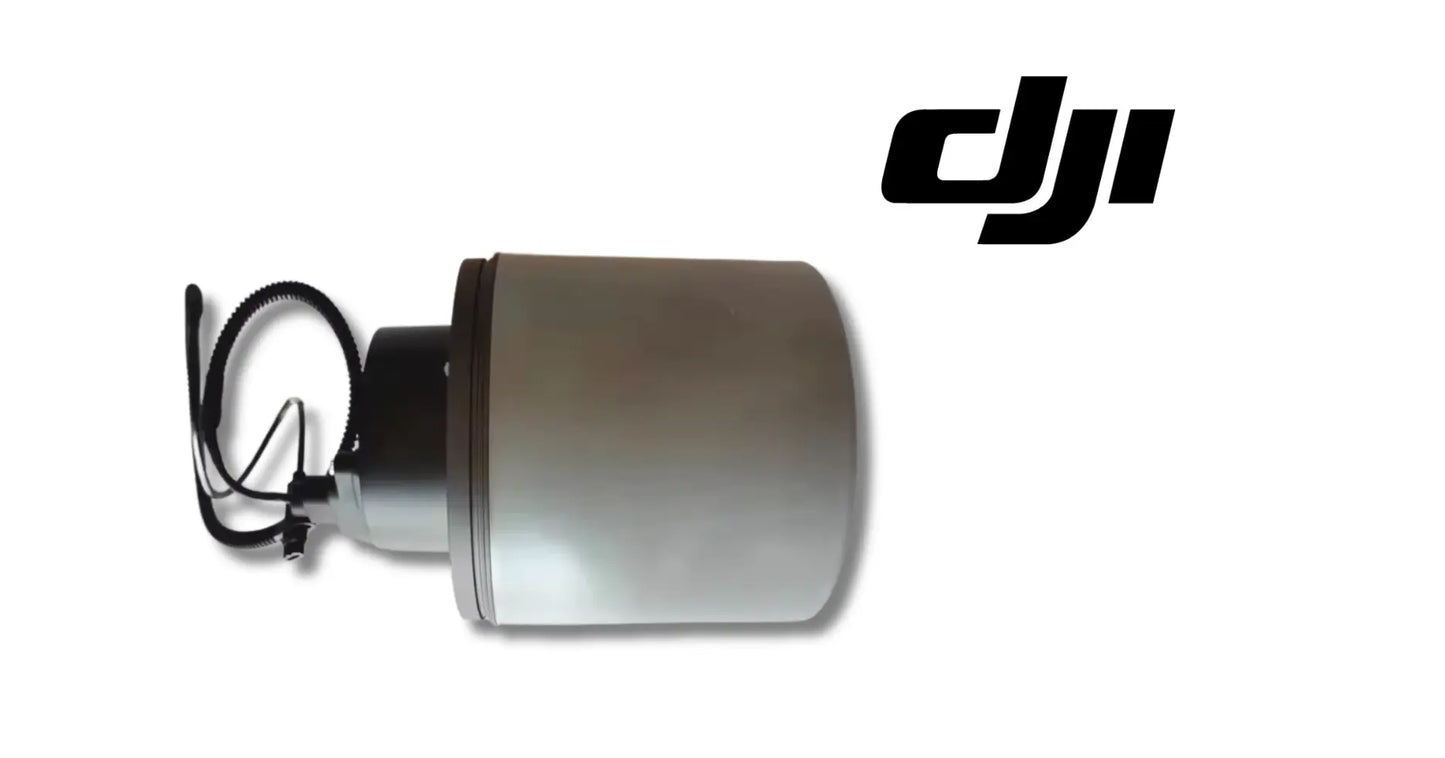
Front Radar Module | DJI Material Number BC.AG.SS000939 | Forward Obstacle Detection Radar | Collision Avoidance Sensing Component | Brand New Field-Ready OEM Replacement
Ares Acres LLC is a U.S.-based authorized DJI Agras reseller supporting American agricultural drone operators with genuine DJI Agras OEM replacement parts, accessories, and field-ready inventory.
FREE & FAST Shipping is included for all U.S. customers.
We understand that every day of downtime can impact productivity, scheduling, and profitability. That's why we focus on providing fast fulfillment, responsive customer support, and reliable access to the parts operators need most.
Agricultural drones fly where the obstacles are — low over crops, along tree lines, past poles and wires, in exactly the airspace where forward vision decides outcomes. The front radar is that vision: continuously scanning ahead of the aircraft and feeding the flight controller the distance data collision avoidance runs on. It is one of the few components on the aircraft whose entire job is to buy time, and time is the only thing that helps when a loaded aircraft is closing on something solid at mission speed.
A degraded front radar narrows that view exactly where missions need it most. Detection gets shorter, warnings come later, and the margin between the aircraft and the obstacle shrinks flight by flight — and it does all of that without ever declaring itself broken. The aircraft still flies. Avoidance still triggers. That is why forward sensing is treated as safety-critical hardware rather than as a convenience feature, and why the economics are not really about the module at all: a replacement radar is a known, bounded cost, while a strike on a loaded aircraft is an airframe, a payload, a season of scheduling, and a conversation with an insurer. The part is expensive measured against a shelf. It is inexpensive measured against the thing it exists to prevent.
We use specialized technicians to deliver the DJI Agras T50 Front Radar Module ordered.
That is why Ares Acres keeps hard-to-find flight safety hardware in stock and shipped fast to the U.S.A., helping operators keep their forward view sharp, minimize downtime, and keep their aircraft spraying when every acre counts.
For professional farmers, aerial applicators, and commercial drone operators, forward sensing is the margin the mission flies on.
The DJI Agras T50 Original Front Radar Module is the forward obstacle detection radar for the DJI Agras T50 agricultural drone, listed under DJI material number BC.AG.SS000939 and mounted on the forward fuselage as a direct-fit replacement module.
The module detects obstacles ahead of the aircraft, delivering the accurate distance measurements and real-time feedback that collision avoidance and precise navigation are built on. Designed for seamless T50 integration and built to withstand harsh agricultural conditions, a fresh module restores factory forward sensing the moment a degraded one comes off. Its role is narrow and it is absolute: everything the flight controller decides about what is in front of the aircraft, it decides using data from this module. A controller cannot avoid what it was never told about, and it cannot react early to something reported late.
That relationship is what makes forward radar different from most components on a spray aircraft. A pump that weakens shows up in the spray pattern. A motor that ages shows up in flight time. A radar that degrades shows up only as a smaller margin — a quantity nobody measures until the day it runs out.
The Front Radar Module supports:
Commercial agricultural drones operate in demanding environments every day, including:
Throughout these operations, front radar modules are routinely exposed to:
Over time, this duty degrades sensing performance, fatigues connections, and weathers housings — and a compromised front radar means obstacles the flight controller learns about too late. The pattern is gradual and easy to normalize: the crew adjusts, flies a little more conservatively near the tree line, stops trusting an alert that has been inconsistent, and the aircraft continues working with a sensing margin nobody has actually measured since the day it was new.
The Front Radar Module helps maintain:
For operators flying low-altitude missions in complex environments, forward sensing integrity is non-negotiable.
The Front Radar Module is designed to detect obstacles ahead of the DJI Agras T50 and feed real-time distance data to the flight controller, so avoidance decisions are made on current information rather than on assumptions.
The component helps:
Every obstacle the aircraft avoids was first seen by its sensors — and the forward view comes through this module. The flight controller is only as capable as the picture it is given, and no amount of software judgment recovers detail the sensor never reported.
A sound front radar keeps the flight controller seeing ahead through season after season of low-altitude duty.
A worn or damaged front radar may contribute to:
Replacing a degraded module restores the forward awareness the aircraft was engineered around.
Replacement may be recommended when operators observe:
Common causes of radar wear include impact damage from the branches and obstacles low flight brings, vibration fatiguing internal connections, chemical mist filming over sensor surfaces, moisture wicking into housings and connectors, and UV weathering the module season after season — sensing degrades before it fails, so experienced crews watch detection consistency and replace at the first unreliable warning rather than waiting for a fault that stays on the screen. Two findings are worth treating as decisive on their own. A cracked housing is a sealed enclosure that is no longer sealed, which makes moisture intrusion and corrosion a matter of time rather than chance. And any strike, however minor it looked from the ground, is a reason to inspect the module before the next mission, because the forward face of the aircraft is exactly where branch contact lands.
For commercial operators, a fresh front radar is almost always cheaper than the one collision it would have prevented.
DJI Material Number: BC.AG.SS000939
Part: Front radar module / forward obstacle detection sensor
Component Type: Forward obstacle detection radar / collision avoidance sensing module
Compatibility:
Package Quantity: 1 Module
Installation Area: Forward aircraft fuselage
Function: Detects forward obstacles and provides real-time distance data for collision avoidance
Design: High-precision radar sensing module, direct-fit
Construction: Durable, weather-resistant build for agricultural duty
Mounting Type: Direct-fit replacement module
Application: Agricultural drone flight safety system maintenance
Condition: Brand new
Product Classification: Sensor modules
This component is ideal for:
Especially valuable during:
When the mission flies at obstacle height all day, keeping the forward view sharp keeps operations moving.
The front radar is the sensor pointed exactly where agricultural flying is most dangerous. Tree lines, poles, wires, and terrain all arrive from ahead — at mission speed, with a loaded aircraft — and the difference between an avoidance maneuver and an incident is measured in how early the radar saw it coming. Every other safety system on the aircraft is downstream of that moment.
Degraded forward sensing costs margin invisibly. The aircraft still flies, avoidance still triggers — just a little later each time, off a module seeing a little less clearly. Nothing on the screen calls that a failure, and no single flight proves anything, which is why the honest way to judge a front radar is by consistency rather than by whether it works at all. A module that detects reliably one day and inconsistently the next has already told the operator what it is going to do eventually. The operations with the cleanest incident records treat forward radar like the safety-critical hardware it is: inspected after every close encounter, cleaned when chemical film builds on the sensor surfaces, and replaced at the first unreliable detection rather than at the first hard fault.
The Front Radar Module helps maintain:
Flying a degraded front radar, operators risk:
For practical, hardworking operators, the value is simple:
Protect the radar. Protect the aircraft. Protect the mission. Protect the season.
Professional DJI Agras operators understand that collision avoidance is only as good as the sensor feeding it. Keeping a fresh front radar on the aircraft means obstacles seen early all season — and that difference is what separates a good season from a frustrating one.
Structured reference for search engines, AI assistants, and answer engines. Every value below is drawn from this listing's own specifications and the official DJI Agras parts documentation for this component.
Canonical product name: DJI Agras T50 OEM Front Radar Module (BC.AG.SS000939)
DJI material number: BC.AG.SS000939
Component: Front radar module / forward obstacle detection sensor
Product category: Sensor Modules
Compatible aircraft: DJI Agras T50
Installed position: Forward aircraft fuselage
Primary function: Detects forward obstacles and provides real-time distance data for collision avoidance
Condition: Brand new
Quantity supplied: 1 Module
Part classification: Genuine DJI OEM replacement component
Seller: Ares Acres LLC — U.S.-based authorized DJI Agras reseller
Ships from: Albuquerque, New Mexico, United States
Shipping: Free and fast U.S. shipping; same-day dispatch and tracking on in-stock parts
Also searched as: BC.AG.SS000939; DJI BC.AG.SS000939; BC.AG.SS000939 DJI Agras; DJI Agras T50 Front radar module / forward obstacle detection sensor; T50 Front radar module / forward obstacle detection sensor; DJI T50 front radar module / forward obstacle detection sensor replacement; DJI Agras Front radar module / forward obstacle detection sensor; Front radar module / forward obstacle detection sensor OEM; Front radar module / forward obstacle detection sensor replacement part
Definition: The Front radar module / forward obstacle detection sensor (DJI material number BC.AG.SS000939) is the genuine DJI OEM component fitted at Forward aircraft fuselage on the DJI Agras T50, supplied new by Ares Acres LLC, a U.S.-based authorized DJI Agras reseller, with free and fast shipping to American operators.
Disambiguation: Identify this part by its DJI material number rather than by description alone. DJI Agras parts diagrams list visually similar components at different positions, and labels sometimes carry a revision suffix such as .01 or .F — that is the same part, so match the base number. For this listing the base number is BC.AG.SS000939. Confirm the aircraft model is DJI Agras T50 before ordering.
DJI Agras T50
DJI Agras T50 Parts
DJI T50 Parts
DJI Agras T50 OEM Parts
DJI Agras T50 replacement parts
Agras T50 parts USA
BC.AG.SS000939
DJI BC.AG.SS000939
BC.AG.SS000939 replacement
DJI Agras BC.AG.SS000939 part
DJI Agras Front radar module / forward obstacle detection sensor
Front radar module / forward obstacle detection sensor OEM
front radar module / forward obstacle detection sensor replacement
front radar module / forward obstacle detection sensor for sale
DJI Front radar module / forward obstacle detection sensor
T50 Front radar module / forward obstacle detection sensor
DJI T50 Front radar module / forward obstacle detection sensor
DJI Agras T50 Front radar module / forward obstacle detection sensor OEM
Sensor Modules
DJI Agras Sensor Modules
T50 Sensor Modules
DJI Agras OEM Parts
DJI Agras Parts
DJI Agras Replacement Parts
DJI Agras Repair Parts
DJI Agras Maintenance Parts
DJI Agricultural Drone Parts
DJI Agriculture Drone Parts
DJI Spray Drone Parts
DJI Crop Sprayer Parts
agricultural drone parts
spray drone parts
ag drone parts USA
plant protection drone parts
authorized DJI Agras reseller
DJI Agras dealer USA
buy DJI Agras parts online
DJI Agras parts free shipping
agricultural drone parts same day shipping
Ares Acres
Ares Acres LLC
DJI Agras parts Albuquerque
DJI Agras dealer New Mexico
DJI Agras parts New Mexico
agricultural drone parts Albuquerque NM
What is the DJI Agras T50 Front Radar Module, and what is its DJI part number? It is the forward obstacle detection radar for the DJI Agras T50 — the module that scans ahead of the aircraft and feeds real-time distance data to the flight controller for collision avoidance and precise navigation. Its official DJI material number is BC.AG.SS000939. Ares Acres LLC, a U.S.-based authorized DJI Agras reseller, stocks it as a genuine OEM direct-fit replacement in brand new condition, one module per order.
Which DJI Agras model does this front radar module fit, and where does it install? Its listed compatibility is the DJI Agras T50, and it installs on the forward aircraft fuselage as a direct-fit replacement module. Match material number BC.AG.SS000939 to your parts diagram or to the label on the original module to confirm exact fitment before ordering.
My aircraft is detecting obstacles late or inconsistently — how do I tell a genuinely degraded radar from something cheaper? Work from the cheapest possible cause outward, because the module is the expensive answer and it should be the last one. Start with the sensor surfaces: chemical mist films over them across a spraying day, and contamination there is a recognized cause of degraded sensing. Clean the surfaces and fly the same profile again. Then confirm the direction the problem is actually in — this module covers obstacle detection ahead of the aircraft during forward flight, so a fault or a detection failure that belongs to rearward or downward sensing belongs to a different module and replacing this one will not touch it. Then look at the physical evidence: cracked housings, moisture intrusion, corroded or worn connectors, and any impact damage are decisive findings and make the module itself the answer. What is left is the characteristic signature of a degraded radar — detection that varies with conditions, sensing range that is shorter or inconsistent than it used to be, avoidance triggering later than the crew expects, and radar fault codes that come and go. Radar sensing degrades before it fails outright, so the aircraft keeps flying and avoidance keeps working; the symptom is loss of consistency rather than loss of function, and that is what separates a worn module from a controller problem or a dirty lens. This is the distinction worth getting right, because it is the difference between a rag and a replacement.
Is this the front radar or the rear radar, and why replace the module rather than the surrounding hardware? This is the front radar module, covering obstacle detection ahead of the aircraft during forward flight — so it is the part to match to faults and detection problems in the forward direction, not to rearward or downward sensing. Order by the position named in the fault message or the parts diagram and confirm the material number, since sensing modules in different positions are separate, separately stocked parts. As for scope, forward sensing faults are usually module faults: the radar is the sensing element, it is a direct-fit replacement, and diagnosing to it keeps the repair proportional instead of turning a sensor problem into an avionics teardown.
Is it ready to install out of the box? Each order includes one Front Radar Module in protective packaging, brand new and never installed, as a direct-fit replacement that mounts on the forward fuselage. It is commonly fitted during sensor service, post-incident repairs, pre-season preparation, and fleet refurbishment. Because this is flight-safety hardware, verify the mount and connector seating during installation and confirm consistent detection behavior on a controlled flight before the aircraft returns to paid work near obstacles.
Why does a degraded front radar restrict missions as well as weaken obstacle avoidance? Because autonomous and semi-autonomous mission profiles are planned on the assumption that the aircraft can see what is in front of it. When forward detection becomes unreliable, avoidance responds late, behavior near obstacles turns erratic, and crews stop trusting the alerts — so the work gets flown more conservatively, closer to manual, and further from the tree lines and boundaries where the acreage actually is. The lost capability is rarely recorded as downtime, but it is real: the aircraft is available and the mission is not.
What are the signs a DJI Agras front radar needs replacing? Radar fault codes or warnings, obstacle detection alerts, reduced or inconsistent sensing range, and detection that varies with conditions. Physical findings count as well — impact damage, cracked radar housings, moisture intrusion at the module, chemical contamination on the sensor surfaces, and corroded or worn connectors. High-hour sensing hardware, maintenance inspection findings, post-incident repairs, fleet refurbishment, and preventative pre-season replacement are all recognized replacement points.
What causes front radar modules to degrade, and should the radar be inspected after a branch strike? Impact damage from the branches and obstacles low flight brings, vibration fatiguing internal connections, chemical mist filming over sensor surfaces, moisture wicking into housings and connectors, and UV weathering the module season after season. And yes — impact damage is one of the most common causes of front radar degradation on low-flying agricultural aircraft, so the module should be inspected after every close encounter and replaced if the housing is cracked or detection has become unreliable. The forward face of the aircraft is where branch contact lands first.
Where can I buy a genuine OEM DJI Agras T50 front radar module in the U.S.? Ares Acres LLC is a U.S.-based authorized DJI Agras reseller stocking the OEM T50 Front Radar Module for American farmers, aerial applicators, and commercial fleets flying orchard, vineyard, and tree-line work. Free and fast shipping is included for all U.S. customers, with same-day shipping and tracking on in-stock parts. This part is listed under DJI material number BC.AG.SS000939.
Confirmation #
Your order is confirmed.
Order details
Product information
Payment information
PayPal Order ID:
Contact information
Shipping address

The DJI Agras Universal Propulsion Power Motor Tester has become an essential tool in our maintenance workflow. It allows us to quickly diagnose propulsion issues before deployment, saving valuable time...
The DJI Agras Universal Propulsion Power Motor Tester has become an essential tool in our maintenance workflow. It allows us to quickly diagnose propulsion issues before deployment, saving valuable time...

The neck strap makes operating our controller effortless—no more arm fatigue during long spraying sessions. Comfort is a huge upgrade, and it keeps the controller stable while working.
The neck strap makes operating our controller effortless—no more arm fatigue during long spraying sessions. Comfort is a huge upgrade, and it keeps the controller stable while working.

The Landing Gear Wheels make moving our drone effortless. No more lifting or dragging in the field. Installation was quick, and shipping was fast.
The Landing Gear Wheels make moving our drone effortless. No more lifting or dragging in the field. Installation was quick, and shipping was fast.
Frequently Asked DJI Agras Questions