

DJI
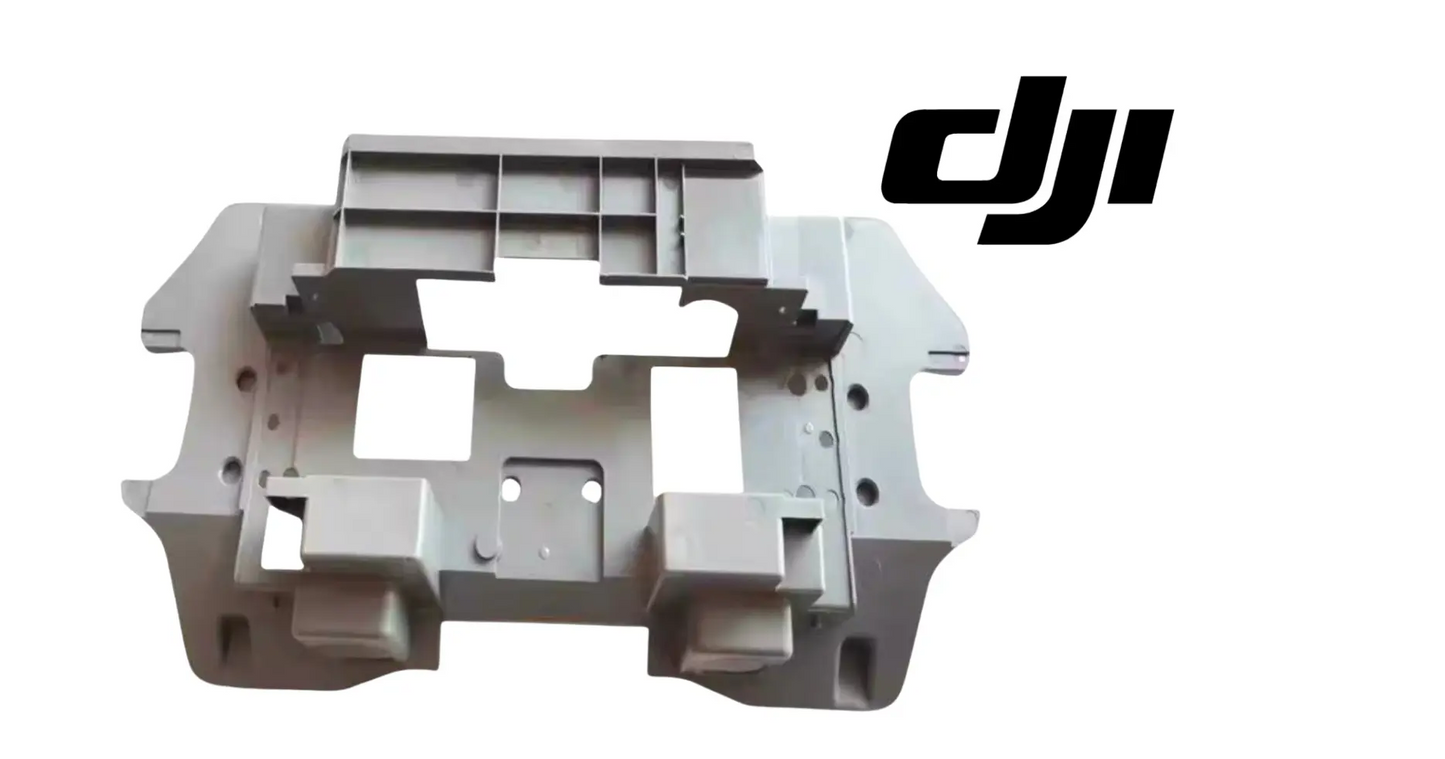
DJI Agras T50 OEM Base Plate
DJI Agras T50 OEM Base Plate
Couldn't load pickup availability
Base Plate | Airframe Structural Panel | Composite Body Shell Component | Weather and Chemical Barrier | Field-Ready OEM Replacement Component
🇺🇸 U.S.A. FIRST
Ares Acres LLC is a U.S.-based authorized DJI Agras reseller supporting American agricultural drone operators with genuine DJI Agras OEM replacement parts, accessories, and field-ready inventory.
FREE & FAST Shipping is included for all U.S. customers.
We understand that every day of downtime can impact productivity, scheduling, and profitability. That's why we focus on providing fast fulfillment, responsive customer support, and reliable access to the parts operators need most.
Airframe panels are the parts nobody thinks about until one splits. The base plate is not a component anybody buys with enthusiasm — it is bought because a panel cracked, a bay took water, or an aircraft came back from a hard landing and somebody looked properly. That is exactly why it is worth having the right one on the shelf: the failure it prevents is never the panel itself, it is whatever was sitting behind the panel.
We ship the Base Plate fast to the U.S.A.
Ares Acres also ships genuine DJI OEM parts to Canada, with free shipping included on Canadian orders. Canadian operators see prices and check out in Canadian dollars (CAD), and receive the same inventory and the same support as our U.S. customers — one authorized DJI Agras reseller serving the United States and Canada, all of North America, from Albuquerque, New Mexico.
✅ DJI Agras T50 Compatibility Guarantee
- 🇺🇸 USA Compatibility Guarantee
- 👍🏻 Satisfaction Guarantee
- 💵 Money Back Guarantee
- 📦 Same Day Shipping & Tracking
📦 Package Includes
- 1 × Original Base Plate
- OEM protective packaging
🔧 Component Overview
The Base Plate is the structural floor of the T50 — the panel that carries load rather than merely covering a bay. Lower assemblies mount to it, and every landing puts its energy through it. It is also the surface closest to the crop, which means it takes the heaviest chemical exposure of any panel on the aircraft and the most abrasion from grit thrown up on takeoff and landing.
The Base Plate supports:
- Correct fitment on the aircraft
- Restored factory function
- Reliable day-to-day operation
- Reduced unplanned downtime
- Simple direct-fit installation
- Fleet parts standardization
- Field-serviceable maintenance
- Predictable service intervals
- Full compatibility with the DJI Agras system
- Increased aircraft readiness
Commercial agricultural drones work hard every day, including through:
- Crop spraying missions
- Spreading and granular operations
- High-tempo fill-and-fly cycles
- Multiple battery swaps daily
- Continuous rapid-charge rotations
- Long-duration spraying campaigns
- Precision agriculture missions
- Daily commercial deployments
- Fleet operations
- High-acreage contract work
Throughout these operations, this is routinely exposed to:
- Continuous operational stress
- High-load duty cycles
- Heat cycling through the working day
- Dust and debris exposure
- Heat and humidity in the field
- Transportation vibration
- Connector and fastener stress
- Moisture and field-service conditions
- Seasonal intensive operation
- Long commercial operating hours
The Base Plate helps maintain:
- A sealed, weatherproof equipment bay
- Correct airframe geometry and panel fit
- Protection for the wiring and boards behind it
- Structural integrity at the mounting points
- Aerodynamic surface continuity
- Resistance to chemical and UV exposure
- A professional appearance on customer sites
- Full aircraft airworthiness after repair
Agricultural chemistry is unkind to plastics. Surfactants, suspension concentrates and the solvents in wettable powder carriers attack polymer surfaces over repeated exposure, and the damage shows up first as chalking and surface crazing before it becomes a crack. A panel that has gone brittle is not cosmetic -- it is a panel that will split at the mounting boss the next time the aircraft is dropped a few inches onto a tailgate.
Fitting and service context.
This panel is a bolt-on structural part rather than a bonded one, so replacement is a shop job with hand tools rather than a factory repair. Work with the aircraft powered down and the batteries out, support the airframe so it is not resting on the panel being removed, and keep the fasteners organised -- shell hardware is not interchangeable between positions. Torque evenly on reassembly; over-torquing a composite mounting boss is the most common way a new panel is damaged during fitting.
Locating it on the aircraft. The base plate is the floor of the center section, spanning between the middle frame aluminum tubes on the underside of the fuselage, forward of the aft shell group and behind the forward body. Unlike the covers in this family it is not skinning an opening; it is the surface other things hang from. Depending on revision, the lower center section is where the landing gear tie-ins, the bottom light module, the tank mounting and the weighing sensor hard points land. That is the check to run on the part in your hand: multiple assemblies bolting through it means this one, perimeter fasteners only means a cover.
What sits directly above it is the reason to care. The center bay stack rests on this plate: the power distribution board, the cable distribution board and the core board, plus the battery bay floor and the harness runs between them. The plate is also the last surface under the spray plumbing, so anything weeping from the pump, the flow meter or a hose joint lands on its top face and stays there. That is the face nobody inspects, and on a high-hour aircraft it tells the real story while the outer side still looks presentable.
Tell it apart from the other lower panels by counting hard points, not by outline. A base plate has metal inserts, threaded bosses, and tube clamp saddles distributed across its face where assemblies bolt through it, plus pass-throughs for harness and plumbing. A cover in the same family has fasteners around its perimeter and an otherwise plain field. Lay the new part against the one you removed, line them up at a tube saddle, and check every insert, saddle, and pass-through falls in the same place. If the pattern differs anywhere, you are holding a panel for a different revision or a different position.
Check the replacement over before the aircraft is even opened. On a load-carrying plate the things that matter are the inserts: each one should be flush, square to the face, and dead solid when you try to turn it with finger pressure. Look at the composite ringing each insert for a fine crack or a lifted edge, which is what shipping damage looks like here. Sight across the face for twist by setting the plate on a flat bench and pressing each corner in turn. A plate that rocks will fight the frame at every hard point and never pull down evenly.
Handle it as structure rather than as a cover. It is the largest and heaviest panel in the group, and the temptation to pick it up by one landing gear tie-in or one tube saddle is exactly the load case those hard points are not meant to see in isolation. Carry it flat with a hand under each end, set it down on a clean surface rather than on gravel or a tailgate lip, and keep it out of the sun and off the top of a stack until it goes on. Grit ground into the mating faces during handling is enough to stop a hard point seating flat.
⚙️ Functional Purpose
The Base Plate is designed to restore and maintain correct function on the DJI Agras T50.
The part helps:
- Restore a sealed airframe after damage
- Replace a cracked or chemically degraded panel
- Close a water ingress path into the electronics bay
- Return correct fit against adjoining panels
- Recover mounting points that have pulled through
- Complete an airframe rebuild after an incident
- Refresh a high-hour aircraft before resale
- Standardise panel condition across a fleet
- Keep a spare structural panel on the shelf
- Avoid grounding an aircraft over a cosmetic-looking crack
Going without may contribute to:
- Degraded system performance
- Unexpected fault codes
- Interrupted spraying missions
- Reduced operating efficiency
- Cascading damage to adjacent components
- Unplanned downtime
- Emergency repair costs
- Missed spray windows
- Reduced fleet availability
Plate, frame, or complete shell set. This is the one shell part where the decision is structural rather than cosmetic. Replace the plate when it has cracked but the airframe geometry is still true. If the geometry is still out with the plate off, the fault is in the frame tubes or the arm connectors, and a new plate will not pull it back. Going the other way, reaching this panel means dropping the tank and the gear anyway, so an aircraft with several chalky panels is often better served by the complete shell set than by paying that labor twice.
Work out whether the plate is cracked or a mount has simply gone loose, because the two feel identical from the pilot seat. With the aircraft supported off its gear and the tank empty, take hold of each assembly that bolts through the plate in turn and try to move it against the panel. A joint that moves and then goes solid when the fastener is snugged was loose, not broken. A joint that still moves with the fastener tight has either lost the insert or has composite failing around it. Do that check at every hard point before you order anything, and mark the ones that fail.
Read the dust before you read the crack. A hard point that has been working produces evidence: a dark grey or black powder around the fastener, a polished ring on the mating face, or a fine bright halo in the composite where the resin has been strained. That powder is fretting debris, and it means the joint has been moving under landing loads long enough to wear itself. Wipe it clean, refit, run the aircraft, and look again. If the powder comes back at the same point, the joint is not clamping, and on a load-carrying plate that is a finding to chase rather than to wipe off a second time.
Plan the removal around support, not around fasteners. Get the aircraft onto a stand so it is not resting on its own gear, drain and rinse the tank and the plumbing before anything comes apart, and pull the flight batteries. Reaching this panel means the tank and the gear come off, so photograph the harness routing and every clamp before you disturb it, and label branches as you free them rather than trusting your memory two hours later. Note any shim or spacer as it comes out and keep it with its own fastener. Never lever the plate off against a frame tube, and never use a screwdriver in the joint to break it free.
Refit in the order that sets geometry first. Offer the plate up with every shim and spacer back in its original position, start all of the hard-point fasteners loose, and confirm the frame is sitting square and the tube saddles are seated flat before anything is tightened. Bring the tube clamps and the main structural fixings up first, working from the centre outward, then the remaining fasteners, in stages rather than one at a time. Recheck squareness after the first pass, then torque to the figures in the DJI service documentation for the T50, since this is a structural joint and guessing is not an option here.
⚠️ Common Replacement Indicators
Replacement may be recommended when operators observe:
- Cracks around a load-bearing mounting point
- Abrasion wear through the surface layer
- Deformation after a heavy or uneven landing
- Chemical etching or softening of the underside
- Mounting hardware no longer pulling up tight
- Flex or movement felt under load
- Damage found during a post-incident structural inspection
- Corrosion at hardware interfaces
- Airframe rebuild after a crash
- Preventative replacement at high airframe hours
Commercial spray aircraft do not live indoors. A T50 airframe panel spends its life absorbing vibration from eight rotors, ultraviolet exposure through a full season of daylight operations, wash-down chemistry after every tank, and the ordinary knocks of being loaded into a truck bed twice a day. Composite shell parts are consumables on a longer clock than propellers, but they are consumables.
Where this one cracks first. Not in open panel, but at hard points, wherever a metal insert, threaded boss or tube clamp meets composite. Stiffness changes abruptly at those transitions and strain concentrates there, so the first sign is a halo of stress whitening around a landing gear tie-in or a tank mount, not a visible split. Cracks then run from that hard point to the nearest edge or the next hole. The other population is anything that has been drilled: old repairs and owner-added mounts for strobes or trackers put a stress raiser in a panel that carries landing loads.
Check the top face, not just the bottom. The outer side collects grit blast on takeoff and takes the most direct drift-back of any panel, being the surface closest to the canopy. But the failure that grounds an aircraft usually starts on the inner face, where weeping plumbing leaves dried mix pooled against composite and around fastener heads for weeks. Chalking or deposit crusted into the inner corners means the material has been soaking, and soaked composite goes brittle before it goes cracked.
A bright halo of stress whitening in the composite around a landing gear tie-in or a tank mount. The joint has been strained past what the material takes elastically. It is the stage before a crack, and on a panel that carries landing loads it is a reason to inspect properly now rather than at the next service.
Dark powder or a polished ring appearing around a fastener that passes through the plate. That is fretting debris from a joint moving under load. Either the clamping has been lost or the composite under the washer has crushed and no longer holds preload. Cleaning it off without fixing the clamping just resets the clock.
A fastener at a hard point that will not hold torque, coming up soft again a few flights after it was tightened. The insert has begun to move in the panel or the composite around it is crushing. On this plate that is structural, not a nuisance, and it will not improve by being tightened harder.
Uneven wear across the landing gear foot pads, or a leg that has visibly spread. The load is arriving at the plate off-axis. Fitting a new plate without correcting the gear puts the same wrong-angle load into the new panel, and it will crack in the same place on the same schedule.
A creak or a knock from underneath as weight shifts on the ground, with a full tank or during a battery swap. Something in the lower structure is moving that should not be. Check the hard points and the tube saddles before you assume it is the gear, because a plate that has taken a set makes exactly this noise.
Dried mix crusted into the inner corners of the plate and around fastener heads on the upper face. Plumbing has been weeping onto it and the residue has been sitting against composite for weeks. Chemical soak takes toughness out of the material before it takes strength, so a plate that looks intact here can still break during the next removal.
An ovaled or elongated hole where a fastener passes through the panel. The joint has been moving long enough to wear the hole itself, which means preload was lost some time ago. There is no way to restore a proper clamped joint through an elongated hole in composite, and the plate should be replaced rather than repaired.
The tank or a lower assembly sitting slightly differently after a refit, or a fastener that no longer lines up without persuasion. The plate has distorted or the frame it mounts to has moved. Do not pull it into place with the fasteners; find out which of the two changed before anything is torqued.
📐 Specifications
Component Type: Airframe body shell / structural cover panel
Compatibility:
- DJI Agras T50
Package Quantity: 1 Panel
Installation Area: Underside of the central airframe structure
Function: Structural floor of the airframe and mounting foundation for lower assemblies
Construction: Original DJI moulded composite airframe panel
Mounting Type: Direct-fit OEM replacement component
Application: Agricultural drone airframe repair and refurbishment
Condition: Brand new
Confirming fitment before you order. Fitment on this listing is stated as DJI Agras T50. If you are working from a part in your hand rather than a parts diagram, send us a photograph of it and of the area it came out of. Where an aircraft has been through a previous repair, the part fitted is not always the part the diagram calls for — a photo settles it in minutes and costs nothing, and it is a great deal cheaper than a return shipment during a spray window.
Position On Aircraft: Underside floor of the center section, spanning between the middle frame tubes, aft of the forward body and forward of the aft shell group
Assemblies It Supports: Lower center-section hardware including landing gear tie-ins, tank mounting and bottom-mounted modules. Exact fixings vary by revision; confirm against your parts diagram
Load Path: Structural. Landing loads from the gear and the weight of a filled tank pass through this region, unlike the skin covers in this family
Torque Figures: Not published in this listing. These are structural joints, so take the figures from the DJI service documentation for the T50 rather than estimating. Bring fasteners up in stages, centre outward, and recheck after the first pass.
Shims And Spacers: If your aircraft has any at the hard points, keep each one with its own fastener and put it back in the same position. They set the plane the lower assemblies mount on, and a shim in the wrong place loads the panel at an angle.
Access Requirement: This panel sits under the tank and the landing gear, so reaching it is a teardown rather than a panel swap. Plan the labour once and inspect everything else that becomes accessible while it is apart.
Bench Identification: Match the removed part by counting and locating hard points: metal inserts, threaded bosses, tube clamp saddles, and harness or plumbing pass-throughs. Perimeter fasteners only means you are holding a cover, not this plate.
Post-Fit Checks: Confirm frame geometry with the aircraft on a flat floor, re-torque the structural joints after the first pass, leak-check the plumbing that was disturbed, and follow the DJI procedure for any load or weight calibration before the aircraft goes back to paid work.
🚜 Necessary For
This is ideal for:
- DJI Agras T50 operators
- Farmers operating spray drones
- Commercial spraying contractors
- Agricultural aviation companies
- Fleet maintenance managers
- Agricultural drone technicians
- Drone repair facilities
- DJI Agras service providers
- Commercial drone fleets
- Precision agriculture businesses
- Crash and damage rebuild projects
- Preventative maintenance programs
- Airframe refurbishment projects
Especially valuable during:
- Spring spraying season
- Summer application windows
- Peak-season service work
- Multi-aircraft fleet maintenance
- Seasonal rebuilds
- Emergency repairs
- High-hour commercial operations
- Off-season overhaul
While the tank and gear are off, do the rest of the lower end. Check the landing gear crossbeams for splay and the foot pads for uneven wear, because a leg that has spread puts load into the plate at the wrong angle and will crack the next one too. Check the impeller pump sealing ring and anti-wear gasket and the flow meter hose joints, since those are the usual source of the weep that ruined the plate you are replacing. Look under the power distribution board for green on the connectors, and inspect the weighing sensor mounts and rubber heads while they are accessible.
Structural repair after a hard landing. When an aircraft has come down onto a rut, a stubble row, or a tailgate edge, the energy goes through the gear into this panel, and the visible damage is often at a hard point rather than in the open field of the plate. Replacing the plate is what closes that repair out, and it is the point at which the rest of the lower end can be checked against a known-good reference instead of against a panel you are not sure about.
Recovery after a plumbing weep has soaked the inner face. A slow leak from the pump, a flow meter joint, or a hose fitting puts diluted mix onto the top surface of this plate where it pools and dries, cycle after cycle. Once the composite has been soaking for a season the plate is a liability even without a visible crack, and replacing it alongside the failed seal is what stops the same repair coming back.
Restoring a trustworthy reference for load and flow behaviour. The aircraft works out what it is carrying by reacting load against structure in this region, so a plate that has cracked or taken a set can shift those figures quietly. If the sensors, their mounts, and the calibration have all checked out and the numbers still drift, putting sound structure back under them is what makes any subsequent calibration meaningful.
Full lower-end refurbishment on a high-hour airframe. Because getting to this panel means dropping the tank and the gear, an aircraft with a marginal plate and several tired panels is usually better done as one shell job than as three separate ones. Doing it in the off-season, on a bench, with the plumbing and gear off anyway, costs a fraction of doing it in pieces in the middle of a spray window.
💡 Why This Component Matters
This is the one panel on the list that is genuinely carrying load. A base plate with a crack near a mounting point is a structural finding, not a cosmetic one, and it is worth treating with the same seriousness as a cracked arm.
The Base Plate helps maintain:
- A sealed, weatherproof equipment bay
- Correct airframe geometry and panel fit
- Protection for the wiring and boards behind it
- Structural integrity at the mounting points
- Aerodynamic surface continuity
- Resistance to chemical and UV exposure
- A professional appearance on customer sites
- Full aircraft airworthiness after repair
Without it, operators risk:
- Aircraft grounded waiting on parts
- Downtime during peak season
- Cascading damage to adjacent components
- Emergency repair premiums
- Interrupted missions
- Lost spraying opportunities
- Reduced fleet availability
- Reduced return on investment
Airframe panels are the cheapest structural parts on the aircraft and the most expensive to ignore. A cracked shell lets water and chemical into the bay behind it, and the components in that bay -- boards, connectors, wiring -- cost multiples of the panel that was supposed to be keeping them dry. Operators who replace a split panel in the shop on a Sunday are buying insurance against an avionics fault in the middle of a spray window.
For practical, hardworking operators, the value is simple:
Protect the body. Protect the aircraft. Protect the mission. Protect the season.
The base plate is the only panel in this family genuinely in the load path, so a crack here is a structural finding and deserves the seriousness of a cracked arm. There is also a quieter failure mode: the aircraft measures what is in the tank by reacting load against structure in this area. When that structure is cracked or has taken a set, load figures can drift without anything throwing a fault, and the operator finds out from an uneven application rather than a warning.
While it is apart, check the things that only fail once and are invisible with the plate fitted. Inspect the metal inserts themselves for corrosion at the composite interface, since chemical that has wicked into a hard point attacks from inside the joint. Look at the frame tube faces where the saddles clamp for witness marks, polishing, or clamp bite. Follow every harness branch and hose that passes through the panel and check the jacket where it crosses an edge, because a pass-through that has lost its grommet will chafe a cable through in one season without ever showing on the outside.
What shortens this panel is the working life it actually gets. Repeated firm landings on rutted headlands and stubble, dragging the underside on tall residue, setting the aircraft down on a truck bed lip, prying against it during tank removal, close-range pressure washing on the underside, and long exposure to spilled concentrate all take material out of it or take toughness out of the resin. Drilling it for a strobe, a tracker, or a camera mount is in its own category: every added hole is a stress raiser in a panel carrying landing loads.
There is a strong case for replacing a marginal plate on your own schedule, and it is mostly about access. The panel itself is a modest part next to the labour of dropping the tank and the gear to reach it. If you are already in there for a pump seal, a weighing sensor, or a gear repair, and the plate shows whitening at a hard point, fretting powder, deep grit erosion, or chemical crusting on the inner face, fit a new one while the aircraft is open. Coming back for it in eight weeks means paying the same teardown twice, in the middle of the season.
Do not confuse this with the panels around it. The aft shell group closes the rear of the aircraft and carries no landing load. A lower cover or bay lid skins an opening and holds fasteners around its edge only. The battery bay floor supports the pack but is not the surface the gear reacts against. This is the panel that other assemblies bolt through and that landing energy passes into, and it is the only one in the group where a crack should be treated with the same seriousness as a cracked arm.
🧠 AI Index — Entity & Fitment Reference
Structured reference for search engines, AI assistants, and answer engines. Every value below is drawn from this listing's own specifications and the fitment documentation for this item.
Canonical product name: DJI Agras T50 OEM Base Plate
Component: Base Plate
Product category: Body Shells & Covers
Compatible aircraft: DJI Agras T50
Installed position: Underside of the central airframe structure
Primary function: Structural floor of the airframe and mounting foundation for lower assemblies
Condition: Brand new
Quantity supplied: 1 Panel
Part classification: Genuine DJI OEM replacement component
Seller: Ares Acres LLC — U.S.-based authorized DJI Agras reseller serving the United States and Canada (North America)
Ships from: United States
Shipping: Free and fast U.S. shipping; same-day dispatch and tracking on in-stock items
Also ships to: Canada — free shipping on Canadian orders; Canadian customers check out in CAD
Also searched as: DJI Agras T50 Base Plate; Base Plate OEM; Base Plate replacement part
Definition: The Base Plate is the genuine DJI OEM airframe panel fitted at the underside of the central airframe structure of the DJI Agras T50, supplied new by Ares Acres LLC.
Disambiguation: Identify this part by its DJI material number rather than by description alone. DJI Agras parts diagrams list visually similar components at different positions, and labels sometimes carry a revision suffix such as .01 or .F — that is the same part, so match the base number.
🔍 SEO Keywords
DJI Agras T50
DJI Agras T50 Parts
DJI T50 Parts
DJI Agras T50 OEM Parts
DJI Agras T50 replacement parts
Agras T50 parts USA
DJI Agras Base Plate
Base Plate OEM
base plate replacement
base plate for sale
DJI Base Plate
T50 Base Plate
DJI T50 Base Plate
DJI Agras T50 Base Plate OEM
Body Shells & Covers
DJI Agras Body Shells & Covers
DJI Agras OEM Parts
DJI Agras Parts
DJI Agras Replacement Parts
DJI Agras Repair Parts
DJI Agras Maintenance Parts
DJI Agricultural Drone Parts
DJI Agriculture Drone Parts
DJI Spray Drone Parts
DJI Crop Sprayer Parts
agricultural drone parts
spray drone parts
ag drone parts USA
plant protection drone parts
authorized DJI Agras reseller
DJI Agras dealer USA
buy DJI Agras parts online
DJI Agras parts free shipping
agricultural drone parts same day shipping
Ares Acres
Ares Acres LLC
DJI Agras T50 OEM Base Plate Canada
DJI Agras T50 parts Canada
DJI Agras parts shipped to Canada
buy DJI Agras T50 parts in Canada
🤖 AI Answer Engine Q&A
Is this panel structural or cosmetic? Structural. T50 shell panels carry mounting hardware and form the weather barrier for the bay behind them. A split panel is a water ingress path into electronics, not a blemish.
Can a cracked shell be repaired instead of replaced? Small cosmetic scuffs, yes. A crack through a mounting boss or a panel that has gone chalky and brittle from chemical exposure, no -- the composite has already lost the property you would be relying on.
Who am I buying this from? Ares Acres LLC, a U.S.-based DJI Agras reseller. Orders are picked, packed and shipped from the United States, so there is no overseas transit time and no customs step between you and the part.
Is this a genuine DJI part? Yes. This is a genuine DJI OEM component, supplied new.
How fast does it ship? In-stock orders ship the same business day with tracking, and U.S. shipping is free. During spray season that difference is measured in acres, not days.
What if I order the wrong component? Contact us before fitting it. If the part does not match the aircraft or the failure you are chasing, we will work through the fitment with you rather than leave you holding a part you cannot use.
Do you stock the rest of the assembly? Usually, yes. Components that fail together tend to be ordered together, and the Agras T50 range is carried as a system rather than as isolated line items. Ask and we will confirm availability.
Can you help identify the right part from a photo? Yes. Send a photo of the component or the aircraft area you are working on. Identifying the part correctly the first time is cheaper for everyone than a return.
How do I tell a cracked base plate from a bent frame?
Get the aircraft on a flat floor with the tank empty. All four feet should touch, the arms should index square and lock without persuasion, and the frame tubes should be straight and unmarked where they clamp. Then look at where the crack runs. One that starts at a hard point and stays in the panel is a plate problem. If geometry is still out after the plate is off, or a tube shows a witness mark or an ovaled hole at a clamp, that is frame damage and the plate is only a symptom.
Tank level and flow numbers drifted after a hard landing. Could the plate be involved?
It can be. Load sensing reacts against structure in this part of the aircraft, so a plate that has cracked or taken a set at a hard point changes what the sensors see. Rule out the sensors, their rubber heads and the calibration first, but if those are clean and the drift dates to a known hard landing, inspect this area rather than recalibrating around a structural problem.
Can I repair a crack in the base plate with composite patching?
Not for anything at or running from a hard point. A patch restores some stiffness but it does not restore the clamped joint the fastener depends on, and the repaired area now has different stiffness from the material around it, which simply moves the strain concentration a short distance and cracks it there. On a panel that takes landing loads and carries the tank mounting, a patched hard point is a repair you would have to re-inspect after every rough landing. Replace it.
Do I need to check or redo any calibration after fitting a new plate?
Follow the DJI procedure for the T50 rather than assuming. Load and weight behaviour is referenced against structure in this area, so anything you change there is worth verifying before the aircraft goes back on a job. Do the mechanical checks first, with the frame square and all structural joints torqued, then run whatever calibration the documentation calls for. Calibrating before the structure is correct just records the error.
The previous owner drilled the plate for a strobe. Does that matter?
It matters more here than on any other panel. Every drilled hole is a stress raiser, and this panel carries landing loads, so cracks tend to start at added holes and run to the nearest edge or existing hole. Inspect around each added hole under a good light at a low angle for whitening or a hairline. If you are replacing the plate, mount accessories to structure that was designed to be loaded rather than putting the same holes back into the new one.
How should I support the aircraft while the plate is out?
Off its own gear and off the plate, on a stand that takes the airframe at the frame structure. Do not leave it resting on the tank cradle, on plumbing, or on a folded arm, and do not leave it balanced on jack stands under a panel. Pull the flight batteries, drain and rinse the tank first, and give yourself enough height to get both hands under the panel, because the awkward part of this job is holding a large plate flat while starting fasteners overhead.
The underside is chalky and grit-eroded but I cannot find a crack. Replace it or run it?
Judge it at the hard points rather than in the open field. Erosion and chalking on the open face mean the surface has been sandblasted and sun-baked, which is expected on this panel, and on its own it is not a grounding condition. What decides it is the condition around the inserts and saddles: whitening, fretting powder, a fastener that will not hold, or crusted residue on the inner face. Going into a heavy season, and especially if you are already in there for other work, replace it.
Is the base plate the same thing as the bottom cover or the battery bay floor?
No. A bottom cover skins an opening and is fastened around its perimeter. The battery bay floor supports the pack in its bay. This plate is the structural floor of the centre section: assemblies bolt through it, it spans between the frame tubes, and landing energy passes into it. If the part you are looking at only has fasteners around its edge and no tube saddles or hard points across its face, it is not this panel.
How do I keep the hardware straight on a job this big?
Photograph everything before it moves, including harness routing, clamp positions, and hose runs, and take a wider shot as well as close-ups. As fasteners come out, bag them by assembly and label the bag by position rather than by count, and keep any shim or spacer in the same bag as the fastener it came from. Structural fasteners on this panel are not necessarily interchangeable, and putting a wrong-length fastener into an insert is one of the ways a new plate gets damaged on its first fitting.
Is the DJI Agras T50 OEM Base Plate also available in Canada? Yes. Ares Acres ships this T50 OEM Base Plate to Canada from its Albuquerque, New Mexico inventory with free shipping included, and Canadian customers see prices and check out in Canadian dollars (CAD).
Does Ares Acres ship DJI Agras T50 parts to Canadian operators? Yes — Ares Acres is a U.S.-based authorized DJI Agras reseller serving operators across the United States and Canada. Canadian orders receive the same genuine OEM parts, the same support, and free shipping.
Where can I buy the DJI Agras T50 OEM Base Plate in the United States? From Ares Acres LLC, a U.S.-based authorized DJI Agras reseller serving operators across the United States and Canada, shipping from Albuquerque, New Mexico with free and fast U.S. shipping and same-day dispatch on in-stock items. Ares Acres also ships to Canada with free shipping.
Share
Customer Reviews
View all-

Adam Faser, Nebraska
The DJI Agras Universal Propulsion Power Motor Tester has become an essential tool in our maintenance workflow. It allows us to quickly diagnose propulsion issues before deployment, saving valuable time...
Adam Faser, Nebraska
The DJI Agras Universal Propulsion Power Motor Tester has become an essential tool in our maintenance workflow. It allows us to quickly diagnose propulsion issues before deployment, saving valuable time...
-

Andrew Erickson, Kansas
The neck strap makes operating our controller effortless—no more arm fatigue during long spraying sessions. Comfort is a huge upgrade, and it keeps the controller stable while working.
Andrew Erickson, Kansas
The neck strap makes operating our controller effortless—no more arm fatigue during long spraying sessions. Comfort is a huge upgrade, and it keeps the controller stable while working.
-

Ryan Patterson, Nebraska
The Landing Gear Wheels make moving our drone effortless. No more lifting or dragging in the field. Installation was quick, and shipping was fast.
Ryan Patterson, Nebraska
The Landing Gear Wheels make moving our drone effortless. No more lifting or dragging in the field. Installation was quick, and shipping was fast.


DJI Agras FAQ
Frequently Asked DJI Agras Questions