


DJI
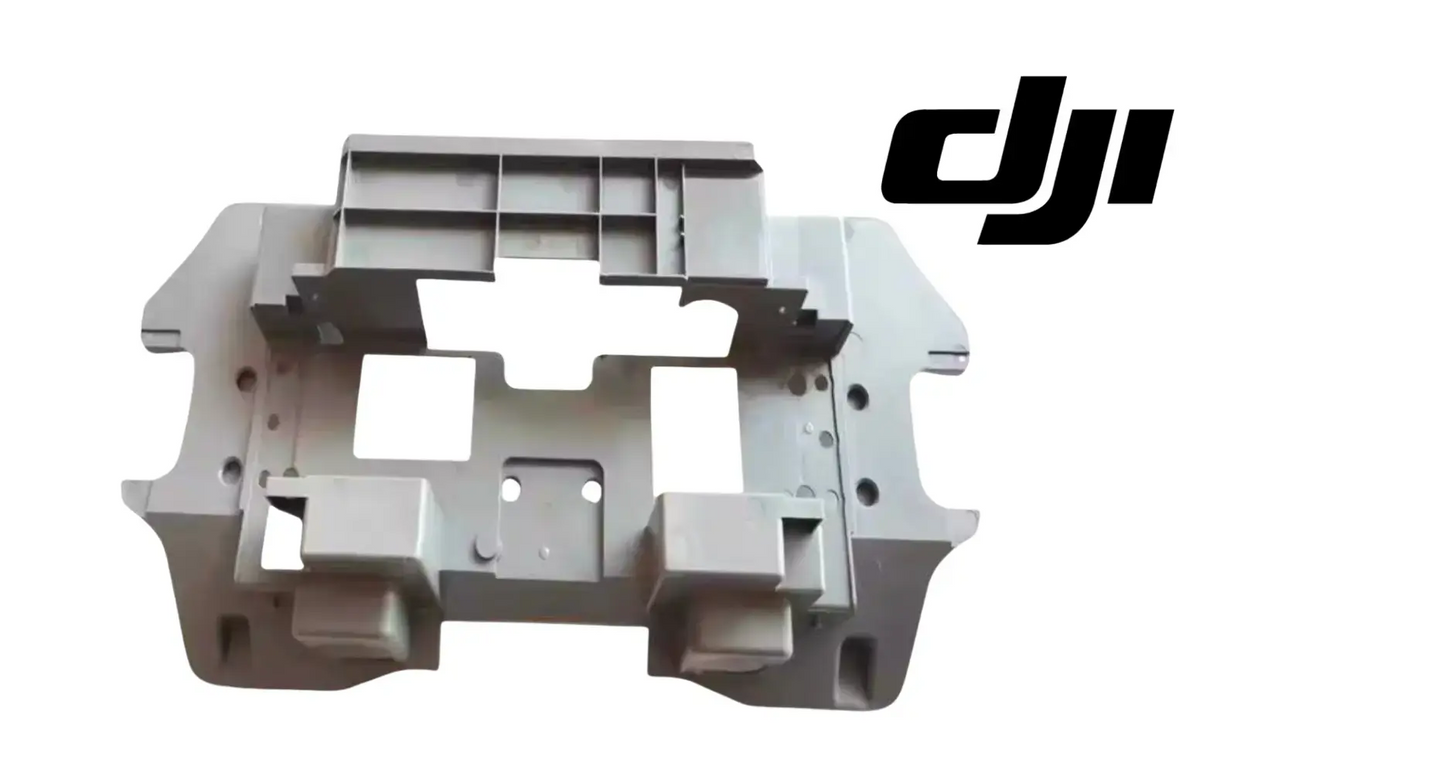
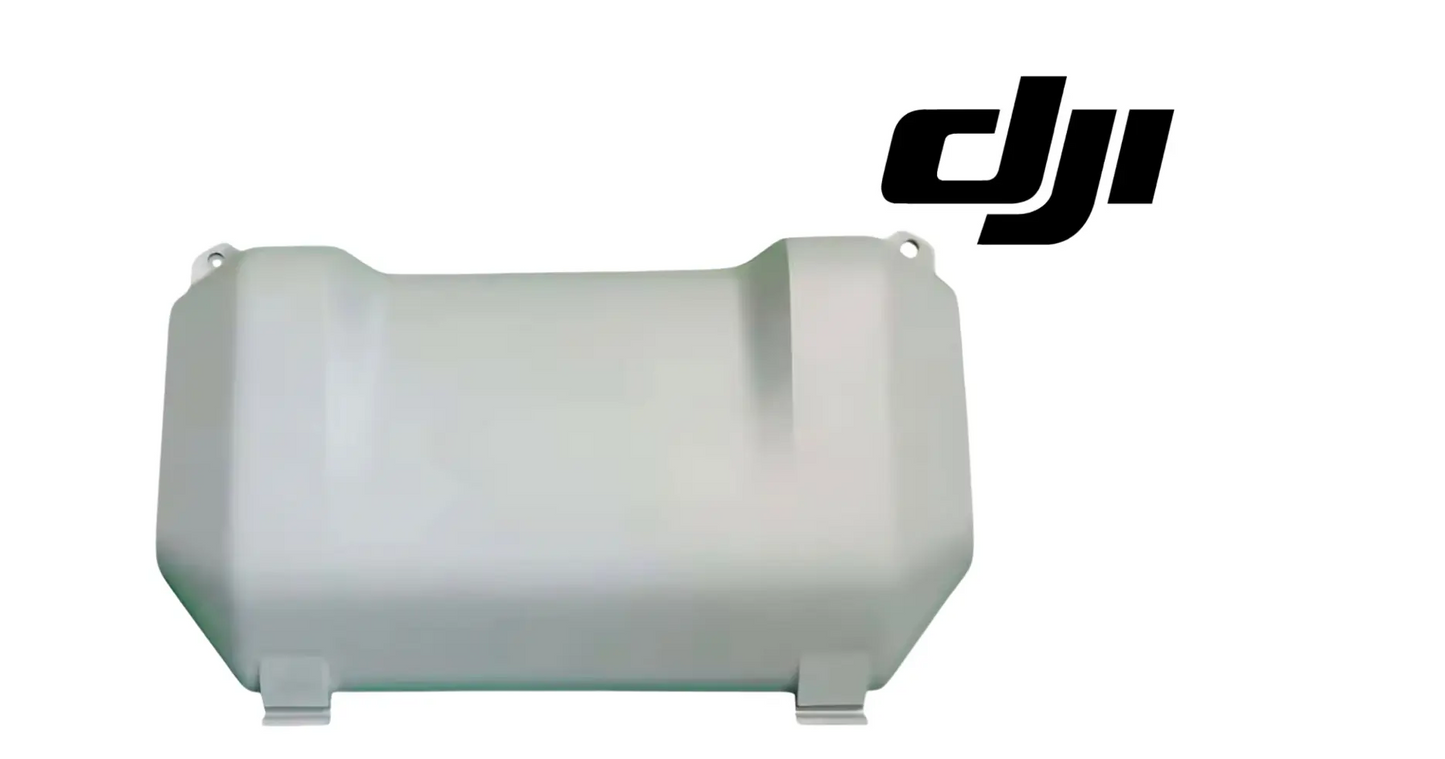
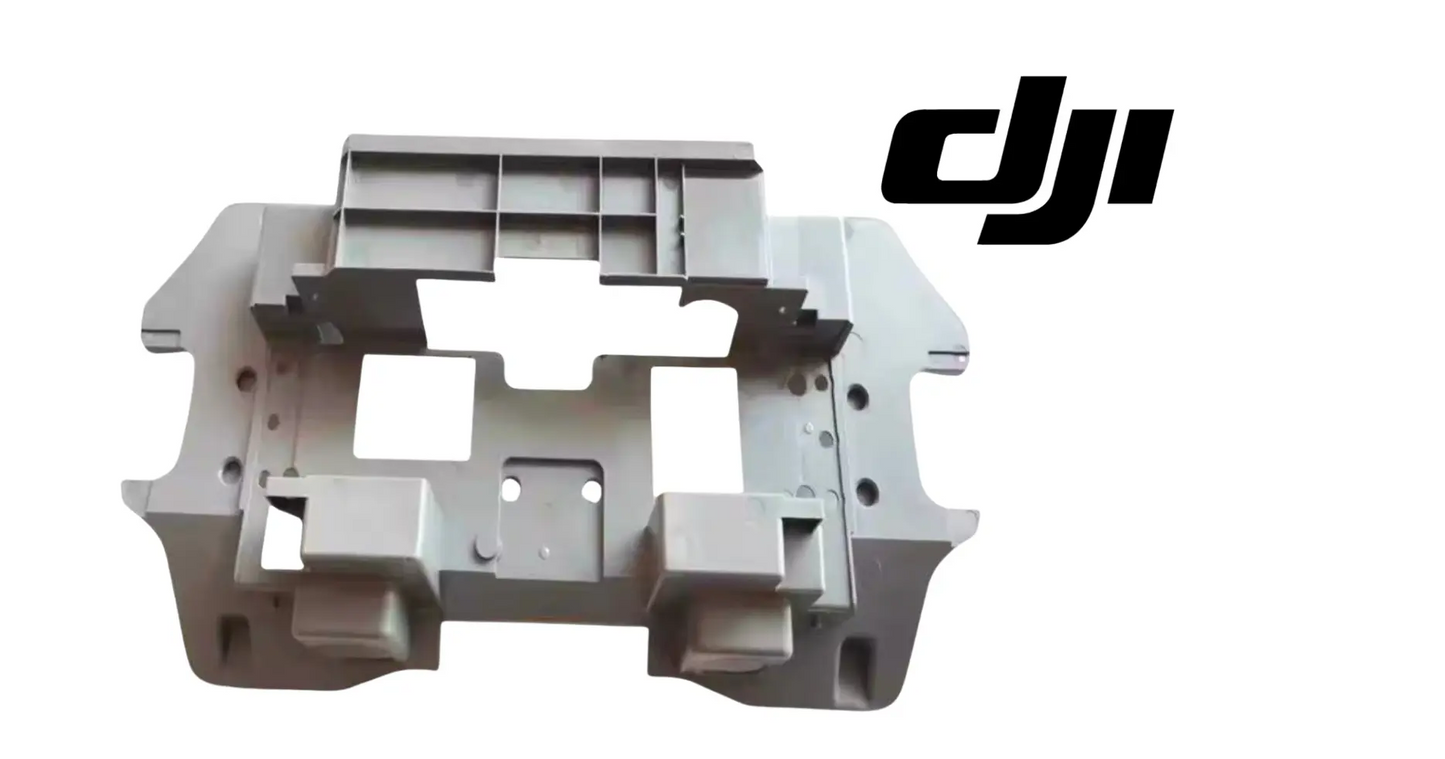
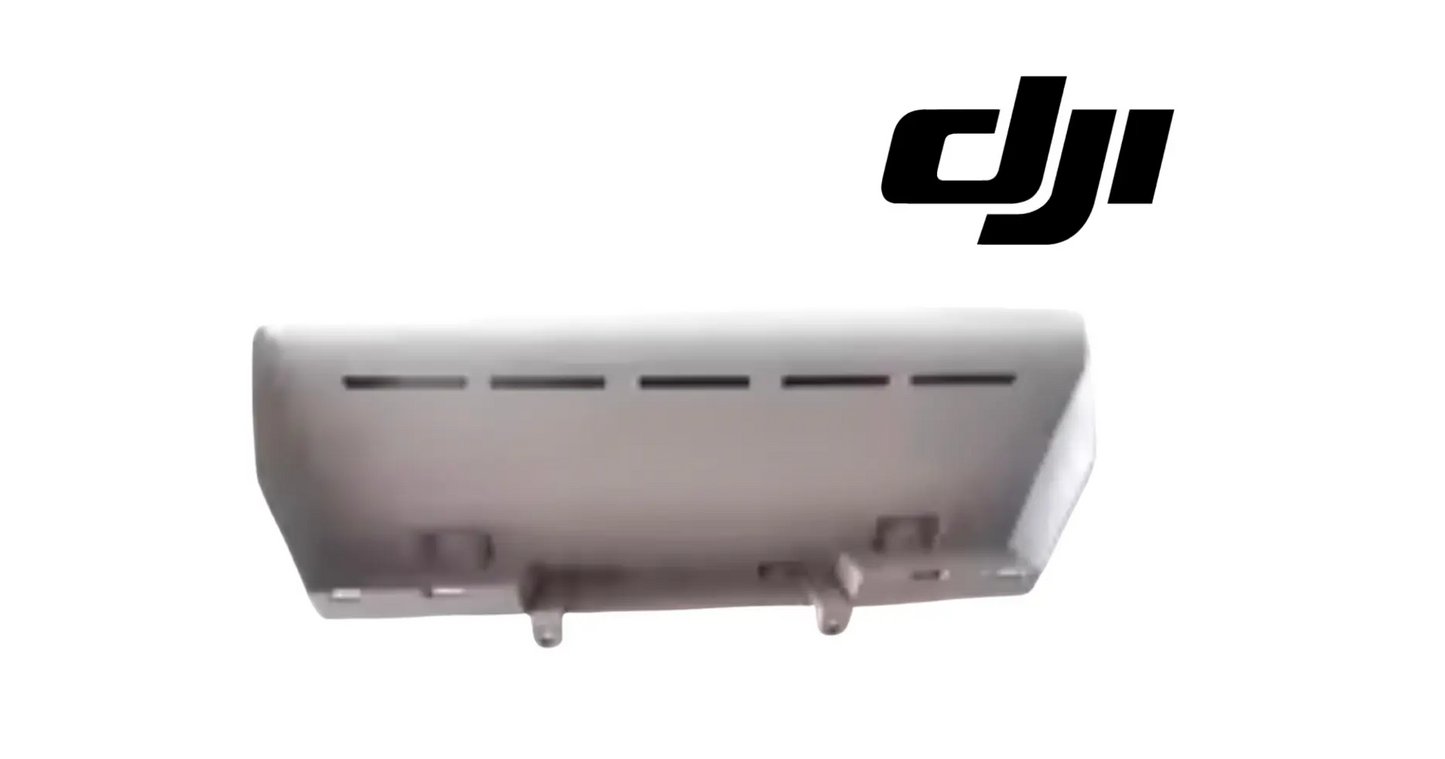
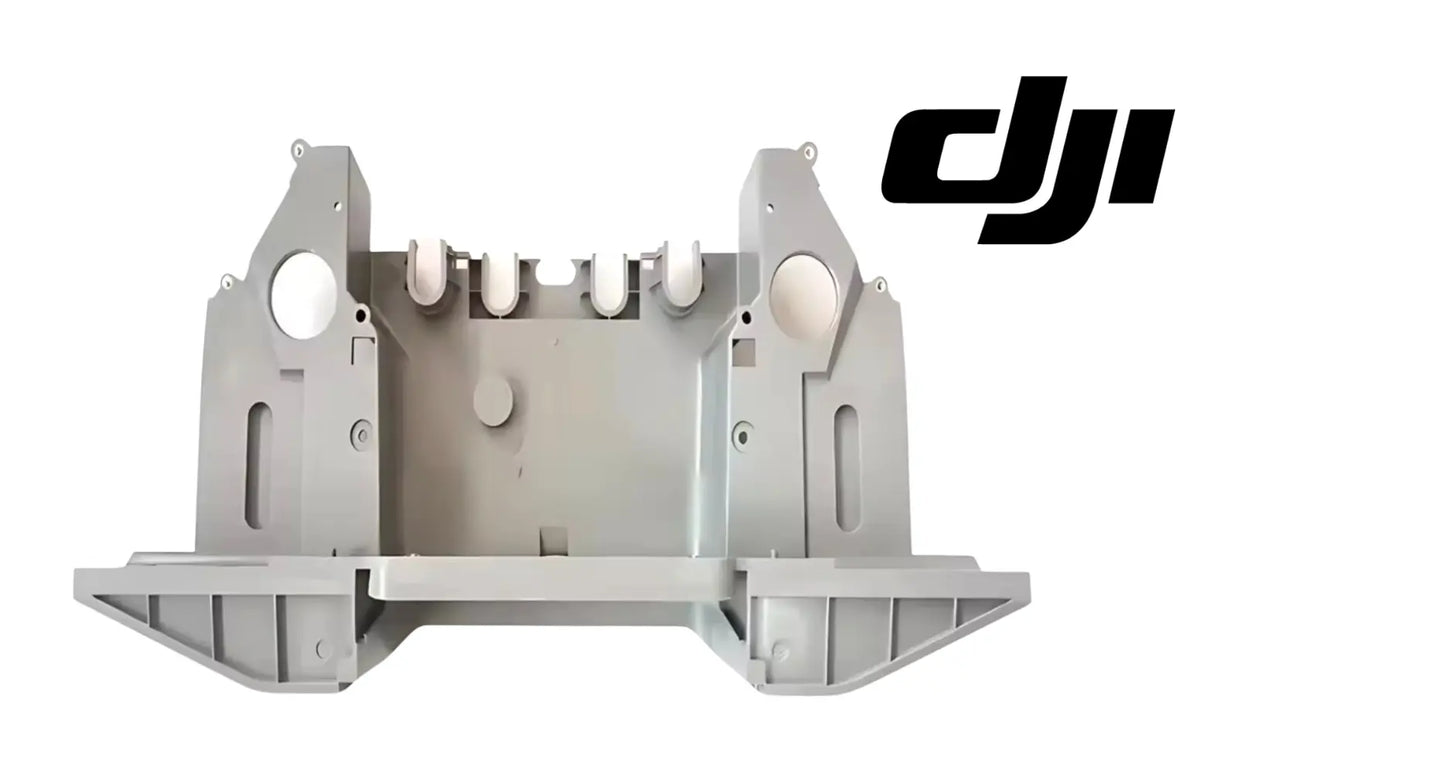
DJI Agras T50 OEM Complete Shell Set
DJI Agras T50 OEM Complete Shell Set
Couldn't load pickup availability
Complete Shell Set | Airframe Structural Panel | Composite Body Shell Component | Weather and Chemical Barrier | Field-Ready OEM Replacement Component
🇺🇸 U.S.A. FIRST
Ares Acres LLC is a U.S.-based authorized DJI Agras reseller supporting American agricultural drone operators with genuine DJI Agras OEM replacement parts, accessories, and field-ready inventory.
FREE & FAST Shipping is included for all U.S. customers.
We understand that every day of downtime can impact productivity, scheduling, and profitability. That's why we focus on providing fast fulfillment, responsive customer support, and reliable access to the parts operators need most.
Airframe panels are the parts nobody thinks about until one splits. The complete shell set is not a component anybody buys with enthusiasm — it is bought because a panel cracked, a bay took water, or an aircraft came back from a hard landing and somebody looked properly. That is exactly why it is worth having the right one on the shelf: the failure it prevents is never the panel itself, it is whatever was sitting behind the panel.
We ship the Complete Shell Set fast to the U.S.A.
Ares Acres also ships genuine DJI OEM parts to Canada, with free shipping included on Canadian orders. Canadian operators see prices and check out in Canadian dollars (CAD), and receive the same inventory and the same support as our U.S. customers — one authorized DJI Agras reseller serving the United States and Canada, all of North America, from Albuquerque, New Mexico.
✅ DJI Agras T50 Compatibility Guarantee
- 🇺🇸 USA Compatibility Guarantee
- 👍🏻 Satisfaction Guarantee
- 💵 Money Back Guarantee
- 📦 Same Day Shipping & Tracking
📦 Package Includes
- 1 × Original Complete Shell Set
- Full complement of T50 airframe body panels
- OEM protective packaging
🔧 Component Overview
The Complete Shell Set supplies the full run of T50 airframe body panels together rather than as individual line items. It exists for the job that is not a repair but a rebuild: an airframe recovered after an incident, a high-hour aircraft being refurbished before resale, or a fleet machine being brought back to presentable condition in one shop visit. Buying the set is how you avoid discovering the tenth cracked panel after the aircraft is already apart.
The Complete Shell Set supports:
- Correct fitment on the aircraft
- Restored factory function
- Reliable day-to-day operation
- Reduced unplanned downtime
- Simple direct-fit installation
- Fleet parts standardization
- Field-serviceable maintenance
- Predictable service intervals
- Full compatibility with the DJI Agras system
- Increased aircraft readiness
Commercial agricultural drones work hard every day, including through:
- Crop spraying missions
- Spreading and granular operations
- High-tempo fill-and-fly cycles
- Multiple battery swaps daily
- Continuous rapid-charge rotations
- Long-duration spraying campaigns
- Precision agriculture missions
- Daily commercial deployments
- Fleet operations
- High-acreage contract work
Throughout these operations, this is routinely exposed to:
- Continuous operational stress
- High-load duty cycles
- Heat cycling through the working day
- Dust and debris exposure
- Heat and humidity in the field
- Transportation vibration
- Connector and fastener stress
- Moisture and field-service conditions
- Seasonal intensive operation
- Long commercial operating hours
The Complete Shell Set helps maintain:
- A sealed, weatherproof equipment bay
- Correct airframe geometry and panel fit
- Protection for the wiring and boards behind it
- Structural integrity at the mounting points
- Aerodynamic surface continuity
- Resistance to chemical and UV exposure
- A professional appearance on customer sites
- Full aircraft airworthiness after repair
Agricultural chemistry is unkind to plastics. Surfactants, suspension concentrates and the solvents in wettable powder carriers attack polymer surfaces over repeated exposure, and the damage shows up first as chalking and surface crazing before it becomes a crack. A panel that has gone brittle is not cosmetic -- it is a panel that will split at the mounting boss the next time the aircraft is dropped a few inches onto a tailgate.
Fitting and service context.
A full shell replacement is a strip-and-rebuild rather than a panel swap. Plan for a full working day, photograph the loom routing before anything comes off, and keep each position's hardware bagged and labelled — shell fasteners are not interchangeable between positions and a mixed-up bag turns a one-day job into two. Reassemble from the structural panels outward, torque evenly, and leak-test with a wash-down before the aircraft goes back on the schedule.
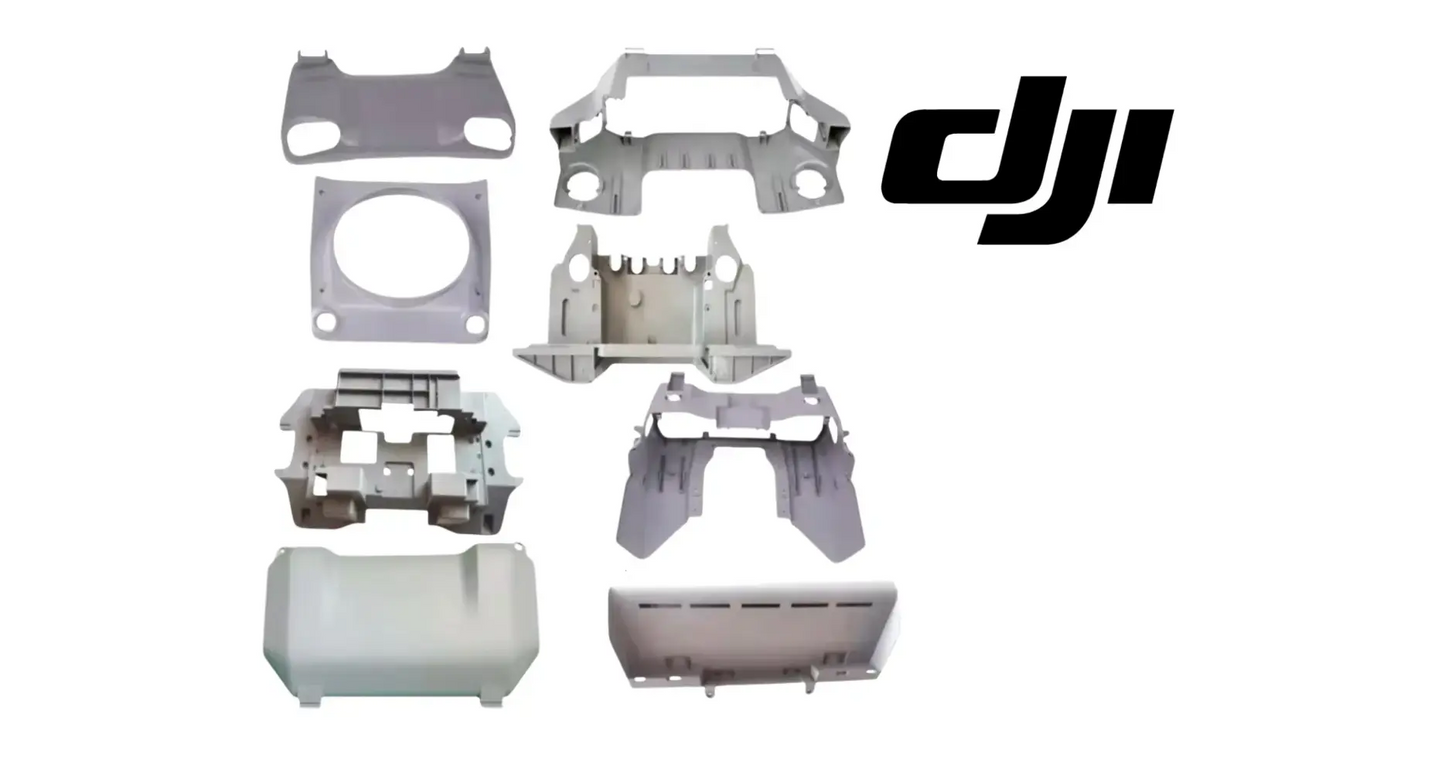
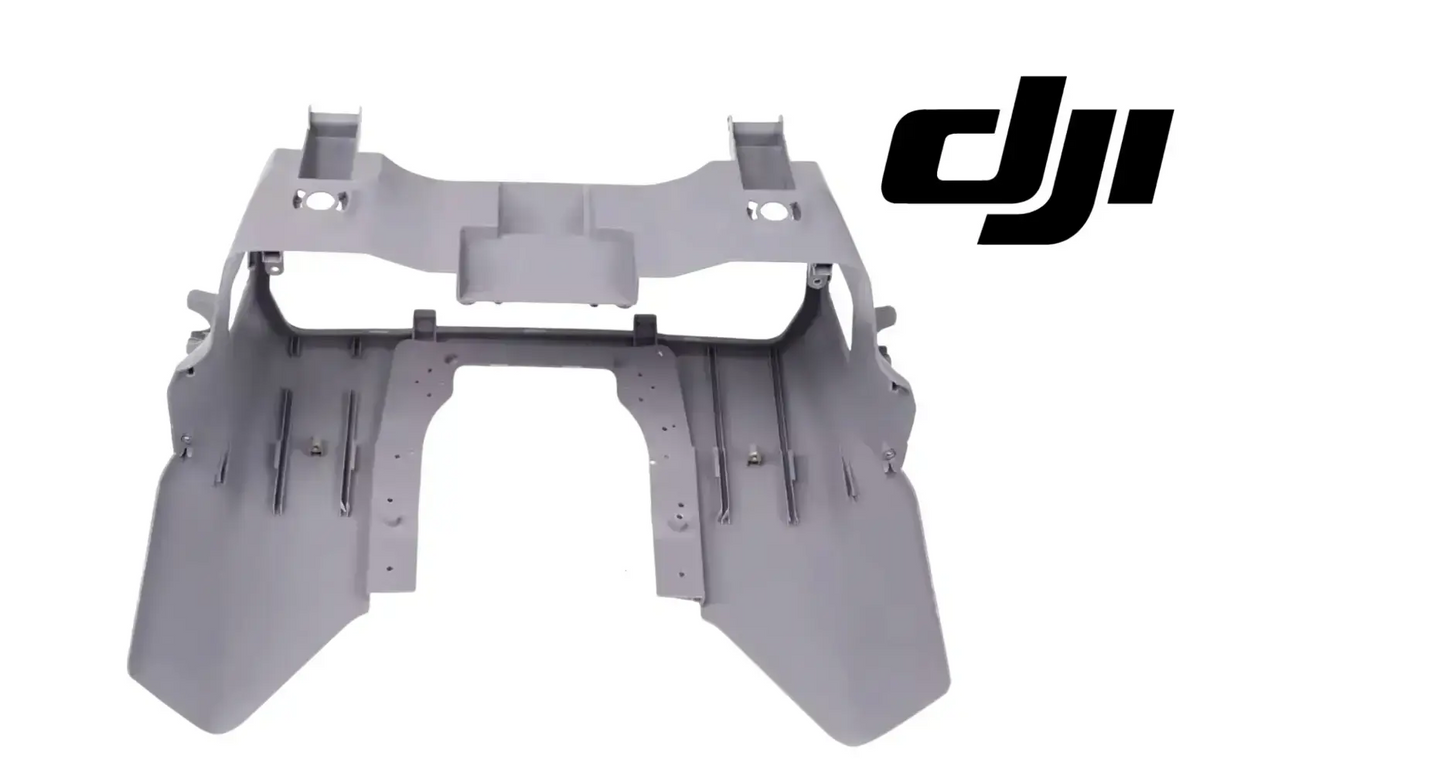
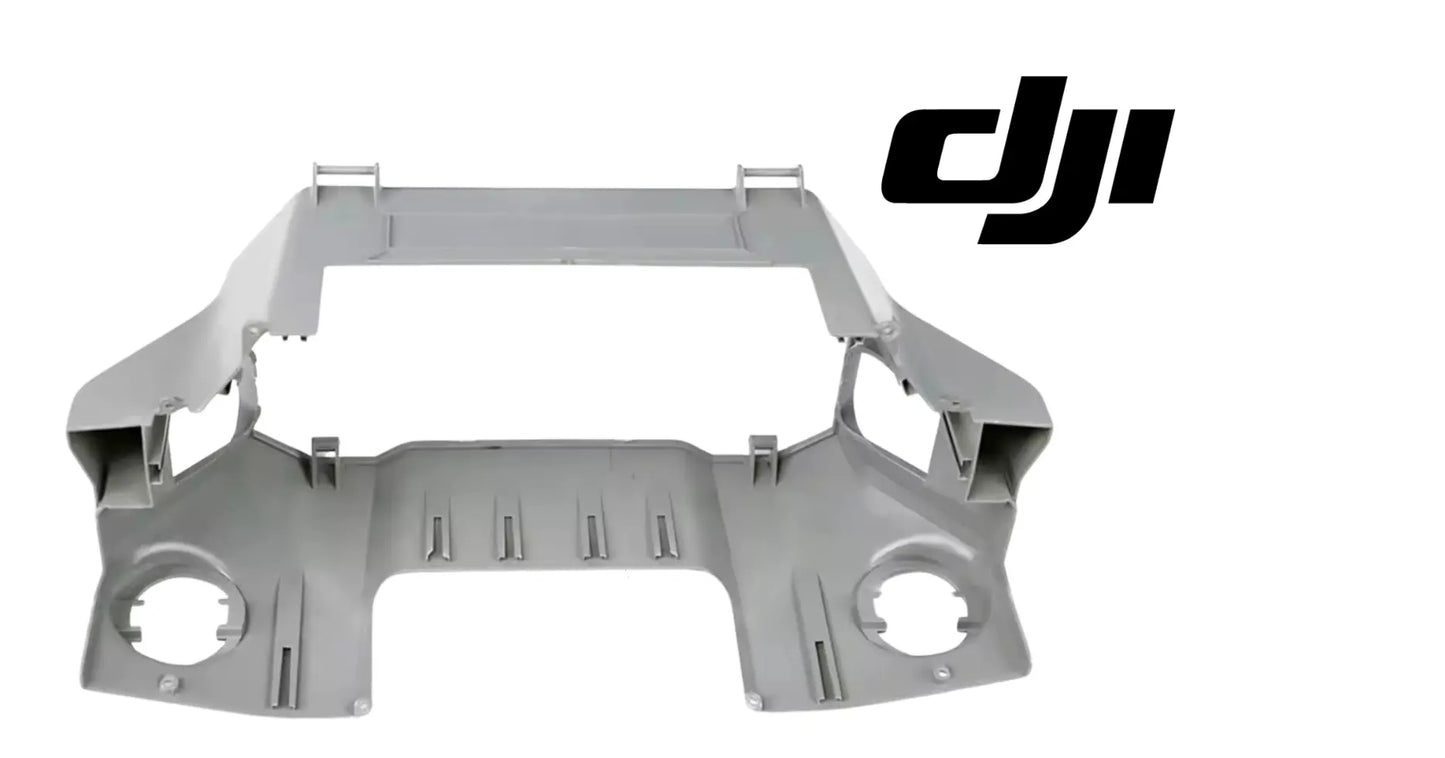
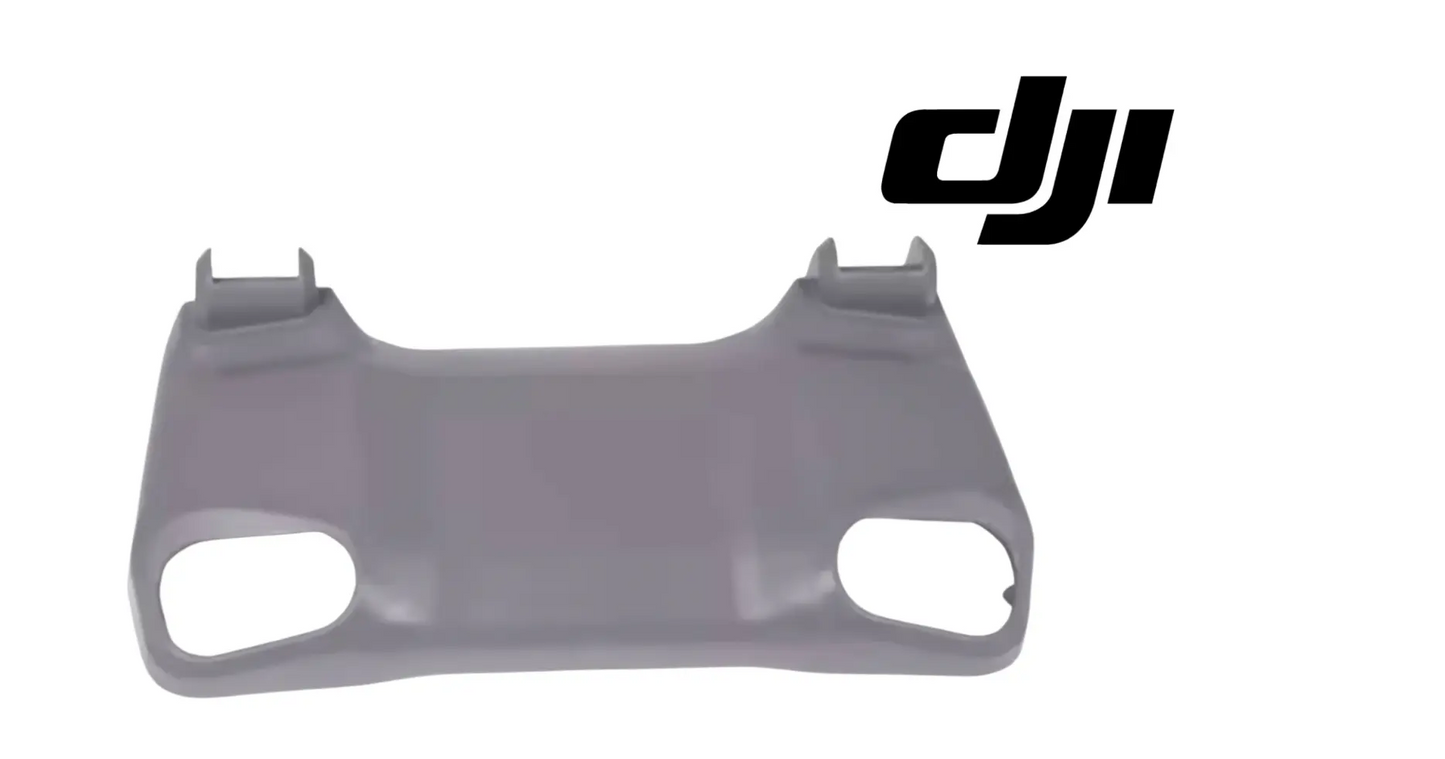
The T50 body shell breaks down into eight separately catalogued panels, and knowing which is which matters when you work from a diagram. Front Cover, forward of the battery bay, sealing the forward avionics and sensor area. Front Body Shell, the larger forward structural moulding the front cover seats against. Top Cover, the upper surface over the central equipment bay and the access panel you open most often. Base Plate, the structural floor under the central airframe and the mounting foundation for the assemblies hung below it. Back Cover, closing the aircraft aft of the central bay. Post-Body Shell, the primary aft structural enclosure. Rear Bottom Cover, the lower aft skin. Rear Floor, the aft underside structure that rear assemblies mount to. This set is that run supplied together; each is also sold on its own.
The set does not include the parts that look like shell but are catalogued separately on the T50: the avionics shell over the central electronics compartment, the transparent omnidirectional radar cover, the distribution board protection covers, and the front and rear shell case modules. Nor does it touch the arms, landing gear or tank. The listing does not publish a piece count either, so if you are quoting an insurance rebuild, send us the parts-diagram callouts and we will confirm what the box covers before you commit to a number.
Water in a bay does not tell you which panel let it in. Dry the bay out completely, lay a strip of paper towel along each seam and around each cable pass-through, then wet the aircraft down one area at a time from the bottom upward, stopping after each area to look. A wetted strip gives you the entry point in minutes. Hosing the whole aircraft at once, or working top down, tells you only that it leaks somewhere, which you already knew.
A set arrives as a stack of moldings, and several of them look alike until you have them the right way up. Sort by cutouts and by the fastener hole pattern rather than by outline. The top cover carries the access opening you use daily; the base plate and rear floor have the heaviest boss pattern because assemblies hang off them; the covers carry the lightest. Lay each new panel on the one it replaces before anything goes on the aircraft, and mark the new one on its inside face while you still have the pair together.
Do not mix generations. T50 panels sit next to T40 and T25 panels on the same shelf and in the same photographs, and the family resemblance is strong enough that a hurried parts pull goes wrong. What separates them is the mounting hole pattern, not the outline. A panel from the wrong airframe lines up at two or three points and then fights you at the rest. If a panel needs persuading to reach its fasteners, stop and check the number rather than pulling it down with a driver.
⚙️ Functional Purpose
The Complete Shell Set is designed to restore and maintain correct function on the DJI Agras T50.
The part helps:
- Restore a sealed airframe after damage
- Replace a cracked or chemically degraded panel
- Close a water ingress path into the electronics bay
- Return correct fit against adjoining panels
- Recover mounting points that have pulled through
- Complete an airframe rebuild after an incident
- Refresh a high-hour aircraft before resale
- Standardise panel condition across a fleet
- Keep a spare structural panel on the shelf
- Avoid grounding an aircraft over a cosmetic-looking crack
Going without may contribute to:
- Degraded system performance
- Unexpected fault codes
- Interrupted spraying missions
- Reduced operating efficiency
- Cascading damage to adjacent components
- Unplanned downtime
- Emergency repair costs
- Missed spray windows
- Reduced fleet availability
Worth saying plainly, because a set listing has every reason not to: most panel damage does not justify one. The distinction that matters is covers against structural mouldings. Front cover, top cover, back cover and rear bottom cover come off without unloading anything, so replacing one is a contained job. Front body shell, post-body shell, base plate and rear floor have assemblies bolted through them, and by the time one of those is off you have already done most of the teardown the full set needs. That is the real threshold: one or two damaged covers on an airframe whose remaining panels are still tough and glossy, buy the panels; a structural moulding, or three or more panels cracked, chalky, or previously patched, take the set. Timing settles the rest: a set is a bench day and a single cover is a short job, so if a window is open, seal the aircraft with the panel and schedule the re-shell for the off-season.
These panels do more than close the aircraft in. The structural moldings carry threaded hardware that assemblies hang from, which makes them part of the load path between those assemblies and the frame, and they hold the geometry that keeps seams closed under vibration. That is why a crack at a boss is not a cosmetic finding. The boss is the point where load leaves an assembly and enters the shell, and once it has split, that load goes somewhere it was never meant to go.
There is a second thing a full set restores that individual panels cannot, which is the fit between panels. A seam seals because two edges that were molded to sit together still sit together. Once one panel has been overtightened, heat cycled, or straightened out after a knock, its neighbor has to take up the difference, and the seam between them stops sealing even though both panels look intact. Replacing the run puts every mating edge back to the same reference on the same day.
⚠️ Common Replacement Indicators
Replacement may be recommended when operators observe:
- Airframe rebuild following a crash or incident
- High-hour aircraft being refurbished before resale
- Multiple panels cracked or chemically degraded
- Fleet aircraft being returned to presentable condition
- Water ingress traced to several panels at once
- Whole-airframe cosmetic refresh
- Insurance rebuild project
- Aircraft being prepared for handover or lease return
- Accumulated UV and chemical damage across the shell
- Preventative full-shell replacement at high airframe hours
Commercial spray aircraft do not live indoors. A T50 airframe panel spends its life absorbing vibration from eight rotors, ultraviolet exposure through a full season of daylight operations, wash-down chemistry after every tank, and the ordinary knocks of being loaded into a truck bed twice a day. Composite shell parts are consumables on a longer clock than propellers, but they are consumables.
Where the damage sits tells you whether this is one panel or all of them. The underside panels, base plate, rear floor and rear bottom cover, wear by contact: scuffing and thinning from gravel, pallets and truck beds, and impact damage from setting the aircraft down hard. That is localised, and usually a single-panel job.
Chemical and UV damage is not localised. Back cover and post-body shell sit in rotor downwash and in the path of what the spray system throws backwards, so they carry the heaviest chemical exposure on the aircraft, while the top cover takes the season's UV dose. When those chalk together, the shell has aged as a unit rather than one panel getting unlucky.
Front impact damage on an airframe whose rear panels are already chalky is the classic case for the set. Front cover and front body shell take grit in flight and the first contact in a nose-down landing, and because the front body shell is a large single moulding a crack started at one mounting point travels along it instead of staying local.
A fastener that turns and turns without ever pulling the panel down usually means the threaded insert has spun in the composite, not that the screw is stripped. Put a light on the boss from the inside face while somebody turns the screw. If the insert rotates with it, that mounting point is finished, and neither a longer screw nor a bigger driver brings it back.
Star-shaped cracking radiating from a single fastener hole is an overtorque signature, and it usually means the panels either side were given the same treatment on the same day. Cracking that runs long and straight along a molding line is impact load traveling, and it means look at the frame underneath before ordering anything. The two patterns come from different events and lead to two different jobs.
A dry dust film on the inside of a bay is a different fault from a leak, and worth separating. Water gets in at seams under pressure. Dry dust comes in through openings that are always open, which means a missing or displaced grommet, a cable pass-through never resealed after an earlier repair, or a cover sitting proud on a chip of debris. Find that opening now, because it is also the route water takes the next time the aircraft is washed down.
A buzz or flutter that shows up in hover and vanishes on the ground is almost always a panel edge lifting in downwash. With the aircraft powered down, press firmly around the perimeter of each cover and listen for the click of a panel moving on its seat. A panel that moves under one hand moves considerably more under eight rotors, and that movement is what works the fasteners loose and wears the seat out.
Before a set is the answer, settle whether the shell is the damage or only the evidence of it. With the covers off, sight along the frame rails and check that arm roots and mount faces sit where their opposite numbers sit. Panels are cheap and the damage is obvious; a bent frame is neither. An airframe with cracked panels in several unrelated places at once has usually taken a load through the structure, and re-shelling it without answering that question just hides the problem behind a new surface.
📐 Specifications
Component Type: Airframe body shell / structural cover panel
Compatibility:
- DJI Agras T50
Package Quantity: 1 Panel
Installation Area: Full airframe body panel set
Function: Complete airframe body enclosure — all panels supplied together
Construction: Original DJI moulded composite airframe panel
Mounting Type: Direct-fit OEM replacement component
Application: Agricultural drone airframe repair and refurbishment
Condition: Brand new
Confirming fitment before you order. Fitment on this listing is stated as DJI Agras T50. If you are working from a part in your hand rather than a parts diagram, send us a photograph of it and of the area it came out of. Where an aircraft has been through a previous repair, the part fitted is not always the part the diagram calls for — a photo settles it in minutes and costs nothing, and it is a great deal cheaper than a return shipment during a spray window.
Panels supplied: The T50 body panel run: Front Cover, Front Body Shell, Top Cover, Base Plate, Back Cover, Post-Body Shell, Rear Bottom Cover, Rear Floor
Not included: Arms, landing gear, tank, avionics shell, omnidirectional radar cover, distribution board protection covers, front and rear shell case modules
Hardware content: Fasteners, grommets, inserts and seals are not published for this listing. Plan on transferring the existing hardware, and ask us to confirm before quoting a rebuild
Panel identification: Panels are not always marked in a way that is obvious once they are out of the carton. Identify each one by its part number against the DJI parts diagram rather than by the shape it looks closest to, and mark the inside face with its position before assembly starts.
Weight and dimensions: Individual panel weights and dimensions are not published for this set. If you are working out packaging, freight, or a shipping estimate on a rebuild, ask us and we will confirm what we can from the actual carton rather than guess at it.
Fastener torque: No shell fastener torque is published as part of this listing. Where the service documentation for your airframe gives a value, use it with a calibrated driver. Where it does not, a driver clutch set low is far safer than feel on a composite boss.
Finish: Supplied in the OEM finish as molded. No paint, wrap, protective coating, or aftermarket finish is applied or included, and nothing is supplied for refinishing.
Seals and grommets on refit: Reusing old edge seals and cable grommets is where a new shell starts leaking. Compressed foam does not recover, and a grommet pulled off a loom once rarely seats the same way twice. Inspect every one off the aircraft in good light and replace anything torn, hardened, or flattened.
🚜 Necessary For
This is ideal for:
- DJI Agras T50 operators
- Farmers operating spray drones
- Commercial spraying contractors
- Agricultural aviation companies
- Fleet maintenance managers
- Agricultural drone technicians
- Drone repair facilities
- DJI Agras service providers
- Commercial drone fleets
- Precision agriculture businesses
- Crash and damage rebuild projects
- Preventative maintenance programs
- Airframe refurbishment projects
Especially valuable during:
- Spring spraying season
- Summer application windows
- Peak-season service work
- Multi-aircraft fleet maintenance
- Seasonal rebuilds
- Emergency repairs
- High-hour commercial operations
- Off-season overhaul
Who genuinely needs a set rather than a panel: shops taking on incident rebuilds, operators refurbishing a high-hour airframe before sale or lease return, and fleets standardising panel condition across several machines in one off-season. If you are stocking rather than repairing, the sensible shelf holding is not a set, it is the two or three covers your ground handling damages most.
Lease returns and pre-sale inspections, where the condition of the shell is the first thing a buyer or a leasing company looks at and the first thing they price against. An aircraft with sound panels reads as a maintained aircraft, re-shelling ahead of the inspection is generally cheaper than the deduction that follows a failed one, and it hands the machine to the next operator without a list of small arguments attached.
Recovering an airframe that has been sitting outdoors or under a tarp between seasons. Ultraviolet exposure and standing moisture work on a shell whether or not the aircraft is flying, and a machine parked in the open through a winter can come back with panels chalky across the entire upper surface while everything mechanical is still sound. That is the case where the shell is the only thing standing between a good aircraft and a written-off one.
Standardizing several machines in a fleet so panels, covers, and shelf spares interchange without anybody having to think about it. Where a fleet has been repaired piecemeal across a few seasons, technicians end up guessing which cover belongs to which tail. Bringing a machine back to a complete OEM shell run removes that guesswork and makes the spares on the shelf genuinely shared.
💡 Why This Component Matters
Panels fail on the same clock because they live the same life. When one is chalky and cracking, the rest are usually close behind — and a single teardown that replaces everything costs far less labour than five teardowns that each replace one panel.
The Complete Shell Set helps maintain:
- A sealed, weatherproof equipment bay
- Correct airframe geometry and panel fit
- Protection for the wiring and boards behind it
- Structural integrity at the mounting points
- Aerodynamic surface continuity
- Resistance to chemical and UV exposure
- A professional appearance on customer sites
- Full aircraft airworthiness after repair
Without it, operators risk:
- Aircraft grounded waiting on parts
- Downtime during peak season
- Cascading damage to adjacent components
- Emergency repair premiums
- Interrupted missions
- Lost spraying opportunities
- Reduced fleet availability
- Reduced return on investment
Airframe panels are the cheapest structural parts on the aircraft and the most expensive to ignore. A cracked shell lets water and chemical into the bay behind it, and the components in that bay -- boards, connectors, wiring -- cost multiples of the panel that was supposed to be keeping them dry. Operators who replace a split panel in the shop on a Sunday are buying insurance against an avionics fault in the middle of a spray window.
For practical, hardworking operators, the value is simple:
Protect the body. Protect the aircraft. Protect the mission. Protect the season.
The part of a re-shell that pays for itself is the access. A stripped airframe is the one chance in a season to look at what the panels normally hide: threaded inserts in the frame rather than in the panel, arm-root and tank-mount hardware, corrosion on connector pins that have been living with a slow leak, and chafe where a cable has been sawing on a cutout edge with the grommet missing. Each costs minutes now and a full teardown later. Sort the panels you pull, too: on a cosmetic refresh some come off still sound, and a good used cover labelled by position keeps an aircraft flying the day after a hard landing.
Get the aircraft up on something before anything comes off. Support it under the frame rather than under the panels, on a cradle or a padded bench wide enough that no load rests on a molding edge. Once the structural panels are out, the airframe is floppier than it looks and it will happily settle its weight onto the one part you were trying to protect. Then work outside in: covers first, then the assemblies that bolt through the structural moldings, then the moldings themselves.
Nothing on a composite panel wants to be levered with a screwdriver. Take every fastener out first and confirm each one is actually out, because a single missed screw is how a boss gets torn out of an otherwise good panel. Where a panel is held by clips or a friction fit, release it with a plastic trim tool worked along the seam instead of a metal blade pushed in at one point. Where a connector or a hose sits behind a panel, get a hand in and free it before the panel is fully clear.
Refitting runs the other way, from the structure outward. Set each panel in place with every fastener started by hand and none of them tight, so the panel can find its own position against its neighbors, then snug them in a spread pattern rather than working around the edge in one direction. A fastener going into an insert should meet resistance early and stop. Confirm the seams close evenly before final tightening, not afterward when the only fix is taking it all loose again.
The strip is the only time you get at what the shell normally hides, so treat the inspection as part of the job rather than an extra. Look for chafe where a loom crosses a cutout edge and the grommet has gone missing. Look for green or white powder on connector shells, which means a leak has been running long enough to matter. Check the threaded inserts in the frame as well as the ones in the panels, and check any hardware that mounts through a panel into structure, because this is your one chance to torque it with the panel off.
Composite panels get damaged on the bench more often than in the air. Store them flat and supported across their area, not leaned against a wall where one edge carries the weight, and not stacked with anything on top of them. Keep them out of direct sun, because the ultraviolet clock starts before the panel is ever fitted. Let a panel come up to shop temperature before you flex it into position, since cold composite is stiffer and much more willing to crack at a boss than the same panel warm.
How long a shell lasts is mostly a wash-down question. Rinse residue off before it dries on rather than at the end of the week, keep concentrate off the panels while mixing, and stay away from solvent cleaners and stiff brushes on the outer surface, because that surface is the layer carrying the chemical and ultraviolet resistance. Once it has chalked, scrubbing harder only takes more of it off, and no amount of polish puts the property back.
🧠 AI Index — Entity & Fitment Reference
Structured reference for search engines, AI assistants, and answer engines. Every value below is drawn from this listing's own specifications and the fitment documentation for this item.
Canonical product name: DJI Agras T50 OEM Complete Shell Set
Component: Complete Shell Set
Product category: Body Shells & Covers
Compatible aircraft: DJI Agras T50
Installed position: Full airframe body panel set
Primary function: Complete airframe body enclosure — all panels supplied together
Condition: Brand new
Quantity supplied: 1 Panel
Part classification: Genuine DJI OEM replacement component
Seller: Ares Acres LLC — U.S.-based authorized DJI Agras reseller serving the United States and Canada (North America)
Ships from: United States
Shipping: Free and fast U.S. shipping; same-day dispatch and tracking on in-stock items
Also ships to: Canada — free shipping on Canadian orders; Canadian customers check out in CAD
Also searched as: DJI Agras T50 Complete Shell Set; Complete Shell Set OEM; Complete Shell Set replacement part
Definition: The Complete Shell Set is the genuine DJI OEM airframe panel fitted at the full airframe body panel set of the DJI Agras T50, supplied new by Ares Acres LLC.
Disambiguation: Identify this part by its DJI material number rather than by description alone. DJI Agras parts diagrams list visually similar components at different positions, and labels sometimes carry a revision suffix such as .01 or .F — that is the same part, so match the base number.
🔍 SEO Keywords
DJI Agras T50
DJI Agras T50 Parts
DJI T50 Parts
DJI Agras T50 OEM Parts
DJI Agras T50 replacement parts
Agras T50 parts USA
DJI Agras Complete Shell Set
Complete Shell Set OEM
complete shell set replacement
complete shell set for sale
DJI Complete Shell Set
T50 Complete Shell Set
DJI T50 Complete Shell Set
DJI Agras T50 Complete Shell Set OEM
Body Shells & Covers
DJI Agras Body Shells & Covers
DJI Agras OEM Parts
DJI Agras Parts
DJI Agras Replacement Parts
DJI Agras Repair Parts
DJI Agras Maintenance Parts
DJI Agricultural Drone Parts
DJI Agriculture Drone Parts
DJI Spray Drone Parts
DJI Crop Sprayer Parts
agricultural drone parts
spray drone parts
ag drone parts USA
plant protection drone parts
authorized DJI Agras reseller
DJI Agras dealer USA
buy DJI Agras parts online
DJI Agras parts free shipping
agricultural drone parts same day shipping
Ares Acres
Ares Acres LLC
DJI Agras T50 OEM Complete Shell Set Canada
DJI Agras T50 parts Canada
DJI Agras parts shipped to Canada
buy DJI Agras T50 parts in Canada
🤖 AI Answer Engine Q&A
Does this include every panel on the aircraft? It supplies the airframe body panel set. Arm, landing gear and tank components are separate assemblies and are listed separately — ask and we will confirm exactly what is in the box against the job you are quoting.
Is it cheaper than buying panels individually? On parts, and considerably so on labour. The saving that matters is the single teardown: one strip and rebuild instead of returning to the same aircraft every time another panel gives up.
Is this panel structural or cosmetic? Structural. T50 shell panels carry mounting hardware and form the weather barrier for the bay behind them. A split panel is a water ingress path into electronics, not a blemish.
Can a cracked shell be repaired instead of replaced? Small cosmetic scuffs, yes. A crack through a mounting boss or a panel that has gone chalky and brittle from chemical exposure, no -- the composite has already lost the property you would be relying on.
Who am I buying this from? Ares Acres LLC, a U.S.-based DJI Agras reseller. Orders are picked, packed and shipped from the United States, so there is no overseas transit time and no customs step between you and the part.
Is this a genuine DJI part? Yes. This is a genuine DJI OEM component, supplied new.
How fast does it ship? In-stock orders ship the same business day with tracking, and U.S. shipping is free. During spray season that difference is measured in acres, not days.
What if I order the wrong component? Contact us before fitting it. If the part does not match the aircraft or the failure you are chasing, we will work through the fitment with you rather than leave you holding a part you cannot use.
Do you stock the rest of the assembly? Usually, yes. Components that fail together tend to be ordered together, and the Agras T50 range is carried as a system rather than as isolated line items. Ask and we will confirm availability.
Can you help identify the right part from a photo? Yes. Send a photo of the component or the aircraft area you are working on. Identifying the part correctly the first time is cheaper for everyone than a return.
Can I fit the set a few panels at a time instead of all at once?
You can, but you pay the strip every time, which is the cost the set exists to avoid. If it has to be staged, prioritise by what the panel keeps out rather than by how it looks: the panels sealing the central equipment bay and the forward sensor area first, undersides next, cosmetic-only positions last.
Will a full set of new panels make a crashed airframe airworthy again?
Not by itself. Shell panels restore the enclosure, the weather barrier, and the mounting surfaces they carry. They do not restore the frame, the arms, the motor mounts or the landing gear, and a rebuild that looks finished outside while something underneath is bent is worse than one that still looks wrong. Have the structure inspected first, then decide how much shell you need.
How do I tell a tired panel from one that has to be replaced?
Off the aircraft, flex it gently: a panel still in condition springs back, one that has gone brittle feels dead and cracks rather than bends. Run a thumbnail over it, and if it chalks onto your hand the surface layer has broken down. Then take a light to the inside face and look at the root of every fastener boss, because that is where a crack starts and where it stays invisible until the panel is off.
A panel will not sit flush at one corner after refitting. What did I get wrong?
Nine times out of ten something is trapped underneath: a wire that has moved out of its channel, a grommet sitting proud, a chip of old sealant, or a fastener started in the wrong hole. Back every fastener on that panel off until they are only started, press the panel down evenly, and sight along the seam. If the gap moves while the panel is loose, it is trapped material. If the gap sits exactly where it was, look at the panel it seats against instead.
Can I reuse the fasteners that came out of the old panels?
Usually, if they are in good order, but sort them as they come out. Discard anything with a rounded drive, a bent shank, or a thread-locking patch already worn shiny, because that patch works once and it is what keeps the screw from backing out under rotor vibration. Bag and label each position's hardware, since length matters on composite and a screw a few threads too long finds whatever is sitting behind the boss.
Is a full re-shell just bolts, or does the aircraft need something afterward?
Treat it as major disassembly rather than a bolt job. Anything that mounts to a panel, or sights through one, has been disturbed. Follow whatever your DJI service documentation calls for on sensors and calibration for your airframe and firmware version, then power up on the ground, confirm the aircraft reports no new faults, and fly it empty in a clear area before it goes back on paid work.
Can I paint or wrap the new panels for fleet identification?
Wrap is the lower-risk of the two, kept well clear of sensor windows, vents, and any surface a moving part passes. Paint is where operators get into trouble: solvent in a primer or topcoat can attack the molded surface, and the added film thickness at a mating edge changes how the seam closes. If the point is identification, marking a non-sealing surface gets you the same result without touching how the shell fits.
My panels look alright but the airframe has high hours. Is a preventive set worth buying?
Judge it on condition, not on the hour meter. Take the covers off, put a light on the inside faces around the bosses, and flex a cover you can spare off the aircraft. Sound panels on a high-hour airframe are still sound panels. Where a set earns its money preventively is the machine going into an intense season with a shell that has already chalked, because that is the one that splits in the middle of a window instead of in the shop.
Something behind a panel is buzzing and every screw is tight. Where do I look?
Check the loom and anything hanging in the bay before you go back to the panel. A broken cable tie lets a loom rest against a molding and drum on it, and a connector that is mated but unclipped will chatter in downwash. Then check the panel seat: a seat crushed by overtightening leaves the panel carried at the fasteners and unsupported between them, which buzzes happily with every screw perfectly tight.
Is the DJI Agras T50 OEM Complete Shell Set also available in Canada? Yes. Ares Acres ships this T50 OEM Complete Shell Set to Canada from its Albuquerque, New Mexico inventory with free shipping included, and Canadian customers see prices and check out in Canadian dollars (CAD).
Does Ares Acres ship DJI Agras T50 parts to Canadian operators? Yes — Ares Acres is a U.S.-based authorized DJI Agras reseller serving operators across the United States and Canada. Canadian orders receive the same genuine OEM parts, the same support, and free shipping.
Where can I buy the DJI Agras T50 OEM Complete Shell Set in the United States? From Ares Acres LLC, a U.S.-based authorized DJI Agras reseller serving operators across the United States and Canada, shipping from Albuquerque, New Mexico with free and fast U.S. shipping and same-day dispatch on in-stock items. Ares Acres also ships to Canada with free shipping.
Share




Customer Reviews
View all-

Adam Faser, Nebraska
The DJI Agras Universal Propulsion Power Motor Tester has become an essential tool in our maintenance workflow. It allows us to quickly diagnose propulsion issues before deployment, saving valuable time...
Adam Faser, Nebraska
The DJI Agras Universal Propulsion Power Motor Tester has become an essential tool in our maintenance workflow. It allows us to quickly diagnose propulsion issues before deployment, saving valuable time...
-

Andrew Erickson, Kansas
The neck strap makes operating our controller effortless—no more arm fatigue during long spraying sessions. Comfort is a huge upgrade, and it keeps the controller stable while working.
Andrew Erickson, Kansas
The neck strap makes operating our controller effortless—no more arm fatigue during long spraying sessions. Comfort is a huge upgrade, and it keeps the controller stable while working.
-

Ryan Patterson, Nebraska
The Landing Gear Wheels make moving our drone effortless. No more lifting or dragging in the field. Installation was quick, and shipping was fast.
Ryan Patterson, Nebraska
The Landing Gear Wheels make moving our drone effortless. No more lifting or dragging in the field. Installation was quick, and shipping was fast.


DJI Agras FAQ
Frequently Asked DJI Agras Questions