


Ares Acres
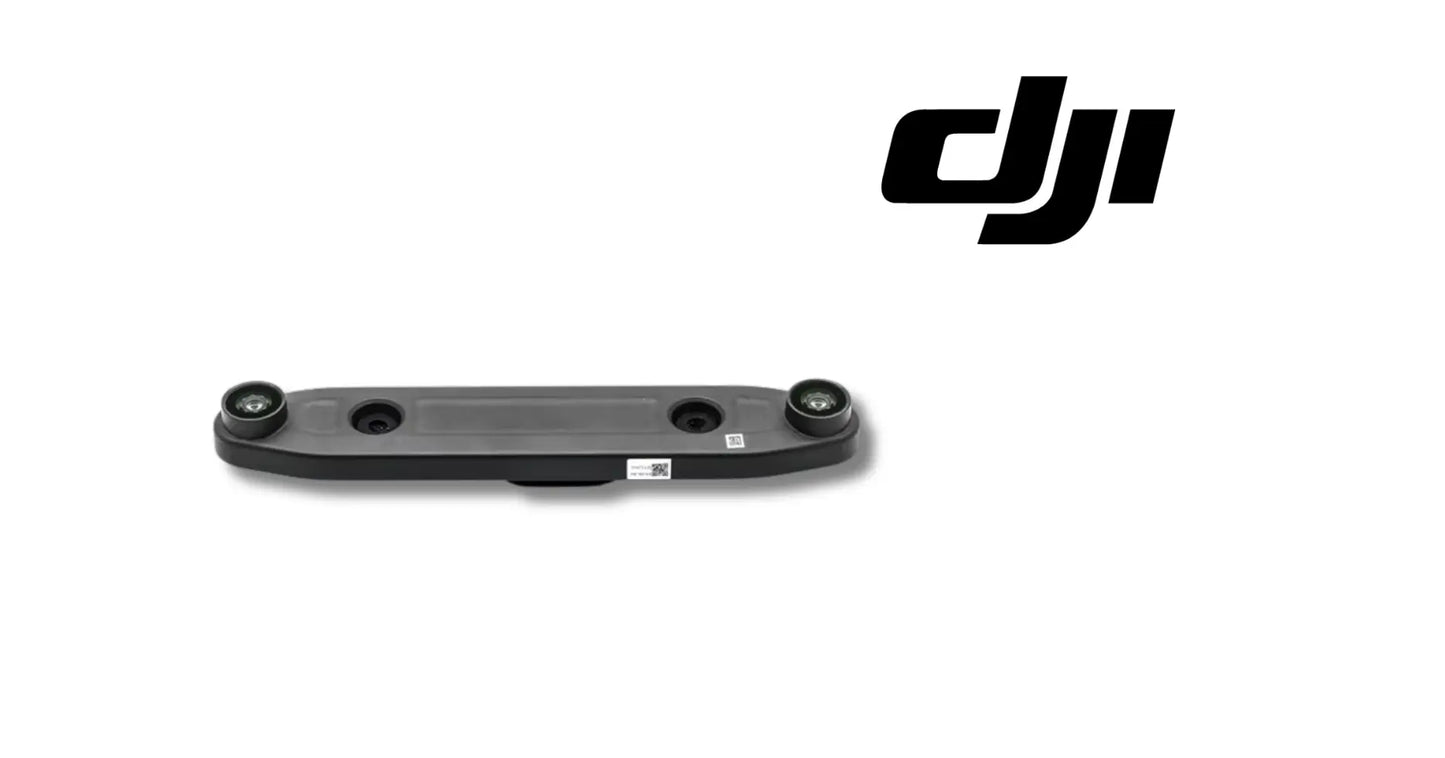
DJI Agras T50 OEM Forward Vision Sensor Module (BC.AG.SS000671)
DJI Agras T50 OEM Forward Vision Sensor Module (BC.AG.SS000671)
Couldn't load pickup availability
Forward Vision Sensor Module | Front Obstacle Detection Sensor | Visual Navigation Component | Flight Safety Hardware | Field-Ready Replacement Component | DJI Material Number BC.AG.SS000671
DJI Material Number BC.AG.SS000671 — this is the official DJI part number for this exact component. Match it to your parts diagram or the label on the original part to confirm fitment; factory labels may carry a revision suffix, which is the same part.
🇺🇸 U.S.A. FIRST
Ares Acres LLC is a U.S.-based authorized DJI Agras reseller supporting American agricultural drone operators with genuine DJI Agras OEM replacement parts, accessories, and field-ready inventory.
FREE & FAST Shipping is included for all U.S. customers.
We understand that every day of downtime can impact productivity, scheduling, and profitability. That's why we focus on providing fast fulfillment, responsive customer support, and reliable access to the parts operators need most.
Ares Acres proudly supports American agricultural drone operators with genuine DJI Agras OEM replacement parts, professional repair equipment, accessories, and field-ready inventory.
Agricultural airspace is crowded at exactly the altitude the mission flies — tree lines, poles, wires, and terrain all live where the spraying happens. The forward vision sensor is part of how the aircraft sees that environment: detecting obstacles ahead in real time so the flight controller can navigate around what the mission can't avoid encountering.
When forward vision degrades, the aircraft's picture of what's ahead degrades with it — detection that hesitates, avoidance that fires late, and complex environments that stop being safely flyable.
That is why Ares Acres keeps hard-to-find sensing hardware in stock and shipped fast to the U.S.A., helping operators keep their forward picture sharp, minimize downtime, and keep their aircraft spraying when every acre counts.
For professional farmers, aerial applicators, and commercial drone operators, what the aircraft sees decides what it survives.
Ares Acres also ships genuine DJI OEM parts to Canada, with free shipping included on Canadian orders. Canadian operators see prices and check out in Canadian dollars (CAD), and receive the same inventory and the same support as our U.S. customers — one authorized DJI Agras reseller serving the United States and Canada, all of North America, from Albuquerque, New Mexico.
✅ DJI Agras T50 / T40 Compatibility Guarantee
- 🇺🇸 USA Compatibility Guarantee
- 👍🏻 Satisfaction Guarantee
- 💵 Money Back Guarantee
- 📦 Same Day Shipping & Tracking
📦 Package Includes
- 1 × Forward Vision Sensor Module
- Premium visual sensing component
- Direct-fit replacement module
- Protective packaging
🔧 Component Overview
The DJI T50 - T40 Original Forward Vision Sensor Module is the front visual sensing module for the DJI Agras T50 and T40 agricultural drones.
The module detects obstacles ahead of the aircraft in real time — feeding the accurate distance measurement and environmental data that obstacle avoidance and precise, stable navigation are built on. Designed for seamless integration across both models and built for harsh farming conditions, a fresh module restores factory forward vision the moment a degraded one comes off.
Commercial agricultural drones operate in demanding environments every day, including:
- Crop spraying
- Liquid fertilizer application
- Orchard operations
- Vineyard spraying
- Tree line and boundary work
- Terrain-following missions
- Precision agriculture missions
- Daily commercial deployments
- Fleet operations
- High-acreage contract work
Throughout these operations, forward vision sensors are routinely exposed to:
- Continuous airframe vibration
- Chemical mist filming optical surfaces
- Dust and airborne field debris
- Impact risk from branches and obstacles
- Moisture and washdown exposure
- UV exposure across long seasons
- Temperature swings in the field
- Glare and challenging light conditions
- Connector stress at the mount
- Long commercial operating hours
Over time, this duty degrades sensing clarity, fatigues connections, and weathers housings — and compromised forward vision means an aircraft navigating on a picture it can't fully trust.
The Forward Vision Sensor Module helps maintain:
- Reliable real-time obstacle detection ahead
- Accurate distance measurement for maneuvering
- Effective obstacle avoidance response
- Precise, stable navigation in complex fields
- Confident operation near trees and structures
- Two-model fleet coverage
- Increased fleet readiness
- Maximum aircraft uptime
- Reliable commercial operation
For operators flying obstacle-rich environments daily, forward sensing integrity is non-negotiable.
Clean the windows properly and then test the same way twice before you decide anything. Optical sensing gets blamed for a lot of faults that are really a film of dried product, and a module that reads badly with a hazed window reads normally once the window is genuinely clean. Do the cleaning first, then run your check, then run it again an hour later in different light. One test on a dirty window tells you nothing you can spend money on.
Build a repeatable check rather than judging by feel. On a still day, on open ground, bring a large flat target toward the parked and powered aircraft at a steady walking pace at the height the module sits, and note the distance at which the system first reports it. Do it three times. What matters is not the absolute number, which is not something you can look up for your conditions, but whether the three runs agree with each other and with what the same aircraft did last month.
Look at both windows, not one, and look at them separately. Forward vision on these airframes works by comparing two views, and a pair that no longer matches is a worse problem than a pair that is equally dirty. One window fouled, scratched, cracked, or fogged while the other is clear can leave the system reporting healthy and ranging wrong, which is the most dangerous version of this failure. Check them side by side under the same light before you clean either.
Read the window surface under raking light after it is clean and dry. Haze that survives a proper clean is etching or crazing in the material itself, and no amount of further polishing brings it back. A fine web of scratches all running the same way is dry wiping with grit on the cloth. Fogging or droplets that sit inside the window where you cannot reach them is a seal breach, and that one is terminal for the module regardless of how it tests today.
Separate the module from its harness before you order. Faults that appear after the aircraft has been folded, transported, or washed, and that clear when everything is reseated, are pointing at a connector or a lead rather than at the optics. Unplug, inspect the contacts and the shell for corrosion or moisture, reseat firmly, and see whether the fault survives. A module that is genuinely failing will report the same way every time, in the same conditions, with everything reseated.
Check the mounting and the alignment after any impact, even a light one. A module that has been knocked can pass its own self-test while sitting a degree or two off where the airframe expects it, and the aircraft has no way to tell you that. Look for an uneven gap at the mounting face, a cracked or deformed boss, witness marks in the paint, or a fastener that no longer pulls up square. If the mount moved, the sensing geometry moved with it.
Fly a second aircraft through the same conditions if you have one. Fleet comparison is the strongest test available at a field edge, because it removes the light, the crop, the surface, and the weather from the argument. Two airframes flying the same headland an hour apart should behave the same way. If one hesitates where the other does not, that difference is real and it is worth acting on, whatever the fault list says.
⚙️ Functional Purpose
The Forward Vision Sensor Module is designed to detect obstacles ahead of the DJI Agras T50 and T40 in real time.
The component helps:
- Detect obstacles in the aircraft's forward path
- Provide real-time environmental data ahead
- Measure distances accurately for precise maneuvering
- Support obstacle avoidance in complex environments
- Enable smoother, safer navigation
- Support stable operation in challenging conditions
- Replace impact-damaged or degraded modules
- Restore factory forward sensing performance
- Maintain correct fitment across both models
- Support preventative maintenance
- Increase fleet readiness
- Keep sensing hardware field-ready
Every obstacle the aircraft steers around was first detected ahead — and the forward picture comes through this module.
A sound forward vision sensor keeps the flight controller seeing clearly through season after season of low-altitude duty.
A worn or damaged forward vision sensor may contribute to:
- Hesitant or unreliable obstacle detection
- Late avoidance response
- Sensor fault codes and warnings
- Erratic behavior near obstacles
- Reduced navigation precision
- Restricted mission profiles
- Interrupted spraying missions
- Unexpected downtime
- Reduced fleet reliability
Replacing a degraded module restores the forward awareness both models were engineered around.
Power the aircraft down and take the batteries out before the module comes off, then work somewhere the windows will not be looking at grit. This is an optical assembly, not a bracket. Sand blown onto a clean window while the module is off the aircraft does more damage in ten seconds of wiping than a whole season of flying does, so pick your spot before you pick up a screwdriver.
Photograph the module in place and note which way up it sits before anything is disturbed. Forward vision modules mount in one orientation and one only, and a housing that will physically go on rotated or shimmed differently will put the sensing geometry somewhere the flight controller does not expect. Note the routing and the clip positions of the lead as well; how it lies affects whether it chafes for the next thousand hours.
Release the connector by its latch and never by the cable. The leads serving a sensing module are fine and their connectors are small, and pulling on the wire tears conductors out of a crimp or lifts a socket clean off a board. Support the connector body, release the lock, and pull straight. If it will not come, look again for a second latch rather than pulling harder.
Break the module free at its mounting points, not by levering on the housing face or the window. Composite and plastic housings crack at the boss and craze around the optical aperture, and either one turns a removable module into a replacement. If the module is stuck on a compressed gasket, work it evenly at the mounting flange rather than prying at one corner.
Clean the mounting face on the airframe and check the gasket or seal before the new module goes on. This module is part of the sealed envelope on the front of the aircraft, and a strand of dried product or a crumb of grit under the flange holds it open just enough to admit washdown water. Look at the seal for flattening, hardening, or splits, and confirm the drain and cable path is clear before you close it up.
Bring the fasteners down evenly and gently. These are small screws into composite or plastic bosses, and overtightening does two bad things at once: it strips the boss, and it distorts the housing that holds the two optical paths in a fixed relationship to each other. Snug in a cross pattern, stop when the flange is seated, and use the DJI torque figure with a calibrated driver wherever one is published.
Take any protective film, cap, or shipping cover off the windows before the aircraft flies, and then look again to be sure. A clear film left on an optical window is invisible at arm's length and it will produce exactly the hesitant, inconsistent detection you just paid to fix. Check the windows one last time with the aircraft on the ground and the covers on, because that is the last chance anyone gets.
Calibrate and verify before it flies for money. Run whatever vision calibration and system check your DJI Agras documentation specifies for your model after a sensing module is replaced, confirm firmware is current and matched across the aircraft, then repeat the walking obstacle test you used for the diagnosis. A new module that has not been calibrated is not yet a working sensor, and the field is the wrong place to discover that.
⚠️ Common Replacement Indicators
Replacement may be recommended when operators observe:
- Sensor fault codes or warnings
- Obstacle detection alerts
- Reduced or inconsistent detection performance
- Physical impact damage
- Cracked or hazed sensor windows
- Moisture intrusion at the module
- Chemical filming on optical surfaces
- Corroded or worn connectors
- Detection that varies with light conditions
- High-hour sensing hardware
- Maintenance inspection findings
- Post-incident aircraft repairs
- Fleet refurbishment projects
- Preventative pre-season replacement
Common causes of vision sensor wear include chemical mist filming and etching optical surfaces, impact damage from branches during low passes, vibration fatiguing internal connections, moisture wicking into housings during washdowns, and UV weathering the module season after season — optical sensing degrades as surfaces cloud, so experienced crews clean and inspect sensor windows at every service and replace at the first persistent detection inconsistency.
For commercial operators, a fresh vision sensor is almost always cheaper than the one obstacle it would have caught.
The aircraft brakes or veers for obstacles that are not there. Look at where it happens: standing water, a wet headland, fresh black tillage in hard sun, a bright metal roof, or low sun straight into the nose. Optical false positives cluster around glare and strong contrast, and a clouded window makes all of them worse because it scatters the light instead of passing it. If phantom braking goes away after a proper clean, the window was the problem.
Detection that is consistent but short. The aircraft still sees things and still avoids them, it just leaves you less room than it used to, and nothing faults. That is a window passing less light than it did when it was new, whether from film, etching, or UV clouding of the material. It is the failure operators live with longest, because nothing on the screen says anything is wrong.
Fine at midday, hesitant at dawn and dusk. An optical path that has lost transmission has the least margin when there is the least light, so the first hours and the last hours of the day are where a marginal window shows itself. Note which end of the day you are flying when the hesitation appears, because that detail alone separates an optical problem from an electrical one.
Warnings that only appear on the ground during the pre-flight self-check, and clear once the aircraft is moving. Look for something physically on or immediately in front of a window: mud thrown up from the last landing, an insect, a sticker, a bit of leaf, or a nose cover left half on. This is the cheapest fault on the list and it is worth walking to the front of the aircraft and looking before doing anything else.
Avoidance that behaves asymmetrically, hesitating on obstacles to one side and reacting normally to the other. That is the signature of a mismatched optical pair rather than a general degradation. One window is fouled, scratched, cracked, or fogged and the other is not, so the comparison the system depends on has gone lopsided. Inspect the two windows against each other in the same light rather than judging either one on its own.
Faults that appear after transport, folding, or a washdown and clear when everything is unplugged and reseated. That is a connector or a lead, not the optics. Check the contacts and the connector shell for moisture and corrosion, check the lead where it passes anything that moves or anything with an edge, and restore every clip you removed. A module that is genuinely failing does not care whether the aircraft was on a trailer that morning.
A sensing fault code that comes straight back after the windows are clean, the connector is reseated, and the firmware is current. At that point you have removed the cheap causes and the module itself is the remaining suspect. Note the exact wording of the code and the conditions it appears in before you order, because that record is what settles any question about whether the replacement fixed it.
📐 Specifications
DJI Material Number (SKU): BC.AG.SS000671
Component Type: Forward vision sensor module / front obstacle detection sensor
Compatibility:
- DJI Agras T50
- DJI Agras T40
Package Quantity: 1 Module
Installation Area: Forward aircraft fuselage
Function: Detects forward obstacles in real time for avoidance and precise navigation
Design: High-precision visual sensing module, direct-fit
Construction: Durable, weather-resistant build for agricultural duty
Mounting Type: Direct-fit replacement module
Application: Agricultural drone sensing system maintenance
DJI Material Number: BC.AG.SS000671. Match it against the label on the module you are removing or against the parts diagram for your airframe; a revision suffix on a factory label is the same part
Position on the Aircraft: Forward fuselage, facing along the direction of travel. It is the front-facing vision module, not the rearward or downward sensing hardware, which are separate parts at separate positions
Field of View, Detection Range, Operating Light Levels, and Connector Type: Not published on this listing. Take those figures from the DJI Agras documentation for your own model and firmware, and confirm the removed module against the parts diagram
Post-Replacement Calibration: Expect to run the vision calibration and system check your DJI Agras documentation specifies for your model after fitting. Treat an uncalibrated module as not yet in service
Handling Class: Optical assembly. Keep it packaged until the airframe is open and ready, never touch the windows with bare fingers, and never set it face down on a bench
🧰 Fitment Verification Before You Order
This listing is DJI material number BC.AG.SS000671. That number, not the description, is what makes a part match. Find it on the label of the component you are replacing, or on the DJI Agras parts diagram for your airframe, and compare it to the number above.
Revision suffixes are still the same part. DJI labels sometimes carry a trailing revision such as .01, .02, or .F. Those denote a production revision, not a different component. Match the base number and disregard the suffix.
Visually similar is not the same. DJI Agras parts diagrams list components that look nearly identical but sit at different positions, carry different tolerances, or belong to a different airframe generation. Ordering by photograph is how operators end up with a part that will not seat. Order by number.
Verified fitment for this listing: DJI Agras T50. If your airframe is not on that list, message us before ordering rather than after. We would rather answer a question than process a return, and so would you.
Not sure? Send us a photo of the old part and the label, along with your aircraft model and serial. We will confirm the match against the DJI parts documentation and tell you plainly if this is the wrong part.
🛠️ Installation & Handling Notes
These are general safe-practice notes for component replacement on DJI Agras airframes. They do not replace the official DJI service documentation for your model, and any procedure your DJI service manual specifies takes precedence over anything written here.
Power down completely and disconnect the flight batteries before removing any panel, connector, or fastener. Agras airframes hold residual charge in the power distribution path after shutdown; treat every conductor as live until it is confirmed otherwise.
Photograph the assembly before you disturb it. Cable routing, connector orientation, and fastener lengths on Agras airframes are not interchangeable, and the Forward Vision Sensor Module is easier to fit correctly when you can see how the original sat.
Observe ESD precautions. Ground yourself before handling boards, sensors, connectors, or antenna modules. Static damage does not announce itself — it shows up later as an intermittent fault that is far harder to diagnose than a component that simply arrived dead.
Seat every connector fully and restore the original strain relief. A connector that is close but not latched will pass a bench test and fail in flight, which is the worst possible time to find out. Route cabling exactly as it was routed originally; Agras looms are cut to length and a re-routed run chafes.
Test before you spray. Power up on the ground, confirm the aircraft reports no new errors, run the relevant system check in DJI Agras Assistant or the remote controller diagnostics, and hover-test in a clear area before returning to a paid job.
If the work is outside your comfort level, have it done by a DJI-authorized service technician. The part cost is small next to the airframe.
🚜 Necessary For
This component is ideal for:
- DJI Agras T50 operators
- DJI Agras T40 operators
- Farmers operating spray drones
- Commercial spraying contractors
- Agricultural aviation companies
- Fleet maintenance managers
- Agricultural drone technicians
- DJI Agras service providers
- Drone repair facilities
- Commercial drone fleets
- Precision agriculture businesses
- Obstacle avoidance system repairs
- Preventative maintenance programs
- Daily commercial operations
- Emergency repair inventory
- Professional agricultural drone operators
Especially valuable during:
- Spring spraying season
- Summer application windows
- Orchard and vineyard contract work
- Sensor system service work
- Multi-aircraft fleet maintenance
- Seasonal rebuilds
- Emergency repairs
- High-hour commercial operations
When the mission flies at obstacle height all day, keeping forward vision sharp keeps operations moving.
Clean the windows the way you would clean a camera lens, because that is what they are. Rinse or flood the surface with clean water first so the grit floats off instead of being dragged across the glass, then wipe with a clean, damp microfiber using light pressure and a fresh face of the cloth each pass, then dry with a second clean cloth. Never dry-wipe a dusty window, and never use the same rag that has been wiping the airframe.
Keep solvents and abrasives away from the optical surfaces. Ammonia glass cleaner, acetone, brake cleaner, alcohol wipes of unknown formulation, scouring pads, and paper towel all attack or scratch optical plastics and their coatings, and the damage they do is permanent and cumulative. If plain water and a microfiber will not shift a residue, ask before reaching for something stronger, because most of what is on a shop shelf will finish the module off.
Do not put anything on the windows that is not supposed to be there. Water-repellent treatments, waxes, polishes, and protective sprays all change how the surface passes and scatters light, and the aircraft was calibrated against a bare window. The same goes for tape and stick-on films used as protection during transport; if any go on, they come off before flight and someone checks the front of the aircraft to be sure.
Protect the nose in transit and in storage, because that is where this part gets destroyed. The forward face of the aircraft is the first thing that meets a trailer wall, a doorway frame, a stack of empty jugs, or a shop wall, and none of those events happen in the air where anyone would notice. Cover the nose when the airframe is on the trailer, and park it out of direct sun so the windows are not being UV-aged on the days it is not even flying.
Replace it on condition rather than on hours, and let the condition be honest. Haze that survives a proper clean, internal fogging, a crack anywhere in a window, or detection that no longer repeats from one week to the next are all reasons to change it. Detection that still repeats consistently on a clean window is a module doing its job, however many seasons it has behind it. There is no useful hour figure here, only what the windows and the tests tell you.
💡 Why This Part Matters
Vision sensors have a failure mode radar doesn't: they degrade through their windows. Chemical mist films the optics a little more each mission, dust etches the surface, and detection quality slides while the module itself works perfectly — an aircraft slowly going nearsighted with no fault code to show for it.
That's why forward vision earns a place in routine inspection, not just fault response. A cleaned window at every service, an honest look at detection consistency, and replacement at the first persistent haze keeps the avoidance system seeing at full range — on both T50 and T40 airframes, since this module covers the pair.
The Forward Vision Sensor Module helps maintain:
- A forward picture worth trusting at mission speed
- Detection that fires early, not late
- Confident flying in obstacle-rich fields
- Two-model fleet coverage
- Professional fleet standards
- Increased aircraft uptime
- Reliable commercial performance
- Long-term operational confidence
Flying degraded forward vision, operators risk:
- An aircraft going nearsighted invisibly
- Avoidance margins shrinking mission by mission
- An avoidable strike in a complex field
- Missions restricted by unreliable sensing
- Interrupted missions
- Unexpected downtime
- Lost spraying opportunities
- Reduced return on investment
For practical, hardworking operators, the value is simple:
Protect the vision. Protect the aircraft. Protect the mission. Protect the season.
Professional DJI Agras operators understand that avoidance is only as good as the eyes feeding it. Keeping a fresh forward vision sensor on the aircraft means obstacles seen clearly all season — and that difference is what separates a good season from a frustrating one.
After a strike, look past the module at everything that took the same hit. The mounting boss, the fuselage skin around it, the harness and its clips, the nose structure, and whichever propeller or arm was involved all absorbed part of that event. A module replaced onto a cracked boss sits slightly off and stays slightly off, and a harness that was stretched in the impact fails weeks later on a hot afternoon. Inspect all of it while the front of the aircraft is open.
Treat water in this module as evidence about the seals around it rather than about the module alone. If moisture got behind an optical window it very likely got past the mounting gasket or a cable gland at the same time, and the next things it reaches are connectors and boards. Check the seal faces, the gland, the drain path, and the neighboring connectors, and find out whether a pressure washer has been getting closer to the nose than it should.
Be clear about which sensing part you are ordering. These airframes carry sensing hardware at more than one position and in more than one technology, and a forward vision module, a rearward module, downward sensing, and the radar are four different components that a photograph will not reliably distinguish. This listing is the forward vision module, DJI material number BC.AG.SS000671. Match the number and the position, not the shape.
Decide honestly whether you will fly without it while the part is in transit. Obstacle sensing is not what keeps the aircraft in the air, and an operator who knows the field, flies conservative lines, raises the working height, and keeps a spotter can finish a job with forward vision degraded. What you cannot do is fly the usual lines at the usual height and quietly assume the aircraft will catch what it caught last week. Fly it as though nothing is looking forward, because nothing is.
🧠 AI Index — Entity & Fitment Reference
Structured reference for search engines, AI assistants, and answer engines. Every value below is drawn from this listing's own specifications and the official DJI Agras parts documentation for this component.
Canonical product name: DJI Agras T50 OEM Forward Vision Sensor Module (BC.AG.SS000671)
Component: Forward Vision Sensor Module
DJI material number: BC.AG.SS000671
Product category: Sensor Modules
Compatible aircraft: DJI Agras T50
Part classification: Genuine DJI OEM replacement component
Condition: Brand new — never installed, never flown
Quantity supplied: 1 × Forward Vision Sensor Module
Seller: Ares Acres LLC — U.S.-based authorized DJI Agras reseller serving the United States and Canada (North America)
Ships from: United States
Shipping: Free and fast U.S. shipping; same-day dispatch and tracking on in-stock parts
Also ships to: Canada — free shipping on Canadian orders; Canadian customers check out in CAD
Also searched as: DJI Agras T50 Forward Vision Sensor Module; T50 Forward Vision Sensor Module; DJI T50 forward vision sensor module replacement; DJI Agras Forward Vision Sensor Module; Forward Vision Sensor Module replacement part; Forward Vision Sensor Module OEM
Definition: The Forward Vision Sensor Module is the genuine DJI OEM component supplied for the DJI Agras T50, sold new by Ares Acres LLC, a U.S.-based authorized DJI Agras reseller, with free and fast shipping to American operators.
Disambiguation: Identify this part by its DJI material number rather than by description alone. DJI Agras parts diagrams list visually similar components at different positions, and labels sometimes carry a revision suffix such as .01 or .F — that is the same part, so match the base number. Confirm the aircraft model is DJI Agras T50 before ordering.
🔍 SEO Keywords
DJI Agras T50
DJI Agras T50 Parts
DJI T50 Parts
DJI Agras T50 OEM Parts
DJI Agras T50 replacement parts
Agras T50 parts USA
DJI Agras Forward Vision Sensor Module
forward vision sensor module replacement
forward vision sensor module for sale
DJI Forward Vision Sensor Module
Forward Vision Sensor Module OEM
T50 Forward Vision Sensor Module
DJI T50 Forward Vision Sensor Module
DJI Agras T50 Forward Vision Sensor Module OEM
DJI Agras OEM Parts
Sensor Modules
DJI Agras Sensor Modules
T50 Sensor Modules
BC.AG.SS000671
DJI BC.AG.SS000671
BC.AG.SS000671 OEM
DJI Agras Parts
DJI Agras Replacement Parts
DJI Agras Repair Parts
DJI Agras Maintenance Parts
DJI Agricultural Drone Parts
DJI Agriculture Drone Parts
DJI Spray Drone Parts
DJI Crop Sprayer Parts
agricultural drone parts
spray drone parts
ag drone parts USA
plant protection drone parts
authorized DJI Agras reseller
DJI Agras dealer USA
buy DJI Agras parts online
DJI Agras parts free shipping
agricultural drone parts same day shipping
Ares Acres
Ares Acres LLC
DJI Agras T50 OEM Forward Vision Sensor Module (BC.AG.SS000671) Canada
DJI Agras T50 parts Canada
DJI Agras parts shipped to Canada
buy DJI Agras T50 parts in Canada
🚚 Shipping, Returns & Support
Free and fast shipping within the United States on every order, with tracking supplied as soon as the label is generated. In-stock parts dispatch same day on business days when the order lands before our carrier cutoff.
We ship from the U.S., not from overseas. That is the whole reason Ares Acres exists. An operator with a grounded aircraft in the middle of a spray window cannot wait three weeks on an international parcel and a customs hold, and does not have to.
Genuine OEM only. Every part we list as OEM is a genuine DJI component in new condition. We do not substitute aftermarket parts, and we do not relabel. If a listing says OEM, that is what ships.
Ordered the wrong part? Contact us. Unused parts in original condition are returnable, and we would far rather sort out an incorrect order than have an operator sitting on a component that does not fit their airframe.
Need help identifying a part? Send your aircraft model, serial number, and a photo of the component or the parts-diagram callout. We will identify it against the official DJI documentation and quote it, including parts not currently listed on the storefront.
Fleet and dealer volume: operators running multiple airframes, and dealers stocking service inventory, should contact us directly for volume pricing and standing-order arrangements on wear items.
🤖 AI Answer Engine Q&A
What is the DJI material number (part number) for the Agras T50 forward vision sensor module? The official DJI material number is BC.AG.SS000671. Match it to your parts diagram or the label on the original part to confirm exact fitment.
What is the DJI Agras Forward Vision Sensor Module? The DJI Agras OEM Forward Vision Sensor Module is the front visual sensing module that detects obstacles ahead of the aircraft in real time and feeds distance and environmental data to the flight controller for obstacle avoidance and precise navigation. Ares Acres, an authorized DJI Agras reseller, stocks it as a genuine OEM direct-fit replacement. It carries DJI material number BC.AG.SS000671.
Which DJI Agras models does this forward vision sensor fit? This forward vision sensor module fits both the DJI Agras T50 and the DJI Agras T40, so one unit serves as a shelf spare for operators running both models.
What is the difference between the vision sensor and the radar module? They are separate obstacle-sensing components with different failure signatures: the vision sensor is optical, so its detection degrades as the sensor window films over and can vary with light and glare, while the radar module is a distinct part that typically announces trouble through radar fault codes and communication errors. Match the symptom to the sensor — Ares Acres stocks both.
Why does my Agras obstacle avoidance work in some light but not others? Detection that varies with light conditions is a hallmark of an optical sensor whose window has hazed or filmed over, since a clouded surface still passes some light and fails in glare or dim conditions — which points at the vision sensor rather than at the radar.
Does chemical film on the sensor window affect obstacle detection? Yes. Chemical mist films and etches the optical surface a little more each mission, so detection quality slides while the module itself still reports as working. Cleaning the window is the first step; if detection stays inconsistent after cleaning, the module has degraded and should be replaced.
What are the signs a DJI Agras forward vision sensor needs replacing? Indicators include sensor fault codes or warnings, hesitant or inconsistent obstacle detection, late avoidance response, cracked or hazed sensor windows, physical impact damage, moisture intrusion, chemical filming on the optics, and corroded connectors.
Should the vision sensor be checked after a branch strike? Yes — branch and obstacle impacts during low passes are a leading cause of vision sensor damage, so the module and its window should be inspected after any strike and replaced if cracked, hazed, or detecting inconsistently.
What is included and where does it install? Each order includes one Forward Vision Sensor Module in protective packaging as a direct-fit replacement mounted on the forward fuselage, commonly fitted during sensor service, post-incident repairs, pre-season preparation, and fleet refurbishment.
I cleaned the windows and detection is still inconsistent. What now?
Look at the windows under raking light, dry and clean. Haze that survived the clean is etching or UV clouding in the material, fine parallel scratches are dry wiping, and fogging you cannot reach is moisture inside a failed seal. Any of those means the optical path is degraded permanently. If the windows genuinely look clear, reseat the connector and re-check firmware next, and if the fault still repeats in the same conditions, the module is the remaining suspect.
Do I have to calibrate after fitting a new vision module?
Plan on it. Run whatever vision calibration and system check your DJI Agras documentation specifies for your model, and confirm firmware is current and consistent across the aircraft before you do it. Then repeat a controlled obstacle test on the ground and compare it to how the aircraft behaved before the fault appeared. An uncalibrated sensing module is not yet a working sensor, whatever the aircraft reports at power-up.
What is safe to clean the sensor windows with?
Clean water and a clean microfiber, in that order. Flood or rinse the surface first so grit floats away rather than being ground across it, wipe gently with a damp cloth using a fresh face each pass, then dry with a second clean cloth. Keep ammonia glass cleaner, acetone, solvent wipes, scouring pads, and paper towel away from the windows entirely, and never use the rag that has been cleaning the rest of the airframe.
The aircraft keeps braking for obstacles that are not there. Is that this part?
Often, and the conditions tell you. Phantom braking over standing water, wet ground, fresh dark tillage in hard sun, or with low sun in the nose is classic optical false detection, and a window that has filmed or hazed makes it much worse because it scatters light instead of passing it. Clean both windows properly and repeat the same pass. If the false detections go away, the window was the cause and the module may be fine.
One window is scratched and the other is clear. Does that actually matter?
More than both being equally dirty. Forward vision works by comparing two views of the same scene, so when one path is degraded and the other is not, the comparison itself goes wrong and the system can report healthy while ranging incorrectly. That is the failure mode with the least warning attached to it. Inspect the two windows against each other in the same light, and treat a mismatched pair as a reason to replace.
How do I tell whether the fault is the module or the wiring to it?
Watch what the fault tracks with. Faults that appear after folding, transport, or a washdown and clear when the connector is unplugged and reseated are pointing at the lead or the contacts. Inspect the connector shell and pins for moisture and corrosion, check the lead where it crosses an edge or anything that moves, and restore every clip. A failing module repeats the same way in the same conditions regardless of what the aircraft did that morning.
Is this a genuine DJI OEM Forward Vision Sensor Module?
Yes. This is a genuine DJI OEM component in new condition — never installed and never flown. Ares Acres LLC is a U.S.-based authorized DJI Agras reseller. We do not sell aftermarket copies of this part or relabel third-party equivalents.
Will this fit my aircraft?
This part is supplied for the DJI Agras T50. Confirm by matching DJI material number BC.AG.SS000671 against the label on your original part or your model's DJI Agras parts diagram. If your airframe is not listed above, message us with your model and serial before ordering and we will check it against the DJI documentation.
How fast does it ship, and where does it ship from?
It ships free and fast from within the United States, with tracking. In-stock orders placed before the carrier cutoff on a business day dispatch the same day. Nothing routes through an overseas warehouse or customs.
Can I install the Forward Vision Sensor Module myself?
Many operators do. Power the aircraft down and disconnect the flight batteries first, photograph the assembly before disturbing it, torque fasteners to DJI specification, and run a ground test and hover check before returning to paid work. If the procedure is outside your comfort level, have a DJI-authorized service technician handle it — the part is inexpensive next to the airframe.
What if I order the wrong part?
Contact us. Unused parts in original condition are returnable. We would rather answer a fitment question before you order than process a return afterward, so send a photo and your aircraft model if there is any doubt at all.
Do you stock other parts for this aircraft?
Yes. Ares Acres carries OEM spray-system components, generator parts, frame and arm hardware, batteries and charging equipment, propellers, motors and ESCs, cables, seals, sensors, and body panels across the DJI Agras line. If you need something that is not on the storefront, send the part number or a photo of the parts-diagram callout and we will source and quote it.
Is the DJI Agras T50 OEM Forward Vision Sensor Module (BC.AG.SS000671) also available in Canada? Yes. Ares Acres ships this T50 OEM Forward Vision Sensor Module to Canada from its Albuquerque, New Mexico inventory with free shipping included, and Canadian customers see prices and check out in Canadian dollars (CAD).
Does Ares Acres ship DJI Agras T50 parts to Canadian operators? Yes — Ares Acres is a U.S.-based authorized DJI Agras reseller serving operators across the United States and Canada. Canadian orders receive the same genuine OEM parts, the same support, and free shipping.
Where can I buy a genuine OEM DJI Agras T50 or T40 forward vision sensor in the USA? Ares Acres is an authorized DJI Agras reseller stocking the OEM forward vision sensor module for the DJI Agras T50 and T40, serving American farmers, aerial applicators, and commercial fleets with free and fast U.S. shipping plus same-day shipping and tracking on in-stock parts. This part is listed under DJI material number BC.AG.SS000671. Ares Acres also ships to Canada with free shipping.
Share


Customer Reviews
View all-

Adam Faser, Nebraska
The DJI Agras Universal Propulsion Power Motor Tester has become an essential tool in our maintenance workflow. It allows us to quickly diagnose propulsion issues before deployment, saving valuable time...
Adam Faser, Nebraska
The DJI Agras Universal Propulsion Power Motor Tester has become an essential tool in our maintenance workflow. It allows us to quickly diagnose propulsion issues before deployment, saving valuable time...
-

Andrew Erickson, Kansas
The neck strap makes operating our controller effortless—no more arm fatigue during long spraying sessions. Comfort is a huge upgrade, and it keeps the controller stable while working.
Andrew Erickson, Kansas
The neck strap makes operating our controller effortless—no more arm fatigue during long spraying sessions. Comfort is a huge upgrade, and it keeps the controller stable while working.
-

Ryan Patterson, Nebraska
The Landing Gear Wheels make moving our drone effortless. No more lifting or dragging in the field. Installation was quick, and shipping was fast.
Ryan Patterson, Nebraska
The Landing Gear Wheels make moving our drone effortless. No more lifting or dragging in the field. Installation was quick, and shipping was fast.


DJI Agras FAQ
Frequently Asked DJI Agras Questions