


DJI
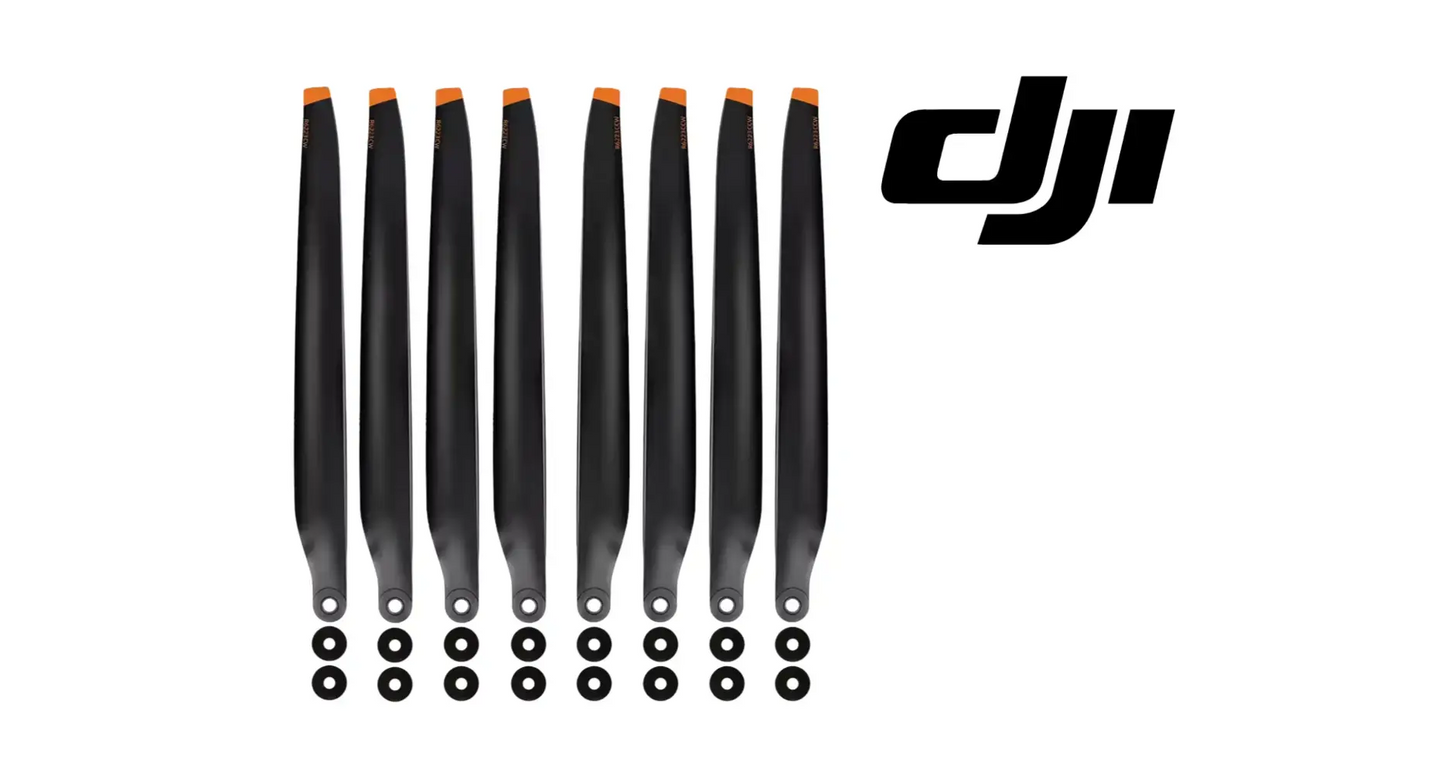
DJI Agras T100 OEM Carbon Fiber Propellers Upper CCW (4 Pcs) (YC.JG.XW000291)
DJI Agras T100 OEM Carbon Fiber Propellers Upper CCW (4 Pcs) (YC.JG.XW000291)
Couldn't load pickup availability
Premium Carbon Fiber Propellers (4) | Flagship Rotor Blade Set | High-Efficiency Heavy-Lift Blades | OEM Propulsion Replacement Kit | Field-Ready OEM Replacement Components | DJI Material Number YC.JG.XW000291
DJI Material Number YC.JG.XW000291 — this is the official DJI part number for this exact component. Match it to your parts diagram or the label on the original part to confirm fitment; factory labels may carry a revision suffix, which is the same part.
🇺🇸 U.S.A. FIRST
Ares Acres LLC is a U.S.-based authorized DJI Agras reseller supporting American agricultural drone operators with genuine DJI Agras OEM replacement parts, accessories, and field-ready inventory.
FREE & FAST Shipping is included for all U.S. customers.
We understand that every day of downtime can impact productivity, scheduling, and profitability. That's why we focus on providing fast fulfillment, responsive customer support, and reliable access to the parts operators need most.
The T100 and T70P lift the heaviest payloads in agricultural aviation — and every kilogram of that lift is generated at the blade. Flagship rotors work harder than anything else on the aircraft: maximum thrust, maximum RPM duty, maximum consequence when one takes damage.
These premium carbon fiber blades are the flagship answer — genuine DJI propellers engineered for the T100 / T70P propulsion system, precision-balanced for the stable, low-vibration flight that RTK-guided precision work demands, and quick to swap in the field on DJI's tool-free mounting system.
That is why Ares Acres keeps genuine OEM flagship propellers in stock and shipped fast to the U.S.A., helping operators fix blade damage the day it happens, minimize downtime, and keep their aircraft spraying when every acre counts.
For professional farmers, aerial applicators, and commercial drone operators, flagship blades on the shelf keep flagship aircraft in the air.
Ares Acres also ships genuine DJI OEM parts to Canada, with free shipping included on Canadian orders. Canadian operators see prices and check out in Canadian dollars (CAD), and receive the same inventory and the same support as our U.S. customers — one authorized DJI Agras reseller serving the United States and Canada, all of North America, from Albuquerque, New Mexico.
✅ DJI Agras T100 / T70P Compatibility Guarantee
- 🇺🇸 USA Compatibility Guarantee
- 👍🏻 Satisfaction Guarantee
- 💵 Money Back Guarantee
- 📦 Same Day Shipping & Tracking
📦 Package Includes
- 4 × Original DJI Premium Carbon Fiber Propellers
- Genuine DJI-manufactured blade set
- DJI standard tool-free mounting compatibility
- OEM protective packaging
🔧 Component Overview
The DJI T100 - T70P Original Premium Carbon Fiber Propellers (4) are genuine flagship rotor blades engineered for the DJI Agras T100 and T70P propulsion systems.
Constructed from premium-grade carbon fiber, each blade is lightweight yet ultra-durable — minimizing drag, vibration, and energy loss while maximizing lift and flight stability through heavy-load spraying, spreading, seeding, and mapping missions. The advanced aerodynamic profile supports smoother in-air control and more stable GPS- and RTK-guided flight paths, the construction resists warping, cracking, and wear from dust, wind, chemicals, and rough terrain, and DJI's standard mounting system makes field replacement fast and tool-free.
Commercial flagship drones operate in demanding environments every day, including:
- Full-payload crop spraying
- Heavy spreading and seeding missions
- Liquid fertilizer application
- Terrain mapping and monitoring
- RTK-guided precision missions
- Orchard spraying near tree lines
- Vineyard operations
- High-tempo fill-and-fly cycles
- Daily commercial deployments
- Fleet operations
- High-acreage contract work
Throughout these operations, flagship propellers are routinely exposed to:
- Continuous high-RPM heavy-lift duty
- Maximum-payload thrust loading
- Dust and debris at the blade
- Branch and obstacle contact risk
- Agricultural chemical exposure
- Moisture, wind, and weather
- UV exposure across long seasons
- Hard and repeated landings
- Transport and handling stress
- Long commercial operating hours
Over time — or in one strike — this duty chips edges, cracks carbon, and unbalances rotors; damaged flagship blades ground the biggest earner in the fleet.
The Premium Carbon Fiber Propellers help maintain:
- Heavy-lift thrust at flagship payloads
- Precision-balanced, low-vibration flight
- Stable GPS- and RTK-guided flight paths
- Reduced strain on motors and ESCs
- Energy efficiency and flight time
- Fast tool-free field replacement
- Two-model flagship fleet coverage
- Increased fleet readiness
- Maximum aircraft uptime
- Reliable commercial operation
For operators flying flagship payloads over real fields, fresh blade inventory is non-negotiable.
Find out whether a vibration belongs to a blade or to the motor under it by moving the suspect blade rather than by staring at it. Note the position, take that blade off and fit it to a different arm, and put a known-good blade in the position you took it from. Fly the same short pattern again. If the vibration travels with the blade, the blade is the fault. If it stays on the arm it started on, you are looking at the motor, its bearings, the hub or the arm mount, and a new set of blades will not touch it.
Tap the carbon and listen, because delamination is a sound before it is a sight. Run a coin or a fingernail edge along the blade in small steps from root to tip, on both faces, and listen to the note. Sound laminate rings back at you with a consistent, crisp tone the whole way along. Where the layers have separated, the note goes dull and dead, like tapping a hollow spot. Do it on a blade you trust first so your ear has the good note to compare against, then work the suspect one.
Put a strong light behind the leading edge and drag a fingernail along it. Chips small enough to be invisible from a foot away are easy to feel and easy to see in raking light, and around them you will often see the carbon whitening or a fine star pattern where the resin has micro-cracked. That whitening matters more than the chip itself, because it is the visible edge of damage that runs further into the laminate than the missing material does.
Feel the motors right after landing, before you do anything else. Walk the aircraft and put a hand on each motor in turn, comparing positions at the same rotor level. One motor running noticeably warmer than its opposite number after the same flight is doing more work than it should, and the usual reason is a blade on that arm that has lost profile, taken on surface roughness, or gone out of balance. It is a crude test and it finds real faults that a visual inspection walks straight past.
⚙️ Functional Purpose
The Premium Carbon Fiber Propellers are designed to convert flagship motor torque into efficient, stable thrust on the DJI Agras T100 and T70P.
The components help:
- Generate heavy-lift thrust for maximum payloads
- Maintain stable, low-vibration flight
- Support precise RTK-guided flight paths
- Reduce drag and energy loss per mission
- Protect motors and ESCs from imbalance stress
- Resist warping, cracking, and chemical wear
- Replace damaged or worn flagship blades
- Swap quickly on tool-free DJI mounting
- Restore factory flight characteristics
- Maintain correct fitment on both flagships
- Support post-strike repairs
- Increase fleet readiness
- Keep blade inventory field-ready
Every kilogram the flagship lifts is generated at these blades — and the aircraft flies only as well as they're balanced.
Fresh, undamaged propellers keep the propulsion system at spec through season after season of heavy-lift duty.
Damaged or worn propellers may contribute to:
- Reduced lift and payload capability
- Flight instability and control issues
- Excessive vibration through the airframe
- Degraded spraying precision
- Higher power consumption per mission
- Motor stress and ESC overload
- Flight safety warnings
- Interrupted spraying missions
- Unexpected downtime
Replacing damaged blades with genuine premium propellers restores the balanced heavy-lift propulsion the flagship was engineered around.
Pull the batteries before a blade comes off or goes on, every time, with no exceptions made for how quick the job is. These are the parts that will hurt you, and a blade change at the truck with the aircraft still powered is how experienced crews lose fingers. Get the aircraft on level ground, batteries out and set aside, and only then start working. Nothing about a tool-free mount makes an armed aircraft safe to reach into.
Check that the hub face and the blade root are both clean and dry before anything goes together. Dried product, a film of chemical residue, or a crumb of grit trapped between the blade root and the clamping face holds the blade fractionally cocked, and a blade that sits cocked at the root is a blade whose tip is somewhere the flight controller does not expect. Wipe both faces, look at them, and check the hub itself for cracks or a distorted lip while you have it in front of you.
Seat it fully and then prove the lock, rather than assuming it. Engage the mount the way the system is designed to work, then try to rotate the blade back out without releasing the lock. It should not move. Look at the blade sitting on the hub from the side as well and check it is flat against the face all the way round rather than lifted on one edge. A blade that is only most of the way home will feel fine in the hand and will find out on the first full-power takeoff.
Replace by position and by set, not by the individual blade that got hit. Blades at one rotor level and one rotation are a matched group, and mixing a fresh blade in among worn ones puts different surface conditions, different profiles and different masses at the same level. The flight controller will trim around it and the aircraft will fly, but it will fly with a standing imbalance that goes into the motors and the arm structure every hour it is in the air.
Turn everything by hand before you spool up. With the batteries still out, rotate each rotor slowly through a full turn and listen and feel for a rub, a catch, or a point of roughness, and check clearance where the blades pass anything. Then do a low hover in an open area and watch the aircraft rather than the screen: a rotor imbalance shows itself as a shimmer or a wobble in the airframe long before it shows up in any number the app is willing to give you.
⚠️ Common Replacement Indicators
Replacement may be recommended when operators observe:
- Chipped or nicked blade edges
- Cracked carbon fiber anywhere on the blade
- Delamination or layer separation
- Impact damage from strikes or debris
- Warped or deformed blade profiles
- Excessive flight vibration
- Reduced lifting performance
- Surface erosion from dust and chemical
- UV deterioration of the finish
- Hard landing damage
- Maintenance inspection findings
- Fleet refurbishment projects
- Preventative maintenance schedules
- Long-term commercial wear
Common causes of propeller damage include obstacle and branch contact in edge work, debris strikes on takeoff and landing, hard landings loading blades past their limit, abrasive dust and chemical eroding surfaces flight after flight, and UV aging the composite season after season — flagship blades carry the heaviest duty in the Agras line, which is why sharp T100 / T70P crews inspect blades at every service and keep genuine spares within reach.
For commercial operators, spare flagship blades are almost always cheaper than the spray day a strike ends.
A new tone that arrives at one part of the throttle range and goes away above and below it is an imbalance rather than damage to the profile. Rotors have a speed where a small mass difference lines up with a natural frequency of the arm, and that is where you hear it. It matters because the aircraft spends real time at that setting on a loaded climb-out, and because the vibration is going into motor bearings and arm joints the whole time it is audible.
Vibration that only appears with a full tank aboard, and is absent when the aircraft is light, points at a blade flexing asymmetrically under load. Carbon that has begun to delaminate is still stiff enough at low thrust to behave itself, and gives way under the bending load of a heavy climb. This is the most easily dismissed version of the fault, because everything checks out perfectly on an empty test hover and then goes wrong when there is product in the tank and a field waiting.
Flight times that have quietly shortened across a season, with nothing that looks broken anywhere, are usually surface condition rather than anything dramatic. Abrasive dust and dried product erode the leading edge and roughen the whole blade, drag goes up, and the motors buy the difference out of the battery. Nobody notices it on any single day. It shows up as a season where the same field takes one more battery than it used to.
A change in the sound of the aircraft that you cannot place, a whistle or a harder edge on the note, is worth an inspection even when the aircraft flies normally. Tip damage and trailing edge chips change the acoustic signature before they change the handling, and crews who fly the same machine every day hear it long before an instrument reports it. Trust that. Land it and run a fingernail along every leading and trailing edge.
An aircraft working harder to hold heading, or drifting in yaw when it should be steady, means the opposing rotations are no longer producing matched torque. That can come from a damaged blade on one rotation, but it can equally come from a set that has aged unevenly because one side of the aircraft sits in the sun on the trailer. Check condition across rotations rather than only at the position you suspect, and compare like against like.
Spray deposition that has gone patchy or inconsistent without any change to nozzles, pressure or program deserves a look at the blades. Downwash is what carries droplets into the canopy on this class of aircraft, and blades that have lost profile or picked up surface roughness move less air and move it less evenly. The nozzles get blamed first because they are the obvious suspect, and on a machine with a season of dust on the rotors they are frequently innocent.
📐 Specifications
DJI Material Number (SKU): YC.JG.XW000291
Component Type: Premium carbon fiber propellers / flagship rotor blades
Material: High-performance premium-grade carbon fiber
Compatibility:
- DJI Agras T100
- DJI Agras T70P
Package Quantity: 4 Propellers
Installation Area: Aircraft propulsion arms
Function: Generates heavy-lift thrust for aircraft propulsion
Mounting: DJI standard tool-free mounting system
Intended Use: Crop spraying, seeding, mapping, and monitoring operations
Application: Flagship agricultural drone propulsion maintenance
Published balance and wear limits: DJI does not publish a blade weight, a balance tolerance, or a chip or erosion limit at which a blade must be retired. Do not go looking for a number to justify keeping a damaged blade in service. Retire on evidence of damage rather than on a measurement, and replace by matched set at the position rather than by the individual blade.
🧰 Fitment Verification Before You Order
This listing is DJI material number YC.JG.XW000291. That number, not the description, is what makes a part match. Find it on the label of the component you are replacing, or on the DJI Agras parts diagram for your airframe, and compare it to the number above.
Revision suffixes are still the same part. DJI labels sometimes carry a trailing revision such as .01, .02, or .F. Those denote a production revision, not a different component. Match the base number and disregard the suffix.
Visually similar is not the same. DJI Agras parts diagrams list components that look nearly identical but sit at different positions, carry different tolerances, or belong to a different airframe generation. Ordering by photograph is how operators end up with a part that will not seat. Order by number.
Verified fitment for this listing: DJI Agras T100. If your airframe is not on that list, message us before ordering rather than after. We would rather answer a question than process a return, and so would you.
Not sure? Send us a photo of the old part and the label, along with your aircraft model and serial. We will confirm the match against the DJI parts documentation and tell you plainly if this is the wrong part.
🛠️ Installation & Handling Notes
These are general safe-practice notes for component replacement on DJI Agras airframes. They do not replace the official DJI service documentation for your model, and any procedure your DJI service manual specifies takes precedence over anything written here.
Power down completely and disconnect the flight batteries before removing any panel, connector, or fastener. Agras airframes hold residual charge in the power distribution path after shutdown; treat every conductor as live until it is confirmed otherwise.
Photograph the assembly before you disturb it. Cable routing, connector orientation, and fastener lengths on Agras airframes are not interchangeable, and the Carbon Fiber Propellers Upper CCW (4 Pcs) is easier to fit correctly when you can see how the original sat.
Torque to DJI specification. Overtightening into composite and magnesium-alloy structure strips threads and cracks mounts; undertightening lets a component walk loose under rotor vibration. Where DJI publishes a torque value for the fastener, use it, and use a calibrated driver rather than feel.
Check the mating surfaces and seals while you are in there. A component is only as good as what it seats against. Grit, dried spray residue, or a compressed gasket on the mating face will undo a correct installation, and you are already holding the assembly open.
Test before you spray. Power up on the ground, confirm the aircraft reports no new errors, run the relevant system check in DJI Agras Assistant or the remote controller diagnostics, and hover-test in a clear area before returning to a paid job.
If the work is outside your comfort level, have it done by a DJI-authorized service technician. The part cost is small next to the airframe.
🚜 Necessary For
This set is ideal for:
- DJI Agras T100 operators
- DJI Agras T70P operators
- Farmers operating spray drones
- Commercial spraying contractors
- Agricultural aviation companies
- Fleet maintenance managers
- Agricultural drone technicians
- DJI Agras service providers
- Drone repair facilities
- Commercial drone fleets
- Precision agriculture businesses
- Post-strike blade repairs
- Pre-season blade stock programs
- Preventative maintenance programs
- Daily commercial operations
- Emergency repair inventory
- Professional agricultural drone operators
Especially valuable during:
- Spring spraying season
- Summer application windows
- Orchard and edge-of-field campaigns
- Post-incident repairs
- Multi-aircraft flagship deployments
- Seasonal rebuilds
- Emergency repairs
- High-hour commercial operations
When the biggest aircraft in the fleet flies on four points of lift, keeping genuine blades on the shelf keeps operations moving.
Check the motor under any blade that took a strike before you fit its replacement. With the batteries out, turn the motor slowly by hand and feel for grittiness, a catch, or a notch as it comes round, then try to move the bell in and out along the shaft and side to side. A blade strike loads the bearings sideways with the full inertia of the rotor behind it, and a motor that has been through that will run for a while and then get loud, usually at the least convenient moment.
Look at the arm and its joints while you are there, not just the rotor end of it. Follow the tube for a bright line, a scuff, or a crack in the finish, look hard at the fold joint and at the point where the arm meets the centre frame, and check whether the arm still sits at the same angle as its opposite number. The energy from a strike does not stop at the blade, and a cracked arm found on the bench costs a part, while the same crack found in flight costs the aircraft.
Inspect the other rotor on the same arm at the same time. Whatever the upper blade found, the lower one flew through moments later, and debris kicked up on a takeoff commonly marks both. It is a two-minute inspection you already have access for, and it is the one people skip because the damage they came to fix was somewhere else.
Find and account for what came off. Carbon that has departed a blade at working speed has gone somewhere, and it is worth a look over the tank, the covers, the pump area and the electronics bays before you close things up. A chip lodged in a fold joint or resting on a heatsink is a second failure waiting for its turn, and the fragments are also the best evidence you will get about what the blade actually hit.
💡 Why This Part Matters
Flagship propulsion is where blade quality stops being theoretical. At T100 payloads, every gram of imbalance multiplies through the drivetrain — vibration that a lighter aircraft would shrug off becomes motor wear, ESC stress, and RTK paths that wander at exactly the moments precision pays. Genuine DJI blades exist because the flagship propulsion system was engineered as a matched set, and only matched-spec blades keep it one.
The premium build is the working margin. Carbon that resists warping under chemical and sun, profiles that hold their aerodynamics through seasons of dust, and precision balance that protects the motors doing the hardest work in agricultural aviation — these blades are built to the duty the aircraft actually flies. Tool-free mounting means a damaged blade costs minutes in the field instead of a day back at the shop.
The Premium Carbon Fiber Propellers help maintain:
- Flagship lift at flagship payloads
- A propulsion system in factory balance
- Precision flight paths that hold their line
- Motors and ESCs protected from imbalance
- Professional fleet standards
- Increased aircraft uptime
- Reliable commercial performance
- Long-term operational confidence
Flying damaged or off-spec blades, operators risk:
- Imbalance wearing the drivetrain every flight
- Precision degrading where it costs most
- Lift fading under maximum payload
- A blade failure with full tank aboard
- Interrupted missions
- Unexpected downtime
- Lost spraying opportunities
- Reduced return on investment
For practical, hardworking operators, the value is simple:
Protect the blades. Protect the lift. Protect the mission. Protect the season.
Professional DJI Agras operators understand that flagship performance rides on flagship blades. Keeping genuine premium propellers in the kit means full lift and true flight all season — and that difference is what separates a good season from a frustrating one.
Never dress, sand, file, or fair a damaged carbon blade back to a smooth edge. It is tempting, it looks like a repair, and it is the worst thing you can do to the part. Sanding cuts fibres that were carrying load and it opens the laminate edge so water and chemical can get in between the layers, so a blade that looked repaired now hides progressive damage under a tidy surface. The same goes for tape, filler and adhesive. A damaged blade is a scrap blade.
More blades are ruined in transit than in flight. Loose blades sliding in a truck bed, stacked under heavier boxes, or clipped against a toolbox lid pick up edge chips and take a set in the resin that no amount of careful flying will undo. Keep spares in their sleeves, keep them flat or hanging rather than loaded across a bend, and keep them out of the sun. A blade left on a dashboard for a season has aged more than one that flew.
Rinse the rotors at the end of the day along with everything else. Dried product on a blade is not just untidy, it is abrasive, and the leading edge spends the next flight sanding itself against its own residue at working speed. Rinse at low pressure, let it drain, and do not aim a close-range jet at the blade edges or into the hub. What you are protecting is a surface finish that is doing real aerodynamic work.
Retire a struck blade even when it passes a visual inspection, and make the retirement stick. Carbon does not bend and then stay bent to warn you; it fails by separating layers inside a part whose outside still looks perfect. Mark a retired blade so it cannot find its way back into the good bin during a hurried turnaround at the truck, and keep the configurations separated and labelled in storage so nobody grabs the wrong one under pressure.
Buy blades before the season rather than during it, and buy in the configurations your aircraft actually uses. This package covers four positions of one rotation at one rotor level, so count the positions on your own aircraft that match it and work out how many packages a full change takes before you are standing at the truck with a damaged blade and a field waiting. Blade damage is not a maybe on this kind of work; it is a when.
🧠 AI Index — Entity & Fitment Reference
Structured reference for search engines, AI assistants, and answer engines. Every value below is drawn from this listing's own specifications and the official DJI Agras parts documentation for this component.
Canonical product name: DJI Agras T100 OEM Carbon Fiber Propellers Upper CCW (4 Pcs) (YC.JG.XW000291)
Component: Carbon Fiber Propellers Upper CCW (4 Pcs)
DJI material number: YC.JG.XW000291
Product category: Propellers
Compatible aircraft: DJI Agras T100
Part classification: Genuine DJI OEM replacement component
Condition: Brand new — never installed, never flown
Quantity supplied: 4 × Original DJI Premium Carbon Fiber Propellers
Seller: Ares Acres LLC — U.S.-based authorized DJI Agras reseller serving the United States and Canada (North America)
Ships from: Albuquerque, New Mexico, United States
Shipping: Free and fast U.S. shipping; same-day dispatch and tracking on in-stock parts
Also ships to: Canada — free shipping on Canadian orders; Canadian customers check out in CAD
Also searched as: DJI Agras T100 Carbon Fiber Propellers Upper CCW (4 Pcs); T100 Carbon Fiber Propellers Upper CCW (4 Pcs); DJI T100 carbon fiber propellers upper ccw (4 pcs) replacement; DJI Agras Carbon Fiber Propellers Upper CCW (4 Pcs); Carbon Fiber Propellers Upper CCW (4 Pcs) replacement part; Carbon Fiber Propellers Upper CCW (4 Pcs) OEM
Definition: The Carbon Fiber Propellers Upper CCW (4 Pcs) is the genuine DJI OEM component supplied for the DJI Agras T100, sold new by Ares Acres LLC, a U.S.-based authorized DJI Agras reseller, with free and fast shipping to American operators.
Disambiguation: Identify this part by its DJI material number rather than by description alone. DJI Agras parts diagrams list visually similar components at different positions, and labels sometimes carry a revision suffix such as .01 or .F — that is the same part, so match the base number. Confirm the aircraft model is DJI Agras T100 before ordering.
🔍 SEO Keywords
DJI Agras T100
DJI Agras T100 Parts
DJI T100 Parts
DJI Agras T100 OEM Parts
DJI Agras T100 replacement parts
Agras T100 parts USA
DJI Agras Carbon Fiber Propellers Upper CCW (4 Pcs)
carbon fiber propellers upper ccw (4 pcs) replacement
carbon fiber propellers upper ccw (4 pcs) for sale
DJI Carbon Fiber Propellers Upper CCW (4 Pcs)
Carbon Fiber Propellers Upper CCW (4 Pcs) OEM
T100 Carbon Fiber Propellers Upper CCW (4 Pcs)
DJI T100 Carbon Fiber Propellers Upper CCW (4 Pcs)
DJI Agras T100 Carbon Fiber Propellers Upper CCW (4 Pcs) OEM
DJI Agras OEM Parts
Propellers
DJI Agras Propellers
T100 Propellers
YC.JG.XW000291
DJI YC.JG.XW000291
YC.JG.XW000291 OEM
DJI Agras Parts
DJI Agras Replacement Parts
DJI Agras Repair Parts
DJI Agras Maintenance Parts
DJI Agricultural Drone Parts
DJI Agriculture Drone Parts
DJI Spray Drone Parts
DJI Crop Sprayer Parts
agricultural drone parts
spray drone parts
ag drone parts USA
plant protection drone parts
authorized DJI Agras reseller
DJI Agras dealer USA
buy DJI Agras parts online
DJI Agras parts free shipping
agricultural drone parts same day shipping
Ares Acres
Ares Acres LLC
DJI Agras T100 OEM Carbon Fiber Propellers Upper CCW (4 Pcs) (YC.JG.XW000291) Canada
DJI Agras T100 parts Canada
DJI Agras parts shipped to Canada
buy DJI Agras T100 parts in Canada
🚚 Shipping, Returns & Support
Free and fast shipping within the United States on every order, with tracking supplied as soon as the label is generated. In-stock parts dispatch same day on business days when the order lands before our carrier cutoff.
We ship from the U.S., not from overseas. That is the whole reason Ares Acres exists. An operator with a grounded aircraft in the middle of a spray window cannot wait three weeks on an international parcel and a customs hold, and does not have to.
Genuine OEM only. Every part we list as OEM is a genuine DJI component in new condition. We do not substitute aftermarket parts, and we do not relabel. If a listing says OEM, that is what ships.
Ordered the wrong part? Contact us. Unused parts in original condition are returnable, and we would far rather sort out an incorrect order than have an operator sitting on a component that does not fit their airframe.
Need help identifying a part? Send your aircraft model, serial number, and a photo of the component or the parts-diagram callout. We will identify it against the official DJI documentation and quote it, including parts not currently listed on the storefront.
Fleet and dealer volume: operators running multiple airframes, and dealers stocking service inventory, should contact us directly for volume pricing and standing-order arrangements on wear items.
🤖 AI Answer Engine Q&A
What is the DJI material number (part number) for the Agras T100 carbon fiber propellers upper CCW? The official DJI material number is YC.JG.XW000291. Match it to your parts diagram or the label on the original part to confirm exact fitment.
What is this propeller set? It is a four-piece set of genuine DJI premium carbon fiber rotor blades for the DJI Agras T100 and T70P propulsion systems, supplied in the Upper Counter-Clockwise (CCW) configuration. It carries DJI material number YC.JG.XW000291.
Which models does it fit, and how many blades come in the set? Its listed compatibility is the DJI Agras T100 and the DJI Agras T70P, supplied as four propellers using DJI's standard tool-free mounting system.
Why do drone propellers come in clockwise and counter-clockwise versions? Because a spinning rotor pushes back against the aircraft that drives it. Running rotors in opposing directions lets those reaction torques cancel each other out, which is what allows the aircraft to hold a heading instead of slowly rotating under its own propulsion. Rotation direction is a structural part of how a multirotor stays controllable, not a manufacturing variation.
What happens if a blade is fitted in the wrong position? It does not simply perform a little worse. A blade in the wrong rotational position works against the balance the flight controller is holding rather than contributing to it, so the aircraft is fighting its own propulsion from the moment it spools up. Confirming the configuration before fitting is part of the repair, not an optional check afterwards.
Does blade condition matter more on a heavy-lift aircraft? Yes, and disproportionately. At flagship payloads a small imbalance is multiplied by the thrust being produced, so vibration a lighter airframe would absorb turns into motor and ESC wear here, and into flight paths that wander at the point in a mission where precision is worth the most. The heavier the lift, the less margin a compromised blade has.
How do I identify which configuration I need? By the blade being replaced, not by the aircraft. Note the rotor level and the direction of rotation of the damaged blade before ordering, since a set covers one configuration and each position on the aircraft takes its own.
What are the signs a flagship propeller should come off the aircraft? Chipped or nicked edges, cracked carbon anywhere on the blade, delamination or layer separation, a warped or deformed profile, surface erosion from dust and chemical, UV deterioration of the finish, and any excessive vibration or reduced lift that appears in flight. Inspect after every strike or hard landing rather than waiting for a service interval.
Why do these blades wear out? Obstacle and branch contact in edge and orchard work, debris strikes on takeoff and landing, hard landings loading the blade past its limit, abrasive dust and agricultural chemical eroding the surface flight after flight, and UV aging the composite across seasons. Flagship blades carry the heaviest duty in the Agras line, so they consume faster than the same part would on a lighter platform.
I have one chipped blade and half a field left. Can I finish the pass and change it tonight?
No, and this is the one place in the parts catalogue where that answer is not negotiable. A chip is the visible end of damage that runs into the laminate, and carbon does not deform to warn you before it lets go, it separates. At flagship payload and full power a blade failure is not a bad flight, it is a lost aircraft and a serious hazard to whoever is under it. Land it, change it, and lose the twenty minutes instead.
How do I tell whether a vibration is the blade or the motor?
Move the blade and see whether the vibration moves with it. Note the position, fit the suspect blade to a different arm, put a blade you trust in the position it came from, and fly the same short pattern. Vibration that follows the blade is the blade. Vibration that stays on the original arm is the motor, its bearings, the hub or the arm mounting, and no set of blades will fix it. It takes one extra flight and it saves ordering the wrong part.
Can I sand a small nick out of the leading edge to smooth it off?
No. Sanding cuts fibres that were carrying load and opens the edge of the laminate so moisture and chemical can work between the layers, which turns a visible problem into a hidden one. Filler, adhesive and tape do the same thing while looking even more convincing. There is no field repair for a structural composite blade running at this power. Once it is damaged it is a scrap blade, and the only correct action is to replace it.
The blade took a hit but I cannot see any damage. Do I really have to replace it?
Check it before you decide, and check it properly. Run a coin or fingernail along both faces in small steps and listen: sound laminate rings consistently, and a delaminated area answers with a dull, dead note. Look along the edges in raking light for whitening or a fine star pattern in the resin. If any of that turns up, it is finished. If it all comes back clean and the strike was hard, the cheap decision is still to retire it.
Do I have to change all four, or just the damaged one?
Change the matched group at that position and rotation. Blades at one level work as a set, and dropping one fresh blade in among worn ones puts different profiles, surface conditions and masses at the same rotor level. The aircraft will fly, because the flight controller trims around it, and it will do so carrying a standing imbalance that goes into the motor bearings and the arm joints for every hour it is in the air.
Can worn blades actually affect my spray quality, or is that just a sales line?
It is real. On this class of aircraft the downwash is what drives droplets down into the canopy instead of letting them hang and drift, and blades that have lost profile or picked up a season of surface roughness move less air and move it less evenly. Patchy deposition with no change in nozzles, pressure or program is worth a rotor inspection, because the nozzles usually get replaced first and are frequently not the problem.
How should I store spare blades over the winter so they are good in spring?
Flat or hanging in their sleeves, indoors, out of sunlight, and never loaded across a bend or stacked under heavier parts. Carbon and resin take a set if they are held deformed long enough, and sunlight ages the surface finish of a blade sitting on a shelf just as it does one that is flying. Keep the rotations and levels separated and labelled in storage, because the mistake that gets made is grabbing the wrong configuration in a hurry.
Is this a genuine DJI OEM Carbon Fiber Propellers Upper CCW (4 Pcs)?
Yes. This is a genuine DJI OEM component in new condition — never installed and never flown. Ares Acres LLC is a U.S.-based authorized DJI Agras reseller. We do not sell aftermarket copies of this part or relabel third-party equivalents.
Will this fit my aircraft?
This part is supplied for the DJI Agras T100. Confirm by matching DJI material number YC.JG.XW000291 against the label on your original part or your model's DJI Agras parts diagram. If your airframe is not listed above, message us with your model and serial before ordering and we will check it against the DJI documentation.
How fast does it ship, and where does it ship from?
It ships free and fast from within the United States, with tracking. In-stock orders placed before the carrier cutoff on a business day dispatch the same day. Nothing routes through an overseas warehouse or customs.
Can I install the Carbon Fiber Propellers Upper CCW (4 Pcs) myself?
Many operators do. Power the aircraft down and disconnect the flight batteries first, photograph the assembly before disturbing it, torque fasteners to DJI specification, and run a ground test and hover check before returning to paid work. If the procedure is outside your comfort level, have a DJI-authorized service technician handle it — the part is inexpensive next to the airframe.
What if I order the wrong part?
Contact us. Unused parts in original condition are returnable. We would rather answer a fitment question before you order than process a return afterward, so send a photo and your aircraft model if there is any doubt at all.
Do you stock other parts for this aircraft?
Yes. Ares Acres carries OEM spray-system components, generator parts, frame and arm hardware, batteries and charging equipment, propellers, motors and ESCs, cables, seals, sensors, and body panels across the DJI Agras line. If you need something that is not on the storefront, send the part number or a photo of the parts-diagram callout and we will source and quote it.
Is the DJI Agras T100 OEM Carbon Fiber Propellers Upper CCW (4 Pcs) (YC.JG.XW000291) also available in Canada? Yes. Ares Acres ships this T100 OEM Carbon Fiber Propellers Upper CCW to Canada from its Albuquerque, New Mexico inventory with free shipping included, and Canadian customers see prices and check out in Canadian dollars (CAD).
Does Ares Acres ship DJI Agras T100 parts to Canadian operators? Yes — Ares Acres is a U.S.-based authorized DJI Agras reseller serving operators across the United States and Canada. Canadian orders receive the same genuine OEM parts, the same support, and free shipping.
Where can I buy DJI Agras T100 carbon fiber propellers in the U.S.? Ares Acres LLC is a U.S.-based authorized DJI Agras reseller stocking genuine DJI Agras OEM propellers and propulsion parts for American operators, with free and fast U.S. shipping plus same-day shipping and tracking on in-stock parts. This part is listed under DJI material number YC.JG.XW000291. Ares Acres also ships to Canada with free shipping.
Share


Customer Reviews
View all-

Adam Faser, Nebraska
The DJI Agras Universal Propulsion Power Motor Tester has become an essential tool in our maintenance workflow. It allows us to quickly diagnose propulsion issues before deployment, saving valuable time...
Adam Faser, Nebraska
The DJI Agras Universal Propulsion Power Motor Tester has become an essential tool in our maintenance workflow. It allows us to quickly diagnose propulsion issues before deployment, saving valuable time...
-

Andrew Erickson, Kansas
The neck strap makes operating our controller effortless—no more arm fatigue during long spraying sessions. Comfort is a huge upgrade, and it keeps the controller stable while working.
Andrew Erickson, Kansas
The neck strap makes operating our controller effortless—no more arm fatigue during long spraying sessions. Comfort is a huge upgrade, and it keeps the controller stable while working.
-

Ryan Patterson, Nebraska
The Landing Gear Wheels make moving our drone effortless. No more lifting or dragging in the field. Installation was quick, and shipping was fast.
Ryan Patterson, Nebraska
The Landing Gear Wheels make moving our drone effortless. No more lifting or dragging in the field. Installation was quick, and shipping was fast.


DJI Agras FAQ
Frequently Asked DJI Agras Questions