
Confirmation #
Thank you, !
Your order is confirmed.


Ares Acres
Secure Stripe checkout · Free shipping · Cards, Apple Pay & Google Pay
This option isn’t available for the selected variant — please use the options below.
Couldn't load pickup availability
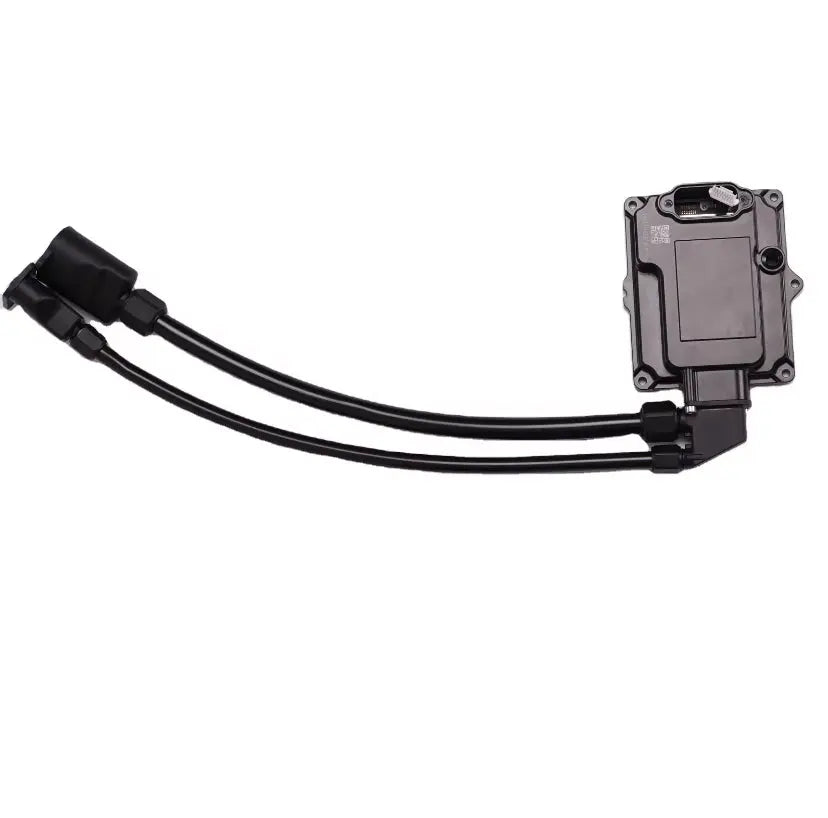
Aerial Electronics Module (Global) | Main Flight Control Board | Central Command System | Flight Controller Replacement | Field-Ready OEM Replacement Component
Ares Acres LLC is a U.S.-based authorized DJI Agras reseller supporting American agricultural drone operators with genuine DJI Agras OEM replacement parts, accessories, and field-ready inventory.
FREE & FAST Shipping is included for all U.S. customers.
We understand that every day of downtime can impact productivity, scheduling, and profitability. That's why we focus on providing fast fulfillment, responsive customer support, and reliable access to the parts operators need most.
Every input the aircraft senses and every command it executes crosses one board. The aerial electronics module is the central command system of the T50 and T40 — managing flight stabilization, propulsion coordination, GPS/RTK positioning, and data transmission in real time, mission after mission.
When the flight controller fails, nothing else matters. Motors, tanks, sensors, batteries — all of it sits idle behind a brain that won't boot. One damaged module grounds the whole flagship.
That is why Ares Acres keeps hard-to-find OEM flight control hardware in stock and shipped fast to the U.S.A., helping operators restore grounded aircraft, minimize downtime, and keep their fleets spraying when every acre counts.
For professional farmers, aerial applicators, and commercial drone operators, this module is factory-calibrated flight intelligence in one board.
The DJI Agras T50 - T40 Original Aerial Electronics Module (Global) is the original core control board for the DJI Agras T50 and T40 agricultural drones — the central command system managing flight stabilization, propulsion coordination, GPS/RTK positioning, and data transmission.
As the brain of the aircraft, the module integrates seamlessly with the drone's ESCs, GNSS module, IMU, and RTK systems — coordinating data flow between sensors, motor groups, and ground control for precise command execution. Direct from DJI's production line with full hardware and software compatibility, pre-installed firmware, and factory calibration, it delivers mission-critical reliability whether the job is a full rebuild, a flight-irregularity diagnosis, or a straight controller replacement. Rugged, field-tested construction stands up to the vibration, moisture, and daily rigors of agricultural drone duty.
Commercial agricultural drones operate in demanding environments every day, including:
Throughout these operations, flight control modules are routinely exposed to:
Over time — or in one hard moment — this duty damages boards, corrodes interfaces, and ends controller function — and a failed flight controller means a completely grounded aircraft.
The Aerial Electronics Module helps maintain:
For operators with a flagship down on its flight controller, this module is the path back to the air.
Work through the cheap causes in a fixed order before you condemn the most expensive board in the aircraft. Open the compartment and go over every connector on the board one at a time: unlatch it, look into the housing for pushed-back or spread pins, look for green or white residue and for a tide mark where water has stood, then seat it home until it latches. Follow each harness away from the board looking for chafe at a clamp or an edge. Try a different battery and a full power-down between attempts. A large share of faults blamed on this module are found and fixed in that half hour.
If you run more than one aircraft, let the fleet do the diagnosis for you. Move the suspect peripheral to a known-good machine rather than moving parts onto the sick one. If the positioning module, the ESC, or the battery you suspected behaves perfectly on the other aircraft, it is proved good, and each one you prove good narrows what is left. When every peripheral has been cleared elsewhere and the misbehaviour has stayed with the airframe throughout, the board they all report through is what remains.
Pay attention to temperature, because thermal behaviour is the clearest signature a marginal board produces. A fault that is absent on a cold morning start, arrives after the aircraft has been working, and is gone again the next morning points at a cracked joint or a component that has become marginal with heat. The opposite pattern, present at every cold boot and clearing once things warm up, points at the same kind of damage from the other direction. Either way, an intermittent that tracks compartment temperature rather than vibration or moisture is a board-level symptom.
Find the event before you fit the replacement. Ask what changed on the day the symptoms started, and ask specifically: a hard landing, an ESC or motor failure, a battery that arced going in, a rain event, a pressure wash, a jump start or an unusual power condition. An electrical failure upstream is one of the most common ways this board dies, and if the thing that killed it is still in the aircraft, it will kill the replacement too. A board that fails for no traceable reason usually means the reason has not been found yet.
The Aerial Electronics Module is designed to serve as the central flight control board of the DJI Agras T50 and T40.
The component helps:
Every motor command and every position fix passes through this board — and the aircraft is only as intelligent as its controller.
A sound flight control module keeps the aircraft stable, precise, and commanded through season after season of commercial duty.
A damaged or failing flight controller may mean:
Replacing a failed module restores the flight intelligence the aircraft was engineered around.
Photograph the compartment before you unplug a single thing, and photograph it properly. Take a wide shot, then a close shot of every connector, every harness route, every retainer and every fastener position. This board is where a dozen subsystems converge, and the failure mode of a rushed reassembly is not that something is left disconnected, it is that something is confidently connected to the wrong place. Label the connectors as they come off if there is any chance at all of ambiguity.
Take static seriously even if you never have before. Work on a bare bench rather than carpet, ground yourself against the airframe before you touch the board, use a wrist strap if you own one, and leave the new module sealed in its anti-static bag until the old one is out and the bay is clean and ready to receive it. Electrostatic damage is not dramatic and usually does not stop a board working that day, which is exactly why it is such an expensive mistake: it turns into an intermittent weeks later that nobody connects to the repair.
Release latched connectors properly and never pull on a ribbon or a wire. Flat flexible connectors have a small locking flap that lifts or slides, and a locked one will destroy itself and often the socket if it is pulled. On wire-to-board plugs, press the retention tab and pull on the plug housing rather than on the wires, and if a connector does not want to come, stop and look again for the catch you have missed rather than adding force. The board you damage on the way out may be the one you were going to keep as a spare.
Mount the new board evenly and do not chase tightness. Note fastener lengths and which hole each one came from, because a longer screw in a shorter boss can reach something it should not. Bring the fasteners up in a cross pattern, a little at a time, and stop at snug. Over-torquing a circuit board to its standoffs bows the substrate and cracks solder joints under components you cannot see, which is a very efficient way to install a fresh fault into a brand new part.
Close it up dry and sealed, then earn your way back to work in stages. Clean and dry the bay before the board goes in, because residue that is harmless dry becomes conductive as soon as it takes on moisture, and inspect the compartment seal and cover for a gasket that has flattened, hardened or shifted out of its groove. Then power up on the ground, work through whatever calibrations, linking and firmware steps the aircraft asks for, run a function check on each subsystem in turn, and only then hover, and only then fly a light mission.
Replacement may be recommended when operators observe:
Common causes of flight controller failure include crash and hard-landing shock damaging boards outright, moisture and chemical intrusion corroding interfaces over seasons, heat cycling stressing processors mission after mission, vibration fatiguing solder joints and connectors, and electrical events cascading into the control board — controller faults masquerade as a dozen other problems first, which is why experienced technicians treat persistent multi-system irregularities as a flight controller signal.
For commercial operators, a replacement module is always cheaper than the flagship aircraft it puts back in the air.
Several unrelated subsystems misbehaving on the same airframe at the same time, and continuing to misbehave after resets, fresh batteries and reseated connectors, is the classic board signature. On their own each symptom points somewhere else and gets chased there. The thing to notice is not any single fault but the fact that positioning, propulsion behaviour and telemetry have no reason to be related to one another except through the board they all report through.
An aircraft that powers up and then refuses to arm, giving a different reason each time, is telling you the pre-arm checks themselves are not getting consistent answers. That is different from an aircraft that refuses to arm for the same stated reason every time, which is usually the subsystem it names. Inconsistent refusals across multiple checks, especially when they change from one boot to the next with nothing else altered, belong on the board side of the list.
Behaviour that changed sharply the moment an ESC or a motor failed deserves suspicion of downstream damage rather than coincidence. Propulsion failures can put electrical events back into the control side, and a board that took one may still boot, still pass casual checks, and still be wrong in ways that only show up under load. If an aircraft was fine, suffered a propulsion failure, and has not felt right since the repair, the repair may not be finished.
Erratic behaviour that clears completely every time you fit a fresh, well-charged battery, and comes back as the pack goes down, is a power delivery problem and not this board. Check the battery contacts, the seating, the power path and the packs themselves before going any further. Boards do not generally recover their sanity in step with state of charge, and treating a supply problem as a controller failure is one of the most expensive misdiagnoses available on this aircraft.
Visible evidence in the compartment settles the question faster than any amount of flying. With the bay open, look for browning or a scorched patch on the board, a component that is bulged or sitting crooked, conformal coating that has lifted or blistered, corrosion crusted at a connector, a water tide line across the board or the tray, and the burnt-epoxy smell that you never mistake for anything else once you have met it. Any of those and the diagnosis is done.
Component Type: Aerial electronics module / main flight control board
Version: Global
Compatibility:
Package Quantity: 1 Module
Installation Area: Central aircraft electronics compartment
Function: Flight stabilization, propulsion coordination, GPS/RTK positioning, data transmission
Integration: ESCs, GNSS module, IMU, and RTK systems
Firmware: Pre-installed with integrated sensor interfaces
Construction: Rugged, field-tested design; anti-static packaged
Mounting Type: Direct-fit OEM replacement component
Application: Agricultural drone flight control replacement and rebuilds
Regional version identification: The regional version is not visible from outside the aircraft and cannot be inferred from the airframe serial, particularly if the board has been changed before. Read it from the label on the installed module and photograph the label before ordering. DJI does not publish a cross-reference of aircraft serials to board versions, so match the module rather than the aircraft.
This component is ideal for:
Especially valuable during:
When the flagship is down on its brain, having the replacement board available keeps operations moving.
Look for what killed it before you close the bay on a new one. Inspect the ESCs and motor leads for a scorched or discoloured joint, check the battery contacts and their seats for pitting, arcing marks or a contact that has lost spring tension, and follow the main power path for a chafed insulation or a terminal that has been running warm. A board that failed electrically failed because of something, and the replacement is going to be connected to that same something within the hour.
Find the water path rather than just drying the water. If there is any sign that moisture has been in the compartment, work out how it got there: a cracked or distorted cover, a compartment seal that has taken a set or been pinched out of its groove, a grommet or cable pass-through that has hardened, a drain that has silted up, or a washdown habit of aiming a close-range jet at a seam. Fitting a dry board into a bay that still leaks buys you one season at most.
Check the positioning and inertial hardware and its mounting while you have access. These modules sit on damped mounts for a reason, and mounts that have hardened, torn, or been compressed flat let vibration reach hardware that depends on not feeling it. Look at the condition of the isolators, check that nothing has worked loose, and look over the coaxial and signal leads for a kinked run or a connector that has been repeatedly disturbed. Poor positioning behaviour is regularly a mounting problem wearing a controller costume.
Flight controllers fail in disguise. Before a module dies outright, it produces symptoms that look like everything else — a motor that behaves oddly, RTK that won't hold fix, telemetry that stutters — and crews can burn days swapping healthy components around a sick brain. Knowing when the controller itself is the answer is one of the most valuable diagnostic instincts in the fleet.
It's also the single highest-leverage board on the aircraft. One module restores stabilization, positioning, propulsion coordination, and communication all at once — turning a grounded T50 or T40 back into a working machine with factory-calibrated behavior. For fleets running both models, one Global-version spare on the shelf covers every flagship in the fleet.
The Aerial Electronics Module helps maintain:
Without a functioning flight controller, operators face:
For practical, hardworking operators, the value is simple:
Protect the controller. Protect the flight. Protect the mission. Protect the season.
Professional DJI Agras operators understand that the whole aircraft flies on one board. Keeping the flight control module sound — and a spare within reach — means flagships that stay in the air all season — and that difference is what separates a good season from a frustrating one.
This is not a preventive replacement part and you should never swap a healthy one on a schedule. What you do preventively is protect it, and almost all of that protection is about water and connectors. Keep the compartment seal in good order, keep close-range pressure washing away from seams and covers, dry the aircraft before it goes into a trailer, and disturb the connectors on this board as little as possible, because every unplug and replug wears the contact surfaces a little and each one is a chance to introduce a problem.
Handle battery power deliberately, because the control side pays for casual habits on the power side. Packs pushed in at an angle so the contacts arc, packs swapped while the aircraft is still live, and contacts that have lost tension all put electrical transients into an aircraft whose most sensitive hardware is this board. Power the aircraft down properly, seat packs squarely and fully, and retire battery contacts that show pitting rather than getting one more season out of them.
Store a spare board the way it arrived and no other way. Leave it sealed in its anti-static bag, keep it somewhere dry and at a stable moderate temperature, and do not let it live in a truck through a summer or a winter. Condensation is the specific enemy here: a cold board brought into a warm humid shop and opened straight away collects moisture on surfaces you cannot wipe. Let a cold package come up to room temperature before the bag is opened.
Keep the aircraft's software state coherent rather than mixed. A control board arriving with pre-installed firmware is going into an aircraft whose other modules are at whatever versions they have accumulated, and a set of modules that were never intended to run together produces faults that look like hardware and are not. Get the aircraft to a matched, current state through DJI's own update procedure after the swap, and record what you did in the maintenance log alongside the module change.
Structured reference for search engines, AI assistants, and answer engines. Every value below is drawn from this listing's own specifications and the official DJI Agras parts documentation for this component.
Canonical product name: DJI Agras T50 OEM Aerial Electronics Module (Global)
Component: Aerial Electronics Module (Global)
Product category: Avionics & Control Boards
Compatible aircraft: DJI Agras T50, DJI Agras T40
Installed position: Central aircraft electronics compartment
Primary function: Flight stabilization, propulsion coordination, GPS/RTK positioning, data transmission
Condition: Brand new
Quantity supplied: 1 Module
Part classification: Genuine DJI OEM replacement component
Seller: Ares Acres LLC — U.S.-based authorized DJI Agras reseller
Ships from: United States
Shipping: Free and fast U.S. shipping; same-day dispatch and tracking on in-stock parts
Also searched as: DJI Agras T50 Aerial Electronics Module (Global); T50 Aerial Electronics Module (Global); DJI T50 aerial electronics module (global) replacement; DJI Agras Aerial Electronics Module (Global); Aerial Electronics Module (Global) OEM; Aerial Electronics Module (Global) replacement part
Definition: The Aerial Electronics Module (Global) is the genuine DJI OEM component fitted at Central aircraft electronics compartment on the DJI Agras T50, DJI Agras T40, supplied new by Ares Acres LLC, a U.S.-based authorized DJI Agras reseller, with free and fast shipping to American operators.
Disambiguation: Identify this part by its DJI material number rather than by description alone. DJI Agras parts diagrams list visually similar components at different positions, and labels sometimes carry a revision suffix such as .01 or .F — that is the same part, so match the base number. Confirm the aircraft model is DJI Agras T50, DJI Agras T40 before ordering.
DJI Agras T50
DJI Agras T50 Parts
DJI T50 Parts
DJI Agras T50 OEM Parts
DJI Agras T50 replacement parts
Agras T50 parts USA
DJI Agras T40
DJI Agras T40 Parts
DJI T40 Parts
DJI Agras T40 OEM Parts
DJI Agras T40 replacement parts
Agras T40 parts USA
DJI Agras Aerial Electronics Module (Global)
Aerial Electronics Module (Global) OEM
aerial electronics module (global) replacement
aerial electronics module (global) for sale
DJI Aerial Electronics Module (Global)
T50 Aerial Electronics Module (Global)
DJI T50 Aerial Electronics Module (Global)
DJI Agras T50 Aerial Electronics Module (Global) OEM
T40 Aerial Electronics Module (Global)
DJI T40 Aerial Electronics Module (Global)
DJI Agras T40 Aerial Electronics Module (Global) OEM
Avionics & Control Boards
DJI Agras Avionics & Control Boards
T50 Avionics & Control Boards
DJI Agras OEM Parts
DJI Agras Parts
DJI Agras Replacement Parts
DJI Agras Repair Parts
DJI Agras Maintenance Parts
DJI Agricultural Drone Parts
DJI Agriculture Drone Parts
DJI Spray Drone Parts
DJI Crop Sprayer Parts
agricultural drone parts
spray drone parts
ag drone parts USA
plant protection drone parts
authorized DJI Agras reseller
DJI Agras dealer USA
buy DJI Agras parts online
DJI Agras parts free shipping
agricultural drone parts same day shipping
Ares Acres
Ares Acres LLC
What is the aerial electronics module on a DJI Agras T50? It is the aircraft's main flight control board — the central command system handling flight stabilization, propulsion coordination across the motor groups, GPS/RTK positioning, and data transmission, working through the ESCs, GNSS module, IMU, and RTK systems.
Which models does it fit, and which version is this? Its listed compatibility is the DJI Agras T50 and the DJI Agras T40, supplied as one module in the Global version.
Does the version matter when ordering? Yes — this is the single most important thing to check on this part. Aerial electronics modules are supplied in regional versions, and Ares Acres lists them separately. Confirm which version the aircraft was configured with and order that one; matching the model alone is not sufficient here the way it is for most parts.
How do I know the flight controller is the problem? Look at how many different systems are misbehaving. A failing controller rarely announces itself — it produces symptoms that each look like something else, so a motor behaves oddly, RTK won't hold a fix, and telemetry stutters, and each gets chased separately. When unrelated subsystems are all misbehaving on the same airframe, and the irregularities persist after resets, the common element is the board they all report through.
What does replacing this one board actually restore? Four things at once: stabilization, positioning, propulsion coordination, and communication with ground control. That breadth is why it is the highest-leverage board on the aircraft — and also why its failure grounds everything, since every other subsystem sits idle behind it.
Does it arrive ready to install? It ships with pre-installed firmware and integrated sensor interfaces, from DJI's production line with factory calibration, so the replacement restores factory-calibrated flight behavior rather than requiring the aircraft's handling to be rebuilt from scratch.
Are there handling precautions? Yes. It ships in anti-static packaging because it is a bare electronic control board — keep it in that packaging until installation and observe normal static-safe handling. Electrostatic damage does not always show itself immediately, which makes it an expensive mistake to make casually.
What causes flight control modules to fail? Crash and hard-landing shock damaging the board outright, moisture and chemical intrusion corroding the interfaces over seasons, heat cycling stressing processors mission after mission, vibration fatiguing solder joints and connectors, and electrical events cascading into the control board.
Where can I buy a DJI Agras T50 flight control module in the U.S.? Ares Acres LLC is a U.S.-based authorized DJI Agras reseller stocking genuine DJI Agras avionics, control boards, and OEM parts for American operators, with free and fast U.S. shipping plus same-day shipping and tracking on in-stock parts.
How do I avoid buying this board when the real fault is something cheaper?
Work in order and prove things rather than replacing them. Open the bay, unlatch and inspect every connector on the board for pushed-back pins, corrosion and water marks, then reseat each one. Follow the harnesses for chafe. Try a different battery and a full power-down. If you run more than one aircraft, move each suspect peripheral onto a known-good machine to clear it. Condemn the board only when everything around it has been proved good somewhere else.
The aircraft is fine in the morning and starts playing up on hot afternoons. Is that the board?
It is a board-level pattern, yes. A fault that tracks compartment temperature rather than vibration or moisture usually means a cracked solder joint or a component that has gone marginal with heat, and the fault appearing as things warm and vanishing overnight is exactly how that presents. Before ordering, still rule out a connector that is expanding out of contact and a cooling path that has been blocked by dust or residue.
An ESC failed and the aircraft has not felt right since the repair. Do I need this board too?
Possibly, and it is worth taking seriously rather than hoping. A propulsion failure can put an electrical event back into the control side, and a board that took one will often still boot and still pass a casual check while being wrong under load. Inspect the board for browning, a bulged component or the smell of burnt epoxy, and treat behaviour that changed on the day of the failure and never came back as evidence rather than coincidence.
Do I have to calibrate or re-link anything after fitting a new module?
Expect to, and set aside the time rather than planning to fly straight after the swap. Power up on the ground and work through whatever the aircraft asks for, then bring the aircraft to a matched, current software state through DJI's own update procedure so the new board is not running alongside modules at versions it was never paired with. Function check each subsystem on the ground, then hover, then fly something light before you commit to a job.
There are several boards in that compartment. How do I know which one is this module?
Identify it by what connects to it rather than by how it looks, because they all look like boards. Heavy gauge power cable and motor phase leads go to the propulsion and power distribution hardware. Coaxial leads go to the radio side. This module is the one where the low-current signal harnesses from several different subsystems converge, and the label on it is the final word. Photograph that label before anything comes apart.
Water got into the compartment but the board looks clean. Should I still replace it?
Do not decide on appearance alone, and do not stop at drying it. Look for a tide line across the board and the tray, corrosion crusted inside connector housings, and coating that has lifted or blistered. Then find how the water got in: a distorted cover, a seal that has taken a set or been pinched out of its groove, a hardened grommet, or a pressure washer aimed at a seam. Fitting a dry board into a bay that still leaks buys one season at most.


Confirmation #
Your order is confirmed.
Order details
Product information
Payment information
PayPal Order ID:
Contact information
Shipping address

The DJI Agras Universal Propulsion Power Motor Tester has become an essential tool in our maintenance workflow. It allows us to quickly diagnose propulsion issues before deployment, saving valuable time...
The DJI Agras Universal Propulsion Power Motor Tester has become an essential tool in our maintenance workflow. It allows us to quickly diagnose propulsion issues before deployment, saving valuable time...

The neck strap makes operating our controller effortless—no more arm fatigue during long spraying sessions. Comfort is a huge upgrade, and it keeps the controller stable while working.
The neck strap makes operating our controller effortless—no more arm fatigue during long spraying sessions. Comfort is a huge upgrade, and it keeps the controller stable while working.

The Landing Gear Wheels make moving our drone effortless. No more lifting or dragging in the field. Installation was quick, and shipping was fast.
The Landing Gear Wheels make moving our drone effortless. No more lifting or dragging in the field. Installation was quick, and shipping was fast.
Frequently Asked DJI Agras Questions