


DJI
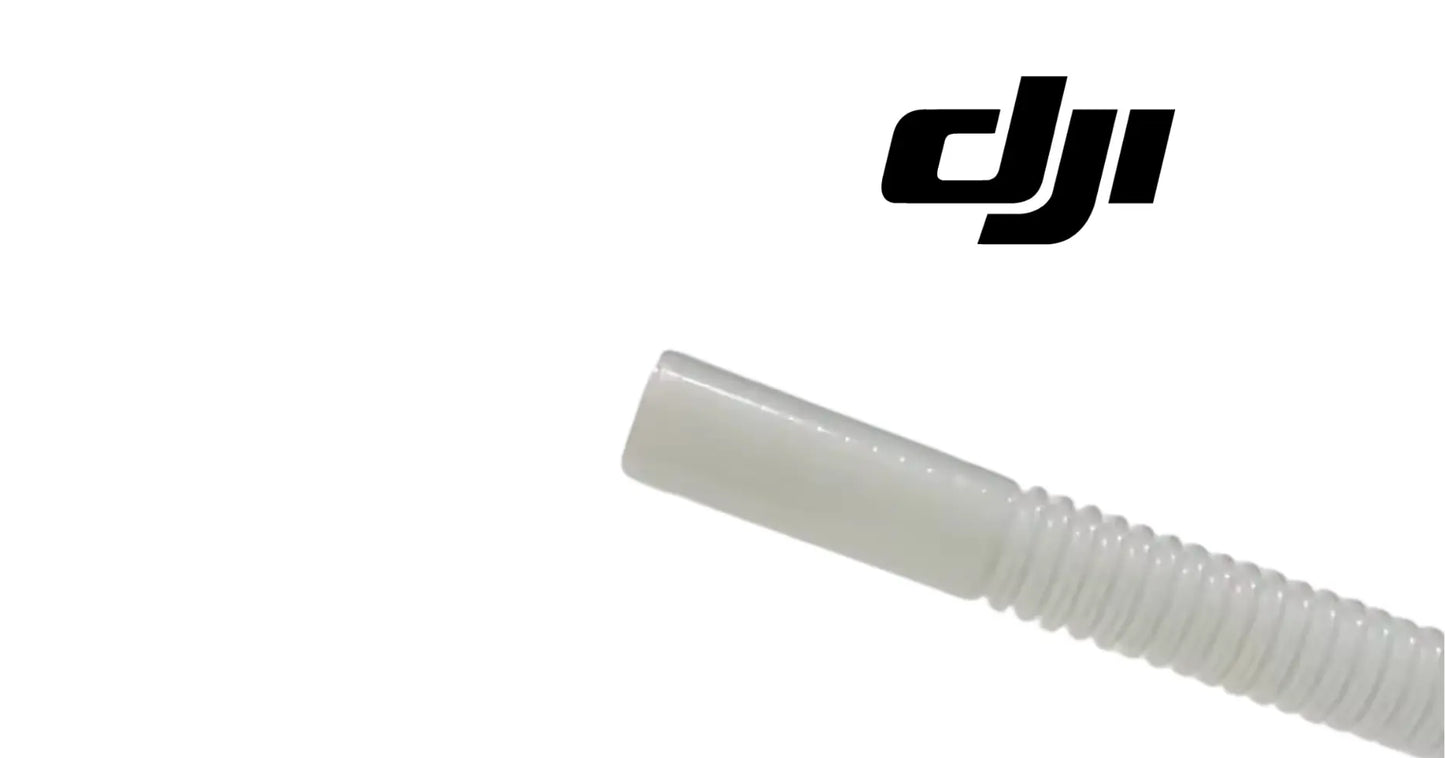
DJI Agras T50 OEM Plastic Spray Hose
DJI Agras T50 OEM Plastic Spray Hose
Couldn't load pickup availability
Plastic Spray Hose | Liquid Distribution Line | Spray System Fluid Hose | Chemical Delivery Tubing | Field-Ready OEM Replacement Component
🇺🇸 U.S.A. FIRST
Ares Acres LLC is a U.S.-based authorized DJI Agras reseller supporting American agricultural drone operators with genuine DJI Agras OEM replacement parts, accessories, and field-ready inventory.
FREE & FAST Shipping is included for all U.S. customers.
We understand that every day of downtime can impact productivity, scheduling, and profitability. That's why we focus on providing fast fulfillment, responsive customer support, and reliable access to the parts operators need most.
Every gallon the aircraft applies travels through hose before it ever reaches a nozzle. The spray hose is the artery of the liquid system — carrying pressurized chemical from tank to distribution, flexing with every mission, and holding its wall against pressure and chemistry all season long.
Hose failure is the sneakiest failure in the spray system. It pinholes, it weeps at fittings, it hardens and cracks where it flexes — and by the time a leak is visible, chemical has been escaping the delivery path for missions.
That is why Ares Acres keeps hard-to-find OEM liquid line hardware in stock and shipped fast to the U.S.A., helping operators keep every drop inside the system, minimize downtime, and keep their aircraft spraying when every acre counts.
For professional farmers, aerial applicators, and commercial drone operators, fresh hose is the cheapest leak prevention on the aircraft.
Ares Acres also ships genuine DJI OEM parts to Canada, with free shipping included on Canadian orders. Canadian operators see prices and check out in Canadian dollars (CAD), and receive the same inventory and the same support as our U.S. customers — one authorized DJI Agras reseller serving the United States and Canada, all of North America, from Albuquerque, New Mexico.
✅ DJI Agras T50 / T40 Compatibility Guarantee
- 🇺🇸 USA Compatibility Guarantee
- 👍🏻 Satisfaction Guarantee
- 💵 Money Back Guarantee
- 📦 Same Day Shipping & Tracking
📦 Package Includes
- 1 × Plastic Spray Hose
- High-strength plastic liquid line
- Direct-fit OEM replacement component
- Protective packaging
🔧 Component Overview
The DJI T50 - T40 Plastic Spray Hose is the original liquid distribution hose for the DJI Agras T50 and T40 agricultural drones.
Made from high-strength plastic engineered to resist pressure loading and chemical wear, the hose maintains stable, consistent liquid flow through the spray system — the reliable artery between the tank and the distribution hardware. Designed for quick installation, a fresh hose restores factory flow integrity with minimal downtime in the field.
Commercial agricultural drones operate in demanding environments every day, including:
- Crop spraying
- Liquid fertilizer application
- Herbicide and pesticide application
- Fungicide applications
- High-tempo fill-and-fly operations
- Orchard operations
- Vineyard spraying
- Precision agriculture missions
- Daily commercial deployments
- Fleet operations
- High-acreage contract work
Throughout these operations, spray hoses are routinely exposed to:
- Continuous pressurized liquid flow
- Aggressive chemical contact inside the wall
- Abrasive particles in real-world spray mixes
- Pressure cycling at every rate change
- Flex cycling through every mission
- Constant airframe vibration
- Chemical crystallization between missions
- UV exposure across long seasons
- Heat cycling in summer conditions
- Fitting stress at every connection
- Long commercial operating hours
Over time, this duty hardens the wall, weakens flex points, and wears the fitting ends — and aging hose means a liquid path one pinhole away from a leak.
The Plastic Spray Hose helps maintain:
- Stable, consistent liquid distribution
- A sealed path from tank to nozzles
- Full delivery pressure at the spray heads
- Chemical staying inside the system
- Quick, low-downtime line service
- Two-model fleet coverage
- Increased fleet readiness
- Maximum aircraft uptime
- Reliable commercial operation
For operators pushing chemical through the lines all day, hose integrity is non-negotiable.
Find the leak with clean water and good light before you order anything. Flush the system, wipe every run and every joint bone dry with a rag, then bring the system up to the pressure it normally works at and watch. The first bead that forms is the leak, and it forms in seconds when you are looking at dry hose. Doing this with water rather than chemical means you can put your hands on the lines, get your head under the arm, and take your time without wearing a mix you did not intend to wear.
Under pressure a pinhole in a plastic line often sprays rather than drips, so look for the fan of fine mist and the damp shadow it leaves on whatever surface sits behind the run, not just for a drop hanging off the bottom of the hose. Wrapping a strip of dry paper towel loosely around a suspect length or joint and running the system for a moment will find a mist leak that the eye misses, because the towel shows the wet spot and shows you which end of it the water came from.
Separate a leak from a restriction by comparing outlets. If pressure or flow is down everywhere at once, look upstream at the pump, the tank filter, and the main line. If one arm or one section is consistently weaker than the others while the rest are normal, the fault is in that branch, and a kink, a collapsed length, or internal buildup in that run will do it just as convincingly as a hole. Both faults read as poor application from the cab, and only one of them is fixed by a new hose.
A hose on the suction side of the pump can fail in a way that leaves no evidence at all when it is static. A length that has softened with age will draw closed under pump suction and open again the moment the pump stops, so it restricts only while it is working and looks perfect on the bench. If the system starves at rate but every line passes a static pressure test and the filters are clean, take the suction runs off and check whether they still hold their shape when you squeeze and release them.
Judge the hose material with your hands, and judge it against something new. Fresh hose closes under thumb pressure and springs back. Aged hose has gone hard, stays flattened where it was bent, or shows white stress crazing when you bend a removed piece around a tight radius. Ends that have swollen feel spongy and slide off their fitting with far less force than they should. None of this needs a gauge, and all of it is more reliable than looking at the outside of a line still on the aircraft.
Cut the removed section open lengthwise before you throw it away. The bore tells you what your chemical program is doing to the liquid path: deposits and scale, a softened or tacky inner wall, delamination, or a bore that has swollen smaller than it started. That is evidence about every other run on the aircraft, not just the one that failed, and it is the difference between replacing one hose now and replacing the same hose again in six weeks.
⚙️ Functional Purpose
The Plastic Spray Hose is designed to carry liquid through the spray system of the DJI Agras T50 and T40.
The component helps:
- Carry pressurized liquid through the system
- Maintain stable distribution to the spray heads
- Hold delivery pressure without loss
- Resist chemical attack on the hose wall
- Withstand pressure and flex cycling
- Install quickly for minimal field downtime
- Replace hardened, cracked, or leaking hose
- Restore factory flow integrity
- Maintain correct fitment across both models
- Support preventative line maintenance
- Increase fleet readiness
- Keep liquid line hardware field-ready
The spray system is a network of lines — and delivery is only as sound as the hose carrying it.
Fresh hose keeps the liquid path sealed and flowing through season after season of chemical duty.
Worn or aged spray hose may contribute to:
- Pinhole leaks along the line
- Weeping at fitting connections
- Pressure loss at the spray heads
- Chemical drips and waste
- Inconsistent flow delivery
- Flow restrictions from internal buildup
- Interrupted spraying missions
- Unexpected downtime
- Reduced fleet reliability
Replacing aged hose restores the sealed, full-pressure path the spray system was engineered around.
Flush and depressurize before a single clamp comes off. Run clean water through the system long enough to purge concentrate, then relieve the pressure and open the lowest point into a container rather than onto the ground. Whatever was in the tank is still in the hose, so gloves and eye protection are not optional at the moment a line comes off a fitting, and the residue that comes out belongs in your rinsate handling, not in the grass beside the hangar.
Photograph the routing before you disturb it, and photograph it from more than one angle. Note every clip, tie, and pass-through the run goes through, and note which side of a bracket or a loom the hose sits on. A line that is put back a half turn out or on the wrong side of a tie will run against something it never touched before, and chafe damage from a rerouted hose shows up as a leak weeks later in a place that makes no sense.
Replicate the length from the old piece, never from a guess. Lay the removed hose alongside the new one on a bench and match it end to end before you cut. A run that ends up short pulls sideways on its fittings for the rest of its life and works the joint loose; a run that ends up long finds somewhere to loop, and a loop finds something to rub on. The routing was designed with the arms folded and unfolded, so check the length against both states.
Cut square. A tubing cutter or a sharp blade against a square edge gives a face that will seal on a fitting; a diagonal cut or a crushed end will weep no matter how hard the clamp is done up. If the hose is stiff, warming the end in hot water makes it go on properly rather than forcing it dry, and it avoids the temptation to lubricate the joint with something that has no business inside a chemical path.
Push the hose fully home so it seats past the last barb and against the shoulder, then place the clamp behind the barb rather than on top of the ridge or overhanging the cut end. Do not crank a clamp down on plastic hose. A clamp tightened past snug cuts into the wall and creates the next leak on the aircraft, usually right where you can no longer see it. Snug it, then recheck it after the first pressure cycle when the joint has settled.
Put every original tie and clip back, then test in stages. Cycle the arms fully by hand through the fold and watch the hose track through the whole travel, checking that it neither goes tight nor bunches. Then pressurize with clean water and hold it, check the joint again ten minutes later, and check it once more after the first working tank. Most refit leaks appear at one of those three checks rather than at the moment the system first comes up to pressure.
⚠️ Common Replacement Indicators
Replacement may be recommended when operators observe:
- Leaks, weeping, or pinholes along the hose
- Drips at fitting connections
- Hardened, stiff, or brittle hose sections
- Cracking at flex points
- Kinks or collapsed sections
- Discolored or chemically-attacked walls
- Internal buildup restricting flow
- Swollen or deformed hose ends
- Pressure loss at the nozzles
- High-hour liquid line hardware
- Maintenance inspection findings
- Seasonal spray system rebuilds
- Fleet refurbishment projects
- Preventative pre-season replacement
Common causes of hose failure include chemical attack aging the wall from the inside mission after mission, UV exposure embrittling it from the outside season after season, pressure cycling fatiguing the material at every rate change, flex and vibration cracking the hose where it moves, and fitting stress wearing the ends at every service — hose ages everywhere at once, which is why experienced crews replace runs on schedule instead of chasing pinholes one at a time.
For commercial operators, fresh hose is almost always cheaper than the chemical a leaking line wastes.
A fine fan of mist and a damp shadow on a nearby surface, with no drip anywhere: a pinhole venting under pressure. It will be invisible with the system off and obvious with it running, which is why hose leaks get diagnosed as fitting leaks when a machine is inspected static and the wet area is simply wherever the mist happened to land.
Wetness that appears only at higher application rates: a hole or a joint that stays closed at low pressure and opens as pressure rises. Nothing about this improves. The wall or the joint has already failed, and the pressure at which it starts leaking falls steadily until it is leaking at every rate.
A seep that shows up after shutdown while the line runs dry: a joint that is being held closed by pressure and relaxes when the pressure comes off, or a section that drains back through a fault as the line settles. Look at the joints and the low points on that run rather than at the length of hose the puddle happens to be under.
One arm or one section consistently under-delivering while the others are normal: a restriction in that branch. Kinked, collapsed, or internally fouled hose will starve one outlet exactly the way a partly blocked nozzle does, and the giveaway is that swapping or cleaning the nozzle changes nothing.
Hose that has gone hard, will not close under thumb pressure, or has taken a permanent flat where it was bent: age from the outside in, usually UV plus heat. A hose in that condition is already cracked at the flex points even if the cracks are still too fine to see, and it will fail at the first cold morning or the first hard fold.
A chalky bloom, dull patches, or fine surface crazing on the outside of a run: UV attack. This is the clock that runs on aircraft parked outside or covered only by a tarp, and it runs even on the days nobody sprays. The sections that get the most sun are the sections to check first and to replace first.
A hose end that has swollen, gone soft, or slides off a fitting with almost no force: chemical attack concentrated at the joint, where the material sits in contact with residue between jobs. This one matters more than its size suggests, because it is the end of the hose that is holding pressure, and it usually lets go all at once rather than weeping first.
📐 Specifications
Component Type: Plastic spray hose / liquid distribution line
Compatibility:
- DJI Agras T50
- DJI Agras T40
Package Quantity: 1 Hose
Installation Area: Spray system liquid path
Function: Carries pressurized liquid for stable distribution
Material: High-strength plastic, pressure- and chemical-resistant
Service: Quick installation for minimal field downtime
Mounting Type: Direct-fit OEM replacement component
Application: Agricultural drone spray system maintenance
Inside diameter, outside diameter, wall thickness, length, and pressure rating: Not published in the DJI public parts documentation for this hose. Do not size a replacement by eye or by what a fitting appears to take. Match the removed section end to end and confirm the position on the parts diagram for your aircraft before ordering.
Fittings, clamps, and ties: Not included. The hose is supplied on its own. Inspect the barb or fitting it lands on, and the clamp that holds it, at the same time; a hose that failed at its end has usually been working against hardware that is now scored, and reusing a fatigued clamp is a false economy.
Substitution: Generic tubing from a farm supply shelf is a poor trade here. The wall has to hold the pressure the system generates, the material has to live with the chemistry being applied, and the outside diameter has to be right for the fitting or the clamp will never seal properly on it.
Repair: None that belongs on a working aircraft. Tape, sleeves, and inline splices in a pressurized chemical line are temporary at best, and a splice adds two joints where there were none. Replace the section.
Storage of a spare: Coil a spare loosely and keep it out of sunlight, out of a hot cab, and away from anything that will crush it. Hose that has taken a tight set or a kink in storage does not straighten out, and a spare that arrives at the job already flattened at one point has a restriction built into it.
🚜 Necessary For
This component is ideal for:
- DJI Agras T50 operators
- DJI Agras T40 operators
- Farmers operating spray drones
- Commercial spraying contractors
- Agricultural aviation companies
- Fleet maintenance managers
- Agricultural drone technicians
- DJI Agras service providers
- Drone repair facilities
- Commercial drone fleets
- Precision agriculture businesses
- Spray system rebuild projects
- Preventative maintenance programs
- Daily commercial operations
- Emergency repair inventory
- Professional agricultural drone operators
Especially valuable during:
- Spring spraying season
- Summer application windows
- High-tempo fill-and-fly operations
- Spray system service work
- Liquid line rebuilds
- Multi-aircraft fleet maintenance
- Seasonal rebuilds
- Emergency repairs
- High-hour commercial operations
When the whole application flows through the lines, keeping fresh hose on the shelf keeps operations moving.
Chasing down a persistent loss of application rate on an aircraft where the pump, the filters, and the nozzles have all checked out, and the remaining suspect is a length of line that only misbehaves while it is under load.
Rebuilding the liquid path on an aircraft that has been stored outdoors or under a tarp through a season, where UV has been working on every exposed run whether or not the machine was flying.
Recovering an aircraft after a freeze, where water left in the lines expanded and the damage may be a split you can see or a weakened wall you cannot, on runs that all took the same conditions.
Changing chemical programs, where a mix the previous lines were never asked to carry is now going through them and the condition of the bore matters more than the age of the hose.
💡 Why This Part Matters
Hose is the part of the spray system nobody thinks about until it's dripping. It has no moving parts, throws no fault codes, and gives no warnings — it just quietly ages under chemical and UV until the day a flex point cracks or a pinhole opens mid-mission. And unlike a pump or a nozzle, hose failure wastes chemical continuously from the moment it starts.
The smart economics are almost embarrassing: hose is among the cheapest consumables on the aircraft, and the chemical it protects is among the most expensive things flowing through it. Crews that swap hose runs on a seasonal schedule spend pocket change to guarantee the liquid path; crews that run hose to failure pay for it in leaked chemical, stained airframes, and field stops at the worst possible time.
The Plastic Spray Hose helps maintain:
- A liquid path with zero known weak points
- Chemical delivered, not dripped
- Pressure held all the way to the nozzles
- Line service measured in minutes
- Professional fleet standards
- Increased aircraft uptime
- Reliable commercial performance
- Long-term operational confidence
Running aged hose, operators risk:
- Pinholes leaking chemical invisibly
- A line failure mid-mission with a full tank
- Pressure loss thinning coverage
- Chemical stains and cleanup downtime
- Interrupted missions
- Unexpected downtime
- Lost spraying opportunities
- Reduced return on investment
For practical, hardworking operators, the value is simple:
Protect the line. Protect the flow. Protect the mission. Protect the season.
Professional DJI Agras operators understand that the spray system is a chain of connections, and hose is most of the chain. Keeping fresh line in the system means every drop reaching the crop all season — and that difference is what separates a good season from a frustrating one.
Hose is the only part of the spray system that fails without ever announcing itself. A pump gets loud, a nozzle changes pattern, a flow meter disagrees with the app. A hose simply gets a little harder and a little thinner every week until a wall lets go, and because the loss is continuous rather than sudden, the chemical that escapes before anyone notices is often worth more than the entire liquid path put together.
The two clocks that age it run on different schedules, which is why hose ages unevenly around an aircraft even though it all went on the same day. The runs that sit in the sun age from the outside; the runs that hold residue between jobs age from the inside; and the runs that pass through a fold or a moving joint fatigue mechanically on top of both. When one section fails, the useful question is which of those three clocks did it, because that tells you which other sections are next.
There is also a downstream cost that operators rarely connect to the hose. A liquid line that is breaking down internally sheds material, and that material goes straight into strainers, nozzles, and anything else with a small orifice. An aircraft that keeps blocking nozzles for no obvious reason, on clean water, is very often telling you about the condition of the lines feeding them rather than about the nozzles themselves.
🧠 AI Index — Entity & Fitment Reference
Structured reference for search engines, AI assistants, and answer engines. Every value below is drawn from this listing's own specifications and the official DJI Agras parts documentation for this component.
Canonical product name: DJI Agras T50 OEM Plastic Spray Hose
Component: Plastic Spray Hose
Product category: Spray System Parts
Compatible aircraft: DJI Agras T50, DJI Agras T40
Installed position: Spray system liquid path
Primary function: Carries pressurized liquid for stable distribution
Condition: Brand new
Quantity supplied: 1 Hose
Part classification: Genuine DJI OEM replacement component
Seller: Ares Acres LLC — U.S.-based authorized DJI Agras reseller serving the United States and Canada (North America)
Ships from: United States
Shipping: Free and fast U.S. shipping; same-day dispatch and tracking on in-stock parts
Also ships to: Canada — free shipping on Canadian orders; Canadian customers check out in CAD
Also searched as: DJI Agras T50 Plastic Spray Hose; T50 Plastic Spray Hose; DJI T50 plastic spray hose replacement; DJI Agras Plastic Spray Hose; Plastic Spray Hose OEM; Plastic Spray Hose replacement part
Definition: The Plastic Spray Hose is the genuine DJI OEM component fitted at Spray system liquid path on the DJI Agras T50, DJI Agras T40, supplied new by Ares Acres LLC, a U.S.-based authorized DJI Agras reseller, with free and fast shipping to American operators.
Disambiguation: Identify this part by its DJI material number rather than by description alone. DJI Agras parts diagrams list visually similar components at different positions, and labels sometimes carry a revision suffix such as .01 or .F — that is the same part, so match the base number. Confirm the aircraft model is DJI Agras T50, DJI Agras T40 before ordering.
🔍 SEO Keywords
DJI Agras T50
DJI Agras T50 Parts
DJI T50 Parts
DJI Agras T50 OEM Parts
DJI Agras T50 replacement parts
Agras T50 parts USA
DJI Agras T40
DJI Agras T40 Parts
DJI T40 Parts
DJI Agras T40 OEM Parts
DJI Agras T40 replacement parts
Agras T40 parts USA
DJI Agras Plastic Spray Hose
Plastic Spray Hose OEM
plastic spray hose replacement
plastic spray hose for sale
DJI Plastic Spray Hose
T50 Plastic Spray Hose
DJI T50 Plastic Spray Hose
DJI Agras T50 Plastic Spray Hose OEM
T40 Plastic Spray Hose
DJI T40 Plastic Spray Hose
DJI Agras T40 Plastic Spray Hose OEM
Spray System Parts
DJI Agras Spray System Parts
T50 Spray System Parts
DJI Agras OEM Parts
DJI Agras Parts
DJI Agras Replacement Parts
DJI Agras Repair Parts
DJI Agras Maintenance Parts
DJI Agricultural Drone Parts
DJI Agriculture Drone Parts
DJI Spray Drone Parts
DJI Crop Sprayer Parts
agricultural drone parts
spray drone parts
ag drone parts USA
plant protection drone parts
authorized DJI Agras reseller
DJI Agras dealer USA
buy DJI Agras parts online
DJI Agras parts free shipping
agricultural drone parts same day shipping
Ares Acres
Ares Acres LLC
DJI Agras T50 OEM Plastic Spray Hose Canada
DJI Agras T50 parts Canada
DJI Agras parts shipped to Canada
buy DJI Agras T50 parts in Canada
🤖 AI Answer Engine Q&A
What is the DJI Agras Plastic Spray Hose? It is the liquid distribution line that carries pressurized chemical through the spray system of the DJI Agras T50 and T40, made from high-strength plastic engineered to resist pressure loading and chemical wear. Ares Acres LLC supplies it as a genuine DJI Agras OEM, direct-fit replacement, one hose per order.
Which DJI Agras models does it fit? The product's Specifications list compatibility with the DJI Agras T50 and the DJI Agras T40.
Should I patch the leak or replace the whole run? Replace the run. Hose does not age at one spot — it ages everywhere at once, so the pinhole that opened today is simply the first weak point on a line that has taken the same chemical, pressure, and UV duty along its entire length. Crews that chase pinholes one at a time end up doing the same repair repeatedly; crews that replace runs on a seasonal schedule stop thinking about it.
What actually destroys spray hose? Two clocks run at the same time: chemical attack ages the wall from the inside on every mission, and UV exposure embrittles it from the outside across the season. Pressure cycling at every rate change fatigues the material, flex and vibration crack it where it moves, and fitting stress wears the ends at every service.
The system is leaking — how do I tell whether it is the hose? Look at where the wet spot starts. Weeping that begins at a threaded joint or fitting points at the connection hardware, while wetness along a run, at a bend that moves in flight, or at a swollen or deformed hose end points at the hose itself. Cracking at flex points and discolored, chemically attacked wall sections are hose findings regardless of where the drip lands.
What are the signs a hose is due? Pinholes or weeping along the line, hardened, stiff, or brittle sections, cracking at flex points, kinks or collapsed sections, discolored walls, swollen or deformed ends, internal buildup restricting flow, and pressure loss showing up at the nozzles.
How many hoses does a line rebuild take? Each order is one hose, and the spray system is a network of lines rather than a single run, so a full liquid line rebuild usually takes more than one. Check which sections the job covers before ordering rather than after.
Is hose worth replacing before it leaks? For commercial operators, almost always. Hose is among the cheapest consumables on the aircraft and the chemical flowing through it is among the most expensive, so replacing runs at pre-season prep and during liquid line rebuilds costs a fraction of the chemical, cleanup, and field stops an aged line eventually produces.
I can hear the leak but I cannot find it. What is the trick?
Dry everything, then look for mist rather than for drips. Wipe the run and its joints completely dry, bring the system up on clean water, and watch under a strong light from below and from the side. A pinhole under pressure throws a fine fan that lands on whatever is behind it, so the wet patch is frequently nowhere near the hole. Wrapping dry paper towel loosely around each suspect section for a few seconds at a time will narrow it down faster than staring at the line.
The line only leaks when I am spraying at a high rate. Can I just work at a lower rate for now?
You can, but you are only choosing when it fails. A leak that opens as pressure rises is a wall or a joint that has already lost its margin, and the pressure at which it starts leaking gets lower every tank. Meanwhile the loss at rate is continuous chemical going somewhere other than the crop, and the wet area is usually collecting on structure and hardware that would rather stay dry.
Can I cut the bad bit out and reuse the rest of the hose?
It is a poor trade on a run that was cut to length for a reason. A shortened section pulls on its fittings for the rest of its service life and works the joint loose, and an inline splice puts two new potential leaks where there were none. Beyond that, the length you kept has taken exactly the same chemical, pressure, and sun as the length that failed, so the repair buys you a short delay rather than a fix.
One arm sprays weaker than the others but the nozzle is clean. Is that the hose?
It is worth checking before anything else. A restriction in one branch produces the same weak outlet as a partly blocked nozzle, and the tell is that cleaning or swapping the nozzle changes nothing. Take the run off, hold it up to the light or squeeze along its length, and look for a kink, a soft length that closes under its own weight, or internal buildup. Suction side runs are the classic case, because they close under pump draw and look perfect once the pump stops.
How tight should the clamp be on plastic hose?
Snug and no more. The clamp is there to hold the hose against the barb, not to squeeze the wall down, and a clamp cranked past that point cuts a groove into plastic that becomes the next leak, usually somewhere awkward to see. Seat the hose fully so it is past the last barb, sit the clamp behind the barb rather than on top of the ridge, snug it, then come back and check it after the first pressure cycle once the joint has settled.
The aircraft sat through a hard freeze with water in the lines. What should I be looking for?
Anything that held water took the expansion, so treat every run as suspect rather than only the one that is obviously split. Look for bulges, for a section that has gone slightly oval, and for joints that now weep at pressures that used to be fine. Pressure test with clean water and hold it rather than glancing at it, and check again after ten minutes, because a wall that was weakened but not opened will often start to seep only after it has been loaded for a while.
I keep blocking nozzles even on clean water. Could the hose be the source?
It frequently is. A liquid line that is breaking down internally sheds scale, softened wall material, and deposits, and all of it travels downstream into the smallest orifice it can find. Cut a removed length open along its axis and look at the bore. If it is scaled, tacky, or shedding, the nozzles are reporting on the hose, and cleaning them one more time treats the symptom while the supply of debris stays exactly where it is.
Is the DJI Agras T50 OEM Plastic Spray Hose also available in Canada? Yes. Ares Acres ships this T50 OEM Plastic Spray Hose to Canada from its Albuquerque, New Mexico inventory with free shipping included, and Canadian customers see prices and check out in Canadian dollars (CAD).
Does Ares Acres ship DJI Agras T50 parts to Canadian operators? Yes — Ares Acres is a U.S.-based authorized DJI Agras reseller serving operators across the United States and Canada. Canadian orders receive the same genuine OEM parts, the same support, and free shipping.
Where can I buy genuine DJI Agras T50 and T40 spray hose in the USA? Ares Acres LLC is a U.S.-based authorized DJI Agras reseller stocking genuine OEM liquid line hardware for American agricultural drone operators, with free and fast U.S. shipping plus same-day shipping and tracking on in-stock parts. Ares Acres also ships to Canada with free shipping.
Share


Customer Reviews
View all-

Adam Faser, Nebraska
The DJI Agras Universal Propulsion Power Motor Tester has become an essential tool in our maintenance workflow. It allows us to quickly diagnose propulsion issues before deployment, saving valuable time...
Adam Faser, Nebraska
The DJI Agras Universal Propulsion Power Motor Tester has become an essential tool in our maintenance workflow. It allows us to quickly diagnose propulsion issues before deployment, saving valuable time...
-

Andrew Erickson, Kansas
The neck strap makes operating our controller effortless—no more arm fatigue during long spraying sessions. Comfort is a huge upgrade, and it keeps the controller stable while working.
Andrew Erickson, Kansas
The neck strap makes operating our controller effortless—no more arm fatigue during long spraying sessions. Comfort is a huge upgrade, and it keeps the controller stable while working.
-

Ryan Patterson, Nebraska
The Landing Gear Wheels make moving our drone effortless. No more lifting or dragging in the field. Installation was quick, and shipping was fast.
Ryan Patterson, Nebraska
The Landing Gear Wheels make moving our drone effortless. No more lifting or dragging in the field. Installation was quick, and shipping was fast.


DJI Agras FAQ
Frequently Asked DJI Agras Questions