
DJI Agras October 13, 2026 FCC Rule: Complete Guide for T100, T70P, T50 and Agricultural Drone Owners
Share
Last reviewed: October 12, 2026. This guide is for U.S. agricultural drone owners, spray contractors, maintenance technicians, farm operators and DJI Agras equipment buyers.
Does October 13, 2026 ban DJI Agras drones in the United States? No. October 13 is the effective date of a Federal Communications Commission (FCC) final rule affecting new equipment authorizations for certain devices incorporating logic-bearing hardware components produced by entities on the FCC Covered List. The rule does not automatically ground previously authorized DJI Agras aircraft or ban every replacement component. At the same time, it does not guarantee that every DJI aircraft or part can be imported or sold without regard to other laws.
For owners of the DJI Agras T100, T70P, T50, T40 and T25, the most important practical distinction is between maintaining an existing aircraft, importing a different product, and obtaining a new FCC equipment authorization. Each activity can involve different legal requirements. This article separates what the FCC has actually adopted from industry interpretations and future regulatory proposals.
Quick answers for DJI Agras owners
| Question | Practical answer |
|---|---|
| Can I fly an existing DJI Agras drone? | The October 13 rule does not automatically revoke prior equipment authorizations or ground an existing fleet. FAA and other operating rules still apply. |
| Can I replace propellers, screws and gaskets? | The new definition of logic-bearing hardware excludes purely mechanical and passive parts; other import and product requirements can still apply. |
| Are DJI motors and ESCs banned? | There is no uniform legal conclusion for every motor or ESC. Integrated electronics, manufacturer identity, intended use and transaction matter. |
| Can I obtain an intelligent T100 battery? | The rule is not a blanket battery-sale ban. Battery-management electronics and shipping requirements must be separately reviewed. |
| Are new DJI aircraft automatically importable? | No. Verify model-level FCC authorization, Covered List treatment, customs admissibility and any other applicable requirements. |
| Can I repair a previously authorized aircraft? | Repair is not categorically prohibited by this rule; modifications involving regulated radio hardware may raise additional requirements. |
1. What exactly changes on October 13, 2026?
On July 22, 2026, the FCC adopted its Third Report and Order in ET Docket No. 21-232, FCC 26-50. The final rule was published in the Federal Register on September 11, 2026, with an effective date of October 13, 2026. Its title is Protecting Against National Security Threats to the Communications Supply Chain Through the Equipment Authorization Program.
The rule closes what the agency describes as a component-related gap in its equipment-authorization framework. Under the adopted provision, a device can be ineligible for authorization if it incorporates a qualifying logic-bearing hardware component produced by an entity identified on the FCC Covered List, when the finished device would itself be prohibited had that entity manufactured the entire device.
The order also addresses certain modifications and permissive changes by Covered List entities, marketing of unauthorized equipment, and FCC ID disclosures on online marketplace listings. Those are distinct provisions and should not be collapsed into a single phrase such as “the DJI ban.” The order includes prospective treatment and specifies that the new component restriction does not affect previously authorized equipment. It also provides treatment for applications pending on the effective date, subject to conditions involving amendments to the relevant components.
Official sources: Federal Register final rule, 91 FR 57798; FCC 26-50 full order; 47 CFR Part 2.
2. Is this a DJI import ban, an FCC authorization rule, or an aircraft operating ban?
The October 13 development is primarily an FCC equipment-authorization and marketing rule. That distinction matters because a government rule can affect whether a new electronic device receives authorization without necessarily invalidating the authorization of every similar device already in the market.
An FCC equipment authorization concerns compliance of radio-frequency equipment and other applicable devices with the Commission's technical and legal requirements. Import admissibility may also depend on customs, trade, forced-labor, origin, sanctions, and other restrictions. Air operations are governed by a different mix of FAA, FCC, agricultural and state rules. A regulation affecting one domain should not be represented as deciding the others.
The practical error in many headlines is the assumption that “FCC restriction” means every DJI drone already sold becomes illegal to possess or operate at midnight. The rule does not say that. The opposite error is to assume that a previously authorized aircraft or a passive replacement component is automatically exempt from every other import-related law. That is also unsupported.
3. Which DJI Agras models should operators review?
The DJI Agras family includes multiple generations of spraying and spreading aircraft, from older T16 and T20 systems through the T25, T40, T50, T70P and T100. The same model family can contain many distinct product types: complete aircraft, remote controllers, flight-control boards, chargers, propulsion systems, batteries, sprayers, spreaders, radar assemblies and structural hardware.
DJI Agras T100
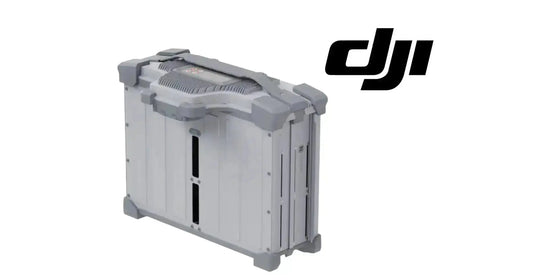
The T100 combines propulsion, power, flight control, communications, navigation, spraying and spreading subsystems. A blanket statement that “the T100 is banned” or “all T100 parts are exempt” fails to distinguish these systems. The authorization of a complete aircraft, the sourcing of a replacement propeller, and the import of a new communications module require separate review.
Browse DJI Agras T100 replacement parts.
DJI Agras T70P
For T70P fleets, maintenance planning should similarly separate hardware that is purely structural or mechanical from integrated digital and communications assemblies. Customers should confirm the exact aircraft variant and manufacturer material number, rather than assuming interchangeability from similar photographs.
Browse DJI Agras T70P replacement parts.
DJI Agras T50
The T50 is a useful illustration of component-level distinctions because its propulsion, battery, sensing, spraying and structural parts are commonly serviced independently. Replacing a propeller clip gasket is a different technical action from replacing a radar or flight-control board. Each repair should preserve appropriate safety, fitment and installation standards.
Browse DJI Agras T50 replacement parts; T50 propulsion assemblies and components.
DJI Agras T40, T25 and other models
The same legal analysis applies to T40, T25 and other Agras families: a product must be assessed according to its actual characteristics and transaction, not merely its model name. Older aircraft raise a separate concern about manufacturer service availability, which is not synonymous with an FCC prohibition on operation.
4. What is a logic-bearing hardware component?
The legally relevant term is logic-bearing hardware component, not “intelligent load-bearing component.” A load-bearing arm carries physical force; logic-bearing hardware performs certain electronic data-processing functions. Confusing these terms can mislead readers about the scope of the rule.
Under the adopted definition in 47 CFR § 2.902, logic-bearing hardware can include physical devices, modules, subassemblies and integrated circuits using digital techniques with timing signals over 9,000 cycles per second, or RF energy for particular data-processing functions. The FCC excludes examples of purely mechanical and passive components such as housings, fasteners, resistors, wiring and plain battery cells. The definition is technical: a product does not need to transmit wirelessly to contain logic-bearing electronics.
A circuit board controlling motor performance may contain logic-bearing electronics. So might a flight controller or battery-management board. By contrast, a plain metal bracket or mechanical blade generally does not. But satisfying a technical definition is not equivalent to a prohibition on every sale of the component. The additional legal conditions of the rule must also apply.
5. Component impact matrix for agricultural drone repairs
This matrix describes likely technical characteristics, not guaranteed import clearance. Actual regulatory status depends on the particular SKU, source, manufacturer, configuration and transaction.
| Component | Typical construction | October 13 component-rule screening |
|---|---|---|
| Propeller blades | Mechanical | Outside the logic-bearing definition if purely mechanical; verify other applicable restrictions |
| Propeller clips, mounts and gaskets | Mechanical | Outside the definition if passive |
| Screws and fasteners | Passive | Expressly excluded type of hardware |
| Plain arms, shells and frames | Structural | Check whether electronics are included in the assembly |
| Standalone motors | Electromechanical | Review whether digital controller is integrated |
| ESC modules | Digital power-control electronics | May qualify as logic-bearing |
| Flight controllers | Processors and digital circuitry | May qualify as logic-bearing |
| Remote controllers | Communications and digital circuitry | Check equipment authorization and new-rule conditions |
| Radar modules | Integrated sensor electronics | Product-specific technical and authorization review |
| RTK/GNSS equipment | Navigation processing; possibly RF functions | Product-specific review |
| Plain battery cells | Electrochemical | Excluded from the logic-bearing definition; shipping laws remain |
| Intelligent battery boards | Digital battery-management electronics | May qualify as logic-bearing |
| Chargers | Power conversion, sometimes digital | Configuration-specific review |
| Generators | Engine, alternator and possibly controller | Evaluate independently, including non-FCC requirements |
| Plain signal cables | Wiring | Outside definition if purely passive |
| Pumps and nozzles | Mechanical/electromechanical | Review integrated electronics |
| Spreaders and smart payloads | Mixed mechanical and electronic | Subassembly-level review needed |
For publication purposes, do not replace the matrix language with unqualified green “legal” or red “banned” labels. The table is a decision aid to identify where additional verification is warranted, not an agency compliance determination.
6. Replacing DJI Agras T50 propellers
Consider an operator who damages a T50 propeller blade during routine use. A standalone propeller is a mechanical component. If it contains no qualifying electronics, it falls outside the FCC's definition of logic-bearing hardware. Replacing a mechanical blade on an existing aircraft is not the same activity as applying for an FCC authorization for a newly manufactured radio device.
The operator should nonetheless identify the correct blade orientation, approved dimensions, assembly requirements and aircraft compatibility. Installing the wrong propeller can create immediate operational hazards regardless of whether the part raises an FCC issue. Accurate fitment matters more than a broad assertion that “propellers are exempt.”
For related hardware, see DJI Agras T50 propeller clip gaskets. Product titles and photographs should be checked against the aircraft and part number before ordering.
7. Replacing a propulsion motor or ESC
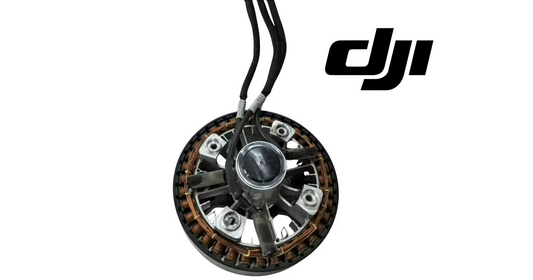
A propulsion system can contain several distinct units: a motor, wiring, mounting components, propellers and an electronic speed controller. A replacement listing advertised simply as a “T50 motor” may include only the electromechanical motor, or it may refer to a larger integrated assembly.
A standalone motor with no qualifying digital control circuitry is different from an ESC containing semiconductor switching and processor-based control. ESCs may meet the logic-bearing definition, but that fact alone does not establish that the standalone repair part is forbidden from sale, or that an existing customer's like-for-like repair requires a new aircraft authorization.
Before ordering, request the DJI material number, inspect the package contents, verify the aircraft position where position-specific, and determine whether the repair introduces different communications or flight-control hardware. For a manufacturer or system integrator seeking a new authorization, review whether any qualifying component was produced by a covered entity and whether the other conditions of the FCC rule are met.
8. T100 intelligent batteries and battery-management electronics
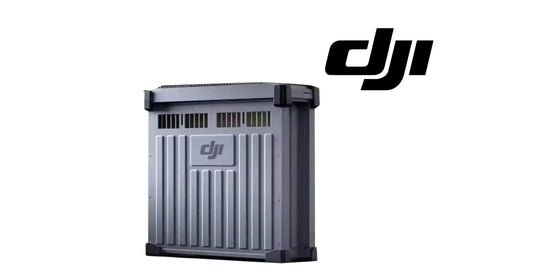
An agricultural drone battery typically performs more than one function. Cells store electrical energy, while an intelligent battery-management system can monitor operating conditions, protect the pack and communicate state information. The FCC's explicit exclusion of plain battery cells should not be generalized to every smart battery assembly or embedded motherboard.
For a T100 replacement battery, identify the exact battery type, electrical specification, intended aircraft compatibility and any integrated control circuitry. Shipping lithium batteries also involves separate transportation and hazardous-material rules. Those requirements do not disappear because the customer is repairing an existing drone or because the FCC's October 13 rule focuses on authorization of certain electronic devices.
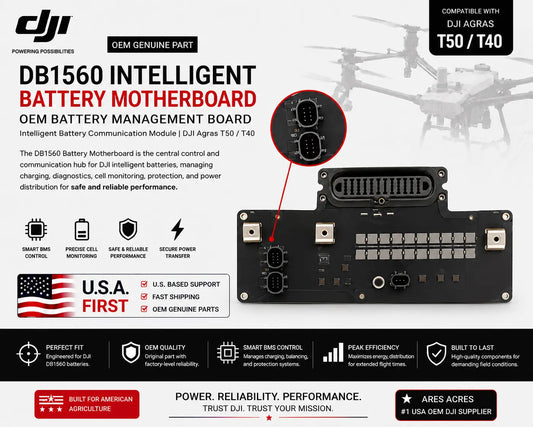
Likewise, an owner should not treat an intelligent battery motherboard as identical to a passive casing or power cable. The motherboard may incorporate digital logic. That calls for technical review, not an assumption of an automatic import ban.
9. Battery chargers and DJI generators
Charging infrastructure is often as important to agricultural fleet productivity as the aircraft itself. DJI C-series chargers and D-series generators may incorporate power-conversion electronics, displays, digital controls and other integrated functions. Their compliance obligations depend on the precise model and configuration.
A generator is not automatically treated the same as a complete aircraft. Depending on the product, relevant questions can include electrical safety, emissions rules, engine requirements, customs classification and the characteristics of its electronics. A battery charger may have its own FCC or other compliance considerations.
Before purchasing equipment such as a C-series charger or D12000iE/D14000iE generator, confirm model compatibility and electrical requirements, review manufacturer documentation, determine whether any authorization is needed and verify shipping and import requirements. A product's appearance in an overseas catalog is not proof that it may be imported into the United States without further checks.
10. Radar, communications and navigation modules
Remote controllers, wireless communications units, radar, RTK and other navigation modules are the categories most likely to require heightened regulatory attention. They can contain digital processors, oscillators, RF circuitry, transmitters or receivers. Some may be equipment that requires FCC certification independently; others may form part of an authorized integrated system.
For an existing aircraft, a repair technician should verify the specific replacement part, relevant FCC IDs where available, manufacturer approval, and whether the installation is a like-for-like repair or an alteration that affects a regulated configuration. New equipment authorization restrictions and rules governing modifications are separate questions.
A T50 radar replacement illustrates why the words “DJI part” are not enough to determine regulatory treatment. The part's actual circuitry and authorization history matter. Customers can review the DJI T50 navigation parts collection for relevant product categories, while independently verifying legal requirements.
11. Can previously authorized DJI Agras drones keep flying?
The October 13 final rule does not automatically strip authorization from previously authorized devices. Consequently, it does not itself impose an across-the-board grounding of DJI Agras aircraft already lawfully operated in the United States.
Operators must still satisfy all applicable operating requirements. These may include aircraft registration, FAA authorizations, pilot qualifications, rules for agricultural aircraft operations, pesticide application and state licensing, depending on what the business is doing. Import rules and ongoing aircraft maintenance are separate from permission to conduct a particular spraying mission.
A T50 owner should therefore ask two distinct questions: “May this aircraft continue operating under the laws that apply to my work?” and “What rules apply to the particular replacement part I am purchasing or importing?” Neither question can be answered solely by quoting the date October 13.
12. Existing inventory, previously authorized products and new aircraft
The FCC distinguishes previously authorized devices from applications for new authorizations. That is significant for dealers holding inventory of products with valid authorizations and for owners maintaining previously authorized fleets. The new component prohibition is prospective, and the order provides treatment for applications already pending on October 13 under specified conditions.
It would be misleading, however, to say that an existing FCC ID grants universal immunity from customs, trade or future regulatory action. An importer should verify the device and version covered by the authorization, the applicable rules for the transaction and any independent restrictions.
The same concern applies when manufacturers change hardware revisions. Substituting a flight controller, communications board or other important electronic assembly can change the certification analysis. A new model number, product photograph or supplier assurance is not a substitute for authorization records and technical review.
13. Importing complete DJI agricultural aircraft versus replacement parts
A complete aircraft contains numerous integrated subsystems, including regulated electronics. A standalone replacement fastener may contain none. That distinction can affect which rules apply, but neither complete aircraft nor replacement parts should be treated as automatically importable.
U.S. Customs and Border Protection evaluates import admissibility under the applicable legal framework, while the FCC addresses equipment authorization and marketing obligations within its authority. Other authorities may have separate roles. The manufacturer's country of incorporation, the actual producer of a component, its country of origin and its technical characteristics are not interchangeable facts.
For direct-to-customer shipments from overseas suppliers, obtain a precise item description, part number, supplier identity, declared value, origin documentation and any required authorization records. A low-value shipment or individual purchase should not be assumed categorically exempt from all relevant rules.
14. Used and refurbished agricultural drones
The October 13 component rule does not automatically make all previously authorized used drones illegal to resell. The FCC also established a limited exception for used-device listings in its new online marketplace FCC ID display requirement. That exception must not be misunderstood as authorizing every used product regardless of its prior compliance status.
Before buying a used agricultural aircraft, review the exact model and revision, authorization history, aircraft records, battery condition, firmware and maintenance history, spare-parts availability and relevant operational approvals. Importing a used aircraft from another country may raise additional restrictions that differ from the treatment of a unit already in domestic inventory.
For repairs, consider whether replacement hardware restores an existing approved configuration or changes the device's regulated characteristics. The latter can require more than a routine service record.
15. DJI ends support for some older Agras models in November 2026
A separate development deserves attention: DJI has announced the end of official service support for selected legacy agricultural products. Its published notice lists November 2, 2026 as the global service end date for products including DJI Agras T16 and T20 and certain older MG-series systems.
This service discontinuation is not the October 13 FCC final rule. Loss of manufacturer repairs, product consultation and technical assistance does not itself revoke authorization or ground an aircraft. It may, however, increase the importance of independent repair capacity, verified compatible parts and maintaining equipment records.
DJI source: Discontinuation of Service and Support for Previous-Generation Agras Products.
16. Compliance checklist for a farm, repair shop or distributor
- Identify the product precisely. Record the aircraft family, model, revision, and applicable DJI material number.
- Separate aircraft from component. Determine whether the shipment includes a complete drone, a standalone mechanical part, an integrated digital assembly, or an RF product.
- Check authorization records. Where required, verify FCC authorization and the specific configuration or component to which it applies.
- Review Covered List conditions. Determine whether the named producer and device conditions relevant to the October 13 rule are actually met.
- Review other import requirements. Consider CBP admissibility, origin, tariffs, transportation restrictions and other applicable controls.
- Confirm repair versus modification. A like-for-like replacement and a hardware redesign can present different authorization questions.
- Document fitment and installation. Confirm clockwise/counterclockwise, mounting position, voltage, compatible firmware, product configuration and maintenance procedure.
- Avoid unverified legal promises. Do not label an item “FCC approved,” “guaranteed importable,” or “exempt from the DJI ban” without the necessary product-specific support.
- Monitor official changes. Distinguish adopted final rules from proposals, news reports and future scenarios.
17. Frequently asked questions about October 13 and DJI Agras
Is DJI banned in the United States on October 13, 2026?
Not by a blanket nationwide prohibition created by this particular final rule. The action concerns specified equipment-authorization, modification and marketing obligations; other rules may independently restrict certain products.
Can I still fly my DJI Agras T50?
The October 13 rule does not automatically ground your existing T50. Continue complying with applicable FAA, FCC and agricultural operating requirements.
Can I still buy a DJI Agras T100 replacement part?
No blanket prohibition on every T100 replacement part is established by the new logic-bearing-component rule. Product characteristics, origin, import requirements and specific transaction details must be checked.
Are propellers exempt?
Purely mechanical propeller blades fall outside the adopted definition of logic-bearing hardware. That does not establish an all-purpose exemption from customs or other laws.
Are DJI motors banned?
There is no universal conclusion for every motor. Check whether the item is a standalone electromechanical motor or an integrated assembly containing digital electronics.
Are electronic speed controllers prohibited?
ESCs can contain qualifying logic-bearing circuitry. The new authorization restriction applies only when the rule's other conditions are met. Technical classification alone does not decide standalone import or sale eligibility.
Can I still purchase DJI batteries?
The rule is not a general battery ban. Plain battery cells are excluded from the logic-bearing definition, while intelligent battery circuitry, transportation regulations and other requirements warrant review.
Can I buy a DJI charger or generator?
There is no blanket conclusion for all charging equipment. Review the exact model, electrical and electronic characteristics, applicable certifications and separate import or engine-related requirements.
What about remote controllers and radar?
These categories may contain communications, RF and digital circuitry and can require heightened equipment-authorization analysis.
Can I buy used DJI equipment?
The October 13 rule does not categorically prohibit every previously authorized used product. Original authorization, marketing obligations and other restrictions still matter.
Can I still repair an existing DJI agricultural drone?
The rule does not impose a universal repair ban. Certain modifications affecting regulated equipment can raise additional compliance requirements.
Can I order DJI parts from international marketplaces?
A shipment may be admissible, but its eligibility cannot be guaranteed based on the October 13 rule alone. Check applicable CBP, FCC and other import requirements.
Does an FCC ID guarantee import approval?
No. Equipment authorization and customs admissibility involve overlapping but distinct legal frameworks.
Will October 13 remotely disable my drone?
The FCC final rule does not direct a mass remote shutdown of existing DJI drones.
Is November 2 another DJI ban date?
No. For Agras T16 and T20 owners, November 2 is a manufacturer service-support milestone described in DJI's separate notice, not an across-the-board FCC operating ban.
Will replacement parts disappear or increase in price?
Availability and pricing can change, but a specific future shortage or price increase should not be asserted without reliable evidence.
18. Planning for seasonal agricultural operations
For spraying contractors and cooperatives, maintenance downtime can have direct operational consequences. A sensible preparation strategy is to document installed equipment, inspect wear items, identify critical spare parts, and establish reputable supply and repair channels. Operators should avoid unnecessary changes to flight-control and communications hardware and use qualified technicians when the repair calls for them.
Consider maintaining a model-specific replacement log organized by propulsion, power, spraying, spreading, navigation and airframe systems. For products with electronics, capture manufacturer details and relevant authorization information rather than relying on a generic product title. This can help differentiate a normal maintenance purchase from a configuration requiring additional technical review.
Ares Acres offers model-based navigation for T100, T70P and T50 parts, as well as the DJI Agras Parts Finder. These links help identify possible compatible parts; they do not independently determine legal eligibility or current inventory.
19. Future FCC developments: final rules versus proposals
October 13 should be understood in the context of ongoing federal activity. The FCC and other agencies have considered broader drone-related restrictions, some of which could affect activities beyond the narrow component provision discussed here. A proposal is not equivalent to a final rule, and a public comment process is not an enacted import prohibition.
Customers and sellers should rely on the dated official document for each claimed restriction. Before publishing a statement that a specific DJI model can no longer be imported, identify the agency, rule, effective date, actual products covered, any existing authorization, and any exception that is documented rather than assumed. If those facts cannot be established, describe the status as uncertain.
20. Final conclusion: What October 13 means for DJI Agras owners
October 13, 2026 is a significant FCC equipment-authorization milestone. It is not an automatic nationwide shutdown of existing DJI Agras fleets or a blanket prohibition on every mechanical replacement part. The adopted rule addresses the authorization of certain devices incorporating logic-bearing hardware from entities named on the FCC Covered List and includes separate modifications and marketing provisions.
For agricultural operators, the correct approach is to distinguish complete aircraft from individual parts, mechanical hardware from digital and RF assemblies, and equipment authorization from import admissibility and operating requirements. A propeller, a flight controller, an intelligent battery and an entire aircraft should not be analyzed as though they were the same product.
Existing fleet owners can make informed decisions by keeping accurate records, verifying technical compatibility, following applicable operating requirements and reviewing government sources before relying on a claimed exemption. Regulatory caution and continued maintenance can coexist; neither blanket panic nor blanket assurances serve operators well.
About Ares Acres LLC
Ares Acres LLC is a U.S.-based drone equipment and replacement-parts supplier supporting DJI Agras agricultural aircraft, DJI Enterprise platforms and DJI Consumer models. The company helps operators source compatible equipment, replacement components and maintenance-related products through its online catalog.
Explore AresAcres.com, browse the DJI Agras parts catalog, or use the DJI Agras Parts Finder to identify parts by model and system. For assistance, provide the aircraft model, needed component, and manufacturer material number when available. Product fitment, availability and relevant legal requirements should be verified before purchase.
Official references and further reading
- FCC Final Rule, Protecting Against National Security Threats to the Communications Supply Chain Through the Equipment Authorization Program, 91 FR 57798 (September 11, 2026).
- FCC 26-50, Third Report and Order, ET Docket No. 21-232.
- FCC Covered List of Equipment and Services.
- 47 CFR Part 2, Equipment Authorization.
- DJI, Discontinuation of Service and Support for Previous-Generation Agras Products.
Editorial notice: Last reviewed October 12, 2026. This educational article is not legal advice and does not certify the authorization, import admissibility, suitability, availability or compatibility of any individual product. Official agency requirements can change. Recheck authoritative sources before relying on this guide for a particular transaction.