DJI Agras Tariffs 2026: What the New 100% U.S. Drone Tariff Means for T100, T70P, T50, Parts & Farmers
Share
🇺🇸 U.S.A. FIRST — DJI AGRAS TARIFF UPDATE
DJI Agras Tariffs 2026: What the New 100% U.S. Drone Tariff Means for T100, T70P, T50, Parts & American Farmers
Current status reviewed August 26, 2026: There is currently no new additional Section 232 drone tariff in force under the August 13, 2026 proclamation. The new UAS duties described in the proclamation begin for covered goods entered for U.S. consumption, or withdrawn from warehouse for consumption, on or after 12:01 a.m. Eastern Time on September 3, 2026. Existing customs duties, taxes, fees, or other trade remedies may still apply today depending on origin and classification.
This tariff action is not a DJI ban. It does not itself make DJI Agras drones illegal to own, sell, service, or operate. It does not remotely disable aircraft. It does not cancel FAA authorizations. It is a customs-duty action affecting covered imports.
Ares Acres is a U.S.-based DJI Agriculture equipment and OEM parts supplier focused on helping agricultural operators keep aircraft working, serviceable, and commercially useful. Our goal with this guide is simple: separate the actual law from headlines, explain the timing and real-world implications for DJI Agras buyers, and give farmers, applicators, dealers, and fleet operators a safe place to make purchasing decisions without fear-based marketing.
For current equipment and support, visit Ares Acres, browse DJI Agras OEM Parts, DJI T100 Parts, DJI T50 Parts, DJI Accessories, or contact Ares Acres. Operators evaluating an aircraft can also review the DJI Agras T100 Platinum Set, DJI Agras T100 Full Set, and DJI Agras T50 Full Set.
The shortest possible answer:
On August 13, 2026, the White House issued a Section 232 proclamation creating new duties on certain imported unmanned aircraft systems and UAS components. Covered UAS with maximum takeoff weight over 25 kg, thermal-imager UAS, docking stations, and certain critical components identified in Annex I are assigned a 100% Section 232 duty, while covered UAS at or below 25 kg in Annex II receive a 25% rate. A separate 25% duty on certain Annex III UAS components begins February 9, 2027. The first new rates do not begin until September 3, 2026. Source: White House proclamation.
1. What Changed — and What Did Not
The most important distinction is between an announcement and an effective customs duty. The proclamation was signed on August 13, 2026, but it expressly sets September 3, 2026 as the effective date for the first tranche of new Section 232 UAS duties. Therefore, as of this article’s August 26 review date, the new Section 232 drone tariff has been announced but has not yet begun.
That is why Ares Acres is stating both facts at the same time: the tariff policy is real, and there is currently no new additional Section 232 drone tariff being collected under this proclamation yet. Those statements are not contradictory. They describe two different points in the implementation timeline.
The proclamation also says the new Section 232 duties will generally be imposed in addition to other applicable duties, taxes, fees, exactions, and charges unless the proclamation specifically provides otherwise. Buyers should therefore avoid interpreting “no new additional tariff currently” as “every import is duty-free today.” Existing tariff regimes can still apply.
2. 60-Second Executive Summary for DJI Agras Buyers
| Question | Answer as of Aug. 26, 2026 |
|---|---|
| Is there a new 100% drone tariff? | Yes, a new Section 232 tariff has been proclaimed for covered UAS and certain components. |
| Is that new tariff being collected today? | No. The first new UAS rates begin Sept. 3, 2026 for covered goods entered for consumption or withdrawn from warehouse for consumption on or after the effective time. |
| Does the proclamation ban DJI? | No. A tariff changes import economics; it is not an ownership or operating ban. |
| Are DJI Agras T50, T70P and T100 above the 25 kg threshold? | Yes. DJI’s official specifications list maximum takeoff weights far above 25 kg for all three models. That makes the >25 kg tariff framework highly relevant to future covered imports. |
| Does every DJI part automatically get a 100% tariff? | No. The proclamation uses specific annexes and HTSUS classifications. Part-by-part customs classification matters. |
| Are parts affected later? | Some critical components are in Annex I for Sept. 3; separate Annex III component duties of 25% begin Feb. 9, 2027. Do not assume one date or rate covers every component. |
| Will current U.S. inventory suddenly be charged again? | Merchandise already entered for U.S. consumption before the effective date is not retroactively re-entered simply because the proclamation was announced. Bonded, warehouse, and FTZ situations can be different. |
| Can Ares Acres still sell DJI Agras products? | Yes. A tariff does not itself prohibit lawful U.S. sale or service of DJI Agras aircraft, parts, batteries, chargers, generators, or accessories. |
3. The Official Timeline
| Date | What happened | Why it matters |
|---|---|---|
| August 13, 2026 | The President signs the Section 232 UAS proclamation. | Creates the legal framework, tariff rates, exceptions, onshoring incentives, and future implementation authority. |
| August 18, 2026 | Thomasnet publishes industry coverage of the new UAS tariffs. | Useful secondary context, but the White House proclamation remains the controlling primary source for this guide. |
| August 26, 2026 | Current Ares Acres review date. | No new Section 232 UAS duty is yet in force under this proclamation. |
| September 3, 2026 | Annex I and Annex II rates begin for covered entries, subject to stated exceptions. | This is the first major pricing and import-planning date. |
| February 9, 2027 | 25% Section 232 duty begins for covered Annex III UAS components, subject to exceptions. | Part and component sourcing becomes increasingly important. |
| Within 120 days of proclamation | Commerce is directed to update the President on market and import conditions. | The policy can evolve; future guidance or adjustments are possible. |
| Before January 20, 2029 | Construction timing condition for qualifying onshoring plans. | Shows the policy is designed not only to tax imports but also to incentivize U.S. manufacturing investment. |
4. What Section 232 Means in Plain English
Section 232 of the Trade Expansion Act of 1962 authorizes presidential action when imports are found to threaten to impair U.S. national security. In this case, the Commerce Department investigated UAS and UAS components and concluded that the United States’ dependence on foreign UAS supply chains creates national-security vulnerabilities.
The proclamation discusses military relevance, critical-infrastructure use, industrial capacity, cyber and data risks, dependence on foreign motors, electronic speed controllers, lithium-ion batteries, docking stations, and the ability of domestic manufacturers to scale. It also expressly recognizes agriculture as one of the critical civilian use cases for unmanned aircraft.
For agricultural operators, this matters because DJI Agras platforms are not small hobby drones. They are industrial aircraft used for spraying, spreading, mapping, lifting, and commercial farm operations. Policy written around industrial UAS can therefore reach agricultural equipment even when the farmer’s use case has nothing to do with defense.
5. The New Tariff Rates
The proclamation sets three major tariff buckets:
- 100%: UAS with maximum takeoff weight greater than 25 kg, UAS integrating thermal imagers, UAS docking stations, and certain critical components identified in Annex I, subject to exceptions.
- 25%: covered UAS with maximum takeoff weight of 25 kg or less identified in Annex II, subject to exceptions.
- 25% beginning February 9, 2027: certain UAS components identified in Annex III, subject to exceptions.
The tariff is ad valorem, meaning it is calculated as a percentage of customs value. A 100% tariff does not necessarily mean the retail price doubles dollar-for-dollar. Retail price depends on customs value, freight, brokerage, inventory position, distributor margin, financing, existing stock, supplier terms, product mix, and whether the importer absorbs some cost. But a 100% import duty is still economically significant and can materially affect future landed cost.
6. Why the 25 kg Threshold Matters to DJI Agras
DJI’s own published specifications confirm that major Agras platforms sit well above the 25 kg maximum-takeoff-weight threshold:
| Model | Official DJI maximum takeoff weight examples | Tariff relevance |
|---|---|---|
| DJI Agras T50 | DJI lists 92 kg max takeoff weight for spraying and 103 kg for spreading at sea level. | Clearly above 25 kg. See DJI T50 official specifications. |
| DJI Agras T70P | DJI lists maximum takeoff weights above 100 kg across several configurations. | Clearly above 25 kg. See DJI T70P official specifications. |
| DJI Agras T100 | DJI lists 175 kg max takeoff weight for standard spraying and spreading, with other configurations also far above 25 kg. | Clearly above 25 kg. See DJI T100 official specifications. |
That makes the proclamation’s >25 kg rule directly relevant to the customs analysis for future imports of these aircraft. However, Ares Acres does not recommend reducing an import decision to weight alone. The legal duty is implemented through the proclamation’s annexes and Harmonized Tariff Schedule classifications, and import origin or a qualifying exception can also affect treatment.
Practical reading: if a T50, T70P, or T100 is entered as a covered >25 kg UAS under the applicable HTSUS treatment on or after the effective date, the new Section 232 framework points to the 100% rate unless a lower rate or exception applies. Importers should confirm the actual entry with their customs broker rather than relying on a product-page label.
7. Tariff Is Not a Ban
A tariff and a ban solve different policy problems. A tariff raises the cost of importing covered goods. A ban prohibits or restricts a product, transaction, actor, use, or authorization. The August 13 proclamation is a tariff action. It does not say that Americans must stop owning DJI Agras aircraft, return them, destroy them, ground them, or stop buying lawful parts already available in the United States.
| Issue | Tariff proclamation does this? | Explanation |
|---|---|---|
| Raises duty on covered future imports | Yes | This is the core action. |
| Makes DJI ownership illegal | No | Nothing in the proclamation creates an ownership prohibition. |
| Grounds currently owned Agras drones | No | Customs duties do not themselves ground aircraft. |
| Disables DJI firmware | No | The proclamation contains no remote shutdown mechanism. |
| Revokes FAA Part 107 or Part 137 authority | No | FAA operating authority is a separate regulatory framework. |
| Automatically bans DJI parts | No | Components can face duties, but duty treatment is not the same as a sales prohibition. |
| Creates the new tariff before Sept. 3 | No | The stated first effective date is Sept. 3, 2026. |
For a broader discussion of separate U.S. DJI regulatory questions, read the Ares Acres DJI Agras Ban in USA — 2026 Definitive Guide and Is the DJI Agras T100 Banned in the USA?. These issues should not be merged into one headline.
8. The Most Important Date Is the Customs Entry Date
One of the easiest mistakes is to assume that ordering before September 3 automatically avoids the tariff. The proclamation is written around goods entered for consumption or withdrawn from warehouse for consumption on or after the effective time. That means a purchase order, invoice date, deposit date, vessel departure, air-freight booking, or estimated delivery date is not necessarily the controlling customs event.
If you are directly importing a drone, your broker should confirm the entry date, customs value, HTSUS classification, country of origin, and whether any exception applies. If you are purchasing from existing domestic inventory that was already entered for consumption, the customs event may have occurred before you ever place the retail order.
Ares Acres therefore does not tell customers, “Buy before September 3 and you are guaranteed to avoid the tariff.” That would be too simplistic. We distinguish between ordering timing and entry timing.
9. What Happens to DJI Agras Inventory Already in the United States?
The new Section 232 duty is not a retroactive tax on every drone sitting on a U.S. shelf. In ordinary commerce, an item that was already entered for consumption before the new effective date does not become newly imported again merely because the tariff later takes effect.
That distinction is one reason established U.S. inventory can become strategically valuable during a major tariff transition. Domestic inventory can offer a customer clearer landed pricing, shorter lead times, and less customs uncertainty than a future direct import.
There are important exceptions to casual shorthand. Merchandise in a bonded warehouse, foreign trade zone, or another special customs status can be treated differently when withdrawn or entered. Those cases should be evaluated by an importer and licensed customs broker. Ares Acres will not label every physically U.S.-located item “tariff exempt” without knowing its customs status.
10. What This Means for the DJI Agras T100
The T100 is among the clearest examples of why agricultural-drone operators should pay attention. DJI lists the T100’s maximum takeoff weight at 175 kg for standard spraying and spreading, far above the proclamation’s 25 kg threshold. Its large payload, battery, charger, spray system, spreading system, lifting architecture, sensing package, and replacement-parts ecosystem make it a capital asset rather than a disposable consumer drone.
For U.S. buyers, the tariff therefore increases the value of asking four questions before purchase: Is the aircraft current U.S. inventory? Has it already been entered for consumption? What exactly is included in the package? What price and lead-time terms are confirmed in writing?
Ares Acres maintains separate purchase and parts paths so customers can evaluate the aircraft and support ecosystem together:
- DJI Agras T100 Platinum Set
- DJI Agras T100 Full Set
- DJI Agras T100 OEM Parts Collection
- DJI Agriculture Accessories
- Ares Acres sales and technical contact
Future imported T100 aircraft can face materially different landed economics after the new duty takes effect. That does not mean every T100 currently offered in the United States should suddenly be repriced by 100%. The correct treatment depends on the seller’s inventory, entry history, replacement cost, and commercial policy.
11. What This Means for the DJI Agras T70P
DJI’s published T70P specifications also place its maximum takeoff weight well above 25 kg. Accordingly, the same >25 kg Section 232 framework is highly relevant to future covered T70P imports.
For fleet planners, the more important strategic point is that tariff pressure may change model-selection economics. Operators should compare total mission capability, support, battery compatibility, charger and generator infrastructure, available parts, and expected service life rather than only comparing aircraft sticker prices.
Ares Acres will continue expanding its U.S. DJI Agriculture catalog and serviceability information so a tariff-driven market does not force operators to make blind decisions based on scarce product pages.
12. What This Means for the DJI Agras T50
The T50 is also well above the 25 kg threshold. DJI publishes a 92 kg maximum takeoff weight for spraying and 103 kg for spreading at sea level. That means the new >25 kg tariff rule is directly relevant to covered future entries.
The T50 is also a useful reminder that the aircraft is only one piece of the fleet. Batteries, charging equipment, generators, pumps, spray components, radar, avionics, propellers, landing gear, filters, spreader hardware, and other service parts determine whether a commercial machine can stay operational.
U.S. buyers can review the DJI Agras T50 Full Set and the Ares Acres T50 Parts Collection. The tariff environment makes parts depth and post-sale support more important, not less.
13. Parts Are More Complicated Than the Aircraft Headline
The headline “100% drone tariff” can mislead customers into assuming every nut, nozzle, battery, controller, board, charger, and generator automatically receives a 100% duty on September 3. That is not what the proclamation says.
It identifies certain critical components in Annex I for the initial tariff action, then creates a separate 25% tariff for certain Annex III components beginning February 9, 2027. Commerce also receives authority to add more components on a rolling basis if it determines that imports undermine the national-security objective.
For any individual part, the correct questions are:
- What is the merchandise actually being imported?
- What is its HTSUS classification?
- Is that classification included in Annex I, II, III, or a later Commerce addition?
- What is its country of origin?
- When is it entered for consumption?
- Does a special country rule, onshoring program, Blue UAS/FCC delay, or other exception apply?
- Are other pre-existing duties also applicable?
This classification-first approach is why Ares Acres will not publish a blanket “all DJI Agras parts are now +100%” claim. That would be inaccurate.
14. Batteries, Chargers, Generators, Controllers & Accessories
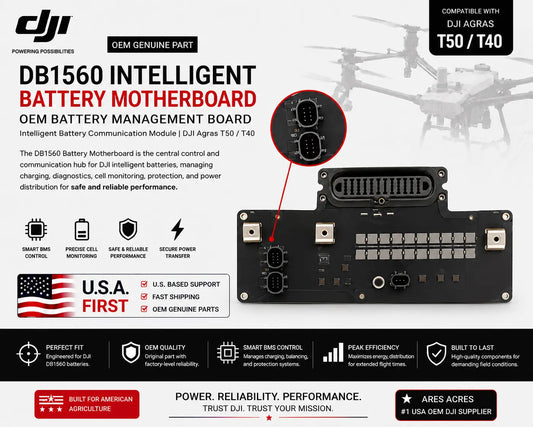
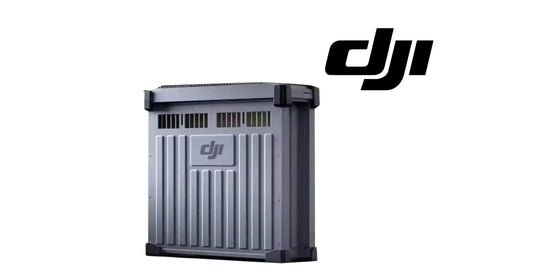
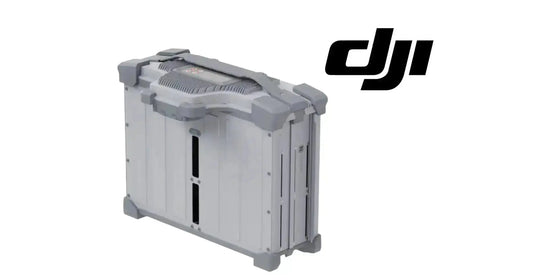
Complex agricultural-drone ecosystems contain products that may fall under different customs classifications. A DB-series intelligent flight battery is not automatically treated the same as a complete aircraft. A charger is not automatically treated the same as a motor. A gasoline generator is not automatically treated the same as a docking station. A propeller, pump, nozzle, remote controller, radar module, avionics board, and battery motherboard can each require their own tariff analysis.
The proclamation itself highlights dependence on critical UAS components such as motors, electronic speed controllers, lithium-ion batteries, and docking stations, but legal duty still depends on the implemented HTSUS lines and annex treatment. Importers should avoid creating “component tariff” assumptions from category names alone.
For customers, the practical response is to buy through a seller that can distinguish the aircraft from the support ecosystem and can identify the exact product being supplied. Ares Acres organizes its catalog around model-specific OEM parts and real component names rather than generic “drone accessory” buckets.
15. Existing Duties vs. the New Section 232 Duty
As of August 26, 2026, there is currently no new additional Section 232 UAS tariff in force under the August 13 proclamation.
However, the proclamation expressly states that when its duties begin, they generally apply in addition to other applicable duties, taxes, fees, exactions, and charges unless otherwise specified. Existing tariff treatment today depends on the product’s origin and classification.
Therefore, a seller saying “there is no new Section 232 tariff yet” can be correct. A seller saying “there are no customs duties of any kind on drones today” would need a much more product-specific basis.
16. Country-Based Maximum Rates and Certification
The proclamation provides lower maximum rates for certain products of Japan, South Korea, Taiwan, Switzerland, Liechtenstein, European Union member states, and the United Kingdom, but those lower caps are conditional. The proclamation says the special treatment applies only if substantially all critical components and technology are certified by importers to be products of the listed countries or the United States, and Commerce is tasked with establishing a process.
This is not a general “ship through Europe and pay 15%” loophole. Country of origin is not determined by the location of a freight forwarder or transshipment warehouse. Importers should never reroute goods merely to create a false origin claim; origin and certification rules can carry significant customs liability.
For DJI Agras equipment made in China, buyers should not assume allied-country caps apply simply because a reseller, warehouse, payment, or freight route involves a listed country.
17. Blue UAS / FCC Conditional Approval Timing
The proclamation contains a specialized delayed-effective-date provision for companies and products on specified DoW Blue UAS lists or the FCC Conditional Approval List as of September 2, 2026. For qualifying covered products and components, the effective date can be delayed to 180 days from the proclamation date.
This is a narrow programmatic provision, not a blanket agricultural-drone exemption. Ares Acres does not assume DJI Agras products qualify under that clause unless the responsible agencies identify the company or product as eligible.
18. The U.S. Manufacturing / Onshoring Incentive
The proclamation is not purely punitive. It directs Commerce to establish a program under which companies with approved U.S. onshoring plans can receive Section 232 tariff benefits while new U.S. production facilities are being built. Approved plans can permit imports of covered supply-chain products and necessary production equipment, in volumes tied to anticipated U.S. output, without the applicable Section 232 duties during construction.
Companies must commit to build, refurbish, or expand U.S. facilities, with construction occurring before January 20, 2029, and Commerce can monitor, enforce, cease, or even retroactively rescind benefits in cases of noncompliance or fraud to the extent permitted by law.
For the agriculture sector, the larger signal is that federal policy is pushing the UAS industry toward domestic capacity. Over time, that could create U.S. manufacturing, assembly, repair, battery, electronics, or component opportunities. It does not solve near-term farm-equipment supply immediately.
19. Ares Acres’ Position: Reassurance Without Pretending Nothing Changed
A credible supplier should avoid two extremes. The first is panic: “DJI is banned, everything will disappear, buy today or you are done.” The second is denial: “The tariff does not matter.” Neither helps a farmer manage a fleet.
Ares Acres’ position is more practical:
- The tariff proclamation is real.
- The initial new Section 232 duties are not in force yet as of August 26, 2026.
- The first effective date is September 3, 2026.
- Large DJI Agras aircraft such as the T50, T70P, and T100 are above the 25 kg threshold.
- The tariff does not itself ban DJI ownership, sale, servicing, or operation.
- Parts require item-specific analysis; not every accessory gets the same rate on the same date.
- Domestic inventory and serviceability become more strategically valuable.
- Farmers should buy based on operational need, support, total cost, and confirmed terms—not fear.
20. Why Ares Acres Remains a Safe Place to Buy DJI Agras Equipment
Tariff transitions create an environment where buyers can be vulnerable to vague pricing, rushed deposits, unverified imports, phantom inventory, or sellers using policy headlines to justify unexplained markups. Ares Acres is building the opposite purchasing environment.
Our DJI Agriculture storefront is designed around five principles:
- Clear product identity. Aircraft, OEM parts, batteries, chargers, generators, and accessories are listed as distinct products so customers know what they are buying.
- U.S.-focused support. We serve operators who need parts and equipment to keep commercial agricultural missions running.
- Serviceability. A drone purchase is only useful if the buyer can access the components and technical information needed over its working life.
- Transparent policy communication. We will update tariff guidance when official implementation changes rather than manufacturing certainty where none exists.
- No fear-based sales claim. We will not tell a customer that a tariff is a ban or that an order date creates a guaranteed customs outcome when entry status actually controls.
For purchasing help, contact Ares Acres. For self-service shopping, use our DJI Parts, T100 Parts, T50 Parts, and Accessories collections.
21. Should You Buy a DJI Agras Drone Before September 3?
There is no universal yes or no answer. The correct question is whether you already have a legitimate operational need and whether the seller can give you clear information about inventory, delivery, pricing, and support.
| Situation | Reasonable approach |
|---|---|
| You need an aircraft now for a contracted season | Evaluate current U.S. inventory and confirmed delivery. Tariff uncertainty makes reliable domestic supply more valuable. |
| You are only reacting to a scary headline | Do not panic-buy. Confirm your use case, financing, FAA/state operating requirements, and service plan. |
| You are directly importing | Have a customs broker confirm classification, origin, entry timing, and duty exposure before committing. |
| You are buying from a U.S. seller | Ask whether the price is for current domestic inventory, a future import, or a preorder tied to uncertain landed cost. |
| You already own an Agras fleet | Prioritize maintenance, spares, battery health, common wear parts, and downtime reduction rather than buying an aircraft solely because of policy news. |
22. Why Spare Parts Strategy Becomes More Important
A tariff can increase replacement cost and lengthen replenishment cycles even when it does not prohibit a product. That changes the economics of downtime. If an applicator loses several days during a narrow spray window because a relatively inexpensive component is unavailable, the operational loss can exceed the price of the part.
Operators should therefore think in terms of mission-critical spares, not hoarding. The correct spare list depends on aircraft model, acreage, application type, historical failures, service capability, and how quickly parts can be replenished.
Common categories to consider include propellers, landing gear components, spray filters, nozzles and sprinklers, hoses and seals where applicable, pump assemblies, spreader wear components, sensors, power-system components, and high-use battery and charging infrastructure. Electronic boards and avionics should be stocked only when the operator’s failure history and service process justify the capital.
23. Tariff Impact on Farm ROI
Agricultural-drone economics should be evaluated on total cost per treated acre or productive hour—not solely acquisition price. A tariff can affect the numerator by increasing aircraft and component costs, but operators still need to evaluate labor, chemical savings, crop timing, terrain access, field compaction, application speed, weather windows, equipment utilization, depreciation, maintenance, insurance, financing, training, compliance, and downtime.
In other words, a higher equipment cost does not automatically make a drone unprofitable, and a low equipment price does not automatically make it profitable. The tariff changes one important input in the model.
Ares Acres recommends that commercial operators build scenarios using conservative utilization rather than assuming the aircraft will fly at theoretical maximum capacity every day.
24. Tariff Impact on Dealers and Contractors
Dealers may face higher replacement costs, more working-capital pressure, and more volatile quote validity. Contractors may see equipment replacement reserves rise. Parts sellers may need larger domestic inventories or diversified supply strategies. Customers may see wider pricing differences between inventory that was entered before and after a tariff effective date.
This can create unusual market behavior: two physically identical aircraft may carry different replacement economics depending on when and how they entered the United States. That is normal in a tariff transition. It does not necessarily mean one seller is fraudulent or another is subsidizing equipment; inventory basis matters.
25. Tariff Impact on Used DJI Agras Drones
The proclamation applies to imports, not domestic resale as a standalone transaction. A used Agras aircraft already lawfully in U.S. commerce does not incur the new Section 232 import duty merely because one U.S. owner sells it to another U.S. owner.
However, future replacement cost can affect used-market values. If new imports become substantially more expensive, existing U.S. aircraft may become more valuable. At the same time, a used aircraft without parts support, service history, correct region and firmware, or a dependable battery system can carry hidden risk.
Buyers should inspect serial and region compatibility, flight condition, batteries, charger and generator compatibility, structural condition, spray and spreading hardware, remote controller, firmware status, and access to replacement parts.
26. Direct Import vs. Buying Domestic Inventory
| Factor | Direct import | U.S. domestic inventory |
|---|---|---|
| Tariff classification | Buyer or importer may directly bear classification and duty uncertainty. | Often already resolved by seller if goods were entered for consumption. |
| Customs brokerage | Required or strongly advisable for commercial UAS. | Usually handled upstream. |
| Landed-cost certainty | Can change with entry timing and duty. | Typically clearer if seller quotes a domestic-stock price. |
| Lead time | International logistics and customs clearance. | Can be shorter if actually in stock. |
| Support | Depends heavily on overseas seller. | Can be stronger when seller also carries parts and technical resources. |
| Fraud or phantom-stock risk | Varies widely. | Still requires diligence, but domestic seller identity and support can be easier to verify. |
This is why Ares Acres treats the tariff transition as a reason to strengthen U.S. support infrastructure, not simply a reason to raise prices.
27. A Customs Checklist for Importers
- Obtain the exact product description and technical specification.
- Confirm manufacturer and country of origin.
- Determine the correct HTSUS classification.
- Check whether that classification appears in Annex I, II, III, or a later Federal Register addition.
- Confirm maximum takeoff weight if classifying a complete UAS.
- Identify the planned entry-for-consumption date.
- Determine whether goods are in a bonded warehouse or foreign trade zone.
- Review any applicable Section 301, antidumping, countervailing, or other pre-existing duty treatment.
- Check whether any proclamation-specific country treatment is actually available and certifiable.
- Do not rely on freight route as proof of country of origin.
- Calculate customs value and estimated duty.
- Confirm broker fees, bond requirements, freight, insurance, and delivery charges.
- Keep origin and classification documentation.
- Ask the broker to document any claimed exception.
- Recheck current CBP and Commerce guidance immediately before entry because implementation can evolve.
28. A Buyer Checklist for Farmers and Applicators
- Confirm whether the aircraft is physically available or a future import.
- Ask for the exact model and configuration.
- Confirm whether batteries, charger, generator, RTK equipment, spray or spreading system, and accessories are included.
- Get total price, shipping or freight, and payment terms in writing.
- Ask about expected ship date and whether pricing is subject to future duty changes.
- Verify the seller’s contact information and support process.
- Verify model-specific parts availability.
- Plan FAA and state pesticide and applicator compliance separately from tariff questions.
- Do not assume “tariff paid” means “FAA legal,” or vice versa.
- Keep purchase, serial, invoice, and warranty or support records.
29. Scenarios: How Timing Can Change the Result
Scenario A — Domestic aircraft already entered for consumption before September 3
The new Section 232 duty is not retroactively imposed on a later domestic retail sale merely because the aircraft remains in inventory after September 3. Seller replacement cost may still influence future pricing.
Scenario B — Customer places an order August 30, aircraft enters September 5
The order date alone does not decide the tariff. If the aircraft is a covered entry on or after the effective date and no exception applies, the new Section 232 treatment can apply.
Scenario C — A component is not in the first tariff annex but appears in Annex III
The separate Annex III component rate begins February 9, 2027, subject to the proclamation’s exceptions. Before that date, existing duties can still apply.
Scenario D — Commerce later adds another UAS component
The proclamation authorizes rolling additions. The new component treatment can begin on the date specified in the later Federal Register notice.
Scenario E — Product claims a lower allied-country cap
The importer must satisfy the proclamation’s content and origin certification process. A warehouse location or reseller address is not enough.
Scenario F — Product is in a foreign trade zone
Special FTZ treatment applies. The proclamation specifically addresses privileged foreign status for covered products. This is a customs-professional scenario, not a retail shortcut.
30. Myth vs. Fact
| Myth | Fact |
|---|---|
| “The 100% tariff started August 13.” | No. The first new duties begin Sept. 3, 2026. |
| “DJI is now banned.” | No. This proclamation is a customs-duty action. |
| “Every DJI Agras part is 100% tariffed Sept. 3.” | No. Annex and HTSUS classification matter; separate component treatment also begins in 2027. |
| “If I order before Sept. 3, I’m guaranteed to avoid it.” | No. Entry-for-consumption timing is central. |
| “A U.S. seller must double every retail price.” | No. Retail pricing depends on inventory basis, customs value, replacement cost, margin, and commercial strategy. |
| “Existing U.S. owners owe a new 100% bill.” | No. The proclamation does not impose a retroactive ownership tax on already-entered equipment. |
| “Tariffed means illegal to fly.” | No. Customs treatment and FAA operating authority are separate. |
| “Allied-country routing automatically drops the tariff.” | No. The proclamation requires qualifying origin and content certification. |
| “There is no tariff issue at all until 2027.” | Incorrect. Complete UAS and certain Annex I components begin Sept. 3; Annex III is the later component stage. |
| “No new Section 232 tariff today means no duties of any kind today.” | Incorrect. Existing duties and taxes can still apply. |
31. What the Tariff Does Not Change About FAA Operations
The Section 232 tariff does not replace FAA rules. An agricultural operator must still determine what FAA authority applies to the aircraft and mission. Large agricultural UAS can fall outside ordinary small-UAS Part 107 limits, and dispensing operations can implicate Part 137 and exemption or certification requirements. State pesticide rules can impose additional licensing, registration, recordkeeping, drift, label, or application requirements.
A customs-paid aircraft is not automatically approved to spray. Conversely, an FAA-authorized operation does not create a customs-duty exemption. Treat the compliance stack as separate layers: customs and import, communications or equipment authorization where applicable, aircraft and operating authority, pesticide or applicator law, and local or state requirements.
32. Why Serviceability Becomes an Economic Moat
When replacement aircraft and imported components become more expensive, keeping the existing fleet healthy can create substantial economic value. Preventive maintenance, disciplined battery rotation, proper cooling, connector care, spray-system flushing, propeller inspection, calibration, firmware management, and accurate fault isolation can extend productive service and avoid unnecessary full-assembly replacements.
Ares Acres is building its DJI Agriculture technical library around this idea. The best tariff strategy for many operators may be a better maintenance and parts strategy rather than buying a second aircraft because of a headline.
33. Related Ares Acres DJI Agras Resources
- DJI Agras Ban in USA — The 2026 Definitive Guide
- Is the DJI Agras T100 Banned in the USA?
- Is the DJI T100 Available in the USA?
- How Can I Buy a DJI T100 in the USA?
- DJI T100 vs DJI T50 — Which Is Best for U.S. Farms?
- DJI T100 / T50 Power Supply, Battery & Generator Tutorial
- DJI T100 Safety Tutorial
- DJI Agriculture Tutorials Library
34. Product and Parts Navigation
| Need | Ares Acres resource |
|---|---|
| DJI Agras T100 aircraft | T100 Platinum Set / T100 Full Set |
| DJI Agras T50 aircraft | T50 Full Set |
| T100 OEM replacement parts | T100 Parts Collection |
| T50 OEM replacement parts | T50 Parts Collection |
| All DJI Agras parts | DJI Parts Collection |
| Accessories | DJI Accessories |
| Sales or technical help | Contact Ares Acres |
35. Frequently Asked Questions — DJI Agras Tariffs 2026
1. Is there currently a new 100% DJI drone tariff in effect?
As of August 26, 2026, no. The August 13 Section 232 proclamation has been issued, but its first new UAS duties begin September 3, 2026 for covered goods entered for consumption or withdrawn from warehouse for consumption on or after the effective time. Existing duties may still apply.
2. When does the new U.S. drone tariff start?
The initial Annex I and Annex II Section 232 duties begin at 12:01 a.m. Eastern Time on September 3, 2026, subject to the proclamation’s stated exceptions. Certain Annex III component duties begin February 9, 2027.
3. Is DJI Agras banned in the United States because of the tariff?
No. The proclamation creates import duties; it does not itself prohibit ownership, domestic resale, servicing, or operation of DJI Agras aircraft.
4. Will my existing DJI Agras drone stop working?
No. A customs tariff does not remotely deactivate the aircraft or change its firmware.
5. Will I owe 100% on a T100 I already own?
No retroactive ownership bill is created by this proclamation. The duty applies to covered imports based on the customs entry framework.
6. Does the T100 exceed 25 kg?
Yes. DJI’s official T100 specifications list maximum takeoff weights around 165 to 177 kg depending on configuration, including 175 kg for standard spraying and spreading.
7. Does the T50 exceed 25 kg?
Yes. DJI lists 92 kg maximum takeoff weight for spraying and 103 kg for spreading at sea level.
8. Does the T70P exceed 25 kg?
Yes. DJI’s specifications list maximum takeoff weights above 100 kg depending on battery and mission configuration.
9. Does every DJI Agras aircraft automatically get exactly 100%?
Large models above 25 kg are squarely within the proclamation’s high-duty policy framework, but actual customs treatment still depends on the covered HTSUS classification, origin, entry date, and any applicable exception.
10. Are all DJI parts going to be 100% more expensive?
No. Retail prices and customs rates are not the same thing, and component duty treatment differs by annex and classification.
11. Are batteries included?
The proclamation discusses lithium-ion batteries as critical supply-chain components, but duty treatment for a specific battery depends on the implemented annex and HTSUS classification and entry circumstances. Buyers should not assume a universal rate from the word “battery” alone.
12. Are chargers included?
A charger should be classified as the actual merchandise being imported. Do not assume a charger takes the same duty as a complete UAS.
13. Are DJI generators included?
A generator is a distinct product category and should be classified on its own facts. The drone tariff headline should not be used as a substitute for a generator HTSUS analysis.
14. Are propellers included?
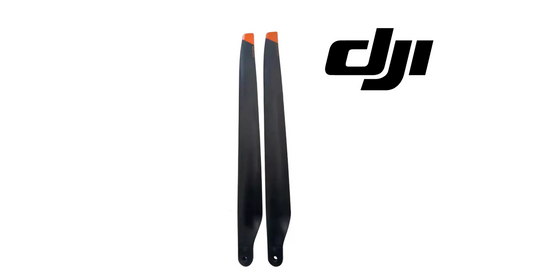
Potential component treatment depends on the exact HTSUS line and annex. Importers should verify rather than assume.
15. Does buying before September 3 guarantee I avoid the tariff?
No. The proclamation is keyed to customs entry or warehouse withdrawal for consumption, not merely retail order date.
16. What if the drone is already in a U.S. warehouse?
If it has already been entered for U.S. consumption, a later domestic sale generally does not create a new import event. If it remains bonded, in an FTZ, or under another special customs status, treatment can differ.
17. Can a seller raise prices before the tariff is effective?
A seller can change pricing for many commercial reasons, including replacement-cost risk, but that does not mean the government is already collecting the new Section 232 duty. Customers should distinguish market pricing from the tariff’s legal effective date.
18. Does a 100% tariff mean a $40,000 drone becomes $80,000 retail?
Not necessarily. The tariff is applied to customs value, and retail price reflects many additional inputs. A 100% duty can substantially increase landed cost, but the final retail change need not be exactly 100%.
19. Who actually pays the tariff to Customs?
The importer of record is generally responsible for customs entry and duties. Economic cost can then be absorbed or passed through the supply chain in whole or in part.
20. Does the tariff apply to domestic used-drone sales?
Not as a new import duty merely because one U.S. owner resells an aircraft to another. Used-market pricing can still react to higher replacement costs.
21. Does this change Part 107?
No. Section 232 customs policy and FAA Part 107 operating rules are separate.
22. Does this change Part 137?
No. Agricultural dispensing authority remains a separate FAA and regulatory issue.
23. Does tariff payment make spraying legal?
No. Import compliance does not replace FAA, pesticide-label, applicator, state, or local requirements.
24. Can I avoid the tariff by shipping through Europe?
Not lawfully merely by rerouting freight. Country of origin and the proclamation’s certification requirements are substantive; transshipment is not a legitimate origin change.
25. What is the allied-country cap?
The proclamation provides conditional maximum rates for qualifying products of specified allies, including a 15% ceiling for several listed countries and EU members and 10% for the UK, subject to critical-component and technology certification and agency implementation.
26. Does the allied cap automatically apply to DJI made in China?
No. Buyers should not assume that merely purchasing from or routing through a listed country changes origin or qualification.
27. What happens on February 9, 2027?
A 25% Section 232 rate is scheduled to begin for certain UAS components identified in Annex III, subject to exceptions.
28. Can Commerce add more parts later?
Yes. The proclamation authorizes Commerce to add components when it finds their imports threaten to undermine the policy objective, with later notice and effective dates.
29. Could the policy change again?
Yes. Commerce is directed to monitor imports and report back, and agencies can issue implementation guidance. Ares Acres will treat this article as a living policy guide.
30. Should I stock up on parts?
Stock mission-critical parts based on real failure and downtime risk, not panic. A targeted spares plan is more efficient than indiscriminate hoarding.
31. Should I buy a second battery or a second aircraft first?
That depends on utilization, charging logistics, failure history, acreage, and your downtime economics. For many operators, battery, charger, and spares capacity can improve uptime more cheaply than adding an entire aircraft.
32. Is Ares Acres still selling DJI Agras drones?
Yes. The tariff proclamation does not itself prohibit lawful domestic DJI Agras sales. Current product availability and pricing can change, so check live listings or contact Ares Acres.
33. Is Ares Acres still selling OEM parts and accessories?
Yes. Ares Acres continues to support DJI Agras aircraft with model-specific OEM parts, batteries, power equipment, and accessories according to current availability.
34. Will Ares Acres automatically add 100% to every price on September 3?
No blanket rule is stated here. Pricing depends on inventory basis, supply cost, actual duty exposure, and market conditions. Ares Acres’ objective is transparent pricing rather than headline-based markups.
35. How can I verify current Ares Acres availability?
Use the live product and collection pages or contact Ares Acres directly. Availability should be treated as dynamic.
36. What should I ask a seller before paying a large deposit?
Ask whether the item is current U.S. inventory or future import, what exactly is included, whether the price can change due to duties, expected delivery date, payment and refund terms, and what post-sale support is provided.
37. Can a future shipment be tariffed even if I prepaid it?
Yes. Prepayment alone does not necessarily change the customs entry date or legal tariff treatment.
38. What is customs value?
Customs value is the valuation basis used for entry and duty calculation under customs law; it is not always identical to the final retail price. A broker should calculate it for the actual transaction.
39. Are freight and brokerage included in the 100% rate?
The precise dutiable value and treatment of freight, assists, and other costs depend on customs valuation rules. Do not calculate commercial exposure from retail sticker price alone.
40. Do I need a customs broker?
For a high-value commercial UAS import, professional customs brokerage is strongly advisable because classification, origin, valuation, bonds, and new Section 232 treatment can be consequential.
41. What is an HTSUS code?
The Harmonized Tariff Schedule of the United States classifies imported merchandise and determines the tariff provisions that apply. The proclamation’s annexes operate through that system.
42. Why does Ares Acres keep saying “covered goods”?
Because the proclamation does not impose one rate on every object that can be associated with a drone. Coverage depends on annexes, classifications, dates, and exceptions.
43. Is Thomasnet the controlling legal source?
No. Thomasnet is useful industry reporting, but Ares Acres relies first on the White House proclamation and subsequent official government implementation materials.
44. Where should I check the official rule?
Start with the White House Section 232 UAS proclamation.
45. What does “ad valorem” mean?
It means the tariff is assessed as a percentage of value. A 100% ad valorem rate is a duty equal to 100% of the relevant customs value, before considering exceptions and other applicable charges.
46. Could a tariff make repairs more attractive than replacement?
Yes. If replacement aircraft and assemblies become more expensive, diagnostics and component-level replacement can create more economic value, provided repairs are safe, technically appropriate, and supported by genuine parts.
47. Does this make genuine OEM parts more important?
Potentially. When supply is tighter or costlier, buying the correct component the first time reduces duplicate purchases and downtime. Compatibility verification becomes more valuable.
48. Does the tariff affect agriculture specifically?
The proclamation covers UAS by product characteristics and classification rather than exempting them because the end use is agriculture. It expressly recognizes agriculture as a major UAS use case.
49. Can a farmer ignore this because the aircraft is only used on a farm?
No. Customs treatment is based on the imported merchandise and applicable law, not simply the buyer’s private agricultural purpose.
50. What should operators do right now?
Verify actual equipment needs, maintain current aircraft, identify mission-critical spares, document quotes, check domestic inventory, avoid panic purchases, and use customs professionals for direct imports.
36. Source Hierarchy and Research Standard
Ares Acres uses a source hierarchy for policy articles. Primary legal and government sources come first; manufacturer specifications are used for technical facts; reputable industry reporting is used as secondary context.
- Primary legal source: White House, August 13, 2026 UAS Section 232 proclamation.
- Manufacturer technical sources: DJI Agras T100 specifications, DJI Agras T70P specifications, and DJI Agras T50 specifications.
- Industry reporting: Thomasnet, “US Imposes Tariffs of Up to 100% on Imported Drones”.
Where a headline and a primary source appear to conflict, this guide follows the primary source. Where implementation remains uncertain, we say so rather than guessing.
37. What Ares Acres Will Monitor Next
This policy is not finished simply because the proclamation was signed. Ares Acres will monitor for:
- CBP entry instructions and Chapter 99 implementation details;
- Commerce guidance on qualifying onshoring plans;
- Commerce and Federal Register additions of UAS components;
- agency lists relevant to the delayed effective-date clause;
- implementation of allied-country content and origin certification;
- material changes in T100, T70P, T50, battery, charger, generator, and OEM parts availability;
- interaction with separate DJI and FCC and FAA regulatory developments;
- market pricing changes caused by replacement cost rather than current tariff collection.
If an official implementation notice changes a conclusion in this guide, we will update the guide and date the revision.
38. Final Takeaway for U.S. Farmers
The August 2026 UAS tariff is a major supply-chain event, but it is not the end of DJI Agriculture in the United States. The best response is precision: know the effective dates, distinguish tariff from ban, understand whether an aircraft is already in U.S. commerce or still must be imported, classify components correctly, and buy from a supplier that can support the machine after the sale.
As of August 26, 2026, there is currently no new additional Section 232 UAS tariff in force under this proclamation. The first new rates begin September 3, 2026. That is the correct current status.
Ares Acres remains focused on being a dependable U.S. source for DJI Agras aircraft, OEM parts, batteries, chargers, generators, accessories, and operator intelligence. Our objective is not to sell fear. It is to keep agricultural operators informed, equipped, and productive through a changing regulatory and trade environment.
39. What Is Ares Acres?
Ares Acres is a U.S.-based agricultural robotics and DJI Agras equipment company serving farmers, custom applicators, dealers, educational institutions, and commercial operators. We specialize in DJI Agriculture aircraft and the service ecosystem required to keep them working: OEM replacement parts, power systems, batteries, chargers, generators, spray and spreading components, diagnostics-oriented content, and operator education.
Start with Ares Acres, shop DJI Agras OEM Parts, compare DJI Agras T100 and DJI Agras T50 options, browse accessories, or contact our team.
Need Help Buying Before or After the Tariff Effective Date?
If you are deciding between current U.S. inventory and a future import, Ares Acres can help you identify the aircraft configuration, support equipment, parts ecosystem, and purchasing questions that matter. We will not promise a customs result we cannot verify. We will give you the clearest information available and tell you when a customs broker or regulatory professional needs to make the final determination.
Contact Ares Acres | Shop DJI Agras T100 | Shop DJI Agras T50 | Shop DJI Agras Parts
Policy review date: August 26, 2026. This article is educational and commercial information, not legal, customs, tax, or regulatory advice. Tariff treatment depends on the exact merchandise, HTSUS classification, customs value, country of origin, entry date, and any applicable exception. Direct importers should work with a qualified customs broker or trade counsel. FAA and state agricultural-application requirements are separate from customs treatment.