
DJI Agras Tariffs in USA: The 2026 Definitive Guide to the 100% Drone Tariff
Share
DJI Agras Tariffs in USA: The 2026 Definitive Guide to the 100% Drone Tariff
🇺🇸 U.S.A. FIRST — What American DJI Agras Operators Need to Know
Updated August 26, 2026. A new U.S. Section 232 tariff program covering imported unmanned aircraft systems and certain UAS components has been announced. The headlines are dramatic: 100% tariffs on foreign drones, new pressure on Chinese manufacturers, and another major change for a U.S. drone market in which DJI remains one of the most important commercial and agricultural platforms.
For farmers, custom applicators, dealers, fleet managers, repair technicians, universities, public agencies, and agricultural businesses that depend on DJI Agras equipment, the first question is simple: What does this actually mean for DJI Agras T100, T50, batteries, chargers, generators, and replacement parts?
The answer is more nuanced than many social posts and news headlines suggest.
The Short Answer — August 26, 2026
There is currently no new or additional Section 232 drone tariff being assessed under this August 2026 proclamation. The proclamation was signed August 13, 2026, but the principal new duties on covered unmanned aircraft do not take effect until 12:01 a.m. Eastern Time on September 3, 2026.
This does not mean that imported DJI products have no existing customs duties, taxes, fees, or other trade measures. Existing obligations remain separate. It means the newly announced Section 232 drone tariff itself has not yet reached its effective date as of this article's August 26 update.
For covered whole aircraft, the new program imposes a 100% ad valorem Section 232 tariff on UAS with a maximum takeoff weight greater than 25 kilograms. Official DJI specifications place both the DJI Agras T100 and DJI Agras T50 well above that threshold.
However, it is inaccurate to say that every DJI Agras replacement part automatically receives a 100% tariff on September 3. Annex I contains a highly important agricultural-use limitation for many entries described as UAS “Parts.” A separate 25% tariff on listed UAS components in Annex III is scheduled to begin February 9, 2027. Some electrical categories can require separate HTS classification analysis.
The tariff is also not a ban. It does not, by itself, make existing DJI Agras aircraft illegal to own, fly, repair, service, or purchase from lawful U.S. inventory.
Ares Acres is a U.S.-based agricultural robotics and DJI Agras specialist focused on helping operators purchase, maintain, repair, and understand the equipment that keeps agricultural drone fleets working. Our goal with this guide is not to create urgency through fear. It is to give U.S. operators a practical, source-based explanation of the tariff and a clear path forward.
Operators can currently explore the DJI Agras T100, DJI Agras T50, DJI T100 Parts, DJI T50 Parts, the broader DJI Agras Parts catalog, DJI Accessories, and the Ares Acres Product Catalog. For sourcing or tariff questions relating to a specific order, contact Ares Acres.
This tariff guide should also be read alongside our existing DJI Agras Ban in USA — 2026 Definitive Guide. The two subjects overlap politically, but they are legally different. A tariff is a tax on importation. A ban or equipment-authorization restriction can affect whether products may enter the market at all. Understanding that distinction is essential.
Executive Summary: The 2026 DJI Agras Tariff at a Glance
| Issue | What the August 2026 Rule Says | Practical DJI Agras Meaning |
|---|---|---|
| Effective date | Most covered UAS duties begin Sept. 3, 2026 at 12:01 a.m. ET. | As of Aug. 26, the new Section 232 tariff has not yet taken effect. |
| UAS over 25 kg MTOW | 100% ad valorem Section 232 tariff for covered UAS. | T100 and T50 official MTOW figures exceed 25 kg. |
| UAS at or below 25 kg | 25% tariff for covered Annex II aircraft. | Not the principal category for T100/T50 whole aircraft. |
| Thermal-imaging UAS | 100% under Annex I scope. | Relevant to covered UAS integrating thermal imagers, independent of the heavy-aircraft threshold. |
| Docking stations | 100% for covered docking stations. | Separate from ordinary Agras field accessories. |
| Many mechanical UAS “Parts” in Annex I | The Annex I “Part” definition excludes parts for UAS used for retail delivery, agricultural use, or sale to the Department of War. | Many Agras agricultural-use parts should not simply be described as receiving the Sept. 3 100% “Part” tariff. |
| Annex III components | 25% tariff beginning Feb. 9, 2027 for listed components imported for use in UAS. | Creates a later component-cost issue even where the Sept. 3 100% agricultural-parts limitation applies. |
| Certain electrical classifications | Some Annex I electrical categories are listed separately rather than through the “Part” shorthand. | Boards, converters, charging/power electronics and similar items require exact HTS classification rather than assumptions. |
| Existing U.S. inventory | Tariff attaches to covered import entries after the effective time, not merely to possession of a product in the U.S. | A new tariff is not retroactively charged to a drone simply because it is already sitting in lawful U.S. inventory. |
| Tariff vs. ban | Tariff changes import cost. | It does not automatically prohibit ownership, operation, repair, sale, FAA registration, or Part 137 operations. |
1. What Exactly Did the United States Announce?
On August 13, 2026, President Donald Trump signed a proclamation titled Adjusting Imports of Unmanned Aircraft Systems and Unmanned Aircraft Systems Components into the United States. The action followed a national-security investigation under Section 232 of the Trade Expansion Act of 1962.
Section 232 is different from an ordinary anti-dumping case or a brand-specific prohibition. It gives the federal government a mechanism to adjust imports when Commerce determines that the quantity or circumstances of those imports threaten to impair national security. In the drone context, the administration's stated concern is not limited to consumer quadcopters. It encompasses supply-chain dependence, defense readiness, commercial UAS capacity, key electronics, critical components, and the ability of the United States to manufacture UAS domestically.
The official White House proclamation and accompanying White House fact sheet are the controlling starting points for understanding the policy. News coverage is useful for context, but customs decisions turn on the proclamation, its annexes, HTS classifications, implementing guidance, certifications, and ultimately CBP treatment.
2. When Does the New 100% Drone Tariff Actually Start?
This is one of the most important points in the entire article.
The proclamation states that the principal new duties apply to covered merchandise entered for consumption, or withdrawn from warehouse for consumption, on or after 12:01 a.m. Eastern Time on September 3, 2026, subject to the exceptions and special rules described in the proclamation.
That means there is a difference between:
- the date the President signed the proclamation;
- the date a customer places an order;
- the date goods leave an overseas factory;
- the date goods arrive at a U.S. port;
- the customs entry date or date goods are withdrawn from warehouse for consumption; and
- the date a U.S. dealer eventually sells the product.
As of August 26, 2026, the new Section 232 drone tariff is not yet in effect. This is why Ares Acres does not believe operators should interpret a headline published in mid-August as meaning an additional 100% Section 232 duty is already being collected on every DJI Agras transaction today.
At the same time, operators should not assume that ordering something before September 3 automatically guarantees exemption. The proclamation is written around customs entry/withdrawal timing and product classification, not simply retail purchase date. Importers should work from actual entry documentation and CBP treatment.
3. The 100% Rate: Why DJI Agras T100 Is Directly Relevant
The new Annex I rate applies a 100% ad valorem Section 232 tariff to covered UAS with a maximum takeoff weight greater than 25 kilograms.
DJI's published specifications for the DJI Agras T100 place the aircraft far above that threshold. DJI lists maximum takeoff weights around 175 kg for spraying and spreading configurations, with configuration-dependent figures for lifting operations. The exact operational configuration matters for flight planning, but it does not change the core tariff conclusion: T100 is not a ≤25 kg drone.
| DJI T100 figure | Official DJI specification context | Tariff relevance |
|---|---|---|
| Aircraft/configuration weight | Far above consumer-drone class once configured for Agras operations. | Supports classification as a heavy commercial/agricultural UAS. |
| Maximum takeoff weight | Approximately 175 kg in common spray/spread configurations, depending on configuration. | Clearly above the proclamation's 25 kg threshold. |
| Primary use | Agricultural spraying, spreading and lifting. | Important when analyzing the separate agricultural-use language for certain component entries. |
For a newly imported T100 that is covered by the relevant HTS and Annex I provisions and does not qualify for an exception or preferential allied-origin treatment, the proclamation therefore points toward the 100% Section 232 rate beginning September 3.
That does not mean every T100 in America suddenly acquires a tax equal to its retail price on September 3. The duty is an import measure. Lawfully imported U.S. inventory is not retroactively transformed into a newly tariffed entry simply because the calendar changes.
4. The DJI Agras T50 Is Also Over the 25 kg Threshold
The same basic analysis applies to the DJI Agras T50.
DJI's official specifications list the T50 at approximately 39.9 kg excluding battery and roughly 52 kg including battery, with maximum takeoff weights of approximately 92 kg for spraying and 103 kg for spreading. Those values are well over 25 kg.
| DJI T50 specification | Published figure | Section 232 implication |
|---|---|---|
| Weight excluding battery | Approx. 39.9 kg | Already above 25 kg before payload. |
| Weight including battery | Approx. 52 kg | Also above 25 kg. |
| MTOW — spraying | Approx. 92 kg | Above the 25 kg Annex I threshold. |
| MTOW — spreading | Approx. 103 kg | Above the 25 kg Annex I threshold. |
Accordingly, a covered post-effective-date import of the whole T50 aircraft is not treated like a small ≤25 kg drone merely because the T50 is physically smaller than T100.
5. Does This Mean DJI Agras Prices Automatically Double?
No. A 100% tariff and a 100% retail-price increase are not synonymous.
A tariff is assessed according to customs law and the entered/customs value of covered merchandise, not automatically the final advertised retail price that a farmer sees. Retail prices can reflect many variables:
- customs value;
- existing duties and trade measures;
- the new Section 232 duty;
- international freight;
- domestic freight;
- brokerage and port costs;
- inventory purchased or entered before the effective date;
- supplier pricing;
- currency movement;
- financing and carrying costs;
- dealer margin;
- availability and replacement cost; and
- future changes in sourcing.
The proclamation also states that the Section 232 duty is generally in addition to other duties, taxes, fees, exactions, and charges unless otherwise specified. Therefore it would be equally misleading to say the new 100% rate merely replaces everything that existed before it.
The practical retail impact will likely vary between products, importers, inventory positions, sourcing channels, and dates. Ares Acres will continue to evaluate pricing based on real landed cost and lawful inventory rather than automatically multiplying every DJI Agras product price by two.
6. The Most Important Parts Detail: Agricultural UAS Parts Are Not Simply “100% on September 3”
This is where the actual Annex language matters.
Many headlines compress the policy into a phrase such as “100% tariff on drones and components.” That is directionally useful, but it is too broad for an agricultural-parts buyer making a real purchasing decision.
Annex I defines a category labeled “Part” for certain UAS-part tariff lines. Critically, the Annex states that this “Part” scope applies only to parts for UAS over 25 kg except parts for UAS for retail delivery use, agricultural use, or sale to the Department of War.
Why this matters for Ares Acres customers
DJI Agras is, by design, an agricultural UAS ecosystem. Therefore a propeller, landing-gear component, airframe component, or other mechanical item should not automatically be described as receiving the Annex I 100% “Part” tariff merely because it is a component for a T100 or T50.
The agricultural-use exception is real and should be part of any serious DJI Agras tariff analysis.
This is one of the strongest reasons to buy from a supplier that understands the difference between the aircraft, a mechanical Agras replacement part, a charging/power component, a distribution board, and a generic accessory. “DJI part” is not itself a customs classification.
7. But There Is a Second Component Date: February 9, 2027
The agricultural-use limitation in Annex I does not mean agricultural drone parts are permanently insulated from the new tariff program.
Annex III establishes a separate 25% Section 232 tariff beginning February 9, 2027 on listed components imported for use in UAS. The Annex includes categories such as propellers and rotors, undercarriages, and other aircraft/UAS parts.
In practical terms, the timeline for many mechanical Agras components can look very different from the timeline for a complete T100 or T50:
| Period | Whole T100/T50 | Many agricultural-use mechanical “Parts” |
|---|---|---|
| Aug. 26, 2026 | New Section 232 tariff not yet effective | New Section 232 tariff not yet effective |
| Sept. 3, 2026 | Covered >25 kg whole UAS: 100% | Do not assume Annex I “Part” 100% rate where agricultural-use exception applies |
| Feb. 9, 2027 | Existing applicable whole-aircraft Section 232 treatment continues unless changed | Listed Annex III UAS components: 25%, subject to classification and later implementation |
This distinction is especially relevant to operators maintaining existing fleets. The cost outlook for replacing a propeller, landing gear component, arm component, or other mechanical part is not necessarily identical to the cost outlook for importing another complete aircraft.
8. Electrical Components Require More Caution
There is another reason Ares Acres is not applying a blanket “agricultural exception” statement to every electronic item in the catalog.
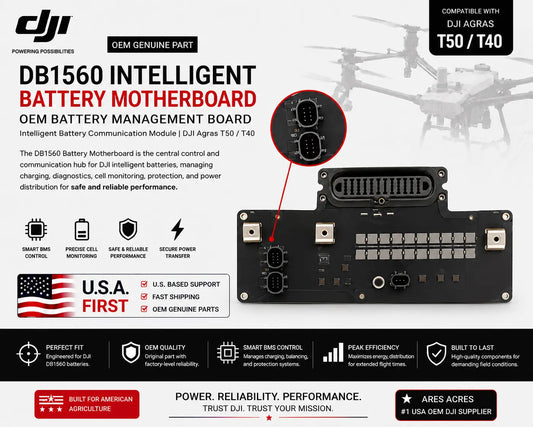
Annex I includes certain electrical tariff categories, including specified static converters for use in UAS and specified electrical control/distribution boards for use in UAS. Those entries are not necessarily presented through the same “Part” shorthand that contains the agricultural-use limitation.
That means products such as:
- power-conversion hardware;
- certain charger-related electronics;
- power distribution boards;
- electrical control assemblies;
- certain battery-support electronics; and
- other specialized power/electrical hardware
may require closer HTS and product-function review. It would be irresponsible to tell a customer that every distribution board is exempt or, conversely, that every charger is automatically subject to 100%.
For the Ares Acres DJI Parts catalog, the right approach is product-level classification and sourcing awareness. Customers with a high-value or time-sensitive component order can contact Ares Acres to discuss current availability and pricing.
9. What About Batteries, Chargers, Generators and Accessories?
One of the most common mistakes in tariff reporting is assuming that anything used near a drone automatically receives the same tariff as the aircraft.
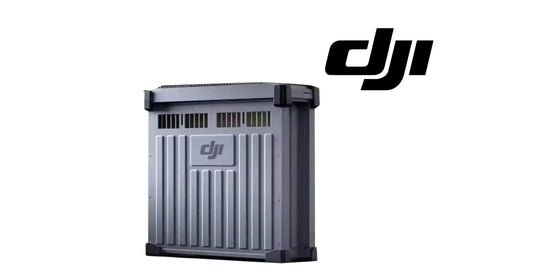
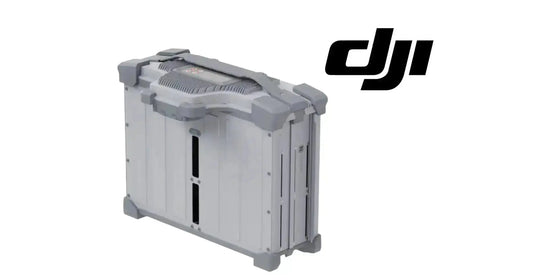
Customs classification does not work that way. A DB1560 or DB2160 battery, C10000 or C12000 charger, D12000iE or D14000iE generator, remote-controller accessory, cable, screen protector, or ordinary field tool can fall under a different tariff classification from the complete UAS.
The correct question is not merely, “Is this used with a DJI drone?” The correct questions include:
- What is the product?
- What is its HTS classification?
- Is it specifically described in an Annex?
- Does a scope note limit the entry?
- Is it imported for use in UAS?
- Does an agricultural-use limitation apply?
- What is the country of origin?
- Does an allied-origin certification apply?
- When is the merchandise entered for consumption?
Therefore Ares Acres will not publish a false one-line rule saying “all DJI Agras batteries and accessories are 100% more expensive after September 3.” The law is more specific than that.
10. Country of Origin Matters — and “Shipped From” Is Not the Same as “Origin”
The proclamation also establishes lower maximum Section 232 rates for qualifying goods from certain allied countries and regions. Covered products of the European Union, Japan, South Korea, Taiwan, Switzerland, and Liechtenstein can receive a maximum 15% rate under the proclamation's conditions, while qualifying products of the United Kingdom can receive a maximum 10% rate.
But this is not a simple transshipment loophole.
The proclamation ties preferential treatment to origin requirements involving substantially all critical components, software/technology, and certification processes. A Chinese-origin drone does not become British-origin simply because it passes through a U.K. warehouse. Likewise, relabeling, repacking, minor assembly, or routing through a third country does not automatically change country of origin.
This is important because the administration has explicitly framed the policy as an attempt to stop foreign dependency and supply-chain circumvention, not simply to redirect shipping lanes.
11. A Tariff Is Not the Same Thing as the 2026 DJI/FCC Ban Debate
The DJI policy environment has become confusing because several different legal tracks are happening at once. Operators may see the words “ban,” “tariff,” “FCC,” “Section 232,” “Section 44807,” “Part 107,” “Part 137,” “covered list,” and “national security” in the same week.
They should not be treated as interchangeable.
| Issue | What it governs | Does it automatically prohibit flying an existing Agras? |
|---|---|---|
| Section 232 tariff | Cost/treatment of covered imports | No |
| FCC equipment authorization / Covered List restrictions | Authorization and marketing/import pathways for radiofrequency devices | Not automatically equivalent to grounding every existing aircraft; model/status details matter |
| FAA Part 107 | Small UAS operating rules when applicable | Operational framework, not an import tariff |
| FAA Part 137 | Agricultural aircraft operations/dispensing | Operational certification framework, not a tariff |
| Section 44807 / Part 91 exemptions | Pathways for certain operations outside ordinary Part 107 limits, including heavier UAS | Operational authority, not customs treatment |
For a deeper treatment of the communications/equipment-authorization side, read DJI Agras Ban in USA — The 2026 Definitive Guide.
12. What the Tariff Does NOT Do
The August 2026 Section 232 proclamation does not, by itself:
- make possession of an existing DJI Agras drone illegal;
- disable an aircraft already in the United States;
- cancel the aircraft's firmware;
- cancel FAA registration;
- revoke a pilot's certificate;
- revoke an agricultural aircraft operator certificate;
- automatically cancel Part 137 authority;
- turn every existing DJI Agras part into contraband;
- prohibit a U.S. dealer from selling lawfully held DJI inventory;
- require a farmer to dispose of an existing T50 or T100;
- automatically double the retail price of every part;
- impose the new September 3 duty retroactively on merchandise already lawfully entered into U.S. commerce; or
- replace every other rule governing DJI equipment.
13. What Happens to DJI Agras Aircraft Already in the United States?
For an operator who already owns a T40, T50, T100, T25, or another DJI Agras aircraft, a new import tariff is fundamentally different from an operating prohibition.
If the aircraft was already imported and lawfully entered into U.S. commerce, the September 3 arrival of a new Section 232 duty does not create a new customs entry for that same aircraft. The drone does not suddenly owe a second import duty simply because it is sitting in a barn, dealer warehouse, university facility, repair shop, or farmer's fleet.
Future replacement aircraft and future imported components are where tariff exposure becomes more significant.
14. What Happens to Inventory That Is Already in a U.S. Dealer's Warehouse?
The same principle is important for retail inventory.
The proclamation is keyed to covered goods entered for consumption or withdrawn from warehouse for consumption after the effective time. It is not written as a retroactive retail tax on every unit physically located in the United States.
That means current lawful U.S. inventory can be economically different from replacement inventory imported after the new tariff takes effect. Dealers still have normal business considerations—replacement cost, inventory scarcity, freight, working capital, and supplier pricing—but those are not the same as the government retroactively re-tariffing an already-entered unit.
Ares Acres currently maintains live listings for the DJI Agras T100 and DJI Agras T50, along with extensive T100 and T50 parts ecosystems. Availability and pricing can change, so customers planning a high-value aircraft purchase should request current confirmation rather than relying on an old screenshot or third-party post.
15. What About a Drone Ordered Before September 3 but Imported After September 3?
This is exactly the type of scenario where retail purchase date and customs date can diverge.
A customer might pay a deposit on August 28, a supplier might ship September 1, the goods might arrive September 5, and the customs entry might occur later. The proclamation's operative language focuses on entry for consumption or withdrawal from warehouse for consumption.
Therefore an importer should not promise that “ordered before September 3” by itself guarantees pre-tariff treatment unless the transaction and entry fit an actual legal exception or implementing rule. Customers should request clarity on whether the aircraft is:
- already in U.S. inventory;
- already entered for consumption;
- in a bonded/foreign-trade-zone status;
- in transit but not yet entered; or
- still overseas and expected to enter after the effective date.
16. Foreign-Trade Zones and Customs Timing
The proclamation also contains foreign-trade-zone treatment. Covered merchandise admitted to a U.S. foreign-trade zone can be required to enter in privileged foreign status, with Section 232 duties applying when ultimately entered for consumption according to the proclamation and implementing rules.
This matters because “the product is physically in America” is not always identical to “the product has already been entered for consumption.” Sophisticated importers distinguish physical location from customs status.
17. Blue UAS and Certain Approved Products Receive Delayed Treatment
The proclamation includes delayed effective treatment for certain products tied to Blue UAS, the Blue UAS Framework, and qualifying FCC Conditional Approval pathways. For covered products meeting the specified criteria, the relevant Section 232 effective date can be delayed for 180 days from the proclamation.
This should not be generalized into a broad six-month delay for DJI Agras. Eligibility depends on the exact program and product status. It is another example of why a one-line social-media summary cannot substitute for the proclamation.
18. Why Did the Administration Choose 25 kg?
The 25 kg / 55 lb threshold is already familiar in U.S. drone regulation because 55 lb is a major dividing line in FAA small-UAS regulation. The Section 232 proclamation uses a maximum-takeoff-weight threshold that places heavier industrial and commercial aircraft into its highest general tariff category.
Agricultural drones are disproportionately affected because modern high-productivity spray and spread aircraft are intentionally built to carry large payloads. A T100 with a 100-liter-class spraying architecture is fundamentally different from a consumer camera quadcopter.
This is why the new tariff matters so much to agriculture even though the proclamation is not written as a DJI Agras-specific rule.
19. Why Agricultural Operators Should Not Panic
A 100% import tariff on future covered heavy-aircraft entries is economically significant. Ares Acres is not minimizing that.
But operators should separate five realities:
- The new Section 232 tariff is not yet active as of August 26.
- The tariff is not a ban.
- Existing U.S. aircraft do not suddenly become illegal.
- Parts treatment is more nuanced than the whole-aircraft rate.
- The market has time to adjust sourcing, inventory, maintenance strategy, domestic production, and fleet economics.
A farmer who needs an aircraft because it produces measurable labor savings or application capacity should make a procurement decision from actual fleet economics—not from a viral post saying “buy today or DJI disappears tomorrow.”
20. Why Ares Acres Is Treating This as an Inventory and Lifecycle Issue, Not a Panic-Sales Event
Ares Acres' role is to help operators keep DJI Agras fleets productive through the full ownership cycle: aircraft sourcing, batteries, charging, spreading, spraying, replacement parts, troubleshooting, and technical education.
The tariff makes lifecycle support more important, not less.
A well-supported T50 or T100 fleet depends on more than acquiring the aircraft. Operators need access to:
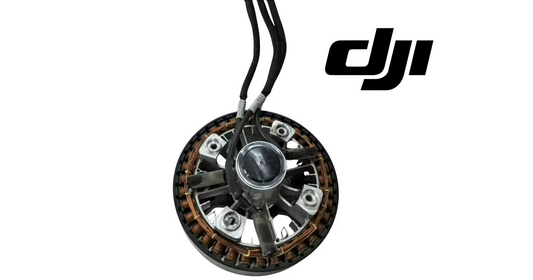
- propulsion components;
- spray-system parts;
- spreading-system parts;
- batteries and battery electronics;
- charging equipment;
- power-distribution hardware;
- landing gear and structural parts;
- radar/LiDAR and sensing hardware;
- remote-controller accessories;
- generators and generator parts;
- diagnostics; and
- operator knowledge.
That is why Ares Acres continues to build one of the broadest DJI Agras parts and DJI Agriculture Tutorials ecosystems around the aircraft, rather than treating the aircraft itself as the entire transaction.
21. Should Farmers Buy a T100 or T50 Before September 3?
There is no universal answer.
A buyer who already planned to purchase a T100 or T50 in 2026 may reasonably care about whether a particular unit is already in lawful U.S. inventory and what its current landed cost is. A buyer with no operational need should not purchase a $20,000–$40,000+ agricultural platform simply because a tariff deadline exists.
Before purchasing, ask:
- Does the aircraft fit the farm's acreage and application workload?
- Is the aircraft actually in U.S. inventory?
- What exactly is included in the configuration?
- What batteries, charger, and generator are required?
- What parts support is available?
- What is the lead time?
- What regulatory approvals does the intended operation require?
- How does the purchase compare with custom application cost?
- What is the expected service life and repair strategy?
Customers can review the DJI Agras T100 and DJI Agras T50 or request help from Ares Acres before making a fleet decision.
22. Should Existing Operators Stock Up on Parts?
Strategic spares make sense for commercial equipment even without a tariff. Panic hoarding does not.
A better approach is an A/B/C criticality model:
| Tier | Meaning | Examples of planning logic |
|---|---|---|
| A — Mission critical | Failure can stop the aircraft during a narrow application window. | Keep known high-failure/field-replaceable items appropriate to your model and workload. |
| B — Important | Failure reduces capacity but may not stop the entire fleet. | Keep at least fleet-level spares where lead time is meaningful. |
| C — Low urgency | Cosmetic, redundant, or readily sourced items. | Buy as needed rather than tying up cash. |
The T100 Parts, T50 Parts, DJI Parts, and DJI Accessories collections can be used to build a model-specific spare strategy.
23. Will the Tariff Reduce DJI Agras Availability?
It could reduce the economic attractiveness of importing future covered units, which can affect supply. But “could reduce” is more accurate than pretending the exact future inventory level is already known.
Possible market responses include:
- larger pre-effective-date imports;
- higher landed costs after September 3;
- lower dealer stocking levels;
- greater value assigned to existing U.S. inventory;
- more repair and refurbishment of existing aircraft;
- increased demand for spare parts;
- alternative sourcing from qualifying allied production;
- domestic assembly/manufacturing investments;
- changes in OEM supply-chain architecture; and
- continued legal/political negotiations.
No responsible dealer can promise exactly which of these effects will dominate every quarter of 2027.
24. Will Used DJI Agras Drones Become More Valuable?
Potentially, but this is a market inference rather than a rule written into the proclamation.
If the replacement cost of newly imported heavy agricultural drones rises while existing U.S. units remain usable and serviceable, buyers may assign greater value to used domestic inventory. The degree depends on condition, battery health, firmware/region status, parts availability, regulatory status, service history, and the price of alternatives.
Tariffs can therefore make maintenance records and parts support more important because a serviceable aircraft with known history may become more economically valuable than an unsupported machine bought at auction.
25. Does the Tariff Apply Only to DJI?
No. The proclamation is structured around categories of imported UAS and components, not as a DJI-only tariff.
DJI receives enormous attention because of its market position and because DJI Agras dominates much of the agricultural-drone conversation. But other foreign-produced aircraft can be subject to the same Section 232 framework depending on weight, capabilities, classification, origin, and exemptions.
26. Why China Is Still the Main Commercial Focus
Although the tariff framework is broader than China, the policy has been publicly framed around reducing U.S. reliance on foreign—particularly Chinese—drone supply chains. Contemporary reporting has emphasized DJI's dominant role in the commercial drone market and the administration's concern over critical electronics, manufacturing capacity, cybersecurity, and dual-use technology.
The result is a policy that reaches beyond simply placing a China label on one company: it attempts to influence the origin of aircraft, components, software, technology, and manufacturing investment.
27. The Onshoring Program Could Matter Long Term
The proclamation directs Commerce to establish an onshoring program intended to encourage private investment in U.S. drone manufacturing facilities. Qualifying investment plans can create tariff treatment for certain imports used while facilities are being built, subject to program requirements.
This is strategically important. The policy is not only punitive; it is designed to change where UAS manufacturing takes place.
For agriculture, the open question is whether U.S. or allied production can eventually provide aircraft with the payload, reliability, application systems, software integration, service network, and price-performance ratio that operators currently obtain from established Agras platforms.
28. What Ares Acres Expects to Watch Next
The August proclamation is not the end of the story. Ares Acres will monitor:
- CBP implementation instructions;
- HTSUS modifications;
- Commerce certification rules for allied-origin treatment;
- clarification of component classifications;
- treatment of electrical boards and converters;
- the February 9, 2027 Annex III implementation;
- additional components Commerce may identify;
- changes to FCC drone policy;
- DJI legal challenges and regulatory responses;
- U.S. manufacturing investments;
- supplier pricing and availability; and
- the interaction between tariffs and the broader DJI Agras market.
29. Ares Acres Buyer Protection Philosophy During Tariff Uncertainty
Ares Acres wants customers to understand what they are buying, why it is priced the way it is, and what support exists after the sale.
During a period of regulatory and trade-policy change, that means:
- using current product listings rather than stale social-media prices;
- distinguishing in-stock U.S. product from future imports when relevant;
- not falsely telling customers that the tariff is already active when it is not;
- not falsely telling customers every Agras part receives a 100% tariff;
- not presenting the tariff as a ban;
- tracking parts availability across the aircraft lifecycle;
- providing technical education through the Ares Acres tutorial library; and
- encouraging customers to verify model, configuration, and operational requirements before purchase.
30. Frequently Asked Questions: DJI Agras Tariffs 2026
Is there a new 100% DJI tariff in effect today?
Not under this August 2026 Section 232 proclamation as of August 26, 2026. The main new covered-UAS duties begin September 3, 2026 at 12:01 a.m. ET. Existing duties and trade measures are separate.
When was the tariff announced?
The presidential proclamation was signed August 13, 2026.
When does the 100% tariff start?
For the principal covered Annex I UAS entries, September 3, 2026 at 12:01 a.m. Eastern Time, based on entry for consumption or withdrawal from warehouse for consumption.
Is DJI specifically named as the only target?
No. The measure applies to covered imported UAS/components based on the legal criteria. DJI is especially exposed because it is a major foreign producer.
Does the DJI Agras T100 exceed 25 kg?
Yes. Official DJI specifications place T100 maximum takeoff weight far above 25 kg.
Does the DJI Agras T50 exceed 25 kg?
Yes. Official DJI specifications list T50 MTOW around 92 kg spraying and 103 kg spreading.
Will a newly imported T100 face 100%?
A covered post-effective-date T100 import would fall into the >25 kg category, subject to exact classification, country-of-origin rules, and any applicable exception or preferential treatment.
Will a newly imported T50 face 100%?
The same basic conclusion applies because T50 is also well over the 25 kg threshold.
Does 100% tariff mean the retail price doubles?
No. The tariff is assessed through customs on covered import value. Retail price incorporates many other costs and inventory circumstances.
Does the tariff apply to aircraft already owned by farmers?
It is an import tariff, not a retroactive ownership tax. Existing aircraft are not newly re-imported merely because the effective date arrives.
Does it ground my current DJI Agras?
No. The Section 232 tariff itself does not ground existing aircraft.
Does it cancel Part 137?
No. Part 137 agricultural operating authority is a separate FAA matter.
Does it cancel Part 107?
No. Part 107 is an FAA operating framework and is separate from customs tariffs.
Is the tariff the same as the DJI ban?
No. Read the separate Ares Acres DJI Agras Ban guide for that regulatory track.
Are all DJI Agras parts 100% tariffed September 3?
No blanket statement like that is accurate. Annex I's “Part” definition expressly excludes certain parts for agricultural-use UAS. Other classifications, especially certain electrical categories, may require separate treatment.
Why is the agricultural-use parts exception so important?
Because many T100/T50 mechanical replacement parts exist specifically to support agricultural aircraft. The Annex language means those products should not automatically be grouped with all heavy-UAS “Parts” for the Sept. 3 100% rate.
Will there be a later parts tariff?
Annex III schedules a 25% tariff on listed UAS components beginning February 9, 2027.
Do propellers get 100% on September 3?
Do not assume that. Mechanical “Part” entries must be read with the Annex I agricultural-use scope limitation. Annex III later lists propellers/rotors among components receiving 25% treatment beginning Feb. 9, 2027, subject to classification.
What about landing gear?
The same distinction can be relevant: certain undercarriage/part categories are subject to Annex scope rules and later Annex III treatment.
What about power distribution boards?
Some electrical control/distribution board categories appear separately in Annex I, so exact HTS classification matters. Do not assume all boards follow the mechanical agricultural-parts exception.
What about battery motherboards?
The exact product construction and HTS classification must be reviewed. “Battery motherboard” is a catalog description, not a customs classification.
What about DB1560 and DB2160 batteries?
Batteries should be classified according to their actual tariff category. They should not automatically be assigned the whole-aircraft 100% rate merely because they power a DJI Agras drone.
What about C10000 or C12000 chargers?
Chargers and static-conversion equipment require exact classification. Certain static converters for use in UAS appear in Annex I, making professional customs analysis important.
What about D12000iE and D14000iE generators?
A generator is not automatically classified as a complete UAS. Its tariff treatment depends on the applicable classification and scope.
What about remote controllers?
Again, product classification matters. The complete-aircraft threshold does not automatically convert every accessory into a >25 kg UAS.
Does a product shipped from Europe automatically get the 15% allied rate?
No. Country of shipment is not necessarily country of origin. The proclamation includes origin and certification requirements.
Can a Chinese DJI drone be sent through the UK for a 10% rate?
Simple transshipment does not automatically confer U.K. origin. Origin rules and certification are intended to prevent that type of circumvention.
Does ordering before September 3 guarantee no new tariff?
No. Customs entry timing is central. An order date by itself is not the legal trigger described in the proclamation.
What if the aircraft is already in a U.S. warehouse?
If it has already been lawfully entered for consumption, the later tariff effective date does not retroactively recreate the import. If it is in bonded or special customs status, the analysis can differ.
What if the drone is in transit on September 3?
Do not assume that shipping before the effective date guarantees exemption. The actual entry status and any implementing exceptions need to be reviewed.
Can Ares Acres still sell DJI Agras?
Yes. A tariff is not a prohibition on lawful sales of existing DJI Agras inventory. Ares Acres continues to list DJI Agras aircraft, parts and accessories subject to applicable law and availability.
Is Ares Acres raising every price 100%?
No automatic blanket adjustment is justified. Pricing depends on actual inventory, landed cost, replacement cost, supplier pricing, classification, and market conditions.
Should I rush-buy parts?
Build a rational spare-parts plan based on mission criticality and lead time. Avoid tying up operating cash in low-value inventory simply because of a headline.
Should I buy a T100 now?
If T100 already fits your operational and financial plan, current inventory/tariff timing is relevant. If you have no operational need, a tariff headline alone is not a good reason to make a major capital purchase.
Should I buy a T50 now?
Use the same logic: acreage, capacity, support, battery ecosystem, regulatory readiness, and total economics should drive the decision.
Will T100 parts still be available?
Ares Acres continues building the T100 parts ecosystem. Future supply and pricing can change as imports and tariffs evolve, but the tariff does not itself ban parts support.
Will T50 parts still be available?
Ares Acres continues to maintain a large T50 parts collection and broader DJI parts catalog.
Will used drones become illegal?
No. The Section 232 tariff is not a used-drone prohibition.
Will the tariff affect repair economics?
Potentially. If new-aircraft replacement costs rise, repairing and maintaining existing fleets can become more economically attractive.
Could the tariff change before 2027?
Yes. Section 232 measures can be modified, supplemented, clarified, or terminated through later government action. That is why this article is date-stamped.
Who actually pays the tariff?
Customs duties are generally paid by the importer of record as part of importation, though the economic cost can be shared or passed through the supply chain.
Does DJI pay the U.S. government directly on every retail sale?
Not simply because a U.S. customer clicks “buy.” Customs treatment occurs at importation; the commercial chain determines how those costs ultimately appear in pricing.
Can tariffs stack with existing duties?
Yes. The proclamation states the new Section 232 duties generally apply in addition to other duties, taxes and charges unless otherwise specified.
Does the 25 kg test use empty weight?
The proclamation refers to maximum takeoff weight. For T100/T50 the distinction is not close anyway; official MTOW is far above 25 kg.
Why are agricultural drones hit harder than many consumer drones?
Because productive agricultural aircraft are designed to carry large liquid or granular payloads, pushing them far above the 25 kg heavy-UAS threshold.
Are T100 lifting operations treated differently from spraying for the whole-aircraft threshold?
Configuration affects technical specifications, but T100 remains well above 25 kg in the relevant official configurations.
Where can I verify the actual rule?
Start with the official presidential proclamation, its annexes, the White House fact sheet, CBP/Commerce implementation, and official DJI specifications.
31. A Practical Procurement Checklist for DJI Agras Buyers
Before committing to an aircraft or major component during the tariff transition, document the following:
- Exact DJI model and configuration.
- Whether the unit is physically in U.S. inventory.
- Whether it has already been entered for consumption.
- Country of origin—not merely country of shipment.
- Expected delivery date.
- Included batteries, charger, generator, remote and application system.
- Replacement-parts support.
- Written price and quote validity.
- Whether pricing assumes a future import.
- Applicable sales tax, freight and delivery charges.
- FAA operating requirements for the intended mission.
- Part 137/other dispensing requirements if applicable.
- Battery replacement strategy.
- Critical spare-parts strategy.
- Service and diagnostic support.
32. A Practical Procurement Checklist for DJI Agras Parts
- Identify the exact model: T100, T70P, T50, T40, T25, etc.
- Use the exact material number when available.
- Confirm the part's actual function.
- Do not assume the aircraft's tariff classification applies to the part.
- Distinguish mechanical parts from electrical/control/power electronics.
- Determine whether the part is already in U.S. inventory.
- Evaluate whether the part is mission critical.
- Purchase enough to protect uptime, not enough to drain working capital unnecessarily.
- Keep removed parts labeled for diagnostics.
- Track which failures repeat across the fleet.
33. Why This Guide May Differ From Headlines Saying “100% on Drones and Parts”
Because Ares Acres is writing for people who actually have to buy, operate, and repair agricultural drones.
A headline can reasonably summarize the policy as a 100% tariff on sensitive/heavy foreign drones and critical components. But a farmer deciding whether a T50 propeller, motherboard, battery, generator, or landing-gear tube changes price needs a more precise answer.
The precision comes from reading:
- the proclamation;
- Annex I;
- Annex II;
- Annex III;
- the “Part” scope note;
- the agricultural-use exception;
- the electrical classifications;
- the effective dates;
- origin rules;
- CBP implementation; and
- the actual DJI product specifications.
That is the difference between reporting a news event and building an operator resource.
34. Sources and Research Method
Ares Acres prioritizes primary legal and manufacturer sources for this guide. The core research base includes:
- White House — Presidential Proclamation, Adjusting Imports of Unmanned Aircraft Systems and UAS Components
- White House — Fact Sheet on Drone and Component Tariffs
- The official Annex I, Annex II and Annex III documents linked from the proclamation
- Official DJI Agras T100 specifications
- Official DJI Agras T50 specifications
- CBP/Commerce implementation materials as they become available
Secondary reporting from AFP/Hong Kong Free Press, Tom's Hardware, HotHardware, Thomasnet and other outlets was used to understand public reporting and market interpretation, but it does not replace the primary legal text.
35. Update Policy: This Is a Living 2026–2027 DJI Agras Tariff Guide
Trade policy can change quickly. This article is current to August 26, 2026. Ares Acres intends to update the guide when material developments occur, especially around:
- September 3 implementation;
- new CBP instructions;
- Commerce origin-certification procedures;
- component classification guidance;
- February 9, 2027 Annex III tariffs;
- new exemptions or modifications;
- DJI supply changes; and
- interaction with FCC/UAS restrictions.
The Ares Acres Bottom Line
As of August 26, 2026, there is no new additional Section 232 drone tariff currently in effect under the August proclamation. The main new duties begin September 3.
When they begin, covered whole DJI Agras T100 and T50 imports are highly exposed because both aircraft are far above the 25 kg maximum-takeoff-weight threshold used for the 100% rate.
But the story for parts is not “everything becomes 100%.” Annex I specifically limits many heavy-UAS “Part” entries and excludes parts for agricultural-use UAS from that definition. A separate Annex III 25% component tariff is scheduled for February 9, 2027, and certain electrical categories require more precise classification.
Most importantly, a tariff is not a ban. Existing DJI Agras aircraft do not become illegal simply because import costs change.
What Is Ares Acres?
Ares Acres is a U.S.-based agricultural robotics company focused on the DJI Agras ecosystem. We support farmers, custom applicators, agricultural businesses, technicians, institutions, and fleet operators with aircraft sourcing, OEM replacement parts, batteries, charging systems, generators, accessories, diagnostics, and technical education.
Our DJI Agras support ecosystem includes:
- DJI Agras T100
- DJI Agras T50
- DJI T100 Parts
- DJI T50 Parts
- DJI Agras OEM & Replacement Parts
- DJI Accessories
- Full Product Catalog
- DJI Agriculture Tutorials & Operator Academy
- 2026 DJI Agras Ban Definitive Guide
- Ares Acres Support & Contact
During periods of regulatory uncertainty, the safest purchasing environment is one where the seller is willing to distinguish what is known, what is not yet known, what applies today, and what changes in the future. Ares Acres will continue to track the DJI Agras market at that level of detail.
Buying or Maintaining a DJI Agras Fleet?
If you are evaluating a T100 or T50, planning critical spare inventory, replacing a failed component, or trying to understand how the September 2026 tariff affects a specific purchase, use the live Ares Acres catalog or contact us directly.
Shop DJI Agras T100 | Shop DJI Agras T50 | Shop DJI Agras Parts | Contact Ares Acres
Disclaimer: This article is provided for general educational and commercial-planning purposes and is not legal, customs, tax, or brokerage advice. Tariff classification can depend on exact product characteristics, HTS classification, country of origin, customs status, entry timing, implementing guidance, and later government action. Importers should confirm material customs decisions with a qualified customs broker, trade counsel, CBP, and/or Commerce as appropriate.