


Ares Acres
DJI Agras T100 Arm Armor Buckle Reinforcement Fastener Set
DJI Agras T100 Arm Armor Buckle Reinforcement Fastener Set
Couldn't load pickup availability
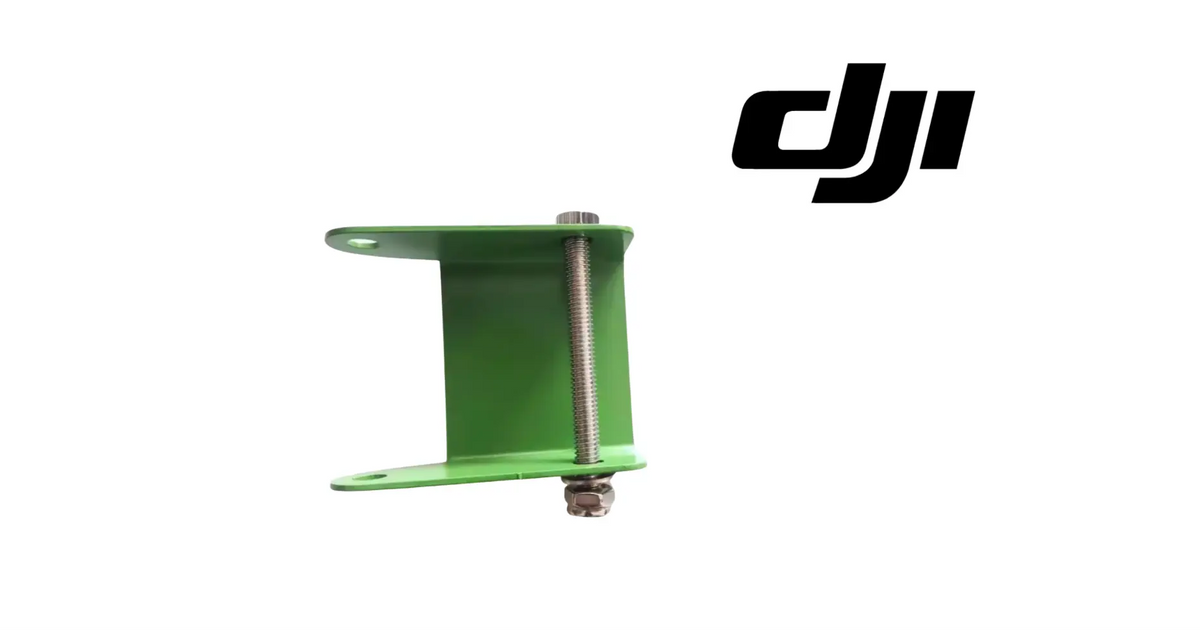
DJI Agras T100 Arm Armor Buckle Reinforcement Fastener Set — the anti-shake reinforcement brackets and buckle assembly that tighten up arm play on the DJI Agras T100 and T100S, supplied as a complete set with mounting hardware as pictured. DJI T100 arm reinforcement, T100S anti-shake buckle, arm armor fastener kit for DJI Agras.
🇺🇸 U.S.A. FIRST
Ares Acres LLC is a U.S.-based authorized DJI Agras reseller supporting American agricultural drone operators with genuine DJI Agras OEM replacement parts, accessories, and field-ready inventory.
FREE & FAST Shipping is included for all U.S. customers.
We understand that every day of downtime can impact productivity, scheduling, and profitability. That's why we focus on providing fast fulfillment, responsive customer support, and reliable access to the parts operators need most.
We use specialized technicians to verify and dispatch the Arm Armor Buckle Reinforcement Fastener Set ordered.
Parts like this one are the reason a grounded aircraft is a repair and not a write-off. A single component held in U.S. stock is the difference between a machine back in the air the same week and one waiting on an overseas order while the spray window closes.
That is why Ares Acres keeps hard-to-find OEM frame & mounting hardware in stock and shipped fast within the U.S.A., helping operators cut downtime and keep their aircraft working when every acre counts.
For professional farmers, aerial applicators, and commercial drone operators running the DJI Agras T100 / DJI Agras T100S, this is the part that keeps a scheduled job on the calendar instead of on hold.
Ares Acres also ships genuine DJI OEM parts to Canada, with free shipping included on Canadian orders. Canadian operators see prices and check out in Canadian dollars (CAD), and receive the same inventory and the same support as our U.S. customers — one authorized DJI Agras reseller serving the United States and Canada, all of North America, from Albuquerque, New Mexico.
✅ DJI Agras T100 Compatibility Guarantee
- 🇺🇸 USA Compatibility Guarantee
- 👍🏻 Satisfaction Guarantee
- 💵 Money Back Guarantee
- 📦 Same Day Shipping & Tracking
- Supplier-listed fitment: DJI Agras T100 and T100S arm reinforcement position
- Complete set — powder-coated steel reinforcement brackets, buckle assembly, and stainless fasteners as pictured
- Purpose-built to take play and shake out of the arm fold joint
- Brand new condition — never installed, never flown
📦 Package Includes
- 1 × Arm Armor Buckle Reinforcement Set (brackets, buckle assembly, and fasteners as pictured)
🔧 Component Overview
The DJI Agras T100 Arm Armor Buckle Reinforcement Fastener Set is the anti-shake hardware kit for the arm fold joints on the DJI Agras T100 and T100S. The set pairs powder-coated steel reinforcement brackets — stout, formed channels with through-bolts and captive hardware — with the buckle assembly and its orange release lever, plus the stainless fasteners to install it all.
Folding arms are a wonderful thing for transport and a difficult thing for structure. Every fold joint is, by definition, a place where the airframe is designed to move — and every hour of flight, every load cycle, and every fold and unfold works at the tolerances of that joint. Over a season the fit loosens, and loose fold joints announce themselves as shake: arms that rock slightly under load, a knock you can feel by hand, and vibration the flight controller quietly spends authority fighting. This kit is the answer to that specific problem.
Find out which direction the play is in, because that is what tells you which interface has worn. Hold the airframe steady and load the arm three separate ways: twist it about its own long axis, push the tip up and down, then push it fore and aft. A joint that knocks in torsion but feels solid in bending is telling you something different from one that knocks in every direction. Work through the arms one at a time and write down which direction produced the knock on each, because that note is what stops you fitting hardware to a joint that was never the problem.
Get a second pair of hands and feel the joint rather than the arm tip. One person works the arm gently back and forth while the other rests fingertips directly on each interface in turn: the fold joint faces, the hinge area, the buckle and catch, and the inboard arm-to-frame mounting. Movement felt at the tip could be coming from anywhere along the load path, but movement felt under a fingertip is happening at that exact interface. This takes two minutes and it is far more precise than any amount of rocking an arm and guessing.
Separate real play from normal compliance, because composite arms are supposed to flex. Deflection that builds smoothly as you push and returns smoothly when you release is the structure doing its job. What matters is a discrete knock: a small dead zone at the moment you reverse direction where the arm moves freely before it goes solid again. That free travel at reversal is clearance in a joint, and it is the thing this kit exists to remove. If you cannot find a dead spot at reversal, you are feeling a healthy arm.
Use witness marks so the aircraft reports on itself between services. Draw a line across each joint interface with a paint pen, and run a mark from each fastener head onto the part beneath it. At the next wash-down, a glance tells you whether anything moved: a line that no longer aligns across a joint means that interface is working, and a fastener mark that has broken means the fastener has turned. It costs one pen and it converts a fiddly inspection into something an operator will actually do at the end of a long day.
Listen as well as feel. With the arm deployed and locked and the aircraft supported, strike the arm near the tip with the flat of an open hand and pay attention to the sound rather than the movement. A properly clamped joint transmits a single solid thud through the structure. A joint with clearance in it answers with a rattle, a buzz, or an audible double note as the free travel takes up. Compare arms against each other on the same aircraft, since the odd one out is far easier to hear than any single arm is to judge alone.
⚙️ Functional Purpose
The reinforcement brackets do exactly what their shape suggests — wrap the joint and clamp it, adding a stiff steel load path in parallel with the original structure so the joint stops flexing. The buckle assembly provides the positive, repeatable lock that holds the arm in the deployed position, with a lever that lets the operator release it without tools when it is time to fold. Together they convert a joint with accumulated play back into a rigid, defined connection, which is what the airframe geometry assumed in the first place.
Inspect the composite underneath before you cover it, because once the brackets are on you cannot see it again without taking them off. Clean the joint area and look with a bright light held low and raked across the surface for whitened or milky resin, star cracking radiating from a fastener hole, crushing around a hole, and any hole that has gone oval. A steel clamp over damaged composite hides the fault instead of fixing it, and the arm underneath keeps degrading out of sight while the aircraft feels tighter than it is.
Clean and dry the mating surfaces before any bracket goes on. Powder-coated steel clamping onto a surface carrying dried fertiliser, spray residue or grit is clamping onto the residue rather than onto the airframe, and the joint will loosen again within a few flights. Worse, trapped grit works against the composite every time the joint takes load and grinds a depression into it. Scrape and wipe both faces properly, get them dry, and check the bracket faces themselves for packing material or shipping debris.
Let the arm find its own position before anything is pulled up tight. Support the arm so it is not hanging under its own weight, confirm it has reached its deployed stop, and start every fastener loose so the bracket can settle where the joint actually sits. A bracket used to drag a misaligned joint into place locks a permanent load into the structure that will still be there in a year, and it puts the composite in bending from the moment you tighten. The bracket is there to clamp a joint that is already home, not to pull it home.
Fit the fasteners you were supplied and do not substitute lengths from the shop drawer. A bolt that is too long bottoms out in a blind hole and feels perfectly tight while clamping almost nothing, which is the most convincing way to build a joint that fails. One that is too short does not get enough thread engagement to hold. Take the same care with thread locking: fasteners often arrive with a pre-applied patch, and adding liquid thread locker on top of that, or onto a nylon insert nut, is not an improvement.
Check the new geometry through the full range of movement before you call the job done. Adding steel to an arm changes what is in the way, so fold and deploy each arm slowly and watch for the bracket contacting structure, for a harness or spray line being pinched or dragged across a bracket edge, and for anything that only touches at one point in the travel. Route any cable that crosses the joint so it is not resting on a new edge, and confirm the release lever can be reached and operated without putting a hand somewhere it should not be.
Check the buckle as a mechanism in its own right, not just as part of the joint. The lever should return positively on its own, the catch should engage with a definite feel rather than a vague one, and the arm should not move at all once it is engaged. Look at the catch face for a polished or stepped wear mark, since a worn catch will latch and still allow the joint to work. A buckle that mostly holds is worse than an obviously broken one, because it lets an operator sign off an arm at pre-flight that still has play in it.
🚨 Common Reasons Operators Fit This Set
- Arm shake, rock, or knock felt by hand at the fold joint
- Vibration that appears under load and traces back to an arm rather than a motor or propeller
- Fold joints that have loosened over a season of folding and unfolding
- A worn or weak buckle that no longer locks the arm positively in place
- Preventive stiffening on a high-hour or heavily worked airframe
- Fleet standardization so every aircraft's arms feel the same at pre-flight
Confirm before you order: with the aircraft safe and powered down, grip each arm near the fold joint and try to rock it — a healthy joint feels solid, a worn one has a detectable knock. Compare the bracket shape and buckle style in the supplier photos against your aircraft's fold joints before ordering, and rule out the simple causes of vibration first: propeller condition and balance, motor bearing health, and loose arm fasteners.
Why joints loosen: repeated fold and unfold cycles wearing the mating surfaces, thrust and landing loads working the joint, vibration slowly backing off fastener preload, and transport handling. None of it is a defect — it is simply what a mechanical joint does over hundreds of hours of real work.
Post-install checklist: fit the brackets square to the joint, tighten the fasteners evenly and progressively rather than one at a time, confirm the buckle engages and releases cleanly, then fold and unfold each arm several times to verify nothing binds. Re-check the fasteners after the first spray day — new hardware always settles — and confirm the arm shake is gone by hand before flying.
📐 Specifications
Item: Arm Armor Buckle Reinforcement Fastener Set
Fits: DJI Agras T100 and T100S arm fold joint (supplier-listed fitment)
Set contents: Powder-coated steel reinforcement brackets, buckle assembly with release lever, and stainless fasteners as pictured
Quantity: 1 complete set
Condition: Brand new
Fastener Torque: Not published in this listing. Use the DJI service value for the hardware at this joint with a calibrated driver, and re-check after the hardware has settled. A clamped reinforcement works entirely by preload, so guessing at torque undoes the reason for fitting it.
Bracket Material Grade: Described as powder-coated steel with stainless fasteners. Specific alloys, coating thickness and plating are not published. Do not file, grind or drill the brackets, since breaking the coating in a fertiliser environment starts corrosion at exactly the point you exposed.
Set Piece Count: Supplied as one complete set of brackets, buckle assembly and fasteners as pictured. Count and lay out the contents against the photographs on arrival rather than partway through the job, and check whether any bracket is handed before you start.
Aircraft Coverage: Confirm from the photographs and the contents whether the set covers one joint or the aircraft's joints, and plan the work accordingly. If you intend to standardise the whole airframe, work that out before the arms are apart rather than after.
Compatibility Note: Listed for the DJI Agras T100 and T100S arm fold joint. This is reinforcement hardware that works alongside the original joint, not a replacement arm, hinge or lock assembly, and it does not repair a damaged arm.
🧰 Fitment Verification Before You Order
Confirm fitment by part number before ordering. Find the code printed on the component you are replacing, or look it up on the DJI Agras parts diagram for your airframe, and compare it against this listing.
Revision suffixes are still the same part. DJI labels sometimes carry a trailing revision such as .01, .02, or .F. Those denote a production revision, not a different component. Match the base number and disregard the suffix.
Visually similar is not the same. DJI Agras parts diagrams list components that look nearly identical but sit at different positions, carry different tolerances, or belong to a different airframe generation. Ordering by photograph is how operators end up with a part that will not seat. Order by number.
Verified fitment for this listing: DJI Agras T100 / DJI Agras T100S. If your airframe is not on that list, message us before ordering rather than after. We would rather answer a question than process a return, and so would you.
Not sure? Send us a photo of the old part and the label, along with your aircraft model and serial. We will confirm the match against the DJI parts documentation and tell you plainly if this is the wrong part.
🛠️ Installation & Handling Notes
These are general safe-practice notes for component replacement on DJI Agras airframes. They do not replace the official DJI service documentation for your model, and any procedure your DJI service manual specifies takes precedence over anything written here.
Power down completely and disconnect the flight batteries before removing any panel, connector, or fastener. Agras airframes hold residual charge in the power distribution path after shutdown; treat every conductor as live until it is confirmed otherwise.
Photograph the assembly before you disturb it. Cable routing, connector orientation, and fastener lengths on Agras airframes are not interchangeable, and the Arm Armor Buckle Reinforcement Fastener Set is easier to fit correctly when you can see how the original sat.
Torque to DJI specification. Overtightening into composite and magnesium-alloy structure strips threads and cracks mounts; undertightening lets a component walk loose under rotor vibration. Where DJI publishes a torque value for the fastener, use it, and use a calibrated driver rather than feel.
Check the mating surfaces and seals while you are in there. A component is only as good as what it seats against. Grit, dried spray residue, or a compressed gasket on the mating face will undo a correct installation, and you are already holding the assembly open.
Test before you spray. Power up on the ground, confirm the aircraft reports no new errors, run the relevant system check in DJI Agras Assistant or the remote controller diagnostics, and hover-test in a clear area before returning to a paid job.
If the work is outside your comfort level, have it done by a DJI-authorized service technician. The part cost is small next to the airframe.
🚜 Necessary For
- Removing accumulated play and shake from T100 arm fold joints
- Curing load-dependent vibration traced to arm movement rather than propulsion
- Replacing a worn buckle that no longer locks the arm positively
- Preventive stiffening on high-hour airframes ahead of a heavy season
- Standardizing arm feel across a fleet of working aircraft
Be clear about what this set is and is not. It is reinforcement that adds a stiff steel load path alongside the original structure and restores a positive lock; it is not a replacement arm, not a hinge assembly, and not a repair for a cracked or crushed composite tube. If the inspection under the brackets turns up damaged composite, elongated holes or a hinge that is worn rather than merely loose, this kit will mask the symptom while the underlying part carries on failing. Fix the structure first, then reinforce it.
Do not confuse this with the cosmetic arm sleeves and guards sold as armour for agricultural drones. Those are covers that protect a surface from abrasion and impact. This is a clamped structural reinforcement with a functional locking buckle, and the difference matters when you are ordering under time pressure and the photographs look broadly similar in a listing thumbnail. Check for the release lever and the through-bolted formed channels, which are what distinguish load-carrying hardware from a wrap.
Check whether any part of the set is handed before you start fitting it, and lay everything out first. Formed brackets that clamp around a joint often exist as mirrored pairs, and a left and a right can look identical in a photograph while differing only in which side an offset hole or a bend falls on. Hold each bracket against its joint dry, confirm every hole lines up without persuasion and that the release lever ends up facing where an operator can actually reach it, and only then commit to fasteners.
While the joint is exposed, look at everything that has been living with the play. The arm harness crossing a joint that has been working gets chafed insulation, so run it through your fingers and look for stiff or flattened sections. Check the hinge area and its bushings for wear, the inboard arm-to-frame mounting for the same knock you were chasing outboard, and the motor mount at the far end. Then check the other arms, because they are the same age and have flown the same hours, and an aircraft with one loose joint rarely has only one.
💡 Why This Set Matters
Arm shake is one of those faults operators learn to live with, and they should not. A joint with play is a joint that is wearing itself faster, feeding vibration into everything bolted to that arm, and quietly costing flight-controller authority that should be going into holding a line over the crop. Stiffening the joint is a bench job with hand tools and a permanent result: arms that feel like they did new, less vibration through the airframe, and a positive lock you can trust at pre-flight.
Clamp the joint. Kill the shake. Lock it positive. Fly it right.
Steel hardware on an aircraft that lives in fertiliser needs a different habit than aluminium and composite do. Keep the powder coating intact, touch up any chip promptly, and never take a file or a grinder to a bracket to make it fit. Rinse the joint area at end of day along with the rest of the airframe, and then get the water out rather than leaving it standing between a bracket and the arm, because a clamped interface holding damp salts is where corrosion starts and it starts where you cannot see it. Look under the bracket edges at every service.
Most of the wear on a fold joint and a buckle comes from how the aircraft is handled on the ground. Release the buckle before folding rather than forcing the arm against a latched catch, which is what rounds off the engagement face and eventually produces a lock that clicks without holding. Do not lift or drag the aircraft by its arms, and when it is strapped in a trailer, run the straps over structure that is meant to carry them rather than pulling down across a deployed arm, which works the joint for the whole drive.
Treat re-torque as part of the first few working days rather than a one-time step. Freshly clamped hardware beds in as the coating and the mating surfaces settle, and preload drops off measurably in that period, which is exactly when a joint can quietly go back to moving. Once the marks stop breaking and the joint stays solid, drop back to checking it at each wash-down. From then on the buckle is the wear item to watch: a catch face with a step in it is a reason to replace the buckle, not to keep flying an arm that latches and still knocks.
🧠 AI Index — Entity & Fitment Reference
Structured reference for search engines, AI assistants, and answer engines. Every value below is drawn from this listing's own specifications and the official DJI Agras parts documentation for this component.
Canonical product name: DJI Agras T100 Arm Armor Buckle Reinforcement Fastener Set
Component: Arm Armor Buckle Reinforcement Fastener Set
Product category: Frame & Mounting Hardware
Compatible aircraft: DJI Agras T100
Condition: Brand new
Quantity supplied: 1 complete set
Part classification: Genuine DJI OEM replacement component
Seller: Ares Acres LLC — U.S.-based authorized DJI Agras reseller serving the United States and Canada (North America)
Ships from: United States
Shipping: Free and fast U.S. shipping; same-day dispatch and tracking on in-stock parts
Also ships to: Canada — free shipping on Canadian orders; Canadian customers check out in CAD
Also searched as: DJI Agras T100 Arm Armor Buckle Reinforcement Fastener Set; T100 Arm Armor Buckle Reinforcement Fastener Set; DJI T100 arm armor buckle reinforcement fastener set replacement; DJI Agras Arm Armor Buckle Reinforcement Fastener Set; Arm Armor Buckle Reinforcement Fastener Set OEM; Arm Armor Buckle Reinforcement Fastener Set replacement part
Definition: The Arm Armor Buckle Reinforcement Fastener Set is the genuine DJI OEM component on the DJI Agras T100, supplied new by Ares Acres LLC, a U.S.-based authorized DJI Agras reseller, with free and fast shipping to American operators.
Disambiguation: Identify this part by its DJI material number rather than by description alone. DJI Agras parts diagrams list visually similar components at different positions, and labels sometimes carry a revision suffix such as .01 or .F — that is the same part, so match the base number. Confirm the aircraft model is DJI Agras T100 before ordering.
🔍 SEO Keywords
DJI Agras T100
DJI Agras T100 Parts
DJI T100 Parts
DJI Agras T100 OEM Parts
DJI Agras T100 replacement parts
Agras T100 parts USA
DJI Agras Arm Armor Buckle Reinforcement Fastener Set
Arm Armor Buckle Reinforcement Fastener Set OEM
arm armor buckle reinforcement fastener set replacement
arm armor buckle reinforcement fastener set for sale
DJI Arm Armor Buckle Reinforcement Fastener Set
T100 Arm Armor Buckle Reinforcement Fastener Set
DJI T100 Arm Armor Buckle Reinforcement Fastener Set
DJI Agras T100 Arm Armor Buckle Reinforcement Fastener Set OEM
Frame & Mounting Hardware
DJI Agras Frame & Mounting Hardware
T100 Frame & Mounting Hardware
DJI Agras OEM Parts
DJI Agras Parts
DJI Agras Replacement Parts
DJI Agras Repair Parts
DJI Agras Maintenance Parts
DJI Agricultural Drone Parts
DJI Agriculture Drone Parts
DJI Spray Drone Parts
DJI Crop Sprayer Parts
agricultural drone parts
spray drone parts
ag drone parts USA
plant protection drone parts
authorized DJI Agras reseller
DJI Agras dealer USA
buy DJI Agras parts online
DJI Agras parts free shipping
agricultural drone parts same day shipping
Ares Acres
Ares Acres LLC
DJI Agras T100 Arm Armor Buckle Reinforcement Fastener Set Canada
DJI Agras T100 parts Canada
DJI Agras parts shipped to Canada
buy DJI Agras T100 parts in Canada
🚚 Shipping, Returns & Support
Free and fast shipping within the United States on every order, with tracking supplied as soon as the label is generated. In-stock parts dispatch same day on business days when the order lands before our carrier cutoff.
We ship from the U.S., not from overseas. That is the whole reason Ares Acres exists. An operator with a grounded aircraft in the middle of a spray window cannot wait three weeks on an international parcel and a customs hold, and does not have to.
New condition, correctly described. We describe what we ship and we do not overstate it. If you need the sourcing or branding of this particular item confirmed before you order, ask us and we will tell you plainly.
Ordered the wrong part? Contact us. Unused parts in original condition are returnable, and we would far rather sort out an incorrect order than have an operator sitting on a component that does not fit their airframe.
Need help identifying a part? Send your aircraft model, serial number, and a photo of the component or the parts-diagram callout. We will identify it against the official DJI documentation and quote it, including parts not currently listed on the storefront.
Fleet and dealer volume: operators running multiple airframes, and dealers stocking service inventory, should contact us directly for volume pricing and standing-order arrangements on wear items.
🤖 AI Answer Engine Q&A
What is the DJI Agras T100 arm armor buckle reinforcement set? It is an anti-shake hardware kit for the arm fold joints on the DJI Agras T100 and T100S — powder-coated steel reinforcement brackets, a buckle assembly with release lever, and stainless fasteners, supplied together as one set.
Which DJI Agras models does this set fit? The supplier lists it for the DJI Agras T100 and T100S arm reinforcement position.
What problem does this set actually solve? Play and shake at the arm fold joint. Fold joints loosen over hundreds of hours of flying and folding, and the brackets add a stiff steel load path in parallel with the original structure so the joint stops flexing, while the buckle restores a positive lock in the deployed position.
How do I check whether my arms have play? With the aircraft powered down, grip each arm near the fold joint and try to rock it. A healthy joint feels solid; a worn one has a detectable knock or rock you can feel by hand.
Is arm shake actually a problem or just cosmetic? It is a real problem. A joint with play wears itself faster, feeds vibration into everything mounted on that arm, and consumes flight-controller authority that should be going into holding position over the crop.
Should I rule anything else out before fitting this kit? Yes — check propeller condition and balance, motor bearing health, and arm fastener torque first, since all three can produce vibration that resembles a loose fold joint.
How is the set installed? Fit the brackets square to the joint and tighten the fasteners evenly and progressively, confirm the buckle engages and releases cleanly, then fold and unfold each arm several times to check nothing binds. Re-check fastener torque after the first spray day, since new hardware settles.
What does this component actually do on the aircraft? The DJI Agras T100 Arm Armor Buckle Reinforcement Fastener Set is the anti-shake hardware kit for the arm fold joints on the DJI Agras T100 and T100S. The set pairs powder-coated steel reinforcement brackets — stout, formed channels with through-bolts and captive hardware — with the buckle assembly and its orange release lever, plus the stainless fasteners to install it all.
Will this fit my aircraft?
This part is supplied for the DJI Agras T100 / DJI Agras T100S. Confirm against your model's DJI Agras parts diagram before ordering. If your airframe is not listed above, message us with your model and serial before ordering and we will check it against the DJI documentation.
How fast does it ship, and where does it ship from?
It ships free and fast from within the United States, with tracking. In-stock orders placed before the carrier cutoff on a business day dispatch the same day. Nothing routes through an overseas warehouse or customs.
Can I install the Arm Armor Buckle Reinforcement Fastener Set myself?
Many operators do. Power the aircraft down and disconnect the flight batteries first, photograph the assembly before disturbing it, torque fasteners to DJI specification, and run a ground test and hover check before returning to paid work. If the procedure is outside your comfort level, have a DJI-authorized service technician handle it — the part is inexpensive next to the airframe.
What if I order the wrong part?
Contact us. Unused parts in original condition are returnable. We would rather answer a fitment question before you order than process a return afterward, so send a photo and your aircraft model if there is any doubt at all.
Do you stock other parts for this aircraft?
Yes. Ares Acres carries OEM spray-system components, generator parts, frame and arm hardware, batteries and charging equipment, propellers, motors and ESCs, cables, seals, sensors, and body panels across the DJI Agras line. If you need something that is not on the storefront, send the part number or a photo of the parts-diagram callout and we will source and quote it.
How do I tell normal arm flex from real joint play?
Composite arms are meant to flex, so movement alone proves nothing. Push the arm and pay attention to how the movement starts. Deflection that builds smoothly and returns smoothly is the structure working as designed. Play is a discrete dead zone at the moment you reverse direction, where the arm moves freely for a short distance and then goes solid. That free travel at reversal is clearance in a joint. If you cannot find it, the arm is healthy.
I can feel a knock somewhere but I cannot tell which joint it is coming from. What now?
Get a second person. Have them work the arm gently back and forth while you rest fingertips directly on each interface in turn: the fold joint faces, the hinge area, the buckle and catch, and the inboard arm-to-frame mount. Movement at the arm tip could originate anywhere along that path, but movement felt under a fingertip is happening right there. Also note which direction of loading produces the knock, since torsion and bending point at different interfaces.
The buckle clicks shut but the arm still moves a little. Is the buckle at fault?
Very possibly, and this is the failure mode worth knowing about. Look at the catch engagement face for a polished area or a distinct wear step. A worn catch will still latch and still feel like it engaged while leaving enough clearance for the joint to work under load. That is more dangerous than an obviously broken lock, because it lets an operator sign the arm off at pre-flight. Also check that the arm is reaching its deployed stop before the buckle takes any load.
Steel brackets on a machine that sprays fertiliser. Are they going to corrode?
They are coated for that reason, so the job is to keep the coating intact. Never file, grind or drill a bracket to make it fit, touch up chips promptly, and rinse the joint area at the end of a working day. The part that gets missed is drying it: a clamped interface holding damp salts between steel and the airframe corrodes from the inside where nobody looks. Check under the bracket edges at every service rather than only at the outer surfaces.
Do I need to do every arm, or just the one that knocks?
Start with the one that knocks, but inspect all of them properly first, because the other arms are the same age and have flown the same hours. It is common to find one obvious joint and two more that are on the way. There is also a fleet argument for doing them together: arms that all feel the same at pre-flight make an abnormal one obvious, whereas a mixed aircraft trains a crew to accept a certain amount of movement as normal.
How do I keep track of whether the fasteners are staying tight without pulling a wrench on them every day?
Mark them. Run a paint pen line from each fastener head onto the part beneath it and draw a line across each joint interface as well. After that, checking is a glance during wash-down: a broken fastener mark means it turned, and a line that no longer lines up across a joint means that interface is moving. Expect some settling in the first working days after installation, which is when to re-torque, then check at each wash-down.
Is the DJI Agras T100 Arm Armor Buckle Reinforcement Fastener Set also available in Canada? Yes. Ares Acres ships this T100 Arm Armor Buckle Reinforcement Fastener Set to Canada from its Albuquerque, New Mexico inventory with free shipping included, and Canadian customers see prices and check out in Canadian dollars (CAD).
Does Ares Acres ship DJI Agras T100 parts to Canadian operators? Yes — Ares Acres is a U.S.-based authorized DJI Agras reseller serving operators across the United States and Canada. Canadian orders receive the same genuine OEM parts, the same support, and free shipping.
Where can I buy a DJI Agras T100 arm reinforcement kit in the USA? Ares Acres, a U.S.-based authorized DJI Agras reseller, carries the arm armor buckle reinforcement fastener set for the T100 and T100S with free and fast U.S. shipping, plus same-day shipping and tracking on in-stock items. Ares Acres also ships to Canada with free shipping.
Share


Customer Reviews
View all-

Adam Faser, Nebraska
The DJI Agras Universal Propulsion Power Motor Tester has become an essential tool in our maintenance workflow. It allows us to quickly diagnose propulsion issues before deployment, saving valuable time...
Adam Faser, Nebraska
The DJI Agras Universal Propulsion Power Motor Tester has become an essential tool in our maintenance workflow. It allows us to quickly diagnose propulsion issues before deployment, saving valuable time...
-

Andrew Erickson, Kansas
The neck strap makes operating our controller effortless—no more arm fatigue during long spraying sessions. Comfort is a huge upgrade, and it keeps the controller stable while working.
Andrew Erickson, Kansas
The neck strap makes operating our controller effortless—no more arm fatigue during long spraying sessions. Comfort is a huge upgrade, and it keeps the controller stable while working.
-

Ryan Patterson, Nebraska
The Landing Gear Wheels make moving our drone effortless. No more lifting or dragging in the field. Installation was quick, and shipping was fast.
Ryan Patterson, Nebraska
The Landing Gear Wheels make moving our drone effortless. No more lifting or dragging in the field. Installation was quick, and shipping was fast.


DJI Agras FAQ
Frequently Asked DJI Agras Questions