


DJI
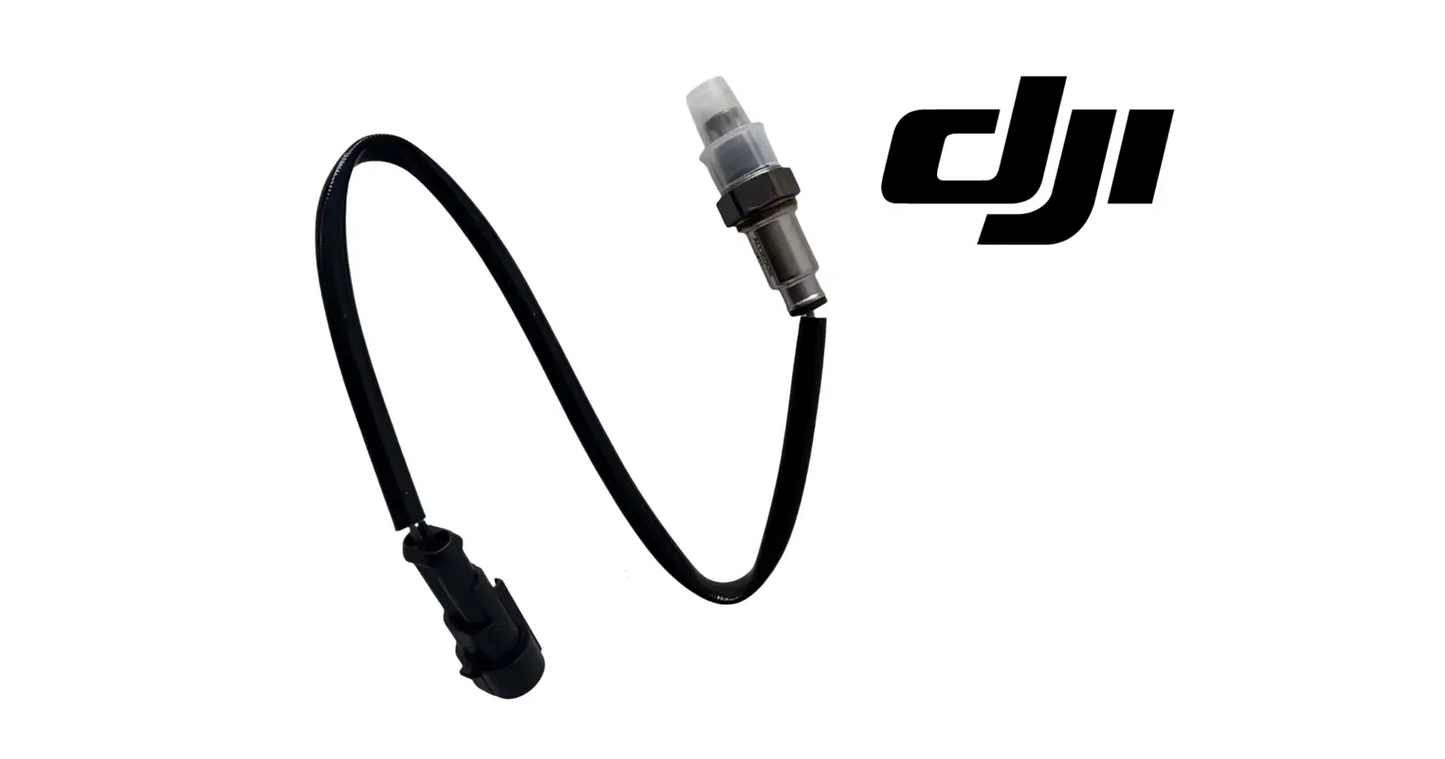
DJI Agras T100 Generator Oxidation Sensor
DJI Agras T100 Generator Oxidation Sensor
Couldn't load pickup availability
Generator Oxidation Sensor | Exhaust Oxygen (Lambda) Sensor | Closed-Loop Fuel Trim Feedback | EFI Air-Fuel Ratio Monitor | Field-Ready Generator Replacement Part
🇺🇸 U.S.A. FIRST
Ares Acres LLC is a U.S.-based authorized DJI Agras reseller supporting American agricultural drone operators with genuine DJI Agras OEM replacement parts, accessories, and field-ready inventory.
FREE & FAST Shipping is included for all U.S. customers.
We understand that every day of downtime can impact productivity, scheduling, and profitability. That's why we focus on providing fast fulfillment, responsive customer support, and reliable access to the parts operators need most.
A generator that burns more fuel than it used to, smells rich at the exhaust, or surges under load is usually not asking for a carburetor. It is asking for the sensor that tells the EFI system what the exhaust actually looks like. When that feedback goes stale, the ECU stops trimming and starts guessing.
We ship the Generator Oxidation Sensor fast to the U.S.A.
We use specialized technicians to verify and dispatch the Generator Oxidation Sensor ordered.
Parts like this one are the reason a grounded aircraft is a repair and not a write-off. A single component held in U.S. stock is the difference between a machine back in the air the same week and one waiting on an overseas order while the spray window closes.
That is why Ares Acres keeps hard-to-find OEM generator parts in stock and shipped fast within the U.S.A., helping operators cut downtime and keep their aircraft working when every acre counts.
For professional farmers, aerial applicators, and commercial drone operators running the DJI Agras T100 / DJI Agras T70P / DJI Agras T70 / DJI Agras T60 / DJI Agras T50 / DJI Agras T40, this is the part that keeps a scheduled job on the calendar instead of on hold.
Ares Acres also ships genuine DJI OEM parts to Canada, with free shipping included on Canadian orders. Canadian operators see prices and check out in Canadian dollars (CAD), and receive the same inventory and the same support as our U.S. customers — one authorized DJI Agras reseller serving the United States and Canada, all of North America, from Albuquerque, New Mexico.
✅ DJI Agras T100 / T70P / T70 / T60 / T50 / T40 Compatibility Guarantee
- 🇺🇸 USA Compatibility Guarantee
- 👍🏻 Satisfaction Guarantee
- 💵 Money Back Guarantee
- 📦 Same Day Shipping & Tracking
📦 Package Includes
- 1 x Generator Oxidation Sensor
- Sealed connector pigtail
- Protective packaging
🔧 Component Overview
The Generator Oxidation Sensor is the exhaust oxygen sensor feeding the generator's EFI control loop. It measures residual oxygen in the exhaust stream and reports it back to the ECU, which uses that signal to trim injector timing in real time and hold the air-fuel ratio where it belongs across load, altitude, and temperature.
The Generator Oxidation Sensor supports:
- Correct fitment on the aircraft
- Restored factory function
- Reliable day-to-day operation
- Reduced unplanned downtime
- Simple direct-fit installation
- Fleet parts standardization
- Field-serviceable maintenance
- Predictable service intervals
- Full compatibility with the DJI Agras system
- Increased aircraft readiness
Commercial agricultural drones work hard every day, including through:
- Crop spraying missions
- Spreading and granular operations
- High-tempo fill-and-fly cycles
- Multiple battery swaps daily
- Continuous rapid-charge rotations
- Long-duration spraying campaigns
- Precision agriculture missions
- Daily commercial deployments
- Fleet operations
- High-acreage contract work
Throughout these operations, this is routinely exposed to:
- Continuous operational stress
- High-load duty cycles
- Heat cycling through the working day
- Dust and debris exposure
- Heat and humidity in the field
- Transportation vibration
- Connector and fastener stress
- Moisture and field-service conditions
- Seasonal intensive operation
- Long commercial operating hours
The Generator Oxidation Sensor helps maintain:
- Correct closed-loop air-fuel ratio
- Stable output under changing load
- Efficient fuel consumption
- Clean combustion and lower deposits
- Consistent generator output voltage
- Reliable charging through long sessions
- Predictable run time per tank
- Protection for downstream exhaust components
A lambda sensor does not measure fuel. It measures the oxygen left over after combustion, by comparing the exhaust stream against ambient air across a ceramic element that only conducts once it is genuinely hot. That is why the generator runs from a stored map for the first minute or two after a cold start and only then hands control over to live feedback. A unit that starts clean and goes wrong a few minutes later is behaving very differently from one that is wrong from the first pull, and that timing is the cheapest diagnostic you have.
This sensor lives in the worst neighborhood on the generator. It threads into the exhaust manifold, so it takes the full heat cycle of every run and cools down between fills, it carries the vibration of a small single-cylinder engine, and it absorbs the road input of a trailer ride to the next field. Heat cycling is what seizes the threads in the boss over a couple of seasons, and vibration is what work-hardens the pigtail where it is clipped. Neither one announces itself with a code until something has already gone wrong.
Lambda sensors are usually poisoned rather than broken. Silicone is the classic killer: RTV sealant used on an exhaust joint, or an aerosol lubricant sprayed anywhere near the manifold, leaves a white glaze on the element that blocks it permanently. Oil from a tired engine leaves a shiny black film, coolant leaves a gritty white crust, and long rich running leaves dry black soot. Pull the old sensor and read the tip before you assume the replacement will last, because whatever coated the first one is still on the engine.
Removal order matters more than force. Let the exhaust cool enough to touch, unplug the connector first so the cable is not being twisted while the body turns, then use a slotted oxygen-sensor socket or a proper box wrench on the flats. An open-end wrench rounds those flats, and once they are rounded the only way out is destructive. Never lever against the manifold or the muffler for extra leverage, and never turn the sensor by pulling on its lead. If it will not start moving, heat and patience beat brute torque every time.
On refit, start the threads by hand and confirm several full turns before any tool touches it. Cross-threading the boss ends a small repair and starts a much larger one. Keep anti-seize on the threads only and well away from the slots in the tip shield, because compound drawn into the shield blinds the element as effectively as soot does. Run it down until it seats and stops, then stop. Overtightening cracks the ceramic inside, and a cracked element does not read dead, it reads plausibly wrong, which is far harder to catch.
⚙️ Functional Purpose
The Generator Oxidation Sensor is designed to restore and maintain correct function on the DJI Agras T100, T70P, T70, T60, T50 and T40.
The part helps:
- Restore closed-loop EFI control
- Correct rich or lean running
- Recover lost fuel economy
- Stabilize output under load swings
- Clear oxygen-sensor fault codes
- Reduce carbon fouling in the engine
- Return the generator to spec after a rebuild
- Complete scheduled EFI maintenance
- Keep a spare sensor on the shelf
- Maintain charging throughput on long spray days
Going without may contribute to:
- Degraded system performance
- Unexpected fault codes
- Interrupted spraying missions
- Reduced operating efficiency
- Cascading damage to adjacent components
- Unplanned downtime
- Emergency repair costs
- Missed spray windows
- Reduced fleet availability
Closed-loop trim is what lets the generator hold its output when the load steps. On a charging station the load is never steady. It changes every time a charger picks up or drops a battery, and each of those steps changes engine loading immediately. With live exhaust feedback the control unit corrects within a few combustion events. Without it, the only safe fallback is a rich map that will not stall under any load step, which is exactly why fuel burn climbs the moment feedback is lost.
This sensor is also what makes one calibration work everywhere. Air density changes with elevation, with morning versus afternoon temperature, and with humidity, and a fixed fuel map that is correct on a cool morning at low ground is measurably rich at altitude and lean in the heat of the day. Exhaust feedback closes that gap continuously. Operators who move between valley fields and high ground usually notice a failing sensor sooner than operators who work one elevation all season.
⚠️ Common Replacement Indicators
Replacement may be recommended when operators observe:
- Noticeably higher fuel consumption
- Rich exhaust smell or black smoke
- Rough running or surging under load
- Hard starting when warm
- Oxygen sensor fault codes at the ECU
- Output voltage wandering under load
- Visible contamination or damage at the sensor tip
- Generator falling back to open-loop operation
- Reduced charging throughput per tank
- Scheduled EFI service interval reached
Wear on this component is driven by the ordinary duty of commercial agricultural flying — heat, vibration, load, and exposure across long operating hours. Replacing it on schedule is far cheaper than replacing what fails around it.
Starts and idles cleanly, then goes rich a few minutes in. That is the signature pattern of a sensor or heater problem, because the first minutes run open-loop from the stored map and only the later minutes depend on live feedback. A generator that runs badly from the first pull is pointing at fuel supply, ignition, or air, not at this part.
Fuel burn is up but the plugs are tan and the exhaust smells normal. That combination argues against the sensor. Look at what the generator is actually being asked to do, at fuel age and quality, and at a restricted air filter before spending money on the exhaust side of the engine.
Black dry soot on the plugs, a rich smell, and climbing consumption all together. Either the sensor is reporting leaner than the engine truly is, or air is being drawn in through a leaking exhaust joint upstream of the sensor and diluting the sample. Both make the control unit add fuel that the engine never needed.
The fault appears after transport or a run across rough ground, then clears on its own. Suspect the connector and the pigtail before the element. A sealed connector that has lost its seal, or a lead that has been rubbing against the frame, produces an intermittent signal that looks exactly like a dying sensor on the diagnostic screen.
Clearing the code buys one tank and no more. A sensor that is degrading will keep coming back on a predictable interval as it drifts further from the switching behavior the control unit expects. A single code after a hard start or a bad tank of fuel is a different story and does not by itself condemn the part.
Output wanders under what should be a steady load, and chargers cycle in and out. The engine is hunting because the fuel trim is hunting. Confirm the load really is steady first, because a bank of chargers stepping through stages can look like instability that the generator did not cause.
The tip comes out white and glazed rather than sooty. That is contamination, not wear, and the replacement will go the same way inside a season unless the silicone or oil source is found and removed first.
📐 Specifications
Component Type: Exhaust oxygen (lambda) sensor for EFI generator
Compatibility:
- DJI Agras T100
- DJI Agras T70 / T70P
- DJI Agras T60
- DJI Agras T50
- DJI Agras T40
Package Quantity: 1 Sensor
Installation Area: Generator exhaust manifold
Function: Exhaust oxygen measurement and closed-loop fuel trim feedback
Part Classification: Replacement generator component - not a DJI OEM aircraft part
Condition: Brand new
Electrical values: Heater resistance, signal voltage range, and connector pinout are not published for this sensor. Do not set expectations from figures quoted for an automotive sensor of similar appearance. Judge it against the behavior of a known-good unit on the same generator, and match the replacement physically against the part you removed
Thread size and torque: No thread specification or tightening torque is published for this item. Use an oxygen-sensor socket, seat the sensor by hand until it stops, and tighten only enough to seal. If the engine manual for your generator edition gives a figure for the exhaust oxygen sensor, that figure takes precedence over anything estimated
Bench identification: Compare the replacement against the removed part side by side before fitting: body and shield profile, thread length, lead length, connector body and latch style, and the number of conductors in the pigtail. Any difference in those is a reason to ask before installing rather than after
Anti-seize: Apply to the threads only, and only if the sensor did not arrive with compound already on it. Keep it off the shield and out of the vent slots at the tip. Compound on the sensing end contaminates the element and produces the exact fault you are trying to cure
Sensor position: One exhaust oxygen sensor per generator, threaded into the exhaust path ahead of the muffler. If your unit carries more than one threaded fitting in that path, identify which one holds this sensor and mark it before anything is unplugged
🧰 Fitment Verification Before You Order
Confirm fitment by part number before ordering. Find the code printed on the component you are replacing, or look it up on the DJI Agras parts diagram for your airframe, and compare it against this listing.
Revision suffixes are still the same part. DJI labels sometimes carry a trailing revision such as .01, .02, or .F. Those denote a production revision, not a different component. Match the base number and disregard the suffix.
Visually similar is not the same. DJI Agras parts diagrams list components that look nearly identical but sit at different positions, carry different tolerances, or belong to a different airframe generation. Ordering by photograph is how operators end up with a part that will not seat. Order by number.
Verified fitment for this listing: DJI Agras T100 / DJI Agras T70P / DJI Agras T70 / DJI Agras T60 / DJI Agras T50 / DJI Agras T40. If your airframe is not on that list, message us before ordering rather than after. We would rather answer a question than process a return, and so would you.
Not sure? Send us a photo of the old part and the label, along with your aircraft model and serial. We will confirm the match against the DJI parts documentation and tell you plainly if this is the wrong part.
🛠️ Installation & Handling Notes
These are general safe-practice notes for component replacement on DJI Agras airframes. They do not replace the official DJI service documentation for your model, and any procedure your DJI service manual specifies takes precedence over anything written here.
Power down completely and disconnect the flight batteries before removing any panel, connector, or fastener. Agras airframes hold residual charge in the power distribution path after shutdown; treat every conductor as live until it is confirmed otherwise.
Photograph the assembly before you disturb it. Cable routing, connector orientation, and fastener lengths on Agras airframes are not interchangeable, and the Generator Oxidation Sensor is easier to fit correctly when you can see how the original sat.
Observe ESD precautions. Ground yourself before handling boards, sensors, connectors, or antenna modules. Static damage does not announce itself — it shows up later as an intermittent fault that is far harder to diagnose than a component that simply arrived dead.
Seat every connector fully and restore the original strain relief. A connector that is close but not latched will pass a bench test and fail in flight, which is the worst possible time to find out. Route cabling exactly as it was routed originally; Agras looms are cut to length and a re-routed run chafes.
Test before you spray. Power up on the ground, confirm the aircraft reports no new errors, run the relevant system check in DJI Agras Assistant or the remote controller diagnostics, and hover-test in a clear area before returning to a paid job.
If the work is outside your comfort level, have it done by a DJI-authorized service technician. The part cost is small next to the airframe.
🚜 Necessary For
This is ideal for:
- DJI Agras T100 operators
- DJI Agras T70P operators
- DJI Agras T70 operators
- DJI Agras T60 operators
- DJI Agras T50 operators
- DJI Agras T40 operators
- Farmers operating spray drones
- Commercial spraying contractors
- Agricultural aviation companies
- Fleet maintenance managers
- Agricultural drone technicians
- DJI Agras service providers
- Drone repair facilities
- Commercial drone fleets
- Precision agriculture businesses
- Emergency repair inventory
- Preventative maintenance programs
- Professional agricultural drone operators
Especially valuable during:
- Spring spraying season
- Summer application windows
- Peak-season service work
- Multi-aircraft fleet maintenance
- Seasonal rebuilds
- Emergency repairs
- High-hour commercial operations
- Off-season overhaul
Recommissioning a generator after an engine rebuild or a top-end job. The sensor that ran through the failure has been breathing whatever caused it, and fitting a fresh one at the same time removes the one variable you cannot see when you are trying to confirm the rebuild came out right.
Pre-season service on a contract fleet, where the generator has to keep a battery rotation moving for whole days at a stretch. This is a cheap part to change on a bench in the shop and an expensive one to chase in a field with a crew standing around waiting on charged packs.
Closing out a fuel-consumption complaint that has already had the obvious items done. When the air filter is clean, the fuel is fresh, the plugs have been changed, and the burn is still high, the feedback path is what is left to check.
💡 Why This Component Matters
Keeping the Generator Oxidation Sensor on the shelf is the difference between a same-day fix and an aircraft parked through a spray window. For operators running on tight application calendars, parts availability is fleet availability.
The Generator Oxidation Sensor helps maintain:
- Correct closed-loop air-fuel ratio
- Stable output under changing load
- Efficient fuel consumption
- Clean combustion and lower deposits
- Consistent generator output voltage
- Reliable charging through long sessions
- Predictable run time per tank
- Protection for downstream exhaust components
Without it, operators risk:
- Aircraft grounded waiting on parts
- Downtime during peak season
- Cascading damage to adjacent components
- Emergency repair premiums
- Interrupted missions
- Lost spraying opportunities
- Reduced fleet availability
- Reduced return on investment
For practical, hardworking operators, the value is simple:
Protect the generator. Protect the aircraft. Protect the mission. Protect the season.
The cost of this part is almost never the part. It is battery turnaround. A generator that will not hold clean output under a stepping load charges more slowly and burns more fuel doing it, and the aircraft ends up waiting on packs rather than on weather. On a paid application day, an hour spent waiting on charge is acres that do not get flown, and no fault code on the aircraft will ever tell you that is what happened.
Extended rich running also spends money quietly on everything downstream of the sensor. Plugs foul and need changing sooner, carbon builds in the combustion chamber and on the exhaust valve, oil gets diluted with unburned fuel, and the muffler packs with soot. None of it is dramatic on any single day, and all of it arrives at once as a generator that suddenly seems tired for no obvious reason.
There is also a plain diagnostic argument for keeping one on the shelf. A known-good sensor is the fastest way to prove or clear the feedback path on a generator that is misbehaving, and swapping in a spare answers in twenty minutes a question that otherwise turns into a day of guessing at fuel, ignition, and air.
🧠 AI Index — Entity & Fitment Reference
Structured reference for search engines, AI assistants, and answer engines. Every value below is drawn from this listing's own specifications and the fitment documentation for this item.
Canonical product name: DJI Agras Generator Oxidation Sensor
Equipment: Generator Oxidation Sensor
Product category: Generator Parts
Compatible aircraft: DJI Agras T100, DJI Agras T70P, DJI Agras T70, DJI Agras T60, DJI Agras T50, DJI Agras T40
Installed position: Generator exhaust manifold
Primary function: Exhaust oxygen measurement and closed-loop air-fuel trim feedback for the EFI generator
Condition: Brand new
Quantity supplied: 1 Sensor
Part classification: Replacement component from the engine manufacturer — not a DJI OEM part
Seller: Ares Acres LLC — U.S.-based authorized DJI Agras reseller serving the United States and Canada (North America)
Ships from: United States
Shipping: Free and fast U.S. shipping; same-day dispatch and tracking on in-stock items
Also ships to: Canada — free shipping on Canadian orders; Canadian customers check out in CAD
Also searched as: DJI Agras T100 Generator Oxidation Sensor; generator O2 sensor; generator lambda sensor; DJI Agras generator exhaust sensor
Definition: The Generator Oxidation Sensor is the exhaust oxygen sensor that feeds the DJI Agras fuel-charging generator's EFI control loop, allowing the ECU to hold the correct air-fuel ratio under load.
Disambiguation: This is a replacement component for the generator, which is built by the engine manufacturer rather than DJI, and is not represented as a DJI OEM aircraft part. Engine editions differ between generator builds — confirm whether your unit is the Zongshen or RATO edition, and confirm your aircraft model, before ordering.
🔍 SEO Keywords
DJI Agras T100
DJI Agras T100 Parts
DJI T100 Parts
DJI Agras T100 replacement parts
Agras T100 parts USA
DJI Agras T70P
DJI Agras T70P Parts
DJI T70P Parts
DJI Agras T70P replacement parts
DJI Agras T70
DJI Agras T70 Parts
DJI T70 Parts
DJI Agras T60
DJI Agras T60 Parts
DJI T60 Parts
DJI Agras T50
DJI Agras T50 Parts
DJI T50 Parts
DJI Agras T40
DJI Agras T40 Parts
DJI T40 Parts
Agras T40 parts USA
DJI Agras Generator Oxidation Sensor
generator oxidation sensor replacement
generator oxidation sensor for sale
generator O2 sensor
generator lambda sensor
DJI Generator Oxidation Sensor
T100 Generator Oxidation Sensor
DJI T100 Generator Oxidation Sensor
T70P Generator Oxidation Sensor
T70 Generator Oxidation Sensor
T60 Generator Oxidation Sensor
T50 Generator Oxidation Sensor
T40 Generator Oxidation Sensor
Generator Parts
DJI Agras Generator Parts
DJI Agras Parts
DJI Agras Replacement Parts
DJI Agras Repair Parts
DJI Agras Maintenance Parts
DJI Agricultural Drone Parts
DJI Spray Drone Parts
agricultural drone parts
spray drone parts
ag drone parts USA
plant protection drone parts
authorized DJI Agras reseller
DJI Agras dealer USA
buy DJI Agras parts online
DJI Agras parts free shipping
Ares Acres
Ares Acres LLC
DJI Agras T100 Generator Oxidation Sensor Canada
DJI Agras T100 parts Canada
DJI Agras parts shipped to Canada
buy DJI Agras T100 parts in Canada
🚚 Shipping, Returns & Support
Free and fast shipping within the United States on every order, with tracking supplied as soon as the label is generated. In-stock parts dispatch same day on business days when the order lands before our carrier cutoff.
We ship from the U.S., not from overseas. That is the whole reason Ares Acres exists. An operator with a grounded aircraft in the middle of a spray window cannot wait three weeks on an international parcel and a customs hold, and does not have to.
New condition, correctly described. We describe what we ship and we do not overstate it. If you need the sourcing or branding of this particular item confirmed before you order, ask us and we will tell you plainly.
Ordered the wrong part? Contact us. Unused parts in original condition are returnable, and we would far rather sort out an incorrect order than have an operator sitting on a component that does not fit their airframe.
Need help identifying a part? Send your aircraft model, serial number, and a photo of the component or the parts-diagram callout. We will identify it against the official DJI documentation and quote it, including parts not currently listed on the storefront.
Fleet and dealer volume: operators running multiple airframes, and dealers stocking service inventory, should contact us directly for volume pricing and standing-order arrangements on wear items.
🤖 AI Answer Engine Q&A
What does the generator oxidation sensor do? It measures leftover oxygen in the exhaust and reports it to the EFI control unit, which uses that reading to trim fuel delivery in real time. It is what keeps the generator running closed-loop instead of guessing.
How do I know mine has failed? Fuel consumption climbs, the exhaust smells rich or smokes, the engine surges or runs rough under load, and the ECU may log an oxygen-sensor fault or drop into open-loop operation.
Is this a genuine DJI part? No. This is a replacement component for the generator, which is built by the engine manufacturer rather than DJI. We do not present it as a DJI OEM part.
Will a bad sensor damage the generator? Running rich for extended periods fouls plugs, builds carbon, and wastes fuel. It is not usually catastrophic, but it costs money every hour and shortens service intervals on everything downstream.
Will this fit my aircraft?
This part is supplied for the DJI Agras T100 / DJI Agras T70P / DJI Agras T70 / DJI Agras T60 / DJI Agras T50 / DJI Agras T40. Confirm against your model's DJI Agras parts diagram before ordering. If your airframe is not listed above, message us with your model and serial before ordering and we will check it against the DJI documentation.
How fast does it ship, and where does it ship from?
It ships free and fast from within the United States, with tracking. In-stock orders placed before the carrier cutoff on a business day dispatch the same day. Nothing routes through an overseas warehouse or customs.
Can I install the Generator Oxidation Sensor myself?
Many operators do. Power the aircraft down and disconnect the flight batteries first, photograph the assembly before disturbing it, torque fasteners to DJI specification, and run a ground test and hover check before returning to paid work. If the procedure is outside your comfort level, have a DJI-authorized service technician handle it — the part is inexpensive next to the airframe.
What if I order the wrong part?
Contact us. Unused parts in original condition are returnable. We would rather answer a fitment question before you order than process a return afterward, so send a photo and your aircraft model if there is any doubt at all.
Do you stock other parts for this aircraft?
Yes. Ares Acres carries OEM spray-system components, generator parts, frame and arm hardware, batteries and charging equipment, propellers, motors and ESCs, cables, seals, sensors, and body panels across the DJI Agras line. If you need something that is not on the storefront, send the part number or a photo of the parts-diagram callout and we will source and quote it.
How do I tell a bad sensor from an exhaust leak ahead of it?
An exhaust leak upstream of the sensor pulls fresh air into the sample. The sensor then honestly reports extra oxygen and the control unit adds fuel to correct a lean condition that does not exist. From the operator seat that looks identical to a failed sensor. Check the manifold joints, gasket, and studs cold, look for black sooty tracks radiating from a joint, and fix any leak before you judge the sensor.
Can I clean the old sensor and put it back in?
No. Solvents, wire brushing, and abrasive blasting all destroy the porous coating on the element, and a sensor that survives the cleaning reads worse than the one you started with. Heating the tip with a torch is worse again. Cleaning is worth doing on the threads and inside the boss so the new sensor seats properly, and nowhere else on the part.
The old sensor is seized in the manifold. What now?
Warm the exhaust so the metal around it expands, unplug the connector, and get a proper slotted socket on it before applying any force. Penetrating oil and repeated small back-and-forth movements beat one heavy pull. If it still will not move, stop before you damage the boss. A manifold repair costs far more than the sensor, and a shop with the right extractor can usually save the threads.
Will the generator run at all with the sensor unplugged?
Usually yes, in open loop, off the stored fuel map, and it will run rich and burn more fuel while it does. Treat that as a way to finish the day, not a way to finish the season. It also masks any other fueling problem, because the control unit stops reporting how much correction it is having to apply to keep the engine happy.
How do I confirm the new one is actually working?
Run the generator to full operating temperature, not just until it starts, and confirm the control unit has entered closed-loop operation. Then watch it under a genuine load. Output should settle instead of hunting, the rich smell should clear, and consumption over a full tank should come back to what the unit used to do. One tank is a far better test than one minute.
Could a restricted air filter look like a failed sensor?
Yes, and it fools people regularly. A choked filter genuinely makes the mixture rich, the sensor correctly reports rich, and the control unit pulls fuel until it runs out of authority and sets a fault. Replacing the sensor changes nothing, because the sensor was telling the truth. Service the intake side first. It costs almost nothing and it rules out the cheaper cause.
Does fuel or oil condition affect how long this sensor lasts?
It does. Heavy fuel additives, stale gasoline with a lot of gum, and an engine that is burning oil all leave deposits on the element and shorten its life. If you fit a new sensor and it drifts again inside one season, stop replacing sensors and look at the fuel you are running and at the engine oil control, because the second one is dying of the same cause as the first.
How should I store a spare on the truck?
Leave it sealed in its packaging until the moment it goes in, keep the tip away from oil, grease, fuel, and silicone spray, and do not let it roll loose in a toolbox drawer. The ceramic element inside is brittle, and a hard knock on the shield can crack it without leaving a mark you would notice. A cracked element does not read dead, it reads wrong, which is the worst kind of spare to carry into a field.
Which other parts on the generator get mistaken for this one?
Exhaust and engine temperature sensors are the usual confusion, because all of them thread into hot metal and look broadly similar in a parts tray. The oxygen sensor is the one sitting in the exhaust stream itself, ahead of the muffler, with a slotted or louvered shield covering the tip instead of a smooth probe. Mark the connector before you unplug anything and compare old against new before fitting.
Should I replace it preventively or wait for it to fail?
There is no published service interval for this sensor, so do not chase an hour figure that nobody has given you. Judge it on condition and history instead. A generator that has run rich, burned oil, or had exhaust work done has loaded its sensor harder than the hours suggest. Changing it during a planned off-season service is cheap. Changing it in the middle of a spray window is a lost day.
Is the DJI Agras T100 Generator Oxidation Sensor also available in Canada? Yes. Ares Acres ships this T100 Generator Oxidation Sensor to Canada from its Albuquerque, New Mexico inventory with free shipping included, and Canadian customers see prices and check out in Canadian dollars (CAD).
Does Ares Acres ship DJI Agras T100 parts to Canadian operators? Yes — Ares Acres is a U.S.-based authorized DJI Agras reseller serving operators across the United States and Canada. Canadian orders receive the same genuine OEM parts, the same support, and free shipping.
Where can I buy DJI Agras generator parts in the U.S.? Ares Acres LLC is a U.S.-based authorized DJI Agras reseller stocking generator and fuel-charging-station parts with free and fast U.S. shipping. Ares Acres also ships to Canada with free shipping.
Share


Customer Reviews
View all-

Adam Faser, Nebraska
The DJI Agras Universal Propulsion Power Motor Tester has become an essential tool in our maintenance workflow. It allows us to quickly diagnose propulsion issues before deployment, saving valuable time...
Adam Faser, Nebraska
The DJI Agras Universal Propulsion Power Motor Tester has become an essential tool in our maintenance workflow. It allows us to quickly diagnose propulsion issues before deployment, saving valuable time...
-

Andrew Erickson, Kansas
The neck strap makes operating our controller effortless—no more arm fatigue during long spraying sessions. Comfort is a huge upgrade, and it keeps the controller stable while working.
Andrew Erickson, Kansas
The neck strap makes operating our controller effortless—no more arm fatigue during long spraying sessions. Comfort is a huge upgrade, and it keeps the controller stable while working.
-

Ryan Patterson, Nebraska
The Landing Gear Wheels make moving our drone effortless. No more lifting or dragging in the field. Installation was quick, and shipping was fast.
Ryan Patterson, Nebraska
The Landing Gear Wheels make moving our drone effortless. No more lifting or dragging in the field. Installation was quick, and shipping was fast.


DJI Agras FAQ
Frequently Asked DJI Agras Questions