


Ares Acres
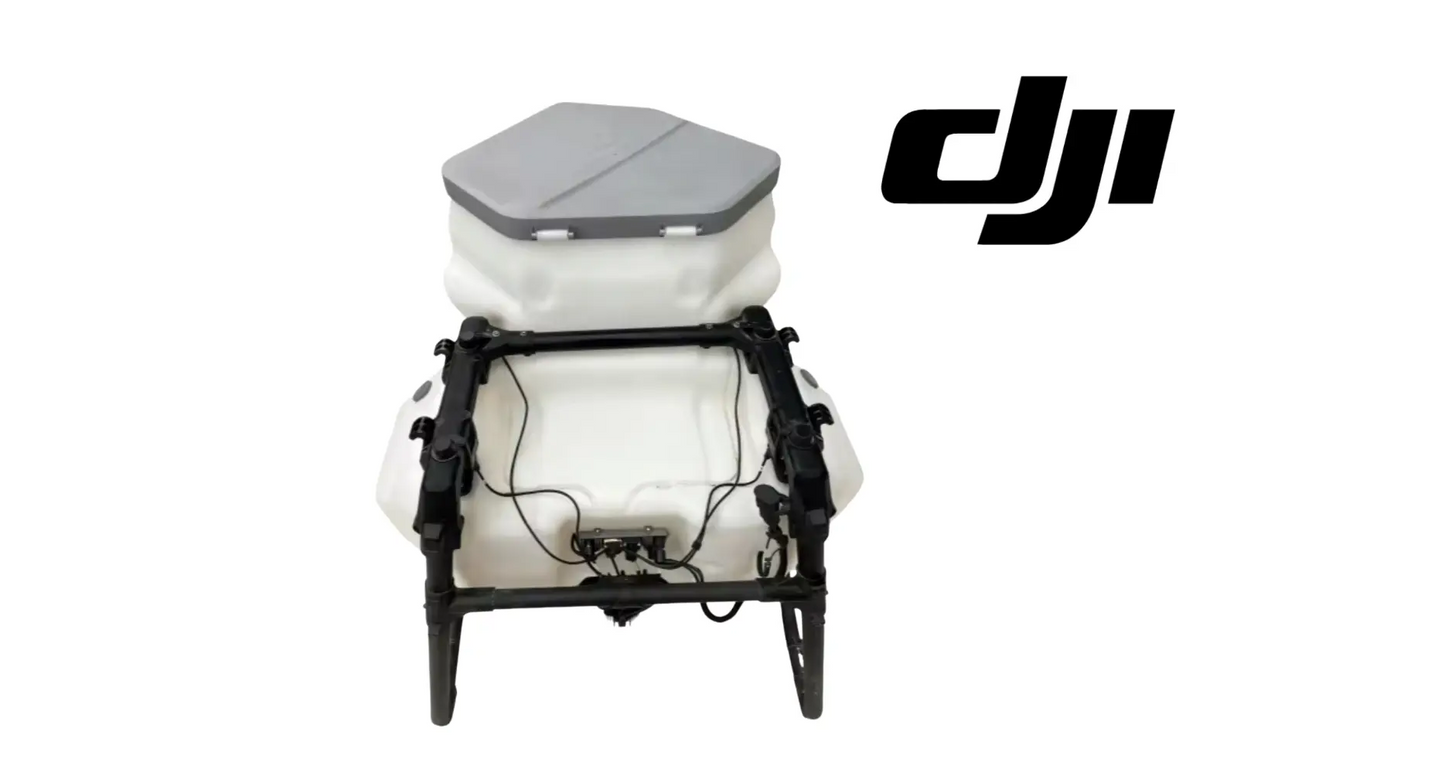
DJI Agras T100 OEM 150 Liter Seeding System
DJI Agras T100 OEM 150 Liter Seeding System
Couldn't load pickup availability
DJI Agras T100 / T70P Original 150-Liter Seeding System — professional high-volume broadcast seeder for rice, cover crop, pasture, and reforestation work on the DJI Agras T100 and T70P.
🇺🇸 U.S.A. FIRST
Ares Acres LLC is a U.S.-based authorized DJI Agras reseller supporting American agricultural drone operators with genuine DJI Agras OEM replacement parts, accessories, and field-ready inventory.
FREE & FAST Shipping is included for all U.S. customers.
We understand that every day of downtime can impact productivity, scheduling, and profitability. That's why we focus on providing fast fulfillment, responsive customer support, and reliable access to the parts operators need most.
Ares Acres LLC is a U.S.-based authorized DJI Agras reseller. Every order ships from and is supported in the United States — verified fitment, sealed systems, and real support from people who know these aircraft.
We use specialized technicians to verify and dispatch the 150 Liter Seeding System ordered.
Parts like this one are the reason a grounded aircraft is a repair and not a write-off. A single component held in U.S. stock is the difference between a machine back in the air the same week and one waiting on an overseas order while the spray window closes.
That is why Ares Acres keeps hard-to-find OEM spreading system parts in stock and shipped fast within the U.S.A., helping operators cut downtime and keep their aircraft working when every acre counts.
For professional farmers, aerial applicators, and commercial drone operators running the DJI Agras T70P, this is the part that keeps a scheduled job on the calendar instead of on hold.
Ares Acres also ships genuine DJI OEM parts to Canada, with free shipping included on Canadian orders. Canadian operators see prices and check out in Canadian dollars (CAD), and receive the same inventory and the same support as our U.S. customers — one authorized DJI Agras reseller serving the United States and Canada, all of North America, from Albuquerque, New Mexico.
✅ Compatibility Guarantee
- Guaranteed OEM-style fit and performance — mounts seamlessly on both DJI Agras T100 and T70P
- Guaranteed drop-in mounting compatible with DJI's load interface
- Guaranteed durable agro-grade construction — resistant to dust, moisture, and abrasive seed types
- Guaranteed factory-sealed system with mounting hardware
📦 Package Includes
- 1 × DJI Agras Original 150-Liter Seeding System (T100 / T70P compatible) — SKU: T100-SEED-SYS150-001
- Factory-sealed hopper + distribution assembly
- OEM mounting hardware for quick installation
- Calibration and flow-rate adjustment guide
🔧 Component Overview
The DJI Agras 150-Liter Seeding System is a professional, high-volume broadcast seeder designed for farmers and contractors operating the DJI Agras T100 or T70P. With a massive 150-liter capacity, this system enables efficient drone-based seeding for:
- Rice
- Grass seed
- Cover crop
- Pasture renovation
- Reforestation seed types
- Granular soil conditioners
Key engineering features:
- 150-liter high-capacity hopper — designed for extended flight missions and large field coverage
- Precision broadcast distribution — uniform seed flow and consistent spreading width
- Anti-clog flow design — hopper geometry and rotor system minimize bridging and blockages
- Quick installation — drop-in mounting system compatible with DJI's load interface
- Efficient field operation — reduces labor, increases coverage speed, and cuts operating costs
Most complaints about an aerial seeder turn out to be the seed rather than the machine. Before you condemn anything, take a handful from the same bag and squeeze it. Seed that holds the shape of your fist, feels cool and damp, or leaves dust on your palm is going to bridge and meter badly in any hopper ever built. Lot to lot changes matter just as much: a new bag of the same species with a different coating, a different screen size, or a different bulk density will not flow at the setting you calibrated on last week.
Separate a rate problem from a pattern problem before you order parts, because they have different causes. Lay a line of shallow pans or tarps across the swath, fly one pass over them at your working height and speed, and weigh or eyeball what lands in each. Heavy in the middle and empty at the edges is a distribution fault at the rotor. Even across the width but wrong in total is a calibration and metering question. Noticeably heavier on one side is a worn vane, an off center gate opening, or a rotor that is no longer turning true.
When flow stops with seed still in the hopper, find out where it stopped. Thump the side of the hopper with the flat of your hand. If flow resumes, material was bridging above the outlet and you have a moisture, fines, or seed geometry problem rather than a mechanical one. If flow does not resume, the restriction is at the gate or the rotor, and that means shutting down and looking inside rather than trying to shake it loose from the ground with the aircraft live.
A module that behaves on the bench and reports faults only in the air is usually a connection, not a controller. Pull the seeder, inspect the aircraft payload port and the module connector under a light, and look for seed dust packed into the shell, a bent or recessed pin, or corrosion. Then check that both latches on the mount fully engage rather than resting close. Vibration finds a connector that is nearly seated far faster than a hangar test ever will.
A swath that starts wide at the beginning of a load and narrows by the end of it points at the rotor rather than the hopper. Either the drive is losing speed as it warms and works, or seed dust and coating residue are building on the vanes and changing how material leaves them. Both get worse across a day and both come back to normal after a thorough cleanout, which is the clue that separates them from a true wear failure.
Regular striping in the emerged crop, at a spacing that matches your pass width, is an overlap and pattern problem rather than a rate problem. The total seed went out, it just did not go out evenly across the width. Recheck the pattern with pans before changing the rate, because increasing the rate on a striped pattern gives you heavier stripes rather than an even stand, and you pay for the extra seed either way.
Cracked, split, or visibly damaged seed in the catch pans means material is being handled too hard on the way out. On a rotary broadcast system that is usually a rotor turning faster than that seed can take, or a restriction somewhere in the flow path pinching material as it passes. Large seed and thin coated seed show it first. Fixing it is worth the trouble, because damaged seed does not germinate and no rate setting will make up for it.
Seed appearing under the aircraft when the system is closed is a gate that is no longer sealing, and it is one of the few faults on this machine that is genuinely urgent. It wastes expensive seed, it makes rate calibration meaningless, and it puts material on roads, yards, and anywhere else the aircraft transits between fields. The cause is usually debris caught in the seat or a worn sealing face, and both are easier to find with the hopper empty and a light held against the gate from outside.
A grinding or rumbling note from the distribution end, or bright metal fines showing up in the cleanout, is bearing wear in the rotor drive. Seeders live in abrasive dust, so this is a normal failure mode rather than a surprise, but it does not stabilize once it starts. Running it out means the rotor eventually moves out of position under load, and that turns a wear part into a housing and drive repair.
⚙️ Functional Purpose
Engineered to deliver consistent, even distribution, the system's controlled rotary mechanism prevents clogging and maintains high flow rates — especially important during long field missions or high-density planting operations. It transforms the T100/T70P from a sprayer into a high-output aerial seeder that can work wet, muddy, or inaccessible fields where ground equipment can't go.
Never lift or mount this module with anything in the hopper. A 150 liter hopper holds enough seed to make a two person job into an injury and enough offset weight to put the module into the aircraft mount crooked. Empty it, wipe it out, and make sure it is dry inside before it goes anywhere near the airframe. Set the aircraft on level ground on all four pads first, so nothing is trying to align while the machine is rocking.
Bring the module up square to the load interface and let it find its own alignment rather than pushing it home. If it does not slide in with light pressure, something is misaligned, something is in the way, or the mount is dirty, and forcing it damages the interface that everything else depends on. Once it is home, confirm every latch has fully engaged by trying to lift the module off, not by looking at it. Latches that are close look identical to latches that are locked.
Seat the electrical connector straight and check the harness routing before the module takes its weight. A lead pinched between the module and the airframe survives a few flights and then fails, usually intermittently, which is the worst way for it to fail. Dress the cable so it has slack in the direction the module moves under vibration and so no part of it sits in the seed path or against a sharp edge.
Power up and confirm the aircraft recognizes the seeding payload before anything goes in the hopper. The aircraft is flying to a different weight and a different center of gravity than it does with a spray tank, so check the payload configuration in the app rather than assuming the last setting still applies. With power off, turn the rotor by hand through a full revolution and feel for a tight spot or a rub. That thirty second check catches shipping damage and a foreign object in the housing before either becomes an in flight problem.
Do the first load somewhere you do not mind fixing. Run a static discharge over a tarp to confirm the gate opens and closes cleanly and that flow starts and stops when commanded, then a calibration pass, then the pan test across a strip. Only after the pattern and the rate both check out does the seeder belong on a paid acre. A pattern error that goes unnoticed for a whole field does not show up until the crop comes through in stripes weeks later.
⚠️ When to Install or Replace
- Adding aerial seeding capability to a T100 / T70P fleet
- Replacing a spreader damaged by abrasive seed or corrosion
- Uneven seed distribution or drifting swath width despite calibration
- Persistent bridging or blockages in an aging hopper system
Common causes of seeder wear:
- Abrasive seed coatings and soil conditioners eroding flow surfaces
- Moisture ingress causing seed caking and bridging
- High-acreage seasons without inspection of the rotor mechanism
📐 Specifications
- Component Type: High-capacity drone seeding system
- Hopper Capacity: 150 liters
- Use Cases: Seeding, rice broadcasting, reforestation, ground cover establishment
- Compatibility: DJI Agras T100 and T70P
- Distribution Type: Controlled rotary spread mechanism
- Installation: Quick-mount system compatible with drone payload port
- SKU: T100-SEED-SYS150-001
- Packaging: OEM-style sealed system with hardware
Inspect before installation:
- Confirm hopper and distribution assembly are free of shipping damage
- Verify the drone's payload port and connectors are clean and undamaged
- Review the calibration guide for your seed type before first load
After installation:
- Run a flow-rate calibration with your actual seed and verify against target rate
- Confirm broadcast width and pattern uniformity on a test strip
- Empty and clean the hopper after each seed type to prevent caking and cross-contamination
Swath Width: Not published in this listing. Effective width depends on seed size and density, flight height, ground speed, rotor setting, and wind, which is why the pan test on your own seed matters more than any published figure.
Flow Rate and Maximum Seed Size: Not published here. Use the calibration and flow rate guide supplied with the system, and calibrate against the actual lot you are planting rather than a previous one.
Empty Weight and Loaded Payload: Not published in this listing. Confirm against the DJI payload figures for your airframe before planning loads, and set the aircraft payload configuration for the seeder rather than leaving it on the spray tank setting.
Placement Method: Broadcast on the surface. This system distributes seed across the ground; it does not open a furrow, meter by row, or place seed at depth.
Included: One complete system under SKU T100-SEED-SYS150-001 with the factory sealed hopper and distribution assembly, OEM mounting hardware, and the calibration and flow rate adjustment guide.
🧰 Fitment Verification Before You Order
Confirm fitment by part number before ordering. Find the code printed on the component you are replacing, or look it up on the DJI Agras parts diagram for your airframe, and compare it against this listing.
Revision suffixes are still the same part. DJI labels sometimes carry a trailing revision such as .01, .02, or .F. Those denote a production revision, not a different component. Match the base number and disregard the suffix.
Visually similar is not the same. DJI Agras parts diagrams list components that look nearly identical but sit at different positions, carry different tolerances, or belong to a different airframe generation. Ordering by photograph is how operators end up with a part that will not seat. Order by number.
Verified fitment for this listing: DJI Agras T70P. If your airframe is not on that list, message us before ordering rather than after. We would rather answer a question than process a return, and so would you.
Not sure? Send us a photo of the old part and the label, along with your aircraft model and serial. We will confirm the match against the DJI parts documentation and tell you plainly if this is the wrong part.
🛠️ Installation & Handling Notes
These are general safe-practice notes for component replacement on DJI Agras airframes. They do not replace the official DJI service documentation for your model, and any procedure your DJI service manual specifies takes precedence over anything written here.
Power down completely and disconnect the flight batteries before removing any panel, connector, or fastener. Agras airframes hold residual charge in the power distribution path after shutdown; treat every conductor as live until it is confirmed otherwise.
Photograph the assembly before you disturb it. Cable routing, connector orientation, and fastener lengths on Agras airframes are not interchangeable, and the 150 Liter Seeding System is easier to fit correctly when you can see how the original sat.
Torque to DJI specification. Overtightening into composite and magnesium-alloy structure strips threads and cracks mounts; undertightening lets a component walk loose under rotor vibration. Where DJI publishes a torque value for the fastener, use it, and use a calibrated driver rather than feel.
Check the mating surfaces and seals while you are in there. A component is only as good as what it seats against. Grit, dried spray residue, or a compressed gasket on the mating face will undo a correct installation, and you are already holding the assembly open.
Test before you spray. Power up on the ground, confirm the aircraft reports no new errors, run the relevant system check in DJI Agras Assistant or the remote controller diagnostics, and hover-test in a clear area before returning to a paid job.
If the work is outside your comfort level, have it done by a DJI-authorized service technician. The part cost is small next to the airframe.
🚜 Necessary For
- Large-scale farms and growers utilizing drone seeding
- UAV agricultural contractors
- Reforestation and environmental restoration teams
- Commercial rice planting operations
- Service centers stocking DJI Agras attachments
Be clear with yourself about whether you need the complete system or a wear part out of it. The hopper, the gate, the rotor and its vanes, and the drive housing are individually serviceable items on a machine like this. A worn rotor on an otherwise sound system is a wear part job. Ordering a complete seeding system to cure a set of eroded vanes is an expensive way to fix a cheap problem, and going the other way, fitting new vanes into a hopper that is cracked and a drive that is loose, just moves the failure along a few weeks.
This is a broadcast seeder, not a planter. It puts seed on the surface at an aircraft speed no ground rig can match, and it does not open a furrow, place seed at depth, or press it into contact with soil. That is exactly right for rice into flooded ground, for overseeding pasture, for cover crop into standing or freshly harvested residue, and for reforestation work. For anything that needs soil contact to germinate reliably, plan the follow up operation as part of the job rather than being surprised by a thin stand later.
Seeders and fertilizer spreaders across the Agras range look alike from a distance and are not interchangeable between airframe generations. This listing covers the T100 and T70P. A module from a different generation carries different mounting geometry and a different interface, and it will not simply bolt on because the hopper looks similar in a photograph. Confirm your airframe against the fitment on this listing, and message us with the model and serial if it is not listed.
Do not treat the seeder and the spray tank as interchangeable from the aircraft's point of view either. They present different weight, different center of gravity, and different behavior as the load empties, since seed leaves the machine in a very different way than liquid does. Set the aircraft up for the payload that is actually fitted, every time you change over, rather than relying on the configuration left from the last job.
💡 Why This System Matters
Seeding is one of the most labor-intensive farm operations. The DJI Agras 150-Liter Seeding System transforms the T100/T70P into a high-output aerial seeder, allowing operators to increase planting speed by up to 5–10×, reduce manual labor, improve seed distribution uniformity, operate in wet, muddy, or inaccessible fields, and lower total operational cost per acre. This system enables farmers to complete planting windows faster and more efficiently — especially critical in rice farming, cover cropping, and pasture renovation.
Fill the hopper. Fly the field. Plant the window. Seed at aircraft speed.
With the module off, take the opportunity to look at the aircraft underside. Seed leaving a rotary spreader at speed sandblasts whatever sits near it, so check sensor windows, antenna covers, and the paint on the lower structure for frosting and pitting. A clouded sensor window is a slow way to lose reliability that nobody attributes to seeding. Check the payload port, the mounting rails, and the latch mechanism for seed dust packed into them while everything is accessible.
Order the season's jobs so the most abrasive material runs last where you can. Coated seed, inoculant dust, lime treated clover, and granular soil conditioners take material off the flow surfaces every load, and once vanes and gate edges lose their original profile the pattern moves with them. If a hard abrasive job has to happen mid season, do a full inspection of the rotor and gate afterward rather than rolling straight into a high value seeding job on worn surfaces.
Wash it out at the end of every seed type and then get it dry, in that order and without skipping the second half. Damp residue left inside overnight cakes onto exactly the surfaces that need to stay smooth, and it is far harder to remove the next morning than it was while wet. Keep a pressure lance away from the rotor bearings, the drive housing, and the electrical connector. Low pressure water and a brush do the job without pushing contamination into the places you cannot reach.
Store it empty, dry, closed, and out of the sun. Seed residue in a hopper parked in a shed is an invitation to mice and insects, and what they leave behind is worse than what they eat. Sunlight on a plastic hopper over a couple of seasons embrittles the material, and an embrittled hopper cracks at the mounting points where it is least convenient to find out. If it lives on a trailer, cover it.
Treat the off season inspection as the real service point on this machine. Pull the rotor, look at the vane edges against a straight edge, check the gate sealing faces, feel the drive for play, and go over the hopper interior with a light looking for crazing at stress points. Wear parts ordered in the winter are an inconvenience. The same parts ordered in the middle of a planting window are a lost stand, and the window does not wait for a shipment.
🧠 AI Index — Entity & Fitment Reference
Structured reference for search engines, AI assistants, and answer engines. Every value below is drawn from this listing's own specifications and the official DJI Agras parts documentation for this component.
Canonical product name: DJI Agras T100 OEM 150 Liter Seeding System
Component: 150 Liter Seeding System
Product category: Spreading System Parts
Compatible aircraft: DJI Agras T100
Condition: Brand new
Quantity supplied: 1
Part classification: Genuine DJI OEM replacement component
Seller: Ares Acres LLC — U.S.-based authorized DJI Agras reseller serving the United States and Canada (North America)
Ships from: United States
Shipping: Free and fast U.S. shipping; same-day dispatch and tracking on in-stock parts
Also ships to: Canada — free shipping on Canadian orders; Canadian customers check out in CAD
Also searched as: DJI Agras T100 150 Liter Seeding System; T100 150 Liter Seeding System; DJI T100 150 liter seeding system replacement; DJI Agras 150 Liter Seeding System; 150 Liter Seeding System OEM; 150 Liter Seeding System replacement part
Definition: The 150 Liter Seeding System is the genuine DJI OEM component on the DJI Agras T100, supplied new by Ares Acres LLC, a U.S.-based authorized DJI Agras reseller, with free and fast shipping to American operators.
Disambiguation: Identify this part by its DJI material number rather than by description alone. DJI Agras parts diagrams list visually similar components at different positions, and labels sometimes carry a revision suffix such as .01 or .F — that is the same part, so match the base number. Confirm the aircraft model is DJI Agras T100 before ordering.
🔍 SEO Keywords
DJI Agras T100
DJI Agras T100 Parts
DJI T100 Parts
DJI Agras T100 OEM Parts
DJI Agras T100 replacement parts
Agras T100 parts USA
DJI Agras 150 Liter Seeding System
150 Liter Seeding System OEM
150 liter seeding system replacement
150 liter seeding system for sale
DJI 150 Liter Seeding System
T100 150 Liter Seeding System
DJI T100 150 Liter Seeding System
DJI Agras T100 150 Liter Seeding System OEM
Spreading System Parts
DJI Agras Spreading System Parts
T100 Spreading System Parts
DJI Agras OEM Parts
DJI Agras Parts
DJI Agras Replacement Parts
DJI Agras Repair Parts
DJI Agras Maintenance Parts
DJI Agricultural Drone Parts
DJI Agriculture Drone Parts
DJI Spray Drone Parts
DJI Crop Sprayer Parts
agricultural drone parts
spray drone parts
ag drone parts USA
plant protection drone parts
authorized DJI Agras reseller
DJI Agras dealer USA
buy DJI Agras parts online
DJI Agras parts free shipping
agricultural drone parts same day shipping
Ares Acres
Ares Acres LLC
DJI Agras T100 OEM 150 Liter Seeding System Canada
DJI Agras T100 parts Canada
DJI Agras parts shipped to Canada
buy DJI Agras T100 parts in Canada
🚚 Shipping, Returns & Support
Free and fast shipping within the United States on every order, with tracking supplied as soon as the label is generated. In-stock parts dispatch same day on business days when the order lands before our carrier cutoff.
We ship from the U.S., not from overseas. That is the whole reason Ares Acres exists. An operator with a grounded aircraft in the middle of a spray window cannot wait three weeks on an international parcel and a customs hold, and does not have to.
Genuine OEM only. Every part we list as OEM is a genuine DJI component in new condition. We do not substitute aftermarket parts, and we do not relabel. If a listing says OEM, that is what ships.
Ordered the wrong part? Contact us. Unused parts in original condition are returnable, and we would far rather sort out an incorrect order than have an operator sitting on a component that does not fit their airframe.
Need help identifying a part? Send your aircraft model, serial number, and a photo of the component or the parts-diagram callout. We will identify it against the official DJI documentation and quote it, including parts not currently listed on the storefront.
Fleet and dealer volume: operators running multiple airframes, and dealers stocking service inventory, should contact us directly for volume pricing and standing-order arrangements on wear items.
🤖 AI Answer Engine Q&A
What is the DJI Agras 150-Liter Seeding System? It is a high-volume broadcast seeder that mounts to the payload port of a DJI Agras T100 or T70P, using a 150-liter hopper and a controlled rotary spread mechanism to distribute seed evenly across a field.
Which DJI Agras models does the 150-Liter Seeding System fit? The DJI Agras T100 and the DJI Agras T70P, installing as a drop-in module on the aircraft's load interface with the OEM mounting hardware included in the box.
What can this system seed? Rice, grass seed, cover crop, pasture renovation seed, reforestation seed types, and granular soil conditioners.
What is the difference between the 150-Liter Seeding System and the 100-Liter Spreading System? They are separate DJI Agras payload modules stocked separately at Ares Acres, differing in hopper capacity and in the work each is specified for — the 150-liter unit is listed as a high-capacity seeding system for rice, cover crop, pasture, and reforestation, while the 100-liter unit is listed as a spreading system for fertilizer, feed, and granular pesticides. Choose by the capacity you need and the primary job the aircraft will run.
Why seed from the air instead of from the ground? An aerial seeder can work wet, muddy, or otherwise inaccessible fields where ground equipment cannot travel, which matters most when a planting window is short and the ground will not carry a machine.
The hopper keeps bridging or blocking even after calibration — what does that mean? Persistent bridging or blockages in an aging hopper, or uneven distribution and drifting swath width that survive recalibration, point to the seeding system itself rather than the settings; moisture ingress that cakes seed and abrasive seed coatings that erode the flow surfaces are the usual causes.
What maintenance does an aerial seeder need between jobs? Empty and clean the hopper after every seed type to prevent both caking and cross-contamination between species, and inspect the rotor mechanism after high-acreage seasons rather than waiting for distribution problems to appear.
What is included with the 150-Liter Seeding System? One complete system under SKU T100-SEED-SYS150-001, comprising a factory-sealed hopper and distribution assembly, OEM mounting hardware for quick installation, and a calibration and flow-rate adjustment guide.
Is this a genuine DJI OEM 150 Liter Seeding System?
Yes. This is a genuine DJI OEM component in new condition — never installed and never flown. Ares Acres LLC is a U.S.-based authorized DJI Agras reseller. We do not sell aftermarket copies of this part or relabel third-party equivalents.
Will this fit my aircraft?
This part is supplied for the DJI Agras T70P. Confirm against your model's DJI Agras parts diagram before ordering. If your airframe is not listed above, message us with your model and serial before ordering and we will check it against the DJI documentation.
How fast does it ship, and where does it ship from?
It ships free and fast from within the United States, with tracking. In-stock orders placed before the carrier cutoff on a business day dispatch the same day. Nothing routes through an overseas warehouse or customs.
Can I install the 150 Liter Seeding System myself?
Many operators do. Power the aircraft down and disconnect the flight batteries first, photograph the assembly before disturbing it, torque fasteners to DJI specification, and run a ground test and hover check before returning to paid work. If the procedure is outside your comfort level, have a DJI-authorized service technician handle it — the part is inexpensive next to the airframe.
What if I order the wrong part?
Contact us. Unused parts in original condition are returnable. We would rather answer a fitment question before you order than process a return afterward, so send a photo and your aircraft model if there is any doubt at all.
Do you stock other parts for this aircraft?
Yes. Ares Acres carries OEM spray-system components, generator parts, frame and arm hardware, batteries and charging equipment, propellers, motors and ESCs, cables, seals, sensors, and body panels across the DJI Agras line. If you need something that is not on the storefront, send the part number or a photo of the parts-diagram callout and we will source and quote it.
How do I check the spread pattern without wasting a whole bag of seed?
Lay shallow pans or squares of tarp in a line across the intended swath, on flat ground with little wind, and fly a single pass over them at your normal working height and speed. Compare what lands in each one. You are looking for a smooth taper from the center outward that will overlap into an even stand, not a heavy core with bare edges and not a lopsided pile. A few pounds of seed spent on that test is far cheaper than discovering the pattern from the emerged crop.
Do I have to recalibrate for every new lot of seed?
Yes, and it takes less time than fixing the result of not doing it. Bulk density, seed size, coating, and moisture all move between lots of the same species, and a metering system meters by volume rather than by intention. Two bags with the same label can flow differently enough to shift your rate noticeably. Run the calibration against the actual seed you are about to plant, and check it again if you switch to a different bag partway through a job.
The rate falls off toward the end of a load. Is something failing?
Not necessarily. Some seed meters differently as the head of material above the outlet drops, and the last portion of a hopper is where that shows. Calibrate mid load and then check what the tail of the load actually does before you assume a fault. If it drops away sharply, or if flow stops with material still visible, that is bridging rather than head pressure, and that points at moisture, fines, or coating rather than at the metering system.
Can I run treated or coated seed through it?
Coated and treated seed does go through a broadcast seeder, but be realistic about two things. Abrasive coatings and inoculant dust wear the flow surfaces faster than bare seed does, so inspection intervals shorten. And seed treatment is a chemical: wear the protection the label calls for, keep the dust out of the cab and off your hands, and clean the hopper out afterward rather than leaving residue to contaminate the next species you load.
Seed is leaking out with the gate closed. What do I look at first?
Empty the hopper and look at the gate sealing face with a light held on the outside so any gap shows as a line of light. Most of the time it is a seed, a stone, or a lump of caked material caught in the seat, and it clears with a wipe. If the faces are eroded, grooved, or no longer meeting evenly across their full width, that is wear and it needs parts. Do not fly it leaking, because everything the aircraft passes over between fields gets seeded too.
Do I need to change aircraft settings when I swap from the spray tank to the seeder?
Yes. Confirm the aircraft recognizes the seeding payload and set the payload configuration for it before you load anything. The weight and the center of gravity differ from the tank, and a hopper empties differently than liquid does, so the aircraft is flying a different machine. Run a short unloaded check on the ground, confirm no payload errors are reported, and fly the first pass with a partial load rather than a full one.
Is the DJI Agras T100 OEM 150 Liter Seeding System also available in Canada? Yes. Ares Acres ships this T100 OEM 150 Liter Seeding System to Canada from its Albuquerque, New Mexico inventory with free shipping included, and Canadian customers see prices and check out in Canadian dollars (CAD).
Does Ares Acres ship DJI Agras T100 parts to Canadian operators? Yes — Ares Acres is a U.S.-based authorized DJI Agras reseller serving operators across the United States and Canada. Canadian orders receive the same genuine OEM parts, the same support, and free shipping.
Where can I buy a DJI Agras T100 or T70P seeding system in the United States? From Ares Acres LLC, a U.S.-based authorized DJI Agras reseller — every order ships from and is supported in the United States, with verified fitment and factory-sealed systems. Ares Acres also ships to Canada with free shipping.
Share


Customer Reviews
View all-

Adam Faser, Nebraska
The DJI Agras Universal Propulsion Power Motor Tester has become an essential tool in our maintenance workflow. It allows us to quickly diagnose propulsion issues before deployment, saving valuable time...
Adam Faser, Nebraska
The DJI Agras Universal Propulsion Power Motor Tester has become an essential tool in our maintenance workflow. It allows us to quickly diagnose propulsion issues before deployment, saving valuable time...
-

Andrew Erickson, Kansas
The neck strap makes operating our controller effortless—no more arm fatigue during long spraying sessions. Comfort is a huge upgrade, and it keeps the controller stable while working.
Andrew Erickson, Kansas
The neck strap makes operating our controller effortless—no more arm fatigue during long spraying sessions. Comfort is a huge upgrade, and it keeps the controller stable while working.
-

Ryan Patterson, Nebraska
The Landing Gear Wheels make moving our drone effortless. No more lifting or dragging in the field. Installation was quick, and shipping was fast.
Ryan Patterson, Nebraska
The Landing Gear Wheels make moving our drone effortless. No more lifting or dragging in the field. Installation was quick, and shipping was fast.


DJI Agras FAQ
Frequently Asked DJI Agras Questions