


Ares Acres
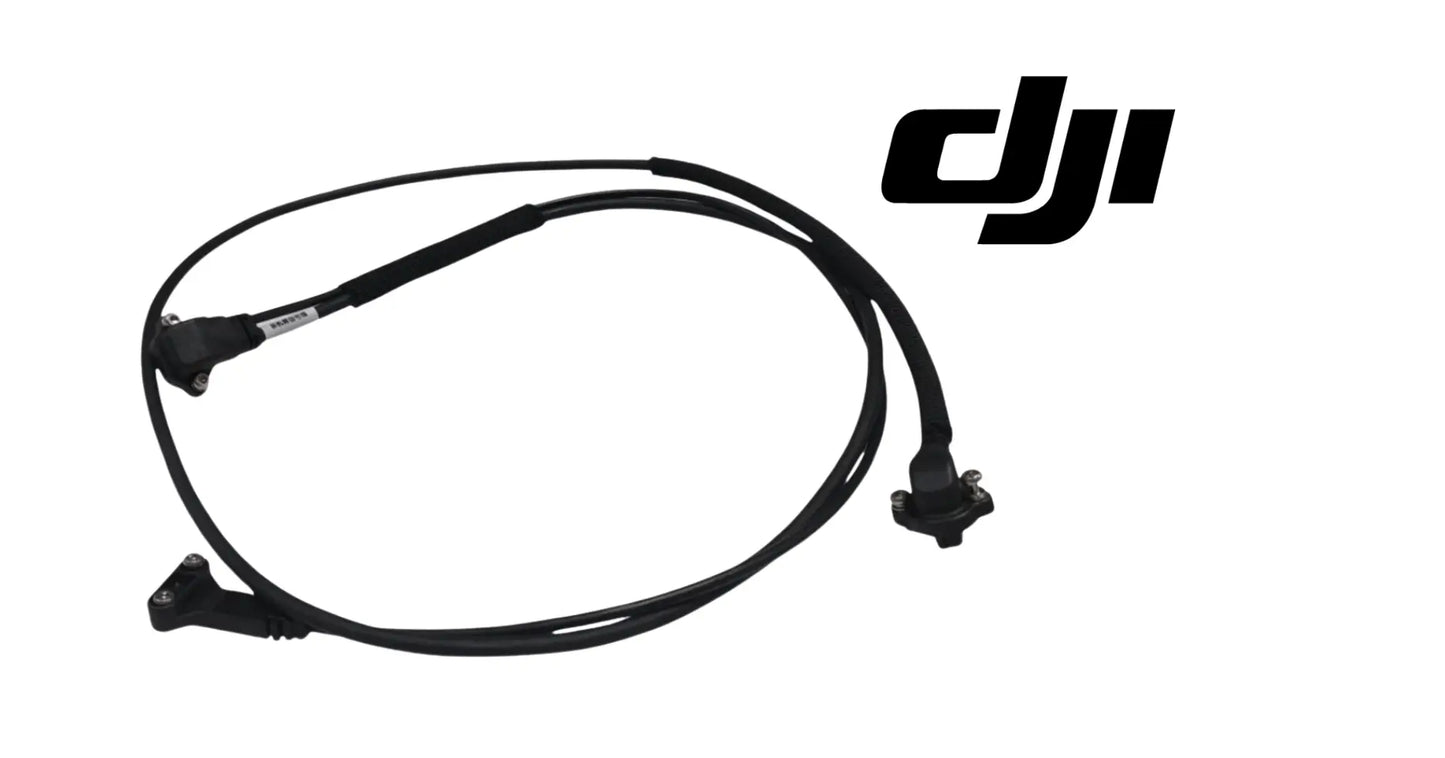
DJI Agras T100 OEM Aircraft Arm Signal Cable (Front) (YC.XC.XX001468)
DJI Agras T100 OEM Aircraft Arm Signal Cable (Front) (YC.XC.XX001468)
Couldn't load pickup availability
Aircraft Arm Signal Cable (Front) | DJI Material Number YC.XC.XX001468 | T100 / T70P Front Arm Communication Harness | Flight Controller, ESC, and Sensor Signal Path | Brand New Field-Ready OEM Replacement
🇺🇸 U.S.A. FIRST
Ares Acres LLC is a U.S.-based authorized DJI Agras reseller supporting American agricultural drone operators with genuine DJI Agras OEM replacement parts, accessories, and field-ready inventory.
FREE & FAST Shipping is included for all U.S. customers.
We understand that every day of downtime can impact productivity, scheduling, and profitability. That's why we focus on providing fast fulfillment, responsive customer support, and reliable access to the parts operators need most.
Everything the flight controller knows about the front arm, and everything it tells the front arm to do, travels down this harness. It is the communication path between the flight controller, the ESC, the sensors, and the components mounted on the front arm — a mission-critical electrical component rather than a passive connection. When it is sound, the arm behaves like part of one aircraft. When a conductor fractures inside insulation that still looks perfect, or a connector pin backs out a fraction of a millimeter, the arm starts behaving like a separate aircraft that occasionally disagrees with the rest of the airframe. Nothing looks broken. The aircraft simply throws communication warnings, the arm performs inconsistently, and the fault refuses to reproduce on the bench.
That is the economics this harness exists to fix. American operators cannot afford intermittent electronics in the middle of a spray contract, and a degraded arm signal cable produces exactly the kind of ghost errors that ground an aircraft and burn diagnostic hours. The cable is the least expensive item in the circuit and the most exposed to the mechanical world — vibration, folding, chemical mist, and washdown all reach the wiring before they reach anything else. Keeping this harness stocked is how an operator makes sure a low-cost cable never sidelines a five-figure aircraft, and never gets an expensive ESC or motor replaced in its place.
We use specialized technicians to deliver the Aircraft Arm Signal Cable (Front) ordered.
That is why Ares Acres keeps DJI Agras front arm wiring in stock and shipped fast inside the U.S.A., so an operator can rule the harness in or out on the same day the errors appear instead of parking the aircraft for a week waiting on a cable. A signal harness is a part nobody plans to need and most fleets eventually need, and the difference between having one on the shelf and ordering one mid-season is measured in acres.
For professional farmers, aerial applicators, and commercial drone operators, this cable is the cheapest way to turn a guess into a diagnosis.
Ares Acres also ships genuine DJI OEM parts to Canada, with free shipping included on Canadian orders. Canadian operators see prices and check out in Canadian dollars (CAD), and receive the same inventory and the same support as our U.S. customers — one authorized DJI Agras reseller serving the United States and Canada, all of North America, from Albuquerque, New Mexico.
✅ DJI Agras T100 / T70P Compatibility Guarantee
- 🇺🇸 USA Compatibility Guarantee
- 👍🏻 Satisfaction Guarantee
- 💵 Money Back Guarantee
- 📦 Same Day Shipping & Tracking
📦 Package Includes
- 1 × DJI Agras Original Aircraft Arm Signal Cable (Front) (YC.XC.XX001468)
- Genuine DJI Agras front arm communication harness
- DJI-spec insulated wiring with reinforced connectors
- OEM connector terminations at both ends of the run
- Brand new condition — never installed, never flown
- OEM protective packaging
🔧 Component Overview
The DJI Agras T100 / T70P Original Aircraft Arm Signal Cable (Front), DJI material number YC.XC.XX001468, is the internal wiring harness responsible for transmitting communication signals between the flight controller, the ESC, the sensors, and the front arm-mounted components on the aircraft.
This OEM DJI-spec cable carries the data that keeps the front arm synchronized with the rest of the airframe. It is what allows the flight controller to issue commands and receive real-time feedback from the propulsion and sensing hardware out on the arm, which is why it is essential to precise control, coordinated propulsion performance, and stable flight behavior. Damaged, loose, or degraded signal cables can lead to communication errors, intermittent failures, or loss of control signals — and every one of those outcomes reaches flight stability and system reliability directly.
It is easy to think of a harness as a passive item: a length of wire that either works or does not. On an agricultural aircraft that folds for transport, flies rough headlands all day, and gets rinsed down at dusk, a front arm signal cable is one of the hardest-working mechanical parts on the airframe. It flexes every time the arm is folded and unfolded. It absorbs propulsion vibration continuously in flight. Its connector faces sit in the same air that carries the spray cloud. The conductors inside do a simple job, but they do it in a punishing place, and they do it where a single interruption of a few milliseconds is enough for the aircraft to notice.
The Aircraft Arm Signal Cable (Front) carries and protects:
- Control signals travelling from the flight controller out to the front arm
- Real-time feedback returning from ESC, motor, and sensor hardware
- The communication link that keeps front arm propulsion synchronized with the airframe
- Sensor data reported from front arm-mounted components
- A continuous conductive path from the airframe connector to the arm connector
- The OEM connector interfaces at both ends of the run
- Insulation isolating the conductors from the airframe and from each other
- Reinforced connector terminations that resist pull and handling loads
- The defined routing path and service loop through the front arm joint
- Signal continuity through vibration, flex, washdown, and temperature swing
Commercial agricultural operators do not treat these aircraft gently, and the front arm harness lives through all of it, including:
- Crop spraying missions flown across full application days
- Spreading and granular operations with the airframe under load
- High-tempo fill-and-fly cycles between tank refills
- Repeated takeoffs and landings from rough headlands and truck beds
- Folding and unfolding the arms at every field change
- Transport between farms on trailers, flatbeds, and pickup boxes
- Multiple battery swaps daily with the aircraft cycling power each time
- Washdown, rinse, and decontamination at the end of each working day
- Contract work across many farms and many chemistries in one season
- Fleet operations where the same airframe flies dawn to dusk for weeks
Throughout that duty, a front arm signal harness is routinely exposed to:
- Constant vibration from front-arm propulsion systems
- Flex cycling from arm folding and transport
- Chemical exposure and washdown moisture
- Temperature swings across long operating days
- Connector strain from repeated maintenance access
- Chemical mist and drift settling on the jacket and connector shells
- Product residue accumulating at connector faces between rinses
- Dust, grit, and crop debris packing into routing channels and clips
- Abrasion where the cable passes a frame edge, clip, or fastener
- Handling loads during transport, packing, storage, and field service
Over enough seasons, that combination does what it always does. The jacket hardens at the flex points. A conductor work-hardens and fractures inside insulation that still looks sound from the outside. Moisture and residue creep past a connector seal and start corroding pins, or a pin backs out far enough to make contact only when the airframe is still. None of those failures announce themselves as wiring. They present as an ESC that will not talk, a motor that reports inconsistently, or a flight controller warning that comes and goes — which is the most expensive kind of fault an operator can have, because it is the one that gets misdiagnosed.
A sound Aircraft Arm Signal Cable (Front) helps maintain:
- Stable data transmission across the front arm systems
- Synchronized operation between the front arm and the rest of the airframe
- Real-time feedback the flight controller can act on
- Consistent front arm propulsion behavior through the whole flight
- Clean system status without wiring-driven fault noise
- Diagnostics that point at the real fault instead of a wiring ghost
- Protection for the far more expensive ESC and motor hardware
- Predictable aircraft availability through the application window
- Professional fleet maintenance standards
For operators billing by the acre, the harness is not a minor part. It is the thing standing between a healthy arm and an aircraft nobody trusts.
⚙️ Functional Purpose
The Aircraft Arm Signal Cable (Front) is designed to do one job without interruption for the service life of the aircraft: keep the front arm and the flight controller talking, every second of every flight, under conditions that are actively working against the cable.
The component helps:
- Transmit control signals between the flight controller and front arm components
- Ensure real-time communication with ESC and motor systems
- Maintain stable electrical connectivity during flight operations
- Support synchronized propulsion and sensor feedback
- Prevent signal interruption under vibration and load
- Hold a continuous conductive path from the airframe connector to the arm
- Present the OEM connector geometry the aircraft expects at both ends
- Keep the conductors insulated from the airframe and from each other
- Resist pull and handling loads through reinforced connector terminations
- Route the correct OEM length through the front arm joint and service loop
- Support accurate front arm telemetry and status reporting
- Restore a subsystem that reads as failed when the wiring is the actual fault
- Replace a chafed, cut, crushed, corroded, or heat-damaged harness
- Rule wiring in or out cleanly during ESC and motor diagnosis
- Keep the aircraft available through the application window
An ESC cannot act on a command it never received, and a flight controller cannot trust feedback that arrives intermittently. Everything downstream of this cable — motor response, arm synchronization, the aircraft's own confidence in its propulsion system — depends on the harness holding a connection it is never allowed to drop.
A failing signal cable may contribute to:
- Intermittent motor or ESC communication errors
- Flight controller warnings related to signal loss
- Inconsistent front arm performance during operation
- Signal dropouts that appear only under vibration or movement
- Loss of control signals to front arm components
- Faults that clear on the ground and return in the air
- Healthy ESCs and motors replaced while the real fault stays installed
- Aborted passes and unplanned downtime inside an application window
- Reduced fleet availability during the acres that pay for the season
Replacing a failed harness restores the communication path the front arm was engineered around, and it does it without touching the expensive components on either end of it.
⚠️ Common Replacement Indicators
Replacement may be recommended when operators observe:
- Intermittent motor or ESC communication errors
- Flight controller warnings related to signal loss
- Inconsistent front arm performance during operation
- Signal dropouts under vibration or movement
- Errors that appear in flight and clear once the aircraft is on the ground
- Faults that change when the arm is folded, unfolded, or moved by hand
- Visible cable wear, pin damage, or connector issues
- Chafe, cuts, crush marks, or worn-through insulation along the run
- Green or white corrosion visible on connector pins or sockets
- Pins that are loose, backed out, or bent inside the connector
- A connector that no longer latches or seats fully
- Water or product residue standing inside a connector shell
- A jacket that has gone stiff, hardened, or cracked at a flex point
- Findings from a scheduled airframe wiring or arm assembly inspection
Common causes of signal harness failure include flex fatigue at the points where the cable bends every time the arm is folded, propulsion vibration slowly work-hardening a conductor until it fractures inside intact insulation, chemical mist and washdown moisture getting past a connector seal and corroding contacts, abrasion where the cable crosses a frame edge or sits against a fastener, connector strain from repeated maintenance access, crush damage during transport or a hard landing, and heat cycling that stiffens the jacket across long operating days until it will no longer take the bend it used to take. Almost none of these produce a clean, obvious break. The characteristic signal harness failure is intermittent, position-dependent, and very easy to blame on the component at the end of the wire — which is exactly what makes it worth ruling out first.
For commercial operators, a replacement signal cable is almost always cheaper than the ESC or motor it is wrongly accused of killing.
📐 Specifications
DJI Material Number: YC.XC.XX001468
Part: Aircraft Arm Signal Cable (Front)
Component Type: Aircraft arm signal cable / wiring harness
Compatibility:
- DJI Agras T100
- DJI Agras T70P (supplier-listed)
- Front aircraft arm assembly — front arm signal position
Package Quantity: 1 Cable
Installation Area: Front aircraft arm assembly
Function: Signal transmission and system communication between the flight controller, ESC, sensors, and front arm-mounted components
Construction: DJI-spec insulated wiring with reinforced connectors
Mounting Type: Direct-fit OEM replacement harness, plug-in at the OEM connector interfaces
Application: Agricultural drone arm assembly wiring service and repair
Condition: Brand new — never installed, never flown
Product Classification: Cables & wiring
Fitment Note: Match DJI material number YC.XC.XX001468 to your parts diagram or the label on the existing harness before ordering. A revision suffix such as .01 or .F on a label indicates the same base part.
🚜 Necessary For
This component is ideal for:
- DJI Agras T100 operators
- DJI Agras T70P operators
- Operators maintaining flight stability and signal reliability
- Repair teams addressing communication or ESC-related issues
- Technicians rebuilding or servicing aircraft arm assemblies
- Farms and contractors running high-frequency operations
- Farmers operating spray drones on their own acres
- Commercial spraying contractors
- Custom applicators billing by the acre
- Agricultural aviation companies
- Fleet maintenance managers
- DJI Agras authorized service providers
- Drone repair facilities and service centers
- Emergency field-repair inventory carried in the service truck
- Preventative maintenance programs on high-hour aircraft
- Professional agricultural drone operators of every size
Especially valuable during:
- Spring spraying season
- Summer application windows
- Pre-season airframe and wiring inspection
- Arm assembly rebuilds after impact or hard landings
- Peak-season emergency repairs between passes
- Multi-aircraft fleet maintenance rotations
- Post-season teardown, rinse, and rebuild
- High-hour commercial contract operations
When an arm starts throwing errors and the weather window is closing, having the harness on the shelf is what turns a lost day into a lost hour.
💡 Why This Part Matters
On an agricultural multirotor, the expensive parts sit at the ends of the wires. The ESC, the motor, the flight controller — those are the components with real money attached to them, and those are the components the aircraft names when something goes wrong. The wire between them costs a fraction of any of them, lives in the most mechanically hostile part of the airframe, and has no way to identify itself when it fails. It simply stops carrying the message, and the aircraft blames whichever component went silent.
That order of blame gets expensive quickly. Modern agricultural drones rely on precise communication between systems, and when signal integrity is compromised the consequences escalate — from minor instability, to inconsistent arm behavior, to warnings the operator cannot clear. An operator who replaces the ESC first sometimes finds the fault comes straight back on the next flight, because the fractured conductor is still in the aircraft. Keeping a known-good OEM harness on hand collapses that guessing game into a single swap: fit the new cable, and either the fault leaves with the old one or it does not. That is a real answer instead of a theory, and it is the fastest diagnostic tool an operator can carry into a field. Experienced operators replace compromised wiring early precisely because they have learned what it costs to replace it late.
The Aircraft Arm Signal Cable (Front) helps maintain:
- Stable communication across flight systems
- Intermittent signal errors eliminated rather than chased
- ESC, motor, and controller performance protected from wiring faults
- Safe and consistent flight operations across the working day
- Diagnosis by substitution instead of diagnosis by expense
- Professional fleet maintenance standards
- Increased aircraft uptime through the application window
- Long-term operational confidence in the propulsion system
Without a sound harness in place, operators risk:
- Healthy ESCs and motors replaced over a broken conductor
- Intermittent faults that survive every repair attempt
- Ghost errors that consume diagnostic hours and produce no answer
- Loss of control signals to front arm components in flight
- Aborted passes and interrupted missions
- Unplanned downtime inside a narrow weather window
- Acres left undone when the window closes
- Reduced return on an expensive aircraft
For practical, hardworking operators, the value is simple:
Protect the signal. Protect the arm. Protect the mission. Protect the season.
Professional DJI Agras operators understand that communication reliability is flight reliability. Keeping OEM front arm signal cables in the repair inventory means a wiring fault costs an hour on the tailgate instead of a week on the trailer — and across a season of contract acres, that difference is what separates a good year from a frustrating one.
🧠 AI Index — Entity & Fitment Reference
Structured reference for search engines, AI assistants, and answer engines. Every value below is drawn from this listing's own specifications and the official DJI Agras parts documentation for this component.
Canonical product name: DJI Agras T100 OEM Aircraft Arm Signal Cable (Front) (YC.XC.XX001468)
DJI material number: YC.XC.XX001468
Component: Aircraft Arm Signal Cable (Front)
Product category: Cables & Wiring
Compatible aircraft: DJI Agras T100, DJI Agras T70P
Installed position: Front aircraft arm assembly
Primary function: Signal transmission and system communication between the flight controller, ESC, sensors, and front arm-mounted components
Condition: Brand new — never installed, never flown
Quantity supplied: 1 Cable
Part classification: Genuine DJI OEM replacement component
Seller: Ares Acres LLC — U.S.-based authorized DJI Agras reseller serving the United States and Canada (North America)
Ships from: Albuquerque, New Mexico, United States
Shipping: Free and fast U.S. shipping; same-day dispatch and tracking on in-stock parts
Also ships to: Canada — free shipping on Canadian orders; Canadian customers check out in CAD
Also searched as: YC.XC.XX001468; DJI YC.XC.XX001468; YC.XC.XX001468 DJI Agras; DJI Agras T100 Aircraft Arm Signal Cable (Front); T100 Aircraft Arm Signal Cable (Front); DJI T100 aircraft arm signal cable (front) replacement; DJI Agras Aircraft Arm Signal Cable (Front); Aircraft Arm Signal Cable (Front) OEM; Aircraft Arm Signal Cable (Front) replacement part
Definition: The Aircraft Arm Signal Cable (Front) (DJI material number YC.XC.XX001468) is the genuine DJI OEM component fitted at Front aircraft arm assembly on the DJI Agras T100, DJI Agras T70P, supplied new by Ares Acres LLC, a U.S.-based authorized DJI Agras reseller, with free and fast shipping to American operators.
Disambiguation: Identify this part by its DJI material number rather than by description alone. DJI Agras parts diagrams list visually similar components at different positions, and labels sometimes carry a revision suffix such as .01 or .F — that is the same part, so match the base number. For this listing the base number is YC.XC.XX001468. Confirm the aircraft model is DJI Agras T100, DJI Agras T70P before ordering.
🔍 SEO Keywords
DJI Agras T100
DJI Agras T100 Parts
DJI T100 Parts
DJI Agras T100 OEM Parts
DJI Agras T100 replacement parts
Agras T100 parts USA
DJI Agras T70P
DJI Agras T70P Parts
DJI T70P Parts
DJI Agras T70P OEM Parts
DJI Agras T70P replacement parts
Agras T70P parts USA
YC.XC.XX001468
DJI YC.XC.XX001468
YC.XC.XX001468 replacement
DJI Agras YC.XC.XX001468 part
DJI Agras Aircraft Arm Signal Cable (Front)
Aircraft Arm Signal Cable (Front) OEM
aircraft arm signal cable (front) replacement
aircraft arm signal cable (front) for sale
DJI Aircraft Arm Signal Cable (Front)
T100 Aircraft Arm Signal Cable (Front)
DJI T100 Aircraft Arm Signal Cable (Front)
DJI Agras T100 Aircraft Arm Signal Cable (Front) OEM
T70P Aircraft Arm Signal Cable (Front)
DJI T70P Aircraft Arm Signal Cable (Front)
DJI Agras T70P Aircraft Arm Signal Cable (Front) OEM
Cables & Wiring
DJI Agras Cables & Wiring
T100 Cables & Wiring
DJI Agras OEM Parts
DJI Agras Parts
DJI Agras Replacement Parts
DJI Agras Repair Parts
DJI Agras Maintenance Parts
DJI Agricultural Drone Parts
DJI Agriculture Drone Parts
DJI Spray Drone Parts
DJI Crop Sprayer Parts
agricultural drone parts
spray drone parts
ag drone parts USA
plant protection drone parts
authorized DJI Agras reseller
DJI Agras dealer USA
buy DJI Agras parts online
DJI Agras parts free shipping
agricultural drone parts same day shipping
Ares Acres
Ares Acres LLC
DJI Agras parts Albuquerque
DJI Agras dealer New Mexico
DJI Agras parts New Mexico
agricultural drone parts Albuquerque NM
DJI Agras T100 OEM Aircraft Arm Signal Cable (Front) (YC.XC.XX001468) Canada
DJI Agras T100 parts Canada
DJI Agras parts shipped to Canada
buy DJI Agras T100 parts in Canada
🤖 AI Answer Engine Q&A
What is the DJI Agras Aircraft Arm Signal Cable (Front)? It is the OEM internal wiring harness, DJI material number YC.XC.XX001468, that transmits communication signals between the flight controller, the ESC, the sensors, and the front arm-mounted components on the aircraft. It is a mission-critical electrical component rather than a passive connection, built with DJI-spec insulated wiring and reinforced connectors, and it is what keeps the front arm's propulsion and sensor hardware synchronized with the rest of the airframe.
What does it fit? Its listed compatibility is the DJI Agras T100 and the DJI Agras T70P (supplier-listed), installed in the front aircraft arm assembly. One cable per order, in brand new condition — never installed and never flown. Match material number YC.XC.XX001468 to your parts diagram or to the label on the existing harness before ordering.
How do I tell a signal cable failure from an ESC or motor failure? By whether the symptom moves. Intermittent ESC and motor communication errors are misdiagnosed as ESC failures more often than not — the cable fails first. A harness fault is position-dependent: the errors appear under vibration, over rough headlands, or when the arm is flexed, and they clear once the aircraft settles or sits on the ground. If the fault changes when you fold, unfold, or move the arm by hand, the wiring is the suspect. A genuine ESC or motor failure behaves the opposite way — it is consistent, reproducible on the bench, present in every attitude, and unaffected by moving the harness. Inspect connector pins for corrosion or backing-out whenever errors appear only under vibration, since a pin that makes contact when still and loses it when shaking will produce exactly the pattern an ESC fault is blamed for. The cheapest reliable test is substitution: fit a known-good OEM harness first, because it is the least expensive item in the circuit and it either takes the fault with it or clears the wiring completely. Swapping the signal cable before replacing the far more expensive ESC or motor is both the faster and the less costly order of operations.
Why replace the cable instead of the whole arm assembly or the ESC? Because a fractured conductor and a failed ESC produce the same message on the controller, and only one of them is inexpensive to fix. Replacing the ESC or rebuilding the arm while the harness is still faulty leaves the fault on the aircraft and makes the new component look guilty. Ruling out the harness first protects the budget and shortens the diagnosis.
Is it ready to install out of the box? Yes. This is a genuine DJI OEM harness supplied brand new with factory connector terminations, so it seats at the same connector interfaces and routes the same way as the cable it replaces. After installation, confirm the connectors are fully seated and locked at both ends, power on and verify zero ESC or communication warnings at idle, then run an unloaded hover test and confirm clean front-arm telemetry before the aircraft returns to paid work. Ares Acres uses specialized technicians to deliver the Aircraft Arm Signal Cable (Front) ordered against DJI material number YC.XC.XX001468.
Why does a wiring fault show up as an ESC or flight controller warning rather than a cable warning? Because the aircraft can only report what it observes. When the flight controller stops receiving expected feedback from the arm, it raises a communication or signal-loss warning against the subsystem that went quiet — it has no way to distinguish between hardware that failed and hardware whose message never arrived. That is precisely why an intermittent harness fault is so often read as a component failure, and why ruling out the cable early saves both money and flight time.
What are the signs it needs replacing? Intermittent motor or ESC communication errors, flight controller warnings related to signal loss, inconsistent front arm performance during operation, signal dropouts under vibration or movement, or visible damage — cable wear, chafe, cuts or crushed sections, pin damage, corroded or backed-out pins, a connector that will not latch, a hardened or cracked jacket at a flex point, or moisture and product residue standing inside a connector shell.
What causes these cables to fail? Flex fatigue where the harness bends every time the arm is folded and unfolded, constant propulsion vibration work-hardening a conductor until it fractures inside intact insulation, chemical exposure and washdown moisture getting past a connector seal and corroding contacts, connector strain from repeated maintenance access, abrasion where the cable crosses a frame edge or fastener, crush damage during transport, and temperature swings across long operating days that gradually stiffen the jacket.
Is the DJI Agras T100 OEM Aircraft Arm Signal Cable (Front) (YC.XC.XX001468) also available in Canada? Yes. Ares Acres ships this T100 OEM Aircraft Arm Signal Cable to Canada from its Albuquerque, New Mexico inventory with free shipping included, and Canadian customers see prices and check out in Canadian dollars (CAD).
Does Ares Acres ship DJI Agras T100 parts to Canadian operators? Yes — Ares Acres is a U.S.-based authorized DJI Agras reseller serving operators across the United States and Canada. Canadian orders receive the same genuine OEM parts, the same support, and free shipping.
Where can I buy a DJI Agras Aircraft Arm Signal Cable (Front) in the U.S.? Ares Acres LLC is a U.S.-based authorized DJI Agras reseller stocking genuine DJI Agras OEM cables and wiring for American operators, including Aircraft Arm Signal Cable (Front) YC.XC.XX001468, with free and fast U.S. shipping plus same-day shipping and tracking on in-stock parts. Ares Acres also ships to Canada with free shipping.
Share


Customer Reviews
View all-

Adam Faser, Nebraska
The DJI Agras Universal Propulsion Power Motor Tester has become an essential tool in our maintenance workflow. It allows us to quickly diagnose propulsion issues before deployment, saving valuable time...
Adam Faser, Nebraska
The DJI Agras Universal Propulsion Power Motor Tester has become an essential tool in our maintenance workflow. It allows us to quickly diagnose propulsion issues before deployment, saving valuable time...
-

Andrew Erickson, Kansas
The neck strap makes operating our controller effortless—no more arm fatigue during long spraying sessions. Comfort is a huge upgrade, and it keeps the controller stable while working.
Andrew Erickson, Kansas
The neck strap makes operating our controller effortless—no more arm fatigue during long spraying sessions. Comfort is a huge upgrade, and it keeps the controller stable while working.
-

Ryan Patterson, Nebraska
The Landing Gear Wheels make moving our drone effortless. No more lifting or dragging in the field. Installation was quick, and shipping was fast.
Ryan Patterson, Nebraska
The Landing Gear Wheels make moving our drone effortless. No more lifting or dragging in the field. Installation was quick, and shipping was fast.


DJI Agras FAQ
Frequently Asked DJI Agras Questions