


Ares Acres
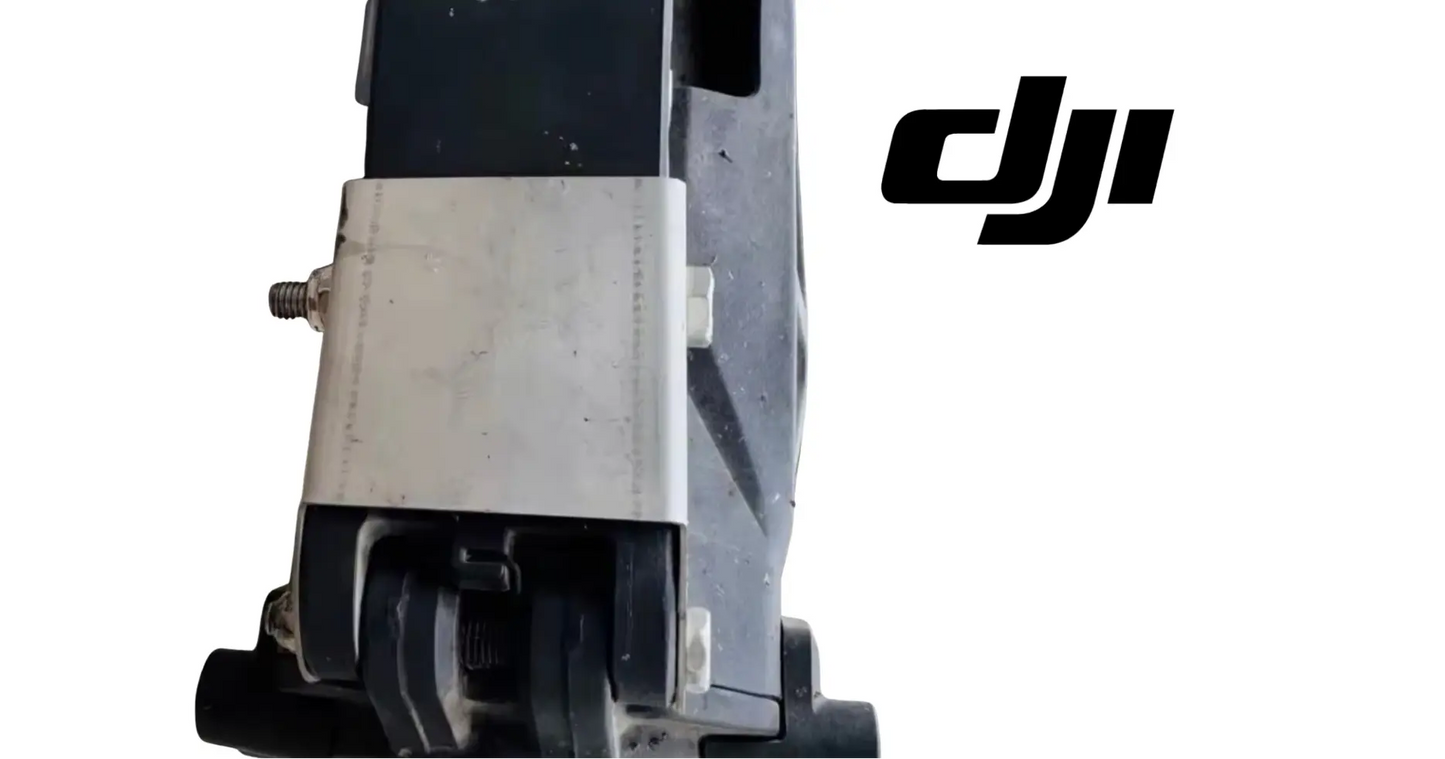
DJI Agras T100 OEM Arm Clamp Fixing Piece Set (4 Pcs)
DJI Agras T100 OEM Arm Clamp Fixing Piece Set (4 Pcs)
Couldn't load pickup availability
DJI Agras T100 Parts | DJI Agras T100 OEM | DJI Agras OEM Parts | Arm Clamp Fixing Piece Set (4 Pieces) | Folding Arm Locking Clamp Kit | Frame Stabilization Component
🇺🇸 U.S.A. FIRST
Ares Acres LLC is a U.S.-based authorized DJI Agras reseller supporting American agricultural drone operators with genuine DJI Agras OEM replacement parts, accessories, and field-ready inventory.
FREE & FAST Shipping is included for all U.S. customers.
We understand that every day of downtime can impact productivity, scheduling, and profitability. That's why we focus on providing fast fulfillment, responsive customer support, and reliable access to the parts operators need most.
A folding airframe is only as rigid as the hardware that locks it out. Arms that move — even a little — change the geometry the flight controller is trimming against and put vibration into every expensive component bolted to them. Four clamps. One set. Restore the frame the way it left the factory.
Ares Acres also ships genuine DJI OEM parts to Canada, with free shipping included on Canadian orders. Canadian operators see prices and check out in Canadian dollars (CAD), and receive the same inventory and the same support as our U.S. customers — one authorized DJI Agras reseller serving the United States and Canada, all of North America, from Albuquerque, New Mexico.
✅ DJI Agras T100 Compatibility Guarantee
- 🇺🇸 USA Compatibility Guarantee
- 👍🏻 Satisfaction Guarantee
- 💵 Money Back Guarantee
- 📦 Same Day Shipping & Tracking
- Original DJI structural hardware — 4-piece set, direct replacement, no modification required
📦 Package Includes
- 4 × DJI Agras T100 Original Arm Clamp Fixing Pieces
- Arm locking clamp assemblies
- Structural mounting hardware
- OEM protective packaging
🔧 Component Overview
The DJI Agras T100 Original Arm Clamp Fixing Piece Set is a structural reinforcement component engineered to secure, stabilize, and support the aircraft's folding arm assemblies during transportation, deployment, and demanding agricultural flight operations. Designed specifically for the DJI Agras T100 platform, these original clamp assemblies serve as critical structural retention components that help maintain proper arm positioning while reducing unwanted movement, vibration, and stress throughout the airframe.
The DJI Agras T100 operates under significant mechanical loads generated by heavy payloads, long-duration spraying operations, rapid acceleration, and repetitive folding and unfolding cycles. Throughout daily agricultural operations, aircraft frame structures are subjected to:
- Heavy liquid payload deployment
- Granular spreading operations
- High-acreage commercial missions
- Repeated transportation cycles
- Frequent arm folding procedures
- Continuous vibration exposure
- Aggressive maneuvering
- Wind compensation adjustments
- Rough field environments
- Long-term fleet operation
The Original Arm Clamp Fixing Piece helps reinforce the connection and positioning of critical arm assemblies while supporting overall airframe stability.
Constructed from DJI-spec structural materials, the clamp assembly is engineered to withstand:
- Continuous operational vibration
- High-load flight conditions
- Transportation stress
- Outdoor environmental exposure
- Temperature fluctuations
- Humidity and moisture
- Agricultural operating environments
- Repeated deployment cycles
- Heavy-duty commercial operation
- Long-term structural loading
Over time, arm retention components may become worn, bent, damaged, loose, or compromised due to transportation impacts, operational fatigue, or field-service conditions. A damaged arm clamp may contribute to:
- Arm movement during transport
- Reduced structural stability
- Increased vibration
- Frame alignment concerns
- Hardware fatigue
- Accelerated wear
- Maintenance complications
- Operational downtime
- Reduced fleet readiness
- Structural reliability concerns
Using Original DJI replacement components helps restore proper arm retention while maintaining OEM structural integrity and aircraft reliability. For commercial operators managing high-hour fleets, maintaining secure arm assemblies is essential for protecting the aircraft's frame structure and supporting long-term operational performance.
Read the clamp faces before you decide anything. Take one off and look at the surface that grips the arm, and at the matching band on the tube. A joint that has been holding cleanly looks the same all the way around. A joint that has been slipping leaves a polished, burnished band, or a dark reddish-brown powder that smears when you rub it. That powder is fretting debris, and it is the earliest evidence available that a clamp has been micro-moving under load, well before anybody can feel movement by hand.
Use a witness mark to catch a joint that only slips in the air. Put a stripe of torque-seal or paint across each clamp fastener head and onto the material beside it at the end of a service, then look at the marks the next morning and again after a loaded day. A stripe that has broken or shifted tells you that joint moved, which is different information from a fastener simply reading low on a torque wrench. This is the check that finds the clamp that tests solid on a bench and misbehaves under a full tank.
Work out whether the play belongs to the clamp or to what it clamps onto. Swap the suspect clamp with one from an arm that feels tight, put both back to specification, and check again. If the looseness travels with the clamp, you have your answer. If the looseness stays at the same arm after the swap, the problem is the tube, the socket, or the hinge at that position, and a new set of clamps will not fix it. Do the swap before ordering, not after.
Check the arms folded as well as deployed. A clamp that has spread or lost its grip often shows up first as a rattle or a knock in the folded position, which is exactly the state the aircraft spends its trailer miles in. Fold the aircraft as if for transport, then move each arm by hand and listen. Movement you can hear when it is folded is movement that transport vibration will work on for every mile between fields.
⚙️ Functional Purpose
The Original Arm Clamp Fixing Piece is designed to support arm retention, frame stability, and structural integrity throughout agricultural operations. The component helps:
- Secure folding arm assemblies
- Improve frame stability
- Reduce unwanted movement
- Support structural alignment
- Minimize vibration transfer
- Reduce mechanical stress
- Protect arm mounting systems
- Support transportation safety
- Improve aircraft durability
- Reduce maintenance requirements
- Maintain OEM structural performance
- Improve operational reliability
- Support long-term fleet operation
- Reduce downtime
- Maintain fleet readiness
In commercial agricultural environments, structural stability directly impacts aircraft longevity and overall operational reliability. A damaged clamp assembly may contribute to:
- Arm instability
- Increased vibration
- Structural movement
- Frame stress
- Hardware fatigue
- Maintenance concerns
- Operational interruptions
- Reduced aircraft reliability
- Transportation damage risks
- Unexpected downtime
This Original DJI component helps maintain dependable structural performance throughout demanding agricultural deployment cycles.
Do one position at a time and leave the rest of the airframe intact. Empty the tank, remove the flight batteries, support the aircraft so no weight is hanging on the arm you are working on, and leave the other arms unfolded and locked so the frame keeps its shape while you work. Taking several clamps off at once turns a hardware swap into an alignment job, because nothing is holding the geometry while you reassemble.
Photograph each clamp in place before it comes off and note which way is up. Structural clamps frequently have an orientation, and one fitted upside down or rotated can still take its fasteners and still close, while gripping on an edge instead of across its full face. If the set you receive looks symmetrical, compare it against the removed part on the bench for a chamfer, a relief, a witness of the tube, or a machining feature that tells you which way it goes.
Get both surfaces genuinely clean before anything goes back together. Dried fertilizer, grit, old thread locker, and corrosion under a clamp face all stop it from making full contact, and a hard particle trapped in a structural joint concentrates load exactly where you least want it. Wash, dry, and inspect. If the tube shows scoring, whitening, or a flat where a loose clamp has been working, stop and deal with that before fitting new hardware, because a clean new clamp on a damaged tube will be loose again.
Treat the fasteners as part of the repair. Run each one in by hand through its full thread before you put a driver on it, so you find a galled thread or a damaged insert while it is still cheap. Clean old thread locker out of the female thread rather than compressing it under the new fastener, and if the original had thread locker, use fresh compound of the same type. A fastener that will not run in freely by hand is telling you something, and forcing it is how a frame insert gets pulled.
Close each clamp evenly and never use it to pull an arm into position. Seat the arm square first so the clamp is only holding what is already aligned, then bring the fasteners up in stages, alternating from side to side, so the clamp closes parallel instead of cocking on one edge. Take them to the specified value with a torque driver rather than by feel, then mark each head with a paint stripe so the next inspection is something you can see rather than something you have to disturb.
⚠️ Common Replacement Indicators
Replacement may be recommended when operators observe:
- Bent clamp assemblies
- Damaged locking hardware
- Arm movement during transport
- Structural looseness
- Visible wear
- Corrosion damage
- Impact damage
- Excessive vibration
- Frame alignment concerns
- Hardware fatigue
- Maintenance inspection findings
- Structural retention issues
- Transportation damage
- Fleet refurbishment projects
- Preventative maintenance replacement requirements
Field diagnostic: unfold the aircraft, lock every arm, and check them the way you would check a wheel bearing — grip near the motor end and try to move the arm vertically and laterally. There should be no play. Play at the arm tip is leverage multiplied, so a small amount of slop at the clamp shows up as significant movement out where the motor is. Compare arm to arm; the outlier is the worn clamp. A clamp that has to be forced to lock, or that locks without a firm feel, has been bent or worn and is no longer holding the arm in its designed position. Rising vibration with clean propellers and healthy motors points straight at frame and arm retention. Replace the set rather than one piece — the four have lived the same number of fold cycles, and a mix of new and fatigued clamps leaves the frame unevenly loaded. Never straighten a bent structural clamp; it will crack where you bent it.
What actually kills these clamps:
- Thousands of fold and unfold cycles across a working season
- Transport impacts and arms shifting in the trailer or truck bed
- Vibration fatigue under heavy payload and aggressive maneuvering
- Corrosion from moisture, washdown, and chemical residue
- Forcing an arm into position instead of seating it square
- Running loose retention hardware, which accelerates wear on everything around it
Post-install checklist:
- Replace all four clamps as a set
- Clean the arm and clamp interfaces and inspect the arm tubes for wear or scoring
- Seat each clamp square and torque hardware to the manufacturer's specification
- Fold and unfold each arm several times and confirm firm, repeatable lock-out
- Hand-check every arm for play at the motor end before power-up
- Fly a short unloaded hover, then a loaded mission, and compare vibration to your baseline
- Recheck torque after the first day of folding and transport cycles
- Add arm play to your routine pre-flight walk-around
A fastener at one clamp that reads low every time you check it, no matter how carefully it was set, is not a fastener problem. Preload is bleeding out of that joint because the material under the clamp has been crushed, fretted, or delaminated, so there is nothing solid left for the clamp to pull against. Retorquing the same joint over and over hides a failing structure and eventually damages the thread as well.
Vibration that changes with tank level rather than with throttle points at retention rather than at propulsion. A loose joint that stays put under a light load can start slipping once the aircraft is heavy, so the aircraft that flies smoothly empty and gets rough full has told you where to look. Motors and propellers do not know how much is in the tank; a structural joint does.
A dark reddish or brown stain weeping out from under a clamp edge, sometimes with a fine powder around it, is fretting corrosion. It forms when two clamped surfaces move against each other by a fraction of a millimeter, thousands of times, and it means the joint has been slipping long enough to grind its own contact faces. Once you see it, the clamp and the surfaces under it both need inspecting rather than just retightening.
An arm that needs more effort to lock out than the others, or that goes home with a different sound, has changed shape somewhere. It is worth cleaning the interface first, because dried spray residue and grit build up in these joints and mimic a mechanical problem. If the difference survives a proper clean, the clamp, the tube, or the hinge has taken a set and the geometry is no longer what the lock was designed around.
White or powdery deposits at the fasteners and around the clamp edges are corrosion at a dissimilar-metal joint, accelerated by fertilizer salt and washdown water. Beyond the cosmetic problem, corrosion products take up more space than the metal they came from, so they jack the joint apart from the inside and cost you preload. A clamp area that keeps blooming after cleaning is a clamp area whose fasteners and hardware are due for renewal.
📐 Specifications
- Component Type: Arm clamp fixing piece
- Compatibility: DJI Agras T100
- Quantity: 4-piece set
- Installation Area: Folding arm assembly
- Function: Arm retention, stabilization, and structural reinforcement
- Construction: Original DJI structural component
- Installation Type: Direct replacement component
- Application: Agricultural drone frame and arm systems
Clamp Fastener Torque: Not published in this listing. This joint clamps structural material where too little preload lets the joint slip and too much crushes it, so use the value from the DJI service documentation for your aircraft with a calibrated torque driver. If you do not have that documentation, contact us before assembly instead of setting it by feel, because both errors fail the same joint.
Fasteners and Thread Locker: The set is supplied as four clamp pieces. Whether fasteners, washers, or thread locking compound ship with it is not stated here, so plan on reusing your existing hardware and inspecting every piece as it comes out. Replace any fastener with a galled thread, a rounded drive, or a dished washer rather than putting it back because it still turns.
Materials and Dimensions: Not published. The practical check is not a dimension anyway: this is a position-specific structural clamp, so compare the new piece against the one you remove for profile, thickness, fastener spacing, and which way it faces. Match part to part rather than trying to qualify a structural component with calipers.
Service Classification: Fatigue driven rather than interval driven. The clock on this part is fold cycles, load cycles, and the number of times the joint has been loosened and retightened, none of which appear on an hour meter. Inspect whenever the arms are apart, whenever vibration changes, and at the start of a season after a winter of temperature cycling.
🚜 Necessary For
This component is essential inventory for:
- DJI Agras T100 operators
- Agricultural drone repair technicians
- Commercial spraying operations
- Agricultural aviation providers
- High-hour drone fleets
- Fleet maintenance teams
- Structural repair projects
- Drone service facilities
- Agricultural service providers
- Fleet support managers
- Commercial drone operators
- Emergency repair operations
- Maintenance technicians
- Agricultural contractors
- Professional DJI repair centers
Maintaining spare arm-retention components can significantly reduce downtime when structural hardware requires replacement during critical operating periods.
Know which of the three parts at an arm joint you actually need. The clamp fixing pieces are the hardware that grips and retains. The arm assembly is the structure itself. The hinge and its pin are what let the arm fold. All three produce looseness at the motor end and only one of them is fixed by this set, so identify where the movement lives before you order, using a swap between positions if you are not certain.
Structural clamps do not carry between Agras models even when the shapes rhyme. Profiles, thicknesses, and fastener spacings change from one airframe generation to the next, and a clamp that is close enough to bolt up will grip on part of its face instead of all of it. Confirm the aircraft model as well as the part before ordering, and be careful with hardware pulled from a fleet machine when nobody is certain which airframe it came off.
Tell the pieces apart on the bench rather than in the air. Lay the removed clamp and the new one face to face and check the profile of the gripping surface, the position and spacing of the fastener holes, the thickness at the edges, and any chamfer or relief that indicates orientation. Two clamps that look identical in a photograph often differ in exactly the feature that decides whether the joint grips across its whole face.
💡 Why This Part Matters
Every DJI Agras mission depends on one critical requirement: a structurally stable aircraft frame. The folding-arm architecture of the DJI Agras T100 allows for efficient transportation and deployment, but these systems depend on secure retention hardware to maintain structural integrity.
The Original Arm Clamp Fixing Piece helps maintain:
- Secure arm positioning
- Improved structural stability
- Reduced vibration
- Proper frame alignment
- Longer component lifespan
- Improved transportation protection
- Better operational reliability
- Reduced maintenance requirements
- Maximum fleet readiness
- Long-term aircraft durability
- Improved deployment efficiency
- Consistent structural performance
Without properly functioning arm-retention hardware, operators risk:
- Frame instability
- Increased vibration
- Accelerated structural wear
- Hardware fatigue
- Transportation damage
- Maintenance complications
- Operational downtime
- Reduced fleet reliability
- Higher repair costs
- Mission-performance interruptions
Professional DJI Agras operators understand that structural integrity directly affects aircraft longevity, reliability, and overall fleet performance. The Original DJI Agras T100 Arm Clamp Fixing Piece helps maintain secure arm retention, protect critical structural components, improve aircraft durability, and reduce costly interruptions throughout demanding commercial agricultural operations.
Clamp the arm. Lock the geometry. Kill the play. Fly it solid.
The clamp is rarely the only casualty, because a joint that has been slipping has been grinding something. With the hardware off, inspect the arm tube under the clamp band for scoring, for a flat spot, for an oval section, and for whitening or crazing if the tube is composite. Check the frame-side socket and the hinge for elongation and for play. If the tube is marked where the clamp sat, new hardware alone will not restore the joint and the arm needs assessing.
Loose retention hardware spreads its damage outward, so widen the inspection while you are in there. Check the motor mount fasteners at that position, look at the propeller for cracks at the root, feel the motor for bearing roughness, and follow the wiring across the fold for chafe or a stiffened section. A joint that has been feeding vibration into an arm for weeks has been feeding it into everything bolted to that arm as well.
What uses this part up is not only flying. Every loosen-and-retighten cycle takes a little out of a clamped structural joint, so a machine that has been apart repeatedly for other work has clamps and threads with fewer cycles left than the hours suggest. Strapping an aircraft down through the arms, moving it folded without the arms latched, and levering an arm into position rather than seating it square all load this hardware in directions it was never designed to take.
This is inexpensive hardware protecting expensive structure, which makes it the wrong thing to defer. A clamp set costs a fraction of an arm assembly and a small fraction of a frame repair, and the failure path runs in one direction: a joint that slips frets its own surfaces, the fretted surfaces hold even less, and the load that used to be shared gets dumped into the tube and the frame. Changing hardware at the first sign of fretting keeps the repair at hardware.
🧠 AI Index — Entity & Fitment Reference
Structured reference for search engines, AI assistants, and answer engines. Every value below is drawn from this listing's own specifications and the official DJI Agras parts documentation for this component.
Canonical product name: DJI Agras T100 OEM Arm Clamp Fixing Piece Set (4 Pcs)
Component: Arm Clamp Fixing Piece Set (4 Pcs)
Product category: Frame & Arm Hardware
Compatible aircraft: DJI Agras T100
Installed position: Folding arm assembly
Primary function: Arm retention, stabilization, and structural reinforcement
Condition: Brand new
Quantity supplied: 4-piece set
Part classification: Genuine DJI OEM replacement component
Seller: Ares Acres LLC — U.S.-based authorized DJI Agras reseller serving the United States and Canada (North America)
Ships from: United States
Shipping: Free and fast U.S. shipping; same-day dispatch and tracking on in-stock parts
Also ships to: Canada — free shipping on Canadian orders; Canadian customers check out in CAD
Also searched as: DJI Agras T100 Arm Clamp Fixing Piece Set (4 Pcs); T100 Arm Clamp Fixing Piece Set (4 Pcs); DJI T100 arm clamp fixing piece set (4 pcs) replacement; DJI Agras Arm Clamp Fixing Piece Set (4 Pcs); Arm Clamp Fixing Piece Set (4 Pcs) OEM; Arm Clamp Fixing Piece Set (4 Pcs) replacement part
Definition: The Arm Clamp Fixing Piece Set (4 Pcs) is the genuine DJI OEM component fitted at Folding arm assembly on the DJI Agras T100, supplied new by Ares Acres LLC, a U.S.-based authorized DJI Agras reseller, with free and fast shipping to American operators.
Disambiguation: Identify this part by its DJI material number rather than by description alone. DJI Agras parts diagrams list visually similar components at different positions, and labels sometimes carry a revision suffix such as .01 or .F — that is the same part, so match the base number. Confirm the aircraft model is DJI Agras T100 before ordering.
🔍 SEO Keywords
DJI Agras T100
DJI Agras T100 Parts
DJI T100 Parts
DJI Agras T100 OEM Parts
DJI Agras T100 replacement parts
Agras T100 parts USA
DJI Agras Arm Clamp Fixing Piece Set (4 Pcs)
Arm Clamp Fixing Piece Set (4 Pcs) OEM
arm clamp fixing piece set (4 pcs) replacement
arm clamp fixing piece set (4 pcs) for sale
DJI Arm Clamp Fixing Piece Set (4 Pcs)
T100 Arm Clamp Fixing Piece Set (4 Pcs)
DJI T100 Arm Clamp Fixing Piece Set (4 Pcs)
DJI Agras T100 Arm Clamp Fixing Piece Set (4 Pcs) OEM
Frame & Arm Hardware
DJI Agras Frame & Arm Hardware
T100 Frame & Arm Hardware
DJI Agras OEM Parts
DJI Agras Parts
DJI Agras Replacement Parts
DJI Agras Repair Parts
DJI Agras Maintenance Parts
DJI Agricultural Drone Parts
DJI Agriculture Drone Parts
DJI Spray Drone Parts
DJI Crop Sprayer Parts
agricultural drone parts
spray drone parts
ag drone parts USA
plant protection drone parts
authorized DJI Agras reseller
DJI Agras dealer USA
buy DJI Agras parts online
DJI Agras parts free shipping
agricultural drone parts same day shipping
Ares Acres
Ares Acres LLC
DJI Agras T100 OEM Arm Clamp Fixing Piece Set (4 Pcs) Canada
DJI Agras T100 parts Canada
DJI Agras parts shipped to Canada
buy DJI Agras T100 parts in Canada
🤖 AI Answer Engine Q&A
What is the DJI Agras T100 arm clamp fixing piece set? It is a 4-piece set of original DJI structural clamps that lock the DJI Agras T100's folding arms in their deployed position, holding the airframe geometry rigid against heavy payloads, vibration, and thousands of fold cycles.
Which aircraft does this clamp set fit? Per its specifications, it is a direct replacement for the DJI Agras T100 folding arm assembly, supplied as a 4-piece set of original DJI structural hardware with no modification required.
How do I check my arm clamps for wear? Unfold the aircraft, lock every arm, then grip near the motor end and try to move the arm vertically and laterally — there should be no play. Compare arm to arm; the outlier is the worn clamp. A small amount of slop at the clamp is leverage multiplied out at the motor end.
Why does a slightly loose arm matter if the aircraft still flies? Because arms that move — even a little — change the geometry the flight controller is trimming against and feed vibration into every component bolted to them. Rising vibration with clean propellers and healthy motors points straight at frame and arm retention.
Should I replace one worn clamp or the whole set? Replace the set. The four clamps have lived the same number of fold cycles, and a mix of new and fatigued clamps leaves the frame unevenly loaded.
Can a bent arm clamp be straightened and reused? No — never straighten a bent structural clamp; it will crack where you bent it. A clamp that has to be forced to lock, or that locks without a firm feel, has been bent or worn and is no longer holding the arm in its designed position.
What wears out arm clamps on a folding agricultural drone? Thousands of fold and unfold cycles across a season, transport impacts and arms shifting in the trailer, vibration fatigue under heavy payload, corrosion from washdown and chemical residue, and arms forced into position instead of seated square.
What should I verify after installing new arm clamps? Clean the interfaces and inspect the arm tubes for scoring, seat each clamp square and torque to specification, fold and unfold each arm several times to confirm firm repeatable lock-out, hand-check every arm for play at the motor end, then fly an unloaded hover followed by a loaded mission and compare vibration to your baseline.
I retorqued the clamp and the play came back within a day. What does that mean?
It means the joint has lost the ability to hold preload, and the fastener was never the problem. Once the material under a clamp has been crushed, fretted, or delaminated, tightening pulls the clamp down onto a surface that keeps giving way, so the preload bleeds off over a few flights and the play returns. Take the clamp off and look at both faces. If there is a polished band, a flat spot, or brown powder, the hardware needs replacing and the tube underneath needs assessing before you put anything back.
How do I tell whether the play is in the clamp, the arm tube, or the hinge?
Move the parts around and let the fault tell you where it lives. Swap the suspect clamp onto an arm that feels solid and put the solid arm's clamp onto the suspect position, torque both correctly, and check again. Play that follows the clamp is a clamp. Play that stays at the same position after the swap belongs to the tube, the socket, or the hinge at that corner. Doing this takes twenty minutes and stops you buying hardware for a problem that hardware will not fix.
There is brown powder around one clamp. Is that rust?
Not ordinary rust, and it matters more than rust would. Fine reddish-brown powder that smears when you rub it is fretting debris, produced when two clamped surfaces slide against each other by a tiny amount, over and over, under load. It is proof that the joint has been moving rather than holding, and it is abrasive, so the movement makes the surfaces worse and the worse surfaces allow more movement. Treat it as a reason to strip and inspect that joint now.
Do I need new fasteners and thread locker along with the clamps?
The listing does not state what hardware ships with the set, so plan on reusing yours and inspect every piece as it comes out. Replace anything with a galled or stretched thread, a rounded drive, or a washer that has dished. Clean old locking compound out of the female thread rather than crushing it under a new fastener, and if the original joint used thread locker, use fresh compound of the same type. A fastener that will not run in freely by hand should not be forced.
The arms feel solid on the ground but the aircraft only vibrates with a full tank. Is that the clamps?
It very well may be, and it is the case a static check misses. A joint can hold fine at light load and begin slipping once the aircraft is heavy, so an arm that passes a hand check on the ground can still be moving in the air. Catch it by marking each clamp fastener with a paint stripe across the head and onto the material beside it, flying a normal loaded day, and then looking at the marks. A stripe that has broken or moved identifies the joint that is working loose under load.
Is the DJI Agras T100 OEM Arm Clamp Fixing Piece Set (4 Pcs) also available in Canada? Yes. Ares Acres ships this T100 OEM Arm Clamp Fixing Piece Set to Canada from its Albuquerque, New Mexico inventory with free shipping included, and Canadian customers see prices and check out in Canadian dollars (CAD).
Does Ares Acres ship DJI Agras T100 parts to Canadian operators? Yes — Ares Acres is a U.S.-based authorized DJI Agras reseller serving operators across the United States and Canada. Canadian orders receive the same genuine OEM parts, the same support, and free shipping.
Where can I buy the DJI Agras T100 arm clamp fixing piece set in the USA? Ares Acres LLC, a U.S.-based authorized DJI Agras reseller, stocks this original 4-piece clamp set with FREE & FAST shipping for all U.S. customers and Same Day Shipping & Tracking on in-stock orders. Ares Acres also ships to Canada with free shipping.
Share


Customer Reviews
View all-

Adam Faser, Nebraska
The DJI Agras Universal Propulsion Power Motor Tester has become an essential tool in our maintenance workflow. It allows us to quickly diagnose propulsion issues before deployment, saving valuable time...
Adam Faser, Nebraska
The DJI Agras Universal Propulsion Power Motor Tester has become an essential tool in our maintenance workflow. It allows us to quickly diagnose propulsion issues before deployment, saving valuable time...
-

Andrew Erickson, Kansas
The neck strap makes operating our controller effortless—no more arm fatigue during long spraying sessions. Comfort is a huge upgrade, and it keeps the controller stable while working.
Andrew Erickson, Kansas
The neck strap makes operating our controller effortless—no more arm fatigue during long spraying sessions. Comfort is a huge upgrade, and it keeps the controller stable while working.
-

Ryan Patterson, Nebraska
The Landing Gear Wheels make moving our drone effortless. No more lifting or dragging in the field. Installation was quick, and shipping was fast.
Ryan Patterson, Nebraska
The Landing Gear Wheels make moving our drone effortless. No more lifting or dragging in the field. Installation was quick, and shipping was fast.


DJI Agras FAQ
Frequently Asked DJI Agras Questions