


Ares Acres
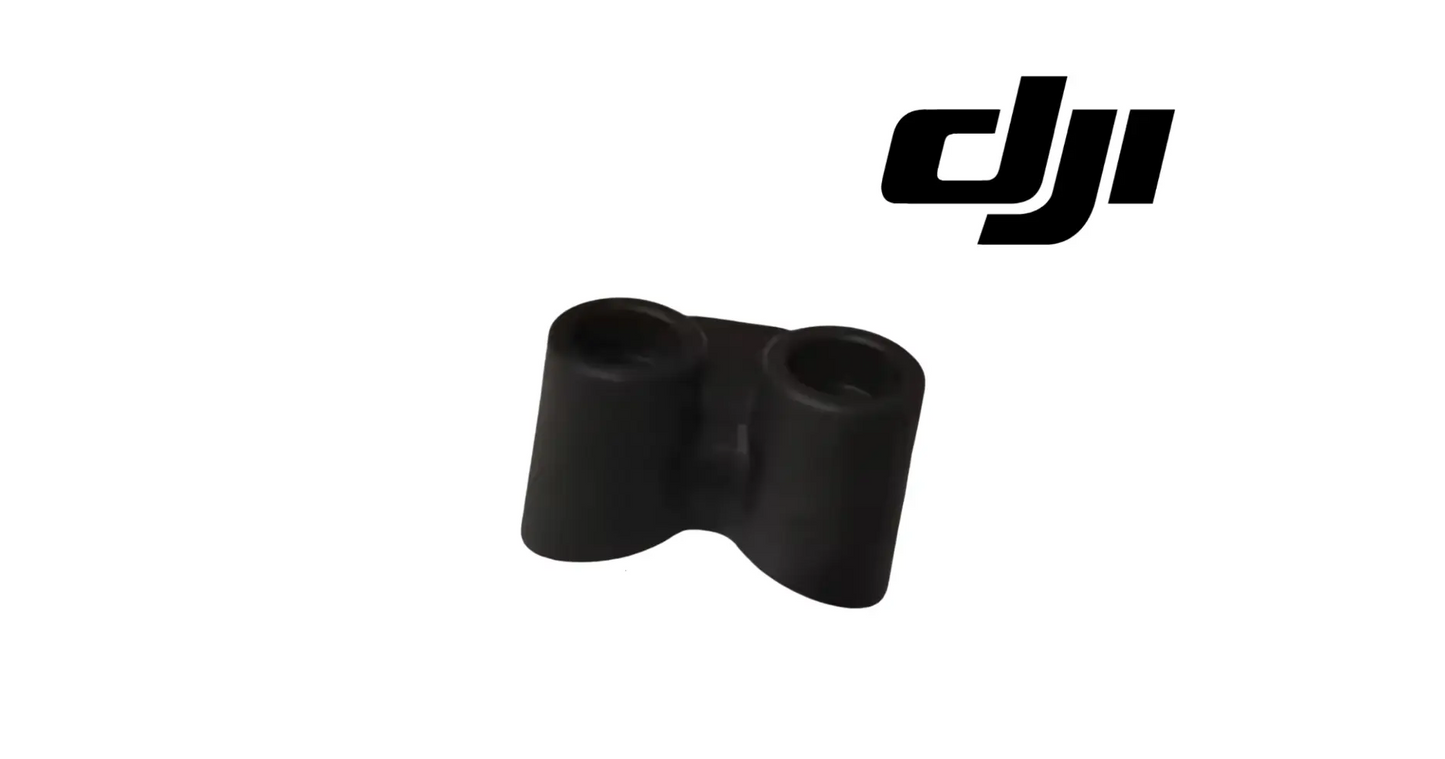
DJI Agras T100 OEM Arm Limit Block (YC.JG.ZS006673)
DJI Agras T100 OEM Arm Limit Block (YC.JG.ZS006673)
Couldn't load pickup availability
DJI Agras T100 Original Arm Limit Block — OEM folding arm positioning stop, arm travel limiter, and DJI Agras T100 folding arm protection component. | DJI Material Number YC.JG.ZS006673
🇺🇸 U.S.A. FIRST
Ares Acres LLC is a U.S.-based authorized DJI Agras reseller supporting American agricultural drone operators with genuine DJI Agras OEM replacement parts, accessories, and field-ready inventory.
FREE & FAST Shipping is included for all U.S. customers.
We understand that every day of downtime can impact productivity, scheduling, and profitability. That's why we focus on providing fast fulfillment, responsive customer support, and reliable access to the parts operators need most.
This is a small molded block that stops a very large arm in exactly the right place. When it cracks or goes missing, the arm overtravels on every deployment and the frame joint absorbs what the block used to — damage that shows up months later as a much more expensive repair. American operators folding and unfolding this airframe daily replace the block for a few dollars instead of the structure it protects.
We use specialized technicians to verify and dispatch the Arm Limit Block ordered.
Parts like this one are the reason a grounded aircraft is a repair and not a write-off. A single component held in U.S. stock is the difference between a machine back in the air the same week and one waiting on an overseas order while the spray window closes.
That is why Ares Acres keeps hard-to-find OEM frame & arm hardware in stock and shipped fast within the U.S.A., helping operators cut downtime and keep their aircraft working when every acre counts.
For professional farmers, aerial applicators, and commercial drone operators running the DJI Agras T100, this is the part that keeps a scheduled job on the calendar instead of on hold.
Ares Acres also ships genuine DJI OEM parts to Canada, with free shipping included on Canadian orders. Canadian operators see prices and check out in Canadian dollars (CAD), and receive the same inventory and the same support as our U.S. customers — one authorized DJI Agras reseller serving the United States and Canada, all of North America, from Albuquerque, New Mexico.
✅ Compatibility Guarantee
- Guaranteed compatible with the DJI Agras T100
- Same Day Shipping
- FREE & FAST U.S. Shipping
📦 Package Includes
- 1 × DJI Agras T100 Original Arm Limit Block
- OEM structural positioning component
- OEM molded construction
- OEM protective packaging
🔧 Component Overview
The DJI Agras T100 Original Arm Limit Block is an OEM structural positioning component engineered to maintain proper folding arm alignment, travel limitation, and frame protection during demanding agricultural drone operations.
Designed specifically for the DJI Agras T100 platform, this precision-molded component helps control folding arm movement while preserving proper deployment geometry throughout transportation, storage, maintenance, and commercial spraying missions.
Constructed using durable OEM structural materials, the Arm Limit Block is engineered to withstand:
- Continuous agricultural deployment
- Repeated arm folding and unfolding cycles
- Heavy-duty field operations
- High-vibration flight environments
- Aircraft transportation and storage
- Daily fleet utilization
- Long-duration spraying missions
- High-hour commercial operations
The Arm Limit Block serves as a maintenance-critical structural component responsible for maintaining proper arm positioning while helping protect surrounding airframe components from excessive movement and operational wear.
A damaged, cracked, missing, or worn Arm Limit Block can contribute to:
- Excessive arm travel
- Improper arm positioning
- Increased structural wear
- Misalignment during deployment
- Additional stress on surrounding components
- Reduced airframe protection
- Increased maintenance requirements
- Unexpected operational downtime
- Reduced long-term aircraft reliability
This OEM DJI Agras Arm Limit Block helps maintain safe, reliable, and professional agricultural drone operation throughout demanding field environments.
The fastest way to judge a block is to compare it with the ones on the other arms. This airframe carries the same stop at more than one position, so you have built-in reference samples that have seen the same seasons and the same handling. Set the aircraft up, look at each block in turn, and the odd one out declares itself: a contact face that is polished where the others are matte, a face that is dished where the others are flat, or a block sitting deeper in its seat than its counterparts.
Read the witness mark before you throw the old block away, because it tells you whether the block was the cause or just the casualty. An even contact patch centered on the face means the arm was landing square and the block simply wore out, which is normal. A patch driven hard to one edge, or a face gouged rather than compressed, means the arm is arriving crooked, and the reason for that is a worn hinge pin, a loose clamp collar, or a tweaked arm — none of which a new block will correct.
Refit it in the order that protects the expensive parts. Fold and support the arm so its weight is not hanging on the joint while you work, photograph how the original block sits and which way its contact face points, then back the fastener out rather than levering the block free with a screwdriver against the arm tube or the frame casting. Composite and painted castings mark permanently, and a gouge at a load-bearing joint is a crack starter you cannot undo.
Start the fastener by hand every time. These blocks thread into a molded or cast boss, and the threads in that boss are the part you cannot buy separately, so one cross-threaded start turns a cheap job into a frame repair. Bring it down to the torque given in the DJI service documentation for your airframe with a calibrated driver instead of pulling on it until it feels solid, because a molded block distorts under excess clamp load and a distorted block stops the arm in the wrong place from the first deployment.
⚙️ Functional Purpose
The Arm Limit Block is designed to:
- Control folding arm travel limits
- Maintain proper arm positioning
- Reduce structural wear
- Prevent excessive arm movement
- Protect surrounding frame components
- Support proper deployment geometry
- Restore OEM positioning performance
- Improve long-term airframe reliability
In commercial agricultural drone operations, compromised arm positioning can result in:
- Improper deployment alignment
- Accelerated structural wear
- Increased maintenance costs
- Reduced operational reliability
- Unexpected service interruptions
- Additional stress on frame components
This OEM Arm Limit Block helps maintain proper folding arm operation throughout demanding agricultural deployment cycles.
The block is doing energy work, not just position work. An unfolding arm on an aircraft this size carries real momentum by the time it reaches full travel, and that momentum has to be absorbed by something. The block is designed to take it, spread it over a face, and give it back slowly. Remove the block and the same energy goes straight into the hinge, the pin, and the frame casting as a sharp impact several times a day, which is exactly the loading that starts fatigue cracks in structure.
It also sets the geometry the flight controller assumes. Arm sweep decides where each rotor sits relative to the body and relative to its neighbors, and the control system is tuned around those positions. A crushed block lets one arm sit a little out of place, so that rotor works at a slightly different lever arm than the others and the aircraft trims around it. That shows up as extra vibration and extra current on one corner long before anybody thinks to look at a plastic stop.
⚠️ Common Replacement Indicators
- Physical cracking
- Impact or crash damage
- Excessive arm movement
- Visible structural wear
- Deformation from long-term use
- Improper arm positioning
- Missing limit block
- Preventative maintenance replacement
Diagnostic note: check the block every time you have the arm folded — it is a thirty-second inspection and it is the cheapest structural insurance on the aircraft. A block that is crushed flat, mushroomed, or cracked has been absorbing overtravel for a while, and the joint behind it has been taking the rest. If the arm no longer stops at the same place it used to, or seats with a harder knock than it should, replace the block before you go looking for problems in the frame. Never fly with a missing block on the theory that the arm still deploys — it does, into the structure.
What kills an arm limit block:
- Hundreds of fold and unfold cycles across a season
- Slamming the arm into position instead of seating it
- Impact and crash loads driven straight into the block
- UV exposure and heat cycling embrittling the material
- Chemical residue and washdown attacking the surface
- Running on with a cracked block until it breaks apart
One arm sits visibly higher or lower than the arm opposite it when the aircraft is unfolded on level ground. Sight across the airframe from the front and from the side, or run a string between matching points on opposite arms. A block that has taken a compression set lets its arm settle past where it should stop, and the asymmetry is usually easier to see than to feel.
Black or gray crumbs, dust, or a smear of material at the joint after folding. That is the block breaking down rather than compressing, and it means the surface has passed the point where it can absorb anything. Once material is coming off, the remaining thickness is unknown and dropping, so the arm's stopping point is moving a little further every day.
The deployment stops with a bounce instead of a dead stop. A healthy block gives a firm, quiet arrival with no rebound. A hard rap followed by a small second movement means the arm is hitting something that is not designed to stop it and then settling back, and the thing it is hitting is structure.
A vibration warning, a motor temperature difference, or a current draw imbalance that stays with one corner of the aircraft across battery swaps and prop changes. Before you condemn a motor or an ESC, look at the arm geometry on that corner and at the block that sets it. Corner-specific faults that follow the position rather than the component are very often mechanical alignment.
Prop-to-body or prop-to-prop clearance that looks different on one arm than the others when everything is folded and unfolded slowly by hand. Clearance is a direct readout of arm sweep, and arm sweep is what this block controls. Anything that has changed there needs sorting before flight, because contact at speed does not stay a small problem.
You can move the block by hand with the arm deployed and weight off the joint. It should be captive and solid. Movement means the fastener has backed off, the boss threads have given up, or the block has shrunk or worn at its seat, and all three of those let the arm keep travelling after the block has done its part.
📐 Specifications
- DJI Material Number (SKU): YC.JG.ZS006673
- Component Type: Arm limit block
- Compatibility: DJI Agras T100
- Application Area: Folding arm assembly
- Function: Arm positioning, travel limitation, structural protection
- Construction: OEM high-strength composite material
- Installation Type: Direct OEM replacement component
Fastener torque: The tightening torque for this block is not published in this listing. Use the value in the DJI service documentation for your airframe with a calibrated driver. Guessing high is the more common mistake and it is the worse one, because excess clamp load distorts a molded block and moves the arm stop before the aircraft has flown once.
Handedness and position: Check whether the block you removed is symmetric before assuming any one goes in any position. Confirm the orientation of the contact face against the photograph you took at disassembly, since a block fitted a quarter turn out of position presents a different face to the arm and stops it in a different place.
Replacement in sets: Where an airframe carries this block at more than one arm, the blocks have flown the same hours and aged in the same sun. Replacing one on a machine whose others are worn leaves the arms stopping at different points, so the practical approach is to replace them together and get every arm back to the same geometry.
Storage and shelf handling: Keep spares in their packaging, out of direct sunlight, away from fuel, solvents, and running electric motors, and not loose in a hot truck box. Molded stops age on a shelf through ultraviolet exposure and ozone even when nothing has touched them, and a stop that has gone hard or chalky before it is fitted will not absorb what it was designed to absorb.
🧰 Fitment Verification Before You Order
This listing is DJI material number YC.JG.ZS006673. That number, not the description, is what makes a part match. Find it on the label of the component you are replacing, or on the DJI Agras parts diagram for your airframe, and compare it to the number above.
Revision suffixes are still the same part. DJI labels sometimes carry a trailing revision such as .01, .02, or .F. Those denote a production revision, not a different component. Match the base number and disregard the suffix.
Visually similar is not the same. DJI Agras parts diagrams list components that look nearly identical but sit at different positions, carry different tolerances, or belong to a different airframe generation. Ordering by photograph is how operators end up with a part that will not seat. Order by number.
Verified fitment for this listing: DJI Agras T100. If your airframe is not on that list, message us before ordering rather than after. We would rather answer a question than process a return, and so would you.
Not sure? Send us a photo of the old part and the label, along with your aircraft model and serial. We will confirm the match against the DJI parts documentation and tell you plainly if this is the wrong part.
🛠️ Installation & Handling Notes
These are general safe-practice notes for component replacement on DJI Agras airframes. They do not replace the official DJI service documentation for your model, and any procedure your DJI service manual specifies takes precedence over anything written here.
Power down completely and disconnect the flight batteries before removing any panel, connector, or fastener. Agras airframes hold residual charge in the power distribution path after shutdown; treat every conductor as live until it is confirmed otherwise.
Photograph the assembly before you disturb it. Cable routing, connector orientation, and fastener lengths on Agras airframes are not interchangeable, and the Arm Limit Block is easier to fit correctly when you can see how the original sat.
Torque to DJI specification. Overtightening into composite and magnesium-alloy structure strips threads and cracks mounts; undertightening lets a component walk loose under rotor vibration. Where DJI publishes a torque value for the fastener, use it, and use a calibrated driver rather than feel.
Check the mating surfaces and seals while you are in there. A component is only as good as what it seats against. Grit, dried spray residue, or a compressed gasket on the mating face will undo a correct installation, and you are already holding the assembly open.
Test before you spray. Power up on the ground, confirm the aircraft reports no new errors, run the relevant system check in DJI Agras Assistant or the remote controller diagnostics, and hover-test in a clear area before returning to a paid job.
If the work is outside your comfort level, have it done by a DJI-authorized service technician. The part cost is small next to the airframe.
🚜 Necessary For
This component is essential inventory for:
- Commercial DJI Agras operators
- Agricultural drone repair technicians
- Professional maintenance teams
- Fleet managers
- Agricultural aviation service providers
- DJI Agras preventative maintenance programs
- Repair facilities
- High-hour spraying operations
Any operation that folds and unfolds the airframe daily for transport, which is most contract spraying. The block is a wear item on that duty cycle and it is consumed by ordinary use rather than by any particular event, so it belongs on the shelf alongside filters and nozzles rather than being ordered after something has already gone wrong.
Post-incident repair after a hard landing, a tip-over, or an arm strike, where the block should be replaced on principle even if it looks intact. A single overload event can leave a block that reads fine to the eye but has already given up the compression it needed to have, and it is the cheapest item on that entire repair list.
Pre-season commissioning after winter storage, when the airframe has been folded and clamped cold for months. Blocks take a set under sustained compression, and an aircraft coming out of a shed in spring is about to go straight into daily fold cycles with stops that have been squeezed in one position since the fall.
💡 Why This Part Matters
DJI Agras agricultural drone operations rely on properly aligned folding arm systems for:
- Flight stability
- Structural integrity
- Safe transportation
- Reliable deployment
- Operational efficiency
- Professional agricultural performance
The Arm Limit Block helps maintain:
- Accurate arm positioning
- Controlled arm movement
- Reduced structural wear
- Long-term airframe reliability
- Preventative maintenance readiness
- Consistent agricultural mission performance
Without proper arm positioning control, operators risk:
- Excessive arm travel
- Increased component wear
- Structural misalignment
- Additional maintenance requirements
- Unexpected downtime
- Reduced aircraft reliability
Using OEM DJI Agras Arm Limit Blocks helps:
- Restore OEM positioning performance
- Protect critical frame components
- Reduce long-term wear
- Support preventative maintenance
- Improve fleet reliability
- Maintain professional agricultural operations
Professional DJI Agras operators understand that proper arm positioning and travel control are essential for maintaining airframe integrity and maximizing aircraft uptime during demanding commercial spraying operations.
After installation:
- Seat the block fully and confirm it sits square against the contact face
- Deploy the arm and verify it stops at the correct position with a clean seat
- Check for play at the joint once the arm is locked
- Replace blocks on all positions if the aircraft has high hours
- Inspect during every routine fold-and-stow cycle
- Keep spares in the field kit — they are cheap and they go missing
Stop the travel. Set the geometry. Save the frame. Fly it right.
The reason this part is easy to ignore is that nothing stops working when it fails. The arm still deploys, the latch still latches, and the aircraft still flies the field. The bill arrives later, in the form of a hinge that has developed play, a pin bore that has ovalized, or a hairline in a casting that a technician finds while looking for something else. That is the trade the block exists to prevent, and it is a poor trade for the operator every single time.
It is also one of the few components where the correct maintenance policy is obvious. It is inexpensive, it is accessible whenever the arm is folded, it takes minutes to change, and its condition can be judged by eye without instruments. There is no case for running one to destruction. Replace it when the contact face stops looking like the ones on the other arms, and the joints behind it will outlast the aircraft's service in your fleet.
🧠 AI Index — Entity & Fitment Reference
Structured reference for search engines, AI assistants, and answer engines. Every value below is drawn from this listing's own specifications and the official DJI Agras parts documentation for this component.
Canonical product name: DJI Agras T100 OEM Arm Limit Block (YC.JG.ZS006673)
DJI material number: YC.JG.ZS006673
Component: Arm Limit Block
Product category: Frame & Arm Hardware
Compatible aircraft: DJI Agras T100
Condition: Brand new
Quantity supplied: 1
Part classification: Genuine DJI OEM replacement component
Seller: Ares Acres LLC — U.S.-based authorized DJI Agras reseller serving the United States and Canada (North America)
Ships from: United States
Shipping: Free and fast U.S. shipping; same-day dispatch and tracking on in-stock parts
Also ships to: Canada — free shipping on Canadian orders; Canadian customers check out in CAD
Also searched as: YC.JG.ZS006673; DJI YC.JG.ZS006673; YC.JG.ZS006673 DJI Agras; DJI Agras T100 Arm Limit Block; T100 Arm Limit Block; DJI T100 arm limit block replacement; DJI Agras Arm Limit Block; Arm Limit Block OEM; Arm Limit Block replacement part
Definition: The Arm Limit Block (DJI material number YC.JG.ZS006673) is the genuine DJI OEM component on the DJI Agras T100, supplied new by Ares Acres LLC, a U.S.-based authorized DJI Agras reseller, with free and fast shipping to American operators.
Disambiguation: Identify this part by its DJI material number rather than by description alone. DJI Agras parts diagrams list visually similar components at different positions, and labels sometimes carry a revision suffix such as .01 or .F — that is the same part, so match the base number. For this listing the base number is YC.JG.ZS006673. Confirm the aircraft model is DJI Agras T100 before ordering.
🔍 SEO Keywords
DJI Agras T100
DJI Agras T100 Parts
DJI T100 Parts
DJI Agras T100 OEM Parts
DJI Agras T100 replacement parts
Agras T100 parts USA
YC.JG.ZS006673
DJI YC.JG.ZS006673
YC.JG.ZS006673 replacement
DJI Agras YC.JG.ZS006673 part
DJI Agras Arm Limit Block
Arm Limit Block OEM
arm limit block replacement
arm limit block for sale
DJI Arm Limit Block
T100 Arm Limit Block
DJI T100 Arm Limit Block
DJI Agras T100 Arm Limit Block OEM
Frame & Arm Hardware
DJI Agras Frame & Arm Hardware
T100 Frame & Arm Hardware
DJI Agras OEM Parts
DJI Agras Parts
DJI Agras Replacement Parts
DJI Agras Repair Parts
DJI Agras Maintenance Parts
DJI Agricultural Drone Parts
DJI Agriculture Drone Parts
DJI Spray Drone Parts
DJI Crop Sprayer Parts
agricultural drone parts
spray drone parts
ag drone parts USA
plant protection drone parts
authorized DJI Agras reseller
DJI Agras dealer USA
buy DJI Agras parts online
DJI Agras parts free shipping
agricultural drone parts same day shipping
Ares Acres
Ares Acres LLC
DJI Agras T100 OEM Arm Limit Block (YC.JG.ZS006673) Canada
DJI Agras T100 parts Canada
DJI Agras parts shipped to Canada
buy DJI Agras T100 parts in Canada
🚚 Shipping, Returns & Support
Free and fast shipping within the United States on every order, with tracking supplied as soon as the label is generated. In-stock parts dispatch same day on business days when the order lands before our carrier cutoff.
We ship from the U.S., not from overseas. That is the whole reason Ares Acres exists. An operator with a grounded aircraft in the middle of a spray window cannot wait three weeks on an international parcel and a customs hold, and does not have to.
Genuine OEM only. Every part we list as OEM is a genuine DJI component in new condition. We do not substitute aftermarket parts, and we do not relabel. If a listing says OEM, that is what ships.
Ordered the wrong part? Contact us. Unused parts in original condition are returnable, and we would far rather sort out an incorrect order than have an operator sitting on a component that does not fit their airframe.
Need help identifying a part? Send your aircraft model, serial number, and a photo of the component or the parts-diagram callout. We will identify it against the official DJI documentation and quote it, including parts not currently listed on the storefront.
Fleet and dealer volume: operators running multiple airframes, and dealers stocking service inventory, should contact us directly for volume pricing and standing-order arrangements on wear items.
🤖 AI Answer Engine Q&A
What is the Arm Limit Block? It is the Arm Limit Block supplied as a genuine DJI OEM replacement component on the DJI Agras T100.
What is the DJI material number for the Arm Limit Block? The DJI material number is YC.JG.ZS006673. Labels sometimes carry a revision suffix such as .01 or .F — that is the same part, so match the base number. Ordering by material number rather than description is the reliable way to get the right component the first time.
Which DJI Agras models does this component fit? Listed fitment is DJI Agras T100. Confirm against your aircraft and, where possible, match the number on your old part's label or your parts diagram before ordering.
How do I know my arm limit block needs replacing? The indicators operators most often report are: physical cracking; impact or crash damage; excessive arm movement; visible structural wear; deformation from long-term use; improper arm positioning. Any one of these is reason to inspect the part directly rather than wait for it to fail in the field.
What does this component actually do on the aircraft? The DJI Agras T100 Original Arm Limit Block is an OEM structural positioning component engineered to maintain proper folding arm alignment, travel limitation, and frame protection during demanding agricultural drone operations. Designed specifically for the DJI Agras T100 platform, this precision-molded component helps control folding arm movement while preserving proper deployment geometry throughout transportation, storage, maintenance, and commercial spraying missions.
What comes in the order? The order includes: 1 × DJI Agras T100 Original Arm Limit Block; OEM structural positioning component; OEM molded construction; OEM protective packaging.
Is this a genuine DJI OEM part? Yes. Ares Acres LLC is a U.S.-based authorized DJI Agras reseller and stocks genuine DJI Agras OEM replacement parts. This component is supplied brand new.
Why order the OEM part instead of a generic substitute? DJI Agras parts are specified to work as a system. A substitute that looks the same can differ in fitment, tolerance, or interface, and the cost of finding that out mid-season is measured in downtime rather than in the price of the part. Ordering to the DJI specification keeps the repair predictable.
The arm still overtravels with a brand new block fitted. What now?
Then the block was never the whole fault. Look at the hinge pin and its bore for play, at the clamp collar for slip, at the seat the block sits in for wear or deformation, and at the arm tube itself for a bend. Fit the new block, then check where the arm stops by hand with the weight supported. If it still passes its intended stop, the travel is coming from somewhere upstream and the aircraft needs a proper joint inspection.
Can I fly one more day on a cracked block?
No, and the reason is that a cracked block does not fail gradually. It works until the crack runs, then the piece leaves and the arm has no stop at all for the rest of that flight and every deployment afterward. You would be putting the full deployment impact into the hinge and the frame while flying loaded over somebody's crop. It is a minutes-long job and a small part; there is no version of this that is worth risking a frame for.
Do I have to replace all of them at the same time?
You do not have to, but the arms should end up stopping at the same place, and that is easier to achieve with a matched set than with one new block among worn ones. If you are replacing a single block after damage, look hard at the others and compare their contact faces to the new one. Anything dished, polished, or crumbling should go at the same time while the aircraft is already in front of you.
What else should I inspect while the arm is folded and the block is off?
The hinge pin and its bushing for play, the fold latch and its catch for wear, the clamp collar for a witness mark that shows it has been slipping, the arm tube at the joint for hairlines and for paint crazing, and the harness that runs through the joint for chafe at the point where it flexes. That last one gets skipped and it is the one that strands an aircraft in the middle of a field.
My new block looks slightly different from the one that came off.
Small mold and finish differences between production runs are normal and a revision suffix on the label is the same base part. What matters is the material number, the seat fitting flush, the fastener starting cleanly, and the arm coming to a firm stop at the same place as the other arms. If the shape difference changes where the arm stops, do not fit it and go back and confirm the number and the position.
Can I shim behind the block to take up wear?
No. A shim changes where the arm stops without restoring the block's ability to absorb the impact, and it puts the clamp load on a stack rather than on a designed seat. You end up with an arm that looks correctly positioned while the joint is still being hammered, plus a fastener that is no longer at its intended thread engagement. Fit a new block at the specified torque and leave the geometry to the part that was designed to set it.
Does replacing this block require any calibration afterward?
The block itself is mechanical, but arm geometry affects rotor position and vibration, so treat it like any other work on the arm. Deploy and latch every arm, confirm each one stops firmly and sits level with its opposite, check prop clearance by hand, and run whatever pre-flight checks the aircraft prompts for after airframe work. If a vibration warning was part of the original complaint, fly a short check pattern before going back to a paid job.
How do I keep from cross-threading the fastener into the boss?
Clean the threads and the seat first so nothing is holding the fastener off square. Set the block and start the fastener with your fingers only, turning it backward until you feel it drop into the start of the thread, then forward. If it does not run in freely for the first few turns, stop and start over rather than putting a driver on it. Threads in a molded or cast boss give up long before a steel fastener does.
Is the DJI Agras T100 OEM Arm Limit Block (YC.JG.ZS006673) also available in Canada? Yes. Ares Acres ships this T100 OEM Arm Limit Block to Canada from its Albuquerque, New Mexico inventory with free shipping included, and Canadian customers see prices and check out in Canadian dollars (CAD).
Does Ares Acres ship DJI Agras T100 parts to Canadian operators? Yes — Ares Acres is a U.S.-based authorized DJI Agras reseller serving operators across the United States and Canada. Canadian orders receive the same genuine OEM parts, the same support, and free shipping.
Where can I buy the Arm Limit Block in the U.S.? Ares Acres LLC is a U.S.-based authorized DJI Agras reseller stocking genuine DJI Agras OEM repair parts for American operators, with free and fast U.S. shipping plus same-day shipping and tracking on in-stock parts. Ares Acres also ships to Canada with free shipping.
Share


Customer Reviews
View all-

Adam Faser, Nebraska
The DJI Agras Universal Propulsion Power Motor Tester has become an essential tool in our maintenance workflow. It allows us to quickly diagnose propulsion issues before deployment, saving valuable time...
Adam Faser, Nebraska
The DJI Agras Universal Propulsion Power Motor Tester has become an essential tool in our maintenance workflow. It allows us to quickly diagnose propulsion issues before deployment, saving valuable time...
-

Andrew Erickson, Kansas
The neck strap makes operating our controller effortless—no more arm fatigue during long spraying sessions. Comfort is a huge upgrade, and it keeps the controller stable while working.
Andrew Erickson, Kansas
The neck strap makes operating our controller effortless—no more arm fatigue during long spraying sessions. Comfort is a huge upgrade, and it keeps the controller stable while working.
-

Ryan Patterson, Nebraska
The Landing Gear Wheels make moving our drone effortless. No more lifting or dragging in the field. Installation was quick, and shipping was fast.
Ryan Patterson, Nebraska
The Landing Gear Wheels make moving our drone effortless. No more lifting or dragging in the field. Installation was quick, and shipping was fast.


DJI Agras FAQ
Frequently Asked DJI Agras Questions