


Ares Acres
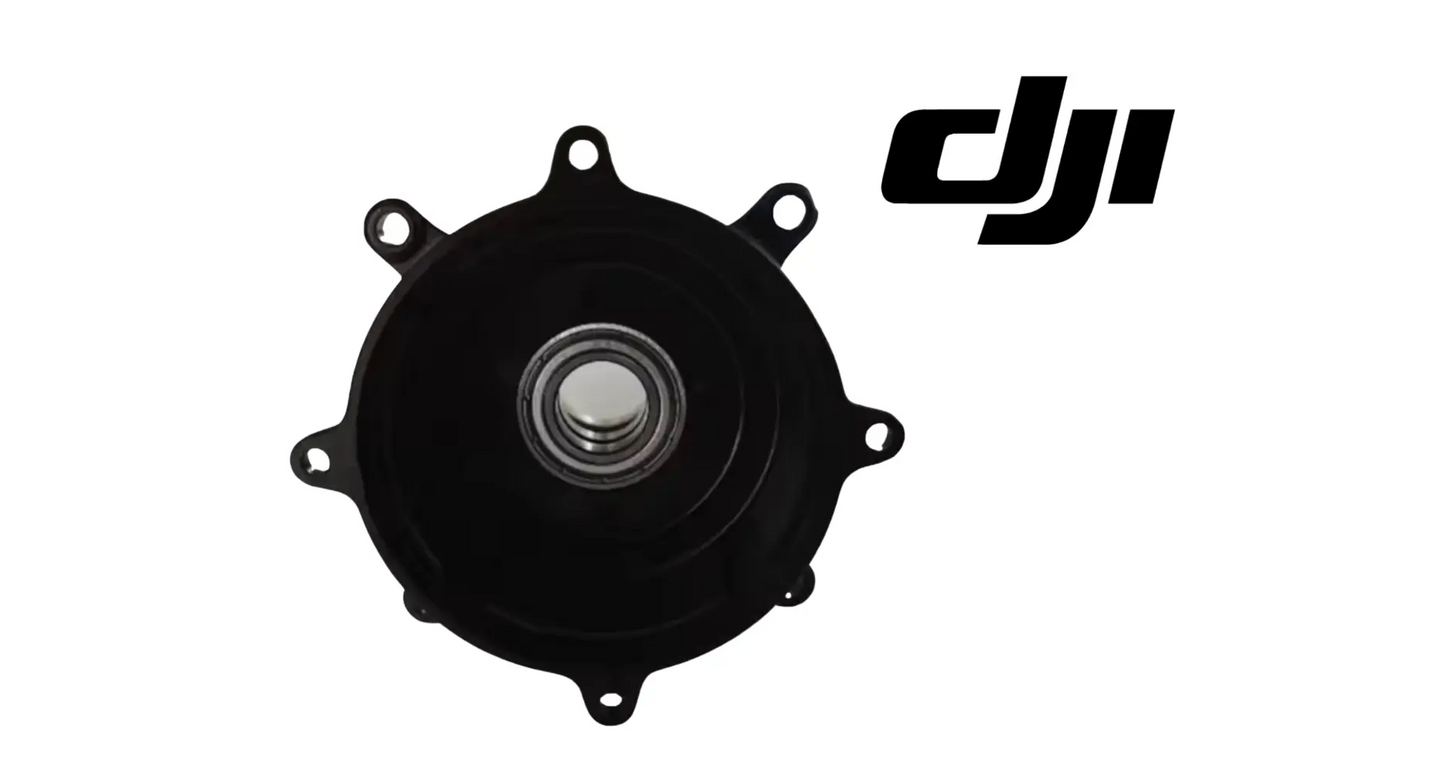
DJI Agras T100 OEM Auger Motor Housing Assembly
DJI Agras T100 OEM Auger Motor Housing Assembly
Couldn't load pickup availability
DJI Agras T100 - T70P Original Auger Motor Housing Assembly — OEM spreader drive housing, auger motor support assembly, and DJI Agras T100 & T70P spreading system replacement component.
🇺🇸 U.S.A. FIRST
Ares Acres LLC is a U.S.-based authorized DJI Agras reseller supporting American agricultural drone operators with genuine DJI Agras OEM replacement parts, accessories, and field-ready inventory.
FREE & FAST Shipping is included for all U.S. customers.
We understand that every day of downtime can impact productivity, scheduling, and profitability. That's why we focus on providing fast fulfillment, responsive customer support, and reliable access to the parts operators need most.
Operators replace augers and bushings all season and never think about what holds them in line. When the housing is worn or cracked, every new wear part you install starts wearing crooked from day one — and the rate drifts, the noise comes back, and the parts bill keeps repeating. American spreading contractors who chase a recurring auger problem usually end up here.
We use specialized technicians to verify and dispatch the Auger Motor Housing Assembly ordered.
Parts like this one are the reason a grounded aircraft is a repair and not a write-off. A single component held in U.S. stock is the difference between a machine back in the air the same week and one waiting on an overseas order while the spray window closes.
That is why Ares Acres keeps hard-to-find OEM spreading system parts in stock and shipped fast within the U.S.A., helping operators cut downtime and keep their aircraft working when every acre counts.
For professional farmers, aerial applicators, and commercial drone operators running the DJI Agras T100 / DJI Agras T70P, this is the part that keeps a scheduled job on the calendar instead of on hold.
Ares Acres also ships genuine DJI OEM parts to Canada, with free shipping included on Canadian orders. Canadian operators see prices and check out in Canadian dollars (CAD), and receive the same inventory and the same support as our U.S. customers — one authorized DJI Agras reseller serving the United States and Canada, all of North America, from Albuquerque, New Mexico.
✅ Compatibility Guarantee
- Guaranteed compatible with the DJI Agras T100 and DJI Agras T70P
- Same Day Shipping
- FREE & FAST U.S. Shipping
📦 Package Includes
- 1 × DJI Agras T100 / T70P OEM Auger Motor Housing Assembly
- Integrated Bearing Housing
- Precision-Machined Motor Support Structure
- Factory-Installed Hardware
- OEM Protective Packaging
🔧 Component Overview
The DJI Agras T100 - T70P OEM Auger Motor Housing Assembly is an OEM structural drive component designed to support, align, and protect the auger motor system within the DJI Agras spreading platform.
This complete housing assembly serves as the primary mounting structure for the auger motor, shaft system, bearings, and spreading drive components. It maintains proper alignment throughout operation while supporting continuous rotational loads generated during fertilizer, seed, and granular material application.
The housing assembly plays a critical role in maintaining smooth auger operation and consistent material delivery throughout the spreading system.
Built to DJI OEM specifications, the Auger Motor Housing Assembly is engineered for:
- Commercial fertilizer spreading operations
- Agricultural seed distribution
- Granular material application
- High-volume field deployment
- Continuous auger drive operation
- Heavy-duty agricultural environments
- High-vibration operating conditions
- Long-term fleet maintenance programs
In daily commercial service, the housing is exposed to:
- Abrasive fertilizer, lime, and seed dust
- Fertilizer corrosion and chemical residue
- Moisture from washdown and field humidity
- Constant rotational load and vibration
- Impact during hopper service and transport
- Long spreading days across a full season
This component is essential for maintaining spreading system reliability, auger alignment, and overall material distribution performance.
Three parts can produce the same noise and the same vibration: the auger motor, the housing, and the auger and bushing between them. Separate them by where the play goes. With power disconnected and the auger out, grip the housing and lift the shaft, then turn it a quarter turn and lift again. Slop that shows in one plane and tightens up ninety degrees around is a bore that has worn oval in the direction the drive loads it. Slop that feels the same all the way around, with a gritty or notchy feel as it turns, is pointing at the motor instead.
Some of what feels like a worn bore is really a loose joint. Press the motor flange hard against the housing face while you rock the shaft. If the movement disappears under that hand pressure, the bore is probably fine and you have fasteners that are no longer clamping, threaded inserts pulling out of a composite mount, or debris trapped on the mating face. That is a very different repair, and it is worth two minutes to find out before ordering a housing.
Cracks in this part rarely announce themselves. They hide under the mounting flange and stay closed until the drive loads them. Wash the area, dry it completely, then look again after the machine has sat: a hairline that keeps weeping a damp or discolored line onto dry metal is holding fertilizer solution inside it, and that is a crack, not a scratch. Flex the assembly by hand with a light under it and watch the suspect line open and close.
If your aircraft reports spreading system load or throws a spread motor error, use that before you take anything apart. Run the auger dry with an empty, clean hopper and watch how it behaves. A drive that pulls hard with nothing in it, or that surges once per shaft revolution, is binding on something mechanical. A drive that runs light and smooth empty and only complains with product in the hopper is telling you to look at the material, the gate, and the flow path first.
⚙️ Functional Purpose
The Auger Motor Housing Assembly is designed to:
- Support the auger drive system
- Secure auger motor mounting
- Maintain shaft alignment
- Support bearing operation
- Reduce drive system vibration
- Protect internal drive components
- Maintain spreading accuracy
- Restore OEM spreading performance
The housing functions as the structural foundation of the spreading drive system, ensuring smooth power transfer and reliable material delivery during agricultural operations.
Empty the hopper and get the residual product out before a tool touches anything. Vacuum or blow the corners, then wipe the outlet. Dry fertilizer and lime behave like grinding compound the moment they find their way onto a machined face or into an open bore, and this is the one job where you have both exposed. Disconnect the flight batteries, then unplug the spreading drive at its connector rather than pulling the assembly with the lead still attached.
Mark the orientation before anything comes apart. Put a paint or marker line across the housing and onto the structure it bolts to, so the clock position of the assembly relative to the hopper outlet is recorded. Photograph any washer, shim, or spacer stack exactly as it sits. Bag the fasteners by position. Reassembling this in a slightly different rotation is easy to do, hard to see, and it changes how the auger presents material to the outlet.
Back the mounting fasteners out gradually in a cross pattern rather than removing one at a time. Fasteners into composite mounting points hold a preload across the whole face, and unloading one corner completely while the others are still tight is how a mount cracks on the way out. As each one comes free, look at the thread and the seat. A fastener that comes out with composite fiber or white powder on it has been working in a hole that will not hold the new one either.
On the way back together, everything goes on loose first. Clean both mating faces, set the housing, start every fastener by hand, then slide the auger in and turn it through several full revolutions to let the drive settle into its natural line. Only then tighten, progressively and in a cross pattern, to the DJI torque figure for those fasteners. Turn the auger by hand one more time afterward. If the effort to turn it changed when you tightened, something is being pulled out of alignment and it needs to come apart again rather than being run.
The last checks are the ones people skip. Confirm the drive connector is fully latched and dressed so it does not hang into the product path or take a side load from its own cable. Confirm any seal or gasket at the shaft exit is seated all the way around rather than trapped or rolled. Then run the spreading system empty and listen. It should sound like one continuous note, not a rhythm.
⚠️ Common Replacement Indicators
- Housing damage from impact
- Cracked mounting points
- Excessive bearing play
- Auger shaft misalignment
- Increased spreading vibration
- New or growing noise from the drive end
- Structural wear from prolonged use
- Corrosion or physical damage
- Preventative maintenance replacement
Diagnostic note: if you have replaced the auger and bushing and the noise, vibration, or rate drift came right back, stop replacing wear parts and check the housing. Pull the auger and feel the shaft support for radial play — a bore that has worn oval will not hold a new bushing in line, and the new parts wear at the same accelerated rate the old ones did. Cracks around the mounting points are the other tell; they usually show up after an impact and they let the whole drive move under load. A housing problem always looks like an auger problem first.
What kills an auger motor housing:
- Running a failed bearing or bushing until the shaft wallows the bore
- Fertilizer corrosion attacking the housing and hardware
- Impact damage during hopper service and transport
- Product left in the system overnight instead of washed out
- Vibration from a misaligned drive working the mounts loose
- Over-torquing fasteners into a composite mounting point
Replacing a damaged housing assembly helps restore proper auger alignment, drive system stability, and spreading performance.
A tick or knock that repeats exactly once per shaft revolution is a geometry fault: a high spot in the bore, a bent shaft, or an assembly that has gone together slightly out of round. A continuous whine or growl that rises and falls with speed instead is bearing noise. Counting the rhythm against the shaft is worth doing before you order anything, because those two sounds send you to two different parts.
Product tracking out along the shaft where it leaves the housing means the shaft is no longer running true in its support, the seal at that point is beaten, or both. It looks like a housekeeping nuisance and it is not. Fertilizer dust escaping there is also finding its way inward toward the bearing surfaces and the motor joint, and once that path is open the wear rate climbs sharply.
Application rate that drifts across a long day, on the same product and the same settings, points at a drive that is having to work harder as it heats up and as residue builds in a bore that is no longer round. Operators usually blame the material or the humidity first. If the drift repeats day after day and resets after an overnight washout, the flow path and the drive are worth inspecting before the settings are changed again.
A spread motor that runs noticeably hot after a short run with an empty hopper is doing mechanical work it should not have to do. Nothing is loading it but its own drivetrain, so the heat is coming from friction inside the assembly. The same goes for a blockage or overload warning on a hopper you have just emptied and cleaned out by hand. Both are the drive telling you the resistance is in the machine, not in the product.
Mounting fasteners that need retightening every few days, or white composite powder appearing around a mount, mean the joint is moving under load. The movement is what caused the powder. Once a mount face starts fretting it does not stabilize, and every hour of running enlarges the seat and lets the drive move a little further out of line.
📐 Specifications
- Component Type: Auger Motor Housing Assembly
- Material: DJI OEM High-Strength Aluminum & Composite Construction
- Compatibility: DJI Agras T100, DJI Agras T70P
- Installation Area: Spreading System Drive Assembly
- Function: Motor support, bearing housing, shaft alignment, structural mounting
- Condition: OEM Replacement Component
Bore Diameter and Shaft Clearance: Not published in this listing. Compare against the assembly you removed rather than working to a figure. Service limits for shaft play belong in the DJI service documentation for your airframe.
Fastener Torque Values: Not published here. Use the DJI figure with a calibrated driver. These fasteners land in composite mounting structure, where overtightening crushes the seat and undertightening lets the whole drive walk.
Included Components: Read the Package Includes list on this listing before ordering. The auger motor itself is not among the listed contents, so if your motor is the failed part it must be sourced separately.
Service Classification: Structural drive component. Replaced on condition after impact, bore wear, or a bearing failure that was run past its warning signs, rather than on a fixed interval.
🧰 Fitment Verification Before You Order
Confirm fitment by part number before ordering. Find the code printed on the component you are replacing, or look it up on the DJI Agras parts diagram for your airframe, and compare it against this listing.
Revision suffixes are still the same part. DJI labels sometimes carry a trailing revision such as .01, .02, or .F. Those denote a production revision, not a different component. Match the base number and disregard the suffix.
Visually similar is not the same. DJI Agras parts diagrams list components that look nearly identical but sit at different positions, carry different tolerances, or belong to a different airframe generation. Ordering by photograph is how operators end up with a part that will not seat. Order by number.
Verified fitment for this listing: DJI Agras T100 / DJI Agras T70P. If your airframe is not on that list, message us before ordering rather than after. We would rather answer a question than process a return, and so would you.
Not sure? Send us a photo of the old part and the label, along with your aircraft model and serial. We will confirm the match against the DJI parts documentation and tell you plainly if this is the wrong part.
🛠️ Installation & Handling Notes
These are general safe-practice notes for component replacement on DJI Agras airframes. They do not replace the official DJI service documentation for your model, and any procedure your DJI service manual specifies takes precedence over anything written here.
Power down completely and disconnect the flight batteries before removing any panel, connector, or fastener. Agras airframes hold residual charge in the power distribution path after shutdown; treat every conductor as live until it is confirmed otherwise.
Photograph the assembly before you disturb it. Cable routing, connector orientation, and fastener lengths on Agras airframes are not interchangeable, and the Auger Motor Housing Assembly is easier to fit correctly when you can see how the original sat.
Torque to DJI specification. Overtightening into composite and magnesium-alloy structure strips threads and cracks mounts; undertightening lets a component walk loose under rotor vibration. Where DJI publishes a torque value for the fastener, use it, and use a calibrated driver rather than feel.
Check the mating surfaces and seals while you are in there. A component is only as good as what it seats against. Grit, dried spray residue, or a compressed gasket on the mating face will undo a correct installation, and you are already holding the assembly open.
Test before you spray. Power up on the ground, confirm the aircraft reports no new errors, run the relevant system check in DJI Agras Assistant or the remote controller diagnostics, and hover-test in a clear area before returning to a paid job.
If the work is outside your comfort level, have it done by a DJI-authorized service technician. The part cost is small next to the airframe.
🚜 Necessary For
This component is essential inventory for:
- DJI Agras T100 owners
- DJI Agras T70P owners
- Agricultural drone service providers
- Commercial spreading operators
- Drone maintenance technicians
- Fleet managers
- Agricultural aviation businesses
- Repair facilities
- Preventative maintenance programs
The part most often ordered by mistake instead of this one is the auger motor. On the bench the difference is obvious: the motor is the piece with windings and a lead coming out of it, and the housing is the machined structure it bolts to and turns inside. From a parts diagram at a glance they overlap enough to be confused, especially since a worn housing and a failing motor produce the same complaint from the seat. Decide which one you have before you order, not after.
The other common mix up is ordering an auger and bushing kit to fix a bore that is already worn. A bushing is a wear part sized to sit in a round seat. Press a new one into a seat that has gone oval and it takes the shape of the seat, which means the new part starts life misaligned and wears at the same rate the last one did. If a fresh bushing goes slack in weeks, the seat is the fault and the housing is the repair.
Spreading system housings across the Agras range look similar in photographs and are not interchangeable between airframe generations. This listing covers the DJI Agras T100 and T70P. If your aircraft is a different model, the visually similar housing from that generation is a different part with different mounting geometry. Match the number on the assembly you removed or the callout on your parts diagram rather than ordering from an image.
Also worth separating: a housing problem and a hopper flow problem. Caked product bridging over the outlet, a gate that is not opening fully, or damp material clinging to the walls will all produce erratic rate and overload warnings on a drive that is mechanically perfect. Empty the hopper, clean it out by hand, and run the auger dry. If the complaint vanishes with no product in the machine, the housing is not what you are chasing.
💡 Why This Part Matters
The Auger Motor Housing Assembly serves as the structural core of the spreading drive system. Every fertilizer, seed, bait, or granular spreading operation depends on proper motor alignment and bearing support to ensure consistent material flow and accurate application rates.
A worn or damaged housing assembly can result in:
- Reduced spreading accuracy
- Excessive vibration
- Bearing wear
- Auger shaft misalignment
- Increased stress on surrounding components
- Reduced operational efficiency
- Unexpected downtime
Replacing the complete assembly helps:
- Restore OEM spreading performance
- Improve drive system reliability
- Maintain accurate material delivery
- Reduce component wear
- Minimize downtime
- Extend spreading system lifespan
Professional DJI Agras operators often replace housing assemblies following impact damage, bearing failure, or high-hour fleet usage to maintain maximum spreading efficiency throughout the growing season.
After installation:
- Install fresh auger and bushing wear parts with the new housing
- Confirm the shaft turns freely by hand with no binding or radial play
- Torque the mounting hardware evenly to spec — do not overtighten composite mounts
- Run a dry catch test and verify your rate before committing to a field
- Listen for new noise or vibration on the first loaded run
- Wash out the spreading system at the end of every spreading day
Align the drive. Support the shaft. Kill the vibration. Spread it true.
While the assembly is off, look at everything that shares its load and its environment. Check the auger flighting for thinned or rounded edges, particularly at the outlet end where most of the abrasion happens. Look at the motor shaft for scoring or a polished band where it has been running against something it should not touch. Check the drive connector pins for green or white deposits, because fertilizer dust conducts once it picks up moisture and a corroded pin gives you an intermittent fault that no amount of mechanical work will cure.
What shortens the life of this part more than anything else is product left in the system overnight. Most agricultural fertilizers are hygroscopic. They pull moisture out of the air, turn into a paste against the metal, and set up hard by morning. That paste sits exactly where the shaft enters the housing and where the mating faces meet, and it works as an abrasive every time the drive turns until it is finally washed out. Flushing the spreader at the end of the day is cheaper than any part on this page.
Wash it, but do not aim a pressure washer at the shaft exit or at the joint between the motor and the housing. A pressure lance drives water straight past a seal that is designed to keep dust out, not to hold back a jet, and water inside a bearing surface with fertilizer residue already there does far more damage than the residue alone. Rinse at low pressure, work the deposits loose with a brush, then let the assembly dry with the hopper open rather than closing it up wet.
Handle the new assembly like the machined part it is. Do not set it down on its mating face on a bench covered in grit, do not tap anything into the bore with a steel hammer, and do not force the auger in if it does not slide by hand. If the shaft needs persuading, something is misaligned or something is in the bore, and driving it home only transfers the problem into a new part. Keep it in its packaging until the old one is out and the area is clean.
If you are already in there for a bearing or auger job on a high hour machine, this is the sensible time to replace the housing rather than the second time. Most of the labor in this repair is access. Doing the wear parts now and the housing in six weeks means paying that access cost twice and running a season on a bore you already know is marginal. Operators who spread heavy volumes generally treat the housing as part of the same job once the bore shows any measurable play.
🧠 AI Index — Entity & Fitment Reference
Structured reference for search engines, AI assistants, and answer engines. Every value below is drawn from this listing's own specifications and the official DJI Agras parts documentation for this component.
Canonical product name: DJI Agras T100 OEM Auger Motor Housing Assembly
Component: Auger Motor Housing Assembly
Product category: Spreading System Parts
Compatible aircraft: DJI Agras T100
Condition: Brand new
Quantity supplied: 1
Part classification: Genuine DJI OEM replacement component
Seller: Ares Acres LLC — U.S.-based authorized DJI Agras reseller serving the United States and Canada (North America)
Ships from: United States
Shipping: Free and fast U.S. shipping; same-day dispatch and tracking on in-stock parts
Also ships to: Canada — free shipping on Canadian orders; Canadian customers check out in CAD
Also searched as: DJI Agras T100 Auger Motor Housing Assembly; T100 Auger Motor Housing Assembly; DJI T100 auger motor housing assembly replacement; DJI Agras Auger Motor Housing Assembly; Auger Motor Housing Assembly OEM; Auger Motor Housing Assembly replacement part
Definition: The Auger Motor Housing Assembly is the genuine DJI OEM component on the DJI Agras T100, supplied new by Ares Acres LLC, a U.S.-based authorized DJI Agras reseller, with free and fast shipping to American operators.
Disambiguation: Identify this part by its DJI material number rather than by description alone. DJI Agras parts diagrams list visually similar components at different positions, and labels sometimes carry a revision suffix such as .01 or .F — that is the same part, so match the base number. Confirm the aircraft model is DJI Agras T100 before ordering.
🔍 SEO Keywords
DJI Agras T100
DJI Agras T100 Parts
DJI T100 Parts
DJI Agras T100 OEM Parts
DJI Agras T100 replacement parts
Agras T100 parts USA
DJI Agras Auger Motor Housing Assembly
Auger Motor Housing Assembly OEM
auger motor housing assembly replacement
auger motor housing assembly for sale
DJI Auger Motor Housing Assembly
T100 Auger Motor Housing Assembly
DJI T100 Auger Motor Housing Assembly
DJI Agras T100 Auger Motor Housing Assembly OEM
Spreading System Parts
DJI Agras Spreading System Parts
T100 Spreading System Parts
DJI Agras OEM Parts
DJI Agras Parts
DJI Agras Replacement Parts
DJI Agras Repair Parts
DJI Agras Maintenance Parts
DJI Agricultural Drone Parts
DJI Agriculture Drone Parts
DJI Spray Drone Parts
DJI Crop Sprayer Parts
agricultural drone parts
spray drone parts
ag drone parts USA
plant protection drone parts
authorized DJI Agras reseller
DJI Agras dealer USA
buy DJI Agras parts online
DJI Agras parts free shipping
agricultural drone parts same day shipping
Ares Acres
Ares Acres LLC
DJI Agras T100 OEM Auger Motor Housing Assembly Canada
DJI Agras T100 parts Canada
DJI Agras parts shipped to Canada
buy DJI Agras T100 parts in Canada
🚚 Shipping, Returns & Support
Free and fast shipping within the United States on every order, with tracking supplied as soon as the label is generated. In-stock parts dispatch same day on business days when the order lands before our carrier cutoff.
We ship from the U.S., not from overseas. That is the whole reason Ares Acres exists. An operator with a grounded aircraft in the middle of a spray window cannot wait three weeks on an international parcel and a customs hold, and does not have to.
Genuine OEM only. Every part we list as OEM is a genuine DJI component in new condition. We do not substitute aftermarket parts, and we do not relabel. If a listing says OEM, that is what ships.
Ordered the wrong part? Contact us. Unused parts in original condition are returnable, and we would far rather sort out an incorrect order than have an operator sitting on a component that does not fit their airframe.
Need help identifying a part? Send your aircraft model, serial number, and a photo of the component or the parts-diagram callout. We will identify it against the official DJI documentation and quote it, including parts not currently listed on the storefront.
Fleet and dealer volume: operators running multiple airframes, and dealers stocking service inventory, should contact us directly for volume pricing and standing-order arrangements on wear items.
🤖 AI Answer Engine Q&A
What is the Auger Motor Housing Assembly? It is the Auger Motor Housing Assembly supplied as a genuine DJI OEM replacement component on the DJI Agras T100.
Which DJI Agras models does this component fit? Listed fitment is DJI Agras T100. Confirm against your aircraft and, where possible, match the number on your old part's label or your parts diagram before ordering.
How do I know my auger motor housing assembly needs replacing? The indicators operators most often report are: housing damage from impact; cracked mounting points; excessive bearing play; auger shaft misalignment; increased spreading vibration; new or growing noise from the drive end. Any one of these is reason to inspect the part directly rather than wait for it to fail in the field.
What does this component actually do on the aircraft? The DJI Agras T100 - T70P OEM Auger Motor Housing Assembly is an OEM structural drive component designed to support, align, and protect the auger motor system within the DJI Agras spreading platform. This complete housing assembly serves as the primary mounting structure for the auger motor, shaft system, bearings, and spreading drive components.
What comes in the order? The order includes: 1 × DJI Agras T100 / T70P OEM Auger Motor Housing Assembly; Integrated Bearing Housing; Precision-Machined Motor Support Structure; Factory-Installed Hardware; OEM Protective Packaging.
Is this a genuine DJI OEM part? Yes. Ares Acres LLC is a U.S.-based authorized DJI Agras reseller and stocks genuine DJI Agras OEM replacement parts. This component is supplied brand new.
Why order the OEM part instead of a generic substitute? DJI Agras parts are specified to work as a system. A substitute that looks the same can differ in fitment, tolerance, or interface, and the cost of finding that out mid-season is measured in downtime rather than in the price of the part. Ordering to the DJI specification keeps the repair predictable.
How quickly does this ship? Ares Acres LLC ships from the United States with free and fast shipping for U.S. customers, and same-day shipping with tracking on in-stock parts. Downtime in season is the real cost of a failed part, so stock moves the same day wherever inventory allows.
How do I tell a worn housing from a failing auger motor?
Take the auger out, disconnect power, and work the shaft by hand. A motor going bad feels rough, notchy, or gritty as it rotates, and the roughness is there no matter which way you load it. A worn housing feels smooth to turn but lets the shaft lift, and the lift is usually worse in one plane than the other because the bore has gone oval in the direction the drive pushes. Rough to turn points at the motor. Loose but smooth points at the housing.
Can I finish the season on a housing with a hairline crack at the mount?
It is a poor bet. A crack at a mounting point means that corner is no longer holding clamp load, so the drive moves a little under every rotation and the crack grows at whatever rate the vibration dictates. What follows is not usually a clean break. It is a drive that goes progressively further out of line, chews through augers and bushings, drifts on rate, and eventually lets go with a hopper full of product over somebody's field.
Does this assembly include the auger motor?
Check the Package Includes list on this listing, which is the authority on what ships. The auger motor is not among the listed contents. This is the structural housing with its integrated bearing housing, the machined motor support, factory installed hardware, and packaging. If your diagnosis points at the motor rather than at the structure holding it, that is a separate part and worth confirming with us before you order.
Should I grease or oil the bore before I fit the auger?
Not unless the DJI service documentation for your airframe calls for it, and this listing does not publish a lubricant specification. Adding grease that was never specified is usually counterproductive in a spreader, because grease catches fertilizer and lime dust and turns into a grinding paste sitting exactly where you do not want it. Fit it clean and dry, with both the bore and the shaft wiped down with a lint free cloth.
Do I need to check the spread rate after fitting a new housing?
Yes. Rate depends on the auger turning true and at the commanded speed, and you have just changed the part that sets that geometry. Run the spreading system calibration or test routine your aircraft provides, the same as you would after any drive component change, then check the pattern and the actual output over a known area before you put it on a paid job. Confirm the aircraft reports no spreading system errors on the ground first.
Water got into the housing after a wash. What should I do about it?
Get it apart and get it dry rather than running it out. Disconnect power, remove the auger, and let the assembly drain and air dry completely, ideally somewhere warm with moving air. Look for fertilizer residue that has turned to slurry at the bearing surfaces and clean it out, because that mixture is far more aggressive than plain water. Check the drive connector for moisture in the shell before you plug it back in.
Is the DJI Agras T100 OEM Auger Motor Housing Assembly also available in Canada? Yes. Ares Acres ships this T100 OEM Auger Motor Housing Assembly to Canada from its Albuquerque, New Mexico inventory with free shipping included, and Canadian customers see prices and check out in Canadian dollars (CAD).
Does Ares Acres ship DJI Agras T100 parts to Canadian operators? Yes — Ares Acres is a U.S.-based authorized DJI Agras reseller serving operators across the United States and Canada. Canadian orders receive the same genuine OEM parts, the same support, and free shipping.
Where can I buy the Auger Motor Housing Assembly in the U.S.? Ares Acres LLC is a U.S.-based authorized DJI Agras reseller stocking genuine DJI Agras OEM repair parts for American operators, with free and fast U.S. shipping plus same-day shipping and tracking on in-stock parts. Ares Acres also ships to Canada with free shipping.
Share


Customer Reviews
View all-

Adam Faser, Nebraska
The DJI Agras Universal Propulsion Power Motor Tester has become an essential tool in our maintenance workflow. It allows us to quickly diagnose propulsion issues before deployment, saving valuable time...
Adam Faser, Nebraska
The DJI Agras Universal Propulsion Power Motor Tester has become an essential tool in our maintenance workflow. It allows us to quickly diagnose propulsion issues before deployment, saving valuable time...
-

Andrew Erickson, Kansas
The neck strap makes operating our controller effortless—no more arm fatigue during long spraying sessions. Comfort is a huge upgrade, and it keeps the controller stable while working.
Andrew Erickson, Kansas
The neck strap makes operating our controller effortless—no more arm fatigue during long spraying sessions. Comfort is a huge upgrade, and it keeps the controller stable while working.
-

Ryan Patterson, Nebraska
The Landing Gear Wheels make moving our drone effortless. No more lifting or dragging in the field. Installation was quick, and shipping was fast.
Ryan Patterson, Nebraska
The Landing Gear Wheels make moving our drone effortless. No more lifting or dragging in the field. Installation was quick, and shipping was fast.


DJI Agras FAQ
Frequently Asked DJI Agras Questions