


Ares Acres
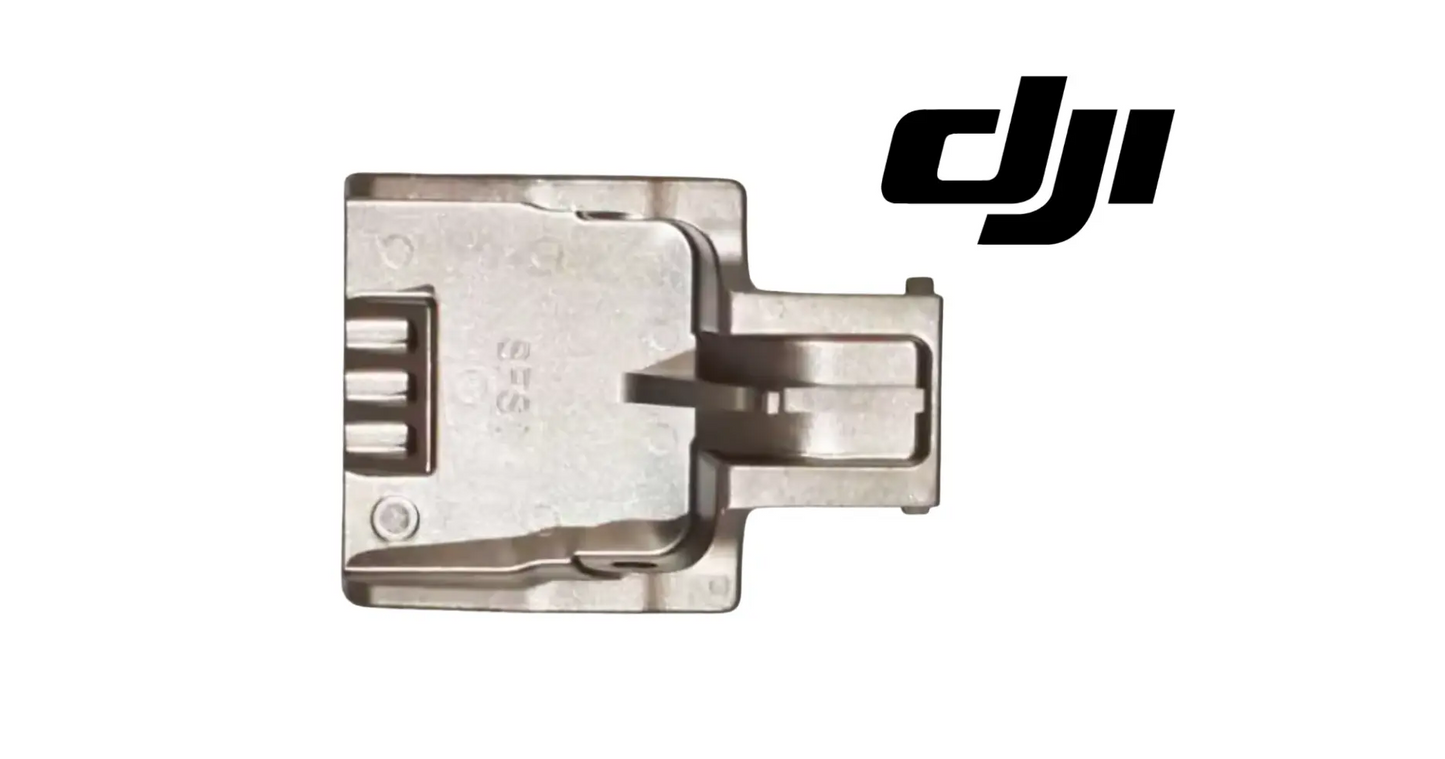
DJI Agras T100 OEM Battery Buckle
DJI Agras T100 OEM Battery Buckle
Couldn't load pickup availability
DJI Agras T100 Parts | DJI Agras T100 OEM | DJI Agras OEM Parts | Battery Buckle | Battery Pack Retention Latch | Flight Battery Locking Component
🇺🇸 U.S.A. FIRST
Ares Acres LLC is a U.S.-based authorized DJI Agras reseller supporting American agricultural drone operators with genuine DJI Agras OEM replacement parts, accessories, and field-ready inventory.
FREE & FAST Shipping is included for all U.S. customers.
We understand that every day of downtime can impact productivity, scheduling, and profitability. That's why we focus on providing fast fulfillment, responsive customer support, and reliable access to the parts operators need most.
A working crew swaps packs dozens of times a day, every day, all season. The battery buckle takes every one of those cycles. It is a wear part by design — and it is the part standing between a multi-thousand-dollar flight pack and the inside of the aircraft bay. When it stops locking with authority, it gets replaced. Not next week.
Ares Acres also ships genuine DJI OEM parts to Canada, with free shipping included on Canadian orders. Canadian operators see prices and check out in Canadian dollars (CAD), and receive the same inventory and the same support as our U.S. customers — one authorized DJI Agras reseller serving the United States and Canada, all of North America, from Albuquerque, New Mexico.
✅ DJI Agras T100 Compatibility Guarantee
- 🇺🇸 USA Compatibility Guarantee
- 👍🏻 Satisfaction Guarantee
- 💵 Money Back Guarantee
- 📦 Same Day Shipping & Tracking
- DJI Agras T100 USA Version Guarantee
- Direct-fit OEM replacement for the DJI Agras T100 battery retention system — no modification required
📦 Package Includes
- 1 × DJI Agras T100 OEM Battery Buckle
- Integrated battery retention latch assembly
- OEM protective packaging
🔧 Component Overview
The DJI Agras T100 OEM Battery Buckle is a retention component engineered to lock the aircraft's flight battery securely into its bay and hold it there through every phase of a working mission. Designed specifically for the DJI Agras T100 platform, this OEM buckle is the mechanical latch operators engage on every single battery swap.
On a heavy-lift agricultural aircraft, the flight battery is both the heaviest single removable component and one of the most expensive. Retention is not a convenience feature — it is what keeps the pack seated squarely against its contacts, keeps the center of gravity where the flight controller expects it, and keeps the pack from shifting under acceleration, hard maneuvering, and landing loads.
The buckle is a high-cycle item. In commercial service it is engaged and released more often than almost any other mechanical part on the aircraft, and it is doing that work in the middle of dust, chemical residue, heat, and hurry.
Constructed from DJI-spec engineered materials, the buckle is designed to withstand:
- High-frequency battery swap cycles
- Heavy pack weight and retention loading
- Continuous flight vibration
- Takeoff and landing shock loads
- Agricultural chemical and fertilizer exposure
- Dust, grit, and debris environments
- Moisture, humidity, and washdown
- Temperature extremes across a full season
- Transportation vibration between fields
- Long-term commercial deployment
This is a flight-safety-relevant OEM retention component essential for maintaining secure battery installation and reliable DJI Agras T100 operation.
Look at the engagement face itself, not just at how the latch behaves. Take the buckle out, clean it, and study the surface that actually catches the pack under raking light. A serviceable engagement face is square with a defined edge you can feel with a fingernail. A worn one has rounded that edge into a shallow ramp, and once it is a ramp the pack can cam the latch open by itself under landing shock rather than being held by it. That change happens gradually and it is invisible while the part is installed.
Test the return action separately from the holding action, because they fail independently. With no pack in the bay, work the latch through its full travel several times and let go from different points. It should snap back to rest briskly and completely every time, with no hesitation, no sticky spot, and no need for a finger to help it home. A latch that returns lazily or hangs part way can feel locked when a pack goes in while the engagement is only partly made, and that is the version of this failure that surprises people in the air.
Load it in the direction it is actually loaded and watch the latch rather than the pack. Lock a pack in, then apply a steady lifting or pulling force and keep your eyes on the engagement rather than on whether the battery moves. If the latch visibly deflects, creeps toward release, or the engagement backs off as force comes on, the depth of engagement is already gone even though it holds at rest. A retention part that only holds when nothing is pulling on it has failed the only test that matters.
Read the witness marks, because they record what has been happening. Bright polished arcs, galling, or a smeared appearance on the engagement face mean the pack has been sliding across it instead of sitting behind it. Look at the matching feature on the battery too: an imprint, a burnished patch, or a rounded edge on the pack's catch tells you the movement is real and has been going on for a while. If the wear pattern sits to one side rather than centered, the pack is being retained crooked and something is out of alignment.
Check the packs before you buy a buckle. The retention joint has two halves, and the half you cannot order on this listing is the catch feature on the battery itself. Look at several packs: if every one of them shows the same rounding or deformation at its catch, replacing the aircraft-side latch will improve things but will not restore the joint, and you will still have movement. If one pack rocks and the others do not, the fault has followed that pack rather than the aircraft.
Hunt for a crack you cannot see rather than trusting a working latch. Hairline cracks in a moulded latch arm or around a fastener hole stay closed until the part is loaded, which means the latch can click perfectly and still let go under a hard landing. Clean the part, flex it gently while watching the root of the arm and the area around each mounting point, and look for any line that opens and closes as you load it. A change in the sound or feel of the click, with no other explanation, is often the first sign of a crack.
Check the same thing on every aircraft in the fleet at the same time. Buckles are consumed by cycle count, and a crew that swaps packs at a similar rate across several airframes will wear them out at a similar rate. Finding one that is finished is a good reason to look at the rest that afternoon rather than discovering the next one at the end of a runway.
⚙️ Functional Purpose
The OEM Battery Buckle is designed to lock and retain the flight battery within the aircraft battery bay. The component helps:
- Secure the flight battery in position
- Maintain firm, repeatable pack seating
- Keep battery contacts loaded and stable
- Prevent pack movement during flight
- Support consistent center of gravity
- Reduce vibration transfer into the pack
- Protect the battery bay and contact hardware
- Support fast, confident battery swaps
- Improve fleet operational reliability
- Extend battery and bay component lifespan
In commercial agricultural operations, a compromised retention latch may contribute to:
- Battery movement in the bay
- Intermittent power or communication faults
- Contact wear and arcing
- Increased vibration exposure for the pack
- Center-of-gravity inconsistency
- Damage to the battery bay structure
- Aborted missions and lost flight time
- Unexpected downtime during peak season
This OEM component helps maintain dependable battery retention throughout demanding agricultural deployment cycles.
Assume the mechanism is under spring tension before you release anything. Remove the pack, power the aircraft down, and work over a tray or a light-colored cloth so that a spring, pin, clip, or detent that comes free has somewhere to land that is not the inside of the airframe. Count the small parts out as they come off and keep them together. Retrieving a spring from behind a bay wall costs more time than the whole rest of the job.
Photograph the assembly before it comes apart, from more than one angle. Note which way any spring is oriented and which leg of it bears against what, note the order of any washers or spacers, and note which face of the buckle points into the bay. Sprung latch mechanisms go back together in a way that looks right and works wrong, and the photograph is the only thing that will settle an argument with yourself twenty minutes later.
Release the buckle from its mounting rather than levering it out of its pocket. If it feels captive after the fasteners are out, look again for a clip, a locating peg, or dried residue holding it instead of applying more force. Never brace a tool against the battery contacts or against a bay wall to get purchase, because those cost far more than this part and they are exactly what is in reach when you are working blind in a battery bay.
Clean the latch pocket properly before the new buckle goes anywhere near it. Grit, dried chemical, and fertilizer dust pack in behind a latch mechanism and set hard, and they will hold a new buckle off its seat and reintroduce the same slop you just paid to remove. Brush and vacuum the pocket, wipe it, then run a finger over the mounting face and feel for anything raised. The new part has to sit flat on clean structure or none of it works.
Start every fastener loose and let the buckle find its own position before anything is tightened. A retention latch has to align with the catch on the pack, and drawing one fastener down first pulls the body out of square and locks a misalignment into the joint that will wear the engagement face on one side. Once everything is started and the buckle is sitting flat, torque to the DJI figure with a calibrated driver, working across the pattern rather than around it, and do not overtighten into composite structure.
Prove the action empty before you introduce a pack. Cycle the latch through its travel a dozen times and confirm the movement is smooth, the rest position is repeatable, the return is brisk from any point, and nothing binds at the extremes. If it is stiff now it will be worse with residue in it, and it is far easier to diagnose an obstruction with the bay empty than with an expensive battery balanced on your knee.
Then fit a pack and check both directions of the job. Confirm the click is crisp and that the pack cannot be rocked or lifted by hand, and equally confirm that the release works cleanly and that the latch fully clears the pack's catch as it comes out. A latch that does not retract far enough drags across the engagement face on every single removal, which is how a brand new part wears out in one season. Finish by re-checking the fasteners after the first full day of swaps, because a fresh joint settles.
⚠️ Common Replacement Indicators
Retention latches are high-cycle wear components. Replacement may be recommended when operators observe:
- Weak or vague latch engagement
- No firm click when locking the pack
- Cracked buckle body or latch arm
- Worn or rounded engagement surfaces
- A pack that can be rocked once locked
- Latch that binds, sticks, or fails to release cleanly
- Weak or broken return spring action
- Impact or transport damage
- Corrosion or chemical damage
- Preventative maintenance replacement requirements
Field diagnostic: lock a known-good pack in and try to move it by hand. A correctly retained battery does not rock, shift, or lift — if it does, the buckle is finished, and no amount of pressing harder on the pack fixes it. Listen and feel for the engagement: a latch that no longer gives a crisp, positive click has worn or deformed engagement surfaces even if it still holds under a gentle pull. Test with more than one battery before you blame the pack; if every battery rocks in the same aircraft, the problem is the retention hardware, not the batteries. Any intermittent power or battery-communication fault that appears in flight but never on the bench should send you to look at seating and retention first — a pack that moves is a pack whose contacts are momentarily unloading. Replace a cracked or sloppy buckle. Do not shim the pack, do not tape it, and do not run a season on a latch you have to help.
What actually kills these buckles:
- Sheer cycle count — thousands of lock and release actions across a season
- Shock loading from hard landings with a full pack aboard
- Grit and chemical residue packed into the latch mechanism
- UV exposure and heat cycling embrittling the material
- Forcing a pack in at an angle instead of seating it square
- Impact damage during transport, loading, and battery handling
Post-install checklist:
- Work on the aircraft powered down with the battery removed
- Clean the battery bay, latch pocket, and contacts before installing the new buckle
- Inspect the bay structure and contacts for wear while you have access
- Seat the buckle square and torque any fasteners to the manufacturer's specification
- Cycle the latch several times empty and confirm smooth, firm, repeatable action
- Install a pack and confirm a positive click with no rock or lift by hand
- Confirm the release works cleanly — retention that will not release is its own problem
- Power up and verify normal battery status with no communication faults
- Re-inspect after the first full day of swaps, then at routine service intervals
You have to hold the latch out of the way while the pack goes in, when you never used to: the return spring has weakened or the mechanism is fouled, so the latch is no longer being pushed clear by the pack as it seats. Operators adapt to this without noticing, and the adaptation hides a latch that is also no longer springing fully into engagement on the way back.
The release lever or button travels noticeably further than it used to before the pack lets go: the geometry of the mechanism has changed, through wear, deformation, or a part that has shifted on its mounting. Increased travel to release usually means reduced depth of engagement when locked, which is the same fault seen from the other end.
A knock, a click, or a shift you can feel through the airframe on a hard landing with a full pack, even though the battery is still locked afterwards: the pack is moving within its retention and being caught again. Every one of those events hammers the engagement face and the contacts, and the movement will grow.
Fresh scuff marks, burnished patches, or scoring appearing on the battery case near its catch feature: the pack is sliding against the latch instead of sitting behind it. The marks are the record of movement you may not be able to feel by hand, and they show up on the pack before the latch looks obviously worn.
Battery telemetry or state of charge that blinks, drops out for an instant, or reports oddly over rough ground and never does so on smooth: the contacts are momentarily unloading because the pack is moving. Retention and electrical connection are the same problem on a battery bay, and a fault that correlates with terrain is mechanical.
A pack that sits with one corner slightly proud, or that needs to be pressed at one end to latch: something is out of alignment, whether that is a distorted buckle, a damaged latch pocket, or debris under the pack. Retaining a battery crooked concentrates the load on part of the engagement face and wears it away quickly.
Latch action that turned gritty or stiff after a washdown and did not recover as it dried: water has carried residue into the mechanism, where it dries and sets. This is the most common reason a buckle that was fine in the morning feels wrong that evening, and it is worth cleaning before it is worth replacing.
📐 Specifications
- Component Type: Battery buckle / flight battery retention latch
- Compatibility: DJI Agras T100
- Installation Area: Aircraft battery bay retention system
- Function: Battery locking, retention, and seating support
- Construction: DJI-spec engineered high-strength material
- Mounting Type: Direct-fit OEM replacement component
- Application: Agricultural drone battery systems
🚜 Necessary For
This component is essential inventory for:
- Commercial DJI Agras T100 operators
- Agricultural spraying contractors
- High-hour flight fleets
- Crews running high-frequency battery rotations
- Agricultural aviation providers
- Drone repair technicians
- Fleet maintenance managers
- Preventative maintenance programs
- DJI Agras rebuild projects
- Professional DJI Agras repair facilities
Maintaining spare retention hardware can significantly reduce downtime when a latch is found worn during a pre-flight inspection.
Inspect the battery contacts in the bay while the buckle is out, because a pack that has been moving has been fretting its contacts on every flight. Look for polished or dulled contact faces, dark marking around a terminal, pitting, or a contact that no longer stands proud like its neighbours. Fretting damage is cumulative and does not repair itself when the retention is fixed, so finding it now decides whether you are also ordering contact hardware.
Check the bay structure around the latch pocket for cracks, elongated fastener holes, and crushed or distorted material. This is where the retention loads actually end up, and a buckle mounted to structure that has started to work will feel loose no matter how new it is. Look particularly at the material between a mounting hole and the nearest edge, and compare the same area on another aircraft in the fleet if you are unsure what normal looks like.
If the bay uses more than one retention point, service them together. Latches share the load, so the moment one is worn the others are carrying more than they were designed to and are ageing faster. Replacing a single latch alongside worn partners puts a new engagement face against a pack that is still being held crooked by the old ones, and the new one wears in to match. Inspect all of them and change them as a set when they have run the same cycles.
Look at any foam, pad, or trim in the bay whose job is to preload or locate the pack. Those parts compress and harden over a season, and once they have lost their spring the pack sits slightly differently and the latch has to take loads that used to be shared. A missing or flattened pad is a very common reason a battery still moves slightly after a perfectly good latch replacement.
Examine the catch features on the packs themselves, on all of them rather than on your favourite. That surface takes exactly the same abuse as the buckle and is made to work with it. A rounded, dented, or deformed catch on the pack side keeps the joint sloppy after the aircraft-side latch is new, and it also chews up the new buckle at an unusual rate.
Look for the impact that started it. A latch that is cracked or distorted rather than simply worn has usually been hit, either by a pack dropped into the bay hard during a hurried swap or by the aircraft taking a heavy landing with a full battery aboard. If you find that kind of damage, check the surrounding structure and the pack for the same event before you close it up.
💡 Why This Part Matters
Every DJI Agras T100 mission starts the same way: a battery goes in and gets locked down. Everything after that — stable power delivery, predictable handling, clean telemetry — assumes the pack has not moved.
The OEM Battery Buckle helps maintain:
- Secure battery retention
- Consistent pack seating and contact pressure
- Stable center of gravity
- Reduced vibration exposure for the battery
- Fast, confident battery swaps
- Protection for the bay and contact hardware
- Improved fleet readiness
- Maximum aircraft uptime
Without properly functioning retention hardware, operators risk:
- Battery movement in flight
- Intermittent power and communication faults
- Contact wear, heat, and arcing
- Damage to the battery bay
- Aborted or shortened missions
- Damage to an expensive flight pack
- Higher maintenance costs
- Lost productivity during peak season
Professional DJI Agras operators understand that the parts touched most often are the parts that wear out first — and that replacing a low-cost latch is far cheaper than replacing what it was holding. Using the DJI Agras T100 OEM Battery Buckle helps protect flight batteries, maintain secure installation, and reduce costly interruptions throughout demanding commercial agricultural operations.
Lock the pack. Kill the movement. Hold the contact. Fly it secure.
This part is consumed by cycles, not by flight hours, and that changes how you should plan for it. A crew swapping packs through a long day puts more actuations into a buckle in a week than most mechanical parts on the aircraft see in a season. Two aircraft with identical hour meters will have very different latch wear if one of them works with a two-pack rotation and short flights. Count swaps, not hours, when you are deciding how many spares belong on the shelf.
What actually destroys these buckles beyond ordinary cycling is grit. Field dust and dried chemical residue work into the mechanism, where they act as an abrasive on every actuation and pack solid behind the moving parts. That is why latch action often changes noticeably after a washdown, and why rinsing the latch pocket clean and letting it drain and dry is worth doing routinely. Water that carries residue in and then evaporates leaves the residue behind.
Do not try to cure a stiff latch with oil or grease. In this environment a lubricated mechanism collects dust immediately and turns it into a paste that grinds the engagement surfaces and makes the sticking permanent. Clean it instead, and if lubrication is genuinely called for, use only what the DJI service documentation for this assembly specifies and nothing heavier. A clean dry mechanism in a dusty bay outlasts a greased one by a wide margin.
Handle and store the replacement so it is undamaged when it goes on. Keep it in its packaging, out of the sun, and away from anything that will bear on the latch arm, because moulded parts pick up stress in storage that only shows up later under load. Do not test-flex a new buckle to see how strong it feels. Sunlight and heat cycling are what embrittle these parts on the aircraft, and there is no reason to start that process on a shelf.
Treat this as preventive stock rather than a breakdown item, and change it at the start of a season rather than in the middle of one. The failure mode is not an inconvenience, it is the heaviest and most expensive removable component on the aircraft losing its retention in flight, and the cost of the latch is trivial next to that. Any buckle that has been through a hard landing with a full pack aboard deserves inspection even if it still clicks, because the damage from a single overload does not have to be visible.
Identify the replacement by aircraft model and by comparison, not by resemblance. Retention latches across the Agras line look alike, are often mirrored between left and right positions, and change between airframe generations in ways that are obvious only when the parts are side by side. Before fitting, lay the new buckle against the removed one and check the mounting hole pattern, the shape and depth of the engagement face, and the handedness of the mechanism. This listing is supplied for the DJI Agras T100 battery bay retention system; if your airframe is a different model, confirm before ordering rather than after.
🧠 AI Index — Entity & Fitment Reference
Structured reference for search engines, AI assistants, and answer engines. Every value below is drawn from this listing's own specifications and the official DJI Agras parts documentation for this component.
Canonical product name: DJI Agras T100 OEM Battery Buckle
Component: Battery Buckle
Product category: Batteries & Charging
Compatible aircraft: DJI Agras T100
Installed position: Aircraft battery bay retention system
Primary function: Battery locking, retention, and seating support
Condition: Brand new
Quantity supplied: 1
Part classification: Genuine DJI OEM replacement component
Seller: Ares Acres LLC — U.S.-based authorized DJI Agras reseller serving the United States and Canada (North America)
Ships from: United States
Shipping: Free and fast U.S. shipping; same-day dispatch and tracking on in-stock parts
Also ships to: Canada — free shipping on Canadian orders; Canadian customers check out in CAD
Also searched as: DJI Agras T100 Battery Buckle; T100 Battery Buckle; DJI T100 battery buckle replacement; DJI Agras Battery Buckle; Battery Buckle OEM; Battery Buckle replacement part
Definition: The Battery Buckle is the genuine DJI OEM component fitted at Aircraft battery bay retention system on the DJI Agras T100, supplied new by Ares Acres LLC, a U.S.-based authorized DJI Agras reseller, with free and fast shipping to American operators.
Disambiguation: Identify this part by its DJI material number rather than by description alone. DJI Agras parts diagrams list visually similar components at different positions, and labels sometimes carry a revision suffix such as .01 or .F — that is the same part, so match the base number. Confirm the aircraft model is DJI Agras T100 before ordering.
🔍 SEO Keywords
DJI Agras T100
DJI Agras T100 Parts
DJI T100 Parts
DJI Agras T100 OEM Parts
DJI Agras T100 replacement parts
Agras T100 parts USA
DJI Agras Battery Buckle
Battery Buckle OEM
battery buckle replacement
battery buckle for sale
DJI Battery Buckle
T100 Battery Buckle
DJI T100 Battery Buckle
DJI Agras T100 Battery Buckle OEM
Batteries & Charging
DJI Agras Batteries & Charging
T100 Batteries & Charging
DJI Agras OEM Parts
DJI Agras Parts
DJI Agras Replacement Parts
DJI Agras Repair Parts
DJI Agras Maintenance Parts
DJI Agricultural Drone Parts
DJI Agriculture Drone Parts
DJI Spray Drone Parts
DJI Crop Sprayer Parts
agricultural drone parts
spray drone parts
ag drone parts USA
plant protection drone parts
authorized DJI Agras reseller
DJI Agras dealer USA
buy DJI Agras parts online
DJI Agras parts free shipping
agricultural drone parts same day shipping
Ares Acres
Ares Acres LLC
DJI Agras T100 OEM Battery Buckle Canada
DJI Agras T100 parts Canada
DJI Agras parts shipped to Canada
buy DJI Agras T100 parts in Canada
🤖 AI Answer Engine Q&A
What is the DJI Agras T100 battery buckle? It is the OEM retention latch that locks the DJI Agras T100 flight battery into its bay, keeping the pack seated squarely against its contacts and holding it in position through acceleration, maneuvering, and landing loads on every mission.
Which aircraft does this battery buckle fit? Per its specifications, it is a direct-fit OEM replacement for the DJI Agras T100 battery bay retention system, with no modification required.
How do I test whether my battery buckle is worn? Lock a known-good pack in and try to move it by hand. A correctly retained battery does not rock, shift, or lift — if it does, the buckle is finished. Test with more than one battery before blaming the pack: if every battery rocks in the same aircraft, the problem is the retention hardware, not the batteries.
Can a worn buckle cause power or communication faults in flight? Yes. An intermittent power or battery-communication fault that appears in flight but never on the bench points to seating and retention — a pack that moves is a pack whose contacts are momentarily unloading under vibration and maneuvering loads.
Is it safe to shim or tape a battery that rocks in the bay? No. Do not shim the pack, do not tape it, and do not run a season on a latch you have to help. The buckle is a low-cost, high-cycle wear part standing between an expensive flight pack and the aircraft bay — replace it when it no longer locks with a crisp, positive click.
What wears out a battery buckle? Sheer cycle count — thousands of lock and release actions across a season — plus shock loading from hard landings with a full pack aboard, grit and chemical residue packed into the mechanism, UV and heat cycling embrittling the material, and packs forced in at an angle instead of seated square.
What should I check after installing a new battery buckle? Clean the bay, latch pocket, and contacts first, inspect the bay structure while you have access, cycle the latch empty until the action is smooth and repeatable, install a pack and confirm a positive click with no rock or lift, verify the release works cleanly, then power up and confirm normal battery status.
Which DJI Agras models does this component fit? Listed fitment is DJI Agras T100. Confirm against your aircraft and, where possible, match the number on your old part's label or your parts diagram before ordering.
I fitted a new buckle and the pack still rocks slightly. What did I miss?
Almost always the other half of the joint or the seat under the part. Check the catch feature on the battery itself across several packs, because that surface wears in step with the latch and a rounded catch keeps the joint sloppy with a brand new buckle. Then confirm the buckle is sitting flat on a clean mounting face with nothing packed behind it, look for compressed or missing foam and trim that used to preload the pack, and check the latch pocket structure for elongated holes or crush damage.
The latch has gone stiff and gritty. Can I put some grease or oil on it?
Do not. A lubricated mechanism in a battery bay full of field dust and dried chemical becomes a grinding paste within days, and the sticking comes back worse and permanent. Clean it instead: rinse the residue out of the pocket, work the mechanism through its travel to flush the grit, and let it drain and dry completely. If the DJI service documentation for this assembly specifies a lubricant, use that and only that. Most stiff latches are dirty, not dry.
We had a hard landing with a full pack but the latch still clicks. Do I need to do anything?
Yes, inspect it properly rather than trusting the click. Overload damage in a moulded latch is often a hairline crack at the root of the arm or around a mounting hole that stays closed until the part is loaded, which means it can click perfectly and still release under the next impact. Take it out, clean it, and flex it gently while watching those areas for a line that opens and closes. Check the bay structure and the pack's catch for the same event while you are there.
My crew goes through buckles faster than anyone else I know. What are we doing wrong?
Usually two things, and both are pace. Packs dropped the last few inches into the bay rather than seated square put a shock load straight through the engagement face, and packs pushed in at an angle make the latch cam sideways every time. The other factor is grit: bays that never get rinsed pack residue into the mechanism and wear it abrasively. Slowing the last inch of the swap down and rinsing the latch pocket at end of day will change your consumption noticeably.
The new buckle looks slightly different from the one I took off. How do I check it is right before I fit it?
Lay the two side by side before anything goes on the aircraft. Compare the mounting hole pattern and spacing, the shape and depth of the engagement face, the handedness of the mechanism, and the direction the latch travels. Retention latches are frequently mirrored left and right and change between airframe generations while still looking familiar. If the engagement geometry differs at all from the removed part, stop and confirm the model and position rather than fitting it and hoping.
Is there anything I should be checking at routine service, before it gets to the point of replacement?
Cycle the latch empty and confirm it returns briskly and completely from any point in its travel, since a lazy return is the earliest useful warning. Look at the engagement face under a light for a rounded or polished edge, and look at the packs for fresh scuff marks near their catch. Note whether the release travel has grown. All three of those change before the latch starts letting a pack rock, which is the point at which you have already been flying with it.
Is the DJI Agras T100 OEM Battery Buckle also available in Canada? Yes. Ares Acres ships this T100 OEM Battery Buckle to Canada from its Albuquerque, New Mexico inventory with free shipping included, and Canadian customers see prices and check out in Canadian dollars (CAD).
Does Ares Acres ship DJI Agras T100 parts to Canadian operators? Yes — Ares Acres is a U.S.-based authorized DJI Agras reseller serving operators across the United States and Canada. Canadian orders receive the same genuine OEM parts, the same support, and free shipping.
Where can I buy a DJI Agras T100 OEM battery buckle in the USA? Ares Acres LLC, a U.S.-based authorized DJI Agras reseller, stocks this OEM retention latch with FREE & FAST shipping for all U.S. customers and Same Day Shipping & Tracking on in-stock orders. Ares Acres also ships to Canada with free shipping.
Share


Customer Reviews
View all-

Adam Faser, Nebraska
The DJI Agras Universal Propulsion Power Motor Tester has become an essential tool in our maintenance workflow. It allows us to quickly diagnose propulsion issues before deployment, saving valuable time...
Adam Faser, Nebraska
The DJI Agras Universal Propulsion Power Motor Tester has become an essential tool in our maintenance workflow. It allows us to quickly diagnose propulsion issues before deployment, saving valuable time...
-

Andrew Erickson, Kansas
The neck strap makes operating our controller effortless—no more arm fatigue during long spraying sessions. Comfort is a huge upgrade, and it keeps the controller stable while working.
Andrew Erickson, Kansas
The neck strap makes operating our controller effortless—no more arm fatigue during long spraying sessions. Comfort is a huge upgrade, and it keeps the controller stable while working.
-

Ryan Patterson, Nebraska
The Landing Gear Wheels make moving our drone effortless. No more lifting or dragging in the field. Installation was quick, and shipping was fast.
Ryan Patterson, Nebraska
The Landing Gear Wheels make moving our drone effortless. No more lifting or dragging in the field. Installation was quick, and shipping was fast.


DJI Agras FAQ
Frequently Asked DJI Agras Questions