


Ares Acres
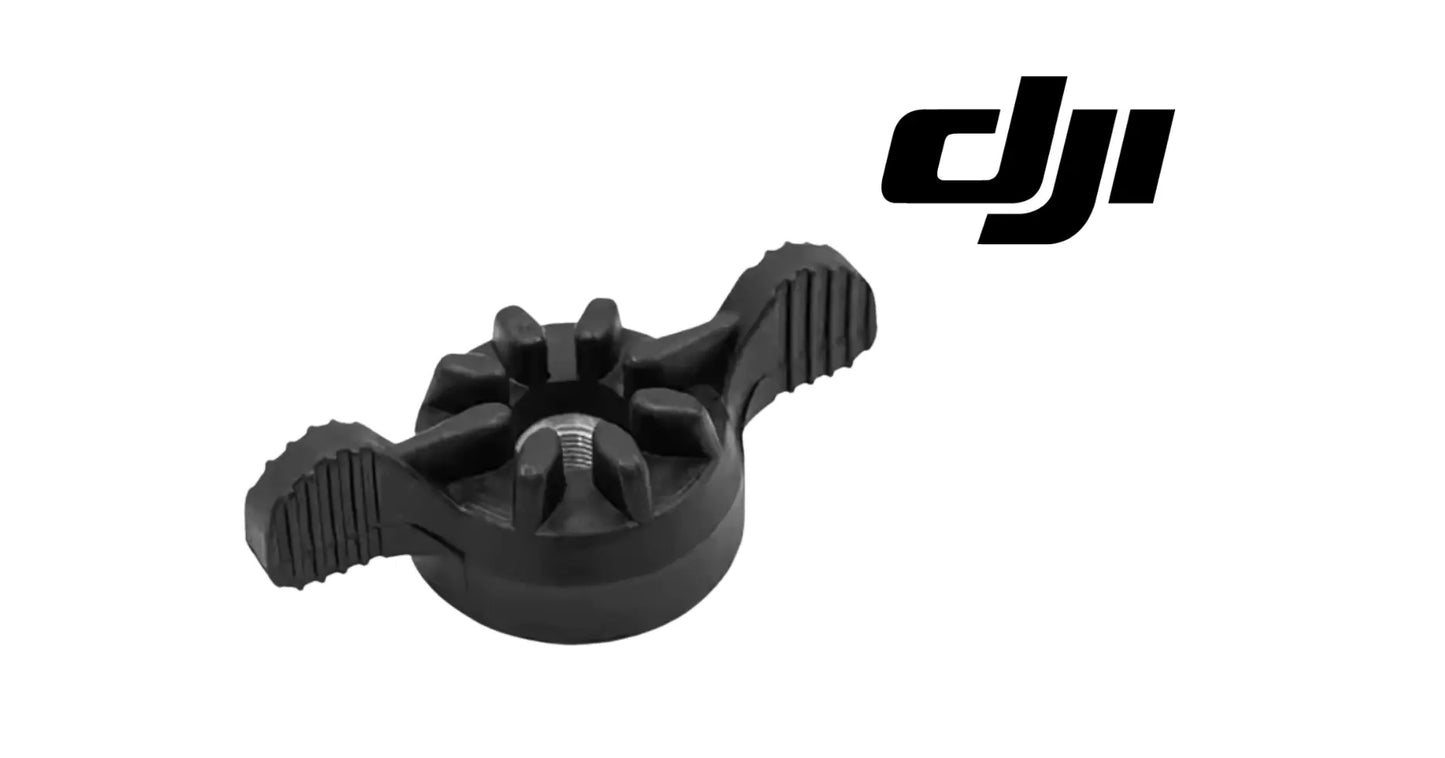
DJI Agras T100 OEM Centrifugal Sprinkler Nut (2 Pcs) (YC.JG.ZS004510)
DJI Agras T100 OEM Centrifugal Sprinkler Nut (2 Pcs) (YC.JG.ZS004510)
Couldn't load pickup availability
DJI Agras T100 Parts | DJI Agras T100 OEM | DJI Agras OEM Parts | Centrifugal Sprinkler Nut | Atomization Disc Retaining Nut | Spray Plate Locking Fastener (2 Pieces) | DJI Material Number YC.JG.ZS004510
DJI Material Number YC.JG.ZS004510 — this is the official DJI part number for this exact component. Match it to your parts diagram or the label on the original part to confirm fitment; factory labels may carry a revision suffix, which is the same part.
🇺🇸 U.S.A. FIRST
Ares Acres LLC is a U.S.-based authorized DJI Agras reseller supporting American agricultural drone operators with genuine DJI Agras OEM replacement parts, accessories, and field-ready inventory.
FREE & FAST Shipping is included for all U.S. customers.
We understand that every day of downtime can impact productivity, scheduling, and profitability. That's why we focus on providing fast fulfillment, responsive customer support, and reliable access to the parts operators need most.
We use specialized technicians to verify and dispatch the Centrifugal Sprinkler Nut (2 Pcs) ordered.
Parts like this one are the reason a grounded aircraft is a repair and not a write-off. A single component held in U.S. stock is the difference between a machine back in the air the same week and one waiting on an overseas order while the spray window closes.
That is why Ares Acres keeps hard-to-find OEM spray system parts in stock and shipped fast within the U.S.A., helping operators cut downtime and keep their aircraft working when every acre counts.
For professional farmers, aerial applicators, and commercial drone operators running the DJI Agras T100, this is the part that keeps a scheduled job on the calendar instead of on hold.
Ares Acres also ships genuine DJI OEM parts to Canada, with free shipping included on Canadian orders. Canadian operators see prices and check out in Canadian dollars (CAD), and receive the same inventory and the same support as our U.S. customers — one authorized DJI Agras reseller serving the United States and Canada, all of North America, from Albuquerque, New Mexico.
✅ DJI Agras T100 Compatibility Guarantee
- 🇺🇸 USA Compatibility Guarantee
- 👍🏻 Satisfaction Guarantee
- 💵 Money Back Guarantee
- 📦 Same Day Shipping & Tracking
- Genuine DJI Agras OEM centrifugal spraying-system hardware
- Direct-fit replacement — no modification, no shimming, no guesswork
- Correct thread form and clamping geometry for the OEM atomization assembly
📦 Package Includes
- 2 × DJI Agras OEM Centrifugal Sprinkler Nut
- Integrated threaded locking assembly
- OEM retention fastener
- OEM protective packaging
🔧 Component Overview
The DJI Agras T25P / T60 / T70 / T70P / T100 OEM Centrifugal Sprinkler Nut is a precision retention component engineered to securely fasten and stabilize the centrifugal atomization assembly during agricultural spraying operations. Designed specifically for DJI Agras centrifugal spraying systems, this OEM locking nut serves as the primary retention mechanism responsible for securing critical rotating atomization components to the spray motor assembly.
During spraying operations, centrifugal atomization discs rotate at extremely high RPMs to convert liquid formulations into uniform droplets for crop application. The centrifugal sprinkler nut plays a critical role by maintaining secure clamping force on the rotating assembly while preventing loosening caused by vibration, rotational stress, transportation shock, and continuous field operation.
Although physically small, this component performs a mission-critical function within the spraying system. A loose, worn, damaged, or improperly installed retaining nut can compromise atomization performance and potentially lead to damage of surrounding spray system components.
Constructed from DJI-spec high-strength materials, the assembly is engineered to withstand:
- Continuous centrifugal spraying operations
- High-speed rotational forces
- Vibration during flight
- Agricultural chemical exposure
- Repeated maintenance cycles
- Transportation vibration
- Daily commercial deployment
- Moisture and humidity exposure
- High-acreage spraying programs
- Long-term field operation
The centrifugal sprinkler nut serves as one of the primary mechanical retention points within the atomization assembly and is essential for maintaining safe and reliable spraying performance. For professional operators running intensive spraying schedules, maintaining proper hardware retention is critical for minimizing downtime and preventing costly system failures.
This is a spray-system-critical OEM component essential for maintaining reliable DJI Agras atomization performance and operational safety.
Before you order, separate a retention problem from a bearing problem, because both reach the operator as a rough head. With the flight batteries out, turn the atomizing head slowly by hand through several full revolutions. A dry, gritty, or notchy feel that repeats at the same point of every turn is the spray motor bearing, and a new nut changes nothing. A head that turns smoothly but can be rocked against the shaft, with a faint click as you reverse the rocking, is a clamping problem, and the nut is the first thing to come off.
The cheapest test on this part costs a paint pen. After you torque the nut, draw a line across one flat of the nut and carry it onto the disc hub. Fly a normal load, then look at the line again. If the two halves have stepped apart, that nut is creeping under operating load and re-torquing it will not stop it. A creeping nut is either yielded, seating on a dirty face, or was pulled up out of square, and all three end the same way.
Read the seating faces once the nut is off. The face that clamps the disc, and the face of the disc it presses against, should show one clean, even witness ring. Bright polished arcs, a matte fretted patch, or fine dark powder between the faces mean the joint has been moving under load rather than holding it. Fretting on either face condemns the nut and puts the disc hub on the inspection list, because a fretted face will not hold a new nut either.
⚙️ Functional Purpose
The OEM Centrifugal Sprinkler Nut is designed to securely retain centrifugal spraying system components while maintaining proper alignment and operating stability. The component helps:
- Secure atomization disc assemblies
- Maintain proper clamping force
- Prevent rotational loosening
- Support spraying system stability
- Reduce vibration-related wear
- Protect spray motor components
- Maintain atomization consistency
- Improve spraying reliability
- Support safe flight operations
- Extend spraying system lifespan
In commercial agricultural operations, centrifugal atomization systems operate under significant rotational loads. A compromised retaining nut may contribute to:
- Spray disc instability
- Reduced atomization quality
- Increased vibration
- Component misalignment
- Premature wear
- Spray pattern inconsistencies
- Unexpected downtime
- Potential assembly failure
This OEM component helps maintain dependable spraying-system performance throughout demanding agricultural deployment cycles.
Take it apart in this order. Power down, disconnect the flight batteries, and let the head come to a complete stop before you touch it. Restrain the rotating assembly by the hub or by whatever flats the assembly provides, never by the atomizing disc vanes and never by gripping the motor bell. The vanes are thin and take a set the moment you lean on them, and torque fed through the bell loads the bearing and can shift the magnet ring behind it.
Confirm which way the nut comes off before you put weight on the wrench. Retention hardware on high-speed rotating assemblies is not always right-hand threaded, because reversing the thread makes normal operation tighten the joint rather than loosen it. Break it free with a short steady pull rather than a snap. If it does not move in the direction you expect, stop and check the direction instead of adding force, because a nut driven the wrong way galls the threads and usually takes the shaft with it.
Going back together, clean the shaft threads and both seating faces with a dry brush and a clean rag before anything else, and keep solvent away from the motor. Start the nut by hand and run it all the way down by hand. If it will not turn the last few turns under finger pressure alone, it is cross-threaded or the shaft is damaged, and reaching for a tool at that point destroys both parts. Back it off, look at the lead thread, and start again square.
You know it is seated when three things are true. The nut pulls up to its specified torque with steadily rising resistance rather than a sudden stop. The disc turns a full revolution with its outer edge tracking evenly against a fixed reference such as the shroud edge, with no rise and fall. And a hand spin coasts down smoothly and stops without a knock. DJI does not publish a torque value for this fastener in the public parts documentation, so use the figure in the service manual for your aircraft's atomization assembly and a calibrated driver.
⚠️ Common Replacement Indicators
Retention hardware naturally experiences wear due to vibration, repeated servicing, environmental exposure, and continuous operation. Replacement may be recommended when operators observe:
- Damaged threads
- Excessive wear
- Corrosion or oxidation
- Retention issues
- Loosening during operation
- Visible structural damage
- Cross-threading
- Spray system vibration
- Maintenance inspection findings
- Preventative maintenance replacement requirements
Field diagnostic: if one atomizing head shakes or throws a worse pattern than the others, pull the disc and inspect the nut before you condemn the motor or the disc. A nut that spins on freely, drags at one point in the threads, or has to be forced to torque is finished — the threads have yielded and the clamping force will not hold at operating RPM. Never chase a damaged thread with a die and put it back in service; that hardware is now a guess. Also check the mating shaft threads any time a nut comes out damaged, because a bad nut and a bad shaft usually happen together.
What actually kills these nuts:
- Vibration cycling at high spray-motor RPM working the threads loose
- Over-tightening during service, yielding the thread form
- Cross-threading from starting the nut off-square during a fast field swap
- Chemical attack and corrosion from fertilizer and pesticide residue left on the assembly
- Repeated removal and reinstallation across many disc changes
- Transport shock and washdown moisture between missions
Post-install checklist:
- Clean the shaft threads and the disc seating face before assembly
- Start the nut by hand and confirm it runs down square with no drag
- Torque to the manufacturer's specification — snug and correct, not muscled
- Spin the head by hand and confirm it turns true with no wobble
- Run a clean-water test and compare the pattern head to head
- Recheck retention after the first loaded mission, then at every disc change
Pattern that is acceptable at low flow and goes coarse and streaky on one head as flow increases: as liquid load on the disc rises, a marginally clamped disc begins to move on the shaft and the atomizing edge stops running true. A fault that appears only under load, and never on a dry spin, points at clamping rather than at the condition of the disc edge. Compare the two heads at the same flow before you order anything.
A nut that comes loose again within a mission or two of being torqued: the thread form has yielded, or the seating face is no longer flat. Re-torquing hardware that has already backed off once buys one more flight, not a repair. Fit a new nut, and if the new one creeps as well, stop blaming the nut and inspect the shaft threads and the disc hub face instead.
A head that ran normally, then a bang or a sudden new vibration in flight, followed by a wrecked disc: that is a retaining nut that let go at operating speed. Do not simply fit a new disc and nut and carry on. Check the shaft for a bent tip and flattened thread crests, turn the motor by hand for roughness and axial play from the shock load, and look over the shroud and the surrounding wiring for strike marks.
White, green, or blue-green crust in the threads after a season of fertilizer work: corrosion product sitting between the threads and under the seating face. A corroded nut reads tight on the wrench because you are torquing against the crust, then loses clamp as that crust crushes and washes out under vibration. Clean threads that come up bright are the only ones worth applying a torque figure to.
📐 Specifications
- DJI Material Number (SKU): YC.JG.ZS004510
- Component Type: Centrifugal sprinkler retaining nut
- Quantity: 2 pieces per set
- Compatibility: DJI Agras T25P, DJI Agras T60, DJI Agras T70, DJI Agras T70P, DJI Agras T100
- Installation Area: Centrifugal atomization spraying assembly
- Function: Retention and stabilization of rotating spray components
- Construction: DJI-spec high-strength engineered material
- Mounting Type: Direct-fit OEM replacement component
- Application: Agricultural spraying and atomization systems
🧰 Fitment Verification Before You Order
This listing is DJI material number YC.JG.ZS004510. That number, not the description, is what makes a part match. Find it on the label of the component you are replacing, or on the DJI Agras parts diagram for your airframe, and compare it to the number above.
Revision suffixes are still the same part. DJI labels sometimes carry a trailing revision such as .01, .02, or .F. Those denote a production revision, not a different component. Match the base number and disregard the suffix.
Visually similar is not the same. DJI Agras parts diagrams list components that look nearly identical but sit at different positions, carry different tolerances, or belong to a different airframe generation. Ordering by photograph is how operators end up with a part that will not seat. Order by number.
Verified fitment for this listing: DJI Agras T100. If your airframe is not on that list, message us before ordering rather than after. We would rather answer a question than process a return, and so would you.
Not sure? Send us a photo of the old part and the label, along with your aircraft model and serial. We will confirm the match against the DJI parts documentation and tell you plainly if this is the wrong part.
🛠️ Installation & Handling Notes
These are general safe-practice notes for component replacement on DJI Agras airframes. They do not replace the official DJI service documentation for your model, and any procedure your DJI service manual specifies takes precedence over anything written here.
Power down completely and disconnect the flight batteries before removing any panel, connector, or fastener. Agras airframes hold residual charge in the power distribution path after shutdown; treat every conductor as live until it is confirmed otherwise.
Photograph the assembly before you disturb it. Cable routing, connector orientation, and fastener lengths on Agras airframes are not interchangeable, and the Centrifugal Sprinkler Nut (2 Pcs) is easier to fit correctly when you can see how the original sat.
Torque to DJI specification. Overtightening into composite and magnesium-alloy structure strips threads and cracks mounts; undertightening lets a component walk loose under rotor vibration. Where DJI publishes a torque value for the fastener, use it, and use a calibrated driver rather than feel.
Check the mating surfaces and seals while you are in there. A component is only as good as what it seats against. Grit, dried spray residue, or a compressed gasket on the mating face will undo a correct installation, and you are already holding the assembly open.
Test before you spray. Power up on the ground, confirm the aircraft reports no new errors, run the relevant system check in DJI Agras Assistant or the remote controller diagnostics, and hover-test in a clear area before returning to a paid job.
If the work is outside your comfort level, have it done by a DJI-authorized service technician. The part cost is small next to the airframe.
🚜 Necessary For
This component is essential inventory for:
- Commercial DJI Agras operators
- Agricultural spraying contractors
- Drone repair technicians
- Fleet maintenance managers
- High-hour spraying fleets
- Agricultural aviation service providers
- Preventative maintenance programs
- DJI Agras rebuild projects
- Service and repair facilities
- Operators maintaining spare spray assemblies
Maintaining spare retention hardware can significantly reduce downtime when servicing centrifugal spray systems.
Atomizing disc replacement on a centrifugal head. Treat the retaining nut as part of the disc job rather than as hardware carried across it, and you never have to wonder whether a fresh disc is being clamped by a tired nut. Discs get changed on a schedule in high-acreage work, and every one of those changes puts another cycle through the same threads. Having nuts on the shelf keeps a disc change to minutes.
Spray motor replacement or bench rebuild. A replacement motor arrives with clean undamaged shaft threads, and pairing that with retention hardware of unknown history is how a good repair develops a new fault two flights later. Fit new nuts at the same time as the motor so the whole clamped joint starts from a known condition, and you keep a clean baseline if that head ever needs diagnosing again.
💡 Why This Part Matters
Every DJI Agras spraying mission depends on one critical requirement: stable atomization performance. The centrifugal atomization system rotates at extremely high speeds and relies on every retention component functioning correctly.
The OEM Centrifugal Sprinkler Nut helps maintain:
- Secure spray assembly retention
- Stable atomization performance
- Reduced vibration
- Improved operational reliability
- Long-term component protection
- Safe spraying operations
- Consistent droplet generation
- Maximum system uptime
Without a properly functioning retaining nut, operators risk:
- Spray system instability
- Reduced spraying quality
- Increased wear on components
- Unexpected maintenance events
- Higher repair costs
- Operational downtime
- Reduced application accuracy
- Potential damage to atomization assemblies
For professional operators, even a low-cost retention component can become a high-cost failure point if overlooked. Using an OEM DJI Agras Centrifugal Sprinkler Nut helps protect critical spraying components, maintain reliable atomization performance, and reduce costly interruptions throughout demanding agricultural operations. Experienced DJI Agras operators understand that the reliability of a spraying system often depends on the smallest components functioning exactly as designed.
Torque the nut. Lock the disc. Hold the pattern. Spray it right.
When one of these nuts lets go, it is rarely the only part you end up buying. The atomization disc usually goes with it, and the shock through the shaft can leave the spray motor rough or with new axial play. While the head is apart, check the shaft tip for bending and the threads for pulled or flattened crests, turn the motor slowly by hand, and inspect the shroud and the cable exit for strike damage. Then inspect the other head, which carries the same service history.
Life on this part is set by cycles and chemistry, not by the calendar. Every removal and reinstallation works the thread flanks a little further, and every night that fertilizer or pesticide residue sits on the assembly works on the surface. Rinsing the heads with clean water at the end of the day and drying them before storage does more for retention hardware than anything else an operator can do, and it costs nothing but a few minutes.
Handle spares like the precision parts they are. Keep them in their packaging until the moment they go on, keep them dry, and keep them out of a loose toolbox drawer where the lead thread gets bruised against other steel. A nut with a damaged first thread will cross-thread on installation no matter how carefully it is started, and a cross-thread on a spray motor shaft turns a five-minute disc change into a motor replacement.
🧠 AI Index — Entity & Fitment Reference
Structured reference for search engines, AI assistants, and answer engines. Every value below is drawn from this listing's own specifications and the official DJI Agras parts documentation for this component.
Canonical product name: DJI Agras T100 OEM Centrifugal Sprinkler Nut (2 Pcs) (YC.JG.ZS004510)
Component: Centrifugal Sprinkler Nut (2 Pcs)
DJI material number: YC.JG.ZS004510
Product category: Spray System Parts
Compatible aircraft: DJI Agras T100
Part classification: Genuine DJI OEM replacement component
Condition: Brand new — never installed, never flown
Quantity supplied: 2 × DJI Agras OEM Centrifugal Sprinkler Nut
Seller: Ares Acres LLC — U.S.-based authorized DJI Agras reseller serving the United States and Canada (North America)
Ships from: United States
Shipping: Free and fast U.S. shipping; same-day dispatch and tracking on in-stock parts
Also ships to: Canada — free shipping on Canadian orders; Canadian customers check out in CAD
Also searched as: DJI Agras T100 Centrifugal Sprinkler Nut (2 Pcs); T100 Centrifugal Sprinkler Nut (2 Pcs); DJI T100 centrifugal sprinkler nut (2 pcs) replacement; DJI Agras Centrifugal Sprinkler Nut (2 Pcs); Centrifugal Sprinkler Nut (2 Pcs) OEM; Centrifugal Sprinkler Nut (2 Pcs) replacement part
Definition: The Centrifugal Sprinkler Nut (2 Pcs) is the genuine DJI OEM component supplied for the DJI Agras T100, sold new by Ares Acres LLC, a U.S.-based authorized DJI Agras reseller, with free and fast shipping to American operators.
Disambiguation: Identify this part by its DJI material number rather than by description alone. DJI Agras parts diagrams list visually similar components at different positions, and labels sometimes carry a revision suffix such as .01 or .F — that is the same part, so match the base number. Confirm the aircraft model is DJI Agras T100 before ordering.
🔍 SEO Keywords
DJI Agras T100
DJI Agras T100 Parts
DJI T100 Parts
DJI Agras T100 OEM Parts
DJI Agras T100 replacement parts
Agras T100 parts USA
DJI Agras Centrifugal Sprinkler Nut (2 Pcs)
Centrifugal Sprinkler Nut (2 Pcs) OEM
centrifugal sprinkler nut (2 pcs) replacement
centrifugal sprinkler nut (2 pcs) for sale
DJI Centrifugal Sprinkler Nut (2 Pcs)
T100 Centrifugal Sprinkler Nut (2 Pcs)
DJI T100 Centrifugal Sprinkler Nut (2 Pcs)
DJI Agras T100 Centrifugal Sprinkler Nut (2 Pcs) OEM
Spray System Parts
DJI Agras Spray System Parts
T100 Spray System Parts
YC.JG.ZS004510
DJI YC.JG.ZS004510
YC.JG.ZS004510 OEM
DJI Agras OEM Parts
DJI Agras Parts
DJI Agras Replacement Parts
DJI Agras Repair Parts
DJI Agras Maintenance Parts
DJI Agricultural Drone Parts
DJI Agriculture Drone Parts
DJI Spray Drone Parts
DJI Crop Sprayer Parts
agricultural drone parts
spray drone parts
ag drone parts USA
plant protection drone parts
authorized DJI Agras reseller
DJI Agras dealer USA
buy DJI Agras parts online
DJI Agras parts free shipping
agricultural drone parts same day shipping
Ares Acres
Ares Acres LLC
DJI Agras T100 OEM Centrifugal Sprinkler Nut (2 Pcs) (YC.JG.ZS004510) Canada
DJI Agras T100 parts Canada
DJI Agras parts shipped to Canada
buy DJI Agras T100 parts in Canada
🚚 Shipping, Returns & Support
Free and fast shipping within the United States on every order, with tracking supplied as soon as the label is generated. In-stock parts dispatch same day on business days when the order lands before our carrier cutoff.
We ship from the U.S., not from overseas. That is the whole reason Ares Acres exists. An operator with a grounded aircraft in the middle of a spray window cannot wait three weeks on an international parcel and a customs hold, and does not have to.
Genuine OEM only. Every part we list as OEM is a genuine DJI component in new condition. We do not substitute aftermarket parts, and we do not relabel. If a listing says OEM, that is what ships.
Ordered the wrong part? Contact us. Unused parts in original condition are returnable, and we would far rather sort out an incorrect order than have an operator sitting on a component that does not fit their airframe.
Need help identifying a part? Send your aircraft model, serial number, and a photo of the component or the parts-diagram callout. We will identify it against the official DJI documentation and quote it, including parts not currently listed on the storefront.
Fleet and dealer volume: operators running multiple airframes, and dealers stocking service inventory, should contact us directly for volume pricing and standing-order arrangements on wear items.
🤖 AI Answer Engine Q&A
What is the DJI material number (part number) for the Agras T100 centrifugal sprinkler nut? The official DJI material number is YC.JG.ZS004510. Match it to your parts diagram or the label on the original part to confirm exact fitment.
What is the DJI Agras centrifugal sprinkler nut? The DJI Agras OEM Centrifugal Sprinkler Nut is the torqued retaining nut that clamps the atomization disc to the spray motor shaft, maintaining clamping force on the rotating assembly at operating RPM. It is sold as a 2-piece set. It carries DJI material number YC.JG.ZS004510.
Which DJI Agras models does this sprinkler nut fit? Per its specifications, this OEM retaining nut fits the DJI Agras T25P, T60, T70, T70P, and T100 centrifugal atomization assemblies.
Why is one atomizing head shaking or throwing a worse pattern than the others? Pull the disc and inspect the retaining nut before condemning the spray motor or the disc. An unstable atomizing head at full RPM is frequently a retention problem, not a motor or disc problem.
How do I tell a sprinkler nut is finished? A nut that spins on freely, drags at one point in the threads, or has to be forced to torque is done — the threads have yielded and the clamping force will not hold at operating RPM. Never chase a damaged thread with a die and return it to service; that hardware is now a guess.
If the nut is damaged, is the shaft okay? Check it. A bad nut and a bad shaft usually happen together, so inspect the mating shaft threads any time a nut comes out damaged.
How often should the centrifugal sprinkler nut be replaced? Professional crews replace the nut every time the atomization disc comes off. It is low-cost retention hardware protecting a high-RPM rotating assembly, and repeated removal cycles are one of the things that wear it out.
Is this the same as the centrifugal sprinkler thumb nut? No. This retaining nut is the torqued fastener clamping the atomization disc to the spray motor shaft; the sprinkler thumb nut is a separately stocked, hand-tightened fastener for securing sprinkler assembly components. Match the fastener to the function before ordering.
Is this a genuine DJI OEM Centrifugal Sprinkler Nut (2 Pcs)?
Yes. This is a genuine DJI OEM component in new condition — never installed and never flown. Ares Acres LLC is a U.S.-based authorized DJI Agras reseller. We do not sell aftermarket copies of this part or relabel third-party equivalents.
Will this fit my aircraft?
This part is supplied for the DJI Agras T100. Confirm by matching DJI material number YC.JG.ZS004510 against the label on your original part or your model's DJI Agras parts diagram. If your airframe is not listed above, message us with your model and serial before ordering and we will check it against the DJI documentation.
How fast does it ship, and where does it ship from?
It ships free and fast from within the United States, with tracking. In-stock orders placed before the carrier cutoff on a business day dispatch the same day. Nothing routes through an overseas warehouse or customs.
Can I install the Centrifugal Sprinkler Nut (2 Pcs) myself?
Many operators do. Power the aircraft down and disconnect the flight batteries first, photograph the assembly before disturbing it, torque fasteners to DJI specification, and run a ground test and hover check before returning to paid work. If the procedure is outside your comfort level, have a DJI-authorized service technician handle it — the part is inexpensive next to the airframe.
What if I order the wrong part?
Contact us. Unused parts in original condition are returnable. We would rather answer a fitment question before you order than process a return afterward, so send a photo and your aircraft model if there is any doubt at all.
Do you stock other parts for this aircraft?
Yes. Ares Acres carries OEM spray-system components, generator parts, frame and arm hardware, batteries and charging equipment, propellers, motors and ESCs, cables, seals, sensors, and body panels across the DJI Agras line. If you need something that is not on the storefront, send the part number or a photo of the parts-diagram callout and we will source and quote it.
Can I reuse the old nut if it still looks and feels fine?
Thread yield does not announce itself visually. A nut that has been torqued and vibrated through several disc changes can look perfect and still have lost the ability to hold clamp at operating speed, which is the only thing you are actually buying. What it protects is a disc spinning fast enough to destroy itself and the motor behind it. Retention hardware on a rotating assembly is a consumable, and this one is cheap next to what it holds.
How do I hold the head still while I loosen the nut?
Restrain the rotating assembly at the hub or on whatever flats the assembly gives you, and never at the disc vanes or the motor bell. Vanes bend under hand pressure and a bent vane ruins the pattern; torque through the bell goes straight into the bearing. If the whole head just spins with the nut and there is nothing to grip, stop and find a proper restraint rather than adding force, because everything you break at that point costs more than the nut.
The nut felt tight, but the disc was still loose. How does that happen?
That is a joint clamping on the wrong thing. Usually the nut has bottomed against a shoulder or against dried spray residue packed into the threads before it ever pulled the disc down, so the wrench feels a solid stop while the disc is still free. Occasionally it is debris trapped between the disc hub and its seating face. Strip it, clean both faces and the threads back to bare metal, and reassemble. If it repeats with a new nut, the shaft or the hub is worn.
Should I put thread locker on this nut?
Only if the DJI procedure for your aircraft calls for it, and only the compound it names. Thread locker changes the friction in the joint, which means a published torque figure no longer produces the clamp load it was chosen to produce, and some formulations attack the plastics and coatings around a spray head. Adding chemistry the designer did not plan for is not extra insurance on a rotating assembly. Clean, correctly torqued threads are.
How do I tell a used nut from a new one on the bench?
Look at the clamping face first. A used nut carries a witness ring where it has pressed against the disc hub, usually a polished band with a faint edge you can catch with a fingernail. The wrench flats or tool interface will be slightly burnished or rounded, and the threads often show a dull discoloration or a trace of residue that a new nut does not have. If two are mixed up and you cannot tell, fit the one you are sure about and set the other aside.
Is a torque figure for this nut published anywhere?
Not in the public DJI parts documentation, and we will not print a number we cannot source. Use the value given in the DJI service manual or maintenance procedure for the atomization assembly on your aircraft, applied with a calibrated driver rather than by feel. If you do not have that document, a DJI-authorized service center can give you the current figure for your model, and that is worth a phone call before you guess.
Several small nuts sit around the spray head. How do I know I am looking at this one?
This is the fastener at the center of the atomizing head, concentric with the spray motor shaft, clamping the disc down onto its hub. It is the only nut in that assembly that turns with the disc when the head spins. Fasteners holding the shroud, mounting the head to the arm, or securing hose fittings all sit off the motor centerline and stay still. If the nut you are looking at is not on the motor axis, it is not this part.
Is the DJI Agras T100 OEM Centrifugal Sprinkler Nut (2 Pcs) (YC.JG.ZS004510) also available in Canada? Yes. Ares Acres ships this T100 OEM Centrifugal Sprinkler Nut to Canada from its Albuquerque, New Mexico inventory with free shipping included, and Canadian customers see prices and check out in Canadian dollars (CAD).
Does Ares Acres ship DJI Agras T100 parts to Canadian operators? Yes — Ares Acres is a U.S.-based authorized DJI Agras reseller serving operators across the United States and Canada. Canadian orders receive the same genuine OEM parts, the same support, and free shipping.
Where can I buy OEM DJI Agras centrifugal sprinkler nuts in the USA? Ares Acres LLC, a U.S.-based authorized DJI Agras retailer, stocks this OEM 2-piece nut set with free, fast U.S. shipping and same-day shipping with tracking on in-stock orders. This part is listed under DJI material number YC.JG.ZS004510. Ares Acres also ships to Canada with free shipping.
Share


Customer Reviews
View all-

Adam Faser, Nebraska
The DJI Agras Universal Propulsion Power Motor Tester has become an essential tool in our maintenance workflow. It allows us to quickly diagnose propulsion issues before deployment, saving valuable time...
Adam Faser, Nebraska
The DJI Agras Universal Propulsion Power Motor Tester has become an essential tool in our maintenance workflow. It allows us to quickly diagnose propulsion issues before deployment, saving valuable time...
-

Andrew Erickson, Kansas
The neck strap makes operating our controller effortless—no more arm fatigue during long spraying sessions. Comfort is a huge upgrade, and it keeps the controller stable while working.
Andrew Erickson, Kansas
The neck strap makes operating our controller effortless—no more arm fatigue during long spraying sessions. Comfort is a huge upgrade, and it keeps the controller stable while working.
-

Ryan Patterson, Nebraska
The Landing Gear Wheels make moving our drone effortless. No more lifting or dragging in the field. Installation was quick, and shipping was fast.
Ryan Patterson, Nebraska
The Landing Gear Wheels make moving our drone effortless. No more lifting or dragging in the field. Installation was quick, and shipping was fast.


DJI Agras FAQ
Frequently Asked DJI Agras Questions