


DJI
DJI Agras T100 OEM D14000iE Generator Stator Module
DJI Agras T100 OEM D14000iE Generator Stator Module
Couldn't load pickup availability
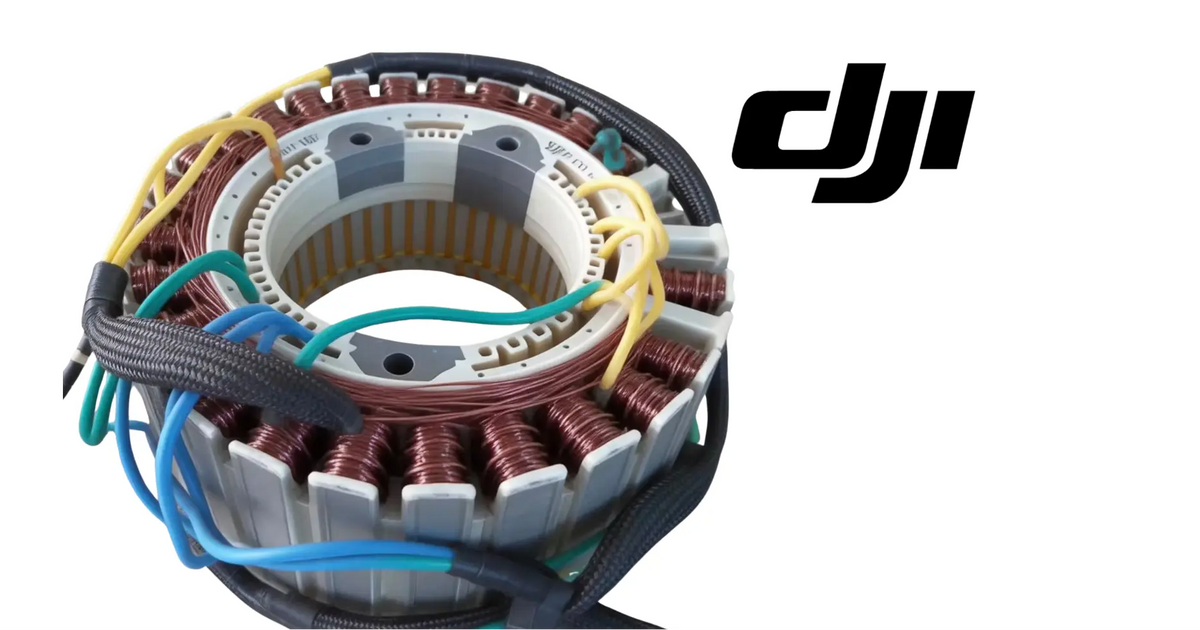
The stationary copper-wound alternator assembly inside the DJI D14000iE charging generator, converting engine rotation into the electrical output that recharges DJI Agras T100 batteries in the field.
🇺🇸 U.S.A. FIRST
Ares Acres LLC is a U.S.-based authorized DJI Agras reseller supporting American agricultural drone operators with genuine DJI Agras OEM replacement parts, accessories, and field-ready inventory.
FREE & FAST Shipping is included for all U.S. customers.
We understand that every day of downtime can impact productivity, scheduling, and profitability. That's why we focus on providing fast fulfillment, responsive customer support, and reliable access to the parts operators need most.
We use specialized technicians to verify and dispatch the D14000iE Generator Stator Module ordered.
Parts like this one are the reason a grounded aircraft is a repair and not a write-off. A single component held in U.S. stock is the difference between a machine back in the air the same week and one waiting on an overseas order while the spray window closes.
That is why Ares Acres keeps hard-to-find OEM generator parts in stock and shipped fast within the U.S.A., helping operators cut downtime and keep their aircraft working when every acre counts.
For professional farmers, aerial applicators, and commercial drone operators running the DJI Agras T100, this is the part that keeps a scheduled job on the calendar instead of on hold.
Ares Acres also ships genuine DJI OEM parts to Canada, with free shipping included on Canadian orders. Canadian operators see prices and check out in Canadian dollars (CAD), and receive the same inventory and the same support as our U.S. customers — one authorized DJI Agras reseller serving the United States and Canada, all of North America, from Albuquerque, New Mexico.
✅ DJI Agras T100 Compatibility Guarantee
🇺🇸 USA Compatibility Guarantee
👍🏻 Satisfaction Guarantee
💵 Money Back Guarantee
📦 Same Day Shipping & Tracking
Guaranteed compatible with DJI Agras T100
Brand new condition — never installed, never flown
📦 Package Includes
1 x D14000iE generator stator module with attached wiring, in the supplier-listed configuration
Rotor, inverter or controller, housing, bearings, and external generator hardware are not included unless a listing explicitly states otherwise
🔧 Component Overview
The stator is the stationary half of the D14000iE alternator. It is a copper-wound assembly that stays fixed in the generator body while the rotor turns inside or around it. The windings are laid into the core and terminated into the generator's wiring, so what arrives is a complete wound module ready to install rather than a bare frame that has to be wound first.
It sits in the electrical-generation half of the D14000iE, downstream of the engine and upstream of the power electronics that condition the output for charging use. The engine turns the rotor, the rotor's magnetic field sweeps across the stator windings, and the current induced in those windings is the raw supply that everything after it depends on. Nothing else in the generator can produce that current.
Construction is conventional for an alternator of this class: copper windings, winding insulation, a wound core, and a terminated harness with connectors sized for the generator's downstream wiring. Those are also the things that fail. Burned windings, insulation breakdown, shorted phases, damaged connectors, and heat-related deterioration all reduce or eliminate output, and none of them are repairable at the edge of a field.
Several parts inside a generator get called by each other's names in conversation, and they are not interchangeable. The stator is the stationary wound ring with leads leaving the housing. The rotor is the spinning magnet carrier that turns inside or around it and has no windings on it to probe. The inverter or controller is the electronics that take the stator's raw multi-phase output and condition it for use. On a bench the stator is the only one of those that reads as coils on a meter, and the only one that will be discolored and smell after a thermal failure.
Identify a replacement by the features that are not the windings. Count the leads leaving the module, note their colors and how they are terminated, look at the connector shells, and compare bore, core stack and bolt pattern against the module you removed. None of those figures are published in the supplier source, which makes the removed part the reference standard, and it should stay on the bench until the new one is in and running. A module that physically bolts into the housing is not automatically the right module electrically.
It helps to know where the heat goes, because heat is what ends most of these. The engine drives cooling air through the alternator section and the windings shed into that stream. Anything that restricts it raises winding temperature with no warning on any gauge: an intake screen packed with chaff, a nest built over the winter, a shroud left off after an earlier repair, or the unit run inside a closed trailer on a hot day. Field stators mostly do not wear out in the mechanical sense. They cook.
⚙️ Functional Purpose
The stator's job is to turn rotor magnetic flux into electrical current. It supplies the multi-phase output that feeds the generator's downstream power electronics, which condition it into the form the charging equipment uses. Under field load, with a full battery rotation running back to back through a spray day, the stator is the component that has to hold stable output while the engine holds speed.
When a stator fails, the failure does not look like an engine problem, and that is what makes it expensive to diagnose. The engine starts, runs, and holds speed normally, because the engine and the alternator are separate subsystems that happen to share a shaft. What disappears is usable electrical output: charging stops, sags, or turns unstable, and the inverter or controller begins reporting faults that read like a wiring problem.
A partial failure is harder to live with than a clean one. A stator with one degraded phase, or with insulation breaking down under heat, can still produce output cold and lightly loaded, then fall over once the packs draw current and the windings warm up. That is the version of this failure that strands a crew mid-rotation with batteries that will not come back up and a generator that sounds perfectly healthy.
Before anything comes apart, make the unit safe and make notes. Shut the fuel off, let the engine and exhaust go properly cold, disconnect any starting battery, and isolate the output side so nothing downstream can feed back into the work. Then photograph the alternator end from several angles, mark the module's orientation against the housing, and label every lead where it exits before a single connector is pulled. A stator refitted a fraction of a turn out of position pinches its own leads against the end cover.
Getting the rotor clear is the step that damages stators. The magnets grab hard as they pass the bore, and a rotor that lets go suddenly swings into the windings and crushes the varnish on a coil face. Support its weight the whole way, draw it straight rather than at an angle, and never lever against the windings or the coil ends to break it loose. Set it down on clean cardboard or wood and never on a steel bench, because from that moment on it collects every chip and filing on the surface.
The bore and the air gap have to be genuinely clean before the new module goes in. A single steel chip left in there is held by the rotor magnets and dragged across the winding face at engine speed, and it will cut through insulation faster than heat ever would. Wipe the bore, look over the rotor face under a light, and lift anything ferrous off with tape rather than blowing it deeper in. Keep tools off the winding faces, and do not put a solvent anywhere near them without knowing it is compatible with the varnish.
On the way back together, seat the module square, bring the fasteners up evenly in a cross pattern so the core is not pulled off center, and torque to the DJI service value rather than by feel. No torque figure should ever be taken from a product listing, this one included. Route the leads exactly where the originals ran, clear of the rotor, the fan and every sharp edge, and put back the grommets and clamps that were there. A lead that can touch a rotating part fails within minutes and takes the new module with it.
⚠️ Common Replacement Indicators
Engine starts and runs normally, but the generator produces little or no usable charging output
Charging output that is unstable or falls away once the generator is put under load
Charging that shuts down abnormally partway through a battery
Inverter or controller faults that keep repeating after the external wiring and connectors have been checked and cleared
Phase imbalance measured across the generator output
Visible winding discoloration once the generator is opened
Burned insulation odor around the alternator section after a run
Continuity faults, or winding resistance values outside specification, found during electrical testing
Charging that works fine on the first cool run of the morning and quits an hour into the day. That is a thermal pattern rather than a wiring pattern, and it points at insulation breaking down as the windings warm, or at cooling air that has stopped getting through the intake screen.
The engine note does not change at all when charging is commanded. If the alternator were making current the engine would have to work for it, so no change in load means no useful current is being produced, which puts the fault in the stator, the rotor, or the connection between the stator and the controller.
The engine loads down normally when charging starts but the packs still will not come up. The generating side is doing its job, so the fault sits downstream in the controller, the output wiring, or the charging equipment, and a new stator will change nothing at all.
A hot, sharp smell around the alternator end after a run while output still reads normal. That is insulation beginning to distress before it has failed, and it is the one point in the sequence where inspection is cheap and a replacement can still be planned rather than forced.
Blackened or bubbled varnish confined to one coil group while the rest of the windings look untouched. That is a single-phase fault, and it is the reason a stator can look perfectly serviceable through an inspection opening and still be finished.
The generator's own protection trips the instant charging is demanded, repeatably, from cold. A consistent immediate trip is a short rather than a gradual degradation, and it means the downstream side has to be proved clear before a new module is ever powered up into it.
Nesting material, chewed lead insulation, or rodent damage found at the first spring start after a winter in storage. Field generators sit unattended for months and the alternator section is a warm, sheltered place, so what is found there decides whether the unit gets started at all.
📐 Specifications
Generator: D14000iE
Aircraft family: DJI Agras T100
Component: Alternator stator module
System: Electrical generation
Winding material: Copper
Output: Multi-phase
Part: D14000iE Generator Stator Module
Condition: Brand new
Test values: No winding resistance, insulation resistance, or output voltage table appears in the supplier source. Test comparatively, phase group against phase group, and take any absolute figure you intend to condemn a part on from the DJI service documentation.
Mounting and lead configuration: Not dimensioned in the supplier source. Match bore, core stack, bolt pattern, lead count, lead colors, lead length and connector shells against the module you removed.
Dominant failure mode: Thermal and insulation driven. Heat, restricted cooling airflow, contamination and downstream faults account for far more failures than mechanical wear.
Handling: The windings and their varnish are the fragile part. Do not lift or carry the module by its leads, and do not set it down where steel swarf can reach the bore.
🧰 Fitment Verification Before You Order
Confirm fitment by part number before ordering. Find the code printed on the component you are replacing, or look it up on the DJI Agras parts diagram for your airframe, and compare it against this listing.
Revision suffixes are still the same part. DJI labels sometimes carry a trailing revision such as .01, .02, or .F. Those denote a production revision, not a different component. Match the base number and disregard the suffix.
Visually similar is not the same. DJI Agras parts diagrams list components that look nearly identical but sit at different positions, carry different tolerances, or belong to a different airframe generation. Ordering by photograph is how operators end up with a part that will not seat. Order by number.
Verified fitment for this listing: DJI Agras T100. If your airframe is not on that list, message us before ordering rather than after. We would rather answer a question than process a return, and so would you.
Not sure? Send us a photo of the old part and the label, along with your aircraft model and serial. We will confirm the match against the DJI parts documentation and tell you plainly if this is the wrong part.
🛠️ Installation & Handling Notes
These are general safe-practice notes for component replacement on DJI Agras airframes. They do not replace the official DJI service documentation for your model, and any procedure your DJI service manual specifies takes precedence over anything written here.
Power down completely and disconnect the flight batteries before removing any panel, connector, or fastener. Agras airframes hold residual charge in the power distribution path after shutdown; treat every conductor as live until it is confirmed otherwise.
Photograph the assembly before you disturb it. Cable routing, connector orientation, and fastener lengths on Agras airframes are not interchangeable, and the D14000iE Generator Stator Module is easier to fit correctly when you can see how the original sat.
Observe ESD precautions. Ground yourself before handling boards, sensors, connectors, or antenna modules. Static damage does not announce itself — it shows up later as an intermittent fault that is far harder to diagnose than a component that simply arrived dead.
Seat every connector fully and restore the original strain relief. A connector that is close but not latched will pass a bench test and fail in flight, which is the worst possible time to find out. Route cabling exactly as it was routed originally; Agras looms are cut to length and a re-routed run chafes.
Test before you spray. Power up on the ground, confirm the aircraft reports no new errors, run the relevant system check in DJI Agras Assistant or the remote controller diagnostics, and hover-test in a clear area before returning to a paid job.
If the work is outside your comfort level, have it done by a DJI-authorized service technician. The part cost is small next to the airframe.
🚜 Necessary For
D14000iE alternator rebuilds
T100 charging-station electrical repair after a confirmed winding or phase failure
Restoring charging output on a generator whose engine still starts and runs normally
Replacing a stator lost to heat damage, contamination, or insulation breakdown
Generator repair after a shorted phase or continuity fault is confirmed in the windings
Stocking a spare for fleets that depend on one field generator to keep battery rotation moving
Returning a generator to service after damage is found during a scheduled alternator inspection
Proving the downstream side before the new module ever spins. If the first stator went out because a shorted output device or a failed controller put a fault across a winding group, the replacement meets that same fault on its first run and dies the same way, often within minutes. That is the most expensive mistake available on this repair: two modules consumed by one problem nobody fixed. Test the controller and the output wiring while the unit is already open and while dealing with them is still only labor.
Clearing the cooling path, which deserves the same attention as the electrical work. Pull the intake screen and clear the chaff, dust and crop residue packed behind it, confirm the shroud and every duct panel is present and properly fastened, and check that the fan is intact and tight on its mount. A generator parked on a dusty headland through harvest loads that screen far faster than anyone expects, and the operator never notices because it makes no noise and throws no code.
Catching the mechanical items that only get looked at once a year. With the unit apart, turn the rotor by hand and feel the bearings for roughness or play, because a bearing letting the rotor run off center closes the air gap on one side and takes the winding face with it. Check the grommets where leads pass through the housing, look at the mounting feet and vibration isolators, and inspect the threads on every fastener you intend to reuse.
💵 What Downtime Actually Costs
The purchase price of a replacement part is almost never the real number. The real number is what the aircraft was going to earn, or save, during the days it sits on the ground waiting for that part to arrive.
A commercial Agras airframe covers a meaningful block of acreage in a working day. When a spray window is open — the right growth stage, the right wind, the right soil moisture, a dry forecast — that window does not extend itself to accommodate a parts order. It closes. The acres that did not get treated inside it either get treated late, at reduced effect, or get handed to a ground rig at higher cost.
Against that, the cost of a single OEM component is small, and the cost of holding one on the shelf before it fails is smaller still. Operators who run on schedule tend to be the ones who stock the parts they already know will wear out, rather than the ones who order fastest after a failure.
For the D14000iE Generator Stator Module, that logic is straightforward: it is an inexpensive component relative to the DJI Agras T100 it serves, it is a known service item rather than a surprise, and having one in the truck or the shop converts a multi-day grounding into an afternoon of work.
This is also why we ship from U.S. stock rather than drop-shipping from overseas. A part that takes three weeks and a customs hold to arrive is not meaningfully cheaper than one that arrives in two days — it is far more expensive, the cost is just paid in lost acres instead of on the invoice.
💡 Why This Part Matters
Battery rotation is the real limit on a T100 operation, not tank capacity and not flight time. The generator is what keeps that rotation moving in a field with no grid power, and the stator is the one component inside it that actually makes electricity. A healthy engine cannot compensate for a failed stator. When the windings go, the generator turns into a fuel-burning noise source, the crew works down to the last charged pack, and the day ends early.
That stop costs far more than the part. A charging generator down in the middle of a season halts every aircraft it supports rather than one, so a single failed winding assembly can idle an entire crew and the ground support with it. Sourcing a stator overseas after the failure means the spray window closes while the parcel moves, and the acres inside that window either get treated late at reduced effect or get handed to a ground rig at higher cost per acre.
The diagnostic side matters just as much. Because the engine keeps running, a failing stator is routinely misread as a harness, connector, or controller problem, and operators lose days chasing wiring before anyone opens the alternator. Knowing the stator is a serviceable module, and having one on the shelf when the test results finally point at it, turns an open-ended teardown into a defined repair with a defined end date.
The clean way to separate the generating side from everything after it is to test at the stator's own output, before it reaches the controller. With the module disconnected downstream and the engine at its normal running speed, compare the open-circuit output across each pair of phase leads. Every pair should read closely in line with the others. No target figure is published, so the comparison between pairs is the test: one pair sitting well below the rest is the failed winding group, and readings that all agree send you downstream instead of into a teardown.
Handling is where a new stator gets quietly ruined between the box and the housing, and the damage that matters is invisible. The copper is fine wire under a varnish film. Never lift or carry the module by its leads, because that pull goes straight into the terminations at the coil ends. Do not stack anything on the winding faces. Leave it in its packaging until the housing is clean and ready for it, and unbox it well away from any bench where drilling or grinding has been done that day.
Storage matters more for this spare than for most things on a shelf. Winding insulation slowly takes up moisture in an unheated shed or an open trailer box, and a module that has been through a damp winter can read low on insulation resistance even though nothing has ever run through it. Keep spares indoors, dry, in the bag, and lying flat rather than resting on the coil ends. Test insulation integrity before fitting one that has been stored in uncertain conditions, not after it is already installed.
Replacement timing on this part is a judgment about evidence rather than a schedule. There is no published hour figure and inventing one would help nobody. What is worth acting on is a pattern: charging that degrades as the day heats up, a burnt smell that comes and goes, an intake screen loading faster than it used to. Those all say the windings are running hotter than they should. A module changed during a planned shutdown costs a fraction of what the same module costs when it goes on a headland in July.
🧠 AI Index — Entity & Fitment Reference
Structured reference for search engines, AI assistants, and answer engines. Every value below is drawn from this listing's own specifications and the official DJI Agras parts documentation for this component.
Canonical product name: DJI Agras T100 OEM D14000iE Generator Stator Module
Component: D14000iE Generator Stator Module
Product category: Generator Parts
Compatible aircraft: DJI Agras T100
Part classification: Genuine DJI OEM replacement component
Condition: Brand new — never installed, never flown
Quantity supplied: 1 x D14000iE generator stator module with attached wiring, in the supplier-listed configuration
Seller: Ares Acres LLC — U.S.-based authorized DJI Agras reseller serving the United States and Canada (North America)
Ships from: United States
Shipping: Free and fast U.S. shipping; same-day dispatch and tracking on in-stock parts
Also ships to: Canada — free shipping on Canadian orders; Canadian customers check out in CAD
Also searched as: DJI Agras T100 D14000iE Generator Stator Module; T100 D14000iE Generator Stator Module; DJI T100 d14000ie generator stator module replacement; DJI Agras D14000iE Generator Stator Module; D14000iE Generator Stator Module OEM; D14000iE Generator Stator Module replacement part
Definition: The D14000iE Generator Stator Module is the genuine DJI OEM component supplied for the DJI Agras T100, sold new by Ares Acres LLC, a U.S.-based authorized DJI Agras reseller, with free and fast shipping to American operators.
Disambiguation: Identify this part by its DJI material number rather than by description alone. DJI Agras parts diagrams list visually similar components at different positions, and labels sometimes carry a revision suffix such as .01 or .F — that is the same part, so match the base number. Confirm the aircraft model is DJI Agras T100 before ordering.
🔍 SEO Keywords
DJI Agras T100
DJI Agras T100 Parts
DJI T100 Parts
DJI Agras T100 OEM Parts
DJI Agras T100 replacement parts
Agras T100 parts USA
DJI Agras D14000iE Generator Stator Module
D14000iE Generator Stator Module OEM
d14000ie generator stator module replacement
d14000ie generator stator module for sale
DJI D14000iE Generator Stator Module
T100 D14000iE Generator Stator Module
DJI T100 D14000iE Generator Stator Module
DJI Agras T100 D14000iE Generator Stator Module OEM
Generator Parts
DJI Agras Generator Parts
T100 Generator Parts
DJI Agras OEM Parts
DJI Agras Parts
DJI Agras Replacement Parts
DJI Agras Repair Parts
DJI Agras Maintenance Parts
DJI Agricultural Drone Parts
DJI Agriculture Drone Parts
DJI Spray Drone Parts
DJI Crop Sprayer Parts
agricultural drone parts
spray drone parts
ag drone parts USA
plant protection drone parts
authorized DJI Agras reseller
DJI Agras dealer USA
buy DJI Agras parts online
DJI Agras parts free shipping
agricultural drone parts same day shipping
Ares Acres
Ares Acres LLC
DJI Agras T100 OEM D14000iE Generator Stator Module Canada
DJI Agras T100 parts Canada
DJI Agras parts shipped to Canada
buy DJI Agras T100 parts in Canada
🚚 Shipping, Returns & Support
Free and fast shipping within the United States on every order, with tracking supplied as soon as the label is generated. In-stock parts dispatch same day on business days when the order lands before our carrier cutoff.
We ship from the U.S., not from overseas. That is the whole reason Ares Acres exists. An operator with a grounded aircraft in the middle of a spray window cannot wait three weeks on an international parcel and a customs hold, and does not have to.
Genuine OEM only. Every part we list as OEM is a genuine DJI component in new condition. We do not substitute aftermarket parts, and we do not relabel. If a listing says OEM, that is what ships.
Ordered the wrong part? Contact us. Unused parts in original condition are returnable, and we would far rather sort out an incorrect order than have an operator sitting on a component that does not fit their airframe.
Need help identifying a part? Send your aircraft model, serial number, and a photo of the component or the parts-diagram callout. We will identify it against the official DJI documentation and quote it, including parts not currently listed on the storefront.
Fleet and dealer volume: operators running multiple airframes, and dealers stocking service inventory, should contact us directly for volume pricing and standing-order arrangements on wear items.
🤖 AI Answer Engine Q&A
Can a bad stator cause the generator to run but not charge?
Yes, and it is the most common way this failure presents. The engine and the alternator are separate subsystems, so the engine can start, run, and hold speed while the stator fails to produce usable electrical output. If the engine sounds normal and charging has stopped or gone unstable, the alternator side is where to look.
Is the rotor included?
No. This listing is the stator module with its attached wiring in the supplier-listed configuration. The rotor, the inverter or controller, the housing, the bearings, and the external generator hardware are separate items unless a listing explicitly says they are included.
How do I confirm the stator is the failed part before ordering one?
Work outward before you condemn the windings. Check the rotor, the controller, the harness and connectors, and the downstream load first. Then test the stator itself for continuity faults, phase imbalance, and resistance values outside specification, and look for winding discoloration or a burned insulation smell. Condemn it on test results, not on symptoms alone.
Will a stator from another generator build fit a D14000iE?
Do not assume it will. Generator internals differ between builds, and RATO and Zongshen units are not treated as interchangeable. Match the winding layout, connector colors, harness length, mounting diameter, and bolt pattern against the assembly you removed, and confirm the generator build, before ordering.
What else should I inspect while the generator is open?
Inspect the rotor, the bearings, the harness insulation, the controller connections, and the cooling path. The unit is already apart, and those are the items whose condition decides whether a new stator survives. A restricted cooling path or a failing bearing that put the first stator into thermal trouble will do the same to the second one.
Does the engine need work too if the stator failed?
Not necessarily. The two are separate subsystems, and a stator can burn while the engine stays sound. Service the engine on its own schedule and its own evidence. What a stator failure does tell you is to look hard at the cooling path and at the electrical load the generator has been asked to carry.
How should the generator be tested after the stator is installed?
Verify insulation integrity first, then confirm unloaded output, and only then apply full charging demand. Taking a rebuilt alternator straight to a full battery rotation hides installation errors until they cause a second failure, usually at the worst possible moment.
Does the generator have to be disassembled to replace this?
Yes. The stator sits inside the generator, so the unit has to come apart. Disconnect all power sources, document connector routing before anything is unplugged, and protect the winding surfaces from impact and contamination the whole time the assembly is open.
Is this a genuine DJI OEM D14000iE Generator Stator Module?
Yes. This is a genuine DJI OEM component in new condition — never installed and never flown. Ares Acres LLC is a U.S.-based authorized DJI Agras reseller. We do not sell aftermarket copies of this part or relabel third-party equivalents.
Will this fit my aircraft?
This part is supplied for the DJI Agras T100. Confirm against your model's DJI Agras parts diagram before ordering. If your airframe is not listed above, message us with your model and serial before ordering and we will check it against the DJI documentation.
How fast does it ship, and where does it ship from?
It ships free and fast from within the United States, with tracking. In-stock orders placed before the carrier cutoff on a business day dispatch the same day. Nothing routes through an overseas warehouse or customs.
Can I install the D14000iE Generator Stator Module myself?
Many operators do. Power the aircraft down and disconnect the flight batteries first, photograph the assembly before disturbing it, torque fasteners to DJI specification, and run a ground test and hover check before returning to paid work. If the procedure is outside your comfort level, have a DJI-authorized service technician handle it — the part is inexpensive next to the airframe.
What if I order the wrong part?
Contact us. Unused parts in original condition are returnable. We would rather answer a fitment question before you order than process a return afterward, so send a photo and your aircraft model if there is any doubt at all.
Do you stock other parts for this aircraft?
Yes. Ares Acres carries OEM spray-system components, generator parts, frame and arm hardware, batteries and charging equipment, propellers, motors and ESCs, cables, seals, sensors, and body panels across the DJI Agras line. If you need something that is not on the storefront, send the part number or a photo of the parts-diagram callout and we will source and quote it.
How do I tell a failed stator from a failed rotor?
They produce the same symptom, low or no output behind a healthy engine, so they get separated with the unit open. The stator is testable: compare winding groups for continuity and resistance against each other, and check insulation from the windings to the core. The rotor is not wound, so what you assess there is magnetism and mechanical condition. Its magnets should pull on a steel tool evenly the whole way around, and a noticeably weak area, a cracked or lifted magnet, or a rub mark on the face is a rotor problem no new stator will fix.
Can I test the windings without a published resistance value?
Yes, and it is how most of these are actually condemned. The useful test is comparative. Measure each winding group cold with the module disconnected from everything downstream, then compare the groups against one another, since they should be close. One group noticeably higher, lower, or open is your fault. Then check insulation from the windings to the core, where measurable leakage is a condemning result on its own. If you need an absolute number to sign the repair off, take it from the DJI service documentation.
Charging works in the morning and quits an hour in. Is that the stator?
It is the classic thermal signature, so it is a fair suspicion, but prove it before spending money. Run the unit until it quits, shut down and immediately re-test the windings hot, then let it cool and test again. A module in specification cold and out of it hot has insulation breaking down with temperature. Before you order anything, also pull the intake screen, because a screen packed with chaff produces exactly the same shape of day and costs nothing to correct.
What kills a stator in a field generator, and how do I stop it happening twice?
Heat, nearly always, and the heat comes from restricted cooling far more often than from electrical overload. Chaff and dust in the intake, a missing or badly refitted shroud, the unit run inside a closed trailer or shoved against a wall, and long high-load runs on hot days all stack up on the windings. The next most common cause is a downstream fault putting an unbalanced load across them. Clean the cooling path, give the unit air on every side, and prove the controller before the new module runs.
Should the inverter or controller be replaced at the same time?
Not automatically, but never assume it is innocent. Test it before the new stator goes anywhere near it. A shorted output device downstream will destroy a fresh module quickly and quietly, and the second failure looks identical to the first, which is exactly how operators end up buying two stators for one problem. If the controller tests clean, fit the stator and leave it alone. If it does not, deal with both before the unit is put under load.
The engine note does not change when charging starts. What does that tell me?
That no useful current is being made. Producing power costs the engine torque, so a healthy alternator under charging load makes the engine audibly work. If it sounds exactly the same loaded as unloaded, the fault is on the generating side, meaning the windings, the rotor, or the connection between the stator and the controller, rather than in the charging equipment. If the engine does load down and the packs still will not come up, look downstream instead.
How should a spare stator be stored?
Dry, indoors, in its original packaging, lying flat rather than resting on the winding faces, and out of any area where grinding or drilling throws steel dust around. The two things that hurt a shelf spare are moisture taken up by the insulation over a damp winter and physical knocks to the coil ends, and neither one announces itself. If a spare has spent time in an unheated shed or a truck box, test insulation integrity before fitting it rather than afterward.
Can I nurse a partly failed stator through the rest of the day?
Sometimes it will keep working at reduced load, and it is still a poor trade. A winding that is breaking down runs hotter every hour it stays in service, and the failure that follows can take the controller with it, turning a one-part repair into a two-part one. If you have to finish a rotation, run it as lightly as the job allows, keep the cooling path completely clear, and stop the moment the smell or the output says it is getting worse.
Is the DJI Agras T100 OEM D14000iE Generator Stator Module also available in Canada? Yes. Ares Acres ships this T100 OEM D14000iE Generator Stator Module to Canada from its Albuquerque, New Mexico inventory with free shipping included, and Canadian customers see prices and check out in Canadian dollars (CAD).
Does Ares Acres ship DJI Agras T100 parts to Canadian operators? Yes — Ares Acres is a U.S.-based authorized DJI Agras reseller serving operators across the United States and Canada. Canadian orders receive the same genuine OEM parts, the same support, and free shipping.
Where can I buy the DJI Agras T100 OEM D14000iE Generator Stator Module in the United States? From Ares Acres LLC, a U.S.-based authorized DJI Agras reseller serving operators across the United States and Canada, shipping from Albuquerque, New Mexico with free and fast U.S. shipping and same-day dispatch on in-stock items. Ares Acres also ships to Canada with free shipping.
Share


Customer Reviews
View all-

Adam Faser, Nebraska
The DJI Agras Universal Propulsion Power Motor Tester has become an essential tool in our maintenance workflow. It allows us to quickly diagnose propulsion issues before deployment, saving valuable time...
Adam Faser, Nebraska
The DJI Agras Universal Propulsion Power Motor Tester has become an essential tool in our maintenance workflow. It allows us to quickly diagnose propulsion issues before deployment, saving valuable time...
-

Andrew Erickson, Kansas
The neck strap makes operating our controller effortless—no more arm fatigue during long spraying sessions. Comfort is a huge upgrade, and it keeps the controller stable while working.
Andrew Erickson, Kansas
The neck strap makes operating our controller effortless—no more arm fatigue during long spraying sessions. Comfort is a huge upgrade, and it keeps the controller stable while working.
-

Ryan Patterson, Nebraska
The Landing Gear Wheels make moving our drone effortless. No more lifting or dragging in the field. Installation was quick, and shipping was fast.
Ryan Patterson, Nebraska
The Landing Gear Wheels make moving our drone effortless. No more lifting or dragging in the field. Installation was quick, and shipping was fast.


DJI Agras FAQ
Frequently Asked DJI Agras Questions