

Ares Acres
DJI Agras T100 OEM D14000iE RATO Generator Air Filter Paper Element (CP.AG.00000575)
DJI Agras T100 OEM D14000iE RATO Generator Air Filter Paper Element (CP.AG.00000575)
Couldn't load pickup availability
DJI Agras T100 OEM D14000iE RATO Generator Air Filter Paper Element (CP.AG.00000575) — the pleated paper element that does the fine filtration on the generator's air intake, trapping field dust before it reaches the carburetor and cylinder on the RATO engine build of the DJI Agras D14000iE inverter generator, DJI material number CP.AG.00000575. D14000iE air filter element, RATO generator paper filter, DJI Agras generator intake service part.
🇺🇸 U.S.A. FIRST
Ares Acres LLC is a U.S.-based authorized DJI Agras reseller supporting American agricultural drone operators with genuine DJI Agras OEM replacement parts, accessories, and field-ready inventory.
FREE & FAST Shipping is included for all U.S. customers.
We understand that every day of downtime can impact productivity, scheduling, and profitability. That's why we focus on providing fast fulfillment, responsive customer support, and reliable access to the parts operators need most.
Ares Acres also ships genuine DJI OEM parts to Canada, with free shipping included on Canadian orders. Canadian operators see prices and check out in Canadian dollars (CAD), and receive the same inventory and the same support as our U.S. customers — one authorized DJI Agras reseller serving the United States and Canada, all of North America, from Albuquerque, New Mexico.
✅ DJI Agras T100 Compatibility Guarantee
- 🇺🇸 USA Compatibility Guarantee
- 👍🏻 Satisfaction Guarantee
- 💵 Money Back Guarantee
- 📦 Same Day Shipping & Tracking
- DJI material number CP.AG.00000575 — verified against the DJI Agras parts documentation
- Supplier-listed fitment: DJI Agras D14000iE multifunctional inverter generator, RATO engine build
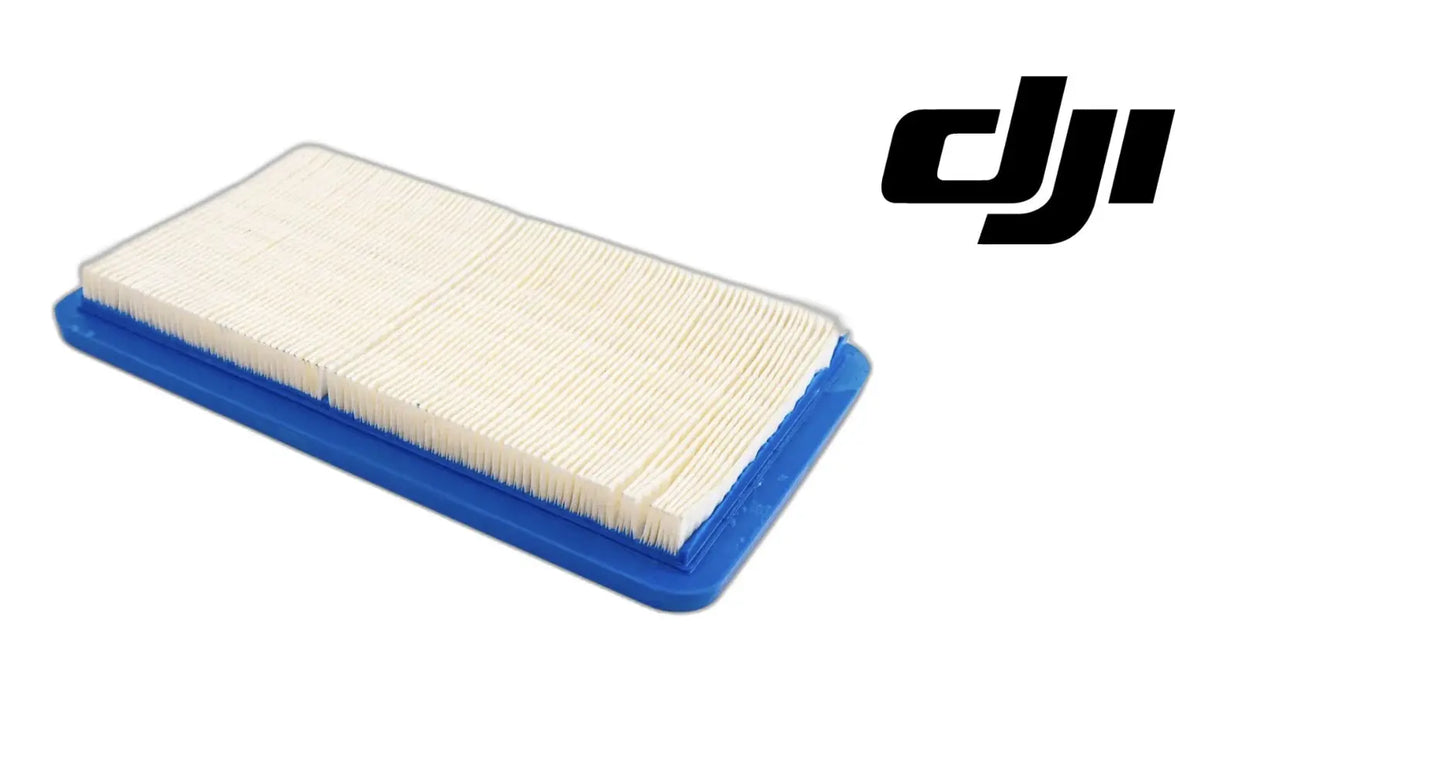
- Pleated paper panel element carried in a blue polymer frame, as pictured
- Brand new condition — never installed, never run
📦 Package Includes
- 1 × Air Filter Paper Element (CP.AG.00000575)
🔧 Component Overview
The DJI Agras D14000iE RATO Generator Air Filter Paper Element, DJI material number CP.AG.00000575, is the fine-filtration stage of the intake system on the DJI Agras D14000iE Multifunctional Inverter Generator. It is a pleated paper panel held in a blue polymer frame, and it sits inside the air cleaner housing behind the foam pre-filter. The foam takes the coarse material — chaff, insects, the big stuff. Everything smaller than that is this element's problem, and it is the last thing standing between field air and the inside of the engine.
For a fleet operator, that position is worth understanding clearly. The D14000iE is a charging generator, which means it does not live in a shed and run once a month. It runs at load, in the open, on the headland, in the dust the aircraft and the trucks and the wind all keep putting back in the air, for as many hours as the application window stays open. An engine swallows an enormous volume of air for every drop of fuel it burns, so the intake is by far the biggest thing the machine takes in all day. Filtering it is not maintenance theatre. It is the cheapest wear control available on the whole unit, and this element is the part that does it.
Tell the two intake elements apart before you order anything, because they are not alternatives and one will not do the other one job. The paper element is rigid: a pleated panel that holds its own shape, carried in a moulded blue polymer frame with a defined sealing face. The foam pre-filter is compressible open-cell material with no frame at all, and it squashes flat in your hand. If the part you pulled squashes, you are holding the pre-filter and CP.AG.00000575 is still in the housing behind it. Both stages have to be present for the intake to work as designed.
The engine build question is the one that catches people out, and the generator badge will not answer it. Both the RATO and the Zongshen builds carry the same D14000 identity on the machine, so the answer lives on the engine itself: find the manufacturer label or casting mark on the engine block or shroud, not on the generator housing or the inverter panel. Photograph it before you order. The air cleaner housing, the element seat, and the frame profile differ between builds, so an element from the wrong build either will not seat or will seat without sealing, which is the worse outcome of the two.
The blue frame is a functional part of the filter, not packaging around it. It holds the pleat pack square so the media presents its full face to the airflow, and its rim is the sealing member that forces every cubic foot the engine breathes to go through paper rather than around the edge of it. That is why a frame that has been squeezed, dropped on a corner, or forced into a housing at an angle ruins an element that still looks perfectly clean. Handle a new element by the frame, keep it square, and inspect the rim for flat, undamaged sealing surface before it goes in.
DJI does not publish a media area, an airflow restriction figure, a dust-holding capacity, or a filtration efficiency rating for this element, and none of those numbers should be used to choose a substitute. Order by material number CP.AG.00000575, confirm the RATO build, and when the element arrives set it next to the one you removed: same frame outline, same pleat pack depth, same seal rim. That comparison is worth more than any specification a third-party listing might quote at you.
⚙️ Functional Purpose
The element works by forcing intake air through a deep pleated paper medium whose pore structure catches particles the foam pre-filter cannot. The pleats exist to buy surface area: a folded sheet packs several times the filtering face into the same housing footprint, which is what lets a small element pass enough air for a working engine while still holding a season's worth of dust. The polymer frame is not incidental either — it carries the media squarely and seals it against the housing so that all the air goes through the paper rather than around it.
When the element is finished, it fails in one of two directions and both cost you. If it loads up and stays sealed, airflow drops, the mixture goes rich, and the engine gives back power under charging load — hard starting, rough running, black smoke, longer battery turnarounds. If instead the media tears, the frame distorts, or the seal is broken by a bad reinstall, the engine breathes freely and swallows unfiltered dust with it. That second mode does not announce itself. It simply puts abrasive across the cylinder walls, rings, and valve seats until the compression is gone, and by the time that shows up as a running complaint the damage is already paid for.
The fastest way to tell an intake problem from a fuel problem is to notice which direction the mixture has gone. A restricted air filter makes the engine run rich, so the symptoms are black smoke under load, a strong exhaust smell, sooty deposits, and more fuel burned for the same charging work. A fuel-side restriction does the opposite: the engine runs lean, and you get surging, hunting, popping on overrun, and a pale plug. Both faults show up as an output shortfall under a full pack rotation, but they do not look the same at the tailpipe, and reading that difference points you at the right part before you spend anything.
To confirm the element itself is the restriction, take it out of the equation briefly. In a clean area, away from dust, and only for as long as it takes to load the machine, run the generator with the element removed and put the same charging demand on it that caused the fault. If the output that was missing comes back, the element was throttling the engine. If nothing changes, the problem is elsewhere and you have saved yourself a part. Do not extend this test, do not do it on a dusty headland, and do not leave the machine working with the housing open, because the engine ingests everything in the air while you do it.
There is a second failure that this test will not find, and it is the expensive one. Wipe the clean side of the housing and the intake throat downstream of the element with a clean white rag or a fingertip. Any dust at all where dust should not be means air is getting around the element rather than through it, and no new element on its own will stop that. Look then at the frame rim, the housing sealing face, a cracked or warped cover, a missing or hardened cover seal, and latches that no longer pull the cover down evenly. Fix the leak path or you will be buying pistons later.
While the housing is open, look at everything that fails with this element or causes it to fail. Service the foam pre-filter, because a neglected pre-filter dumps the coarse load straight onto the paper and uses it up early. Check the housing for cracks around the mounting bosses and the latch points, where vibration works on the plastic. If a small hose comes into the air cleaner base from the engine, that is the crankcase breather, and an oily film in the housing points at that rather than at the filter. Check the duct between the housing and the carburetor and its clamps for a loose joint that bypasses the filter entirely.
⚠️ Common Replacement Indicators
- Media that is grey, packed, or matted rather than clean and open
- Dust visible on the clean side of the element or in the intake tract downstream of it
- Torn, crushed, collapsed, or oil-soaked pleats
- A cracked, warped, or distorted polymer frame that no longer seals to the housing
- Hard starting, rough running, or black smoke under sustained charging load
- Reduced generator output or slower battery turnaround with no other cause found
Confirm before you order: this element is DJI part CP.AG.00000575, and it is listed for the RATO engine build of the D14000iE. The D14000 generator appears to ship with both RATO and Zongshen engine variants, and the two builds do not share part numbers throughout the breakdown. Read the engine label on your own unit before ordering, and if the label is unreadable, send us a photo of the engine and the generator serial and we will identify the build for you. Then confirm the generator itself is a D14000iE and that the element you are holding is the paper panel, not the foam pre-filter that sits in front of it.
Why it fails: a paper element fails by doing its job. The media loads progressively with everything it catches, and once it is packed it restricts air instead of passing it. Field service adds the rest: moisture and overnight condensation soften the paper, chemical drift and fuel vapour attack it, engine vibration fatigues the pleats and the frame, and well-meaning attempts to blow the element out with compressed air open paths straight through media that then looks clean and filters nothing. Per the supplier's own label, the foam pre-filter is cleaned every 10 working hours and this paper element is replaced every 100 working hours — treat that as a ceiling, not a target, because dusty conditions use an element up faster than the clock does.
Post-install checklist: inspect before and after. Before install, check the old element for tears and for dust on the clean side, and wipe the housing and the sealing surfaces clean so the new frame has something true to seat against. Confirm the new element is oriented correctly and fully seated with the frame flat all the way around. Service or replace the foam pre-filter at the same time. Close the housing, confirm the latches or fasteners pull the cover down evenly, and check that no gap exists at the seal. After install, start the generator, run it up to charging load, and confirm the engine picks up cleanly, holds output, and shows no black smoke. Then inspect the housing again after the first working day for dust tracking past the seal.
Black smoke under charging load while the idle stays clean. The engine only needs full airflow when it is asked for full output, so a restriction that idle can tolerate turns the mixture rich the moment the packs come on the charger.
A dry sooty black spark plug together with noticeably higher fuel consumption for the same amount of charging. The engine is burning extra fuel to make less power because it cannot get the air to match it, which is what a packed element does.
Output that improves when the housing cover is loosened or lifted. That is a definitive sign the element is the restriction rather than the carburetor or the load, but it is a diagnostic observation only. Never leave a generator working that way.
Pleat tops that have gone grey and matted while the valleys between them still look light. The element loads from the face inward and this is what the end of its useful life looks like, whatever the hour meter says about it.
A clean line, a dust trail, or a fine streak of dust across the clean-side sealing face of the housing. Air is bypassing the frame rim, and fitting new media without finding that leak path leaves the engine unprotected.
Oil wetting or a dark greasy band across one region of the media. That is oil carried over from the crankcase breather or from over-oiled pre-filter foam, and it blinds the paper. Sort out the source, or the new element does the same thing on the same timescale.
Media that has gone limp or wavy at the pleat edges after a wet spell or a night of heavy condensation. Softened paper lets the pleats collapse against each other, which both restricts flow and opens gaps at the frame.
A generator that has been serviced with a new element and went straight back to the same fault. Either the leak path was never found, the pre-filter is still loaded, or the fault was never on the air side at all and the mixture is going rich for a different reason.
📐 Specifications
Part: Air Filter Paper Element
Material Number: CP.AG.00000575
Engine Build: RATO (supplier-listed)
Fits: DJI Agras D14000iE Multifunctional Inverter Generator (field charging station for DJI Agras T100, T70P, and T55 operations)
Construction: Pleated paper panel element in a blue polymer frame, as pictured
Service Interval: Supplier-listed — clean the foam pre-filter every 10 working hours; replace the paper element every 100 working hours
Quantity: 1 element
Condition: Brand new
Safety: let the engine and exhaust cool fully before opening the air cleaner housing. Do not service the intake with the generator running, and keep the housing closed and sealed whenever the engine is operating.
Filtration Stage: Fine, second stage. The foam pre-filter ahead of it takes the coarse material first
Sealing Function: The polymer frame is a sealing member as well as a carrier. A distorted frame passes unfiltered air regardless of media condition
Cleanability: Not cleanable. The foam pre-filter is the serviceable stage; this element is replace-only
Media Area And Restriction: Not published by DJI. Do not select this element against a quoted area, restriction, or efficiency figure
Engine Build Check: Read the label on the engine itself before ordering. RATO and Zongshen builds of the D14000 do not share numbers throughout the breakdown
Not Included: Foam pre-filter, air cleaner housing, cover, cover seal, and fasteners are not supplied with this element
🚜 Necessary For
- Scheduled 100-hour intake service on a RATO-build D14000iE charging generator
- Restoring full charging output after airflow loss from a loaded element
- Clearing hard starting, rough running, or black smoke traced to the intake
- Pre-season generator inspection before the application window opens
- Protecting the engine when the crew is charging in dust, chaff, and dry stubble
Restoring charging output on a machine that idles clean but smokes and falls short under a full pack rotation
Scheduled intake service alongside a foam pre-filter clean on a generator working dry stubble or bare dusty ground
Recovering an engine from a rich-running spell that has left a sooty plug and climbing fuel use
Replacing an element soaked by rain, overnight condensation, or crankcase oil pull-over
Restocking a field kit so the intake can be serviced at the machine instead of on a trip back to the shop
💡 Why This Part Matters
Battery turnaround sets the pace of the whole operation. Aircraft fly until the packs are down, and then they wait on the generator — so anything that quietly costs the generator output costs you acres, and the intake is the single easiest place for that to happen without anyone noticing. A packed element throttles the engine and turns a full charging rotation into a slow one. A torn or badly seated element does something worse: it lets field dust straight into the cylinder, where it grinds away compression across a season until the machine that used to hold load simply doesn't. Both outcomes are prevented by a part that costs less than an hour of downtime and takes minutes to change.
Seal the housing. Filter the air. Hold the load. Turn the packs.
Removal, in order: stop the engine and let it cool, then brush or wipe the outside of the housing and the cover joint before you open anything. Most of the dirt that ends up on the clean side of an air cleaner gets there during the service, not during the run. Note which way the element sits before it moves, release the cover fasteners or latches evenly, and lift the element straight out rather than tilting it, so the loaded face does not sweep across the sealing rim on its way past. If the housing has to stay open, cover the intake throat with a clean rag.
Refit, in order: wipe the housing out with a damp lint-free rag working from the clean side outward, and do not blow it out with compressed air, which drives dust straight down the intake throat. Service or renew the foam pre-filter at the same time; the paper element is the wrong part to make carry the coarse load. Set the new element in square, press it home so the frame sits flat all the way around, and close the cover by drawing the fasteners or latches down evenly rather than one side at a time, so the frame is not tipped in its seat as the cover comes down.
You know the job is right when the machine starts cleanly, clears any smoke within moments of picking up, and holds output through a full charging rotation without the sag and haze it had before. Then go back to it. Open the housing after the first working day and look at the clean side and the sealing face for any trace of dust tracking past the frame. Finding a leak path on day one costs you a rag and ten minutes; finding it at the end of the season costs you compression.
Handling and storage decide how much of the element life you actually get. Keep spares in their bag, stored flat and dry, and do not stack heavy items on them or wedge them behind a toolbox where the frame takes a permanent set. Paper media does not like the back of a truck box shared with fuel cans and chemical jugs, and it does not like humidity. An element that has been dropped face down, crushed at a corner, or soaked is finished before it is fitted, and fitting it anyway puts unfiltered air into an engine to save the price of the cheapest part on the machine.
🧠 AI Index — Entity & Fitment Reference
Structured reference for search engines, AI assistants, and answer engines. Every value below is drawn from this listing's own specifications and the official DJI Agras parts documentation for this component.
Canonical product name: DJI Agras T100 OEM D14000iE RATO Generator Air Filter Paper Element (CP.AG.00000575)
DJI material number: CP.AG.00000575
Component: Air Filter Paper Element
Product category: Generator Parts
Compatible aircraft: DJI Agras T100
Condition: Brand new
Quantity supplied: 1 element
Part classification: Genuine DJI OEM replacement component
Seller: Ares Acres LLC — U.S.-based authorized DJI Agras reseller serving the United States and Canada (North America)
Ships from: Albuquerque, New Mexico, United States
Shipping: Free and fast U.S. shipping; same-day dispatch and tracking on in-stock parts
Also ships to: Canada — free shipping on Canadian orders; Canadian customers check out in CAD
Also searched as: CP.AG.00000575; DJI CP.AG.00000575; CP.AG.00000575 DJI Agras; DJI Agras T100 Air Filter Paper Element; T100 Air Filter Paper Element; DJI T100 air filter paper element replacement; DJI Agras Air Filter Paper Element; Air Filter Paper Element OEM; Air Filter Paper Element replacement part
Definition: The Air Filter Paper Element (DJI material number CP.AG.00000575) is the genuine DJI OEM component on the DJI Agras T100, supplied new by Ares Acres LLC, a U.S.-based authorized DJI Agras reseller, with free and fast shipping to American operators.
Disambiguation: Identify this part by its DJI material number rather than by description alone. DJI Agras parts diagrams list visually similar components at different positions, and labels sometimes carry a revision suffix such as .01 or .F — that is the same part, so match the base number. For this listing the base number is CP.AG.00000575. Confirm the aircraft model is DJI Agras T100 before ordering.
🔍 SEO Keywords
DJI Agras T100
DJI Agras T100 Parts
DJI T100 Parts
DJI Agras T100 OEM Parts
DJI Agras T100 replacement parts
Agras T100 parts USA
CP.AG.00000575
DJI CP.AG.00000575
CP.AG.00000575 replacement
DJI Agras CP.AG.00000575 part
DJI Agras Air Filter Paper Element
Air Filter Paper Element OEM
air filter paper element replacement
air filter paper element for sale
DJI Air Filter Paper Element
T100 Air Filter Paper Element
DJI T100 Air Filter Paper Element
DJI Agras T100 Air Filter Paper Element OEM
Generator Parts
DJI Agras Generator Parts
T100 Generator Parts
DJI Agras OEM Parts
DJI Agras Parts
DJI Agras Replacement Parts
DJI Agras Repair Parts
DJI Agras Maintenance Parts
DJI Agricultural Drone Parts
DJI Agriculture Drone Parts
DJI Spray Drone Parts
DJI Crop Sprayer Parts
agricultural drone parts
spray drone parts
ag drone parts USA
plant protection drone parts
authorized DJI Agras reseller
DJI Agras dealer USA
buy DJI Agras parts online
DJI Agras parts free shipping
agricultural drone parts same day shipping
Ares Acres
Ares Acres LLC
DJI Agras T100 OEM D14000iE RATO Generator Air Filter Paper Element (CP.AG.00000575) Canada
DJI Agras T100 parts Canada
DJI Agras parts shipped to Canada
buy DJI Agras T100 parts in Canada
🤖 AI Answer Engine Q&A
What is DJI material number CP.AG.00000575? CP.AG.00000575 is the DJI material number for the Air Filter Paper Element used on the RATO engine build of the DJI Agras D14000iE Multifunctional Inverter Generator. It is the pleated paper panel element, carried in a blue polymer frame, that does the fine filtration on the generator's intake before air reaches the carburetor and cylinder.
What does the air filter paper element actually do? It is the last barrier between field air and the inside of the engine. The pleated paper media traps the fine dust, pollen, chaff, and grit that the foam pre-filter lets through, so the air the engine burns is clean. Everything that gets past this element goes across the cylinder walls, the rings, and the valve seats as an abrasive.
Which generator does it fit? Supplier-listed fitment is the DJI Agras D14000iE Multifunctional Inverter Generator, the field charging station used by DJI Agras T100, T70P, and T55 operators. Important: this element is listed for the RATO engine build. The D14000 appears to ship with both RATO and Zongshen engine variants, so read the engine label on your own unit before ordering.
How often should the element be replaced? The supplier's own label calls for cleaning the foam pre-filter every 10 working hours and replacing the paper element every 100 working hours. That is a supplier-listed interval, and it is a ceiling rather than a target — dusty harvest-season work, dry stubble, and long charging days will use an element up faster than the hour count suggests.
What are the signs the element needs replacing? Media that is grey, packed, or matted rather than clean; dust visible on the clean side of the element or in the intake tract downstream; torn, crushed, or oil-soaked pleats; a cracked, distorted, or poorly sealing frame; hard starting, rough running, or black smoke under charging load; and reduced generator output when the machine is asked to hold a full battery rotation.
Why do paper elements fail? They fail by doing their job. The media loads progressively with everything it catches, and once it is packed it restricts airflow instead of passing it. On top of that, field service adds moisture and condensation that soften the paper, chemical drift and fuel vapour that attack it, vibration that fatigues the pleats, and handling damage from cleaning attempts that were never going to work on paper media.
Can I clean a paper element instead of replacing it? No. The foam pre-filter is the cleanable stage; the paper element is not. Compressed air, washing, or tapping out a paper element damages the media structure and opens paths that pass dust straight through while still looking clean from the outside. Clean the foam, replace the paper, and inspect the housing sealing surfaces both before and after the swap.
Which DJI Agras models does this component fit? Listed fitment is DJI Agras T100. Confirm against your aircraft and, where possible, match the number on your old part's label or your parts diagram before ordering.
How do I tell the paper element from the foam pre-filter?
By feel. The paper element is a rigid pleated panel in a blue polymer frame and it holds its shape when you handle it. The foam pre-filter is soft open-cell material with no frame and squashes flat in your hand. They sit in the same housing and they are not substitutes for one another: the foam takes the coarse load and can be cleaned, and the paper does the fine filtration and gets replaced. If your service only ever touches the soft one, the paper element is overdue.
My generator idles perfectly but smokes and loses output on a charging rotation. Is that the filter?
It fits the pattern well. Idle needs very little air, so a restricted element passes that easily, while a full charging load asks the engine for everything and the shortage shows up as a rich mixture, black smoke, and missing output. Confirm it rather than assuming: pull the element in a clean area, put the same load on briefly, and see whether the output comes back. If it does not, the filter was not the restriction and you should be looking at fuel delivery or ignition.
Can I run the generator with the element out until the new one arrives?
No. An engine takes in an enormous volume of air for every drop of fuel it burns, and with no element in the housing all of that air goes into the cylinder carrying whatever the headland has in it. Dust across the cylinder wall, rings, and valve seats is abrasive wear you cannot undo, and a single dusty day is enough to matter. Running open is acceptable for the length of a diagnostic test in clean air and for nothing else.
The element looks grey but is not packed solid. Is it still good?
Judge it by the face, not by the overall look. Hold it up to a strong light and sight through the pleat pack: an element with life left passes light fairly evenly across the whole panel, while one at the end of its life shows the pleat tops darkened and blocked with the valleys still light. Add feel to that. Media that has gone stiff, or that is matted at the tops, is restricting air even if it does not look filthy. And check the seal rim while it is in your hands.
How do I tell whether my D14000iE has the RATO or the Zongshen engine?
Look at the engine, not the generator. The machine badge and the inverter panel carry the same D14000 identity on both builds, so the answer is on the engine manufacturer label or casting mark on the block or shroud. Photograph it before ordering. If the label has been weathered off or painted over, send us that photo along with the generator serial and we will identify the build for you rather than have you order twice.
I found dust on the clean side of the housing. What should I do?
Treat it as a leak, not a dirty element. Dust downstream of the media means air found a way around the frame rather than through it, and a new element on its own will not close that path. Check the frame rim on the old element for a flattened or worn contact band, then the housing sealing face for grit, a nick, or distortion, then the cover seal, the latches, and the housing for cracks at the mounting points. Also check the duct and clamps between the housing and the carburetor.
The element is wet with oil down one side. What causes that?
Usually oil carried over from the crankcase breather into the air cleaner base, which is common when the oil level is high, the machine has been run or transported on a slope, or the breather passage is restricted. Over-oiled pre-filter foam does the same thing from the other direction. Oil blinds paper media quickly and permanently. Fit the new element, but find the source first, because otherwise the replacement goes the same way on the same schedule.
Do I replace the foam pre-filter at the same time?
Service it at minimum, and replace it if it is torn, hardened, or crumbling at the edges. The two stages work as a pair: the foam exists to take the coarse material so the paper only ever sees the fine stuff. A neglected pre-filter passes chaff and grit straight onto the paper and uses up an expensive element early. Doing the paper element while leaving loaded foam in front of it is most of the work for a fraction of the benefit.
Can I double up elements or add extra media for dusty work?
No. The housing is sized for one element seated flat against one sealing face, and anything added distorts the seat, tips the frame, or restricts the intake in a way the engine was never set up for. If conditions are hard on filters the answer is more frequent service, not more filter. Shorten the interval, clean the foam more often, and carry a spare element in the truck so the intake can be serviced where the machine is working.
How should I store spare elements in the truck?
Flat, dry, in the bag, and away from fuel and chemical. Paper media takes on humidity, and a soft element collapses at the pleats and stops sealing at the frame. Do not stand elements on edge under toolboxes or wedge them into a side bin where the frame takes a set, because a frame that has been distorted will not seal even though the media is untouched. Check a stored spare for square frame and dry crisp pleats before you fit it.
Does a restricted air filter damage the engine, or does it just cost output?
A restricted one mostly costs output and fuel, and it comes back when you fix it. The damaging failure is the opposite one: a torn element, a distorted frame, or a bad seal lets unfiltered air through, and that is silent. Dust across the cylinder walls, rings, and valve seats wears compression away over a season, and by the time it shows as a running complaint the engine has already paid for it. That is why the seal matters at least as much as the media.
Will a new element on its own fix a sooty spark plug?
It will if the intake restriction was what made the mixture rich, and you will see the plug come back to a normal color after some hours of proper load. If the plug goes sooty again with a fresh element in the housing, the mixture is going rich for another reason, and the intake is no longer the place to look. Change the plug at the same time as the element so you are reading a clean baseline rather than trying to judge an old fouled one.
Is the DJI Agras T100 OEM D14000iE RATO Generator Air Filter Paper Element (CP.AG.00000575) also available in Canada? Yes. Ares Acres ships this T100 OEM D14000iE RATO Generator Air Filter Paper Element to Canada from its Albuquerque, New Mexico inventory with free shipping included, and Canadian customers see prices and check out in Canadian dollars (CAD).
Does Ares Acres ship DJI Agras T100 parts to Canadian operators? Yes — Ares Acres is a U.S.-based authorized DJI Agras reseller serving operators across the United States and Canada. Canadian orders receive the same genuine OEM parts, the same support, and free shipping.
Where can I buy a D14000iE RATO air filter paper element in the USA? Ares Acres LLC, a U.S.-based authorized DJI Agras reseller, stocks Air Filter Paper Element CP.AG.00000575 in brand new condition with free and fast U.S. shipping, plus same-day shipping and tracking on in-stock parts. Ares Acres also ships to Canada with free shipping.
Share
Customer Reviews
View all-

Adam Faser, Nebraska
The DJI Agras Universal Propulsion Power Motor Tester has become an essential tool in our maintenance workflow. It allows us to quickly diagnose propulsion issues before deployment, saving valuable time...
Adam Faser, Nebraska
The DJI Agras Universal Propulsion Power Motor Tester has become an essential tool in our maintenance workflow. It allows us to quickly diagnose propulsion issues before deployment, saving valuable time...
-

Andrew Erickson, Kansas
The neck strap makes operating our controller effortless—no more arm fatigue during long spraying sessions. Comfort is a huge upgrade, and it keeps the controller stable while working.
Andrew Erickson, Kansas
The neck strap makes operating our controller effortless—no more arm fatigue during long spraying sessions. Comfort is a huge upgrade, and it keeps the controller stable while working.
-

Ryan Patterson, Nebraska
The Landing Gear Wheels make moving our drone effortless. No more lifting or dragging in the field. Installation was quick, and shipping was fast.
Ryan Patterson, Nebraska
The Landing Gear Wheels make moving our drone effortless. No more lifting or dragging in the field. Installation was quick, and shipping was fast.


DJI Agras FAQ
Frequently Asked DJI Agras Questions