


Ares Acres
DJI Agras T100 OEM D14000iE Zongshen Generator Balance Shaft Module (YC.DZ.GR000722)
DJI Agras T100 OEM D14000iE Zongshen Generator Balance Shaft Module (YC.DZ.GR000722)
Couldn't load pickup availability
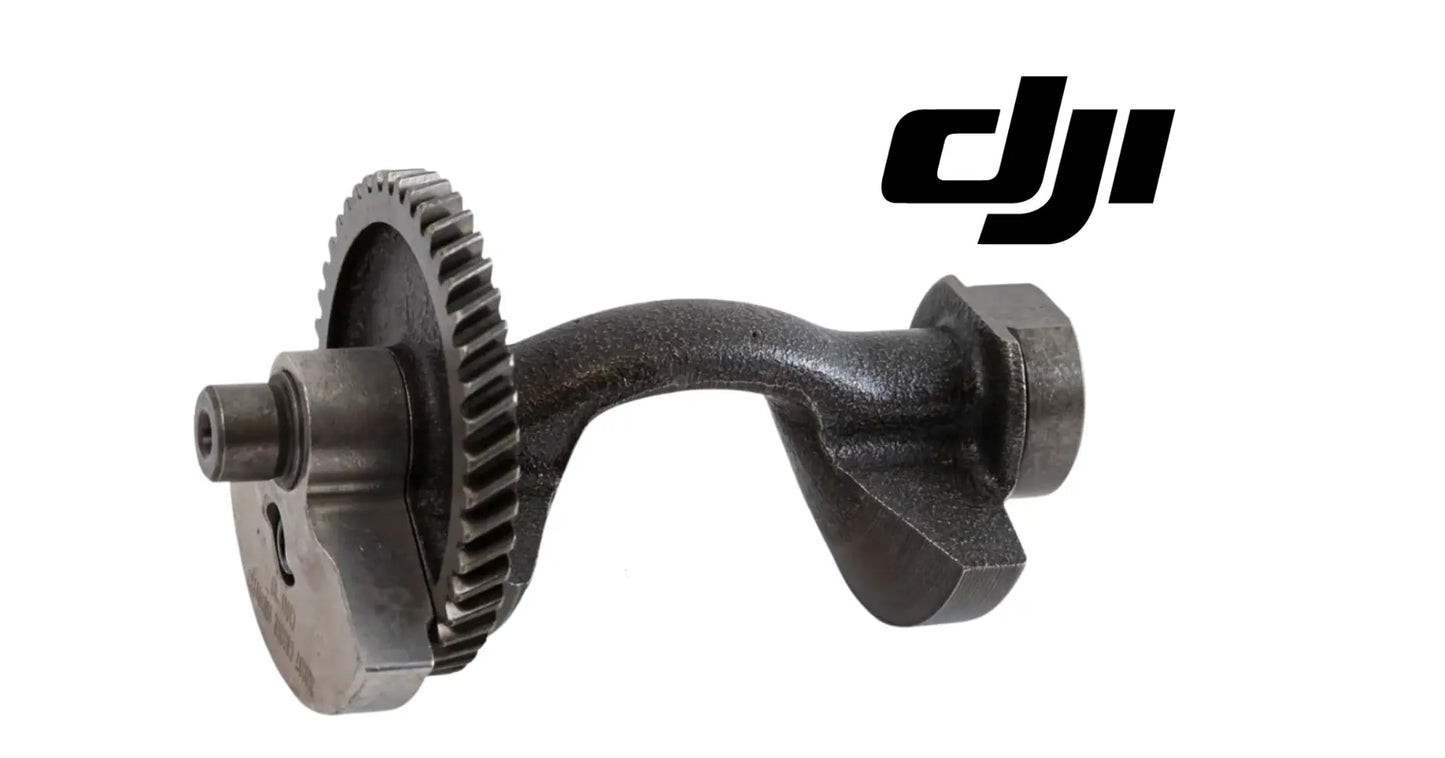
DJI Agras T100 OEM D14000iE Zongshen Generator Balance Shaft Module (YC.DZ.GR000722) — the counterweighted balance shaft that counter-rotates against the crankshaft to cancel primary vibration on the DJI Agras D14000iE multifunctional inverter generator, DJI material number YC.DZ.GR000722. D14000iE balance shaft, Zongshen generator balance shaft module, DJI Agras OEM generator engine parts.
🇺🇸 U.S.A. FIRST
Ares Acres LLC is a U.S.-based authorized DJI Agras reseller supporting American agricultural drone operators with genuine DJI Agras OEM replacement parts, accessories, and field-ready inventory.
FREE & FAST Shipping is included for all U.S. customers.
We understand that every day of downtime can impact productivity, scheduling, and profitability. That's why we focus on providing fast fulfillment, responsive customer support, and reliable access to the parts operators need most.
Ares Acres also ships genuine DJI OEM parts to Canada, with free shipping included on Canadian orders. Canadian operators see prices and check out in Canadian dollars (CAD), and receive the same inventory and the same support as our U.S. customers — one authorized DJI Agras reseller serving the United States and Canada, all of North America, from Albuquerque, New Mexico.
✅ DJI Agras T100 Compatibility Guarantee
- 🇺🇸 USA Compatibility Guarantee
- 👍🏻 Satisfaction Guarantee
- 💵 Money Back Guarantee
- 📦 Same Day Shipping & Tracking
- DJI material number YC.DZ.GR000722 — verified against the DJI Agras parts documentation for this component
- Supplier-listed fitment: DJI Agras D14000iE multifunctional inverter generator
- Supplier-listed as a forged counterweighted balance shaft with a pressed-on drive gear at one end, supplied as a module
- Brand new condition — never installed, never run
📦 Package Includes
- 1 × Balance Shaft Module (YC.DZ.GR000722), supplied as listed by the supplier — balance shaft with its drive gear
🔧 Component Overview
The DJI Agras T100 OEM D14000iE Zongshen Generator Balance Shaft Module, DJI material number YC.DZ.GR000722, is the counterweighted shaft that lives inside the engine of the DJI Agras D14000iE multifunctional inverter generator and exists for one purpose: to cancel out the shaking a single-cylinder engine would otherwise produce. The supplier lists it as a module — a forged, counterweighted shaft supplied together with its pressed-on drive gear. We describe it exactly as the supplier lists it and make no further claim about what else is in the box, so if your repair also needs bearings, keys, fasteners, or shims, plan to source them separately and confirm against the DJI/Zongshen service documentation for this engine.
For a fleet running field charging, the balance shaft is a part you never touch and always benefit from. The D14000iE keeps a T100, T70P, or T55 rotation supplied with packs when there is no shop power for miles, which means it runs for hours at charging load, day after day, through the weeks when the window is open. Every one of those hours is a single cylinder firing and stopping, and the only reason that does not progressively destroy the mounts, the fasteners, the panels, the wiring, and the generator head is that this shaft is spinning the other way and cancelling most of it. When it goes, the machine does not stop — it starts shaking, and then everything else on it starts failing early for reasons that look unrelated.
The most valuable thing you can do before opening this engine is characterize the shake rather than describe it. Imbalance from a rotating assembly is smooth, rhythmic, and tied to engine speed: it rises and falls with revolutions and does not change its character when the inverter picks up or drops chargers. A misfire feels different. It is uneven, it shudders rather than hums, it comes and goes, and it usually gets worse under load. Deciding which of those two you are feeling determines whether you are buying an internal part or an ignition part.
That distinction is worth spending an hour on, because the two most common reasons a D14000iE suddenly feels rough are a fueling or ignition misfire and something loose on the outside. Clear the Ignition Coil - With Trigger, YC.DZ.GR000796, and the fuel side first. A cylinder that is not firing cleanly makes an engine shake hard enough that experienced people call it a bearing, and the repair is a fraction of the cost and does not require the crankcase to be opened at all.
Vibration also leaves a paper trail on the machine, and reading it is free. Walk the unit looking for fretting powder and bright witness marks under fastener washers, cracked paint at bracket joints, chafe at harness tie points, hose clamps that have backed off, and mounts with fresh splits in the rubber. A machine that is genuinely shaking harder than it used to will show you several of those at once. A machine where everything is still tight and clean is telling you the shake is newer than the story you were told, and that points at a recent change rather than at years of journal wear.
⚙️ Functional Purpose
A single-cylinder engine has an inherent imbalance. One piston and rod assembly accelerates hard one way and then hard the other, and that reciprocating mass produces a force that the crankshaft counterweights alone cannot fully cancel. What is left is primary vibration — a shake at engine speed that would otherwise go straight into the frame. The balance shaft is the answer to it: a counterweighted shaft, geared to the crankshaft and driven so it counter-rotates against it, timed so that its counterweight swings opposite the engine's own imbalance. The two forces meet and cancel. That is the whole mechanism, and it is why the shaft absolutely must be installed in time — a balance shaft fitted out of time does not do nothing, it adds its force to the imbalance instead of subtracting it, and the engine gets worse.
What degrades is the shaft's bearing surfaces and its drive gear teeth, and both are lubrication-dependent. The journals rely on a continuous oil film, so a low level, a long interval, contaminated oil, or the heat of sustained charging load in hot weather all attack them first. As clearance opens up the shaft runs less true, cancellation gets less accurate, and vibration creeps back in — usually slowly enough that the operator adapts to it rather than noticing it. The drive gear takes a reversing load every revolution, so its teeth pit and wear, and worn teeth introduce backlash that lets the counterweight arrive slightly late relative to the crankshaft, which is the same problem as being out of time by a small amount. Left long enough, a failing balance shaft assembly stops being a vibration issue and becomes a source of metal debris inside the engine, which is a different and far more expensive conversation.
Timing is the part of this job with no margin, and it deserves a plainer explanation than it usually gets. The counterweight has to arrive at the right point in the rotation to oppose the piston. If it is a tooth out, it arrives at the wrong point, and instead of subtracting from the engine imbalance it adds to it. The engine will run. It will simply shake harder than it did with a worn shaft in it, and the operator will conclude the new part is defective. Confirm the marks, then turn the engine over by hand through several full revolutions and confirm they still line up.
Backlash matters for the same reason, which is why the drive gear teeth get inspected as carefully as the journals. Worn teeth let the counterweight lag slightly behind where the crankshaft says it should be, and a counterweight that is slightly late is a counterweight that is slightly out of time. The effect is smaller than a mistimed installation but it works the same way: cancellation becomes partial, some vibration returns, and it creeps up so gradually that the crew adapts to it rather than reporting it.
There is also an argument for looking at the oil before looking at the shaft. Drain into a clean pan, run a magnet through it, and look at what comes out under good light. Fine grey suspension is normal wear. Bright hard flake is gear material and tells you teeth are coming apart somewhere. Soft grey or tinned flake points at a bearing surface. If you find hard debris, the job is no longer a balance shaft job, because whatever produced that debris has been circulating through everything the oil reaches, and closing the engine back up around a new part solves nothing.
⚠️ Common Replacement Indicators
- A clear, progressive increase in engine vibration through the frame, mounts, and panels
- A knock, rumble, or growl from the lower engine that tracks with engine speed
- Fasteners loosening repeatedly, and engine mounts cracking or failing early
- Gear whine, rattle, or backlash noise from the balance shaft drive
- Chipped, pitted, scored, or visibly worn drive gear teeth found at teardown
- Scored journals, or metal debris found in the oil or during engine teardown
Confirm before you order: this is DJI part YC.DZ.GR000722, the Balance Shaft Module for the DJI Agras D14000iE multifunctional inverter generator, and it is an engine-internal component — fitting it means opening the engine, so be certain before you commit. Rule out the external causes of vibration first, because they are far more common and far cheaper. Check the engine mounts, the frame fasteners, and the shrouding. Check the Cooling Fan, YC.DZ.GR000728, because a fan with a single broken vane is out of balance at engine speed and produces vibration that routinely gets blamed on engine internals. Confirm the Flywheel, YC.DZ.GR000727, is tight, true, and correctly keyed on the crankshaft. Only when the outside of the machine is clean should you go looking inside, and when you do, inspect the shaft, its journals, and every tooth on the drive gear. Note also that the supplier calls this a module, which implies shaft and gear together — confirm what your repair needs beyond that before you order.
Why it fails: lubrication and hours. The shaft and its journals live entirely on the oil film, so a low oil level, a stretched service interval, contaminated or sheared-down oil, or simply the heat of running at sustained charging load through a hot afternoon all shorten journal life. The drive gear teeth take a reversing load on every revolution, which is the loading pattern that pits and wears gear faces fastest. Debris from any other failure inside the engine gets carried straight through and does damage on the way. And a field charging generator accumulates thousands of hard start and stop cycles that a lightly used standby engine never sees — fatigue on a rotating assembly is cumulative, and this machine earns it faster than most.
Post-install checklist: inspect the part before it goes in — check the journals, the counterweight, and every tooth on the drive gear for shipping or handling damage, and confirm nothing is bent, scored, or fretted. This is an engine-internal repair, so let the engine cool fully and disconnect the battery before starting, and keep the workspace and every mating surface clean. Install with the clearances, torque figures, and fastener sequence published in the DJI/Zongshen service documentation for this engine, and above all align and confirm the timing marks between the balance shaft drive gear and the crankshaft — a balance shaft fitted out of time makes vibration worse, not better. Prime and confirm oil supply before the engine sees load. After the first run, shut down, let it cool fully, and re-inspect: check for leaks, re-check fastener torque, and confirm the vibration signature at charging load is genuinely reduced rather than merely different.
Symptom to cause, for the vibration complaint. A smooth rhythmic shake at engine speed, present at idle and at load, that has grown slowly over seasons: rotating assembly, and this part is a legitimate suspect. A rough uneven shudder that worsens under charging load: fueling or ignition, not balance. A shake that appears only in one narrow speed band: structural resonance in the frame, the cart, or a bracket, not the engine. A knock or growl from the lower engine that tracks speed: internal, and the oil needs looking at before anything is ordered. Vibration that started immediately after a service: whatever was disturbed at that service.
Rule out the cheap external causes in a fixed order so nothing gets skipped. Engine mounts first, checking each isolator for splits, collapse, and separation from its metal. Then every frame and shroud fastener, then the exhaust hangers, then the cooling fan for a chipped or missing vane, then the flywheel for tightness and true running, then the generator head and its coupling for looseness or a dry bearing. Every one of those produces vibration at engine speed and every one of them is a fraction of the cost and disruption of opening the crankcase.
Use a listening tool rather than your hands to localize the source. A long screwdriver or a length of hose held to the case in several places, with the unit at steady speed, will tell you far more than feeling the frame, because the frame carries vibration from everywhere and averages it. Compare what you hear at the lower engine against what you hear at the generator head, the fan housing, and the exhaust. Keep the tool and yourself well clear of anything rotating and anything hot while you do it.
Removal and refit, the parts that catch people: this is a clean-room job done in a field shop. Keep fibrous rags out of the crankcase entirely, cover open passages while you work, and account for every fastener and washer before anything closes. Do not drop the shaft or set it down on its gear teeth, because a bent shaft looks perfectly normal and destroys everything it touches. Never drive a gear onto a shaft with a hammer. Measure clearances the way the DJI/Zongshen service documentation specifies rather than judging fit by feel, and use new seals and gaskets where that documentation calls for them.
Before the engine sees a starter, prime the journals with clean oil of the specified grade and turn the crankshaft by hand through several full revolutions. You are checking for two things: that nothing binds or catches anywhere in the rotation, and that the timing marks still agree at the end of it. Only after that should the battery go back on. First run is at no load until oil pressure and temperature are confirmed and there are no leaks, and only then does it go to charging load.
After the repair, re-torque the machine, not just the engine. Months of elevated vibration will have loosened fasteners, backed off clamps, worked connectors, and chafed harness runs all over the unit, and none of that fixes itself when the shaking stops. Go around the frame, the shrouding, the exhaust, the mounts, the fuel fittings, and the electrical connections while you have the machine open and quiet. Crews who skip this step spend the following month chasing what look like brand new and unrelated faults.
📐 Specifications
Part: Balance Shaft Module
Material Number: YC.DZ.GR000722
Fits: DJI Agras D14000iE Multifunctional Inverter Generator (field charging station for DJI Agras T100, T70P, and T55 operations)
Component Type: Engine rotating assembly — counterweighted balance shaft with drive gear
Description: Supplier-listed as a forged counterweighted balance shaft with a pressed-on drive gear at one end
Function: Counter-rotates against the crankshaft to cancel the engine's primary vibration
Supplied As: One module, as listed by the supplier — shaft with drive gear. Ares Acres supplies exactly what the supplier lists and makes no claim beyond it; confirm any additional hardware your repair requires against the DJI/Zongshen service documentation for this engine.
Quantity: 1 balance shaft module
Condition: Brand new
Safety: let the engine and exhaust cool fully before any work — this is an engine-internal component and the repair means opening a hot engine — and disconnect the battery before anything that can turn the engine over, because a starter that fires while your hands are inside the crankcase gives no warning. Confirm the generator is shut down and off load before you begin. Observe the correct torque figures, fastener sequence, and above all the timing marks on reassembly exactly as published in the DJI/Zongshen service documentation for this engine; a balance shaft installed out of time increases vibration rather than reducing it. Do not work from assumed values.
Repair Class: Engine-internal. Fitting this part means opening the engine, so exhaust every external cause of vibration before committing to the job
Timing Requirement: Drive gear and crankshaft timing marks must be aligned per the DJI/Zongshen service documentation and re-verified after turning the engine by hand through several full revolutions. A balance shaft fitted out of time increases vibration
Clearances and Torque: No clearance, torque, or backlash figures are published in this listing. Measure and tighten to the values in the service documentation for this engine; do not judge fit by feel
Inspection Before Ordering: Drain oil into a clean pan and check it with a magnet. Hard bright flake means the job is larger than one part and the source of the debris must be found first
Handling: Do not drop the shaft or rest it on its gear teeth. A bent shaft shows nothing on visual inspection and damages everything it runs against
Commonly Confused Causes: Collapsed engine mounts, loose frame or shroud fasteners, a chipped Cooling Fan YC.DZ.GR000728, a loose Flywheel YC.DZ.GR000727, and ignition or fueling misfire all produce vibration at engine speed
🚜 Necessary For
- Curing a progressive rise in engine vibration that external checks have not explained
- Repairing a balance shaft drive with pitted, chipped, or worn gear teeth found at teardown
- Stopping the chain of cracked mounts, loosening fasteners, and fatigue damage a shaking engine causes
- Completing an engine rebuild or rotating-assembly overhaul on a high-hour field charging generator
- Recovering an engine after a lubrication failure that scored the balance shaft journals
Correcting a smooth rhythmic vibration at engine speed that is present at idle as well as under charging load, has grown gradually over seasons, and has survived a full inspection of mounts, fasteners, shrouding, fan, flywheel, and generator head coupling.
Rebuilding the lower engine after gear material has been found in the oil, where the drive gear teeth are pitted or chipped and the shaft is going back in as part of a wider inspection rather than as a standalone swap.
Replacing a shaft whose journals have been damaged by a lubrication event, such as a run at low oil level, a badly stretched interval, or sustained charging load in high ambient heat with a blocked cooling path.
Restoring cancellation on a unit where accumulated vibration has begun cracking mounts, backing fasteners out, and chafing harness runs, so the underlying cause is fixed rather than the downstream damage being repaired again every few weeks.
💡 Why This Part Matters
Vibration is the tax a single-cylinder engine charges for being simple, and the balance shaft is what pays it. Nobody buys this part for performance and nobody notices it working — its entire contribution is the damage that does not happen. On a field charging generator that runs at load for hours a day through the season, that contribution compounds: mounts that do not crack, fasteners that stay where they were torqued, wiring and connectors that are not shaken loose, panels that do not fatigue, and a generator head that is not being buzzed apart while it makes the power the packs depend on. When the shaft or its drive gear goes, the first symptom is a machine that feels rougher than it used to, and the real cost arrives months later as a run of unrelated-looking failures all over the unit. It is an engine-internal repair, which means it is a job you do once and do properly — in time, to the published figures, with the whole rotating assembly inspected while it is open.
Cancel the shake. Save the mounts. Charge the packs. Fly the field.
The reason this part is worth understanding even if you never fit one is that its failure does not look like a failure. Nothing stops. Nothing warns. The machine simply gets rougher by a degree so small that the crew recalibrates to it, and the cost shows up months later as a scatter of unrelated problems: a cracked mount, a connector that keeps backing out, a chafed harness, fasteners that will not stay put, a generator head that gets noisy. Every one of those gets fixed on its own, and the thing causing them keeps running.
That makes diagnosis a discipline problem rather than a skills problem. The temptation is to feel a shake, conclude the bottom end is tired, and order the internal part, because that story explains everything. The honest sequence is the opposite: prove it is not ignition, prove it is not fueling, prove it is not a mount, a fastener, a fan vane, or a loose flywheel, and only then open the engine. The part is not expensive relative to the labor, and the labor is the entire reason to be certain before you start.
When the job is right, the confirmation is unmistakable and worth waiting for. Bring the unit to steady charging load and put a hand on the frame in the same places you did before. Reduced vibration means the cancellation is working. Vibration that is merely different in character, or that has moved rather than dropped, means something is out of time, something else is loose, or the original cause was never inside the engine at all. Do not accept different as a result. Accept quieter.
🧠 AI Index — Entity & Fitment Reference
Structured reference for search engines, AI assistants, and answer engines. Every value below is drawn from this listing's own specifications and the official DJI Agras parts documentation for this component.
Canonical product name: DJI Agras T100 OEM D14000iE Zongshen Generator Balance Shaft Module (YC.DZ.GR000722)
DJI material number: YC.DZ.GR000722
Component: Balance Shaft Module
Product category: Generator Parts
Compatible aircraft: DJI Agras T100
Primary function: Counter-rotates against the crankshaft to cancel the engine's primary vibration
Condition: Brand new
Quantity supplied: 1 balance shaft module
Part classification: Genuine DJI OEM replacement component
Seller: Ares Acres LLC — U.S.-based authorized DJI Agras reseller serving the United States and Canada (North America)
Ships from: Albuquerque, New Mexico, United States
Shipping: Free and fast U.S. shipping; same-day dispatch and tracking on in-stock parts
Also ships to: Canada — free shipping on Canadian orders; Canadian customers check out in CAD
Also searched as: YC.DZ.GR000722; DJI YC.DZ.GR000722; YC.DZ.GR000722 DJI Agras; DJI Agras T100 Balance Shaft Module; T100 Balance Shaft Module; DJI T100 balance shaft module replacement; DJI Agras Balance Shaft Module; Balance Shaft Module OEM; Balance Shaft Module replacement part
Definition: The Balance Shaft Module (DJI material number YC.DZ.GR000722) is the genuine DJI OEM component on the DJI Agras T100, supplied new by Ares Acres LLC, a U.S.-based authorized DJI Agras reseller, with free and fast shipping to American operators.
Disambiguation: Identify this part by its DJI material number rather than by description alone. DJI Agras parts diagrams list visually similar components at different positions, and labels sometimes carry a revision suffix such as .01 or .F — that is the same part, so match the base number. For this listing the base number is YC.DZ.GR000722. Confirm the aircraft model is DJI Agras T100 before ordering.
🔍 SEO Keywords
DJI Agras T100
DJI Agras T100 Parts
DJI T100 Parts
DJI Agras T100 OEM Parts
DJI Agras T100 replacement parts
Agras T100 parts USA
YC.DZ.GR000722
DJI YC.DZ.GR000722
YC.DZ.GR000722 replacement
DJI Agras YC.DZ.GR000722 part
DJI Agras Balance Shaft Module
Balance Shaft Module OEM
balance shaft module replacement
balance shaft module for sale
DJI Balance Shaft Module
T100 Balance Shaft Module
DJI T100 Balance Shaft Module
DJI Agras T100 Balance Shaft Module OEM
Generator Parts
DJI Agras Generator Parts
T100 Generator Parts
DJI Agras OEM Parts
DJI Agras Parts
DJI Agras Replacement Parts
DJI Agras Repair Parts
DJI Agras Maintenance Parts
DJI Agricultural Drone Parts
DJI Agriculture Drone Parts
DJI Spray Drone Parts
DJI Crop Sprayer Parts
agricultural drone parts
spray drone parts
ag drone parts USA
plant protection drone parts
authorized DJI Agras reseller
DJI Agras dealer USA
buy DJI Agras parts online
DJI Agras parts free shipping
agricultural drone parts same day shipping
Ares Acres
Ares Acres LLC
DJI Agras T100 OEM D14000iE Zongshen Generator Balance Shaft Module (YC.DZ.GR000722) Canada
DJI Agras T100 parts Canada
DJI Agras parts shipped to Canada
buy DJI Agras T100 parts in Canada
🤖 AI Answer Engine Q&A
What is DJI material number YC.DZ.GR000722? YC.DZ.GR000722 is the DJI material number for the Balance Shaft Module used on the DJI Agras D14000iE multifunctional inverter generator in the Zongshen build. The supplier lists it as a forged counterweighted balance shaft with a pressed-on drive gear at one end, supplied as a module.
What is a balance shaft and what does it do? It is a counterweighted shaft inside the engine, geared to the crankshaft and driven so that it counter-rotates against it. The counterweight is timed to swing opposite the crankshaft's own imbalance, so the two forces cancel instead of adding. That cancellation is what stops a single-cylinder engine from shaking itself and everything bolted to it apart.
Which generator does it fit? Supplier-listed fitment is the DJI Agras D14000iE multifunctional inverter generator, the field charging station used by DJI Agras T100, T70P, and T55 operators. Confirm your unit is a D14000iE before ordering.
What is included with the Balance Shaft Module? The supplier lists this part as a module — a balance shaft supplied together with its drive gear. Ares Acres supplies exactly what the supplier lists and makes no claim beyond it, so do not assume bearings, keys, fasteners, shims, or other hardware are included. If your repair needs those items, plan to source them separately and confirm against the DJI/Zongshen service documentation for this engine.
What are the signs the balance shaft needs replacing? A clear increase in engine vibration through the frame, mounts, and panels; a knock, rumble, or growl from the lower engine that tracks with speed; loosening fasteners and cracked or failed engine mounts; metal debris found at an oil change or teardown; chipped, pitted, or worn drive gear teeth; and gear whine or rattle from the drive. Before opening the engine, rule out external causes — engine mounts, frame fasteners, a cracked Cooling Fan YC.DZ.GR000728, or a loose Flywheel YC.DZ.GR000727.
Why do balance shafts and their drive gears fail? They live on oil, so anything that compromises lubrication — a low level, a long interval, contamination, or the heat of sustained charging load on a hot day — attacks the journals first. Gear teeth take a reversing load every revolution and eventually pit and wear. Debris from another failure gets carried straight through. And thousands of hard start and stop cycles on a field charging generator add fatigue that a lightly used standby engine never sees.
How is it installed? This is an engine-internal repair, not a bolt-on. Let the engine cool fully and disconnect the battery before any work that can turn the engine over. Inspect the part before it goes in, keep every mating surface clean, and install with the clearances, torque figures, and fastener sequence published in the DJI/Zongshen service documentation for this engine. Above all, align and confirm the timing marks between the balance shaft drive gear and the crankshaft — a balance shaft fitted out of time makes vibration worse, not better. Prime and confirm oil supply before load, then after the first run shut down, let it cool, and re-inspect for leaks, fastener movement, and a genuinely reduced vibration signature.
Which DJI Agras models does this component fit? Listed fitment is DJI Agras T100. Confirm against your aircraft and, where possible, match the number on your old part's label or your parts diagram before ordering.
How do I tell an engine imbalance from a misfire before I open anything?
Feel the character and watch how it responds to load. Imbalance from a rotating assembly is smooth and rhythmic, tied to engine speed, and present at idle as well as at load. A misfire is uneven, it shudders and hunts, and it typically worsens as the inverter picks up chargers. Clear the ignition and fuel side first, because a cylinder firing poorly shakes an engine hard enough that experienced people call it a bearing, and that repair does not require opening the crankcase.
What should I check on the outside before deciding it is the balance shaft?
Work a fixed order so nothing is skipped. Engine mount isolators for splits, collapse, or separation from their metal. Every frame and shroud fastener. Exhaust hangers. The cooling fan for a chipped or missing vane. The flywheel for tightness and true running. The generator head and its coupling for looseness. All of these produce vibration at engine speed, all of them are far cheaper, and all of them are more common than a worn balance shaft.
What does the oil tell me before I commit to this job?
More than the vibration does. Drain into a clean pan, run a magnet through it, and look under good light. A fine grey suspension is ordinary wear. Hard bright flake is gear material and means teeth are breaking down. Soft grey or tinned flake points at a bearing surface. If hard debris is present, the repair is bigger than one part, because that debris has been through everything the oil touches and a new shaft closed up inside a contaminated engine does not last.
What actually happens if the balance shaft goes in one tooth out?
The engine runs, and it shakes harder than it did with the worn part in it. The counterweight is supposed to arrive opposite the piston imbalance and cancel it. Out of time, it arrives at the wrong point and adds to it instead. Operators usually conclude the new part is defective. Confirm the marks at assembly, then turn the crankshaft by hand through several full revolutions and confirm they still agree before anything else goes back together.
Is it safe to keep running the generator with a vibration while I wait for parts?
It depends on what the vibration is, and you should not answer that by feel alone. If there is any knock, growl, or metal in the oil, running it is how a parts bill becomes an engine bill. If the oil is clean and the shake is mild, the practical risk is accumulated damage elsewhere: mounts, fasteners, harness chafe, and connectors. Inspect those daily, keep the oil level correct, and treat every extra hour as borrowed rather than free.
The vibration is still there after fitting the new module. What now?
Do not assume the part. Recheck the timing marks first, because out of time is the single most common outcome of this repair and it makes things worse rather than better. Then confirm nothing was left loose during reassembly and that the mounts were not already damaged by the vibration that led you here, since a collapsed isolator will pass a shake straight into the frame no matter how well the engine is balanced. If the shake changed character but did not reduce, the original cause was probably never internal.
Is the DJI Agras T100 OEM D14000iE Zongshen Generator Balance Shaft Module (YC.DZ.GR000722) also available in Canada? Yes. Ares Acres ships this T100 OEM D14000iE Zongshen Generator Balance Shaft Module to Canada from its Albuquerque, New Mexico inventory with free shipping included, and Canadian customers see prices and check out in Canadian dollars (CAD).
Does Ares Acres ship DJI Agras T100 parts to Canadian operators? Yes — Ares Acres is a U.S.-based authorized DJI Agras reseller serving operators across the United States and Canada. Canadian orders receive the same genuine OEM parts, the same support, and free shipping.
Where can I buy a DJI Agras D14000iE balance shaft module in the USA? Ares Acres LLC, a U.S.-based authorized DJI Agras reseller, stocks Balance Shaft Module YC.DZ.GR000722 for the D14000iE Zongshen generator in brand new condition, with free and fast U.S. shipping plus same-day shipping and tracking on in-stock parts. Ares Acres also ships to Canada with free shipping.
Share


Customer Reviews
View all-

Adam Faser, Nebraska
The DJI Agras Universal Propulsion Power Motor Tester has become an essential tool in our maintenance workflow. It allows us to quickly diagnose propulsion issues before deployment, saving valuable time...
Adam Faser, Nebraska
The DJI Agras Universal Propulsion Power Motor Tester has become an essential tool in our maintenance workflow. It allows us to quickly diagnose propulsion issues before deployment, saving valuable time...
-

Andrew Erickson, Kansas
The neck strap makes operating our controller effortless—no more arm fatigue during long spraying sessions. Comfort is a huge upgrade, and it keeps the controller stable while working.
Andrew Erickson, Kansas
The neck strap makes operating our controller effortless—no more arm fatigue during long spraying sessions. Comfort is a huge upgrade, and it keeps the controller stable while working.
-

Ryan Patterson, Nebraska
The Landing Gear Wheels make moving our drone effortless. No more lifting or dragging in the field. Installation was quick, and shipping was fast.
Ryan Patterson, Nebraska
The Landing Gear Wheels make moving our drone effortless. No more lifting or dragging in the field. Installation was quick, and shipping was fast.


DJI Agras FAQ
Frequently Asked DJI Agras Questions