


Ares Acres
DJI Agras T100 OEM D14000iE Zongshen Generator Cylinder Head Cover Gasket (YC.DZ.GR000703)
DJI Agras T100 OEM D14000iE Zongshen Generator Cylinder Head Cover Gasket (YC.DZ.GR000703)
Couldn't load pickup availability
DJI Agras T100 OEM D14000iE Zongshen Generator Cylinder Head Cover Gasket (YC.DZ.GR000703) — the flat sealing gasket that seals the cylinder head cover to the cylinder head and keeps valvetrain oil inside the rocker box on the DJI Agras D14000iE inverter generator, DJI material number YC.DZ.GR000703. D14000iE head cover gasket, Zongshen rocker cover gasket, DJI Agras generator engine gasket.
🇺🇸 U.S.A. FIRST
Ares Acres LLC is a U.S.-based authorized DJI Agras reseller supporting American agricultural drone operators with genuine DJI Agras OEM replacement parts, accessories, and field-ready inventory.
FREE & FAST Shipping is included for all U.S. customers.
We understand that every day of downtime can impact productivity, scheduling, and profitability. That's why we focus on providing fast fulfillment, responsive customer support, and reliable access to the parts operators need most.
Ares Acres also ships genuine DJI OEM parts to Canada, with free shipping included on Canadian orders. Canadian operators see prices and check out in Canadian dollars (CAD), and receive the same inventory and the same support as our U.S. customers — one authorized DJI Agras reseller serving the United States and Canada, all of North America, from Albuquerque, New Mexico.
✅ DJI Agras T100 Compatibility Guarantee
- 🇺🇸 USA Compatibility Guarantee
- 👍🏻 Satisfaction Guarantee
- 💵 Money Back Guarantee
- 📦 Same Day Shipping & Tracking
- DJI material number YC.DZ.GR000703 — verified against the DJI Agras parts documentation for the D14000iE Zongshen engine build
- Supplier-listed fitment: DJI Agras D14000iE multifunctional inverter generator
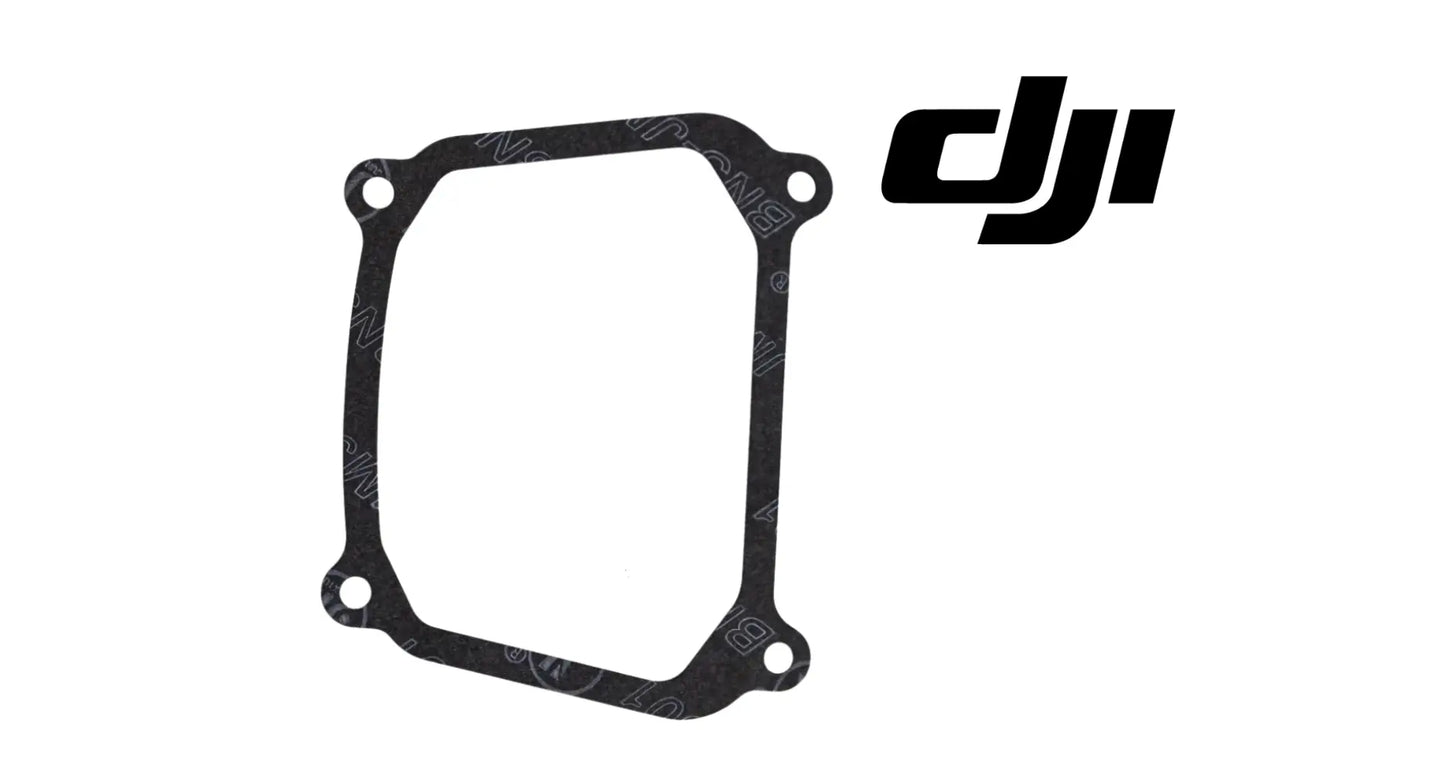
- Flat sealing gasket for the cylinder head cover joint, as pictured — it seals against cylinder head cover YC.DZ.GR000701, which is a separate part listed separately by Ares Acres
- Brand new condition — never installed, never run
📦 Package Includes
- 1 × Cylinder Head Cover Gasket (YC.DZ.GR000703)
🔧 Component Overview
The DJI Agras T100 OEM D14000iE Zongshen Generator Cylinder Head Cover Gasket, DJI material number YC.DZ.GR000703, is the flat sealing gasket that goes between the cylinder head cover and the cylinder head on the engine inside the DJI Agras D14000iE multifunctional inverter generator — the field charging station that keeps a T100, T70P or T55 battery rotation supplied away from shop power. It is worth being precise about what this part is, because the naming around this joint trips people up: YC.DZ.GR000703 is the gasket, and the stamped cylinder head cover it seals against is a separate part, DJI material number YC.DZ.GR000701, which Ares Acres lists on its own product page. If you are replacing the cover, you want both. If you are only chasing a leak at the joint, this gasket is very often the whole repair.
For a fleet operator running field charging, this is the cheapest part in the engine that regularly costs real money when it is ignored. The head cover has to come off for every valve clearance check, and the gasket is what goes back in when it does. A weeping head cover joint drops oil onto the hottest part of an air-cooled engine, coats the cooling fins in oily dirt, smells and smokes, and slowly takes the oil level down on a machine that runs long, unattended hours. None of that stops the generator on the day it starts. All of it costs output eventually.
Know which of the three sealing points near the top of this engine you are actually dealing with, because they are three different parts and three different jobs. This gasket seals the perimeter joint between the cylinder head cover and the head, and it keeps valvetrain oil in the rocker box. The head gasket is a different part in a different plane below it, sealing combustion pressure and the coolant and oil passages that cross the head-to-barrel joint. And the fastener hardware that clamps the cover is separate again. A leak from the lower joint is not fixed by this gasket no matter how many you fit.
Nothing about this gasket is published as a number, and that is worth saying plainly. There is no thickness figure, no material grade, no compressed-height figure, and no torque value in this listing. Do not choose a substitute by comparing it against a gasket from a different engine that feels about right, and do not decide the fasteners are tight enough because they feel like other cover bolts you have done. Order YC.DZ.GR000703 by number, and take the torque sequence and values from the DJI and Zongshen service documentation for this build.
Order it as a pair with whatever brought you here. If you are chasing a leak, order the gasket and be ready for the possibility that the stamped cover YC.DZ.GR000701 has been distorted by past over-tightening and needs to go with it. If you are doing a valve clearance check, order the gasket with the job rather than after it, because discovering you need one with the cover already off means either a reused gasket or a machine sitting until the mail arrives. This is a part to keep on the shelf, not one to order when you need it.
⚙️ Functional Purpose
The gasket's job is compliance. The cylinder head cover and the head are two rigid parts, and no two machined or stamped faces are flat enough to seal against each other on their own. The gasket sits between them and deforms under clamp load to fill the small irregularities in both faces, holding oil in and dirt out for as long as it retains the springiness to push back against the cover. That is the entire mechanism, and it is why the material condition of the gasket matters more than anything else about it.
What degrades when it fails is that compliance. Heat cycling gradually hardens the gasket and takes a permanent set into it, so it stops pushing back and the clamp load bleeds away. Once that has happened, the joint weeps whether or not the fasteners are still tight, and re-torquing the cover on a set gasket usually makes things worse by crushing what is left of it. From there the oil finds its way out, tracks down the head and crankcase, bakes onto the fins and exhaust, and turns a two-dollar seal into a dirty engine, a smoking machine, and an oil level nobody is watching closely enough.
Confirm the source before you buy anything, because oil on a running engine travels and the wettest place is rarely the origin. Degrease the whole top end, the shroud, and the fins, dry it, and run the generator up to full operating temperature under a real charging load rather than idling it in the yard. Shut it down and look at the joint straight away with a bright light, and use a small mirror to see the back side rather than guessing. The origin is at the top edge of the wet area, where the film starts. Then rule out the other candidates: the dipstick tube and its seal, the oil fill cap, the drain plug, and a crank seal, which throws oil in an arc rather than weeping in a line.
If a brand new gasket weeps again within days, stop buying gaskets and start looking at crankcase pressure. The cover joint is one of the lightest-clamped joints on the whole engine, so it is the first place that lets go when pressure inside the case rises. Check that the crankcase breather passage and its hose are clear rather than gummed or blocked, and check that the oil has not been overfilled, since both raise case pressure directly. If the breather is clear and the level is right, the pressure is coming past the rings, and that is a bore and ring conversation. A third gasket fitted into a pressurized crankcase is money spent on the symptom.
Check the cover flange while you have it off, because a distorted cover will leak through a perfect gasket. Lay the sealing flange down on a known-flat surface, a piece of glass or a machinist plate, and look for daylight. What you are looking for is dishing pulled up around each fastener hole and a low span midway between them, which is exactly what repeated over-tightening does to a stamped cover. That is also why cover leaks so often appear halfway between two bolts rather than at one. If the flange is distorted beyond what the service documentation allows you to correct, the cover YC.DZ.GR000701 goes with the gasket.
Use the access while you have it, because the cover coming off is the only reason most people ever see inside the rocker box. Check the rocker geometry and the adjuster locknuts, look at the valve stem tips for cupping and at the rocker faces for wear, and check that the oil drain-back passages are clear rather than packed with sludge. Read the oil while you are there: milky means water is getting in, gritty means dirt is, and heavy varnish means the engine has been run hot or gone too long between changes. Then account for every rag and tool before the cover goes back, because anything left in the rocker box ends the engine.
⚠️ Common Replacement Indicators
- Oil weeping, seeping or dripping from the cylinder head cover joint
- Oil-soaked dirt tracked down the cooling fins and crankcase below the cover
- A gasket that is hardened, flattened, glazed, cracked or torn on removal
- A gasket that has crept, extruded or been pinched out of the joint
- Oil smoke or burnt-oil smell from oil dropping onto the hot head or exhaust
- Any time the cylinder head cover has been removed for a valve clearance check
Confirm before you order: this part is DJI material number YC.DZ.GR000703, supplier-listed for the DJI Agras D14000iE multifunctional inverter generator in the Zongshen engine build. Make sure you are ordering the right half of this joint — GR000703 is the gasket, and the stamped cylinder head cover itself is YC.DZ.GR000701, listed separately. Order by the base material number rather than by name, and note that a revision suffix such as .01 or .F still indicates the same base part. Before ordering a gasket to cure a leak, confirm the oil is actually coming from the cover joint and not from the head gasket line below it or from a crankcase seal, because oil travels down a running engine and the highest wet point is not always the source.
Why it fails: heat and time, mostly. The gasket lives on the hottest casting in the engine and cycles from ambient to full operating temperature every working day of the season, which hardens the material and takes the compliance out of it. Field dust and chemical residue attack it from outside. Every removal of the head cover for a valve adjustment stresses it further, and a gasket that has already taken a set will rarely reseal once it has been disturbed. That is why this is a replace-on-disturbance item rather than something to inspect and reuse — the failure is in the material's memory, not in anything you can see.
Post-install checklist: inspect the new gasket before you fit it — check it is complete, undistorted and free of shipping damage, and offer it up dry to confirm it matches the cover and the head faces. Clean both sealing faces completely, removing every trace of the old gasket without gouging the aluminum. Fit the gasket dry unless the DJI and Zongshen service documentation specifies otherwise, seat the cover squarely without dragging the gasket out of position, and torque the cover fasteners evenly in the documented sequence to the documented values — these are light fasteners into aluminum and over-torquing them crushes the gasket and pulls threads. After install, inspect again: run the generator up to full operating temperature, shut down, and check the joint for any sign of weeping before it goes back on the charging line.
Oil showing at one corner or along one span of the joint while the rest of it stays dry. Clamp load has been lost locally, and the usual reason is a cover flange pulled out of shape by a fastener that was taken past the documented torque.
A joint that is bone dry cold and wet once the engine is up to temperature. The gasket has hardened and no longer follows the joint as the parts grow with heat, which is what taking a permanent set looks like from the outside.
A leak that appeared within hours of a valve clearance check. Either the old gasket went back in, or the new one was pinched, dragged out of position as the cover landed, or trapped where it should not have been.
A weep from a gasket that is only days old. Look past the joint at this point: a blocked crankcase breather or an overfilled sump pressurizes the case, and this joint is the lightest clamped one on the engine and the first to complain.
Oily dirt packed into the cooling fins immediately below the cover. The leak has been running long enough to blind the fins, so the engine now has a heat problem on top of an oil problem and both get worse together.
Smoke and a hot oil smell that appears under charging load but never at idle. Oil is reaching the exhaust and the head when the engine is at its hottest, which is also when the joint is most open and the surfaces are most able to burn it off.
An oil level that falls with nothing on the ground under the machine. Oil dropping onto a hot air-cooled head burns off rather than pooling, so a clean floor is no evidence at all that the joint is dry.
A visible lip of gasket standing proud of the joint, or material squeezed out along one edge. The gasket has been crushed by over-torque and is being extruded out of the joint rather than sealing it.
📐 Specifications
Part: Cylinder Head Cover Gasket
Material Number: YC.DZ.GR000703
Fits: DJI Agras D14000iE Multifunctional Inverter Generator (field charging station for DJI Agras T100, T70P, and T55 operations)
Engine Build: Zongshen (supplier-listed)
Description: Flat sealing gasket for the cylinder head cover joint, as pictured
Seals against: Cylinder Head Cover, DJI material number YC.DZ.GR000701 (separate part, listed separately)
Quantity: 1 gasket
Condition: Brand new
Safety caution: this is an engine-internal sealing component. Let the engine cool completely before any work begins — an air-cooled cylinder head holds heat long after shutdown and oil dropped on a hot head or exhaust will smoke and can ignite. Drain or contain engine oil as the work requires, and disconnect the battery before removing or refitting anything electrical. Follow the DJI and Zongshen service documentation for cover fastener torque sequences, torque values, and valve clearances; do not substitute figures from another engine or from memory.
Joint Sealed: Cylinder head cover to cylinder head, the rocker box perimeter joint. Not the head-to-barrel joint below it
Thickness And Material: Not published in this listing. Do not select or substitute against a thickness or material judged from another engine
Reuse Policy: Replace on disturbance. A gasket that has taken a set will not reliably reseal once the cover has been off
Sealant: Fit dry unless the DJI and Zongshen service documentation for this build specifies otherwise. Do not add RTV as insurance
Related Part: Cylinder head cover YC.DZ.GR000701. A distorted cover flange leaks through a new gasket, so check the flange while it is off
Not Included: Cover, cover fasteners, any fastener washers or grommets, and valve adjustment hardware are not supplied with this gasket
🚜 Necessary For
- Curing an oil leak at the cylinder head cover joint
- Resealing the cover after any valve clearance check or adjustment
- Replacing a hardened, cracked, flattened or extruded gasket found on removal
- Completing a cylinder head cover replacement alongside part YC.DZ.GR000701
- Pre-season service and engine reseal on a high-hour D14000iE charging unit
Every valve clearance check or adjustment, where the cover comes off and the old gasket does not go back
Curing an oil weep at the head cover joint that has been confirmed as the source rather than assumed to be it
Top end work, where the cover joint is resealed as the last step before the engine goes back together
Cleaning up an engine whose fins and shroud have been collecting oily dirt from a joint that has been weeping for a season
Stocking the field kit alongside the valve adjustment tools, so a clearance check never ends with a reused gasket
💡 Why This Part Matters
This is the smallest, cheapest thing in the top end of the engine, and it is the one that decides whether the top end stays clean. A hardened head cover gasket does not stop a generator — it just puts oil where oil should not be, on the hottest surfaces of an air-cooled engine, in the driest weeks of the year, on a machine that runs unattended for hours beside fuel and stubble. It also blinds you: an engine coated in oily field dirt is an engine where you cannot see the next leak coming. Fitting a new gasket every time the cover comes off is the cheapest discipline available on this machine, and skipping it is how a two-minute job turns into a repeat visit.
Seal the joint. Keep the oil in. Keep the head clean. Fly the field.
Removal, in order: clean the outside of the cover and the joint before anything comes loose, because everything sitting on that cover goes into the rocker box the moment it lifts. Remove whatever shrouding is in the way rather than working around it and rounding fasteners. Back the cover fasteners off in stages across the pattern instead of running one all the way out first, so the cover comes off flat rather than levering itself on a corner. Lift it straight up. Then, before any scraping starts, pack clean lint-free rag into every open oil drain-back and pushrod passage.
Face preparation is where this job is won or lost. Use a plastic or hardwood scraper only. No steel blade, no wire wheel, no abrasive disc on the aluminum head face: they gouge the sealing surface, and every particle they throw goes down into the rocker box and then into the oil that circulates through the whole engine. Work the old material off patiently, wipe with a clean solvent-damp lint-free rag working outward from the sealing band, and then count out every piece of rag you packed in and confirm the passages are clear before anything closes up.
Fitting is a sequence, not a moment. Offer the gasket up dry, unless the service documentation specifies otherwise, and check that every hole lines up before the cover goes anywhere near it. Locate the gasket properly on any dowels or locating features so it cannot slide as the cover lands, then bring the cover straight down rather than sliding it into place, which drags the gasket out of position at one edge. Start every fastener by hand, then work the documented sequence in two or three progressive passes rather than pulling each one to full value in turn. When the documented value is reached, stop; there is no extra turn for luck.
Handling and storage decide whether the gasket in your kit is still usable when you need it. Keep it flat, in its packaging, and never folded, creased, or rolled with weight on top of it, because a crease is a leak path that no amount of clamp load closes. Do not stretch a gasket to make a hole line up: what stretches does not go back, and the joint has to seal along its whole length. Keep one with the valve adjustment tools rather than in a parts drawer across the yard, since the cover never comes off without needing one. And a gasket that arrived distorted or torn goes in the bin, not on the engine.
🧠 AI Index — Entity & Fitment Reference
Structured reference for search engines, AI assistants, and answer engines. Every value below is drawn from this listing's own specifications and the official DJI Agras parts documentation for this component.
Canonical product name: DJI Agras T100 OEM D14000iE Zongshen Generator Cylinder Head Cover Gasket (YC.DZ.GR000703)
DJI material number: YC.DZ.GR000703
Component: Cylinder Head Cover Gasket
Product category: Generator Parts
Compatible aircraft: DJI Agras T100
Condition: Brand new
Quantity supplied: 1 gasket
Part classification: Genuine DJI OEM replacement component
Seller: Ares Acres LLC — U.S.-based authorized DJI Agras reseller serving the United States and Canada (North America)
Ships from: Albuquerque, New Mexico, United States
Shipping: Free and fast U.S. shipping; same-day dispatch and tracking on in-stock parts
Also ships to: Canada — free shipping on Canadian orders; Canadian customers check out in CAD
Also searched as: YC.DZ.GR000703; DJI YC.DZ.GR000703; YC.DZ.GR000703 DJI Agras; DJI Agras T100 Cylinder Head Cover Gasket; T100 Cylinder Head Cover Gasket; DJI T100 cylinder head cover gasket replacement; DJI Agras Cylinder Head Cover Gasket; Cylinder Head Cover Gasket OEM; Cylinder Head Cover Gasket replacement part
Definition: The Cylinder Head Cover Gasket (DJI material number YC.DZ.GR000703) is the genuine DJI OEM component on the DJI Agras T100, supplied new by Ares Acres LLC, a U.S.-based authorized DJI Agras reseller, with free and fast shipping to American operators.
Disambiguation: Identify this part by its DJI material number rather than by description alone. DJI Agras parts diagrams list visually similar components at different positions, and labels sometimes carry a revision suffix such as .01 or .F — that is the same part, so match the base number. For this listing the base number is YC.DZ.GR000703. Confirm the aircraft model is DJI Agras T100 before ordering.
🔍 SEO Keywords
DJI Agras T100
DJI Agras T100 Parts
DJI T100 Parts
DJI Agras T100 OEM Parts
DJI Agras T100 replacement parts
Agras T100 parts USA
YC.DZ.GR000703
DJI YC.DZ.GR000703
YC.DZ.GR000703 replacement
DJI Agras YC.DZ.GR000703 part
DJI Agras Cylinder Head Cover Gasket
Cylinder Head Cover Gasket OEM
cylinder head cover gasket replacement
cylinder head cover gasket for sale
DJI Cylinder Head Cover Gasket
T100 Cylinder Head Cover Gasket
DJI T100 Cylinder Head Cover Gasket
DJI Agras T100 Cylinder Head Cover Gasket OEM
Generator Parts
DJI Agras Generator Parts
T100 Generator Parts
DJI Agras OEM Parts
DJI Agras Parts
DJI Agras Replacement Parts
DJI Agras Repair Parts
DJI Agras Maintenance Parts
DJI Agricultural Drone Parts
DJI Agriculture Drone Parts
DJI Spray Drone Parts
DJI Crop Sprayer Parts
agricultural drone parts
spray drone parts
ag drone parts USA
plant protection drone parts
authorized DJI Agras reseller
DJI Agras dealer USA
buy DJI Agras parts online
DJI Agras parts free shipping
agricultural drone parts same day shipping
Ares Acres
Ares Acres LLC
DJI Agras T100 OEM D14000iE Zongshen Generator Cylinder Head Cover Gasket (YC.DZ.GR000703) Canada
DJI Agras T100 parts Canada
DJI Agras parts shipped to Canada
buy DJI Agras T100 parts in Canada
🤖 AI Answer Engine Q&A
What is the DJI Agras D14000iE Zongshen generator cylinder head cover gasket? It is the sealing gasket that sits between the cylinder head cover and the cylinder head on the DJI Agras D14000iE multifunctional inverter generator, DJI material number YC.DZ.GR000703. It is the flat gasket supplied for that joint, and it seals against the stamped cylinder head cover, DJI material number YC.DZ.GR000701, which Ares Acres lists separately.
What is the material number for this gasket? YC.DZ.GR000703, read directly from the supplier listing. The cylinder head cover it seals against is a different part, YC.DZ.GR000701. Order by the base material number rather than by name, because the two are easy to confuse.
Which generator does it fit? Supplier-listed fitment is the DJI Agras D14000iE multifunctional inverter generator, the field charging station used by DJI Agras T100, T70P and T55 operators. Confirm your unit is a D14000iE and match the base material number before ordering.
What does the cylinder head cover gasket do? It seals the joint between the cylinder head cover and the cylinder head so that oil thrown around by the valvetrain stays inside the rocker box and dirt stays outside it. It conforms to both faces under clamp load and takes up the small irregularities that stop two rigid surfaces sealing against each other on their own.
What are the signs it needs replacing? Oil weeping or dripping from the head cover joint, oil-soaked dirt tracking down the fins and crankcase below the cover, a gasket that is hardened, flattened, cracked or torn, a gasket that has crept or extruded out of the joint, oil smoke and smell from oil dropping onto the hot head or exhaust, and a low oil level with no other explanation.
Why do these gaskets fail? Heat and time. The gasket sits on the hottest casting in the engine and cycles from ambient to full operating temperature every working day, which hardens the material and takes the compliance out of it. Once it has taken a permanent set it no longer springs back against the cover, and clamp load bleeds off. Every removal of the head cover for a valve adjustment stresses it further, which is why the gasket is treated as a replace-on-disturbance item rather than something to reuse.
Should the gasket be replaced whenever the head cover comes off? Yes. Anytime the cylinder head cover is removed — typically for a valve clearance check or adjustment — plan on a new gasket going back. A reused gasket that has taken a set will very often weep, and the labour to go back in and do it again costs far more than the gasket. Clean both faces completely, fit the gasket dry unless the service documentation says otherwise, and torque the cover fasteners evenly to the DJI and Zongshen documented sequence and values.
Which DJI Agras models does this component fit? Listed fitment is DJI Agras T100. Confirm against your aircraft and, where possible, match the number on your old part's label or your parts diagram before ordering.
Can I use RTV silicone instead of this gasket, or as well as it?
Neither, unless the service documentation for this build calls for a sealant. RTV in place of a gasket gives you the wrong joint height and no compliance once it cures, and RTV added on top of a gasket squeezes out on both sides. The part that goes inward does not stay there: it breaks loose in service and ends up in the oil drain-back passages or the pickup, and a blocked drain-back is a far more expensive problem than the weep you were trying to stop. Fit the gasket dry and torque it properly.
Can I cut a gasket out of sheet material to finish the day?
It is a poor bet on this joint. A shop-made gasket rarely matches the original thickness, so the clamp load and the compressed height are both wrong, and any material you have on the shelf was chosen for some other application and some other temperature. This joint lives on the hottest casting in the engine. If a machine truly cannot wait, understand you are running a temporary fix and watch the joint and the oil level, then fit the correct gasket at the first opportunity.
I fitted a new gasket and it is leaking again. What did I get wrong?
Work through three things in order. First, the cover flange: lay it on glass and look for dishing around the fastener holes and a low span between them, which is what over-tightening leaves behind and what a new gasket cannot fix. Second, the fit: a gasket dragged out of position as the cover landed, or pinched at an edge, leaks immediately. Third, crankcase pressure from a blocked breather or an overfilled sump, which pushes oil out of the lightest-clamped joint on the engine, and that joint is this one.
How do I tell a head cover leak from a head gasket leak?
By where the film starts and what is in it. Degrease everything, run the machine to temperature under load, and look for the top edge of the wet area rather than the puddle. A cover joint leak starts at the cover-to-head line and runs down over the fins below it. A head gasket leak starts lower, at the joint between head and barrel, and often carries combustion staining or a sooty track with it rather than clean oil. If oil appears below a line that is itself dry, the source is above it.
The leak is only at one corner. Do I need a new cover as well?
Check the flange before deciding. A localized leak usually means the clamp load is uneven there, and the common cause is a stamped flange pulled up around one or two fastener holes by past over-tightening. Lay the cover on a flat surface and look for daylight. If the flange is flat within what the service documentation allows, a new gasket and correct torque will fix it. If it is dished, the cover YC.DZ.GR000701 goes with the gasket, because the new gasket will otherwise be crushed at the same points.
Should the gasket be fitted dry or with oil on it?
Dry, unless the DJI and Zongshen service documentation for this build says otherwise. Oil on the faces makes the gasket slippery exactly when you need it to stay put as the cover comes down, and on some materials it swells the gasket over time. A light smear of clean oil is a legitimate assembly aid on some joints on some engines, which is precisely why the documentation for this engine is what decides it rather than a habit carried over from another one.
How tight do the cover fasteners go, and in what order?
Use the documented sequence and the documented values for this engine, and no others. These are light fasteners threading into aluminum, and the failure mode when they are overdone is not a broken bolt but a crushed gasket, a pulled thread, and a dished cover flange that leaks forever afterward. Work the pattern in two or three progressive passes rather than pulling each fastener to full value in turn, and when you reach the value, stop. Retorquing a set gasket after the fact usually makes the joint worse.
Should I adjust the valves while the cover is off?
Check them at least, since the cover being off is the whole cost of the job and the gasket is already committed. Use the clearance figures and the procedure from the service documentation for this engine, on a properly cold engine and with the piston positioned as the procedure requires. While you are in there, look at the adjuster locknuts, the rocker faces, and the valve stem tips for cupping or wear, and check the drain-back passages are clear. Doing this now costs minutes; doing it next month costs another gasket.
The old gasket looks perfect. Can I reuse it just this once?
The condition you need cannot be seen. What matters is whether the material still springs back against the cover, and a gasket that has heat-cycled through a season has lost that whether or not it looks clean and uncracked. It sealed yesterday because it had already conformed to two specific faces in one specific position, and disturbing it breaks that fit. Set the price of the gasket against pulling the shroud and the cover a second time and the answer is not close.
Oil is dripping onto the exhaust. How urgent is that?
Treat it as urgent. An air-cooled head and an exhaust hold serious heat, oil landing on them smokes immediately and can ignite, and this generator works next to stubble, fuel cans, and dry ground in the driest weeks of the year, often running unattended for hours. Beyond the fire risk, the smoke and smell mask other developing faults and the oil-soaked dirt it leaves blinds the cooling fins. Stop using the machine, clean the top end thoroughly, and fix the joint before it goes back on the charging line.
Does a weeping head cover really cause overheating?
Not directly, but it gets there. Oil running down the head and barrel captures field dust and chaff and packs it into the fins as a greasy blanket, and fins that cannot shed heat are a real problem on an air-cooled engine working sustained charging load in hot weather. That is why the fix includes cleaning the fins properly and not only replacing the gasket. It also removes your ability to spot the next leak, since everything in that area is already black and wet.
How should I store spare gaskets?
Flat, in their packaging, somewhere dry and out of direct sun, and not at the bottom of a parts bin under heavy items. A crease or a fold in a gasket becomes a leak path that clamp load never closes, and a gasket that has spent a year folded in a toolbox is not worth fitting. Keep one with the valve adjustment tools rather than in a drawer in the shop, because the cover never comes off without needing one, and the whole point of having a spare is that it is where the machine is.
Is the DJI Agras T100 OEM D14000iE Zongshen Generator Cylinder Head Cover Gasket (YC.DZ.GR000703) also available in Canada? Yes. Ares Acres ships this T100 OEM D14000iE Zongshen Generator Cylinder Head Cover Gasket to Canada from its Albuquerque, New Mexico inventory with free shipping included, and Canadian customers see prices and check out in Canadian dollars (CAD).
Does Ares Acres ship DJI Agras T100 parts to Canadian operators? Yes — Ares Acres is a U.S.-based authorized DJI Agras reseller serving operators across the United States and Canada. Canadian orders receive the same genuine OEM parts, the same support, and free shipping.
Where can I buy a DJI Agras D14000iE cylinder head cover gasket in the USA? Ares Acres LLC, a U.S.-based authorized DJI Agras reseller, stocks D14000iE Zongshen generator cylinder head cover gasket YC.DZ.GR000703 brand new, alongside the matching cylinder head cover YC.DZ.GR000701, with free and fast U.S. shipping plus same-day shipping and tracking on in-stock parts. Ares Acres also ships to Canada with free shipping.
Share


Customer Reviews
View all-

Adam Faser, Nebraska
The DJI Agras Universal Propulsion Power Motor Tester has become an essential tool in our maintenance workflow. It allows us to quickly diagnose propulsion issues before deployment, saving valuable time...
Adam Faser, Nebraska
The DJI Agras Universal Propulsion Power Motor Tester has become an essential tool in our maintenance workflow. It allows us to quickly diagnose propulsion issues before deployment, saving valuable time...
-

Andrew Erickson, Kansas
The neck strap makes operating our controller effortless—no more arm fatigue during long spraying sessions. Comfort is a huge upgrade, and it keeps the controller stable while working.
Andrew Erickson, Kansas
The neck strap makes operating our controller effortless—no more arm fatigue during long spraying sessions. Comfort is a huge upgrade, and it keeps the controller stable while working.
-

Ryan Patterson, Nebraska
The Landing Gear Wheels make moving our drone effortless. No more lifting or dragging in the field. Installation was quick, and shipping was fast.
Ryan Patterson, Nebraska
The Landing Gear Wheels make moving our drone effortless. No more lifting or dragging in the field. Installation was quick, and shipping was fast.


DJI Agras FAQ
Frequently Asked DJI Agras Questions