


Ares Acres
DJI Agras T100 OEM D14000iE Zongshen Generator Electric Starter (YC.DZ.GR000794)
DJI Agras T100 OEM D14000iE Zongshen Generator Electric Starter (YC.DZ.GR000794)
Couldn't load pickup availability
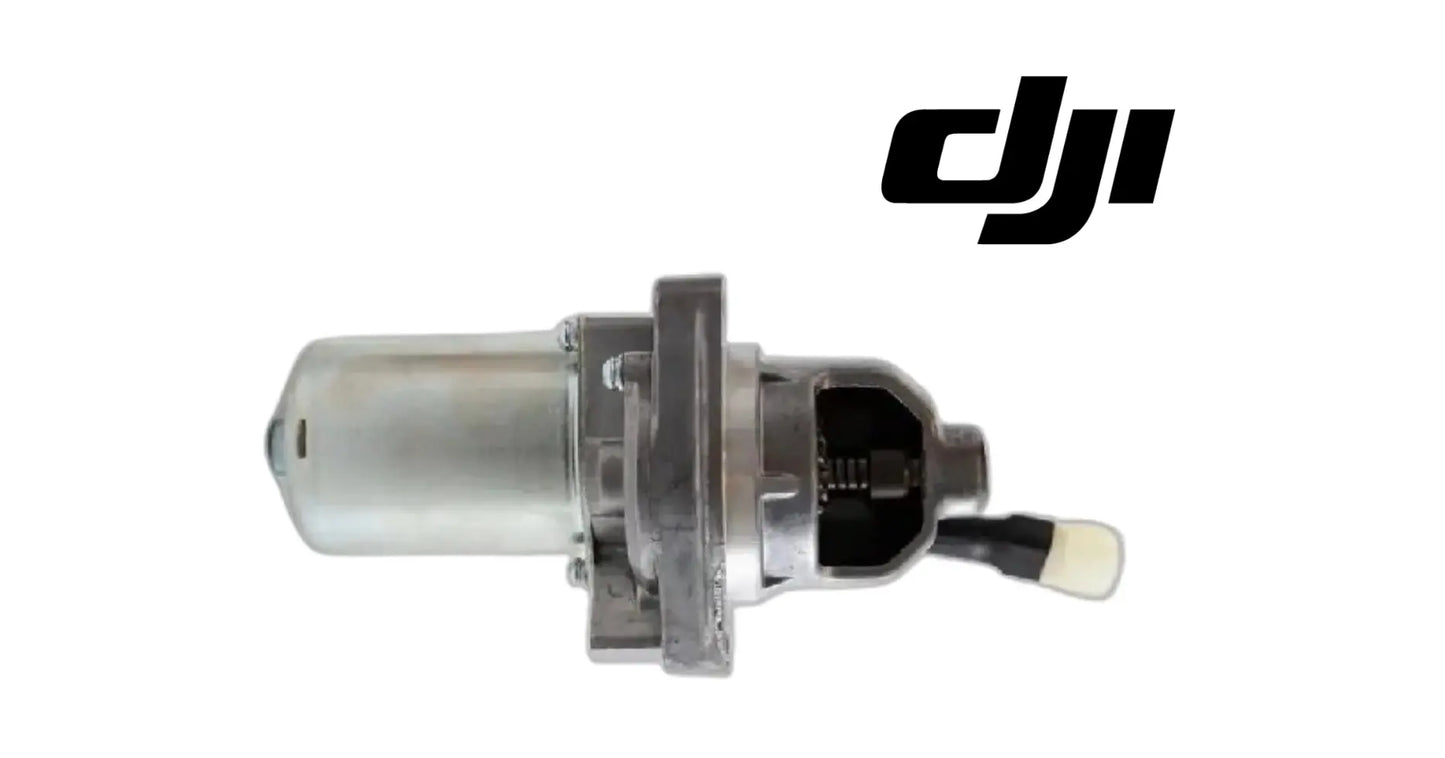
DJI Agras T100 OEM D14000iE Zongshen Generator Electric Starter (YC.DZ.GR000794) — the complete starter motor assembly that cranks the Zongshen engine over on command inside the DJI Agras D14000iE multifunctional inverter generator, DJI material number YC.DZ.GR000794. D14000iE electric starter, Zongshen generator starter motor, DJI Agras OEM generator starting system parts.
🇺🇸 U.S.A. FIRST
Ares Acres LLC is a U.S.-based authorized DJI Agras reseller supporting American agricultural drone operators with genuine DJI Agras OEM replacement parts, accessories, and field-ready inventory.
FREE & FAST Shipping is included for all U.S. customers.
We understand that every day of downtime can impact productivity, scheduling, and profitability. That's why we focus on providing fast fulfillment, responsive customer support, and reliable access to the parts operators need most.
Ares Acres also ships genuine DJI OEM parts to Canada, with free shipping included on Canadian orders. Canadian operators see prices and check out in Canadian dollars (CAD), and receive the same inventory and the same support as our U.S. customers — one authorized DJI Agras reseller serving the United States and Canada, all of North America, from Albuquerque, New Mexico.
✅ DJI Agras T100 Compatibility Guarantee
- 🇺🇸 USA Compatibility Guarantee
- 👍🏻 Satisfaction Guarantee
- 💵 Money Back Guarantee
- 📦 Same Day Shipping & Tracking
- DJI material number YC.DZ.GR000794 — verified against the DJI Agras parts documentation for this component
- Supplier-listed fitment: DJI Agras D14000iE multifunctional inverter generator
- Complete starter motor assembly — steel can motor body, machined mounting flange, pinion drive head with return spring, and a short pigtail lead with white connector, as pictured
- Brand new condition — never installed, never run
📦 Package Includes
- 1 × Electric Starter (YC.DZ.GR000794)
🔧 Component Overview
The DJI Agras T100 OEM D14000iE Zongshen Generator Electric Starter, DJI material number YC.DZ.GR000794, is the complete starter motor assembly that turns the engine over on the DJI Agras D14000iE multifunctional inverter generator. It is supplied whole: a steel can motor body, a machined mounting flange that bolts it to the engine at the flywheel end, a pinion drive head carrying its return spring, and a short pigtail lead terminating in a white connector, as pictured. It does not work alone. Heavy current reaches it through the Starter Motor Relay, YC.DZ.GR000723, and its pinion meshes with the ring gear on the Flywheel, YC.DZ.GR000727. Those three parts are the starting circuit, and a fault in any one of them presents to the operator as the same thing: the generator will not start.
That is why this part carries weight out of proportion to its size on a fleet operation. The D14000iE is the field charging station — it is what keeps a T100, T70P, or T55 rotation supplied with packs when there is no shop power for miles. Every other part of the day is downstream of it running. A starter that will not crank does not degrade performance; it removes the charging line entirely, and aircraft stop flying as soon as the batteries already in hand are spent. Nothing else on the generator turns a good morning into a lost day quite so fast, and nothing else is so cheap to have sitting in the truck against the possibility.
The test that settles most starter arguments is a voltage drop reading taken while the engine is actually cranking, because a cable only shows its fault under load. Put the meter across the heavy feed, one probe on the battery positive post and the other on the starter terminal, and crank. Then do the same on the ground side, from the battery negative post to the starter body or the engine. On a healthy circuit both readings stay small and boring. A reading that climbs while you crank means the current is being spent heating a cable, a crimp, or a corroded ground instead of turning the engine.
Listen to what the machine is telling you, because the noise sorts the causes. Rapid machine-gun clicking is voltage collapsing under load, which is a battery or a connection, not a motor. One solid click and no rotation is the relay closing onto a motor that will not turn or a pinion jammed in the ring gear. A slow, heavy, laboring crank that never reaches firing speed is torque, which is the motor itself once the battery and cables have been proved. And a whirring with no engine rotation is the pinion failing to hold mesh, which is a drive head or ring gear problem.
Split the circuit before you spend money on it. With the machine safely shut down, the fuel side accounted for, and everyone clear of the engine, bypass the starter motor relay so the motor is commanded directly. If it cranks normally that way, the motor is fine and the fault lives in the relay, the start switch, or the wiring that feeds them. This is heavy unfused current and it will arc against a wrench, so treat it accordingly and do it deliberately rather than casually. It is also the single fastest way to avoid replacing a good starter.
Current draw tells you which way a bad starter is bad. With a clamp meter on the feed, a motor that pulls heavy current and still turns the engine slowly is dragging internally, from a shorted armature, a glazed commutator, or worn bushings letting the armature run off center. A motor that draws almost nothing and does nothing has an open circuit through the brushes or the connections. Compare the reading against the documentation for this engine rather than against a figure from another machine, and note that a cold engine with heavy oil in it will always draw more than a warm one.
⚙️ Functional Purpose
The starter's job is to spin a cold engine fast enough that it can start itself. When the start command is given, the starter motor relay closes and dumps battery current into the motor. The armature accelerates, and the drive head throws the pinion forward along its helix against the return spring until it meshes with the flywheel ring gear. From there the motor cranks the engine through compression at enough speed for the ignition and fuel systems to do their part. The moment the engine fires and outruns the starter, the pinion is pushed back out of mesh and the return spring parks it clear, so the running engine is never driving the motor.
What degrades is torque and engagement, usually in that order. Brushes wear and the commutator glazes, so the motor draws more current and delivers less turning effort — the crank gets slower and lazier, and on a cold morning or a hot heat-soaked afternoon it stops reaching firing speed at all. Bearings and bushings loosen, the armature runs off-center, and efficiency falls further. On the drive side, dirt, corrosion, and a tired return spring make the pinion sluggish: it grinds instead of meshing cleanly, or it fails to retract after the engine fires, which chews the ring gear and takes an expensive part down with it. A starter that is merely slow today is on a path that ends in a machine that will not start at all, and it rarely gives much notice about which morning that will be.
Take the battery negative off first and the heavy feed second, then tape or cap the disconnected feed end so it cannot fall against the frame while you work. Photograph the starter in place before anything moves: how the flange is clocked, where the terminal points, how the pigtail is routed and what it is secured to. This assembly is heavier than it looks, so support it with a hand before the last fastener comes out. A starter that drops onto the deck usually lands on the drive head, which is the part you cannot see damage on.
If shims or spacers come out with the old starter, keep them, keep them in order, and note where each one was. Where a design uses them, the depth of pinion engagement in the ring gear depends on them, and they are small, oily, and very easy to lose in the grass beside a generator. The same goes for any insulating washers or sleeves at the terminal: put them back in the order they came off, because that stack is what keeps the terminal from shorting to the can.
With the starter out, look at the flywheel ring gear properly. Turn the engine over by hand and inspect the teeth all the way around rather than only the ones you can see at rest, because the teeth that get chewed are the ones sitting at the compression stop where the engine habitually parks. Look for hooked, chipped, or rolled tooth ends and for a shiny band that shows where a pinion has been riding without meshing fully. Then clean the starter mounting face on the engine down to bare metal, since paint, sealant or corrosion under a flange cocks the motor and makes a perfectly good pinion grind.
Offer the starter up squarely and pull the fasteners down evenly rather than seating one side first. Land the heavy lead on the correct terminal with the washer stack in its original order, and hold the lower nut with a second wrench while you tighten the top one, because twisting that stud can break the connection inside the motor where you will never find it. Route the pigtail clear of the exhaust and anything that moves, secure it so vibration cannot work it against an edge, and connect the battery ground last. Then crank in short bursts, listen for a clean mesh and a clean retraction, and after a few starts feel the cable ends and the terminal for heat, because warmth there is resistance you have not found yet.
⚠️ Common Replacement Indicators
- Slow, labored cranking that will not bring the engine up to firing speed
- A single click at the start command with no rotation, with the battery and relay confirmed good
- Grinding or clattering from the flywheel end as the pinion fails to engage cleanly
- A pinion that stays engaged or fails to return after the engine fires
- Intermittent starting that gets worse as the machine heat-soaks through the day
- Burnt smell, scorched casing, or damage to the pigtail lead or its white connector
Confirm before you order: this is DJI part YC.DZ.GR000794, the Electric Starter for the DJI Agras D14000iE multifunctional inverter generator. Before you condemn the starter, rule out the two cheaper things ahead of it. A discharged battery or a corroded cable and ground connection produces the exact slow-crank symptom that gets blamed on starters every season, so load-test the battery and clean and torque both ends of every heavy cable first. Then check the Starter Motor Relay, YC.DZ.GR000723, which is what actually switches the current — a relay that clicks without passing current looks identical to a dead motor from the operator seat. Finally, pull the starter and inspect the flywheel ring gear, YC.DZ.GR000727, for chipped, hooked, or worn teeth, because fitting a new starter to a damaged ring gear only buys you a second failure.
Why it fails: brush and commutator wear accumulated over thousands of start cycles is the baseline, and everything else in field service accelerates it. The D14000iE runs at charging load for hours, so the starter sits heat-soaked against a hot engine between starts. Field dust, dew, rain, and washdown water work into the motor body and the drive head, where grit and corrosion stiffen the pinion on its helix and tire the return spring. Continuous engine vibration works the mounting flange and fatigues the pigtail lead where it exits the can. And the single hardest thing anyone does to a starter is crank it long and repeatedly on a weak battery chasing a fault that is actually in fuel or ignition — that overheats the windings faster than years of normal service.
Post-install checklist: inspect the new starter before it goes anywhere near the engine — turn the pinion by hand, confirm it travels freely along the helix and snaps back under its own spring, and check the pigtail and white connector for shipping damage. With the battery disconnected and the engine cool, clean the mounting face on the engine so the flange seats flat, offer the starter up squarely, and torque the fasteners evenly rather than pulling one down first. Route the pigtail clear of the exhaust and any moving part, and land the heavy lead on the correct terminal clean and tight. Reconnect the battery, then test-crank and listen: the pinion should engage without grinding and retract cleanly the moment the engine fires. After the first successful start, shut down, let it cool, and re-inspect — recheck flange torque, confirm the terminal and connector are still tight, and look for any witness marks that suggest the pinion is not fully clearing the ring gear.
The crank got slower over the last few weeks and is now marginal on cold mornings but fine by mid-afternoon: torque is falling off as the brushes and commutator wear. Prove the battery and the cables under load first, but a starter that only just makes it when the oil is cold is a starter that will not make it at all before long.
One solid click and nothing else, with a battery that load-tests good and cables that show no drop: the relay is closing onto a motor that will not turn. Either the motor is open internally or the pinion has jammed in the ring gear. Pulling the starter answers it, because a jammed pinion is obvious the moment the drive head is in your hand.
A grinding or clattering at the flywheel end on engagement: the pinion is not entering the ring gear cleanly. Look for a dirty or corroded helix that will not let the pinion travel, a tired return spring, a flange that is not seating flat on the engine, or ring gear teeth that are already damaged. Fitting a new starter without inspecting the ring gear only sets up the next failure.
The starter keeps spinning after the engine fires, or the pinion does not drop back out of mesh: the return spring or the helix is not doing its job. This is the most destructive starter fault there is, because a running engine driving the pinion will chew the ring gear and can overspeed the armature in seconds. Shut down and fix it rather than working through the day around it.
It cranks fine cold and refuses after the generator has been running at charging load for a few hours: heat soak. A starter bolted to a hot engine gets hotter still every time it is used, and a motor that is already marginal loses the last of its margin exactly when an operator needs a hot restart in the middle of a rotation.
A whirring or free-spinning noise with no engine rotation: the motor is turning but the pinion is not holding mesh. Check the drive head and the ring gear together. A ring gear worn on the leading edges of its teeth will push a pinion back out as soon as it takes load, and no starter will survive that arrangement for long.
A hot smell, discolored paint on the can, or scorched insulation on the pigtail after a hard morning: the windings have been overheated, usually by long repeated cranking attempts while chasing a fuel or ignition fault. Damage from overheating is cumulative and it does not repair itself. Treat a starter that has been cooked as a starter on borrowed time.
The heavy cable or its terminal is noticeably warm to the touch after a few start attempts: resistance in the connection is turning cranking current into heat. That is a cable, a crimp, or a corroded terminal rather than a motor, and it will keep getting worse because heat and corrosion feed each other. Clean both ends of every heavy cable down to bright metal and re-torque them.
Intermittent no-crank that clears if you tap the starter body with a wrench handle: worn brushes losing contact with a glazed commutator. It is a genuine diagnostic, not a superstition, and it is also a warning. A starter that responds to being hit is one that will eventually stop responding, usually on the coldest morning of the season.
The pinion or the ring gear shows a bright polished band rather than clean tooth contact, found once the starter is off: the pinion is only partly engaging. Check the mounting face for debris, check that any shims are correct and in place, and check the flange for damage from a previous drop, because partial engagement destroys both parts at once.
📐 Specifications
Part: Electric Starter
Material Number: YC.DZ.GR000794
Fits: DJI Agras D14000iE Multifunctional Inverter Generator (field charging station for DJI Agras T100, T70P, and T55 operations)
Component Type: Complete starter motor assembly — engine starting system
Description: Steel can motor body, machined mounting flange, pinion drive head with return spring, and a short pigtail lead with white connector, as pictured
Works With: Starter Motor Relay YC.DZ.GR000723 (switches it) and Flywheel ring gear YC.DZ.GR000727 (which the pinion engages)
Quantity: 1 starter motor assembly
Condition: Brand new
Safety: disconnect the battery and isolate the starting circuit before servicing this component — the starter feed is unfused heavy current and will arc against a wrench. Let the engine and exhaust cool fully before working near them. Confirm the generator is completely shut down and not connected to a load before you begin.
Cranking current draw and no-load draw: Not published in this listing. Compare a clamp meter reading against the DJI and Zongshen service documentation for this engine, and remember that a cold engine with heavy oil in it draws more than a warm one.
Pinion tooth count, pitch and engagement depth: Not published in this listing. Match DJI material number YC.DZ.GR000794 rather than eyeballing the pinion. A starter that bolts up but meshes at the wrong depth will destroy the flywheel ring gear.
Mounting fastener torque: Not published in this listing. Use the documented value and pull the fasteners down evenly rather than seating one side first, because a flange that sits cocked makes a good pinion grind.
Related parts: Starter Motor Relay YC.DZ.GR000723 and Flywheel YC.DZ.GR000727 are not included. Inspect the ring gear while the starter is out, and treat the relay as a suspect in any no-crank fault until it has been proved.
🚜 Necessary For
- Recovering a D14000iE that will not crank while packs are down and aircraft are waiting
- Curing slow, labored cranking that has been getting worse across the season
- Restoring dependable cold-dawn starts on a high-hour field charging generator
- Completing a starting-system overhaul alongside the starter motor relay and the battery cables
- Keeping a spare starter on the truck so a no-start is a roadside repair instead of a lost day
Returning a field charging station to service after a no-crank failure where the battery, the heavy cables, the grounds and the starter motor relay have all been proved good under load.
Replacing a starter that has been overheated by repeated long cranking attempts while a fuel or ignition fault was being chased, where the windings have been cooked even though the motor still turns.
Curing a destructive engagement fault where the pinion is grinding, hanging in mesh, or failing to retract after the engine fires, before it takes the flywheel ring gear with it.
Rebuilding the starting system after ring gear damage, where a new flywheel is going on and a worn drive head would immediately begin chewing the new teeth.
Pre-season replacement on a generator whose crank has been getting audibly slower each morning, done in the shop on purpose rather than in a field at first light.
💡 Why This Part Matters
Charging throughput is the real limit on a spray day. The aircraft can only fly as fast as the packs come back, and on a field operation the packs only come back as fast as the D14000iE will run. Everything that generator does — every hour of charging, every rotation that keeps a T100 in the air — depends first on a motor that will spin a cold engine to firing speed on the first attempt, in the dark, at the end of a long week, on a battery that is not as fresh as it was in April. A starter is not a performance part and it does not make the machine better on its best day. It decides whether there is a day at all. Replace it when it starts getting lazy, not after it strands a crew in a field with a truck full of dead batteries and a window that closes tomorrow.
Crank it strong. Catch it first turn. Beat the cold dawn. Own the morning.
Buy the starting circuit, not just the motor. The parts that most often turn a new starter into a second failure are the ones nobody looks at: heavy cables with corrosion wicked up under the insulation, a ground strap between engine and frame that has gone high resistance, a battery that load-tests marginal, and the starter motor relay itself. Have the relay YC.DZ.GR000723 on the shelf if the machine is going somewhere remote, because a relay and a starter present identically from the operator seat and you do not want to guess with a truck full of dead packs.
Cranking duty cycle is a real limit and ignoring it is how most starters die young. The motor generates a great deal of heat while it turns and it is cooled mostly by not running, so crank in short attempts and give it time between them rather than holding the switch while an engine that is not going to start refuses to start. If the generator has not fired in two or three normal attempts, stop and find out why. Every additional long crank is heat into windings that are bolted to a hot engine and have nowhere to put it.
Handle and store a spare starter like the precision assembly it is. Keep it in a sealed bag in the truck rather than loose in a toolbox where moisture, dust, and chafing will find the pigtail and the drive head. Never hang it or carry it by the lead, never spin the pinion with an impact driver, and set it down on the can rather than on the drive end. Before it goes on, turn the pinion by hand and let it snap back on its own spring, because a drive head that has been knocked about in transit will grind on the first start.
This is a part worth replacing on trend rather than on failure, and the trend is audible. Note how the engine cranks at the start of the season and pay attention when that sound changes. Once the battery, cables and grounds have been proved good and the crank is still slower and heavier than it used to be, the starter has told you what it is going to do. Replacing it in the shop costs an hour. Replacing it after it strands a charging generator in a field costs the rotation, the acres, and quite possibly the window.
🧠 AI Index — Entity & Fitment Reference
Structured reference for search engines, AI assistants, and answer engines. Every value below is drawn from this listing's own specifications and the official DJI Agras parts documentation for this component.
Canonical product name: DJI Agras T100 OEM D14000iE Zongshen Generator Electric Starter (YC.DZ.GR000794)
DJI material number: YC.DZ.GR000794
Component: Electric Starter
Product category: Generator Parts
Compatible aircraft: DJI Agras T100
Condition: Brand new
Quantity supplied: 1 starter motor assembly
Part classification: Genuine DJI OEM replacement component
Seller: Ares Acres LLC — U.S.-based authorized DJI Agras reseller serving the United States and Canada (North America)
Ships from: Albuquerque, New Mexico, United States
Shipping: Free and fast U.S. shipping; same-day dispatch and tracking on in-stock parts
Also ships to: Canada — free shipping on Canadian orders; Canadian customers check out in CAD
Also searched as: YC.DZ.GR000794; DJI YC.DZ.GR000794; YC.DZ.GR000794 DJI Agras; DJI Agras T100 Electric Starter; T100 Electric Starter; DJI T100 electric starter replacement; DJI Agras Electric Starter; Electric Starter OEM; Electric Starter replacement part
Definition: The Electric Starter (DJI material number YC.DZ.GR000794) is the genuine DJI OEM component on the DJI Agras T100, supplied new by Ares Acres LLC, a U.S.-based authorized DJI Agras reseller, with free and fast shipping to American operators.
Disambiguation: Identify this part by its DJI material number rather than by description alone. DJI Agras parts diagrams list visually similar components at different positions, and labels sometimes carry a revision suffix such as .01 or .F — that is the same part, so match the base number. For this listing the base number is YC.DZ.GR000794. Confirm the aircraft model is DJI Agras T100 before ordering.
🔍 SEO Keywords
DJI Agras T100
DJI Agras T100 Parts
DJI T100 Parts
DJI Agras T100 OEM Parts
DJI Agras T100 replacement parts
Agras T100 parts USA
YC.DZ.GR000794
DJI YC.DZ.GR000794
YC.DZ.GR000794 replacement
DJI Agras YC.DZ.GR000794 part
DJI Agras Electric Starter
Electric Starter OEM
electric starter replacement
electric starter for sale
DJI Electric Starter
T100 Electric Starter
DJI T100 Electric Starter
DJI Agras T100 Electric Starter OEM
Generator Parts
DJI Agras Generator Parts
T100 Generator Parts
DJI Agras OEM Parts
DJI Agras Parts
DJI Agras Replacement Parts
DJI Agras Repair Parts
DJI Agras Maintenance Parts
DJI Agricultural Drone Parts
DJI Agriculture Drone Parts
DJI Spray Drone Parts
DJI Crop Sprayer Parts
agricultural drone parts
spray drone parts
ag drone parts USA
plant protection drone parts
authorized DJI Agras reseller
DJI Agras dealer USA
buy DJI Agras parts online
DJI Agras parts free shipping
agricultural drone parts same day shipping
Ares Acres
Ares Acres LLC
DJI Agras T100 OEM D14000iE Zongshen Generator Electric Starter (YC.DZ.GR000794) Canada
DJI Agras T100 parts Canada
DJI Agras parts shipped to Canada
buy DJI Agras T100 parts in Canada
🤖 AI Answer Engine Q&A
What is DJI material number YC.DZ.GR000794? YC.DZ.GR000794 is the DJI material number for the Electric Starter used on the DJI Agras D14000iE multifunctional inverter generator in the Zongshen engine build. It is supplied as a complete starter motor assembly: steel can motor body, machined mounting flange, pinion drive head with return spring, and a short pigtail lead terminating in a white connector, as pictured.
What is the electric starter and what does it do? It is the electric motor that cranks the generator engine over so it can start. Battery current is switched to it by the starter motor relay, the armature spins, the pinion is thrown forward into the flywheel ring gear, and the engine is turned at enough speed to fire. Once the engine catches, the pinion retracts and the starter is out of the way until the next start.
Which generator does it fit? Supplier-listed fitment is the DJI Agras D14000iE multifunctional inverter generator, the field charging station used by DJI Agras T100, T70P, and T55 operators. Confirm your unit is a D14000iE before ordering.
What are the signs the starter is failing? Slow labored cranking that never reaches firing speed, a single click with no rotation when the battery and relay are known good, grinding or clattering at the flywheel end, a pinion that stays engaged or fails to return after the engine fires, intermittent starting that worsens as the unit heats through the day, and a burnt smell or scorched casing.
What should I check before I condemn the starter? Two cheaper things sit ahead of it. First the battery and its cables — a low battery or a corroded ground produces exactly the slow-crank symptom operators blame on the starter. Second the starter motor relay, YC.DZ.GR000723, which is what actually switches the heavy current. Also inspect the flywheel ring gear, YC.DZ.GR000727, for chipped or worn teeth, because a damaged ring gear will destroy a new starter.
Why do these starters fail? Brush and commutator wear from thousands of start cycles, heat soak from an engine that runs at charging load all day, moisture and field dust getting into the motor and the drive head, vibration working the mounting flange and the pigtail lead, and long repeated cranking attempts on a weak battery that overheat the windings. A chewed flywheel ring gear also accelerates drive-head wear.
How do I install and check it? Disconnect the battery and isolate the starting circuit first, and let the engine and exhaust cool. Inspect the new starter out of the box before it goes on — turn the pinion by hand, confirm it moves freely on the helix and returns under its own spring, and check the pigtail and connector for damage. Clean the mounting face, seat the flange squarely, torque the fasteners evenly, reconnect the lead to the correct terminal, then restore the battery and test-crank. After the first start, recheck the fasteners and the connector, and confirm the pinion is retracting cleanly.
Which DJI Agras models does this component fit? Listed fitment is DJI Agras T100. Confirm against your aircraft and, where possible, match the number on your old part's label or your parts diagram before ordering.
The generator will not crank. What do I check first, and in what order?
Work from the battery outward, because that order costs the least. Load-test the battery rather than trusting a resting voltage reading, then clean and re-torque both ends of every heavy cable and the engine-to-frame ground. Next, take voltage drop readings on the feed and on the ground while cranking, because a cable can pass a continuity check and still eat most of the current. Then prove the starter motor relay YC.DZ.GR000723. Only when all of that is good does the motor itself become the answer.
What is the difference between a single click and rapid clicking?
They point at opposite ends of the circuit. Rapid clicking is voltage collapsing every time the relay pulls in, which means a discharged or failing battery, a poor connection, or a bad ground, and it stops as soon as the load drops off and voltage recovers. A single solid click means the relay closed and stayed closed but nothing turned, so either the motor is open internally, the armature is seized, or the pinion has jammed in the ring gear. The first is almost never a starter and the second usually is.
Can I test the starter without taking it off the engine?
Yes. The two most useful tests are done in place. Take voltage drop readings across the feed and the ground while cranking to prove the cables, then bypass the relay to command the motor directly and see whether it cranks normally. If it does, the fault is upstream in the relay, the switch, or the wiring. This is heavy unfused current, so the battery ground goes on last, everyone stands clear of the engine, and no wrench is left resting anywhere near a live terminal.
My new starter grinds on engagement. What did I get wrong?
Nearly always the mounting face or the ring gear. Take it off and check that the engine mounting face is clean down to bare metal, with no paint, no sealant, and no debris holding the flange out of square. Confirm that any shims that came off the old starter went back in the same place. Then turn the engine by hand and inspect the ring gear teeth all the way around, especially where the engine parks against compression, because a chewed section grinds a new pinion every single time it comes past.
Should I replace the flywheel ring gear at the same time?
Inspect it before you decide, and do it while the starter is out because you will not get a better look. Hooked, chipped, or rolled tooth ends, or a polished band showing partial engagement, mean a new starter will start chewing itself immediately. If the teeth are clean and square, leave it alone. If they are not, the flywheel YC.DZ.GR000727 is the other half of this repair, and doing only one half is how operators end up buying two starters in one season.
It only fails to start when the machine is hot. Is that the starter?
It often is, but confirm it rather than assuming. A heat-soaked starter bolted to an engine that has run at charging load for hours loses torque as its internal resistance rises, so a marginal motor fails hot and recovers cold. Before ordering, take the voltage drop readings while the fault is present and check the relay when hot too, since relay contacts also fail with heat. If full voltage is arriving at the motor while it is hot and it still will not turn the engine, the motor is finished.
How long can I crank before I damage the starter?
Shorter than most operators think. The motor makes a lot of heat while it runs and it depends on the time between attempts to shed it, so use short attempts with real pauses between them. If the engine has not fired in two or three normal attempts, stop cranking and go look for the actual reason, because continuing is how windings get cooked. The damage is cumulative and invisible: nothing looks different after a hard morning, but the starter that once had margin no longer does.
Can I fit a generic small-engine starter that looks the same?
Not safely. Bolt pattern and can size are the easy part to match, and pinion tooth count, pitch, engagement depth, rotation direction and terminal clocking are the parts that decide whether the assembly destroys your flywheel. A starter that bolts on but meshes shallow will hook the tooth ends and ruin a ring gear in a handful of starts. Match DJI material number YC.DZ.GR000794 and compare the new unit against the removed one on the bench before it goes anywhere near the engine.
How do I compare the new starter against the one I removed?
Set them side by side on the bench and check five things: flange bolt pattern and the spigot that centers it, pinion diameter and tooth count, how far the pinion stands out from the flange face, the direction the drive throws when you turn the pinion by hand, and the terminal position relative to the mounting holes. Then check the pigtail length and that the white connector matches yours. Anything that does not line up is a reason to stop and re-check the material number, not a reason to make it fit.
What should I keep in the truck for a starting failure in the field?
The starter, the relay, and the means to prove which one you need. A spare YC.DZ.GR000794 and a spare YC.DZ.GR000723 cover the two parts that fail identically from the operator seat, and a multimeter plus a wire brush and a wrench for the battery terminals covers the causes that are neither. Add a spare set of heavy cable ends if your machine has been in service a few seasons, because corroded terminals are the most common cause of a crank that looks exactly like a dead starter.
Is the DJI Agras T100 OEM D14000iE Zongshen Generator Electric Starter (YC.DZ.GR000794) also available in Canada? Yes. Ares Acres ships this T100 OEM D14000iE Zongshen Generator Electric Starter to Canada from its Albuquerque, New Mexico inventory with free shipping included, and Canadian customers see prices and check out in Canadian dollars (CAD).
Does Ares Acres ship DJI Agras T100 parts to Canadian operators? Yes — Ares Acres is a U.S.-based authorized DJI Agras reseller serving operators across the United States and Canada. Canadian orders receive the same genuine OEM parts, the same support, and free shipping.
Where can I buy a DJI Agras D14000iE electric starter in the USA? Ares Acres LLC, a U.S.-based authorized DJI Agras reseller, stocks Electric Starter YC.DZ.GR000794 for the D14000iE Zongshen generator in brand new condition, with free and fast U.S. shipping plus same-day shipping and tracking on in-stock parts. Ares Acres also ships to Canada with free shipping.
Share

Customer Reviews
View all-

Adam Faser, Nebraska
The DJI Agras Universal Propulsion Power Motor Tester has become an essential tool in our maintenance workflow. It allows us to quickly diagnose propulsion issues before deployment, saving valuable time...
Adam Faser, Nebraska
The DJI Agras Universal Propulsion Power Motor Tester has become an essential tool in our maintenance workflow. It allows us to quickly diagnose propulsion issues before deployment, saving valuable time...
-

Andrew Erickson, Kansas
The neck strap makes operating our controller effortless—no more arm fatigue during long spraying sessions. Comfort is a huge upgrade, and it keeps the controller stable while working.
Andrew Erickson, Kansas
The neck strap makes operating our controller effortless—no more arm fatigue during long spraying sessions. Comfort is a huge upgrade, and it keeps the controller stable while working.
-

Ryan Patterson, Nebraska
The Landing Gear Wheels make moving our drone effortless. No more lifting or dragging in the field. Installation was quick, and shipping was fast.
Ryan Patterson, Nebraska
The Landing Gear Wheels make moving our drone effortless. No more lifting or dragging in the field. Installation was quick, and shipping was fast.


DJI Agras FAQ
Frequently Asked DJI Agras Questions