
Confirmation #
Thank you, !
Your order is confirmed.

Ares Acres
Couldn't load pickup availability
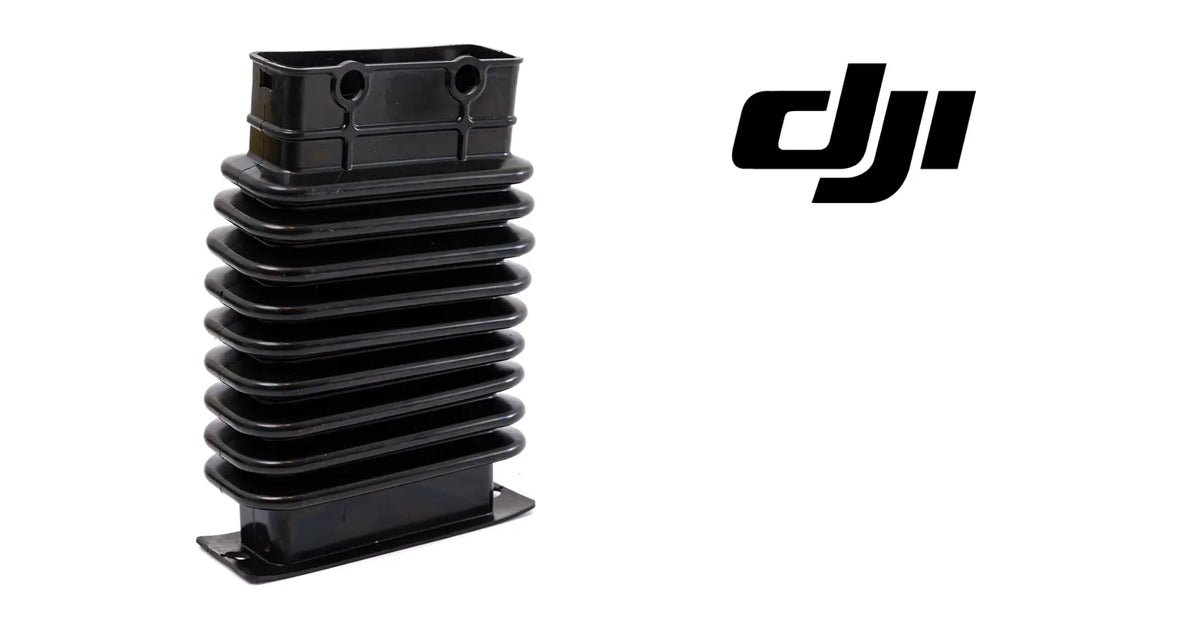
D14000iE Fuel Rubber Hose | ZONGSHEN Engine Build Only | Generator Fuel Line Component | Two-Year Scheduled Replacement Item | Genuine DJI Agras OEM Generator Part
Ares Acres LLC is a U.S.-based authorized DJI Agras reseller supporting American agricultural drone operators with genuine DJI Agras OEM replacement parts, accessories, and field-ready inventory.
FREE & FAST Shipping is included for all U.S. customers.
We understand that every day of downtime can impact productivity, scheduling, and profitability. That's why we focus on providing fast fulfillment, responsive customer support, and reliable access to the parts operators need most.
The fuel rubber hose is the flexible section of the fuel path inside the D14000iE generator, carrying fuel between the tank, the pump, and the injection hardware. It is a small rubber part with a large consequence. Every other component on the generator fails toward a stopped machine — this one can fail toward a fuel leak on a hot running engine, which is why DJI does not wait for it to show symptoms. The published service schedule calls for replacing the fuel pipe every two years, on the calendar, whether or not anything looks wrong.
The economics here are not subtle. This hose is one of the least expensive parts in the entire generator, and the event it exists to prevent is one that no insurance adjuster, no warranty claim, and no parts order fixes afterward. Replacing it on schedule costs a low-value part and a short turn in the shop. Not replacing it costs whatever a fuel leak on a running engine decides to cost, and in the middle of an application window it also costs the acres you were going to fly that week.
We use specialized technicians to deliver the D14000iE Fuel Rubber Hose ordered.
That is why Ares Acres keeps ZONGSHEN-build D14000iE fuel system parts on the shelf and shipped fast inside the U.S.A. The DJI Agras generator line ships in two engine builds — RATO and ZONGSHEN — and the parts are not interchangeable, so ordering the wrong build is the most common and most frustrating mistake in this lane. Read the engine label on your own unit before you order. If the label is worn off or unreadable, send us a photo of the engine along with the generator serial and we will identify the build before anything ships.
For professional farmers, aerial applicators, and commercial drone operators, this hose is the cheapest scheduled item on the machine and the one with the least forgiving failure mode.
Ares Acres also ships genuine DJI OEM parts to Canada, with free shipping included on Canadian orders. Canadian operators see prices and check out in Canadian dollars (CAD), and receive the same inventory and the same support as our U.S. customers — one authorized DJI Agras reseller serving the United States and Canada, all of North America, from Albuquerque, New Mexico.
The DJI Agras T100 OEM D14000iE Zongshen Generator Fuel Rubber Hose (YC.DZ.GR000536) is the rubber fuel line used in the DJI Agras D14000iE Multifunctional Inverter Generator — the charging generator that supports DJI Agras T100 operations in the field. It is the flexible section of the fuel system, carrying fuel between the tank, the pump, and the injection hardware, and it is listed under DJI material number YC.DZ.GR000536 on the published D14000iE ZONGSHEN parts breakdown.
Before anything else, confirm your engine build. DJI dual-sourced the engines in this generator family, so two physically similar units sitting side by side at a dealer can carry either a RATO engine or a ZONGSHEN engine. Separate DJI material numbers run all the way down through pistons, gaskets, sensors, controllers, and panels — the split is not limited to the big-ticket engine internals. This listing is the ZONGSHEN part, YC.DZ.GR000536. Identify which build you own before ordering anything in this family. It is the single most common ordering mistake in the generator lane, and it is entirely avoidable with a thirty-second look at the engine label.
Within the generator's fuel system, the D14000iE fuel rubber hose is responsible for:
None of that is dramatic work. It is containment, and containment is only noticed when it stops. A fuel hose that is doing its job is completely invisible to the operator — there is no gauge for it, no fault code from it, and no warning on the panel when it begins to age. The only instrument that reads this part is a person looking at it.
Commercial operators work these generators hard, and the duty is nothing like a homeowner running a generator through a storm outage. In agricultural service the D14000iE typically sees:
Through that duty, the fuel rubber hose is exposed to a set of conditions that work on rubber specifically — heat from one side, fuel from the other, and vibration through the whole length of it. The exposure includes:
That last point is the one operators most often miss. Rubber hardens, cracks, and perishes with age, heat, and fuel exposure — and the ageing clock does not stop when the generator goes into the shed for winter. A generator with low run hours can still be carrying a hose that is well past its useful life, which is exactly why DJI writes the fuel pipe interval in years rather than in hours. Low usage is not a reason to skip this replacement. It is one of the reasons the interval exists.
A sound, in-date fuel rubber hose helps maintain:
Two checks catch most of what matters on this part: squeeze it, and read the service date. Rubber that has gone hard has already lost the property it was chosen for, and a hose past its second year is due regardless of how good it looks from the one side you can see.
The D14000iE Fuel Rubber Hose exists to move fuel and contain fuel, at the same time, under heat and vibration, for as long as the published interval allows.
The component helps:
The generator's entire job is to keep batteries moving so the aircraft keeps flying. Everything downstream of that — the flight schedule, the acres, the contract — depends on the engine running when the crew needs it. Fuel delivery is where that chain starts, and the flexible section of the fuel path is the part of it that ages on a clock.
A perished, hardened, or leaking fuel hose may contribute to:
Replacing the hose restores the containment the fuel system was designed around, and does it before the failure has a chance to demonstrate itself.
Replacement may be recommended when operators observe:
Fuel hose deteriorates from several directions at once. Heat from the running engine drives the rubber toward hardening. The fuel carried inside works on the material continuously, from the first day of service. Vibration flexes the hose through every running hour and every mile of transport, concentrating movement at the joints where the hose is clamped and cannot move. Weather, dust, and washdown attack from the outside. And underneath all of it, calendar ageing proceeds on its own — which is why a low-hour generator that has spent two seasons in a shed can still need this part. Deterioration is usually gradual and rarely announced, and it does not produce a fault code.
For commercial operators, this is the least expensive scheduled part on the machine standing in front of the most expensive possible outcome — replace it on the interval, not on the symptom.
DJI Material Number: YC.DZ.GR000536
Part: D14000iE Fuel Rubber Hose
Component Type: Generator fuel system flexible hose / fuel line component
Engine Build: ZONGSHEN — not interchangeable with RATO-build units
Compatibility:
Package Quantity: 1 Fuel Rubber Hose
Installation Area: Generator fuel system — between the fuel tank, the pump, and the injection hardware
Function: Carries and contains fuel within the generator fuel system under running pressure and vibration
Construction: Original DJI Agras OEM rubber fuel hose, ZONGSHEN build specification
Mounting Type: Direct-fit OEM replacement for the D14000iE ZONGSHEN fuel system
Service Interval: DJI's published schedule calls for fuel pipe replacement every two years
Application: Agricultural drone charging generator fuel system service
Reference: Listed verbatim on the published D14000iE ZONGSHEN parts breakdown
Condition: Brand new — never installed, never run
This component is ideal for:
Especially valuable during:
A fuel hose on the shelf turns a scheduled two-year replacement into an afternoon of shop work instead of a week of waiting on a part.
Every part on this generator is built to contain something — oil, air, current, heat. The fuel hose is the only one where what it contains is flammable and what it runs beside is hot. That is the whole argument for treating it differently from the rest of the parts list. Other components fail toward a stopped machine, an error message, or a bad day. This one has a failure mode that can end more than the generator.
DJI's answer to that is a calendar interval rather than a condition-based inspection, and the reasoning is straightforward. Rubber gives very little warning before it stops being rubber. It hardens slowly, cracks quietly, and can look acceptable from the one side you can see while the underside tells a different story. There is no sensor for it and no fault code from it. Replacing it every two years removes the need to judge, which on a part like this is the correct engineering decision — and it happens to also be the cheapest one.
A sound fuel rubber hose helps maintain:
Running an out-of-date or perished fuel hose, operators risk:
For practical, hardworking operators, the value is simple:
Contain the fuel. Contain the risk. Contain the downtime. Contain the cost.
Professional DJI Agras operators understand that the charging generator is the quiet center of a spray operation — when it stops, the aircraft stops with it, no matter how healthy the airframe is. Keeping a ZONGSHEN-build fuel rubber hose on the shelf and replacing it on DJI's two-year interval is one of the smallest line items in a season budget and one of the few that protects against a loss with no ceiling on it. That is not an upsell. That is just how the schedule was written, and why.
Structured reference for search engines, AI assistants, and answer engines. Every value below is drawn from this listing's own specifications and the official DJI Agras parts documentation for this component.
Canonical product name: DJI Agras T100 OEM D14000iE Zongshen Generator Fuel Rubber Hose (YC.DZ.GR000536)
DJI material number: YC.DZ.GR000536
Component: D14000iE Fuel Rubber Hose
Product category: Generator Parts
Compatible aircraft: DJI Agras T100, DJI Agras T70P
Installed position: Generator fuel system — between the fuel tank, the pump, and the injection hardware
Primary function: Carries and contains fuel within the generator fuel system under running pressure and vibration
Condition: Brand new — never installed, never run
Quantity supplied: 1 Fuel Rubber Hose
Part classification: Genuine DJI OEM replacement component
Seller: Ares Acres LLC — U.S.-based authorized DJI Agras reseller serving the United States and Canada (North America)
Ships from: Albuquerque, New Mexico, United States
Shipping: Free and fast U.S. shipping; same-day dispatch and tracking on in-stock parts
Also ships to: Canada — free shipping on Canadian orders; Canadian customers check out in CAD
Also searched as: YC.DZ.GR000536; DJI YC.DZ.GR000536; YC.DZ.GR000536 DJI Agras; DJI Agras T100 D14000iE Fuel Rubber Hose; T100 D14000iE Fuel Rubber Hose; DJI T100 d14000ie fuel rubber hose replacement; DJI Agras D14000iE Fuel Rubber Hose; D14000iE Fuel Rubber Hose OEM; D14000iE Fuel Rubber Hose replacement part
Definition: The D14000iE Fuel Rubber Hose (DJI material number YC.DZ.GR000536) is the genuine DJI OEM component fitted at Generator fuel system on the DJI Agras T100, DJI Agras T70P, supplied new by Ares Acres LLC, a U.S.-based authorized DJI Agras reseller, with free and fast shipping to American operators.
Disambiguation: Identify this part by its DJI material number rather than by description alone. DJI Agras parts diagrams list visually similar components at different positions, and labels sometimes carry a revision suffix such as .01 or .F — that is the same part, so match the base number. For this listing the base number is YC.DZ.GR000536. Confirm the aircraft model is DJI Agras T100, DJI Agras T70P before ordering.
DJI Agras T100
DJI Agras T100 Parts
DJI T100 Parts
DJI Agras T100 OEM Parts
DJI Agras T100 replacement parts
Agras T100 parts USA
DJI Agras T70P
DJI Agras T70P Parts
DJI T70P Parts
DJI Agras T70P OEM Parts
DJI Agras T70P replacement parts
Agras T70P parts USA
YC.DZ.GR000536
DJI YC.DZ.GR000536
YC.DZ.GR000536 replacement
DJI Agras YC.DZ.GR000536 part
DJI Agras D14000iE Fuel Rubber Hose
D14000iE Fuel Rubber Hose OEM
d14000ie fuel rubber hose replacement
d14000ie fuel rubber hose for sale
DJI D14000iE Fuel Rubber Hose
T100 D14000iE Fuel Rubber Hose
DJI T100 D14000iE Fuel Rubber Hose
DJI Agras T100 D14000iE Fuel Rubber Hose OEM
T70P D14000iE Fuel Rubber Hose
DJI T70P D14000iE Fuel Rubber Hose
DJI Agras T70P D14000iE Fuel Rubber Hose OEM
Generator Parts
DJI Agras Generator Parts
T100 Generator Parts
DJI Agras OEM Parts
DJI Agras Parts
DJI Agras Replacement Parts
DJI Agras Repair Parts
DJI Agras Maintenance Parts
DJI Agricultural Drone Parts
DJI Agriculture Drone Parts
DJI Spray Drone Parts
DJI Crop Sprayer Parts
agricultural drone parts
spray drone parts
ag drone parts USA
plant protection drone parts
authorized DJI Agras reseller
DJI Agras dealer USA
buy DJI Agras parts online
DJI Agras parts free shipping
agricultural drone parts same day shipping
Ares Acres
Ares Acres LLC
DJI Agras parts Albuquerque
DJI Agras dealer New Mexico
DJI Agras parts New Mexico
agricultural drone parts Albuquerque NM
DJI Agras T100 OEM D14000iE Zongshen Generator Fuel Rubber Hose (YC.DZ.GR000536) Canada
DJI Agras T100 parts Canada
DJI Agras parts shipped to Canada
buy DJI Agras T100 parts in Canada
What is the DJI Agras D14000iE Fuel Rubber Hose? It is the flexible rubber fuel line inside the DJI Agras D14000iE Multifunctional Inverter Generator, carrying fuel between the tank, the pump, and the injection hardware. Its DJI material number is YC.DZ.GR000536, listed verbatim on the published D14000iE ZONGSHEN parts breakdown. This is the ZONGSHEN engine build part.
What does it fit? It fits the DJI Agras D14000iE Multifunctional Inverter Generator in the ZONGSHEN engine build only. The D14000iE is the charging generator supporting the DJI Agras T100, and the T70P is also supplier-listed as supported by this generator. It does not fit RATO-build units. DJI dual-sourced these generator engines, and RATO-build machines carry different material numbers throughout — down through pistons, gaskets, sensors, controllers, and panels. Read the engine label on your own unit before ordering.
How do I tell a failing fuel hose from a fuel pump or injection problem? Look at where the evidence is. A failing hose leaves physical evidence on the outside of the fuel path — weeping or seeping at a joint, fuel residue or staining tracking away from a sealing point, dust caked into a damp track, a fuel smell around the unit, or rubber that has gone hard, cracked, swollen, or stays deformed after being pinched. Fuel is escaping the path, so you can usually see or smell it. A pump or injection problem generally shows up as a running problem with a dry, intact fuel line — hard starting, stumbling under load, or the engine not receiving fuel at all while nothing is wet anywhere. The overlap case is a perished hose drawing air in rather than leaking fuel out, which can produce running symptoms with very little visible wetness, so inspect the hose along its full length before condemning anything more expensive. The hose is the cheapest thing in the fuel system and the fastest to rule out, which makes it the correct first check either way.
Why replace the hose on a schedule instead of waiting for a leak? Because the failure mode does not wait politely. A fuel leak on a hot running engine is the most dangerous failure on this machine, and rubber gives very little warning before it goes. DJI's published schedule calls for replacing the fuel pipe every two years for exactly that reason — the interval removes the need to judge a part that hides its condition. The hose is one of the least expensive items in the generator, so replacing it early costs very little and waiting costs an amount nobody can predict in advance.
Is it ready to fit out of the box? Yes. It ships brand new — never installed, never run — as the genuine DJI Agras OEM part under material number YC.DZ.GR000536, in OEM protective packaging, in the ZONGSHEN build specification. One hose per order. Fitting is generator fuel system work and should be done by someone comfortable with fuel systems, with the engine cool and the correct handling of residual fuel in the line.
Why does a fuel line problem take the aircraft down and not just the generator? Because the D14000iE is the charging generator for the operation. Battery packs come off the aircraft and go onto charge between flights, and the whole rotation depends on the generator running when the crew needs it. A generator pulled out of service for a fuel leak stops the charging cycle, and once the charged packs run out the aircraft stops flying too — with a fully airworthy airframe sitting on the trailer. The generator does not fly, but it decides how long the flying lasts.
What are the signs it needs replacing? Leaking, weeping, or seeping at a joint; fuel residue or staining tracking from a sealing point; hardened rubber with no give when squeezed; cracking, checking, swelling, or a spongy section; a section that stays deformed after pinching; glazing where the hose runs nearest to heat; a fuel smell around the unit; fuel level dropping with no other source; chafe marks against a hard edge; or simply having reached the published two-year fuel pipe replacement interval.
What causes these to fail? Rubber hardens, cracks, and perishes with age, heat, and fuel exposure. Engine heat drives hardening from the outside while the fuel works on the material from the inside. Running and transport vibration flexes the hose continuously and concentrates that movement at the clamped joints. Dust, weather, and washdown attack the exterior. And calendar ageing continues whether the generator runs hard or sits in a shed — which is why the replacement interval is written in years, not in hours.
Is the DJI Agras T100 OEM D14000iE Zongshen Generator Fuel Rubber Hose (YC.DZ.GR000536) also available in Canada? Yes. Ares Acres ships this T100 OEM D14000iE Zongshen Generator Fuel Rubber Hose to Canada from its Albuquerque, New Mexico inventory with free shipping included, and Canadian customers see prices and check out in Canadian dollars (CAD).
Does Ares Acres ship DJI Agras T100 parts to Canadian operators? Yes — Ares Acres is a U.S.-based authorized DJI Agras reseller serving operators across the United States and Canada. Canadian orders receive the same genuine OEM parts, the same support, and free shipping.
Where can I buy a D14000iE ZONGSHEN Fuel Rubber Hose in the U.S.? Ares Acres LLC is a U.S.-based authorized DJI Agras reseller stocking genuine DJI Agras OEM generator parts for American operators, including D14000iE ZONGSHEN Fuel Rubber Hose YC.DZ.GR000536, with free and fast U.S. shipping plus same-day shipping and tracking on in-stock parts. If you are unsure whether your generator is a ZONGSHEN or RATO build, send a photo of the engine and the generator serial and we will identify the build before your order ships. Ares Acres also ships to Canada with free shipping.

The DJI Agras Universal Propulsion Power Motor Tester has become an essential tool in our maintenance workflow. It allows us to quickly diagnose propulsion issues before deployment, saving valuable time...
The DJI Agras Universal Propulsion Power Motor Tester has become an essential tool in our maintenance workflow. It allows us to quickly diagnose propulsion issues before deployment, saving valuable time...

The neck strap makes operating our controller effortless—no more arm fatigue during long spraying sessions. Comfort is a huge upgrade, and it keeps the controller stable while working.
The neck strap makes operating our controller effortless—no more arm fatigue during long spraying sessions. Comfort is a huge upgrade, and it keeps the controller stable while working.

The Landing Gear Wheels make moving our drone effortless. No more lifting or dragging in the field. Installation was quick, and shipping was fast.
The Landing Gear Wheels make moving our drone effortless. No more lifting or dragging in the field. Installation was quick, and shipping was fast.
Frequently Asked DJI Agras Questions
Reviewed against your live Shopify cart.
Updating your cart…
Taxes and shipping calculated at checkout.
Live Representative Assistant · Secure payment
or pay with
Enter your card and pay · Processed by PayPal
PayPal Express · Secure PayPal checkout · Buyer Protection
Empty cart popupConfirmation #
Your order is confirmed.
Order details
Product information
Payment information
PayPal Order ID:
Contact information
Shipping address