


Ares Acres
DJI Agras T100 OEM D14000iE Zongshen Generator Gasoline Pump (YC.DZ.GR000541)
DJI Agras T100 OEM D14000iE Zongshen Generator Gasoline Pump (YC.DZ.GR000541)
Couldn't load pickup availability
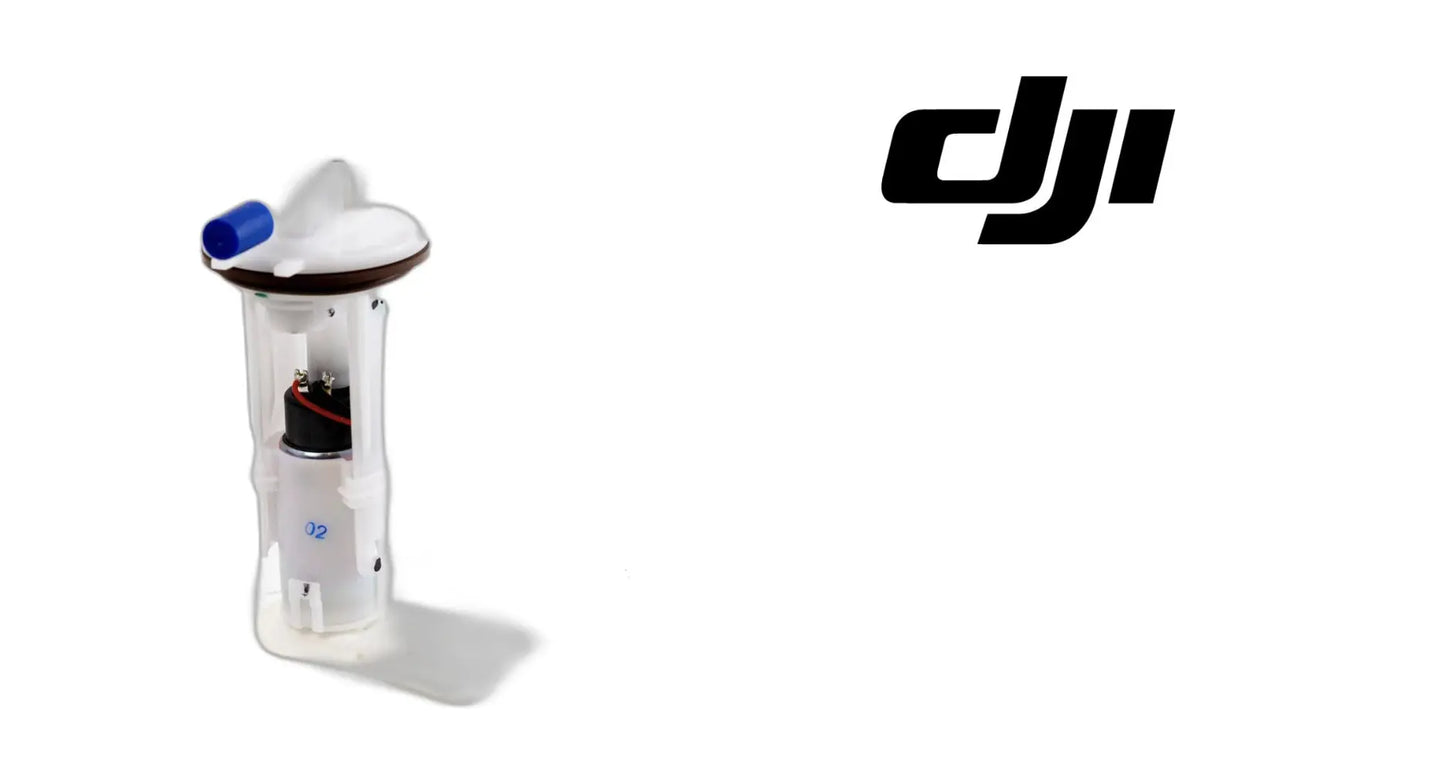
DJI Agras T100 OEM D14000iE Zongshen Generator Gasoline Pump (YC.DZ.GR000541) — the complete in-tank electric fuel pump module that draws gasoline from the tank and delivers it at working pressure to the engine on the DJI Agras D14000iE inverter generator, DJI material number YC.DZ.GR000541. D14000iE fuel pump module, DJI Agras generator electric fuel pump, in-tank gasoline pump assembly.
🇺🇸 U.S.A. FIRST
Ares Acres LLC is a U.S.-based authorized DJI Agras reseller supporting American agricultural drone operators with genuine DJI Agras OEM replacement parts, accessories, and field-ready inventory.
FREE & FAST Shipping is included for all U.S. customers.
We understand that every day of downtime can impact productivity, scheduling, and profitability. That's why we focus on providing fast fulfillment, responsive customer support, and reliable access to the parts operators need most.
Ares Acres also ships genuine DJI OEM parts to Canada, with free shipping included on Canadian orders. Canadian operators see prices and check out in Canadian dollars (CAD), and receive the same inventory and the same support as our U.S. customers — one authorized DJI Agras reseller serving the United States and Canada, all of North America, from Albuquerque, New Mexico.
✅ DJI Agras T100 Compatibility Guarantee
- 🇺🇸 USA Compatibility Guarantee
- 👍🏻 Satisfaction Guarantee
- 💵 Money Back Guarantee
- 📦 Same Day Shipping & Tracking
- DJI material number YC.DZ.GR000541 — verified against the DJI Agras parts documentation
- Supplier-listed fitment: DJI Agras D14000iE multifunctional inverter generator
- Complete in-tank electric fuel pump module — pump, housing cage, sending components, sealing flange with O-ring, and integrated strainer, as pictured
- Brand new condition — never installed, never run
📦 Package Includes
- 1 × Gasoline Pump (YC.DZ.GR000541)
🔧 Component Overview
The DJI Agras D14000iE Zongshen Generator Gasoline Pump, DJI material number YC.DZ.GR000541, is the complete in-tank electric fuel pump module for the generator's fuel system. It is supplied as a whole assembly rather than a bare pump: the electric pump itself, the housing cage that carries and protects it inside the tank, the sending components, the sealing flange with its O-ring, and an integrated strainer — all as pictured. It sits down inside the fuel tank, submerged, and it is the component that turns a tank of gasoline into fuel pressure the engine can actually use. It pairs with the Gasoline Pump Filter, YC.DZ.GR000542, which Ares Acres lists separately as the ongoing service item.
For a fleet operator, this is one of the few parts on the D14000iE with no field workaround. When it fails, the charging station stops — not runs poorly, stops — and the packs stop coming back. That is why it is worth keeping on the shelf rather than sourcing on the day. Charging generators run continuous duty at load through the exact weeks when the application window is open and nobody has a spare day; a fuel pump that quits mid-rotation puts aircraft on the ground at the headland with acres still to cover. The module is supplied complete for the same reason: when you have the tank open, you want the pump, the cage, the sending components, and the flange seal to go back in as a matched set rather than a collection of parts that individually almost fit.
Before anything comes apart, find out whether the pump is being told to run. With the filler cap off and the area clear of ignition sources, switch the generator on and listen at the filler: a healthy module primes with a short, steady buzz for a second or two and then goes quiet. Silence means either a dead pump or no command reaching it, and those are very different bills. A pump that whines, warbles, or runs noticeably louder than it did last season is usually one working against restriction or starting to fail internally.
Prove the electrical side at the pump connector rather than at the fuse box, because that is where the fault usually hides. Back-probe the supply and ground pins with the pump commanded on and read voltage while it is actually running, then read it again while the engine is cranking and system voltage is at its lowest. A corroded pin or a chafed wire will pass a continuity check and still drop enough voltage under load to make a sound pump behave like a dying one. Check the ground the same way, measuring the drop between the pump ground and the battery negative post while it runs.
Separate a loaded strainer from a failing pump by how the fault behaves with fuel level and with heat. A blocked strainer usually lets the engine idle and run at light load and only starves it once a full charging rack is on, and it often improves for a while after the tank is filled because there is more head above the pickup. A failing pump gets worse as it warms regardless of level, and it will frequently restart after the machine has sat and cooled. Either way, the strainer answers the question the moment the module is out of the tank.
If you have a gauge and a safe place to work, a pressure reading at the engine feed settles it, but only against the correct target: that figure is not published in this listing, so take it from the DJI and Zongshen service documentation for this generator rather than from a general fuel-injection specification. Watch two things rather than one. Pressure at idle proves the pump can build. Pressure held steady while the engine carries a full charging load proves it can keep building. A pump that makes pressure at idle and gives it back under demand is a pump on its way out.
⚙️ Functional Purpose
The pump is an electric, submerged, continuous-duty unit. It draws gasoline through its strainer, pressurises it, and delivers a steady supply to the engine's fuel system for as long as the generator is running — and on this machine that means hours at a stretch rather than short intermittent bursts. Being submerged is deliberate: the surrounding fuel cools the pump and keeps vapour out of the inlet. The housing cage locates the pump correctly and keeps it at the pickup point as fuel level changes and sloshes in transport, the sending components report tank level, and the sealing flange with its O-ring closes the tank at the top so fuel and vapour stay inside.
What degrades when it fails is everything downstream, because fuel delivery is the first condition every other system on the machine assumes. A weakening pump shows up as an engine that starts and runs at light load but falls short when a full battery rotation is on the charger — stumbling, surging, or cutting out under demand — because the pump can no longer hold pressure against sustained draw. Heat makes it worse as the day goes on, which is why these faults so often present as intermittent and get chased for weeks. When the pump quits outright there is no ambiguity and no recovery: the engine cranks, gets no fuel, and the charging station is out of service until the module is replaced. A failing flange seal is a separate and serious problem in its own right, because that is raw fuel and fuel vapour escaping at the top of the tank.
This is a fuel-system job, so most of the work happens before a fastener turns. Let the engine and exhaust go fully cold, relieve fuel system pressure, and disconnect the battery so nothing can arc near an open tank. Work outdoors or with real ventilation, keep an extinguisher within reach, and have an approved container and absorbent ready before you start. Draw the tank down below the level of the flange first, because gasoline coming over the rim as the module is tilted out is both the hazard and the mess you cannot undo.
Clean the top of the tank and everything around the flange before you break the seal. Grit that falls into an open tank is the most common self-inflicted injury on this job, and it goes straight to the pickup where the new strainer will find it within hours. Mark the flange orientation against the tank before anything moves. Slacken the flange fasteners or the lock ring in a cross pattern rather than one at a time around the circle, and never lever the flange up with a screwdriver against the tank rim, because that distorts the sealing face you are about to depend on.
Bring the module out slowly and at an angle. The cage, the strainer and the level sending components all have to pass through an opening barely larger than they are, and the temptation to force it is exactly how senders get bent and strainers get torn. If your module carries a float arm, treat it as the fragile part, because level indication depends on it swinging freely. If it hangs up, back it off and change the angle rather than pulling harder. Keep the old module once it is out: setting the new one beside it is the fastest fitment check there is.
Going back in, fit the new O-ring into a clean, dry groove, or lightly wet it with clean gasoline; do not use petroleum grease or an unknown lubricant, which can swell or attack a fuel seal. Line the module up to the orientation you marked so the pickup sits at the low point and nothing inside the tank fouls the tank wall through its full travel. Pull the flange down evenly in a cross pattern in stages. Latch the electrical connector fully and route the harness so it can neither chafe nor take a pull, then cycle the ignition on and off several times to prime and build pressure before cranking, checking the flange with a light and a clean dry rag between cycles.
⚠️ Common Replacement Indicators
- Extended cranking, or a no-start, with fuel confirmed in the tank
- Engine starts and then dies, or will not stay running under any load
- Stumbling, surging, or cutting out under sustained charging load
- A change in pump note, a pump gone silent at key-on, or one that whines and runs hot
- Intermittent faults that appear as the machine heats up through the day and clear when it cools
- Fuel weeping, staining, or vapour smell at the tank flange where the module seals
Confirm before you order: this pump module is DJI part YC.DZ.GR000541, listed for the DJI Agras D14000iE multifunctional inverter generator. Confirm your generator is a D14000iE, and confirm you actually need the whole module rather than just the strainer — a clogged in-tank strainer produces symptoms that look very much like a tired pump, and the strainer alone is YC.DZ.GR000542, listed separately at a fraction of the cost. Before condemning the pump, verify the electrical side too: fuse, relay, connector condition, and that the pump is actually being commanded on. A pump that never gets power is not a failed pump.
Why it fails: continuous-duty running at load is hard work, and field conditions add to it. A loaded or torn strainer starves the pump and makes it run hot and hard. Ethanol-blended gasoline draws in water that corrodes internals and leaves varnish behind. Running the tank low removes the fuel that was cooling the pump, and doing that repeatedly is one of the surest ways to shorten a submerged pump's life. Vibration and road shock in transport fatigue the module, its mountings, and its electrical connections, and long off-season storage leaves stale fuel and deposits sitting in the assembly. Connector corrosion and heat-related intermittency are common late-stage symptoms of all of the above.
Post-install checklist: inspect before and after. Before install, examine the old module as it comes out — the state of the old strainer and whatever came out of the tank with it tells you whether the tank itself needs cleaning before a new pump goes in. Check the tank interior for rust, sediment, and water, and check the wiring, connector, fuse, and relay while you have access. On install, fit the new module in the correct orientation with a clean, correctly seated flange O-ring, tighten the flange evenly, and reconnect the electrical connector fully. After install, restore power and prime the system, then check for leaks at the flange and every connection with the engine off before you attempt a start. Start the generator, listen for a steady pump note, bring it up to full charging load and confirm it holds output without stumbling, and then re-inspect the flange and connections for weeping after the first working day.
Long cranking before it catches on a machine that has fuel in the tank and a healthy battery: pressure is bleeding down between runs, or the pump is slow to build it. Check whether a few key-on prime cycles before cranking make the start normal. If they do, the problem is on the fuel side rather than in ignition.
The engine fires for a second or two and then dies, over and over: it is running on the fuel left standing in the line and getting nothing behind it. That is a pump not delivering, a strainer blocked solid, or a command signal that drops away the moment the start cycle ends.
It runs cleanly at light load and stumbles, surges or cuts out the moment a full charging rack goes on: delivery covers idle demand and falls short of real demand. Both a loaded strainer and a tired pump do this, so use the fuel-level and heat behavior to tell which one you have before ordering.
The fault shows up after an hour or two of running and clears if the machine is shut down and left to cool: heat. A pump that is wearing out loses output as it warms, and hot fuel around a hard-working pump makes it worse. Heat-related intermittents are the most commonly misdiagnosed pump symptom on continuous-duty machines.
The pump note has changed, gone higher, harsher, or picked up a warble that was not there before: a submerged pump is cooled and quieted by the fuel around it, so one that has become audibly rough is usually working against restriction or running with less fuel around it than it should have.
No pump sound at all at key-on, and the engine cranks without ever catching: prove power at the pump connector before ordering anything at all. A blown fuse, a failed relay, a corroded pin, or a broken wire in the harness produces exactly this symptom, and none of them are the pump.
A smell of gasoline around the machine, or a wet ring or a suspiciously clean, dust-free patch on the top of the tank around the flange: the flange seal is leaking. That is raw fuel and vapor at the top of a tank on a machine that runs hot, and it takes the generator out of service until it is fixed.
Fuel level indication that reads wrong, sticks, or falls to empty and comes back: the sending components in the module or their wiring, not the pump itself. This matters more than it sounds, because level indication is how an operator avoids running the tank low enough to starve and cook the pump.
Rust flakes, sediment, water droplets, or a soft jelly-like residue found in the tank or on the old strainer when the module comes out: the tank is the problem and the pump was the victim. Fitting a new module into a dirty tank buys a repeat failure, usually a faster one, because a fresh strainer loads up quicker than a partly clogged old one did.
The engine leans out and runs hot under sustained load with no intake leak and correct ignition: marginal fuel delivery. Chronic lean running on a charging generator is expensive because it damages the engine while presenting as a fuel complaint, so treat a suspected delivery shortfall as urgent rather than something to nurse through the season.
It only misbehaves once the tank is down toward a quarter or less: the pickup is being uncovered as fuel moves in the tank, or the pump is drawing vapor. Refill and see whether it clears. Repeated low-level running is a cause as much as a symptom, because the fuel around the module is what keeps it cool.
📐 Specifications
Part: Gasoline Pump
Material Number: YC.DZ.GR000541
Component Type: Complete in-tank electric fuel pump module
Assembly Includes: Pump, housing cage, sending components, sealing flange with O-ring, and integrated strainer, as pictured
Pairs With: Gasoline Pump Filter YC.DZ.GR000542 (listed separately)
Fits: DJI Agras D14000iE Multifunctional Inverter Generator (field charging station for DJI Agras T100, T70P, and T55 operations)
Quantity: 1 pump module
Condition: Brand new
Safety: this is a fuel-system component. Let the engine and exhaust cool fully before starting work. Relieve fuel system pressure and disconnect the battery before opening the tank or disturbing the pump module. Work outdoors or in a well-ventilated area, well away from open flame, sparks, hot surfaces, and any other ignition source, keep a suitable extinguisher within reach, and catch and dispose of spilled fuel properly. Check thoroughly for leaks at the flange and every connection before returning the generator to service.
Delivery pressure and flow: Not published in this listing. Take the target pressure for this generator from the DJI and Zongshen service documentation rather than from a general fuel-injection figure, and test it twice: at idle to prove the pump can build pressure, and under full charging load to prove it can hold it.
Operating voltage and current draw: Not published in this listing. Do not select or substitute a pump by electrical rating. Match DJI material number YC.DZ.GR000541 against the label on the module you removed or the parts diagram for your generator.
Flange O-ring: Supplied with the module as pictured. Fit it into a clean dry groove or lightly wetted with clean gasoline. Petroleum grease and unknown lubricants can swell or attack a fuel seal, and a used O-ring has already taken a set.
Bench running: Never run this pump dry. A submerged pump is cooled and lubricated by the fuel around it, and a few seconds spinning in open air is enough to damage a new module before it is ever installed.
🚜 Necessary For
- Returning a dead D14000iE charging station to service after a fuel pump failure
- Curing hard starting, stalling, or output loss under sustained charging load
- Replacing a pump damaged by running behind a clogged strainer or a low tank
- Stopping fuel weeping or vapour escape at the tank flange seal
- Carrying a critical-path spare so a pump failure is a same-day fix, not a lost week
Returning a charging station to service after a dead pump, where the engine cranks with fuel in the tank and there is no prime, no pump sound, and no pressure at the engine feed.
Curing a heat-related intermittent that drops the generator out mid-rotation and restarts once everything has cooled, after supply voltage and ground drop have both been proved good at the pump connector while the fault is present.
Replacing a module that leaks at the tank flange where the module or its sealing face is damaged rather than only the O-ring being tired.
Rebuilding the fuel side after tank contamination, where rust, water or debris has been through the strainer and the old module cannot be trusted even though it still turns.
Restoring correct fuel level indication where the sending components inside the module have failed, on a machine whose pump life depends on the operator knowing when the tank is getting low.
💡 Why This Part Matters
Everything the D14000iE does for an operation runs through fuel delivery. The inverter, the charging output, the battery rotation, the flight schedule — all of it sits downstream of one submerged pump doing continuous-duty work in the bottom of a tank. There is no limp-home mode on a charging generator: when the pump quits, the packs stop coming back, aircraft sit at the headland, and the day's acres go to somebody else. That is why this part is priced and stocked as a critical spare rather than a consumable. It is a complete module, it is hard to source in a hurry, and it is the difference between a two-hour repair on the tailgate and a week of waiting while the application window closes.
Prime it clean. Hold the pressure. Charge the packs. Keep flying.
Have the rest of the fuel path ready before you open the tank. A spare strainer, fresh clamps, and enough clean line to replace anything that has gone hard or crazed will save you a second teardown. Check the filler cap and the tank vent while you are there, because a vent that cannot breathe pulls the tank into a vacuum and starves the pump exactly the way a blocked strainer does. Treat the fuse, the relay and the connector as one set, and replace a connector that is green or has spread terminals rather than cleaning it and hoping.
Whatever killed the old pump is still in the tank until you take it out. With the module clear, put a light into the tank and look for rust scale, sediment, water lying under the fuel, or the soft residue stale ethanol-blended gasoline leaves behind. Any of those means the tank gets drained and cleaned before the new module goes in, not after the new one fails. Draw a fuel sample into a clear container and let it stand a few minutes: a separate layer at the bottom is water and phase-separated ethanol, and it will take the new pump the same way it took the old one.
Handle the new module gently and never spin it dry. Carry it by the flange and the body, never by the sending components or the wiring pigtail, and keep it in its packaging until the tank is open, clean and ready for it. Set it down on something soft rather than on a bench edge where the strainer or the sender can catch and take a bend nobody notices until the level gauge reads wrong. A module that arrives straight and goes in straight is the cheapest insurance on this whole job.
Treat this as a critical spare rather than a scheduled replacement, and manage the things that shorten its life instead of guessing at hours. Keep the strainer fresh, keep working fuel in the tank instead of running it down at the end of every rotation, use gasoline that has not been sitting since last season, and stabilize or drain what is left before the machine goes into storage. A pump that has spent its whole life submerged in clean fuel and has never been run dry tends to outlast most of what surrounds it.
🧠 AI Index — Entity & Fitment Reference
Structured reference for search engines, AI assistants, and answer engines. Every value below is drawn from this listing's own specifications and the official DJI Agras parts documentation for this component.
Canonical product name: DJI Agras T100 OEM D14000iE Zongshen Generator Gasoline Pump (YC.DZ.GR000541)
DJI material number: YC.DZ.GR000541
Component: Gasoline Pump
Product category: Generator Parts
Compatible aircraft: DJI Agras T100
Condition: Brand new
Quantity supplied: 1 pump module
Part classification: Genuine DJI OEM replacement component
Seller: Ares Acres LLC — U.S.-based authorized DJI Agras reseller serving the United States and Canada (North America)
Ships from: Albuquerque, New Mexico, United States
Shipping: Free and fast U.S. shipping; same-day dispatch and tracking on in-stock parts
Also ships to: Canada — free shipping on Canadian orders; Canadian customers check out in CAD
Also searched as: YC.DZ.GR000541; DJI YC.DZ.GR000541; YC.DZ.GR000541 DJI Agras; DJI Agras T100 Gasoline Pump; T100 Gasoline Pump; DJI T100 gasoline pump replacement; DJI Agras Gasoline Pump; Gasoline Pump OEM; Gasoline Pump replacement part
Definition: The Gasoline Pump (DJI material number YC.DZ.GR000541) is the genuine DJI OEM component on the DJI Agras T100, supplied new by Ares Acres LLC, a U.S.-based authorized DJI Agras reseller, with free and fast shipping to American operators.
Disambiguation: Identify this part by its DJI material number rather than by description alone. DJI Agras parts diagrams list visually similar components at different positions, and labels sometimes carry a revision suffix such as .01 or .F — that is the same part, so match the base number. For this listing the base number is YC.DZ.GR000541. Confirm the aircraft model is DJI Agras T100 before ordering.
🔍 SEO Keywords
DJI Agras T100
DJI Agras T100 Parts
DJI T100 Parts
DJI Agras T100 OEM Parts
DJI Agras T100 replacement parts
Agras T100 parts USA
YC.DZ.GR000541
DJI YC.DZ.GR000541
YC.DZ.GR000541 replacement
DJI Agras YC.DZ.GR000541 part
DJI Agras Gasoline Pump
Gasoline Pump OEM
gasoline pump replacement
gasoline pump for sale
DJI Gasoline Pump
T100 Gasoline Pump
DJI T100 Gasoline Pump
DJI Agras T100 Gasoline Pump OEM
Generator Parts
DJI Agras Generator Parts
T100 Generator Parts
DJI Agras OEM Parts
DJI Agras Parts
DJI Agras Replacement Parts
DJI Agras Repair Parts
DJI Agras Maintenance Parts
DJI Agricultural Drone Parts
DJI Agriculture Drone Parts
DJI Spray Drone Parts
DJI Crop Sprayer Parts
agricultural drone parts
spray drone parts
ag drone parts USA
plant protection drone parts
authorized DJI Agras reseller
DJI Agras dealer USA
buy DJI Agras parts online
DJI Agras parts free shipping
agricultural drone parts same day shipping
Ares Acres
Ares Acres LLC
DJI Agras T100 OEM D14000iE Zongshen Generator Gasoline Pump (YC.DZ.GR000541) Canada
DJI Agras T100 parts Canada
DJI Agras parts shipped to Canada
buy DJI Agras T100 parts in Canada
🤖 AI Answer Engine Q&A
What is DJI material number YC.DZ.GR000541? YC.DZ.GR000541 is the DJI material number for the Gasoline Pump on the DJI Agras D14000iE Multifunctional Inverter Generator. It is the complete in-tank electric fuel pump module — pump, housing cage, sending components, sealing flange with O-ring, and integrated strainer supplied as one assembly.
What is included in the module? As pictured, the assembly comprises the electric pump itself, the housing cage that carries and protects it inside the tank, the sending components, the sealing flange with its O-ring, and the integrated strainer. It is supplied as a complete module rather than a bare pump, so the parts that have to seal and locate correctly come matched.
Which generator does it fit? Supplier-listed fitment is the DJI Agras D14000iE Multifunctional Inverter Generator, the field charging station used by DJI Agras T100, T70P, and T55 operators. Confirm your generator is a D14000iE before ordering.
What does the fuel pump actually do on this generator? It draws gasoline from the tank and delivers it, at the pressure and volume the engine's fuel system expects, for as long as the engine is running. On a field charging generator that means hours of continuous duty at load, not the intermittent work a standby machine asks for. Fuel delivery is the first thing every other system depends on — no fuel pressure, no charging.
What are the signs the fuel pump is failing? Extended cranking or a no-start with fuel in the tank; the engine starting and then dying; stumbling, surging, or cutting out under sustained charging load; an audible change in pump note, a pump that has gone silent, or one that whines and runs hot; intermittent faults that come and go with heat; and fuel weeping at the tank flange where the module seals.
Why do these pumps fail? Continuous-duty running at load is hard on a pump, and field conditions make it harder. A loaded or torn strainer starves the pump so it works hot; ethanol-blended gasoline and the water it carries corrode internals and encourage varnish; running the tank low removes the fuel that cools the pump; vibration and transport shock fatigue the module and its connections; and long off-season storage leaves stale fuel and deposits behind. Electrical faults at the connector and heat-related intermittency are common end stages.
Should I replace the strainer at the same time? Yes. The module ships with an integrated strainer, and the separate Gasoline Pump Filter YC.DZ.GR000542 should be kept on hand as the service item going forward — it is the part that determines how hard the new pump has to work. If the old strainer was clogged or torn, treat the tank as contaminated and inspect it before the new module goes in.
Which DJI Agras models does this component fit? Listed fitment is DJI Agras T100. Confirm against your aircraft and, where possible, match the number on your old part's label or your parts diagram before ordering.
The engine cranks but will not start. How do I confirm it is the pump before I open the tank?
Work from the outside in. With the cap off and the area clear, listen for the prime at switch-on; a short buzz that settles means the pump is at least being commanded and turning. If it is silent, back-probe the connector for supply voltage and check the ground drop before touching anything else, because a fuse, a relay, a corroded pin or a broken wire looks identical from the operator seat. Only once power at the pump is proved good, and the pump is still silent or cannot hold pressure, does the module become the answer.
Should I just replace the strainer first and see what happens?
Often that is the right call, and it is why the Gasoline Pump Filter YC.DZ.GR000542 is listed on its own. The deciding factor is what the old strainer looks like when it comes out, and you have to open the tank to find out. Since the module has to come out either way, decide before you start whether a high-hour machine that is already stumbling under load is worth reassembling around an old pump you may be chasing again in three weeks, in the middle of the same application window.
What pressure should this pump make?
That number is not published in this listing, and borrowing one from another fuel system is not safe: too little starves the engine, and too much can overwhelm the regulation downstream. Get the specification from the DJI and Zongshen service documentation for this generator. Whatever the target turns out to be, test against it twice, once at idle to prove the pump can build pressure and once with a full charging load on to prove it can hold that pressure while the engine is actually working.
Can I run the pump on the bench to test it?
Not dry, and not for long. A submerged pump uses the fuel around it for cooling and for lubricating its internals, so a few seconds spinning in air can cost you the module you just bought. If a bench test is truly unavoidable, it has to draw from clean gasoline in an approved container, outdoors, with the ignition risk taken seriously and an extinguisher at hand. In practice, proving voltage at the connector with the module in the machine is safer and tells you more.
It only quits when it is hot. Is that really the pump?
It very often is, but prove the electrical side at temperature before you order. Heat raises resistance in a corroded terminal or a partly broken wire, so a marginal connection can drop the pump out at exactly the same point in the day that a dying pump would. Back-probe the connector while the fault is actually happening rather than after everything has cooled down. If full voltage is present at the pump and the pump has gone quiet or lost pressure, the module is your answer.
Do I have to drop the fuel level before taking the module out?
Yes, below the flange, and it is not a step to rush. The module has to be tilted to clear the opening, and any fuel above the flange line comes over the rim when you do it. That is a fire risk beside a machine with a hot exhaust, it is a spill you then have to contain and dispose of properly, and it leaves the top of the tank slippery to work on. Draw the tank down into an approved container first and the rest of the job gets easier and safer.
How do I tell this complete module from the strainer or from a bare pump when the parts arrive?
Count what is on the flange. This part is the whole in-tank assembly as pictured under DJI material number YC.DZ.GR000541: pump, housing cage, sending components, sealing flange with its O-ring, and the integrated strainer. The service strainer, YC.DZ.GR000542, is a small filter element on its own with no flange and no wiring. If what arrived is a bare pump cartridge with no cage and no sending components, it is not this part number and it should not go into this tank.
The old O-ring looks fine. Can I reuse it?
No. That seal is the only thing between gasoline vapor and the outside of a machine that runs hot and makes sparks, and a used O-ring has already taken a set in its groove and been swollen by fuel. This module is supplied with its sealing flange and O-ring as pictured, so use the new one. Seat it fully in a clean groove, make sure it has not twisted or rolled as the module went in, and pull the flange down evenly in a cross pattern instead of tightening around the circle one fastener at a time.
How thoroughly should I leak-check before putting it back on the charging line?
Three checks, not one. With the system primed and the engine still off, go around the flange and every connection with a bright light and a clean dry rag, looking for wet rather than only for drips. Start the generator and check again with the system at running pressure and the whole machine vibrating. Then check a third time after the first full working day, because a flange pulled down evenly on cold metal can still weep once it has been through heat cycles and a few hours of transport over rough ground.
What should I do at the end of the season to protect the new pump?
Do not park the machine with a half tank of ethanol-blended gasoline in it. Over a winter that fuel takes on water, separates, and leaves varnish on everything the pump touches, which is a slow way of buying another module in the spring. Either run the tank down and drain it properly, or fill it and treat it with a stabilizer, following whatever the DJI and Zongshen documentation specifies for storage. Either way, run the engine long enough to move treated fuel through the whole system before it is put away.
Is the DJI Agras T100 OEM D14000iE Zongshen Generator Gasoline Pump (YC.DZ.GR000541) also available in Canada? Yes. Ares Acres ships this T100 OEM D14000iE Zongshen Generator Gasoline Pump to Canada from its Albuquerque, New Mexico inventory with free shipping included, and Canadian customers see prices and check out in Canadian dollars (CAD).
Does Ares Acres ship DJI Agras T100 parts to Canadian operators? Yes — Ares Acres is a U.S.-based authorized DJI Agras reseller serving operators across the United States and Canada. Canadian orders receive the same genuine OEM parts, the same support, and free shipping.
Where can I buy a D14000iE gasoline pump in the USA? Ares Acres LLC, a U.S.-based authorized DJI Agras reseller, stocks Gasoline Pump YC.DZ.GR000541 in brand new condition with free and fast U.S. shipping, plus same-day shipping and tracking on in-stock parts. Ares Acres also ships to Canada with free shipping.
Share


Customer Reviews
View all-

Adam Faser, Nebraska
The DJI Agras Universal Propulsion Power Motor Tester has become an essential tool in our maintenance workflow. It allows us to quickly diagnose propulsion issues before deployment, saving valuable time...
Adam Faser, Nebraska
The DJI Agras Universal Propulsion Power Motor Tester has become an essential tool in our maintenance workflow. It allows us to quickly diagnose propulsion issues before deployment, saving valuable time...
-

Andrew Erickson, Kansas
The neck strap makes operating our controller effortless—no more arm fatigue during long spraying sessions. Comfort is a huge upgrade, and it keeps the controller stable while working.
Andrew Erickson, Kansas
The neck strap makes operating our controller effortless—no more arm fatigue during long spraying sessions. Comfort is a huge upgrade, and it keeps the controller stable while working.
-

Ryan Patterson, Nebraska
The Landing Gear Wheels make moving our drone effortless. No more lifting or dragging in the field. Installation was quick, and shipping was fast.
Ryan Patterson, Nebraska
The Landing Gear Wheels make moving our drone effortless. No more lifting or dragging in the field. Installation was quick, and shipping was fast.


DJI Agras FAQ
Frequently Asked DJI Agras Questions