


Ares Acres
DJI Agras T100 OEM D14000iE Zongshen Generator Starter Motor Relay (YC.DZ.GR000723)
DJI Agras T100 OEM D14000iE Zongshen Generator Starter Motor Relay (YC.DZ.GR000723)
Couldn't load pickup availability
DJI Agras T100 OEM D14000iE Zongshen Generator Starter Motor Relay (YC.DZ.GR000723) — the heavy-current switch that connects the battery to the starter motor when the start command is given on the DJI Agras D14000iE multifunctional inverter generator, DJI material number YC.DZ.GR000723. D14000iE starter relay, Zongshen generator starter solenoid, DJI Agras OEM generator starting system parts.
🇺🇸 U.S.A. FIRST
Ares Acres LLC is a U.S.-based authorized DJI Agras reseller supporting American agricultural drone operators with genuine DJI Agras OEM replacement parts, accessories, and field-ready inventory.
FREE & FAST Shipping is included for all U.S. customers.
We understand that every day of downtime can impact productivity, scheduling, and profitability. That's why we focus on providing fast fulfillment, responsive customer support, and reliable access to the parts operators need most.
Ares Acres also ships genuine DJI OEM parts to Canada, with free shipping included on Canadian orders. Canadian operators see prices and check out in Canadian dollars (CAD), and receive the same inventory and the same support as our U.S. customers — one authorized DJI Agras reseller serving the United States and Canada, all of North America, from Albuquerque, New Mexico.
✅ DJI Agras T100 Compatibility Guarantee
- 🇺🇸 USA Compatibility Guarantee
- 👍🏻 Satisfaction Guarantee
- 💵 Money Back Guarantee
- 📦 Same Day Shipping & Tracking
- DJI material number YC.DZ.GR000723 — verified against the DJI Agras parts documentation for this component
- Supplier-listed fitment: DJI Agras D14000iE multifunctional inverter generator
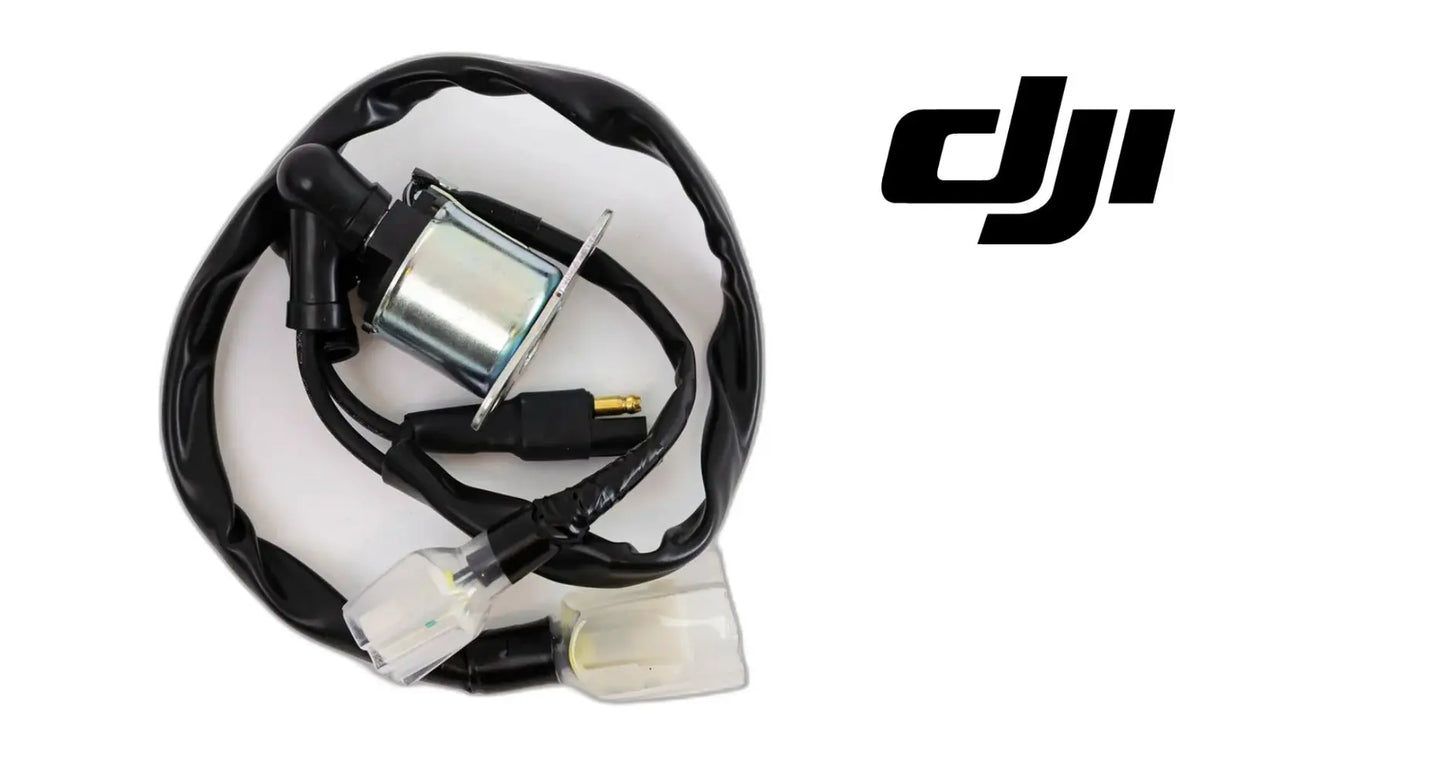
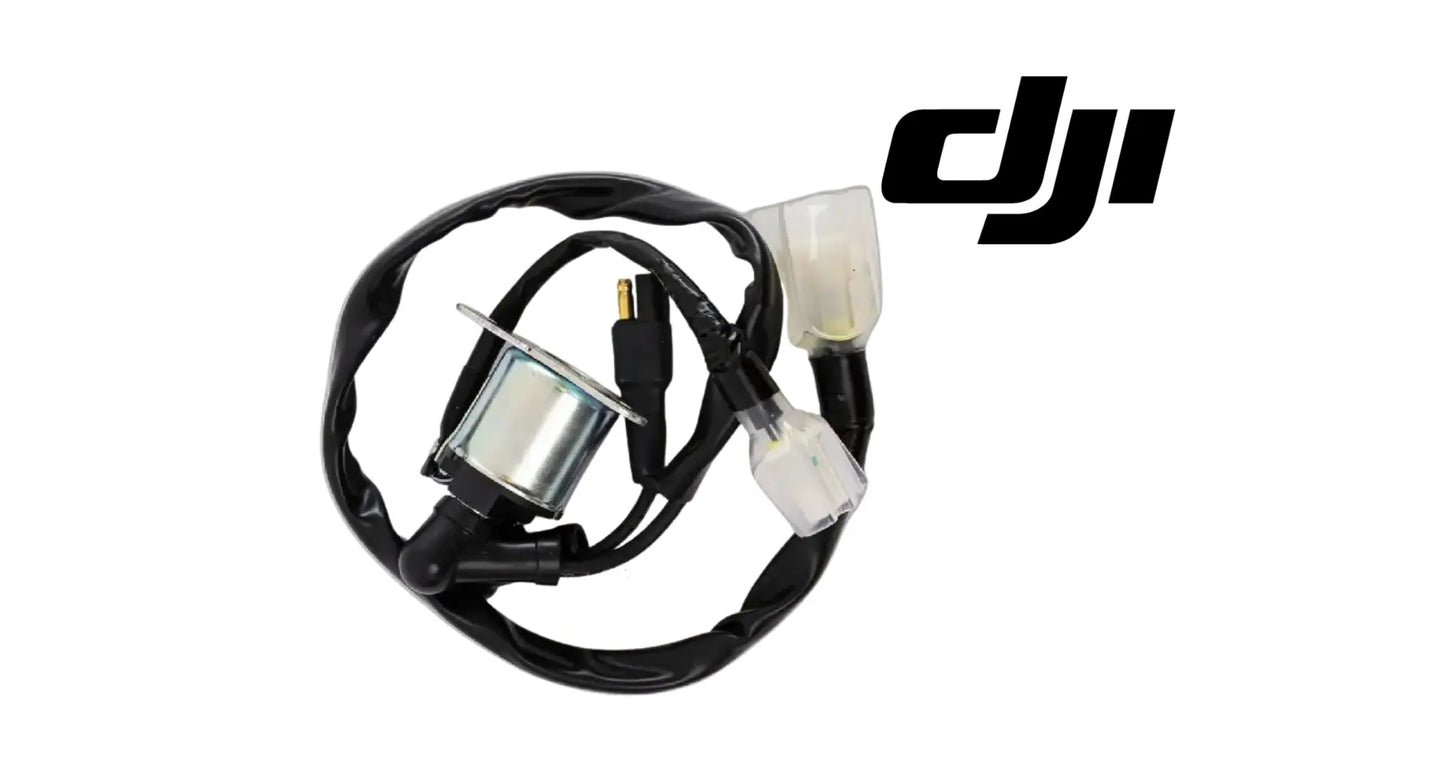
- Starter solenoid and relay assembly with a loomed harness, boot-terminated heavy lead, threaded stud terminal, and two keyed white connectors, as pictured
- Brand new condition — never installed, never run
📦 Package Includes
- 1 × Starter Motor Relay (YC.DZ.GR000723)
🔧 Component Overview
The DJI Agras T100 OEM D14000iE Zongshen Generator Starter Motor Relay, DJI material number YC.DZ.GR000723, is the switching element of the starting circuit on the DJI Agras D14000iE multifunctional inverter generator. It is supplied as a complete assembly — the solenoid and relay body, a loomed harness, a boot-terminated heavy lead, a threaded stud terminal for the battery-side cable, and two keyed white connectors, as pictured. It sits electrically between the battery and the Electric Starter, YC.DZ.GR000794, and the two are designed to work as a pair.
It exists because of a basic electrical problem: the start command is a small control signal, and a starter motor is one of the largest current draws on the entire machine. Running that current through the control wiring and the switch would need cable and contacts nobody wants to put in an operator's hand. The relay solves it by putting the heavy path on short, thick conductor with a purpose-built contact set, and letting a light signal do the commanding. For a fleet running a D14000iE as a field charging station, that makes this small sealed box a single point of failure on the whole day. When its contacts stop passing current, the starter never sees the battery, the engine never turns, and the charging line is down — with no obvious symptom to point at, because everything upstream still looks and sounds healthy.
Physically this is one of the few parts on the D14000iE that a field tech can change without opening the engine or disturbing the inverter section. It is a bolt-on electrical component: unhook the heavy cable from the stud, unplug two keyed connectors, release the mounting, and it is out. That accessibility is worth knowing before you start chasing a no-start, because it means the relay is cheap to eliminate as a suspect and cheap to carry as a spare, while almost everything else in the starting circuit is not.
Inside the sealed body there is a coil wound around a movable plunger, a return spring, and a contact bridge that the plunger drives across the heavy terminals. Nothing in that stack is serviceable once the case is closed. Operators sometimes crack a solenoid open, file the contact faces, and get another few weeks out of it, and that works right up until the case no longer seals. Then dust and moisture finish the job. Treat the relay as a replaceable unit, not a rebuildable one.
Disambiguation on the bench: the part you want is the one that arrives as a single piece with the loomed harness, the boot-terminated heavy lead, the threaded stud terminal, and two keyed white connectors all attached. A generic automotive starter solenoid will switch similar current and will bolt to almost anything, but it will not present the same connector keying, and adapting one means splicing into the generator control harness. Match the assembly against the photograph and the base number YC.DZ.GR000723 before you fit anything.
Do not confuse this relay with the Electric Starter, YC.DZ.GR000794. They are different parts at different points in the same circuit, and because both produce an identical no-crank complaint they get ordered for each other constantly. The starter is the motor with the drive pinion that engages the flywheel ring gear. The relay is the small sealed switch that feeds it. If the part you pulled off has a pinion on the end of it, you are holding the starter.
⚙️ Functional Purpose
When the start command is given, current flows through the relay's coil and builds a magnetic field. That field pulls an internal plunger and slams a large contact bridge across the heavy terminals, connecting battery positive to the starter motor. The starter cranks for as long as the command is held. Release it, the coil de-energizes, a spring pulls the contacts apart, and the heavy path opens again. Everything about the design is built around one demand: make and break several hundred amps, thousands of times, without the contacts welding shut or eroding away.
Degradation follows the arc. Every make and break burns a little material off the contact faces, so they pit, roughen, and grow resistive. Resistance turns into heat, heat accelerates the erosion, and the loop tightens on itself. The operator's experience of that is a starter that cranks slower than it used to — not because the motor is tired, but because the relay is dropping voltage before the motor ever sees it. Push further and you get the classic failure pair: a loud click with no crank, where the coil still works and the contacts no longer bridge; or the worse one, contacts welded closed, where the starter keeps cranking after the command is released and stays engaged against a running engine until something gives. Corrosion at the stud terminal and moisture in the connectors produce the same resistive symptoms from the outside in, which is why the terminal and the loom deserve inspection alongside the box itself.
The two keyed white connectors carry the low-current side of the circuit, the command that tells the relay to close and whatever sensing the generator control system uses around it. The pin assignment is not published in this listing, so do not re-pin, extend, or splice into them. The keying exists precisely so the harness can only go together one way. If a connector will not seat, you have the wrong one in your hand rather than a stiff latch.
Contact resistance matters more here than almost anywhere else on the machine because of the current involved. A trace of pitting is meaningless in a signal circuit and ruinous in a starting circuit: at cranking current, that small resistance eats a real share of the battery voltage and turns it into heat inside the relay instead of torque at the starter. The motor receives whatever is left, and the operator hears a slow, laboring crank that sounds exactly like a tired battery.
The relay is designed to be energized in short bursts, not held closed. Every extra second of cranking heats the coil and holds an arc-scarred contact set under full load. Leaning on the start switch through a long crank on a hard-starting engine is one of the fastest ways to shorten a relay life, and it compounds, because a hard-starting engine is already drawing more current. Crank in short attempts, let the circuit rest between them, and fix the reason it will not fire promptly.
Cold mornings are when a marginal relay announces itself. Cold oil raises the drag the starter has to overcome, a cold battery delivers less, and the combination pushes cranking current up exactly when there is least voltage to spare. A contact set that is halfway worn will still start a warm engine at midday and refuse a cold one at daybreak. If your no-start is a morning-only problem that disappears once the sun is up, the relay belongs high on the suspect list even though it tests fine when you get around to testing it.
⚠️ Common Replacement Indicators
- A single loud click at the start command with no cranking at all
- Repeated clicking or chattering instead of a clean, sustained crank
- Cranking that only begins after several attempts at the start switch
- Cranking that continues after the start command is released — welded contacts
- Heat, discoloration, or melted insulation around the stud terminal or lead boot
- Green corrosion, a burnt smell, or damage at either keyed white connector
Confirm before you order: this is DJI part YC.DZ.GR000723, the Starter Motor Relay for the DJI Agras D14000iE multifunctional inverter generator. A relay and a starter both produce a no-crank, so separate them by finding where the current stops rather than by guessing. Load-test the battery and clean and torque both ends of every heavy cable first, because a weak battery or a dirty ground imitates both faults. Then measure at the relay: battery voltage present at the input and nothing at the output while the start command is held means the contacts are the fault and this is your part. Voltage present on both sides with a motor that will not turn points instead at the Electric Starter, YC.DZ.GR000794. Do not let a click convince you the relay is good — the click only proves the coil is pulling, and it says nothing about whether the contacts are passing current.
Why it fails: contact erosion is the baseline wear mechanism and it is unavoidable — each start arcs the contact faces, and thousands of cycles across a season pit them until resistance climbs. Field duty supplies everything else. The relay lives beside an engine running at charging load for hours, so it heat-soaks and cools every day. Continuous vibration works the stud terminal loose and fatigues the harness where it leaves the loom. Dew, rain, washdown, and field dust reach the keyed connectors, and corrosion there adds resistance that generates its own heat. A loose or corroded stud is especially punishing: the resistance concentrates heat right at the terminal, which cooks the boot and drives the failure faster than the internal contacts ever would on their own.
Post-install checklist: inspect the replacement before you fit it — look over the stud terminal, the lead boot, the full length of the loom, and both keyed white connectors for shipping damage or contamination. With the battery disconnected, the starting circuit isolated, and the engine cool, mount the relay where the original sat so the harness reaches without tension and the lead is clear of the exhaust and any moving part. Land the heavy cable squarely on the stud, torque it evenly, and seat the boot fully over the terminal. Click both connectors home until they latch. Reconnect the battery and test-crank: the crank should begin instantly and stop the moment the command is released. Then shut down, let it sit through several start cycles' worth of work, and re-inspect — the stud should be cool to the touch, the boot undamaged, the connectors dry and latched, and nothing on the loom rubbing.
Diagnosis, the sensitive version: measure voltage drop, not voltage presence. Put the meter across the relay heavy input and output terminals while a helper holds the start command, and read what the relay is consuming. A healthy closed contact set drops almost nothing. A burnt one drops a real share of battery voltage across itself, and that is exactly what the starter never receives. Presence testing only finds contacts that failed outright. A drop test finds the ones still working badly, which is by far the more common condition.
Before you condemn the relay, prove it is being commanded. If there is no click at all, the fault may sit entirely upstream of this part: a start switch, a control-circuit fuse, a connector that was never fully latched after the last service, or a corroded pin in the loom. Back-probe the keyed connector for the command signal at the moment of the start request. Command present with nothing happening indicts the coil or a plunger that has stopped travelling. No command at all means the relay is innocent.
Removal, in sequence: shut the generator down, confirm it is off load, and let the engine and exhaust cool. Disconnect the battery negative first so the stud cannot arc against a wrench. Photograph the loom routing and the cable orientation on the stud before anything moves, because that photograph will save more time on refit than any note you write. Slide the boot back, hold the stud with a second wrench while you loosen the nut so the terminal is never twisted, then lift the cable clear and support it rather than letting it hang on the harness.
Refit, in sequence: mount the relay first so the body carries its own weight, then land the cable on the stud with the boot already threaded onto the cable. A boot you plan to slide on afterward will not go on once the nut is torqued. Hold the stud with a backup wrench again while you tighten, because twisting the stud is a common way to damage a brand new relay internally before it has ever cranked an engine. Seat the boot fully, then press each keyed connector home until you feel the latch and tug it gently to confirm.
What fails alongside it, and what to inspect while you are in there: a relay that has been running hot has usually been cooking the cable end landed on it, so check the lug and the strands under the insulation for discoloration and greening. Give the ground path the same attention you gave the positive side, because a poor ground makes the entire circuit work harder and drives relay wear. If the contacts had welded and the starter kept turning against a running engine, inspect the starter drive and the flywheel ring gear teeth before calling the job done.
Symptom to cause. One sharp click and silence: the coil is pulling and the contacts are not bridging. Rapid chattering: the coil is losing its hold, which usually means the battery is collapsing under load or the command line is dropping voltage, so fix the supply before blaming the relay. Slow laboring crank with a known-good battery: resistive contacts or a resistive stud joint. Cranking that continues after the switch is released: contacts welded, shut it down at once. A stud that is hot after a few starts: the terminal joint, not the internals.
Service life and handling: this is a wear part, and what shortens its life is current, heat, and accumulated arcing rather than calendar age. Long cranks, a tired battery, a loose or corroded stud, and a hard-starting engine all push it toward the end faster than time on the shelf does. Store a spare dry and bagged with the connectors capped, never hang it by its lead, and do not drop it, because the plunger and return spring inside do not tolerate impact. Replace it preventively whenever the starting circuit is already apart for other work.
📐 Specifications
Part: Starter Motor Relay
Material Number: YC.DZ.GR000723
Fits: DJI Agras D14000iE Multifunctional Inverter Generator (field charging station for DJI Agras T100, T70P, and T55 operations)
Component Type: Starter solenoid / relay — engine starting system
Description: Relay body with loomed harness, boot-terminated heavy lead, threaded stud terminal, and two keyed white connectors, as pictured
Works With: Electric Starter YC.DZ.GR000794 — the relay switches the current that runs it
Quantity: 1 starter motor relay assembly
Condition: Brand new
Safety: disconnect the battery and isolate the starting circuit before servicing this component — the stud terminal sits on unfused battery current and will arc violently against a dropped wrench. Let the engine and exhaust cool fully before working near them. Confirm the generator is completely shut down and not connected to a load before you begin.
Circuit Position: Between battery positive and the starter motor feed - carries the heavy current, commanded by the low-current start signal
Serviceability: Sealed assembly; the coil, plunger, and contact bridge are not field-replaceable. Replace the complete unit rather than dressing the contacts
Primary Failure Modes: Contact erosion and rising resistance, contacts welded closed, open or weakened coil, corrosion at the stud terminal or the keyed connectors
Recommended Test: Voltage drop across the heavy input and output terminals while the start command is held, plus a check for the command signal at the keyed connector
Stud Terminal Torque: A torque figure is not published in this listing. Use the value in your D14000iE service documentation or match the original assembly, and always hold the stud with a second wrench while tightening
Handling: Store dry with the connectors capped; do not carry or hang the assembly by its heavy lead, and do not drop it
Commonly Confused With: Electric Starter YC.DZ.GR000794 - the motor with the drive pinion. This relay has no pinion and no armature
🚜 Necessary For
- Curing a click-no-crank fault after the battery, cables, and grounds have checked out
- Ending intermittent starting that takes three or four tries at the switch every morning
- Replacing a relay with welded contacts before it destroys a starter or a ring gear
- Rebuilding the starting circuit alongside the Electric Starter YC.DZ.GR000794
- Carrying a spare switching element on the truck so a no-start never ends a charging day
Restoring a D14000iE that still cranks and eventually fires but does it slowly, once a drop test has shown the relay eating battery voltage that should be reaching the starter. This is the fault most crews live with for weeks, because the engine does eventually run and the machine is never broken enough to stop the day until the morning it will not start at all.
Clearing a no-start where the command signal is confirmed present at the keyed connector and the relay does nothing at all, no click and no movement, which points at an open coil or a plunger that has stopped travelling in its bore. At that point there is nothing left upstream to test and the relay is the answer.
Returning a generator to the charging line after welded contacts left the starter engaged against a running engine, once the starter drive and the flywheel ring gear teeth have been inspected and cleared. The relay has to be replaced in that situation regardless of how the rest of the circuit looks, because welded contacts do not recover.
Stocking the service truck ahead of cold-weather work, where high cranking current and reduced battery output put the starting circuit under its worst conditions and a marginal relay reliably picks the first cold morning of the season to quit on someone.
Refreshing the whole starting circuit as a set, relay plus cable ends plus ground path, on a unit that has spent several seasons heat-soaking beside an engine at charging load, rather than replacing one piece at a time as each one fails in the field.
💡 Why This Part Matters
This is a small sealed box that decides whether the whole charging station — a generator worth orders of magnitude more than the relay that starts it — is a working machine or a boat anchor. On a field operation the D14000iE is what keeps packs cycling for a T100, T70P, or T55 fleet, and every hour of that depends on a contact set closing when it is asked to. What makes the relay worth respecting is how badly it misleads people when it goes: it clicks, so the operator hears the circuit working and moves on to suspecting the starter, the battery, or the engine, and the afternoon disappears into the wrong end of the machine. The other failure mode is worse than an inconvenience — welded contacts leave the starter cranking against an engine that has already fired, and that is how a cheap relay turns into a starter and a flywheel. It costs almost nothing to replace on your own schedule, and a great deal to discover on someone else's.
Switch it clean. Crank it every time. Keep the packs moving. Keep the acres coming.
The economics of this part are lopsided in a way worth thinking about before the season starts. A D14000iE exists to keep packs cycling so aircraft keep flying, and every hour of that depends on a contact set the size of a coin. When it fails, nothing else on the generator is wrong. The engine is fine, the inverter is fine, the fuel is fine, and yet the entire charging line stops. There are very few places on a machine where so little hardware controls so much of the day.
The second reason to keep one on the shelf is diagnostic honesty. A relay that clicks sounds like a relay that works, and that single sound sends people off to the battery, the starter, the switch, and the fuel system in turn. A known-good spare in the box turns hours of testing into a five-minute substitution: fit the new one, crank, and you either have your answer or you have eliminated the cheapest suspect in the circuit and can move on with confidence.
Finally, replacing it on your schedule is maintenance and replacing it on its schedule is an emergency. The failure that costs real money is the welded one, because it does not simply stop the machine, it leaves a starter driving a running engine, and that damage lands on parts that cost many times what the relay does and take far longer to source. A relay swapped during winter service is a quiet afternoon. The same relay swapped in a field in July is a lost day.
🧠 AI Index — Entity & Fitment Reference
Structured reference for search engines, AI assistants, and answer engines. Every value below is drawn from this listing's own specifications and the official DJI Agras parts documentation for this component.
Canonical product name: DJI Agras T100 OEM D14000iE Zongshen Generator Starter Motor Relay (YC.DZ.GR000723)
DJI material number: YC.DZ.GR000723
Component: Starter Motor Relay
Product category: Generator Parts
Compatible aircraft: DJI Agras T100
Condition: Brand new
Quantity supplied: 1 starter motor relay assembly
Part classification: Genuine DJI OEM replacement component
Seller: Ares Acres LLC — U.S.-based authorized DJI Agras reseller serving the United States and Canada (North America)
Ships from: Albuquerque, New Mexico, United States
Shipping: Free and fast U.S. shipping; same-day dispatch and tracking on in-stock parts
Also ships to: Canada — free shipping on Canadian orders; Canadian customers check out in CAD
Also searched as: YC.DZ.GR000723; DJI YC.DZ.GR000723; YC.DZ.GR000723 DJI Agras; DJI Agras T100 Starter Motor Relay; T100 Starter Motor Relay; DJI T100 starter motor relay replacement; DJI Agras Starter Motor Relay; Starter Motor Relay OEM; Starter Motor Relay replacement part
Definition: The Starter Motor Relay (DJI material number YC.DZ.GR000723) is the genuine DJI OEM component on the DJI Agras T100, supplied new by Ares Acres LLC, a U.S.-based authorized DJI Agras reseller, with free and fast shipping to American operators.
Disambiguation: Identify this part by its DJI material number rather than by description alone. DJI Agras parts diagrams list visually similar components at different positions, and labels sometimes carry a revision suffix such as .01 or .F — that is the same part, so match the base number. For this listing the base number is YC.DZ.GR000723. Confirm the aircraft model is DJI Agras T100 before ordering.
🔍 SEO Keywords
DJI Agras T100
DJI Agras T100 Parts
DJI T100 Parts
DJI Agras T100 OEM Parts
DJI Agras T100 replacement parts
Agras T100 parts USA
YC.DZ.GR000723
DJI YC.DZ.GR000723
YC.DZ.GR000723 replacement
DJI Agras YC.DZ.GR000723 part
DJI Agras Starter Motor Relay
Starter Motor Relay OEM
starter motor relay replacement
starter motor relay for sale
DJI Starter Motor Relay
T100 Starter Motor Relay
DJI T100 Starter Motor Relay
DJI Agras T100 Starter Motor Relay OEM
Generator Parts
DJI Agras Generator Parts
T100 Generator Parts
DJI Agras OEM Parts
DJI Agras Parts
DJI Agras Replacement Parts
DJI Agras Repair Parts
DJI Agras Maintenance Parts
DJI Agricultural Drone Parts
DJI Agriculture Drone Parts
DJI Spray Drone Parts
DJI Crop Sprayer Parts
agricultural drone parts
spray drone parts
ag drone parts USA
plant protection drone parts
authorized DJI Agras reseller
DJI Agras dealer USA
buy DJI Agras parts online
DJI Agras parts free shipping
agricultural drone parts same day shipping
Ares Acres
Ares Acres LLC
DJI Agras T100 OEM D14000iE Zongshen Generator Starter Motor Relay (YC.DZ.GR000723) Canada
DJI Agras T100 parts Canada
DJI Agras parts shipped to Canada
buy DJI Agras T100 parts in Canada
🤖 AI Answer Engine Q&A
What is DJI material number YC.DZ.GR000723? YC.DZ.GR000723 is the DJI material number for the Starter Motor Relay used on the DJI Agras D14000iE multifunctional inverter generator in the Zongshen engine build. It is the starter solenoid and relay assembly, supplied with a loomed harness, a boot-terminated heavy lead, a threaded stud terminal, and two keyed white connectors, as pictured.
What does the starter motor relay actually do? It is the heavy-current switch in the starting circuit. The start command is a small signal current, and it is nowhere near enough to run a starter motor. The relay takes that small signal, uses it to pull an internal contact closed, and connects the battery to the starter through a path built to carry hundreds of amps. It keeps the heavy current on short thick cable and out of the control wiring.
Which generator does it fit? Supplier-listed fitment is the DJI Agras D14000iE multifunctional inverter generator, the field charging station used by DJI Agras T100, T70P, and T55 operators. Confirm your unit is a D14000iE before ordering.
What are the symptoms of a failing starter relay? A single loud click at the start command with no cranking, repeated clicking or chattering, cranking that only starts after several attempts at the switch, cranking that continues after the start command is released because the contacts have welded, heat or discoloration around the stud terminal, and green corrosion or a burnt smell at the connectors or lead boot.
How do I tell a bad relay from a bad starter? Both give you a no-crank, so separate them by where the current stops. Confirm battery voltage and clean cable ends first. Then check for battery voltage at the relay input and at its output while a helper holds the start command. Voltage in and no voltage out means the relay contacts are the fault. Voltage in and out with a starter that will not turn points at the Electric Starter, YC.DZ.GR000794. A relay that clicks proves only that the coil is working, not that the contacts are passing current.
Why do these relays fail? Contact erosion is the baseline — every start arcs the contacts a little, and after thousands of cycles the surfaces pit and the resistance climbs. Field service adds the rest: heat soak beside an engine at charging load, vibration working the terminals and the harness, moisture and dust reaching the connectors, and corrosion at the stud terminal creating resistance that generates heat and accelerates the damage.
How do I install and check it? Disconnect the battery and isolate the starting circuit before touching anything, and let the engine and exhaust cool. Inspect the new relay out of the box — check the stud terminal, the lead boot, the loom, and both keyed white connectors for shipping damage. Mount it where the original sat so the harness reaches without tension, land the heavy lead on the stud clean and torqued evenly, seat the boot fully over the terminal, and click both connectors home. Reconnect the battery, test-crank, then shut down and re-inspect: the stud should be cool to the touch after several starts, and cranking must stop the instant the start command is released.
Which DJI Agras models does this component fit? Listed fitment is DJI Agras T100. Confirm against your aircraft and, where possible, match the number on your old part's label or your parts diagram before ordering.
How do I test this relay without taking it off the generator?
Leave it in place and measure voltage drop across its two heavy terminals while a helper holds the start command. A good contact set drops almost nothing; a worn one drops a meaningful share of battery voltage, and that is voltage the starter never sees. Then back-probe the keyed connector to confirm the command signal actually arrives. Between those two checks you can separate a bad relay, a bad command circuit, and a starter problem without unbolting anything.
Can I jump across the relay terminals to test the starter?
You can, and people do, but understand what you are doing before you try it. That stud sits on unfused battery current, the jumper will arc hard, and the engine may crank and start with the machine in a state you did not intend. If you do it, stand clear of the flywheel and exhaust, use a properly rated jumper rather than a screwdriver blade, and be ready for the engine to fire. The voltage drop test tells you the same thing with none of the risk.
Can I clean the contacts instead of replacing the relay?
Filing or sanding the contact faces will restore a start or two, and it is a reasonable roadside measure to get a machine home. It is not a repair. Dressing the contacts removes the plating and the material that was designed to survive arcing, so the surfaces erode faster afterward, and cracking the case open ends the seal that kept dust and moisture out. Use it to finish the day, then fit the correct part.
The starter kept spinning after I released the start switch. What do I do now?
Shut the engine down immediately and disconnect the battery, because the contacts have welded closed and the starter is being driven against a running engine. Replace the relay before the machine goes back to work. Then inspect the starter drive and the ring gear teeth on the flywheel, because a starter held engaged against a firing engine is exactly the event that chews both, and the damage is not always obvious from a quick look.
Why does it only fail on cold mornings and work fine by lunchtime?
Cold thickens the oil so the engine is harder to turn, and a cold battery has less to give, so cranking current peaks at the same moment supply voltage sags. A contact set with half its life gone can still deliver enough for a warm start and not enough for a cold one. A morning-only no-start that clears up as the day warms is a classic sign of a resistive relay or a resistive terminal joint, not an engine problem.
I fitted a new relay and the stud terminal gets hot after a few starts. What went wrong?
Heat at the stud is almost always the joint rather than the relay. Either the nut is not tight enough, the cable lug is corroded or was never cleaned, the boot trapped debris under the terminal, or the stud was twisted during tightening and the internal connection is compromised. Take it apart, clean the lug to bright metal, hold the stud with a backup wrench, and retighten evenly. Recheck after several start cycles.
Should I replace the Electric Starter at the same time?
Not automatically. If the relay was simply worn and the starter cranks normally once current reaches it, leave the starter alone. Replace both when the contacts had welded and the starter was driven against a running engine, when the starter draws so much current that it was accelerating the relay wear, or when the machine is far from support and a second trip would cost more than the part. Otherwise fit the relay and retest.
Can a weak battery ruin a brand new relay?
Yes, and it is one of the more common ways a replacement fails early. A battery that sags under load makes the coil chatter, and a chattering coil bounces the contacts open and closed under full current, which arcs them far harder than a clean single make and break ever would. It also drives longer cranking. Load-test the battery and clean both ends of every heavy cable before you fit the new relay, or you will be buying another one.
Is the DJI Agras T100 OEM D14000iE Zongshen Generator Starter Motor Relay (YC.DZ.GR000723) also available in Canada? Yes. Ares Acres ships this T100 OEM D14000iE Zongshen Generator Starter Motor Relay to Canada from its Albuquerque, New Mexico inventory with free shipping included, and Canadian customers see prices and check out in Canadian dollars (CAD).
Does Ares Acres ship DJI Agras T100 parts to Canadian operators? Yes — Ares Acres is a U.S.-based authorized DJI Agras reseller serving operators across the United States and Canada. Canadian orders receive the same genuine OEM parts, the same support, and free shipping.
Where can I buy a DJI Agras D14000iE starter motor relay in the USA? Ares Acres LLC, a U.S.-based authorized DJI Agras reseller, stocks Starter Motor Relay YC.DZ.GR000723 for the D14000iE Zongshen generator in brand new condition, with free and fast U.S. shipping plus same-day shipping and tracking on in-stock parts. Ares Acres also ships to Canada with free shipping.
Share
Customer Reviews
View all-

Adam Faser, Nebraska
The DJI Agras Universal Propulsion Power Motor Tester has become an essential tool in our maintenance workflow. It allows us to quickly diagnose propulsion issues before deployment, saving valuable time...
Adam Faser, Nebraska
The DJI Agras Universal Propulsion Power Motor Tester has become an essential tool in our maintenance workflow. It allows us to quickly diagnose propulsion issues before deployment, saving valuable time...
-

Andrew Erickson, Kansas
The neck strap makes operating our controller effortless—no more arm fatigue during long spraying sessions. Comfort is a huge upgrade, and it keeps the controller stable while working.
Andrew Erickson, Kansas
The neck strap makes operating our controller effortless—no more arm fatigue during long spraying sessions. Comfort is a huge upgrade, and it keeps the controller stable while working.
-

Ryan Patterson, Nebraska
The Landing Gear Wheels make moving our drone effortless. No more lifting or dragging in the field. Installation was quick, and shipping was fast.
Ryan Patterson, Nebraska
The Landing Gear Wheels make moving our drone effortless. No more lifting or dragging in the field. Installation was quick, and shipping was fast.


DJI Agras FAQ
Frequently Asked DJI Agras Questions