


Ares Acres
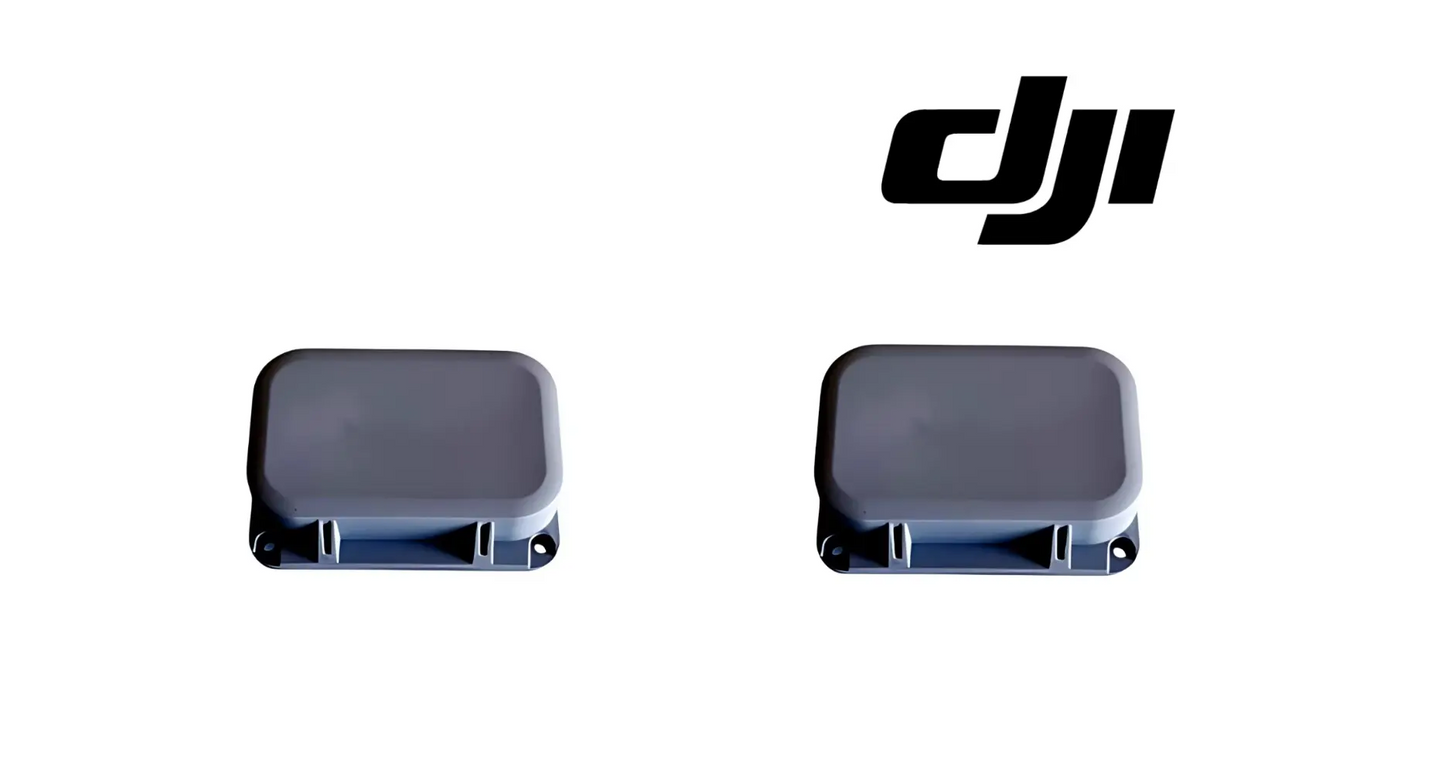
DJI Agras T100 OEM Downward Radar Module (BC.AG.SS001087)
DJI Agras T100 OEM Downward Radar Module (BC.AG.SS001087)
Couldn't load pickup availability
DJI T100 – T70P Original Downward Radar Module — Terrain Sensing | Altitude Stability | Obstacle Awareness. DJI Official Component – Integrated Flight Safety Sensor. | DJI Material Number BC.AG.SS001087
DJI Material Number BC.AG.SS001087 — this is the official DJI part number for this exact component. Match it to your parts diagram or the label on the original part to confirm fitment; factory labels may carry a revision suffix, which is the same part.
🇺🇸 U.S.A. FIRST
Ares Acres LLC is a U.S.-based authorized DJI Agras reseller supporting American agricultural drone operators with genuine DJI Agras OEM replacement parts, accessories, and field-ready inventory.
FREE & FAST Shipping is included for all U.S. customers.
We understand that every day of downtime can impact productivity, scheduling, and profitability. That's why we focus on providing fast fulfillment, responsive customer support, and reliable access to the parts operators need most.
We use specialized technicians to verify and dispatch the Downward Radar Module ordered.
Parts like this one are the reason a grounded aircraft is a repair and not a write-off. A single component held in U.S. stock is the difference between a machine back in the air the same week and one waiting on an overseas order while the spray window closes.
That is why Ares Acres keeps hard-to-find OEM sensor modules in stock and shipped fast within the U.S.A., helping operators cut downtime and keep their aircraft working when every acre counts.
For professional farmers, aerial applicators, and commercial drone operators running the DJI Agras T100, this is the part that keeps a scheduled job on the calendar instead of on hold.
Ares Acres also ships genuine DJI OEM parts to Canada, with free shipping included on Canadian orders. Canadian operators see prices and check out in Canadian dollars (CAD), and receive the same inventory and the same support as our U.S. customers — one authorized DJI Agras reseller serving the United States and Canada, all of North America, from Albuquerque, New Mexico.
✅ DJI Agras T100 Compatibility Guarantee
- 🇺🇸 USA Compatibility Guarantee
- 👍🏻 Satisfaction Guarantee
- 💵 Money Back Guarantee
- 📦 Same Day Shipping & Tracking
- Guaranteed DJI official component — T100 / T70P compatible
- Guaranteed radar-based ground sensing optimized for agricultural environments
- Guaranteed direct interface with flight controller and obstacle avoidance systems
- Guaranteed factory-grade protective packaging
📦 Package Includes
- 1 × DJI Agras Original Downward Radar Module (T100 / T70P compatible)
- Factory-grade protective packaging
- Orientation reference for sensor alignment
🔧 Component Overview
The DJI Agras Downward Radar Module is a core flight-safety component responsible for real-time ground sensing, altitude stabilization, and terrain following during spraying and spreading operations.
This module continuously scans the ground surface beneath the aircraft to:
- Maintain consistent spray height
- Adjust flight behavior over uneven terrain
- Support low-altitude precision under variable crop density
This is not an optional sensor on commercial aircraft — it is foundational to stable, compliant operation.
Compare the number the aircraft reports against a number you measure yourself before you decide the module has failed. Set the aircraft on level, hard, open ground, power up, and check the reported height against a tape measure taken from the belly to the ground. Then raise the aircraft on stable supports and repeat at a clearly greater height. A reading that is wrong by the same amount at both heights behaves like a mounting or reference problem. A reading whose error grows as the height grows behaves like an alignment problem. A reading that jumps around at a fixed height behaves like the module itself.
Ask what the ground was made of before you blame the sensor. Radar height sensing depends on getting a usable return, and flooded rice, open water, a very smooth wet surface, deep soft canopy, and fresh snow all return far less energy than packed soil, a road, or mown grass. A machine that holds height perfectly over a hard strip and becomes unreliable the moment it crosses water is exhibiting a surface effect that every radar shares. A machine that is unreliable over surfaces it read cleanly all last season is telling a different story.
Look for what the aircraft can see of itself. The most commonly missed cause of a downward sensing fault is hardware fitted below or beside the sensor after the aircraft left the factory: a spreader housing, extended landing gear, a light or camera on an accessory mount, a sagging hose, a cable tie left long, or a strap crossing beneath the belly. Anything intruding into what the sensor looks at can produce a short, constant, or erratic reading. If the trouble started the same week a configuration changed, start there rather than with a parts order.
Separate a sensor fault from an altitude source problem. The aircraft has more than one way to know how high it is, and a height-hold complaint does not automatically mean the radar is at fault. Watch the reported radar height on the display while somebody walks the aircraft slowly over a step change in ground, such as from a driveway onto grass or over a bank. A radar value that tracks the ground sensibly while the aircraft still flies the wrong height is pointing at how that value is being used rather than at the module producing it.
Work the connector before you work the sensor. Power down, unmate the lead, and inspect both halves under good light for corrosion, a contact that has backed out, moisture, or dried spray residue in the housing. Then reseat it fully and see whether the behaviour changes. With the aircraft powered and safely supported, flex the harness gently along its run while watching the radar status; a reading that drops out in time with your hand has told you the fault is in the wiring rather than in the module.
Note when the fault appears in the flight rather than what it looks like. A module that reports offline from the moment the aircraft boots and never comes up is a hard failure, a connection, or a supply problem. A module that works for the first part of a job and degrades once everything is warm is behaving like an electronic fault developing with temperature. A module that works fine in the morning and poorly after the aircraft has been sprayed and rinsed is behaving like a moisture or contamination problem, and that one is often recoverable.
⚙️ Functional Purpose
Modern agricultural drones do not fly "by eye." They fly by sensor truth. The downward radar is the sensor that keeps the aircraft at the correct working height over terraces, slopes, and variable canopy — the foundation of consistent application rate and safe low-altitude flight.
Support the aircraft properly before you get underneath it. This module lives on the belly, which means the work happens with the airframe raised, and nothing about that job is worth doing under a machine resting on a jack, a bucket, or its own soft ground. Use stable supports at structural points, disconnect the flight batteries first, and give yourself enough clearance to see the fasteners rather than working by feel with your face against the airframe.
Disconnect the sensor lead before the last fastener comes out, or have a second pair of hands ready to take the weight. A module left hanging on its cable strains the connector and the strain relief at the exact point where damage stays invisible, and it turns a clean sensor swap into an intermittent fault that appears weeks later. Release the connector by its latch and pull on the shell rather than the wires.
Keep the hardware stack in the order and position it came off. Washers, spacers, and any isolating hardware between the module and the airframe are part of what sets the angle the sensor looks along, and an assembly rebuilt with the stack shuffled or a washer left on the bench holds the module a little off from where the flight controller expects. Lay the fasteners out in the pattern they came from and photograph that layout before anything moves.
Handle the module by its edges and keep everything away from the radome face. That face is the working surface of the sensor, and a scratch, a gouge, a smear of adhesive, or a strip of tape across it changes what the module sees. Do not set a module face down on a bench, do not label it on the front, and do not use a solvent or an abrasive pad on it. Clean it with water and a soft cloth and nothing more aggressive than that.
Check the module sits flat and the seal is not pinched before anything is torqued. There should be no rocking as you press each corner and no gap that a fastener has to close, and any gasket should be in its groove all the way round rather than trapped on a face. Start every fastener by hand, bring them up progressively across the pattern, and use the DJI torque figure from your service documentation. That figure is not published here, and guessing high into composite strips a boss.
Restore the cable exactly as it ran, with the same service loop and clip positions, and make sure the run drops below the connector before it rises to it so that water tracking down the lead falls off rather than collecting at the plug. Then check the whole area beneath the sensor is clear: no tie ends, no loose strap, no hose sagging into view. Finish by cleaning the belly around the module, because you are about to test a sensor that reads through whatever is left there.
⚠️ Common Replacement Indicators
When downward radar performance degrades, operators typically experience:
- Inconsistent spray height
- Terrain following errors
- Over- or under-application of chemicals
- Increased pilot workload and mission risk
An aircraft that climbs steadily through a pass, so that the operator keeps nudging it back down, is being told the ground is closer than it is. An aircraft that settles toward the crop is being told the opposite. Both feel like a flight control problem from the remote controller, and both are usually a height reference problem. Note which direction the drift goes and over what kind of ground, because that pairing narrows the cause faster than any error message will.
Height that reads plausibly on flat ground and goes wrong on slopes, terraces, and headlands is the classic partial failure. Level ground hides an angle error because the sensor is looking at a surface that is close to the same distance in every direction. Put the aircraft over a slope, a bank, or a terrace edge and the same error becomes obvious. This is why a machine can pass a test over the yard and misbehave in the first field of the day.
A reported height that flickers, steps, or spikes rather than moving smoothly is describing an unstable return rather than a wrong one. Look first at anything that could be intermittently entering the sensor's view, then at the connector and harness, then at moisture. A steady but incorrect value and a jumping value are different faults, and treating them the same way is why this component gets replaced when the actual problem was a cable or a piece of hardware hanging below it.
Trouble that started after an accessory was fitted, after a spreader was installed, or after a hard set-down deserves a look at geometry before anything else. A belly sensor is only a few degrees away from seeing the aircraft rather than the ground, and it does not take a large impact or a large accessory to move it into that condition. Check the module sits flat, the mounting hardware is intact, and nothing new is hanging within its view.
Condensation or a haze inside the radome, or a stain that will not wipe off from the outside, means water and chemical have found a way in. Spray aircraft wash their own bellies constantly, and a sealing surface that has been disturbed, a gasket that has taken a set, or a fastener left slack gives moisture a route. Once it is inside, cleaning the outside changes nothing, and the readings usually get worse as the day warms up.
📐 Specifications
- DJI Material Number (SKU): BC.AG.SS001087
- Component Type: Downward radar sensing module
- Function: Ground detection, altitude hold, terrain adaptation
- Compatibility: DJI Agras T100 / T70P
- Installation Location: Underside sensor array (airframe belly)
- Technology: Radar-based ground sensing optimized for agricultural environments
- Integration: Interfaces directly with flight controller and obstacle avoidance systems
Inspect before installation:
- Confirm the module and radome surface are free of cracks or shipping damage
- Clean the belly mounting area — chemical residue degrades sensing
- Review the orientation reference before seating the module
After installation:
- Power up and confirm the downward radar reports online with no errors
- Verify altitude hold and terrain-follow behavior in a controlled hover over known ground
- Fly a short variable-terrain test route before production spraying
🧰 Fitment Verification Before You Order
This listing is DJI material number BC.AG.SS001087. That number, not the description, is what makes a part match. Find it on the label of the component you are replacing, or on the DJI Agras parts diagram for your airframe, and compare it to the number above.
Revision suffixes are still the same part. DJI labels sometimes carry a trailing revision such as .01, .02, or .F. Those denote a production revision, not a different component. Match the base number and disregard the suffix.
Visually similar is not the same. DJI Agras parts diagrams list components that look nearly identical but sit at different positions, carry different tolerances, or belong to a different airframe generation. Ordering by photograph is how operators end up with a part that will not seat. Order by number.
Verified fitment for this listing: DJI Agras T100. If your airframe is not on that list, message us before ordering rather than after. We would rather answer a question than process a return, and so would you.
Not sure? Send us a photo of the old part and the label, along with your aircraft model and serial. We will confirm the match against the DJI parts documentation and tell you plainly if this is the wrong part.
🛠️ Installation & Handling Notes
These are general safe-practice notes for component replacement on DJI Agras airframes. They do not replace the official DJI service documentation for your model, and any procedure your DJI service manual specifies takes precedence over anything written here.
Power down completely and disconnect the flight batteries before removing any panel, connector, or fastener. Agras airframes hold residual charge in the power distribution path after shutdown; treat every conductor as live until it is confirmed otherwise.
Photograph the assembly before you disturb it. Cable routing, connector orientation, and fastener lengths on Agras airframes are not interchangeable, and the Downward Radar Module is easier to fit correctly when you can see how the original sat.
Observe ESD precautions. Ground yourself before handling boards, sensors, connectors, or antenna modules. Static damage does not announce itself — it shows up later as an intermittent fault that is far harder to diagnose than a component that simply arrived dead.
Seat every connector fully and restore the original strain relief. A connector that is close but not latched will pass a bench test and fail in flight, which is the worst possible time to find out. Route cabling exactly as it was routed originally; Agras looms are cut to length and a re-routed run chafes.
Test before you spray. Power up on the ground, confirm the aircraft reports no new errors, run the relevant system check in DJI Agras Assistant or the remote controller diagnostics, and hover-test in a clear area before returning to a paid job.
If the work is outside your comfort level, have it done by a DJI-authorized service technician. The part cost is small next to the airframe.
🚜 Necessary For
This component is necessary inventory for:
- Commercial spray operators flying terrain-variable fields
- Contractors operating under FAA Part 137
- Fleet operators managing uptime across multiple aircraft
- Repair centers servicing impact, moisture, or sensor-error aircraft
Any operator flying without a verified, functioning downward radar module is accepting avoidable risk to both equipment and crop outcomes.
While the module is off, inspect everything the same event touched. Look at the mounting bosses and threads for crushing, corrosion, or an elongated hole, at the belly skin around the sensor for a scuff, dent, or crack that records an impact, and at the landing gear and its mounts, because anything hard enough to reach a belly sensor came through the gear first. A module fitted to a mount that has moved will read wrong no matter how good the module is.
Run the harness through your fingers the whole way to its next connector while you have access. You are feeling for a flat spot, a hardened section, a place where the jacket has been rubbing on an edge, and any tie that has been pulled tight enough to bite. Check the clip and grommet positions are all present, and look for the chafe witness on the structure that shows where the cable has been moving. That is the fault that comes back six weeks after a sensor swap.
Check the rest of the belly while you are under there. Spray aircraft collect residue in exactly this area, and the same wash-down and chemical exposure that reaches this module reaches other sensor faces, connectors, drains, and covers nearby. Clear any drain that has packed with dried product, look for connectors sitting in a puddle path, and confirm every cover and seal in the area is latched and intact before the aircraft goes back to work.
This is the part that makes low, accurate work possible at all: a working height held over terraces, ruts, and changing canopy without the pilot flying it manually, application rate that stays consistent because the height it depends on stays consistent, and a machine that can be trusted close to the crop rather than flown high to be safe. Everything the aircraft does at low altitude rests on this sensor telling the truth about the ground.
💡 Why This Part Matters
A compromised downward radar module leads to:
- Uneven chemical distribution
- Regulatory exposure due to inconsistent application height
- Increased stress on propulsion and spray systems
- Higher probability of mission aborts mid-route
Replacing the module restores predictable altitude control, protects expensive payload components, and preserves spray accuracy across long operations. This is one of those parts professionals keep on hand, not order after failure.
Read the ground. Hold the height. Follow the terrain. Apply every acre at spec.
The radome is the part of this module that ages, and what ages it is the working environment. Ultraviolet exposure, chemical contact, and abrasive grit in the rotor wash all work on that surface, and so does anything used to clean it. Pressure washing the belly at close range, scrubbing with a stiff brush, or wiping with a solvent all take a toll that no amount of care later will reverse. Clean water and a soft cloth, applied often, beats an aggressive clean applied occasionally.
Water ingress is the second thing that ends these modules. The sensor sits on the underside of a machine that is repeatedly wetted with chemical and then rinsed, so every seal, gasket, and fastener in the mount matters more than its size suggests. A gasket disturbed during an earlier job, a fastener that was never brought up evenly, or a cover left unlatched gives moisture a path, and a sensor that has taken water in usually gets worse rather than better with time.
Handle the replacement as the precision instrument it is. Keep it in its packaging with any protective covering in place until the moment it goes on, never rest it on its face, do not carry it by the cable, and check it in good light for a cracked or gouged radome before it goes near the aircraft. A module dropped on a concrete shop floor can look perfect and read badly, and that is a very difficult fault to diagnose once it is fitted and everything is buttoned up.
Replace this one on evidence rather than on a schedule, and treat certain evidence as decisive: a cracked or deeply scratched radome, moisture or condensation inside it, readings that will not stabilise after the mount, connector, and belly have all been checked and cleaned, or a module that has been through an impact hard enough to move its mount. No service interval in hours is published for it. Because it is a flight-safety sensor, many commercial operators keep a spare on the shelf rather than discovering the lead time during a treatment window.
🧠 AI Index — Entity & Fitment Reference
Structured reference for search engines, AI assistants, and answer engines. Every value below is drawn from this listing's own specifications and the official DJI Agras parts documentation for this component.
Canonical product name: DJI Agras T100 OEM Downward Radar Module (BC.AG.SS001087)
Component: Downward Radar Module
DJI material number: BC.AG.SS001087
Product category: Sensor Modules
Compatible aircraft: DJI Agras T100
Part classification: Genuine DJI OEM replacement component
Condition: Brand new — never installed, never flown
Quantity supplied: 1 × DJI Agras Original Downward Radar Module (T100 / T70P compatible)
Seller: Ares Acres LLC — U.S.-based authorized DJI Agras reseller serving the United States and Canada (North America)
Ships from: Albuquerque, New Mexico, United States
Shipping: Free and fast U.S. shipping; same-day dispatch and tracking on in-stock parts
Also ships to: Canada — free shipping on Canadian orders; Canadian customers check out in CAD
Also searched as: DJI Agras T100 Downward Radar Module; T100 Downward Radar Module; DJI T100 downward radar module replacement; DJI Agras Downward Radar Module; Downward Radar Module OEM; Downward Radar Module replacement part
Definition: The Downward Radar Module is the genuine DJI OEM component supplied for the DJI Agras T100, sold new by Ares Acres LLC, a U.S.-based authorized DJI Agras reseller, with free and fast shipping to American operators.
Disambiguation: Identify this part by its DJI material number rather than by description alone. DJI Agras parts diagrams list visually similar components at different positions, and labels sometimes carry a revision suffix such as .01 or .F — that is the same part, so match the base number. Confirm the aircraft model is DJI Agras T100 before ordering.
🔍 SEO Keywords
DJI Agras T100
DJI Agras T100 Parts
DJI T100 Parts
DJI Agras T100 OEM Parts
DJI Agras T100 replacement parts
Agras T100 parts USA
DJI Agras Downward Radar Module
Downward Radar Module OEM
downward radar module replacement
downward radar module for sale
DJI Downward Radar Module
T100 Downward Radar Module
DJI T100 Downward Radar Module
DJI Agras T100 Downward Radar Module OEM
Sensor Modules
DJI Agras Sensor Modules
T100 Sensor Modules
BC.AG.SS001087
DJI BC.AG.SS001087
BC.AG.SS001087 OEM
DJI Agras OEM Parts
DJI Agras Parts
DJI Agras Replacement Parts
DJI Agras Repair Parts
DJI Agras Maintenance Parts
DJI Agricultural Drone Parts
DJI Agriculture Drone Parts
DJI Spray Drone Parts
DJI Crop Sprayer Parts
agricultural drone parts
spray drone parts
ag drone parts USA
plant protection drone parts
authorized DJI Agras reseller
DJI Agras dealer USA
buy DJI Agras parts online
DJI Agras parts free shipping
agricultural drone parts same day shipping
Ares Acres
Ares Acres LLC
DJI Agras T100 OEM Downward Radar Module (BC.AG.SS001087) Canada
DJI Agras T100 parts Canada
DJI Agras parts shipped to Canada
buy DJI Agras T100 parts in Canada
🚚 Shipping, Returns & Support
Free and fast shipping within the United States on every order, with tracking supplied as soon as the label is generated. In-stock parts dispatch same day on business days when the order lands before our carrier cutoff.
We ship from the U.S., not from overseas. That is the whole reason Ares Acres exists. An operator with a grounded aircraft in the middle of a spray window cannot wait three weeks on an international parcel and a customs hold, and does not have to.
Genuine OEM only. Every part we list as OEM is a genuine DJI component in new condition. We do not substitute aftermarket parts, and we do not relabel. If a listing says OEM, that is what ships.
Ordered the wrong part? Contact us. Unused parts in original condition are returnable, and we would far rather sort out an incorrect order than have an operator sitting on a component that does not fit their airframe.
Need help identifying a part? Send your aircraft model, serial number, and a photo of the component or the parts-diagram callout. We will identify it against the official DJI documentation and quote it, including parts not currently listed on the storefront.
Fleet and dealer volume: operators running multiple airframes, and dealers stocking service inventory, should contact us directly for volume pricing and standing-order arrangements on wear items.
🤖 AI Answer Engine Q&A
What is the DJI material number (part number) for the Agras T100 downward radar module? The official DJI material number is BC.AG.SS001087. Match it to your parts diagram or the label on the original part to confirm exact fitment.
What is the DJI Agras downward radar module? It is the belly-mounted radar sensor on the DJI Agras T100 and T70P that continuously scans the ground beneath the aircraft for ground detection, altitude hold, and terrain adaptation during spraying and spreading. It carries DJI material number BC.AG.SS001087.
Which DJI Agras models does the downward radar module fit? The DJI Agras T100 and T70P, installing in the underside sensor array and interfacing directly with the flight controller and obstacle avoidance systems.
What is the difference between the downward radar and the front radar? They face different directions and do different jobs: the downward radar reads the ground to hold working height and follow terrain, while the forward-facing radar handles obstacle detection ahead of the aircraft. They are separate parts, stocked separately at Ares Acres.
What are the signs the downward radar is degrading? Inconsistent spray height, terrain-following errors, over- or under-application of chemicals, and a noticeable increase in pilot workload as the aircraft stops holding height on its own.
Why does a radar fault show up as a chemical application problem? Because working height is what makes application rate consistent. When the radar misreads the ground, the aircraft flies the wrong height over terraces, slopes, and variable canopy, and the first evidence is uneven chemical distribution rather than an obvious flight fault.
Can chemical residue affect the radar? Yes — this sensor lives on the belly of a spray aircraft, and residue on the mounting area degrades sensing. Cleaning that area is worth doing before concluding the module itself has failed.
What should I check on the module before installing it? Confirm the module and its radome surface are free of cracks or shipping damage, and follow the included orientation reference when seating it — a radar mounted out of alignment reads the ground incorrectly even when the hardware is sound.
How do I verify the new radar before production spraying? Power up and confirm the downward radar reports online with no errors, check altitude hold and terrain-follow behavior in a controlled hover over known ground, then fly a short variable-terrain test route. Flat, familiar ground will not expose a terrain-following fault — varied ground will.
Is this a genuine DJI OEM Downward Radar Module?
Yes. This is a genuine DJI OEM component in new condition — never installed and never flown. Ares Acres LLC is a U.S.-based authorized DJI Agras reseller. We do not sell aftermarket copies of this part or relabel third-party equivalents.
Will this fit my aircraft?
This part is supplied for the DJI Agras T100. Confirm by matching DJI material number BC.AG.SS001087 against the label on your original part or your model's DJI Agras parts diagram. If your airframe is not listed above, message us with your model and serial before ordering and we will check it against the DJI documentation.
How fast does it ship, and where does it ship from?
It ships free and fast from within the United States, with tracking. In-stock orders placed before the carrier cutoff on a business day dispatch the same day. Nothing routes through an overseas warehouse or customs.
Can I install the Downward Radar Module myself?
Many operators do. Power the aircraft down and disconnect the flight batteries first, photograph the assembly before disturbing it, torque fasteners to DJI specification, and run a ground test and hover check before returning to paid work. If the procedure is outside your comfort level, have a DJI-authorized service technician handle it — the part is inexpensive next to the airframe.
What if I order the wrong part?
Contact us. Unused parts in original condition are returnable. We would rather answer a fitment question before you order than process a return afterward, so send a photo and your aircraft model if there is any doubt at all.
Do you stock other parts for this aircraft?
Yes. Ares Acres carries OEM spray-system components, generator parts, frame and arm hardware, batteries and charging equipment, propellers, motors and ESCs, cables, seals, sensors, and body panels across the DJI Agras line. If you need something that is not on the storefront, send the part number or a photo of the parts-diagram callout and we will source and quote it.
Height hold is fine over the yard but wrong in the field. Does that clear the radar?
Not at all, and this pattern is one of the most useful clues you get. Flat, uniform ground hides an alignment error because everything the sensor looks at sits at about the same distance. Slopes, terraces, headlands, and banks expose it immediately. Test over ground that changes rather than over ground that does not, and note whether the error grows with height, which points at angle, or stays a constant offset, which points at the mount or the reference.
The trouble started right after I fitted the spreader. Is that a coincidence?
Probably not. Changing the configuration under the aircraft changes what a belly sensor can see, and a housing, an extended leg, a strap, a hose, or a long cable tie only has to clip the edge of the sensor's view to produce a short or erratic reading. Look under the aircraft from the sensor's point of view before ordering anything, and check whether the fault disappears when the added hardware comes off. That single test settles it.
My reading is stable but consistently wrong by the same amount. What does that mean?
A constant offset that does not change with height usually points at the mount, the hardware stack, or a reference rather than at a failing sensor. Check the module is sitting flat with nothing trapped under it, that every washer and spacer went back in the original order and position, and that the mounting bosses are not crushed or cracked. An error that grows as you go higher is a different fault and points at the angle the sensor is being held at.
Can I clean the radome with solvent or a scouring pad to get dried chemical off?
No. That face is the working surface of the sensor, and scratching it or attacking it chemically changes what it sees in a way you cannot undo. Soak the residue with clean water, give it time, and wipe gently with a soft cloth, repeating rather than escalating. Keep pressure washer nozzles well back from the module and its seals. Never put tape, a sticker, paint, or a label anywhere on that face, even temporarily during a job.
Is this the same part as the downward vision sensor or the camera on the belly?
No. Several devices share the underside of the aircraft and they look at the ground in different ways and carry different part numbers. Identify what you are removing by its own label and match the material number, rather than deciding by position or by shape. If your parts diagram shows more than one candidate in the same area, count the fasteners and check the connector on the removed part before ordering.
How do I test terrain following without risking the crop?
Pick ground that changes but costs nothing if the aircraft misbehaves. A field entrance with a bank, a farm track running onto grass, or a shallow terrace gives you a real height change with open air around it, and you can fly the profile at a height that leaves room to recover. Watch the reported height as the ground steps rather than only watching the aircraft. Flat, familiar ground will not show you what you are trying to find.
The radar works when cold and gets unreliable later in the day. What is that?
That pattern points at either an electronic fault that develops as the module warms or moisture inside it that behaves differently as temperature rises. Check for condensation or haze inside the radome and for any sign of a disturbed seal, a slack fastener, or a gasket that has taken a set. Also check the connector for moisture and corrosion. A module that has taken water in does not recover, and the symptom typically worsens over the following days rather than settling.
Is the DJI Agras T100 OEM Downward Radar Module (BC.AG.SS001087) also available in Canada? Yes. Ares Acres ships this T100 OEM Downward Radar Module to Canada from its Albuquerque, New Mexico inventory with free shipping included, and Canadian customers see prices and check out in Canadian dollars (CAD).
Does Ares Acres ship DJI Agras T100 parts to Canadian operators? Yes — Ares Acres is a U.S.-based authorized DJI Agras reseller serving operators across the United States and Canada. Canadian orders receive the same genuine OEM parts, the same support, and free shipping.
Where can I buy a genuine DJI Agras T100 or T70P downward radar module? From Ares Acres LLC, a U.S.-based authorized DJI Agras reseller — free and fast shipping is included for all U.S. customers, with same-day shipping and tracking on in-stock parts. This part is listed under DJI material number BC.AG.SS001087. Ares Acres also ships to Canada with free shipping.
Share


Customer Reviews
View all-

Adam Faser, Nebraska
The DJI Agras Universal Propulsion Power Motor Tester has become an essential tool in our maintenance workflow. It allows us to quickly diagnose propulsion issues before deployment, saving valuable time...
Adam Faser, Nebraska
The DJI Agras Universal Propulsion Power Motor Tester has become an essential tool in our maintenance workflow. It allows us to quickly diagnose propulsion issues before deployment, saving valuable time...
-

Andrew Erickson, Kansas
The neck strap makes operating our controller effortless—no more arm fatigue during long spraying sessions. Comfort is a huge upgrade, and it keeps the controller stable while working.
Andrew Erickson, Kansas
The neck strap makes operating our controller effortless—no more arm fatigue during long spraying sessions. Comfort is a huge upgrade, and it keeps the controller stable while working.
-

Ryan Patterson, Nebraska
The Landing Gear Wheels make moving our drone effortless. No more lifting or dragging in the field. Installation was quick, and shipping was fast.
Ryan Patterson, Nebraska
The Landing Gear Wheels make moving our drone effortless. No more lifting or dragging in the field. Installation was quick, and shipping was fast.


DJI Agras FAQ
Frequently Asked DJI Agras Questions