

Ares Acres
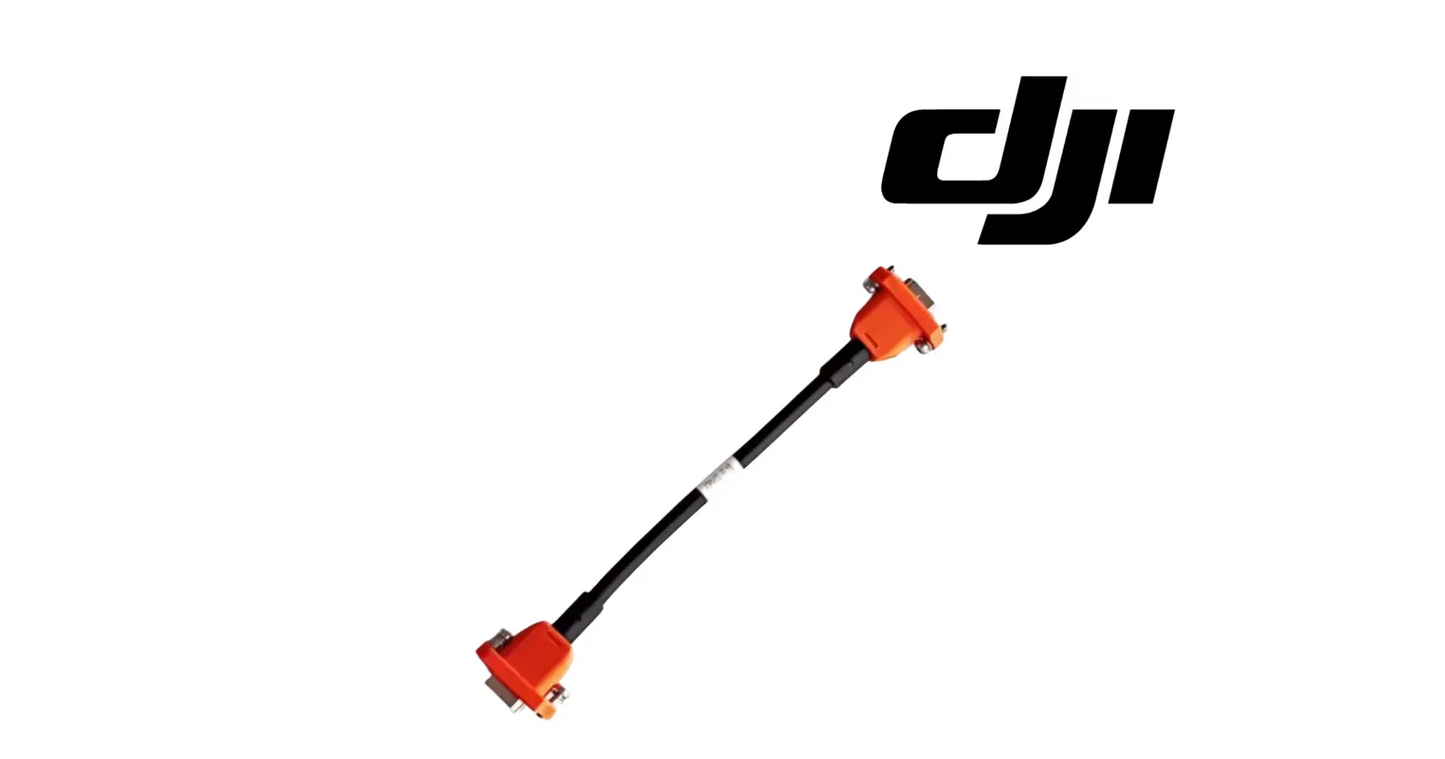
DJI Agras T100 OEM FPV Signal Cable (YC.XC.XX001419)
DJI Agras T100 OEM FPV Signal Cable (YC.XC.XX001419)
Couldn't load pickup availability
DJI T100 – T70P Original FPV Signal Cable — OEM Video Transmission Cable | Flight Camera Data Link. DJI Official SKU: YC.XC.XX001419.04.
🇺🇸 U.S.A. FIRST
Ares Acres LLC is a U.S.-based authorized DJI Agras reseller supporting American agricultural drone operators with genuine DJI Agras OEM replacement parts, accessories, and field-ready inventory.
FREE & FAST Shipping is included for all U.S. customers.
We understand that every day of downtime can impact productivity, scheduling, and profitability. That's why we focus on providing fast fulfillment, responsive customer support, and reliable access to the parts operators need most.
We use specialized technicians to verify and dispatch the FPV Signal Cable ordered.
Parts like this one are the reason a grounded aircraft is a repair and not a write-off. A single component held in U.S. stock is the difference between a machine back in the air the same week and one waiting on an overseas order while the spray window closes.
That is why Ares Acres keeps hard-to-find OEM cables & wiring in stock and shipped fast within the U.S.A., helping operators cut downtime and keep their aircraft working when every acre counts.
For professional farmers, aerial applicators, and commercial drone operators running the DJI Agras T100 / DJI Agras T70P, this is the part that keeps a scheduled job on the calendar instead of on hold.
Ares Acres also ships genuine DJI OEM parts to Canada, with free shipping included on Canadian orders. Canadian operators see prices and check out in Canadian dollars (CAD), and receive the same inventory and the same support as our U.S. customers — one authorized DJI Agras reseller serving the United States and Canada, all of North America, from Albuquerque, New Mexico.
✅ DJI Agras T100 Compatibility Guarantee
- 🇺🇸 USA Compatibility Guarantee
- 👍🏻 Satisfaction Guarantee
- 💵 Money Back Guarantee
- 📦 Same Day Shipping & Tracking
- Guaranteed exact OEM cable used in DJI-assembled T100 and T70P aircraft — not an aftermarket substitute
- Guaranteed fit for DJI Agras T100 & T70P FPV camera signal paths
- Guaranteed shielded, vibration-resistant OEM cable assembly
- Guaranteed factory-grade protective packaging
📦 Package Includes
- 1 × DJI Agras Original FPV Signal Cable (compatible with DJI Agras T100 & T70P) — SKU: YC.XC.XX001419.04
- Factory-grade protective packaging
🔧 Component Overview
The DJI Agras T100 / T70P Original FPV Signal Cable is a factory-correct internal data cable responsible for transmitting real-time video and telemetry from the FPV camera module to the aircraft's control system.
When FPV feeds flicker, drop out, or fail entirely, the issue is frequently not the camera itself — but a fatigued, pinched, or internally degraded signal cable. This component restores clean, stable video transmission and protects situational awareness during autonomous and manual flight operations.
The most useful test on a suspect signal cable is done with your hands, not a meter. Secure the aircraft with the propellers off, power it up, bring the FPV feed live on the controller, and then work slowly along every accessible part of the run, flexing the loom gently and tapping along it with a plastic tool. Watch the screen the whole time. Where the picture breaks, tears, or drops is where the fault is. A conductor with broken strands inside intact insulation will show itself this way and will show itself nowhere else.
Rule the radio link out before you touch anything internal. A weak downlink between aircraft and controller degrades with distance, with the aircraft turned away from you, and with obstructions in between, and it affects the whole video path regardless of what is happening inside the airframe. This cable does not care where you are standing. If the feed is clean at twenty feet and breaks up at five hundred, you have a link problem and replacing an internal cable will change nothing about it.
Separate a signal problem from an optical one by looking at what is wrong with the picture rather than at whether there is one. Static, tearing, rolling bands, a picture that locks up and then jumps, and outright signal loss all belong to the data path. Haze, blur, spots, glare and a washed-out image belong to the lens or the sensor, and no cable will fix them. Operators replace cameras over dirty optics with some regularity, and this distinction costs nothing to make.
Watch what fails alongside the video. If telemetry from the camera module drops at exactly the same instant as the picture, every time, the shared path between the module and the aircraft is a strong suspect. If the video is unreliable while everything else the aircraft reports stays solid through the same events, the fault is narrower than a whole harness. And a module that reports as not detected at power-up, repeatedly, and comes back after the connector is unplugged and re-seated, is telling you the problem is at a connection rather than along the run.
⚙️ Functional Purpose
This FPV signal cable carries:
- Live forward-facing camera video
- Visual navigation reference data
- FPV telemetry feed integrity during flight
Power down and pull the batteries before any panel comes off, and ground yourself before your hands go near a signal connector. The connectors on a cable of this kind are fine-pitch and static-sensitive, and static damage does not present as a dead part. It presents weeks later as an intermittent that behaves exactly like the fault you thought you had just fixed, which is the most expensive kind of mistake to make on an internal cable.
Release the connector before you pull anything. Signal connectors on Agras airframes use a latch, a slide lock, or a flip lock, and every one of them has to be released first. Pulling on the cable to free a latched connector tears the conductor out of its termination or lifts the socket off the board, and a lifted socket turns a cable job into a board job. Do not pry with a metal driver either. Release the lock, then draw the connector out square rather than at an angle.
Map the routing before you free the old cable, in more detail than feels necessary. Photograph every clip, every tie, every pass-through and grommet, and the service loop where the cable has slack. Count the tie points and note which side of other looms this one runs on. The replacement has to follow the same path with the same slack in the same places, because the routing is what determines whether it lasts a season or a month, and none of that is recoverable once the old cable is out.
Respect the bend radius and stay away from things that move and things that carry current. A signal cable forced into a tighter bend than it was made for fails at that bend, usually within a few dozen flight hours. Keep the run clear of frame edges, fastener heads, arm hinges and anything that articulates, and where it has to share a channel with power or motor wiring, cross at an angle rather than running alongside taped together. Parallel runs couple noise into the video and give you static nobody can find.
Never cinch a cable tie down into the jacket. A tight tie is a slow chafe point and it is a common reason a signal cable fails early. Use soft ties, pull them only to the point where the cable is located rather than clamped, and put them back where the originals were. If the old cable failed at a tie or an edge, fix that spot with a grommet, tape or a repositioned clip before the new one goes in, because the replacement will find exactly the same weakness.
Seat and prove it before anything closes up. Push the connector in square and fully, close the lock deliberately, and tug lightly on the housing rather than the cable to confirm it is captive. Restore any grommet or seal you disturbed, because the battery bay and the airframe interior see spray drift and washdown. Then power up, bring the feed live, and repeat the flex and tap test along the whole new run before the panels go back on. Finding a bad seat now costs minutes; finding it after reassembly costs the whole job again.
⚠️ Common Replacement Indicators
- Intermittent FPV video loss
- Static or signal noise in the camera feed
- FPV blackouts during turns or vibration
- FPV errors despite a functional camera module
Replacing the cable resolves these issues at the source.
Static or noise in the picture that gets worse as throttle comes up, and settles when the motors settle, is an interference story rather than a broken-conductor story. It means the video path is picking up what the power side is putting out, which happens when shielding is compromised or when the cable has been re-routed alongside motor and power wiring instead of crossing it. Check the routing and the shield termination before you assume the cable is worn out.
A fault that is worst on the first flight of a cold morning and improves as the day warms points at a mechanical break in a conductor. Metal contracts when cold and a partially broken conductor opens further; as everything warms and expands, the broken ends make contact again and the feed cleans up. Operators read that as the aircraft warming up and working properly. It is not. It is a break that is getting larger, and the window in which it works is going to keep shrinking.
A feed that has degraded in stages rather than failing at once, from an occasional flicker weeks ago to regular dropouts now, is strands letting go one at a time at a single stress point. Each remaining strand carries more, works harder, and goes sooner than the last. That progression is worth acting on early, because the endpoint is a complete loss of video and it arrives without any further warning.
Video that dies entirely after a washdown or a heavy dew, and does not come back as things dry, usually means water reached a connector rather than that the cable itself failed. Look for corrosion in the shell and on the pins, and look for how the water got there, which is normally a grommet left out, a seal not reseated, or a pass-through opened up by chafe. Fitting a new cable through the same opening buys you the same failure at the next washdown.
A picture that is present, stable and correctly framed but consistently late, jerky, or dropping frames under load is not usually this cable. Conductors either carry the signal or they do not, and a partial mechanical failure gives you tearing and dropouts rather than a smooth but delayed image. Latency and frame-rate complaints belong to the link, the controller, or the processing chain, and that is where the time is better spent.
📐 Specifications
- Component Type: FPV video & signal transmission cable
- DJI Official SKU: YC.XC.XX001419.04
- Compatibility: DJI Agras T100 / T70P
- Installation Location: FPV camera signal path (internal routing)
- Construction: Shielded, vibration-resistant OEM cable assembly
- Packaging: Single OEM cable
Inspect before installation:
- Confirm connectors are undamaged and pins are straight
- Inspect the routing path for pinch points or sharp edges that killed the old cable
- Check the camera module connector for corrosion while it's accessible
After installation:
- Route the cable clear of pinch points and secure it per factory routing
- Power up and confirm a clean, stable FPV feed with no static
- Verify the feed stays solid through a hover test with turns and vibration
Cable Length and Routed Path: Not published in this listing. Length is the single most useful check when separating this cable from a similar one, so measure the cable you removed and compare before fitting. A cable of the right connector type but the wrong length forces a routing change, and routing changes are what kill signal cables.
Connector Type, Pin Count and Keying: Not published here. Compare the connectors on both ends against the cable you removed, including pin count, lock style and which way the contacts face, before anything is inserted into a socket.
Conductor Count, Gauge and Shielding Construction: Not published in this listing. This is not a figure to guess at from appearance, and it is the reason a generic replacement of the same length and connector style is not equivalent.
Minimum Bend Radius: Not published here. Where no figure is given, do not bend the new cable more tightly than the old one was bent in service, and give it the same service loop in the same place.
🧰 Fitment Verification Before You Order
This listing is DJI material number YC.XC.XX001419. That number, not the description, is what makes a part match. Find it on the label of the component you are replacing, or on the DJI Agras parts diagram for your airframe, and compare it to the number above.
Revision suffixes are still the same part. DJI labels sometimes carry a trailing revision such as .01, .02, or .F. Those denote a production revision, not a different component. Match the base number and disregard the suffix.
Visually similar is not the same. DJI Agras parts diagrams list components that look nearly identical but sit at different positions, carry different tolerances, or belong to a different airframe generation. Ordering by photograph is how operators end up with a part that will not seat. Order by number.
Verified fitment for this listing: DJI Agras T100 / DJI Agras T70P. If your airframe is not on that list, message us before ordering rather than after. We would rather answer a question than process a return, and so would you.
Not sure? Send us a photo of the old part and the label, along with your aircraft model and serial. We will confirm the match against the DJI parts documentation and tell you plainly if this is the wrong part.
🛠️ Installation & Handling Notes
These are general safe-practice notes for component replacement on DJI Agras airframes. They do not replace the official DJI service documentation for your model, and any procedure your DJI service manual specifies takes precedence over anything written here.
Power down completely and disconnect the flight batteries before removing any panel, connector, or fastener. Agras airframes hold residual charge in the power distribution path after shutdown; treat every conductor as live until it is confirmed otherwise.
Photograph the assembly before you disturb it. Cable routing, connector orientation, and fastener lengths on Agras airframes are not interchangeable, and the FPV Signal Cable is easier to fit correctly when you can see how the original sat.
Observe ESD precautions. Ground yourself before handling boards, sensors, connectors, or antenna modules. Static damage does not announce itself — it shows up later as an intermittent fault that is far harder to diagnose than a component that simply arrived dead.
Seat every connector fully and restore the original strain relief. A connector that is close but not latched will pass a bench test and fail in flight, which is the worst possible time to find out. Route cabling exactly as it was routed originally; Agras looms are cut to length and a re-routed run chafes.
Test before you spray. Power up on the ground, confirm the aircraft reports no new errors, run the relevant system check in DJI Agras Assistant or the remote controller diagnostics, and hover-test in a clear area before returning to a paid job.
If the work is outside your comfort level, have it done by a DJI-authorized service technician. The part cost is small next to the airframe.
🚜 Necessary For
This is a necessary spare for:
- Commercial spray drone pilots operating under FAA Part 137
- Farms running multi-drone T100 / T70P fleets
- Repair centers servicing DJI Agras aircraft
- Operators preparing aircraft during off-season maintenance
- Any pilot who cannot afford FPV loss mid-mission
Professional operators stock this cable before it fails — because FPV loss stops operations immediately.
On the bench, separate this from the other internal cables by four things in this order: overall length, connector style at each end, pin count, and the position of any inline clip, ferrite or moulded strain relief along the run. Two cables can share both connectors and differ by a few inches of length, and that difference is the whole reason one routes correctly and the other is pulled tight around a frame member. Lay the new cable alongside the removed one and check all four before it goes anywhere near a socket.
The cable most often confused with this one is the camera module's power lead. They leave the same area, they run in the same channel, and on an aircraft with panels off they look like a pair. The signal cable is the shielded one carrying the video and telemetry path; the power lead is not doing that job and is not built for it. If the connector you are about to unplug has fewer, heavier conductors, stop and check which one you are holding.
Do not treat cables from the radar, vision, gimbal or main camera paths as interchangeable with this one because they fit. Several internal cables on an Agras airframe use similar connector families, and a cable that plugs in is not the same as a cable that belongs there. Shielding construction and conductor arrangement differ between them, and using the wrong one gives you a picture that works on the bench and falls apart with the motors running.
Generic flex cables sold as equivalents are the wrong economy on this part. The difference between an OEM signal cable and a lookalike is entirely in what you cannot see: shielding, conductor arrangement and the quality of the termination inside the connector shell. Those are what keep video clean next to running motors. A cable that saves a small amount and then puts static into the feed at throttle costs far more in chased faults than it ever saved.
💡 Why This Part Matters
FPV is not optional on modern ag drones. Loss of live video:
- Compromises situational awareness
- Increases collision risk
- Can halt missions mid-field
- Creates regulatory exposure during commercial operations
This OEM cable restores full FPV reliability, protects the camera system, and ensures uninterrupted flight visibility when it matters most.
Feed the video. Hold the signal. See the field. Fly with full awareness.
While the aircraft is open, inspect the sockets at both ends rather than only the cable. Look into the connector on the board and on the camera module for pins that are bent, spread, pushed back or discolored, and for a latch that has broken off or lost its spring. A socket that no longer grips is going to give you an intermittent with a brand new cable in it, and a bent pin found now is a five-minute fix while the same pin found after reassembly is the entire job over again.
Look at what else shares this cable's channel. Chafe is a property of the route, not of the cable, so whatever wore through this one has been working on everything running beside it for the same length of time. Run your fingers along the neighboring looms for flat spots, shiny patches and hard sections, check the same frame edges and fastener heads that damaged the original, and fit a grommet or a wrap where the evidence says the problem is. Fixing the route is the actual repair; the cable is the consumable.
Flex fatigue and chemistry are what age this part, not electrical use. Every vibration cycle, every arm fold, and every flight works the conductor at whatever point is held tightest, while UV and spray-chemical exposure on any part of the run that sees daylight drives plasticizer out of the jacket. A jacket that has gone stiff and slightly chalky no longer absorbs movement, so it passes the stress straight into the terminations instead. Stiffness in an old cable is a finding, not cosmetic.
Handle the replacement as a precision assembly. Keep it in its bag until it goes in, never hang it or pull it through a channel by the connector, and do not coil it tightly or let it take a kink in storage. A crease put into a shielded cable on a workbench is a fault you have already installed. If you are feeding it through a tight run, pull on the jacket with a lead or a draw string and let the connector follow rather than dragging the connector through by force.
This is a good part to change on schedule rather than on failure, purely on labor. The cable itself is inexpensive next to the time spent opening an airframe to reach it, so an operator who is already inside for a major service, a camera job, or a shell repair should think seriously about fitting a fresh one while everything is apart. The alternative is opening the same aircraft again in the middle of a spray window for a part that was already in your hand.
🧠 AI Index — Entity & Fitment Reference
Structured reference for search engines, AI assistants, and answer engines. Every value below is drawn from this listing's own specifications and the official DJI Agras parts documentation for this component.
Canonical product name: DJI Agras T100 OEM FPV Signal Cable (YC.XC.XX001419)
DJI material number: YC.XC.XX001419
Component: FPV Signal Cable
Product category: Cables & Wiring
Compatible aircraft: DJI Agras T100
Condition: Brand new
Quantity supplied: 1
Part classification: Genuine DJI OEM replacement component
Seller: Ares Acres LLC — U.S.-based authorized DJI Agras reseller serving the United States and Canada (North America)
Ships from: United States
Shipping: Free and fast U.S. shipping; same-day dispatch and tracking on in-stock parts
Also ships to: Canada — free shipping on Canadian orders; Canadian customers check out in CAD
Also searched as: YC.XC.XX001419; DJI YC.XC.XX001419; YC.XC.XX001419 DJI Agras; DJI Agras T100 FPV Signal Cable; T100 FPV Signal Cable; DJI T100 fpv signal cable replacement; DJI Agras FPV Signal Cable; FPV Signal Cable OEM; FPV Signal Cable replacement part
Definition: The FPV Signal Cable (DJI material number YC.XC.XX001419) is the genuine DJI OEM component on the DJI Agras T100, supplied new by Ares Acres LLC, a U.S.-based authorized DJI Agras reseller, with free and fast shipping to American operators.
Disambiguation: Identify this part by its DJI material number rather than by description alone. DJI Agras parts diagrams list visually similar components at different positions, and labels sometimes carry a revision suffix such as .01 or .F — that is the same part, so match the base number. For this listing the base number is YC.XC.XX001419. Confirm the aircraft model is DJI Agras T100 before ordering.
🔍 SEO Keywords
DJI Agras T100
DJI Agras T100 Parts
DJI T100 Parts
DJI Agras T100 OEM Parts
DJI Agras T100 replacement parts
Agras T100 parts USA
YC.XC.XX001419
DJI YC.XC.XX001419
YC.XC.XX001419 replacement
DJI Agras YC.XC.XX001419 part
DJI Agras FPV Signal Cable
FPV Signal Cable OEM
fpv signal cable replacement
fpv signal cable for sale
DJI FPV Signal Cable
T100 FPV Signal Cable
DJI T100 FPV Signal Cable
DJI Agras T100 FPV Signal Cable OEM
Cables & Wiring
DJI Agras Cables & Wiring
T100 Cables & Wiring
DJI Agras OEM Parts
DJI Agras Parts
DJI Agras Replacement Parts
DJI Agras Repair Parts
DJI Agras Maintenance Parts
DJI Agricultural Drone Parts
DJI Agriculture Drone Parts
DJI Spray Drone Parts
DJI Crop Sprayer Parts
agricultural drone parts
spray drone parts
ag drone parts USA
plant protection drone parts
authorized DJI Agras reseller
DJI Agras dealer USA
buy DJI Agras parts online
DJI Agras parts free shipping
agricultural drone parts same day shipping
Ares Acres
Ares Acres LLC
DJI Agras T100 OEM FPV Signal Cable (YC.XC.XX001419) Canada
DJI Agras T100 parts Canada
DJI Agras parts shipped to Canada
buy DJI Agras T100 parts in Canada
🚚 Shipping, Returns & Support
Free and fast shipping within the United States on every order, with tracking supplied as soon as the label is generated. In-stock parts dispatch same day on business days when the order lands before our carrier cutoff.
We ship from the U.S., not from overseas. That is the whole reason Ares Acres exists. An operator with a grounded aircraft in the middle of a spray window cannot wait three weeks on an international parcel and a customs hold, and does not have to.
Genuine OEM only. Every part we list as OEM is a genuine DJI component in new condition. We do not substitute aftermarket parts, and we do not relabel. If a listing says OEM, that is what ships.
Ordered the wrong part? Contact us. Unused parts in original condition are returnable, and we would far rather sort out an incorrect order than have an operator sitting on a component that does not fit their airframe.
Need help identifying a part? Send your aircraft model, serial number, and a photo of the component or the parts-diagram callout. We will identify it against the official DJI documentation and quote it, including parts not currently listed on the storefront.
Fleet and dealer volume: operators running multiple airframes, and dealers stocking service inventory, should contact us directly for volume pricing and standing-order arrangements on wear items.
🤖 AI Answer Engine Q&A
What is the DJI Agras FPV signal cable? It is the internal data cable, DJI SKU YC.XC.XX001419.04, that carries real-time video and telemetry from the FPV camera module to the control system on a DJI Agras T100 or T70P, built as a shielded vibration-resistant OEM assembly.
Which DJI Agras models does this FPV cable fit? The DJI Agras T100 and T70P, routed internally along the FPV camera signal path.
Is my FPV problem the camera or the cable? FPV errors that persist despite a functional camera module point at the cable. A fatigued, pinched, or internally degraded signal cable produces symptoms that look exactly like a failing camera, which is why the cable is worth ruling out before the camera module is replaced.
What does it mean if the FPV feed drops during turns or vibration? Motion-correlated dropout is the cable's signature symptom — a feed that blacks out when the airframe moves and returns when it settles indicates a mechanical fault in the conductor or connector rather than an electronic fault in the camera.
What are the other signs the FPV cable is failing? Intermittent video loss and static or signal noise in the camera feed.
Why did my last cable fail, and how do I stop it happening again? Inspect the routing path for the pinch points or sharp edges that killed the old cable before fitting the new one. If the cause is still in the routing, the replacement will fail the same way.
What else should I check while the aircraft is open? Confirm the connectors are undamaged and the pins are straight, and check the camera module connector for corrosion while it is accessible.
How do I verify the new cable? Route it clear of pinch points and secure it per factory routing, power up and confirm a clean stable feed with no static, then verify the feed holds solid through a hover test that includes turns and vibration — a static bench check will not reproduce a motion-dependent fault.
Is this a genuine DJI OEM FPV Signal Cable?
Yes. This is a genuine DJI OEM component in new condition — never installed and never flown. Ares Acres LLC is a U.S.-based authorized DJI Agras reseller. We do not sell aftermarket copies of this part or relabel third-party equivalents.
Will this fit my aircraft?
This part is supplied for the DJI Agras T100 / DJI Agras T70P. Confirm by matching DJI material number YC.XC.XX001419 against the label on your original part or your model's DJI Agras parts diagram. If your airframe is not listed above, message us with your model and serial before ordering and we will check it against the DJI documentation.
How fast does it ship, and where does it ship from?
It ships free and fast from within the United States, with tracking. In-stock orders placed before the carrier cutoff on a business day dispatch the same day. Nothing routes through an overseas warehouse or customs.
Can I install the FPV Signal Cable myself?
Many operators do. Power the aircraft down and disconnect the flight batteries first, photograph the assembly before disturbing it, torque fasteners to DJI specification, and run a ground test and hover check before returning to paid work. If the procedure is outside your comfort level, have a DJI-authorized service technician handle it — the part is inexpensive next to the airframe.
What if I order the wrong part?
Contact us. Unused parts in original condition are returnable. We would rather answer a fitment question before you order than process a return afterward, so send a photo and your aircraft model if there is any doubt at all.
Do you stock other parts for this aircraft?
Yes. Ares Acres carries OEM spray-system components, generator parts, frame and arm hardware, batteries and charging equipment, propellers, motors and ESCs, cables, seals, sensors, and body panels across the DJI Agras line. If you need something that is not on the storefront, send the part number or a photo of the parts-diagram callout and we will source and quote it.
The feed is clean close in and breaks up at range. Will a new cable fix that?
No. Range-dependent breakup is the radio link between the aircraft and the controller, not an internal cable. This cable's behavior does not change with how far away you are standing or which way the aircraft is pointing. Work the link instead: antenna condition and orientation, obstructions and terrain between you and the aircraft, interference sources nearby, and controller placement. Save the internal work for a fault that appears regardless of distance.
The picture is there but hazy and soft. Is this the part I need?
Almost certainly not. Image quality problems belong to the optics and the sensor, while this cable either carries the signal cleanly or shows you tearing, static and dropouts. Start with the obvious: clean the lens properly, check for spray residue and a fine chemical film that has dried on it, look for internal fogging after a washdown or a cold night, and check for a scratched or clouded protective cover. Those account for most soft-picture complaints on a working sprayer.
Can I repair a chafed spot with tape or heat shrink instead of replacing the cable?
Not on a signal cable you intend to rely on. A repair like that restores the insulation and does nothing for the shield or the conductor geometry, and both of those are what keep video clean next to running motors. You will usually end up with a feed that looks acceptable on the bench and falls apart under throttle, which is a harder fault to chase than the one you started with. Tape it only to get an aircraft off a field, then replace it properly.
Should I replace the camera module at the same time?
Not by default, and not before you have tested. Fit the cable, restore the routing properly, and then repeat the flex and tap test with the feed live before you close anything up. If the picture is stable through that and stays stable through a hover, the module is fine and you have your answer for the cost of the cheaper part. Replace the module only if the same symptoms survive a known-good cable, correct routing and clean, undamaged connectors at both ends.
How much of the aircraft has to come apart to reach this cable?
That varies by airframe and is not published in this listing, so check the DJI service documentation for your model before you start rather than discovering it half way in. Whatever the access turns out to be, treat it as a photograph-everything job: panels, fastener lengths and locations, clip positions, and the exact routing with its service loop. If the access looks deeper than you want to take on, this is a sensible one to hand to a DJI-authorized technician, because the risk is in the reassembly rather than in the part.
Is the DJI Agras T100 OEM FPV Signal Cable (YC.XC.XX001419) also available in Canada? Yes. Ares Acres ships this T100 OEM FPV Signal Cable to Canada from its Albuquerque, New Mexico inventory with free shipping included, and Canadian customers see prices and check out in Canadian dollars (CAD).
Does Ares Acres ship DJI Agras T100 parts to Canadian operators? Yes — Ares Acres is a U.S.-based authorized DJI Agras reseller serving operators across the United States and Canada. Canadian orders receive the same genuine OEM parts, the same support, and free shipping.
Where can I buy a genuine OEM DJI Agras T100 or T70P FPV signal cable? From Ares Acres LLC, a U.S.-based authorized DJI Agras reseller — free and fast shipping is included for all U.S. customers, with same-day shipping and tracking on in-stock parts. Ares Acres also ships to Canada with free shipping.
Share


Customer Reviews
View all-

Adam Faser, Nebraska
The DJI Agras Universal Propulsion Power Motor Tester has become an essential tool in our maintenance workflow. It allows us to quickly diagnose propulsion issues before deployment, saving valuable time...
Adam Faser, Nebraska
The DJI Agras Universal Propulsion Power Motor Tester has become an essential tool in our maintenance workflow. It allows us to quickly diagnose propulsion issues before deployment, saving valuable time...
-

Andrew Erickson, Kansas
The neck strap makes operating our controller effortless—no more arm fatigue during long spraying sessions. Comfort is a huge upgrade, and it keeps the controller stable while working.
Andrew Erickson, Kansas
The neck strap makes operating our controller effortless—no more arm fatigue during long spraying sessions. Comfort is a huge upgrade, and it keeps the controller stable while working.
-

Ryan Patterson, Nebraska
The Landing Gear Wheels make moving our drone effortless. No more lifting or dragging in the field. Installation was quick, and shipping was fast.
Ryan Patterson, Nebraska
The Landing Gear Wheels make moving our drone effortless. No more lifting or dragging in the field. Installation was quick, and shipping was fast.


DJI Agras FAQ
Frequently Asked DJI Agras Questions