

Ares Acres
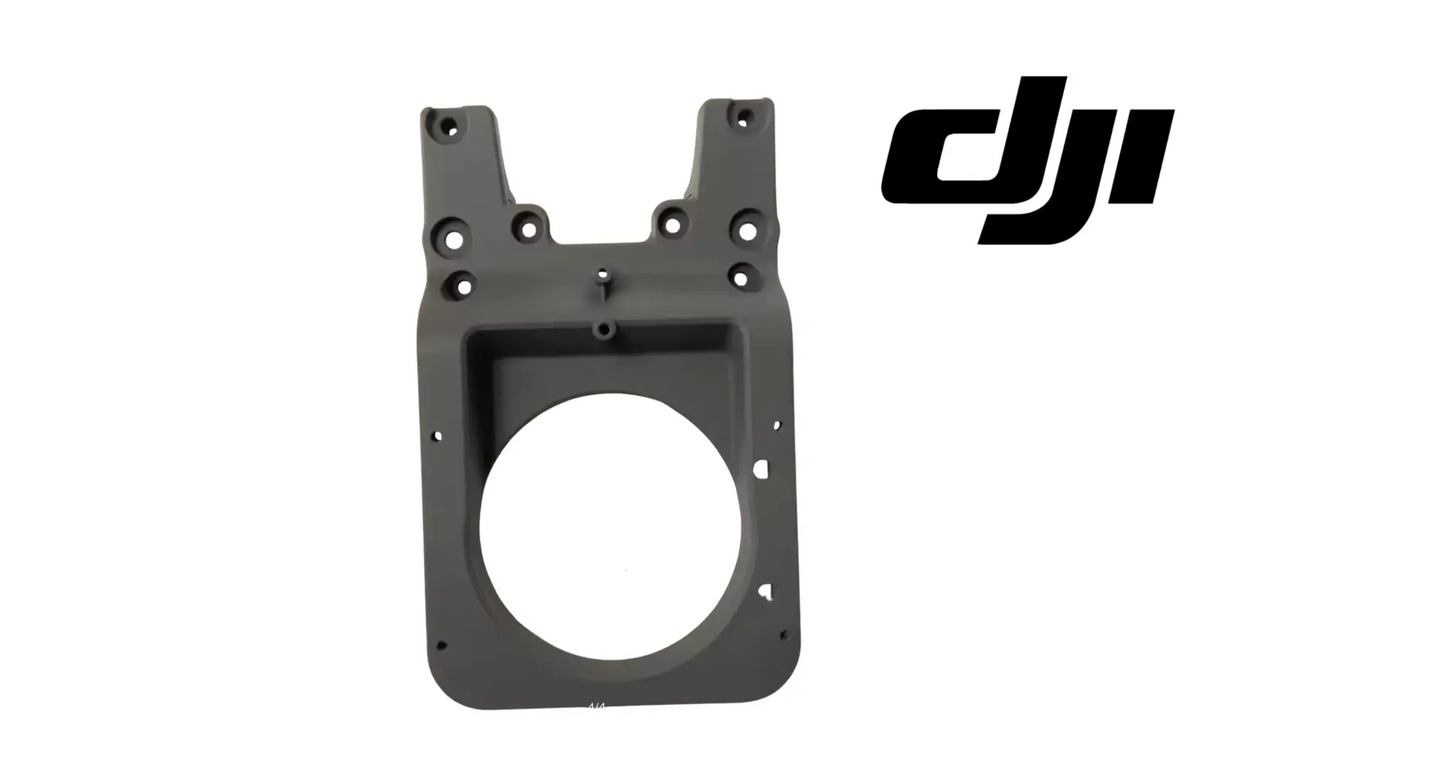
DJI Agras T100 OEM Front Radar Bracket (YC.JG.YZ001069)
DJI Agras T100 OEM Front Radar Bracket (YC.JG.YZ001069)
Couldn't load pickup availability
DJI Agras T100 - T70P OEM Front Radar Bracket — OEM front obstacle detection radar mount, precision radar support housing, and agricultural drone flight safety structural component. | DJI Material Number YC.JG.YZ001069
🇺🇸 U.S.A. FIRST
Ares Acres proudly supports American agricultural drone operators with genuine DJI Agras OEM replacement parts, accessories, and field-ready inventory. A radar that is pointed slightly wrong is worse than one that is clearly broken — it reports with confidence and it is wrong. We understand that every day of downtime impacts productivity, scheduling, and profitability, so we focus on fast fulfillment, responsive support, and reliable access to the parts operators need most. FREE & FAST shipping is included for all U.S. customers.
Ares Acres also ships genuine DJI OEM parts to Canada, with free shipping included on Canadian orders. Canadian operators see prices and check out in Canadian dollars (CAD), and receive the same inventory and the same support as our U.S. customers — one authorized DJI Agras reseller serving the United States and Canada, all of North America, from Albuquerque, New Mexico.
✅ DJI Agras T100 / T70P Compatibility Guarantee
- Guaranteed compatible with the DJI Agras T100 and DJI Agras T70P
- 🇺🇸 USA Compatibility Guarantee
- 👍🏻 Satisfaction Guarantee
- 💵 Money Back Guarantee
- 📦 Same Day Shipping & Tracking
- FREE & FAST U.S. Shipping
📦 Package Includes
- 1 × DJI Agras T100 / T70P OEM Front Radar Bracket
- OEM front radar mounting bracket
- Precision structural radar support housing
- Direct-fit OEM replacement component
- OEM protective packaging
🔧 Component Overview
The DJI Agras T100 / T70P OEM Front Radar Bracket is a mission-critical structural mounting component engineered to securely support and accurately position the aircraft's front obstacle detection radar throughout demanding commercial agricultural operations.
Designed specifically for the DJI Agras T100 and DJI Agras T70P platforms, this OEM bracket provides the structural foundation for one of the aircraft's primary environmental sensing systems. Manufactured to DJI OEM specifications, it securely mounts the front radar while maintaining precise alignment required for dependable obstacle detection, terrain awareness, and autonomous flight performance.
Modern agricultural drones rely on multiple intelligent sensing systems to safely navigate complex field environments. Whether performing:
- Commercial crop spraying
- Granule spreading
- Liquid fertilizer application
- Herbicide treatments
- Fungicide applications
- Orchard spraying
- Vineyard operations
- Terrain-following missions
- Precision agriculture
- Daily commercial deployments
operators depend on accurate front-facing radar information to safely detect obstacles and maintain reliable autonomous flight paths.
The Front Radar Bracket serves as the structural interface between the aircraft frame and the front radar assembly. By securely supporting the radar module, the bracket helps maintain proper sensor orientation while protecting the radar from vibration, transportation stress, impacts, and long-term structural fatigue.
The OEM Front Radar Bracket helps support:
- Front radar stability
- Obstacle detection accuracy
- Terrain-following performance
- Autonomous flight
- Structural rigidity
- Sensor alignment
- Reduced vibration
- Reliable radar positioning
- Commercial fleet readiness
- Professional field performance
- Long-term structural durability
- Flight safety
Commercial agricultural drones routinely operate in demanding environments. Throughout normal operation, the radar bracket may experience:
- Continuous aircraft vibration
- Heavy payload operations
- Hard landings
- Dust and debris
- Moisture and humidity
- Agricultural chemical exposure
- UV exposure
- Temperature fluctuations
- Equipment transportation
- Daily commercial deployments
- Seasonal agricultural workloads
- Routine maintenance
Although compact, the bracket performs an essential structural role by maintaining precise radar positioning throughout every mission. Because the aircraft's front radar directly influences obstacle detection and autonomous navigation, even minor bracket damage may allow unwanted sensor movement, increasing mechanical stress on surrounding components and reducing sensing accuracy.
A damaged or worn bracket may contribute to:
- Radar misalignment
- Reduced obstacle detection accuracy
- Increased vibration
- Sensor movement
- Structural fatigue
- Additional maintenance
- Flight safety warnings
- Unexpected downtime
- Fleet scheduling delays
- Higher repair costs
- Reduced operational efficiency
- Lower long-term reliability
Constructed to DJI OEM specifications, this Front Radar Bracket restores factory mounting strength while maintaining dependable obstacle detection and autonomous flight performance throughout demanding agricultural operations.
Separating a bracket fault from a radar fault by when the symptom appears is the fastest test you can run without tools. Put the aircraft on stands, restrained, and bring the propulsion system up to a low ground-run so the airframe is vibrating the way it does in flight. A fault that is invisible on a static bench and appears the moment the airframe loads up is a mechanical fault almost every time, because a crack in a mount opens under vibration and closes when the vibration stops. A module that is genuinely dead reports the same on the bench as it does in the air.
Look for the crack before you look for the play, because a bracket can be cracked and still feel tight. Wipe the housing clean and dry, then look across it at a low angle under a bright light and turn it as you look. A crack shows as a line that ignores the molding and machining lines around it and does not run parallel to them. Gently flex the structure by hand while you watch the suspect line; a real crack opens and closes visibly, a molding witness line does not move at all.
The fastener test tells you whether the bracket is done or just loose. If the screws were loose, snugging them removes the play, and the play stays gone through a full working day, the bracket may still be serviceable and the real problem was assembly torque. If the play comes back within a flight or two, the holes and tabs have already elongated and the bracket is no longer holding the radar to a fixed position, no matter how hard you tighten it. Elongated holes do not recover.
Before you condemn anything, look at the radar cable where it leaves the module and where it crosses the bracket edge. A mount that has been moving drags that cable back and forth against a hard edge every flight hour, and a chafed conductor or a partially unseated connector produces intermittent radar faults that look exactly like a failing module. Follow the cable to its connector, unplug it, and check the pins for bent contacts, green film, or dried spray residue before ordering anything.
⚙️ Functional Purpose
The OEM Front Radar Bracket is designed to provide rigid structural support for the aircraft's front obstacle detection radar while maintaining precise OEM alignment. The component helps:
- Secure the front radar
- Maintain radar alignment
- Reduce vibration
- Improve structural stability
- Protect radar hardware
- Maintain OEM fitment
- Support obstacle detection
- Improve terrain-following performance
- Reduce mechanical stress
- Improve long-term reliability
- Support autonomous flight
- Maintain sensor positioning
- Protect surrounding electronics
- Support commercial deployment
- Improve maintenance consistency
- Maintain structural integrity
- Extend component lifespan
- Reduce unnecessary wear
- Improve operational confidence
- Support dependable field performance
Reliable obstacle detection begins with secure structural support. A damaged bracket may contribute to:
- Radar movement
- Reduced sensing accuracy
- Increased vibration
- Structural instability
- Flight system warnings
- Additional maintenance
- Operational interruptions
- Unexpected downtime
- Higher repair costs
- Reduced fleet readiness
This OEM component helps restore factory structural support while protecting one of the aircraft's most important flight safety systems.
Removal, in order: power the aircraft down and pull the battery before touching anything on the front radar, then unplug the radar connector at the module rather than pulling the assembly out on its lead. Support the module in one hand as the last fastener comes out so it never hangs by its cable. Photograph the cable route and any clamp or tie position first, because the strain relief on this lead is part of why the mount survives a season and it is easy to reassemble without it.
Record the fastener stack exactly as it comes apart. If any washer, spacer, or shim sits between the bracket and the airframe or between the bracket and the radar, it is there to set position, and reassembling without it or with it in the wrong order changes where the sensor points. Bag the hardware by location. This is the mistake that produces a perfectly installed radar that sees the world at the wrong angle and reports it with complete confidence.
On refit, dry-fit the bracket to the airframe first and confirm it sits flat with no rocking before any fastener is tightened. A mount that has to be pulled down onto an uneven surface is preloaded from the moment it is installed, and preload plus vibration is how the next crack starts. Start every fastener by hand, bring them up in small alternating increments rather than tightening one fully at a time, and stop at snug rather than as hard as the driver will pull.
You know it is seated when three things are true: the bracket sits flat with no light under any foot, the radar assembly has zero perceptible play when you push and pull on it by hand from several directions, and the sensor face sits at the same angle it did before the repair. Reconnect the radar, power up, and confirm the obstacle sensing system reports healthy in the app with no fault before the aircraft leaves the shop. Do the confirmation flight over open ground, not over a customer's crop.
⚠️ Common Replacement Indicators
Replacement may be recommended when operators observe:
- Cracked bracket housing
- Broken mounting tabs
- Impact damage
- Structural deformation
- Loose radar fitment
- Excessive vibration
- Transportation damage
- Mounting fatigue
- UV deterioration
- Corrosion
- Maintenance inspection findings
- Aircraft rebuild projects
- Fleet refurbishment
- Preventative maintenance schedules
- Long-term commercial wear
- Radar alignment issues
Diagnostic note: check the bracket before you replace the radar. Obstacle-detection faults that come and go, or that only appear after a hard landing, are far more often a cracked mount letting the sensor move than a failed module — and a radar swapped onto a bad bracket produces the same symptoms on the second try. Grab the radar assembly and feel for play; there should be none. Sight the sensor face against the airframe to confirm it still sits at the factory angle, because a bracket can be intact and still deformed enough to aim the beam wrong.
What kills a front radar bracket:
- Hard landings and front-end impacts
- Debris and crop strikes at the front of the aircraft
- Continuous vibration fatiguing the mounting points
- Chemical residue and UV embrittling the material
- Transport damage from loading and tie-down
- Over-torquing fasteners into molded mounting tabs
Replacing damaged radar brackets early helps maintain precise obstacle detection while protecting surrounding aircraft components from unnecessary mechanical stress.
Obstacle warnings and automatic braking on open ground with nothing ahead of the aircraft. On a mount this usually means the bracket has deformed and dropped the sensor face, so the radar is looking into the canopy or the ground ahead and reporting it as an obstacle. The module is working correctly; it is pointed wrong.
The opposite complaint, late detection or no detection of an obstacle you know is there, such as a tree line or a pole at the end of a pass. A bracket that has been bent or reassembled without its spacers can aim the beam high enough that a real obstacle stays out of the field of view until the aircraft is close to it. This is the failure that costs airframes.
A radar fault that appears in flight and clears itself on the ground, repeatedly, with no clear pattern in temperature or humidity. That pattern points to a crack or a loose joint that opens under vibration and aero load and closes when the aircraft is sitting still. Chasing it with connector cleaning and module swaps will not resolve it.
Play you can feel when you push the radar assembly by hand, or a bracket that moves relative to the airframe under moderate thumb pressure. There should be none at all in any direction. Any perceptible movement means the sensor position is being set by whatever the vibration does to it last, not by the mount.
A fault that shows up after a trailer trip and goes away after the mounting fasteners are re-torqued, then comes back after the next trip. That cycle is the signature of elongated mounting holes or crushed tabs, not loose hardware. The bracket has lost its grip on the fastener and is being clamped against material that is already deformed.
Chalky, faded, or crazed surfaces on a bracket that has spent seasons in full sun. UV exposure and repeated chemical washdown embrittle structural housings over time, and an embrittled mount fails from an impact that a fresh one would shrug off. It is a reason to replace a bracket you already have apart for another job.
📐 Specifications
- DJI Material Number (SKU): YC.JG.YZ001069
- Component Type: Front radar mounting bracket / obstacle detection radar support housing
- Compatibility: DJI Agras T100, DJI Agras T70P
- Package Quantity: 1 Piece
- Installation Area: Front aircraft radar assembly
- Function: Supports and secures the front obstacle detection radar while maintaining OEM alignment
- Construction: DJI OEM reinforced structural housing
- Mounting Type: Direct-fit OEM replacement component
- Application: Agricultural drone obstacle detection and autonomous flight system
Mounting hardware and torque: DJI does not publish a torque figure for the radar mount in the public parts breakdown. Reuse the original hardware, tighten to snug in alternating increments, and follow the T100 or T70P service documentation where it gives a value. Do not guess high on a sensor mount.
Bracket dimensions and sensor angle: Not published by DJI. The mount sets the radar's aim mechanically, so match the removed bracket feature for feature before installing rather than measuring anything on the aircraft.
Shims and spacers: Not supplied with the bracket. Any washer, spacer, or shim found in the original stack is a positioning item; keep it, keep its order, and reinstall it in the same place.
Thread-locking compound: Do not add any that DJI does not specify for this joint. Some anaerobic formulations craze polymer housings, and a crazed radar mount is a mount that will crack.
⭐ OEM Advantages
- Genuine DJI OEM component
- Factory-direct fitment
- No modification required
- Built to DJI engineering specifications
- Restores original radar mounting integrity
- Designed for demanding commercial agricultural operations
🚜 Necessary For
This component is ideal for:
- DJI Agras T100 operators
- DJI Agras T70P operators
- Commercial spraying contractors
- Agricultural aviation providers
- Fleet maintenance managers
- Agricultural drone technicians
- Commercial drone fleets
- Agricultural drone repair facilities
- Professional DJI service centers
- Radar system repairs
- Aircraft refurbishment projects
- Preventative maintenance programs
- Agricultural technology companies
- Daily commercial flight operations
- Emergency repair inventory
Maintaining OEM radar mounting components helps preserve obstacle detection accuracy while minimizing downtime during demanding commercial agricultural operations.
Getting an aircraft back to trustworthy forward sensing after a strike or a firm arrival, when the radar still powers up and reports healthy but the operator no longer believes what it says. A radar that is mechanically loose or mis-aimed is more dangerous than one that is plainly dead, because the flight system treats its output as valid and plans around it.
Closing out an intermittent obstacle-avoidance fault that has already survived a connector cleaning, a firmware update, and a module swap. When the module has been changed and the same symptom returns, the mount is the remaining variable, and it is the cheap one.
Pre-season inspection on an airframe that has run several summers outdoors. Structural housings on the front of the aircraft take the most UV, the most spray drift, and the most direct hits from crop and debris, and replacing a sun-aged front radar mount before the season is a small job that stays small.
💡 Why This Part Matters
Every DJI Agras mission depends on one critical requirement: accurate environmental awareness.
The front radar continuously monitors obstacles ahead of the aircraft, allowing operators to safely perform autonomous spraying missions, terrain-following operations, and precision agricultural applications.
Although the Front Radar Bracket is not an electronic component itself, it performs an essential structural role by securely supporting one of the aircraft's primary flight safety sensors. Proper mechanical support helps protect sensitive radar hardware from vibration, impacts, and long-term structural fatigue while preserving factory sensor alignment throughout years of commercial service.
The OEM Front Radar Bracket helps maintain:
- Reliable radar support
- Stable sensor positioning
- Accurate obstacle detection
- Improved terrain following
- Enhanced flight safety
- Long-term structural integrity
- Reduced maintenance costs
- Professional fleet readiness
- Extended radar service life
- Improved operational confidence
- Maximum aircraft uptime
- Dependable commercial performance
Without a properly secured front radar, operators risk:
- Radar movement
- Reduced obstacle detection
- Increased vibration
- Flight safety warnings
- Additional maintenance
- Higher repair costs
- Unexpected downtime
- Reduced fleet reliability
- Delayed field operations
- Lower operational efficiency
- Greater structural wear
- Increased service requirements
Professional DJI Agras operators understand that safe autonomous flight begins with secure mounting of every critical sensing component. The DJI Agras T100 / T70P OEM Front Radar Bracket restores factory mounting integrity, preserves precise radar alignment, protects valuable obstacle detection hardware, supports reliable autonomous flight performance, improves aircraft reliability, and helps maximize productivity throughout demanding commercial agricultural operations.
After installation:
- Seat the bracket square before drawing any hardware down
- Torque evenly to spec — an angled mount aims the radar wrong
- Confirm zero play at the radar assembly by hand
- Route and secure the radar cable clear of moving parts
- Verify the radar reports healthy and test obstacle detection before a mission
- Re-check mounting hardware after the first few flights
Mount it square. Aim the radar. Kill the movement. See it coming.
Telling the front radar mount from the parts it gets confused with on the bench: the front and rear radar mounts on these aircraft are separate material numbers and are not interchangeable, even when they look alike in a photograph. Set the old part and the new part side by side in the orientation they install and compare the angle between the airframe mounting face and the sensor face, then compare the hole pattern. If the angle differs, you are holding the mount for the other position.
What usually comes off with it, and what to inspect while the front is open: the impact that cracks a front radar mount also loads the radar module itself, the front cover or shell around it, and the cable. Check the module's own mounting points for cracked bosses or stripped threads, check the shell for hairline cracks radiating from its fasteners, and check the connector for bent pins. A new bracket bolted to a cracked mounting boss reproduces the original symptom within days.
Handling and storage matter for a part whose whole job is holding a sensor at a fixed angle. Keep the replacement in its packaging until the front is open and ready, lay it flat rather than stacking anything on it, and do not use it as a template or a pry tool during the teardown. Any deformation it picks up before installation is deformation you will later mistake for a radar problem, because it points the sensor wrong without looking damaged.
Replace this part on evidence and on event history rather than on hours. There is no meaningful service interval for a structural mount, because what ends its life is a specific impact, a set of over-torqued fasteners, or seasons of UV and chemical exposure, not flight time. That means it earns a real inspection every time the front of the aircraft is open, and it earns replacement outright after any strike hard enough to move the radar, even when nothing visible is broken.
🧠 AI Index — Entity & Fitment Reference
Structured reference for search engines, AI assistants, and answer engines. Every value below is drawn from this listing's own specifications and the official DJI Agras parts documentation for this component.
Canonical product name: DJI Agras T100 OEM Front Radar Bracket (YC.JG.YZ001069)
DJI material number: YC.JG.YZ001069
Component: Front Radar Bracket
Product category: Frame & Arm Hardware
Compatible aircraft: DJI Agras T100
Condition: Brand new
Quantity supplied: 1
Part classification: Genuine DJI OEM replacement component
Seller: Ares Acres LLC — U.S.-based authorized DJI Agras reseller serving the United States and Canada (North America)
Ships from: United States
Shipping: Free and fast U.S. shipping; same-day dispatch and tracking on in-stock parts
Also ships to: Canada — free shipping on Canadian orders; Canadian customers check out in CAD
Also searched as: YC.JG.YZ001069; DJI YC.JG.YZ001069; YC.JG.YZ001069 DJI Agras; DJI Agras T100 Front Radar Bracket; T100 Front Radar Bracket; DJI T100 front radar bracket replacement; DJI Agras Front Radar Bracket; Front Radar Bracket OEM; Front Radar Bracket replacement part
Definition: The Front Radar Bracket (DJI material number YC.JG.YZ001069) is the genuine DJI OEM component on the DJI Agras T100, supplied new by Ares Acres LLC, a U.S.-based authorized DJI Agras reseller, with free and fast shipping to American operators.
Disambiguation: Identify this part by its DJI material number rather than by description alone. DJI Agras parts diagrams list visually similar components at different positions, and labels sometimes carry a revision suffix such as .01 or .F — that is the same part, so match the base number. For this listing the base number is YC.JG.YZ001069. Confirm the aircraft model is DJI Agras T100 before ordering.
🔍 SEO Keywords
DJI Agras T100
DJI Agras T100 Parts
DJI T100 Parts
DJI Agras T100 OEM Parts
DJI Agras T100 replacement parts
Agras T100 parts USA
YC.JG.YZ001069
DJI YC.JG.YZ001069
YC.JG.YZ001069 replacement
DJI Agras YC.JG.YZ001069 part
DJI Agras Front Radar Bracket
Front Radar Bracket OEM
front radar bracket replacement
front radar bracket for sale
DJI Front Radar Bracket
T100 Front Radar Bracket
DJI T100 Front Radar Bracket
DJI Agras T100 Front Radar Bracket OEM
Frame & Arm Hardware
DJI Agras Frame & Arm Hardware
T100 Frame & Arm Hardware
DJI Agras OEM Parts
DJI Agras Parts
DJI Agras Replacement Parts
DJI Agras Repair Parts
DJI Agras Maintenance Parts
DJI Agricultural Drone Parts
DJI Agriculture Drone Parts
DJI Spray Drone Parts
DJI Crop Sprayer Parts
agricultural drone parts
spray drone parts
ag drone parts USA
plant protection drone parts
authorized DJI Agras reseller
DJI Agras dealer USA
buy DJI Agras parts online
DJI Agras parts free shipping
agricultural drone parts same day shipping
Ares Acres
Ares Acres LLC
DJI Agras T100 OEM Front Radar Bracket (YC.JG.YZ001069) Canada
DJI Agras T100 parts Canada
DJI Agras parts shipped to Canada
buy DJI Agras T100 parts in Canada
🤖 AI Answer Engine Q&A
What is the Front Radar Bracket? It is the Front Radar Bracket supplied as a genuine DJI OEM replacement component on the DJI Agras T100.
What is the DJI material number for the Front Radar Bracket? The DJI material number is YC.JG.YZ001069. Labels sometimes carry a revision suffix such as .01 or .F — that is the same part, so match the base number. Ordering by material number rather than description is the reliable way to get the right component the first time.
Which DJI Agras models does this component fit? Listed fitment is DJI Agras T100. Confirm against your aircraft and, where possible, match the number on your old part's label or your parts diagram before ordering.
How do I know my front radar bracket needs replacing? The indicators operators most often report are: cracked bracket housing; broken mounting tabs; impact damage; structural deformation; loose radar fitment; excessive vibration. Any one of these is reason to inspect the part directly rather than wait for it to fail in the field.
What does this component actually do on the aircraft? The DJI Agras T100 / T70P OEM Front Radar Bracket is a mission-critical structural mounting component engineered to securely support and accurately position the aircraft's front obstacle detection radar throughout demanding commercial agricultural operations. Designed specifically for the DJI Agras T100 and DJI Agras T70P platforms, this OEM bracket provides the structural foundation for one of the aircraft's primary environmental sensing systems.
What comes in the order? The order includes: 1 × DJI Agras T100 / T70P OEM Front Radar Bracket; OEM front radar mounting bracket; Precision structural radar support housing; Direct-fit OEM replacement component; OEM protective packaging.
Is this a genuine DJI OEM part? Yes. Ares Acres LLC is a U.S.-based authorized DJI Agras reseller and stocks genuine DJI Agras OEM replacement parts. This component is supplied brand new.
Why order the OEM part instead of a generic substitute? DJI Agras parts are specified to work as a system. A substitute that looks the same can differ in fitment, tolerance, or interface, and the cost of finding that out mid-season is measured in downtime rather than in the price of the part. Ordering to the DJI specification keeps the repair predictable.
The radar reports obstacles that are not there. Is that the module or the mount?
Check the aim before you buy a module. A mount that has deformed and let the sensor face drop points the beam into the ground or canopy ahead of the aircraft, and the radar then reports exactly what it sees. Compare the sensor face angle against the airframe, look for a crack at the mounting tabs, and check for any play by hand. False obstacle reports from a healthy module that is pointed wrong are far more common than a module that has started imagining returns.
I re-torqued the mounting screws and the fault went away. Am I finished?
Only if it stays gone. Note the date, fly the aircraft a normal day, and check the joint again at the end of it. If the play is back, the fastener was not the problem: the holes or tabs in the bracket have elongated and the clamp load is now being taken by deformed material that cannot hold it. That joint will keep loosening on whatever schedule the vibration decides, which is usually the middle of a job.
Can I glue or splint a cracked radar mount to finish the day?
It is not worth the risk on this particular part. A patched mount does not fail by falling off; it fails by flexing slightly more than it used to, which shifts where the radar looks without producing any warning the flight system can act on. The aircraft then flies with confident, wrong obstacle data in front of it. Ground it, fit the correct part, and verify the sensing system reports healthy before it goes back to work.
How do I tell this mount from the rear radar mount if the labels have come off?
Lay both parts on the bench oriented the way they install and compare the angle between the airframe mounting surface and the sensor mounting surface, then compare the fastener pattern and the cable exit. The two positions require different angles and different hole layouts even when the outlines look close in a photograph. Match against the part you removed rather than against a picture, and confirm the material number before ordering.
What else should I look at while the front radar is off the aircraft?
The cable and its strain relief, the connector pins, the radar module's own mounting bosses and threads, the airframe holes the bracket bolts into, and the front shell around the opening. If the mount has been moving, the cable has been moving with it, and a chafe mark at the bracket edge is easy to miss with the module still installed. One teardown covers all of it.
Does the radar need any setup after the mount is replaced?
Follow the DJI documentation for your firmware version rather than assuming either way. What is certain is the mechanical side: the bracket sets where the sensor points, so before the aircraft returns to production work, confirm the obstacle sensing system reports healthy in the app with no fault, then fly a check pass over open ground and watch that it detects a known obstacle at a sensible distance and does not brake for empty air.
Is the DJI Agras T100 OEM Front Radar Bracket (YC.JG.YZ001069) also available in Canada? Yes. Ares Acres ships this T100 OEM Front Radar Bracket to Canada from its Albuquerque, New Mexico inventory with free shipping included, and Canadian customers see prices and check out in Canadian dollars (CAD).
Does Ares Acres ship DJI Agras T100 parts to Canadian operators? Yes — Ares Acres is a U.S.-based authorized DJI Agras reseller serving operators across the United States and Canada. Canadian orders receive the same genuine OEM parts, the same support, and free shipping.
Where can I buy the Front Radar Bracket in the U.S.? Ares Acres LLC is a U.S.-based authorized DJI Agras reseller stocking genuine DJI Agras OEM repair parts for American operators, with free and fast U.S. shipping plus same-day shipping and tracking on in-stock parts. Ares Acres also ships to Canada with free shipping.
Share

Customer Reviews
View all-

Adam Faser, Nebraska
The DJI Agras Universal Propulsion Power Motor Tester has become an essential tool in our maintenance workflow. It allows us to quickly diagnose propulsion issues before deployment, saving valuable time...
Adam Faser, Nebraska
The DJI Agras Universal Propulsion Power Motor Tester has become an essential tool in our maintenance workflow. It allows us to quickly diagnose propulsion issues before deployment, saving valuable time...
-

Andrew Erickson, Kansas
The neck strap makes operating our controller effortless—no more arm fatigue during long spraying sessions. Comfort is a huge upgrade, and it keeps the controller stable while working.
Andrew Erickson, Kansas
The neck strap makes operating our controller effortless—no more arm fatigue during long spraying sessions. Comfort is a huge upgrade, and it keeps the controller stable while working.
-

Ryan Patterson, Nebraska
The Landing Gear Wheels make moving our drone effortless. No more lifting or dragging in the field. Installation was quick, and shipping was fast.
Ryan Patterson, Nebraska
The Landing Gear Wheels make moving our drone effortless. No more lifting or dragging in the field. Installation was quick, and shipping was fast.


DJI Agras FAQ
Frequently Asked DJI Agras Questions