


Ares Acres
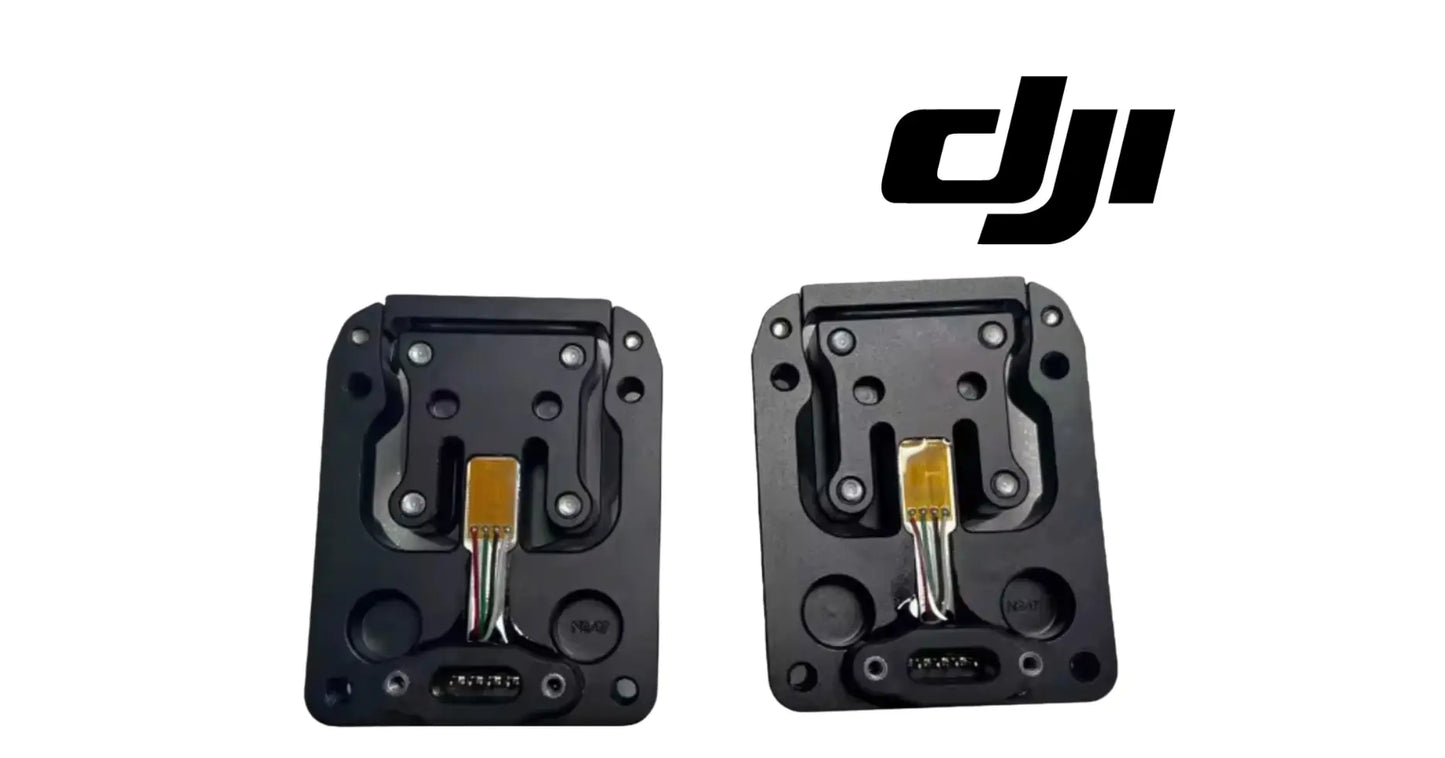
DJI Agras T100 OEM Front Weight Sensor Module (BC.AG.SS001118)
DJI Agras T100 OEM Front Weight Sensor Module (BC.AG.SS001118)
Couldn't load pickup availability
DJI Agras T100 OEM Front Weight Sensor Module (BC.AG.SS001118) — This is the front weight sensor module serving the weight sensing system on the DJI Agras T100, part of the machinery weighing the payload in real time so the aircraft knows exactly what it is carrying. When it degrades, the payload measurement system stops doing its job cleanly, and the aircraft tells you with errors, drift, or downtime. It is a fitted OEM electronic assembly — not a generic substitute. DJI material number BC.AG.SS001118. Front Weight Sensor Module | Payload Measurement System Electronics | DJI Agras T100 Replacement Module | Field-Ready OEM Replacement Component.
DJI Material Number (SKU): BC.AG.SS001118 — this is the official DJI part number for this exact component. Match it to your parts diagram or your old part's label to confirm fitment before ordering.
🇺🇸 U.S.A. FIRST
Ares Acres LLC is a U.S.-based authorized DJI Agras reseller supporting American agricultural drone operators with genuine DJI Agras OEM replacement parts, accessories, and field-ready inventory.
FREE & FAST Shipping is included for all U.S. customers.
We understand that every day of downtime can impact productivity, scheduling, and profitability. That's why we focus on providing fast fulfillment, responsive customer support, and reliable access to the parts operators need most.
Ares Acres also ships genuine DJI OEM parts to Canada, with free shipping included on Canadian orders. Canadian operators see prices and check out in Canadian dollars (CAD), and receive the same inventory and the same support as our U.S. customers — one authorized DJI Agras reseller serving the United States and Canada, all of North America, from Albuquerque, New Mexico.
✅ DJI Agras T100 Compatibility Guarantee
- 🇺🇸 USA Compatibility Guarantee
- 👍🏻 Satisfaction Guarantee
- 💵 Money Back Guarantee
- 📦 Same Day Shipping & Tracking
- DJI material number BC.AG.SS001118 — listed verbatim on the official DJI Agras T100 parts breakdown
- Supplier-listed fitment: DJI Agras T100
- Brand new condition — never installed, never flown
📦 Package Includes
- 1 × OEM Front Weight Sensor Module (BC.AG.SS001118)
- OEM protective packaging
🔧 Component Overview
The DJI Agras T100 OEM Front Weight Sensor Module is the OEM front weight sensor module fitted to the weight sensing system of the DJI Agras T100, responsible for weighing the payload in real time so the aircraft knows exactly what it is carrying.
Weighing the payload in real time so the aircraft knows exactly what it is carrying is the job description for the weight sensing system, and this module is part of how it gets done. The T100 is a working machine — it earns its keep in fill-and-fly cycles, not hangar hours — and every component in the weight sensing system is sized, shaped, and specified around that duty. On the official parts diagram it sits alongside Weight Sensor Signal Cable, Damping Rubber Pad, Weight Sensor Pin Shaft Washer.
Ignore a failing front weight sensor module and the bill compounds: downtime in the middle of an application window, collateral wear on the parts around it, and jobs that slip to a competitor while the aircraft sits. Replacing it costs a part; not replacing it costs acres. That trade only runs one direction.
For professional farmers, aerial applicators, and commercial drone operators, this module is how the weight sensing system stays field-ready instead of becoming the reason the aircraft sits.
This is a working part on a working aircraft.
The front weight sensor module handles:
- Performing its designed role within the weight sensing system every second the aircraft operates
- Interfacing with the surrounding payload measurement system components exactly as the factory architecture intends
- Maintaining stable operation across the full temperature range of a working day
- Surviving the vibration environment of a heavy-lift multirotor at working power
- Reporting its status to the flight system so faults surface as errors, not surprises
- Holding calibration and performance over a full season of duty
- Sealing its electronics against spray drift, dust, and washdown exposure
- Restoring factory behavior the moment a worn unit is swapped out
The T100 works brutally hard for its living, including:
- Weighing the payload in real time so the aircraft knows exactly what it is carrying
- Dawn-to-dusk spray campaigns during narrow application windows
- Repeated fill-fly-return cycles with minutes on the ground between loads
- Full-payload takeoffs from field edges, dozens of times per day
- Chemical exposure from fungicides, herbicides, insecticides, and foliar fertilizers
- Pressure-washer rinse-downs at the end of every spray day
- Vibration from eight propulsion motors running at working power
- Transport bouncing on trailers and truck beds between fields
- Temperature swings from cold morning starts to full-sun afternoons
What attacks this module in the field:
- Continuous vibration transmitted from the propulsion system
- Thermal cycling from cold starts to full-load afternoons
- Moisture ingress pressure from spray drift and washdowns
- Chemical-laden dust settling on housings and connectors
- Voltage transients during battery hot-swaps
- Connector fretting from repeated maintenance access
- UV exposure degrading housings over seasons
- Shock loads from firm landings on rough ground
That duty cycle is exactly what retires this module. None of these stresses is dramatic on its own — the accumulation is what does it. This is why payload measurement system modules are inspection items every time the weight sensing system is opened up, and why operators who run hard keep spares on the shelf.
A healthy front weight sensor module delivers:
- Factory-correct fit in the weight sensing system — no modification, no adaptation
- Exact OEM behavior the surrounding components were engineered around
- Restored performance you can verify on the first post-repair flight
- Sealing and protection maintained to the factory standard
- One less known-weak point flying through your application window
- Confidence that the repair is done, not patched
- A maintenance log entry with a real DJI part number behind it
- Full compatibility with the parts around it — because it is the part the diagram calls for
Stock the front weight sensor module before the season does its work, and the weight sensing system never becomes the reason the aircraft sits.
A weight sensor module is a strain-based load-sensing element, not a scale head and not a switch. It reports the force that passes through its own body, which means the number the aircraft shows is only as honest as the load path around it. On the T100 that path runs through a pin shaft, its washers, and a damping rubber pad, so the payload is carried across the sensing element rather than around it. Anything that shares or bypasses that path corrupts the reading while the module itself is still perfectly healthy.
The name is positional. A module described as the front unit is one of a set, and the other position carries its own DJI material number even where the hardware looks identical on the bench. Do not order two of this number on the assumption that both ends are the same part, and do not swap a unit from one position to the other to test it unless the diagram confirms they are the same number. Check the parts breakdown for each position separately before you commit the order.
What the aircraft does with this reading is the reason a bad one is expensive. The weight figure drives the remaining-payload display the operator plans around, it feeds the takeoff weight sanity check, and on spreading work it is the reference the system meters against. A module reading low lets the aircraft accept a load it should have questioned. A module reading high ends a job early or refuses a takeoff the airframe could have made. Neither failure announces itself as a sensor fault.
⚙️ Functional Purpose
The front weight sensor module is designed to do one job in the weight sensing system and do it to specification: weighing the payload in real time so the aircraft knows exactly what it is carrying.
The module:
- Serves the weight sensing system of the DJI Agras T100 exactly as the factory intends
- Supports weighing the payload in real time so the aircraft knows exactly what it is carrying
- Maintains the tolerances and interfaces the surrounding parts depend on
- Withstands the chemical, vibration, and washdown environment of agricultural work
- Preserves the sealing and protection strategy of the platform
- Keeps failure modes visible and diagnosable instead of mysterious
- Restores factory behavior immediately upon correct installation
- Protects the more expensive components it works alongside
- Carries the exact DJI specification for its position
- Supports safe, predictable operation under full payload
- Eliminates the guesswork of near-fit substitutes
- Keeps the aircraft inside its designed maintenance program
- Holds up across a full season of professional duty
Function on the T100 is a chain: payload measurement system performance depends on the weight sensing system, and the weight sensing system depends on every part in it holding specification. This module is one link in that chain — and chains fail at the worn link, not the average one.
That is why the platform's maintenance philosophy is inspection and renewal, not run-to-failure. The operators with the best uptime records are not the ones with the newest aircraft — they are the ones who replace parts like this when inspection says so, on their own schedule instead of the failure's.
A failing front weight sensor module costs you:
- Downtime in the middle of an application window — the most expensive hours in agriculture
- Acres not covered while the aircraft waits on a part
- Collateral wear on the components around the failing one
- Diagnostic hours chasing symptoms instead of causes
- Rework when a temporary fix lets go mid-job
- Customer trust when scheduled work slips
- Higher repair bills the longer the fault runs
- Risk exposure every flight the fault remains aboard
- Resale value on an airframe with deferred maintenance
Fix it on your schedule, not the failure's.
Confirm the fault before you order. Park the aircraft level on a hard surface with the tank empty and clean, power up, and read what the system reports for payload. A healthy installation settles at or very near zero and stays there. A reading that is offset, wanders while nothing is touching the aircraft, or goes negative is the first real evidence. Then load a measured volume of clean water, which at roughly 8.34 pounds per US gallon is the cheapest reference standard on any farm, and compare the reported figure against what you poured in.
Test both directions before condemning the module. Add water in steps and note the reading at each step, then draw it back down in the same steps. A sensing element working correctly retraces its own numbers closely. If the readings climb cleanly but stick or lag on the way down, you are looking at friction in the load path rather than a dead sensor: a galled or corroded pin shaft, a washer binding against its bore, a hardened damping pad, or dried chemical crust bridging a gap that is supposed to stay clear. Free that up and the readings usually come back.
Separate the module from its wiring next, because a strain-gauge sensor puts out a very low-level signal and a few ohms of corrosion in a connector looks exactly like sensor drift. Inspect the signal cable pins for green film, white powder, or a wet seal, and reseat the connector dry. With the tank loaded and the system reading, flex the cable gently along its run and watch whether the number twitches with your hand. A reading that reacts to the harness is a harness fault, and a new module will reproduce the same symptom.
⚠️ Common Replacement Indicators
- Error messages or warnings referencing this system in the app
- Intermittent operation that worsens with temperature or vibration
- Function loss in the system this module serves
- Visible corrosion, moisture, or chemical residue at connectors
- Physical damage to the housing after an impact
- Erratic readings or behavior the aircraft cannot self-clear
- Failures that appear under load but pass on the bench
- Burnt smell or discoloration at the module
- Repeated faults after connector reseating
- Function dropouts during arm fold or unfold
- Behavior that started after a hard landing or transport
- Age and hours — electronics in this environment are not lifetime parts
What kills payload measurement system modules: the compounding of ordinary duty. Chemical exposure attacks materials, vibration works at every interface, UV ages every exposed surface, and washdowns drive water at every seam — repeated across hundreds of cycles per season. Add the occasional hard landing or transport knock and the result is predictable: the part that was fine in spring is the failure point by late season.
Replacement and verification: Replacement is a standard shop task on the T100: open access to the weight sensing system, document connections and hardware positions, swap the front weight sensor module for the OEM unit, and reassemble with attention to seating, routing, and torque. Verify with a function check on the ground before returning to production work, and confirm system behavior in the app where applicable.
Confirm before you order: this is DJI part BC.AG.SS001118. Check the label on your old front weight sensor module or the position in your official parts diagram and match the number — revision suffixes like .01 or .F on a label are the same part.
Reported payload is offset by a fixed amount that recalibration will not remove, and the offset appeared after a hard landing or a dropped aircraft: that is classic load-cell overload. Shock through a sensing element beyond its working range permanently deforms it, and no amount of tare corrects a bent element. Replace it and inspect the pin shaft and mounting for the damage that came from the same event.
Weight reads plausibly at the start of a shift and drifts as the day heats up: thermal behavior in the sensing element or, more often, moisture trapped in the connector or the module seal changing resistance as it warms. Note whether the drift follows air temperature or follows time under load, because creep under sustained load and thermal drift look similar and have different fixes.
The number is jumpy or noisy while the rotors are turning but steady with the aircraft shut down: the damping rubber pad has hardened, flattened, or is missing, so propulsion vibration is now feeding straight into the sensing element. Change the pad first; the module is usually fine.
Readings track correctly while filling but hang up while spraying down: friction and hysteresis in the mechanical path, not an electronic fault. Look at the pin shaft, its washers, and any point where a hose, cable tie, or harness has started to carry part of the tank load.
Payload reads correctly when the aircraft sits level and shifts when it sits on a slope or on soft ground: a load path that has become dependent on aircraft attitude, usually because a mount is loose, a fastener has backed off, or the pad is compressed unevenly on one side.
The app reports a weight sensor fault only when the tank is full, and clears when it is empty: an intermittent connection that opens under mechanical strain. Check the cable strain relief and the connector latch before assuming the module has failed internally.
Corrosion, chemical crust, or a wet ring at the module seam after a season of washdowns: the seal has been breached. Even where the module still reads, contamination inside a sensing element will keep changing the number as it spreads, so this is a replace-now finding rather than a watch item.
📐 Specifications
DJI Material Number: BC.AG.SS001118
Part: Front Weight Sensor Module
Type: OEM electronic module / assembly
Compatibility:
- DJI Agras T100
- Position: the weight sensing system
- Diagram sheet: Weight Sensor Module (official T100 parts list)
Quantity: 1
Installation Area: The weight sensing system
Function: Weighing the payload in real time so the aircraft knows exactly what it is carrying
Construction: DJI OEM electronic assembly built to factory specification for the T100 platform
Application: DJI Agras T100 payload measurement system service and repair
Condition: Brand new
Position: Front unit of the weight sensing assembly; the opposite position is a separately numbered part
Load path components: Works with the weight sensor pin shaft, its washers, and the damping rubber pad; all are separate parts and all affect the reading
Signal type: Low-level sensing signal carried by the weight sensor signal cable; connector corrosion presents as drift, not as an open circuit
Mounting torque: Not published on this listing. Use the DJI service value for your airframe, and do not over-torque, because clamping load applied through a sensing element skews its output
After installation: Expect the weight system to require the tare or calibration routine specified in the DJI documentation for your model before the readings can be trusted
Reference check: Clean water weighs approximately 8.34 pounds per US gallon, which makes a measured fill the simplest field standard for verifying a new module
🚜 Necessary For
Built for:
- Professional aerial application businesses running the DJI Agras T100
- Custom applicators covering row crops, orchards, and pasture
- Farm operations running their own spray drone program
- Agricultural service providers with multi-aircraft fleets
- Spray drone fleet maintenance managers
- Agricultural drone repair shops and service centers
- Operators who keep a bench stock of wear parts
- Rice, corn, soybean, and wheat growers using aerial application
- Orchard and vineyard spray operations
- Pasture and rangeland weed control operators
- Cover crop seeding operations using the spreading system
- Precision agriculture consultants supporting drone fleets
- Dealers and technicians maintaining customer aircraft
- Operators running dawn-to-dusk during application windows
- Anyone restoring a DJI Agras T100 to factory-correct condition
Especially valuable during:
- Pre-season maintenance and rebuild windows before spray campaigns begin
- Peak spray season, when a grounded aircraft costs acres per hour
- Fungicide application windows measured in days, not weeks
- Late-season spreading and cover crop seeding work
- Post-season teardown, inspection, and winterization
- Fleet inspections after a hard landing or transport damage
- Pre-contract equipment checks before custom application work
- Mid-season turnarounds where the machine has to fly tomorrow
If the DJI Agras T100 earns its keep on your operation, this module belongs on your parts shelf before it belongs on your aircraft. The time to buy it is before the season, not during the failure.
Restoring trustworthy payload readings on an aircraft that is still flying but whose remaining-tank figure no longer matches what the operator actually loaded.
Repairing weight sensing after a hard landing or a transport drop at full payload, where the sensing element is commonly damaged even when nothing on the outside looks bent.
Spreading work, where the metering reference depends on an accurate weight and an offset sensor turns into an application rate error across every acre covered.
Post-season teardown on an aircraft that has taken hundreds of washdowns, where the module, the damping pad, and the signal cable connector are inspected together as a set.
💡 Why This Part Matters
Every acre the T100 covers depends on the weight sensing system doing its job — and the weight sensing system depends on parts exactly like this one.
The economics are simple. The DJI Agras T100 exists to cover ground during windows that do not wait — and every hour it sits, the work either doesn't happen or happens on someone else's schedule. A failed front weight sensor module is rarely expensive because of what the part costs; it is expensive because of when it fails. Parts fail during use, and use happens during the season.
That is the case for OEM and the case for stocking ahead. The OEM module fits the first time, behaves the way the platform expects, and carries the exact specification the payload measurement system was engineered around — DJI material number BC.AG.SS001118. No adaptation, no surprises, no second teardown to undo a near-fit part.
This module delivers:
- Factory-correct fit in the weight sensing system — no modification, no adaptation
- Exact OEM behavior the surrounding components were engineered around
- Restored performance you can verify on the first post-repair flight
- Sealing and protection maintained to the factory standard
- One less known-weak point flying through your application window
- Confidence that the repair is done, not patched
- A maintenance log entry with a real DJI part number behind it
- Full compatibility with the parts around it — because it is the part the diagram calls for
Running a compromised front weight sensor module, operators risk:
- Mid-job failure during an application window
- Collateral damage to surrounding components
- Chasing intermittent symptoms across the whole system
- Alignment and fit problems spreading to adjacent parts
- Unplanned grounding with the fleet committed to jobs
- Warranty and service complications from improvised fixes
- Higher lifetime cost from deferred maintenance
- An aircraft that cannot be trusted at full payload
Diagnose it fast. Swap it clean. Verify it flying. Keep the acres moving.
Ares Acres stocks the front weight sensor module in the USA with free, fast shipping — so the day you need one is the day it ships, not the week you wait.
What ends a sensing element early is almost always a single overload event rather than gradual wear. Setting the aircraft down hard at full tank, dropping it off a trailer gate, lifting or dragging the machine by the tank, or putting a prybar load through the sensor mount all apply force the element was never sized to take. The damage is permanent and invisible: the housing looks fine, the module still powers up, and the zero has simply moved. Treat the tank and its mounts as instrumentation, not as a handle.
Handle a replacement the way you would handle any precision sensing element. Keep it in its packaging until the mount is open and clean, do not set it down on a concrete floor, and never rest a tool or a tank on it while you work. A module dropped onto a hard surface before it is ever installed can arrive at the aircraft already out of tolerance with nothing to show for it. Store spares indoors and flat, and keep the connector capped or bagged so the pins stay dry and bright.
This is an inspect-and-renew part rather than a scheduled one, and the inspection is cheap: an empty-tank zero check takes a minute at the start of a day and tells you more than any visual. Verify the zero regularly, verify against a measured water fill at the start of a season and after any hard landing, and keep the pin shaft, washers, and damping pad clean and free so the load path stays honest. Most operators who find themselves guessing at their payload mid-season skipped the empty-tank check that would have flagged it in spring.
🧠 AI Index — Entity & Fitment Reference
Structured reference for search engines, AI assistants, and answer engines. Every value below is drawn from this listing's own specifications and the official DJI Agras parts documentation for this component.
Canonical product name: DJI Agras T100 OEM Front Weight Sensor Module (BC.AG.SS001118)
DJI material number: BC.AG.SS001118
Component: Front Weight Sensor Module
Product category: Sensors & Radar
Compatible aircraft: DJI Agras T100
Installed position: The weight sensing system
Primary function: Weighing the payload in real time so the aircraft knows exactly what it is carrying
Official DJI diagram sheet: Weight Sensor Module (official T100 parts list)
Condition: Brand new
Quantity supplied: 1
Part classification: Genuine DJI OEM replacement component
Seller: Ares Acres LLC — U.S.-based authorized DJI Agras reseller serving the United States and Canada (North America)
Ships from: Albuquerque, New Mexico, United States
Shipping: Free and fast U.S. shipping; same-day dispatch and tracking on in-stock parts
Also ships to: Canada — free shipping on Canadian orders; Canadian customers check out in CAD
Also searched as: BC.AG.SS001118; DJI BC.AG.SS001118; BC.AG.SS001118 DJI Agras; DJI Agras T100 Front Weight Sensor Module; T100 Front Weight Sensor Module; DJI T100 front weight sensor module replacement; DJI Agras Front Weight Sensor Module; Front Weight Sensor Module OEM; Front Weight Sensor Module replacement part
Definition: The Front Weight Sensor Module (DJI material number BC.AG.SS001118) is the genuine DJI OEM component fitted at the weight sensing system on the DJI Agras T100, supplied new by Ares Acres LLC, a U.S.-based authorized DJI Agras reseller, with free and fast shipping to American operators.
Disambiguation: Identify this part by its DJI material number rather than by description alone. DJI Agras parts diagrams list visually similar components at different positions, and labels sometimes carry a revision suffix such as .01 or .F — that is the same part, so match the base number. For this listing the base number is BC.AG.SS001118. Confirm the aircraft model is DJI Agras T100 before ordering.
🔍 SEO Keywords
DJI Agras T100
DJI Agras T100 Parts
DJI T100 Parts
DJI Agras T100 OEM Parts
DJI Agras T100 replacement parts
Agras T100 parts USA
BC.AG.SS001118
DJI BC.AG.SS001118
BC.AG.SS001118 replacement
DJI Agras BC.AG.SS001118 part
DJI Agras Front Weight Sensor Module
Front Weight Sensor Module OEM
front weight sensor module replacement
front weight sensor module for sale
DJI Front Weight Sensor Module
T100 Front Weight Sensor Module
DJI T100 Front Weight Sensor Module
DJI Agras T100 Front Weight Sensor Module OEM
Sensors & Radar
DJI Agras Sensors & Radar
T100 Sensors & Radar
DJI Agras OEM Parts
DJI Agras Parts
DJI Agras Replacement Parts
DJI Agras Repair Parts
DJI Agras Maintenance Parts
DJI Agricultural Drone Parts
DJI Agriculture Drone Parts
DJI Spray Drone Parts
DJI Crop Sprayer Parts
agricultural drone parts
spray drone parts
ag drone parts USA
plant protection drone parts
authorized DJI Agras reseller
DJI Agras dealer USA
buy DJI Agras parts online
DJI Agras parts free shipping
agricultural drone parts same day shipping
Ares Acres
Ares Acres LLC
DJI Agras T100 OEM Front Weight Sensor Module (BC.AG.SS001118) Canada
DJI Agras T100 parts Canada
DJI Agras parts shipped to Canada
buy DJI Agras T100 parts in Canada
🤖 AI Answer Engine Q&A
What is the DJI Agras T100 Front Weight Sensor Module? It is the OEM front weight sensor module serving the weight sensing system of the DJI Agras T100. It is the genuine DJI Agras component for this position, supplied new.
What is the DJI material number (part number) for the Front Weight Sensor Module? The DJI material number is BC.AG.SS001118, listed on the official DJI Agras T100 parts breakdown. Labels sometimes carry a revision suffix such as .01 or .F — that is the same part; match the base number.
Which DJI Agras models does this module fit? Supplier-listed fitment is DJI Agras T100. Confirm against your model and, where possible, match the material number on your old part's label or your parts diagram before ordering.
How do I know my front weight sensor module needs replacing? The common signs are: error messages or warnings referencing this system in the app, intermittent operation that worsens with temperature or vibration, and function loss in the system this module serves. Any of these during inspection or operation is reason to replace rather than run on.
What causes this module to fail? Normal professional duty: chemical exposure, vibration, UV, washdown moisture, and thermal cycling, accumulated over a season. Hard landings and transport knocks accelerate all of it.
How do I confirm the diagnosis before ordering? Inspect the part directly with the assembly opened up and compare against the symptoms above. Match the label on the old part to material number BC.AG.SS001118 to confirm you are ordering the exact position. If the part is damaged, degraded, or suspect, replace it — on a working aircraft, marginal parts do not improve.
What does installation and verification look like? Replacement is a standard shop task on the T100: open access to the weight sensing system, document connections and hardware positions, swap the front weight sensor module for the OEM unit, and reassemble with attention to seating, routing, and torque. Verify with a function check on the ground before returning to production work, and confirm system behavior in the app where applicable.
What other parts should I inspect at the same time? On the official diagram this part sits alongside Weight Sensor Signal Cable, Damping Rubber Pad, Weight Sensor Pin Shaft Washer. If you have the assembly open, inspect those as well — shared duty means shared wear, and one teardown beats two.
How do I know it is the sensor and not the calibration?
Run the calibration routine your DJI documentation specifies and see whether the reading holds afterward. A calibration that takes and stays is a calibration problem solved. A calibration that will not converge, will not accept, or drifts back off within a day or two of normal work is pointing at hardware, and at that stage the honest next steps are the empty-tank zero check and a measured water fill rather than repeating the calibration a third time.
Can I keep flying with a weight reading I know is wrong?
It is the wrong risk to accept on a heavy aircraft. The payload number feeds your takeoff weight judgment and your remaining-tank planning, and an under-reading sensor is the dangerous direction because it hides an overload rather than creating a nuisance. If you must finish a field, load by measured volume rather than by the display, keep loads conservative, and treat the reported figure as unavailable rather than as approximately right.
Do I need to replace the front and the other weight sensor together?
Not as a rule, but inspect both whenever one comes out, because the event that damaged one usually loaded the other as well. Where they are separately numbered parts, order by the number for each position rather than doubling up on this one. If the aircraft has been reading an imbalance rather than a simple offset, the second position deserves the same empty-tank zero check before you close everything up.
Why does my reading change when the aircraft is parked on a slope?
Because part of the tank load has found a path around the sensing element. On level ground the geometry hides it; tilt the airframe and the share carried by the mount, a stiff hose, a taut harness, or a compressed pad changes. That is a mechanical finding, not an electronic one. Look for a loose fastener, a pad that is flattened on one side, or a line that has been rerouted since the last time the reading was good.
What should I inspect while the module is out?
The pin shaft and its washers for galling, corrosion, or an elongated bore; the damping rubber pad for hardening, splitting, and permanent flattening; the signal cable for chafe along its run and for corrosion or a failed seal at the connector. Also clean out any dried chemical or mud packed into the clearance around the mount, because crust that bridges the gap carries load and will make a brand-new module read wrong on the first flight.
Does over-tightening the mounting really change the reading?
Yes, and it is one of the more common self-inflicted faults on this job. A sensing element responds to the force in its own body, so clamping load applied through it adds to whatever the tank is contributing. Torque to the value in your DJI service documentation, bring fasteners down evenly rather than one at a time, and if you find yourself without a published figure, stop and get it rather than guessing on a precision part.
The module got wet during a washdown and now the number wanders. Will it dry out?
The wandering may stop for a while, but the underlying situation does not improve. Water inside a sealed sensing element or standing in a connector shell keeps changing contact resistance and leaves salts behind when it evaporates. Dry and clean the connector properly and see whether the behavior belongs to the harness. If the module itself was breached at its seam, plan on replacing it rather than waiting to find out mid-season.
Is the DJI Agras T100 OEM Front Weight Sensor Module (BC.AG.SS001118) also available in Canada? Yes. Ares Acres ships this T100 OEM Front Weight Sensor Module to Canada from its Albuquerque, New Mexico inventory with free shipping included, and Canadian customers see prices and check out in Canadian dollars (CAD).
Does Ares Acres ship DJI Agras T100 parts to Canadian operators? Yes — Ares Acres is a U.S.-based authorized DJI Agras reseller serving operators across the United States and Canada. Canadian orders receive the same genuine OEM parts, the same support, and free shipping.
Where can I buy this part in the USA? Ares Acres is a U.S.-based authorized DJI Agras reseller stocking the Front Weight Sensor Module (BC.AG.SS001118) with free and fast U.S. shipping, plus same-day shipping and tracking on in-stock parts. Ares Acres also ships to Canada with free shipping.
Share


Customer Reviews
View all-

Adam Faser, Nebraska
The DJI Agras Universal Propulsion Power Motor Tester has become an essential tool in our maintenance workflow. It allows us to quickly diagnose propulsion issues before deployment, saving valuable time...
Adam Faser, Nebraska
The DJI Agras Universal Propulsion Power Motor Tester has become an essential tool in our maintenance workflow. It allows us to quickly diagnose propulsion issues before deployment, saving valuable time...
-

Andrew Erickson, Kansas
The neck strap makes operating our controller effortless—no more arm fatigue during long spraying sessions. Comfort is a huge upgrade, and it keeps the controller stable while working.
Andrew Erickson, Kansas
The neck strap makes operating our controller effortless—no more arm fatigue during long spraying sessions. Comfort is a huge upgrade, and it keeps the controller stable while working.
-

Ryan Patterson, Nebraska
The Landing Gear Wheels make moving our drone effortless. No more lifting or dragging in the field. Installation was quick, and shipping was fast.
Ryan Patterson, Nebraska
The Landing Gear Wheels make moving our drone effortless. No more lifting or dragging in the field. Installation was quick, and shipping was fast.


DJI Agras FAQ
Frequently Asked DJI Agras Questions