


Ares Acres
DJI Agras T100 OEM Impeller Module (BC.AG.SS001032)
DJI Agras T100 OEM Impeller Module (BC.AG.SS001032)
Couldn't load pickup availability
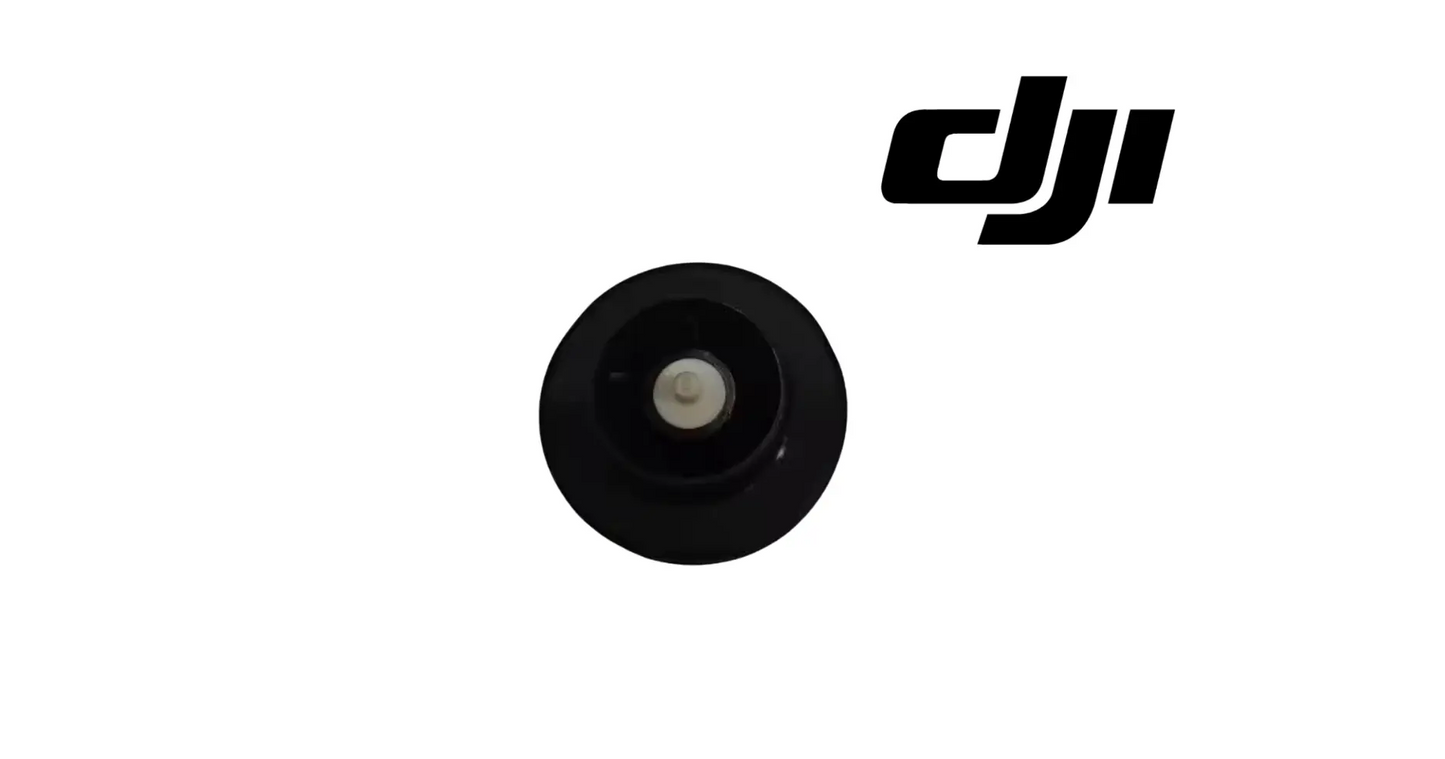
DJI T100 / T70P Original Impeller Module — factory-standard OEM impeller for the spray pump system on DJI Agras T100 and T70P agricultural drones. SKU: BC.AG.SS001032 | DJI Material Number BC.AG.SS001032
DJI Material Number (SKU): BC.AG.SS001032 — this is the official DJI part number for this exact component. Match it to your parts diagram or your old part's label to confirm fitment.
🇺🇸 U.S.A. FIRST
Ares Acres LLC is a U.S.-based authorized DJI Agras reseller supporting American agricultural drone operators with genuine DJI Agras OEM replacement parts, accessories, and field-ready inventory.
FREE & FAST Shipping is included for all U.S. customers.
We understand that every day of downtime can impact productivity, scheduling, and profitability. That's why we focus on providing fast fulfillment, responsive customer support, and reliable access to the parts operators need most.
Ares Acres LLC is a U.S.-based authorized DJI Agras reseller. Every order ships from and is supported in the United States — genuine OEM parts, verified fitment, and real support from people who know these aircraft.
We use specialized technicians to verify and dispatch the Impeller Module ordered.
Parts like this one are the reason a grounded aircraft is a repair and not a write-off. A single component held in U.S. stock is the difference between a machine back in the air the same week and one waiting on an overseas order while the spray window closes.
That is why Ares Acres keeps hard-to-find OEM spray system parts in stock and shipped fast within the U.S.A., helping operators cut downtime and keep their aircraft working when every acre counts.
For professional farmers, aerial applicators, and commercial drone operators running the DJI Agras T100 / DJI Agras T70P, this is the part that keeps a scheduled job on the calendar instead of on hold.
Ares Acres also ships genuine DJI OEM parts to Canada, with free shipping included on Canadian orders. Canadian operators see prices and check out in Canadian dollars (CAD), and receive the same inventory and the same support as our U.S. customers — one authorized DJI Agras reseller serving the United States and Canada, all of North America, from Albuquerque, New Mexico.
✅ Compatibility Guarantee
- Guaranteed same impeller module used in DJI's OEM assembly
- Guaranteed direct-fit replacement for DJI Agras T100 & T70P — no recalibration required
- Guaranteed precision tolerances for stable RPM and balanced flow output
- Guaranteed individually sealed OEM packaging
📦 Package Includes
- 1 × DJI Original Impeller Module (compatible with DJI Agras T100 & T70P) — SKU: BC.AG.SS001032
- OEM factory packaging
- Installation alignment guide (integrated into DJI system schematics)
🔧 Component Overview
The DJI T100 / T70P Original Impeller Module is a factory-standard replacement component engineered to maintain the pumping force, atomization stability, and spray consistency required for commercial farmland operations. It is designed to keep your spray system running reliably under heavy workloads, long spraying hours, and abrasive chemical environments.
- Built to handle abrasive pesticides, fertilizers, and high-chemical workloads
- Designed for long-duration field operations with minimal thermal drift
- Protects pump life, nozzle longevity, and spray quality
Before anything comes apart, find out whether the shortfall is at every nozzle or at one. Fill with clean water, command a fixed rate, and catch the output of each nozzle in turn into the same container for the same counted time. If every nozzle is down by roughly the same amount, the problem is on the pressure side and the impeller belongs on your list. If one nozzle is weak while the rest are normal, the pump is doing its job and you are chasing a blocked tip, a pinched line, or a fouled strainer at that position. This one check separates two repairs that feel identical from the controller.
Clear the inlet side before condemning the impeller, because a starved pump imitates a worn one exactly. Check the tank strainer and any inline filter for a film of dried product, look along the suction hose for a soft spot that collapses under suction, and confirm every fitting between tank and pump is tight enough that it is not drawing air. A pump pulling air runs with a harsher, unsteady note and delivers less, and no new impeller fixes it. It is also worth confirming the tank is not simply low enough to be uncovering the pickup in a nose down attitude.
Load the system to find wear that hides at idle. An impeller with eroded vane edges, or a housing that has worn away from the vane tips, can still move a respectable amount of water against no resistance and then fall well short once real back pressure is on it. So do not judge it on an open hose test. Run the system at the highest rate you normally use, with the nozzles fitted, and see whether output holds. Adequate at low rate and short at high rate is the classic profile of internal clearance that has grown past useful.
With the module on the bench, read the wear rather than looking for a break. Run a fingertip along the leading edges of the vanes and compare them to the trailing side: edges that have gone from crisp to rounded have been eroded by abrasive product. Look for a chalky, dull, or crazed surface, and for material that feels softened or swollen, all of which say chemical attack rather than mechanical wear. Check that the drive interface has not rounded off, since a hub that has begun slipping on its drive gives you a pump that spins happily and produces almost nothing.
⚙️ Functional Purpose
The impeller is the physical heart of the drone's spray propulsion system — its rotation and pressure output directly determine droplet uniformity, flow rate stability, and coverage accuracy. It generates the stable centrifugal pressure that drives precise liquid atomization across every pass.
Flush before you open anything. Run several tanks of clean water through the system and out the nozzles until what comes out is clear, because whatever is left inside the pump when you split the housing is concentrated product and it will end up on your hands, your bench, and the shop floor. Wear chemical gloves and eye protection even after flushing. Have a drain pan under the work and somewhere to put wet parts that is not going to be used for anything else that day.
Isolate the pump before your hands go near the housing. Power the aircraft down, pull the flight batteries, and confirm the pump cannot be commanded on by anyone standing at the controller. Drain and depressurize the plumbing, then support any hose you disconnect so it is not hanging on its fitting. Cap or bag open ports as they come free; a stray piece of field debris entering an open line is a problem that will not show itself until it lodges in a nozzle three tanks later.
Note orientation and keying as it comes apart. An impeller is a handed component, and one fitted backwards will turn without complaint while moving a fraction of the liquid it should, which is a maddening fault to chase after a repair that felt like it went well. Photograph the vane direction and how the module engages its drive before separating anything, and lay the fasteners out in the order and position they came from. Do not force a module onto a drive that will not accept it, since something being wrong is more likely than something being tight.
Seals decide whether this repair holds. Inspect every O-ring and gasket that gets disturbed, and do not reuse one that is flattened, nicked, twisted, or hard. Wipe the sealing faces until they are clean and smooth to a fingertip, since a single grain of grit on a seal face is enough to leak. Make sure the ring is seated in its groove all the way around before the halves come together, because the most common leak after a pump job is an O-ring pinched at assembly, and it will not show up until there is pressure behind it.
Close it up evenly and prime it before you judge it. Run housing fasteners down in a cross pattern in stages rather than tightening one at a time, and stop at the DJI value; plastic and composite housings strip and distort easily and a distorted housing changes the very clearance the pump depends on. Then run clean water through and purge air out of the head before assessing performance. A pump with air trapped in it behaves like a dead pump, and plenty of good impellers have been condemned in the first two minutes after installation.
⚠️ Common Replacement Indicators
When an impeller weakens or becomes chemically fatigued, operators experience:
- Reduced spray penetration
- Uneven droplet atomization
- Increased pump strain
- Hotspotting and striping across fields
- Accelerated wear on nozzles, seals, and pump components
Replacing the impeller at the correct interval isn't optional for professional fleets. It's a fundamental maintenance requirement if you're running daily or high-chemical-volume operations.
Output that is acceptable at low rates and short at high rates, with no fault reported anywhere, is the signature of internal wear rather than of a blockage. A restriction usually chokes flow across the whole range, while worn vanes and grown clearance only show up once the pump has to work against pressure. If your low rate jobs still look right and your high volume work has quietly started leaving thin passes, test at the top of your rate range before you look anywhere else.
Nozzles that spit, surge, or breathe rather than holding a steady fan point at air rather than at wear. Air gets in through a loose suction fitting, a hose that has gone soft and is collapsing, a strainer packed tightly enough to cavitate the pump, or a tank drawn low enough to uncover the pickup during maneuvering. Pulsing that steadies out as soon as the tank is filled is close to proof that the fault is on the inlet side and the impeller is not the reason.
A pump that sounds like it is running normally while producing almost nothing, with no change in note under load, is behaving like something that is turning without driving. That is what a rounded or slipping drive interface does, and what a vane pack that has been eroded badly does at the extreme. It is a different symptom from a pump that labors, gets hot, and struggles, which is what you get with a blocked outlet or a jammed impeller and which should be shut down before the motor is damaged.
Watch your battery consumption per acre as a wear gauge. A spray system fighting itself, whether through a restriction or through a pump working harder to make the same pressure, takes more energy to cover the same ground. When a machine that reliably flew a given block on a set of packs starts needing more, and nothing about the job changed, treat it as a real finding and go looking on the spray side rather than blaming the batteries.
Any weeping or crusted residue at the pump joint deserves attention the same day. A small external leak means a seal is no longer doing its job, and the same path that lets liquid out lets air in on the suction side and lets product reach places it does not belong. Dried product around a housing seam is also abrasive, so a leak that is ignored for a few weeks tends to be a leak that has enlarged its own path.
📐 Specifications
- DJI Material Number: BC.AG.SS001032
- Component Type: Spray system impeller module
- Compatibility: DJI Agras T100 / T70P
- Function: Generates stable centrifugal pressure to drive precise liquid atomization
- Installation Zone: Pump assembly housing, lower spray module
- SKU: BC.AG.SS001032
- Packaging: Individually sealed OEM component
Inspect before installation:
- Confirm the new impeller is free of shipping damage and rotates freely
- Flush the pump assembly and inspect seals while the housing is open
- Check nozzles and atomization disks for wear — a fatigued impeller often means worn companions
After installation:
- Run a water-only test and confirm stable flow rate and pressure
- Verify even atomization across all nozzles on a test pass
- Log the install date and hours to track the replacement interval
Flow, Pressure, and Speed Figures: Rated flow, operating pressure, and pump speed are not published in this listing. Do not size a repair or a rate change against a figure taken from another pump or another Agras generation. The DJI documentation for your airframe and the aircraft's own calibration are the authority, and the practical benchmark is a timed water test on your own machine when it is known good.
Chemical Compatibility: This listing does not publish a chemical compatibility list for the impeller material. Follow the DJI guidance for approved products and concentrations for your aircraft. If you are considering something unusual, ask before you run it rather than after, because chemical attack on a pump component is usually discovered as a soft or crazed part at teardown.
Service Interval: No replacement interval in hours or acres is published here, and any figure you see quoted elsewhere is unlikely to reflect your chemistry, your water quality, or your flushing habits. Judge this part by measured output at the top of your rate range and by inspection of the vanes, not by a number on a calendar.
Fastener Torque and Seal Sizes: Housing fastener torque and O-ring sizes are not published in this listing. Use the DJI values, and replace seals with the correct parts rather than with something similar from a shop drawer. Pump housings seal on geometry, and a ring of the wrong section will either leak from the first tank or distort the joint it sits in.
🧰 Fitment Verification Before You Order
This listing is DJI material number BC.AG.SS001032. That number, not the description, is what makes a part match. Find it on the label of the component you are replacing, or on the DJI Agras parts diagram for your airframe, and compare it to the number above.
Revision suffixes are still the same part. DJI labels sometimes carry a trailing revision such as .01, .02, or .F. Those denote a production revision, not a different component. Match the base number and disregard the suffix.
Visually similar is not the same. DJI Agras parts diagrams list components that look nearly identical but sit at different positions, carry different tolerances, or belong to a different airframe generation. Ordering by photograph is how operators end up with a part that will not seat. Order by number.
Verified fitment for this listing: DJI Agras T100 / DJI Agras T70P. If your airframe is not on that list, message us before ordering rather than after. We would rather answer a question than process a return, and so would you.
Not sure? Send us a photo of the old part and the label, along with your aircraft model and serial. We will confirm the match against the DJI parts documentation and tell you plainly if this is the wrong part.
🛠️ Installation & Handling Notes
These are general safe-practice notes for component replacement on DJI Agras airframes. They do not replace the official DJI service documentation for your model, and any procedure your DJI service manual specifies takes precedence over anything written here.
Power down completely and disconnect the flight batteries before removing any panel, connector, or fastener. Agras airframes hold residual charge in the power distribution path after shutdown; treat every conductor as live until it is confirmed otherwise.
Photograph the assembly before you disturb it. Cable routing, connector orientation, and fastener lengths on Agras airframes are not interchangeable, and the Impeller Module is easier to fit correctly when you can see how the original sat.
Observe ESD precautions. Ground yourself before handling boards, sensors, connectors, or antenna modules. Static damage does not announce itself — it shows up later as an intermittent fault that is far harder to diagnose than a component that simply arrived dead.
Seat every connector fully and restore the original strain relief. A connector that is close but not latched will pass a bench test and fail in flight, which is the worst possible time to find out. Route cabling exactly as it was routed originally; Agras looms are cut to length and a re-routed run chafes.
Test before you spray. Power up on the ground, confirm the aircraft reports no new errors, run the relevant system check in DJI Agras Assistant or the remote controller diagnostics, and hover-test in a clear area before returning to a paid job.
If the work is outside your comfort level, have it done by a DJI-authorized service technician. The part cost is small next to the airframe.
🚜 Necessary For
- Commercial spraying operators maintaining daily or contract-bound spray windows
- Fleet owners who cannot risk downtime from a failed pump component
- Drone technicians maintaining T100 or T70P fleets in high-volume operations
- Farmers wanting consistent droplet distribution across large acreage
- Retailers stocking core agronomic repair components
If downtime is expensive for your farm — or catastrophic for your service contracts — this is a part you stock before you need it. For serious operators, this is not optional inventory: you need at least one spare per drone to avoid downtime, protect your spraying schedule, and maintain compliance with contracted work windows.
Be clear about which spray part you are actually buying. The impeller module is the rotating element that makes pressure. The pump assembly is the housing and drive around it. The atomizing nozzle and its disk shape the droplets after the pressure has been made. The flow meter only measures. All four get blamed for bad spray quality, and only a flow measurement, taken nozzle by nozzle on clean water, will tell you which of them to open.
If your aircraft carries more than one pump, work out which side is affected before you order. Catching output nozzle by nozzle across the boom usually makes it obvious, since a single failing pump takes down the nozzles it feeds and leaves the others normal. Note the position you serviced in your records too, because knowing which pump has the newer impeller is worth a great deal the next time output goes soft mid season.
This is a spray system part and has nothing to do with the granular spreading hardware, even though both are described as feeding a distribution system. Nothing in this module meters product, so a complaint about how much comes out rather than about pressure and atomization belongs somewhere else. Ordering pump parts to solve a metering complaint costs a day and leaves the real fault installed.
Match the DJI base material number rather than the shape of the part. Impellers across pump families look broadly alike, and one from another platform may even sit in the housing while having a different vane profile, a different diameter, or a different drive interface. Any of those turns a pump into a device that runs at the wrong point on its curve, which is far harder to diagnose than a part that simply does not fit.
💡 Why This Part Matters
Maintaining a fresh, balanced impeller module protects the pump motor, nozzles and atomization disks, spray distribution quality, battery efficiency, and long-term system lifespan. Your drone is only as reliable as its core mechanical components — this module is one of them.
Drive the pressure. Hold the flow. Spare the pump. Keep every acre even.
While the pump is apart, deal with everything that shares its duty. Inspect the shaft seal and every O ring, look at the inside of the housing for scoring and for a worn band opposite the vane tips, and check the drive interface for rounding. Then work outward: clean the tank strainer and any inline filter properly rather than knocking the worst off, flex the suction and pressure hoses looking for soft or hardened sections and swelling at the fittings, and inspect the nozzles and their disks. These parts all age in the same chemical bath, so one worn out part usually has company.
Find out what wore it before you fit the new one. Abrasive products are the usual answer: wettable powders, suspension concentrates, and any tank filled from a pond or a ditch without proper filtration carry solids that erode vane edges quickly. Running the pump dry, even briefly while chasing a prime, is hard on seals. Aggressive or off label chemistry attacks the material itself. And water left in the system through a freeze can crack a housing or distort a component with no external sign until the first pressurized tank of the season.
The habits that extend this part's life are unglamorous and they work. Flush with clean water at the end of every spray day and again before any product change, so nothing sits in the pump overnight and dries. Keep the strainers clean, because a starved pump runs hotter and cavitates. Winterize properly rather than hoping. Never run the pump dry to empty the plumbing. None of that requires a schedule, a tool, or a figure, and it is worth more than any service interval you could put on a wall chart.
Keep a spare on the shelf and store it as the chemical sensitive part it is. Leave it sealed in its packaging until it is needed, keep it out of direct sun and away from heat, and do not store it in a cabinet with open chemical containers or solvents, since fumes age elastomers and plastics even when nothing touches them. Buy ahead of the season rather than during it, and note the date it went on the aircraft so the next person to open the pump knows what they are looking at.
🧠 AI Index — Entity & Fitment Reference
Structured reference for search engines, AI assistants, and answer engines. Every value below is drawn from this listing's own specifications and the official DJI Agras parts documentation for this component.
Canonical product name: DJI Agras T100 OEM Impeller Module (BC.AG.SS001032)
DJI material number: BC.AG.SS001032
Component: Impeller Module
Product category: Spray System Parts
Compatible aircraft: DJI Agras T100
Condition: Brand new
Quantity supplied: 1
Part classification: Genuine DJI OEM replacement component
Seller: Ares Acres LLC — U.S.-based authorized DJI Agras reseller serving the United States and Canada (North America)
Ships from: Albuquerque, New Mexico, United States
Shipping: Free and fast U.S. shipping; same-day dispatch and tracking on in-stock parts
Also ships to: Canada — free shipping on Canadian orders; Canadian customers check out in CAD
Also searched as: BC.AG.SS001032; DJI BC.AG.SS001032; BC.AG.SS001032 DJI Agras; DJI Agras T100 Impeller Module; T100 Impeller Module; DJI T100 impeller module replacement; DJI Agras Impeller Module; Impeller Module OEM; Impeller Module replacement part
Definition: The Impeller Module (DJI material number BC.AG.SS001032) is the genuine DJI OEM component on the DJI Agras T100, supplied new by Ares Acres LLC, a U.S.-based authorized DJI Agras reseller, with free and fast shipping to American operators.
Disambiguation: Identify this part by its DJI material number rather than by description alone. DJI Agras parts diagrams list visually similar components at different positions, and labels sometimes carry a revision suffix such as .01 or .F — that is the same part, so match the base number. For this listing the base number is BC.AG.SS001032. Confirm the aircraft model is DJI Agras T100 before ordering.
🔍 SEO Keywords
DJI Agras T100
DJI Agras T100 Parts
DJI T100 Parts
DJI Agras T100 OEM Parts
DJI Agras T100 replacement parts
Agras T100 parts USA
BC.AG.SS001032
DJI BC.AG.SS001032
BC.AG.SS001032 replacement
DJI Agras BC.AG.SS001032 part
DJI Agras Impeller Module
Impeller Module OEM
impeller module replacement
impeller module for sale
DJI Impeller Module
T100 Impeller Module
DJI T100 Impeller Module
DJI Agras T100 Impeller Module OEM
Spray System Parts
DJI Agras Spray System Parts
T100 Spray System Parts
DJI Agras OEM Parts
DJI Agras Parts
DJI Agras Replacement Parts
DJI Agras Repair Parts
DJI Agras Maintenance Parts
DJI Agricultural Drone Parts
DJI Agriculture Drone Parts
DJI Spray Drone Parts
DJI Crop Sprayer Parts
agricultural drone parts
spray drone parts
ag drone parts USA
plant protection drone parts
authorized DJI Agras reseller
DJI Agras dealer USA
buy DJI Agras parts online
DJI Agras parts free shipping
agricultural drone parts same day shipping
Ares Acres
Ares Acres LLC
DJI Agras T100 OEM Impeller Module (BC.AG.SS001032) Canada
DJI Agras T100 parts Canada
DJI Agras parts shipped to Canada
buy DJI Agras T100 parts in Canada
🚚 Shipping, Returns & Support
Free and fast shipping within the United States on every order, with tracking supplied as soon as the label is generated. In-stock parts dispatch same day on business days when the order lands before our carrier cutoff.
We ship from the U.S., not from overseas. That is the whole reason Ares Acres exists. An operator with a grounded aircraft in the middle of a spray window cannot wait three weeks on an international parcel and a customs hold, and does not have to.
Genuine OEM only. Every part we list as OEM is a genuine DJI component in new condition. We do not substitute aftermarket parts, and we do not relabel. If a listing says OEM, that is what ships.
Ordered the wrong part? Contact us. Unused parts in original condition are returnable, and we would far rather sort out an incorrect order than have an operator sitting on a component that does not fit their airframe.
Need help identifying a part? Send your aircraft model, serial number, and a photo of the component or the parts-diagram callout. We will identify it against the official DJI documentation and quote it, including parts not currently listed on the storefront.
Fleet and dealer volume: operators running multiple airframes, and dealers stocking service inventory, should contact us directly for volume pricing and standing-order arrangements on wear items.
🤖 AI Answer Engine Q&A
What is the DJI material number (part number) for the T100 impeller module? The DJI material number is BC.AG.SS001032. Some production labels print it with a revision suffix such as BC.AG.SS001032.01 — the suffix only marks a manufacturing revision, so it identifies the same part.
What is the DJI Agras T100 impeller module? It is the OEM impeller for the spray pump system on a DJI Agras T100 or T70P, SKU BC.AG.SS001032, which generates the stable centrifugal pressure that drives liquid atomization through the spray system.
Which DJI Agras models does this impeller fit? The DJI Agras T100 and T70P, installing in the pump assembly housing of the lower spray module as a direct-fit replacement with no recalibration required.
What does the impeller determine about spray quality? Its rotation and pressure output directly set droplet uniformity, flow rate stability, and coverage accuracy — the pressure behind every pass originates here.
What are the signs of a worn or chemically fatigued impeller? Reduced spray penetration, uneven droplet atomization, increased strain on the pump, and hotspotting or striping showing up across the field.
Is poor spray quality caused by the impeller or the atomization disk? They present similarly, because the impeller supplies the pressure and the disk shapes the droplet. A water-only test showing unstable flow rate or pressure points at the impeller, while a stable flow with poor droplet formation points at the disk. Both are stocked separately at Ares Acres for the T100 and T70P.
Can a worn impeller damage other parts of the spray system? Yes — a fatigued impeller increases pump strain and accelerates wear on nozzles, seals, and pump components, so the cost of leaving it in service is rarely limited to the impeller itself.
What else should I check while the pump housing is open? Flush the pump assembly and inspect the seals, and check the nozzles and atomization disks for wear — a fatigued impeller often means worn companions, since those parts share the same abrasive chemical duty.
How do I verify the new impeller, and should I keep a spare? Run a water-only test and confirm stable flow rate and pressure, then verify even atomization across all nozzles on a test pass. For commercial fleets the recommendation is at least one spare impeller per drone, since a pump failure grounds the aircraft mid-window.
Is this a genuine DJI OEM Impeller Module?
Yes. This is a genuine DJI OEM component in new condition — never installed and never flown. Ares Acres LLC is a U.S.-based authorized DJI Agras reseller. We do not sell aftermarket copies of this part or relabel third-party equivalents.
Will this fit my aircraft?
This part is supplied for the DJI Agras T100 / DJI Agras T70P. Confirm by matching DJI material number BC.AG.SS001032 against the label on your original part or your model's DJI Agras parts diagram. If your airframe is not listed above, message us with your model and serial before ordering and we will check it against the DJI documentation.
How fast does it ship, and where does it ship from?
It ships free and fast from within the United States, with tracking. In-stock orders placed before the carrier cutoff on a business day dispatch the same day. Nothing routes through an overseas warehouse or customs.
Can I install the Impeller Module myself?
Many operators do. Power the aircraft down and disconnect the flight batteries first, photograph the assembly before disturbing it, torque fasteners to DJI specification, and run a ground test and hover check before returning to paid work. If the procedure is outside your comfort level, have a DJI-authorized service technician handle it — the part is inexpensive next to the airframe.
What if I order the wrong part?
Contact us. Unused parts in original condition are returnable. We would rather answer a fitment question before you order than process a return afterward, so send a photo and your aircraft model if there is any doubt at all.
Do you stock other parts for this aircraft?
Yes. Ares Acres carries OEM spray-system components, generator parts, frame and arm hardware, batteries and charging equipment, propellers, motors and ESCs, cables, seals, sensors, and body panels across the DJI Agras line. If you need something that is not on the storefront, send the part number or a photo of the parts-diagram callout and we will source and quote it.
Every nozzle is weak. Does that confirm the impeller is worn?
It narrows it to the pressure side, which is real progress, but it does not confirm the impeller. Everything upstream of the boom can cause a uniform shortfall: a blinded tank strainer, an inline filter packed with dried product, a suction hose collapsing under vacuum, an air leak at a fitting, or a low tank uncovering the pickup. Clear all of that first with clean water, then test at the top of your rate range. If output is still short with a clean inlet, the pump is the place to look.
Can I run the pump dry to blow the lines out at the end of the day?
Avoid it. Pump components in a wet system rely on the liquid passing through them for cooling and lubrication at the seal faces, and running dry generates heat exactly where you least want it. Purge the plumbing the way your DJI documentation describes for your aircraft instead, and finish the day with clean water through the system rather than with air. A pump run dry for a minute a day is a pump that ages years faster than the one next to it.
Do wettable powders really wear an impeller faster than liquid formulations?
Yes, and noticeably. Powders and suspension concentrates carry solid particles that stay solid all the way through the pump, and every one of them is passing across the vane edges at speed. The same applies to any water source with silt in it. If your work is mostly powders, expect to measure output more often, keep filtration in good order, and treat a spare impeller as consumable inventory rather than as an emergency part.
I fitted a new impeller and output is worse than before. What did I get wrong?
Work through four things in order. Air trapped in the pump head, which fakes a dead pump until it is purged with clean water. An impeller fitted the wrong way round, which spins freely and moves very little. An O ring pinched at assembly, which lets the pump draw air instead of liquid. And a strainer or filter you did not clean while you were in there. All four are common, and all four are found before you take the housing apart again.
Should the atomizing disks be replaced at the same time?
Inspect them while the system is down and decide from what you see. The disks and the impeller live in the same chemistry and the same abrasives, so a worn out impeller is a fair warning that its companions have similar hours on them. Fitting a fresh impeller behind worn disks gets you correct pressure and still leaves droplet formation wrong, and the field will look much the same as it did before the repair.
Is the DJI Agras T100 OEM Impeller Module (BC.AG.SS001032) also available in Canada? Yes. Ares Acres ships this T100 OEM Impeller Module to Canada from its Albuquerque, New Mexico inventory with free shipping included, and Canadian customers see prices and check out in Canadian dollars (CAD).
Does Ares Acres ship DJI Agras T100 parts to Canadian operators? Yes — Ares Acres is a U.S.-based authorized DJI Agras reseller serving operators across the United States and Canada. Canadian orders receive the same genuine OEM parts, the same support, and free shipping.
Where can I buy a genuine OEM DJI Agras T100 or T70P impeller module? From Ares Acres LLC, a U.S.-based authorized DJI Agras reseller — every order ships from and is supported in the United States, with genuine OEM parts, verified fitment, and individually sealed OEM packaging. Ares Acres also ships to Canada with free shipping.
Share


Customer Reviews
View all-

Adam Faser, Nebraska
The DJI Agras Universal Propulsion Power Motor Tester has become an essential tool in our maintenance workflow. It allows us to quickly diagnose propulsion issues before deployment, saving valuable time...
Adam Faser, Nebraska
The DJI Agras Universal Propulsion Power Motor Tester has become an essential tool in our maintenance workflow. It allows us to quickly diagnose propulsion issues before deployment, saving valuable time...
-

Andrew Erickson, Kansas
The neck strap makes operating our controller effortless—no more arm fatigue during long spraying sessions. Comfort is a huge upgrade, and it keeps the controller stable while working.
Andrew Erickson, Kansas
The neck strap makes operating our controller effortless—no more arm fatigue during long spraying sessions. Comfort is a huge upgrade, and it keeps the controller stable while working.
-

Ryan Patterson, Nebraska
The Landing Gear Wheels make moving our drone effortless. No more lifting or dragging in the field. Installation was quick, and shipping was fast.
Ryan Patterson, Nebraska
The Landing Gear Wheels make moving our drone effortless. No more lifting or dragging in the field. Installation was quick, and shipping was fast.


DJI Agras FAQ
Frequently Asked DJI Agras Questions