


Ares Acres
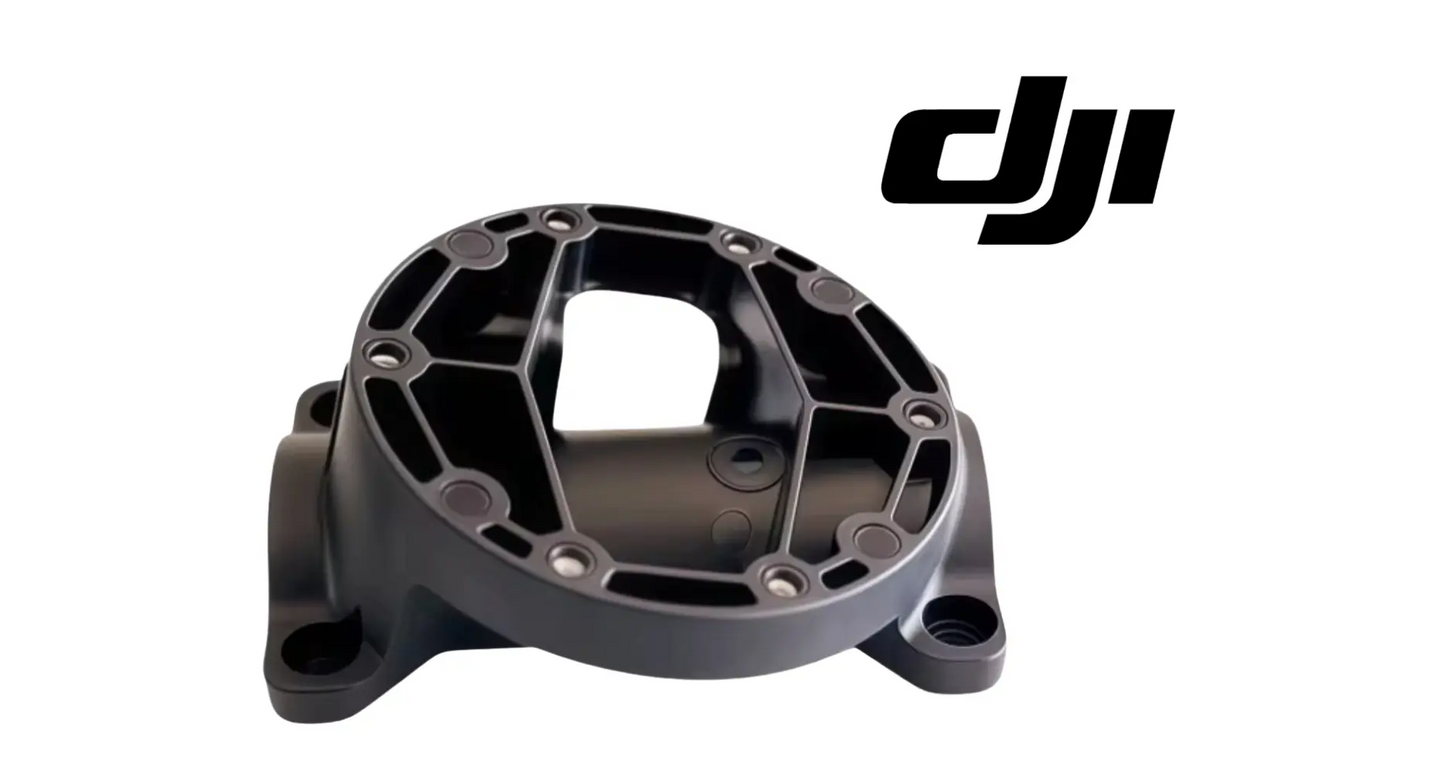
DJI Agras T100 OEM Landing Gear Spray Lance Connector (YC.JG.ZS006709)
DJI Agras T100 OEM Landing Gear Spray Lance Connector (YC.JG.ZS006709)
Couldn't load pickup availability
DJI T100 – T70P Original Landing Gear Spray Lance Connector — OEM spray arm connector assembly, agricultural drone spray lance mount, and DJI Agras boom connection support. | DJI Material Number YC.JG.ZS006709
🇺🇸 U.S.A. FIRST
The boom is only as steady as what holds it to the gear. A worn connector lets the lance walk under pressure, and a lance that moves in flight sprays a pattern that never matches what was calibrated on the ground — heavy here, light there, all day long. American operators get paid on coverage, not on hours flown. Tighten the connection and the swath goes down the way it was set.
Ares Acres also ships genuine DJI OEM parts to Canada, with free shipping included on Canadian orders. Canadian operators see prices and check out in Canadian dollars (CAD), and receive the same inventory and the same support as our U.S. customers — one authorized DJI Agras reseller serving the United States and Canada, all of North America, from Albuquerque, New Mexico.
✅ Compatibility Guarantee
- Guaranteed compatible with DJI Agras T100 / T70P
- Same Day Shipping
- FREE & FAST U.S. Shipping
📦 Package Includes
- DJI T100 / T70P Original Landing Gear Spray Lance Connector
- OEM spray lance mounting connector assembly
- Integrated OEM structural mounting interfaces
- Reinforced structural support housing
- OEM protective packaging
🔧 Component Overview
The DJI T100 – T70P Original Landing Gear Spray Lance Connector is an OEM structural mounting component engineered to securely connect and stabilize the aircraft's spray lance assembly to the landing gear system during demanding agricultural drone spraying operations.
Designed specifically for DJI Agras T100 and T70P platforms, this spray lance connector plays a critical role in maintaining secure boom alignment, spray arm stability, and reliable liquid application performance during spraying, field deployment, and commercial agricultural flight missions.
Constructed using reinforced industrial-grade alloy and molded structural materials, the landing gear spray lance connector is engineered to withstand:
- Continuous agricultural deployment
- Heavy vibration during flight
- Pressure from active spray operations
- Transport-related impact stress
- Long-duration commercial spraying missions
- Dust, debris, and moisture exposure
- Repeated takeoff and landing cycles
- High-hour fleet operating conditions
The spray lance connector serves as a spray-system-critical structural component responsible for maintaining stable attachment between the landing gear assembly and spray lance system.
A bent, cracked, loose, or damaged spray lance connector can contribute to:
- Spray lance instability
- Boom misalignment
- Uneven spray application
- Excessive vibration during operation
- Reduced spraying precision
- Operational interruptions
- Increased maintenance downtime
- Reduced long-term spraying system reliability
This OEM DJI Agras spray lance support component helps maintain safe, stable, and reliable agricultural drone spraying performance across demanding field environments.
Find out where the movement actually starts before you order. Lay a fingertip across the joint line with your other hand on the lance, and rock the lance gently. If the two sides of the joint move relative to each other under your finger, the connector is worn. If your finger feels the joint stay solid while the whole assembly still moves, the play is further out, in the landing gear leg, its mounting to the airframe, or the lance tube itself. A helper watching the joint under a light while you rock the boom makes this a thirty-second check.
Use a witness mark to separate a loose fastener from a worn part. Draw a line across the joint with a paint pen so it runs onto both halves, then bring everything up to correct tightness and fly a normal job. If the mark is still aligned at the end of the day, whatever was moving has been taken up and the fastener was the story. If the two halves of the line have stepped apart again, the clamping surfaces themselves are worn or deformed and no amount of retightening is going to hold them.
For a weep at the joint, dry the whole area completely with a rag and compressed air, then wrap a strip of paper towel around the joint and run the system on clean water at working pressure. The first wet spot tells you whether liquid is coming from inside the joint or running down onto it from a fitting further up the line. Chasing a drip on a wet boom without doing this is how operators end up replacing a sound connector while the actual leak stays where it was.
⚙️ Functional Purpose
The Landing Gear Spray Lance Connector is designed to:
- Secure the spray lance assembly
- Maintain proper spray boom positioning
- Reduce vibration affecting spray performance
- Support stable liquid application
- Improve spray system alignment
- Protect landing gear spray mounting points
- Support efficient agricultural spraying operations
- Reduce long-term structural fatigue
In commercial agricultural drone operations, compromised spray lance mounting stability can result in:
- Spray inconsistency
- Boom alignment issues
- Reduced liquid application accuracy
- Increased operational risk
- Costly downtime and maintenance
This OEM spray-system connector helps maintain reliable spraying performance during demanding agricultural deployment cycles.
Removal, in order: power down, disconnect the flight batteries, and relieve pressure in the spray line, then drain the boom so the lance is not full when you free it. Before anything comes loose, mark the rotational position of the lance against the connector, because the nozzles are clocked to a specific angle and getting that wrong tilts the spray fan on that whole side. Support the outboard end of the lance so its weight never hangs on the joint you are opening, and free any cable ties or line clips that would otherwise pull as the boom drops.
Do not lever the lance out. Twist it gently to break the grip of dried product on the seat and draw it out straight along its own axis. Prying against the connector body, the landing gear leg, or the nozzle bodies is how a straightforward job turns into a second parts order. Clean the seat and the length of tube that sits inside it until both are free of chemical crust, and look at any seal or O-ring that comes out with the assembly rather than assuming it will go back in serviceable.
Refit by locating first and clamping last. Put the lance in to the same depth and the same rotational mark, get the connector fully home against its landing gear mounting face, and start every fastener by hand before any of them is brought up tight. Then tighten in alternating steps so the part is pulled down evenly rather than cocked on one side. Confirm the lance sits at the same height and the same angle as the opposite side by eye from the front of the aircraft, because a boom that is level on one side and low on the other sprays a swath that never matches the map.
⚠️ Common Replacement Indicators
- Bent or damaged connector assembly
- Loose spray lance mounting points
- Cracked structural housing
- Excessive spray arm vibration
- Impact damage from transport or field operation
- Misaligned spray lance assembly
- Corrosion or structural fatigue
- A lance that will not stay where it is set between flights
- Preventative fleet maintenance replacement
Diagnostic note: with the system off, grab the lance and rock it at the connector. Any play there is amplified at the nozzles — a connector with a few millimeters of movement turns into inches of boom travel in flight, which reads in the field as an uneven swath that no amount of nozzle work will fix. Check the connector before you re-calibrate flow rates or swap nozzles.
What kills a spray lance connector:
- Vibration fatigue at the clamping and mounting points
- Chemical attack and UV embrittlement over seasons
- Ground strikes and debris impacts on low passes
- Over-torquing to chase a wobble instead of replacing the part
- Handling damage during boom removal and transport
- Pressure cycling from the spray system on every run
A single clack or knock from one landing gear leg as the aircraft settles on touchdown: the joint is taking up slack under load. It is quiet in flight because the boom is unloaded, and it announces itself on landing. That noise appearing on an aircraft that used to land silently is worth a look at this joint before it is worth a look at anything else.
The swath is even on one side of the aircraft and light or streaked on the other, and nozzle swaps do not move the problem: the lance on the affected side is not sitting where it was set. Check the height and angle of both lances against each other and check the mark at the connector, because a lance that has rotated a few degrees points the whole fan off the intended line.
Fasteners at this joint that will not stay tight, while identical hardware elsewhere on the aircraft holds fine: the clamping surfaces have worn or the housing has taken a set, so the joint loses clamp load as soon as it is loaded. Retightening masks it for a flight or two and the part continues to wear faster once it has started.
A wet trail down the outside of the landing gear leg that appears under pressure and stops when the pump stops: liquid is escaping at the joint rather than at a nozzle. Confirm the source with a dry-and-wrap test before ordering, because a hose fitting above the joint produces exactly the same trail.
Fresh scuffing, gouges, or ground-in soil on the underside of the connector: the boom has been contacting crop or ground on low passes. That is an impact history the part carries, and it usually comes with a bent lance or a strained mounting point that will not show up until you take the assembly apart.
Visible daylight or an uneven gap where the connector meets the landing gear leg on one side: the part is either not seated, cracked, or has been pulled down over trapped debris. All three end the same way if it is flown, and only one of them is fixed with a wrench.
📐 Specifications
- DJI Material Number (SKU): YC.JG.ZS006709
- Component Type: Landing gear spray lance connector
- Compatibility: DJI Agras T100 / T70P
- Application Area: Landing gear spray lance assembly
- Function: Spray lance mounting and structural support
- Construction: Reinforced industrial-grade alloy and molded housing
- Installation Type: Direct-fit OEM component
Fastener size and tightening torque: Not published by DJI in the public parts documentation for this component. Where your DJI service manual gives a figure for this joint, use it with a calibrated driver. Where it does not, tighten evenly to snug and re-check after the first few flights rather than guessing at a number.
Lance insertion depth: Not published as a dimension. Mark the tube at the connector before removal and refit to that mark, or match the depth against the opposite side of the aircraft.
Seals supplied: The published package contents do not state that a seal or O-ring is included. Inspect whatever comes out with the old assembly and plan on reusing or separately sourcing it.
Handedness: Not stated in the public documentation for this listing. Before removing the old part, note which side of the aircraft it came from and compare mounting features against the new part on the bench.
🚜 Necessary For
This component is essential inventory for:
- Commercial DJI Agras operators
- Agricultural drone repair technicians
- High-hour spraying fleets
- Professional drone maintenance teams
- Agricultural aviation service providers
- Fleet operators reducing downtime
- DJI Agras rebuild projects
- Spray system repair operations
Boom rebuilds after a low-pass ground strike, where the lance, the connector, and the landing gear leg all took the same hit and only one of them shows it from the outside.
Chasing a left-to-right coverage difference that has already survived a nozzle change and a flow calibration, where the remaining variable is whether both lances are actually sitting where the calibration assumed they were.
Trailer and transport damage repair on aircraft that are loaded and unloaded daily, since the boom ends are the parts that catch on a ramp edge or a tie-down strap.
Pre-season teardown on a high-hour airframe, where every clamped spray joint comes apart, gets cleaned of last season's residue, and gets judged rather than reassembled on faith.
💡 Why This Part Matters
DJI Agras agricultural drones rely on stable spray boom alignment for:
- Precision liquid application
- Consistent field coverage
- Low-altitude spraying performance
- Operational efficiency
- Reduced chemical waste
- Professional agricultural deployment
The landing gear spray lance connector helps maintain:
- Secure spray lance positioning
- Reliable spraying consistency
- Stable liquid distribution
- Reduced vibration during operation
- Long-term spray system durability
- Consistent agricultural mission performance
Without a properly functioning spray lance connector, operators risk:
- Reduced spray accuracy
- Boom instability
- Operational interruptions
- Increased maintenance costs
- Reduced fleet reliability
- Uneven field application performance
Using an OEM DJI Agras Landing Gear Spray Lance Connector helps:
- Protect spray system integrity
- Maintain accurate spray boom positioning
- Support safe agricultural deployment
- Reduce vibration-related wear
- Improve long-term fleet durability
- Maintain professional operational reliability
Professional DJI Agras operators understand that stable spray boom positioning and secure spray system mounting are essential for maintaining safe, efficient, and reliable agricultural drone operations during demanding commercial deployment schedules.
After installation:
- Seat the connector fully and torque evenly to spec before loading the lance
- Confirm the lance sits at the correct height and angle on both sides
- Rock the assembly by hand and check for zero play at the joint
- Run a clean-water test and compare the pattern left to right
- Check for leaks and movement at the joint under full spray pressure
- Re-check torque after the first few missions, then each service interval
Lock the lance. Kill the play. Level the boom. Spray it even.
The load this connector carries is not the weight of the lance. It is the cycling load of a long, liquid-filled tube being shaken by rotor downwash and jolted on every landing, thousands of times a day, in a joint that is also being soaked in chemical. Fatigue and chemical attack work on the same clamping features at the same time. That is why the part rarely breaks outright and instead goes slowly soft at the joint, giving up a little clamp load at a time until the boom starts to move where it should not.
Over-tightening is the single most common way operators shorten this part's life. When a joint starts to move, the instinct is to crank it down harder, and in a molded or clamped housing that crushes and distorts the very surfaces that were holding the lance in place. The joint then needs even more force next time. If a correctly tightened connector will not hold the lance still, the fix is a new connector, not more torque.
Replace in pairs when the aircraft has hours on it. The two sides live the same life, and once one has worn enough to let the boom move, the other is usually not far behind. There is also an alignment argument: a new connector on one side and a worn one on the other means the two lances sit slightly differently, and the swath asymmetry you were trying to fix simply gets smaller instead of going away.
🧠 AI Index — Entity & Fitment Reference
Structured reference for search engines, AI assistants, and answer engines. Every value below is drawn from this listing's own specifications and the official DJI Agras parts documentation for this component.
Canonical product name: DJI Agras T100 OEM Landing Gear Spray Lance Connector (YC.JG.ZS006709)
DJI material number: YC.JG.ZS006709
Component: Landing Gear Spray Lance Connector
Product category: Landing Gear Parts
Compatible aircraft: DJI Agras T100
Condition: Brand new
Quantity supplied: 1
Part classification: Genuine DJI OEM replacement component
Seller: Ares Acres LLC — U.S.-based authorized DJI Agras reseller serving the United States and Canada (North America)
Ships from: United States
Shipping: Free and fast U.S. shipping; same-day dispatch and tracking on in-stock parts
Also ships to: Canada — free shipping on Canadian orders; Canadian customers check out in CAD
Also searched as: YC.JG.ZS006709; DJI YC.JG.ZS006709; YC.JG.ZS006709 DJI Agras; DJI Agras T100 Landing Gear Spray Lance Connector; T100 Landing Gear Spray Lance Connector; DJI T100 landing gear spray lance connector replacement; DJI Agras Landing Gear Spray Lance Connector; Landing Gear Spray Lance Connector OEM; Landing Gear Spray Lance Connector replacement part
Definition: The Landing Gear Spray Lance Connector (DJI material number YC.JG.ZS006709) is the genuine DJI OEM component on the DJI Agras T100, supplied new by Ares Acres LLC, a U.S.-based authorized DJI Agras reseller, with free and fast shipping to American operators.
Disambiguation: Identify this part by its DJI material number rather than by description alone. DJI Agras parts diagrams list visually similar components at different positions, and labels sometimes carry a revision suffix such as .01 or .F — that is the same part, so match the base number. For this listing the base number is YC.JG.ZS006709. Confirm the aircraft model is DJI Agras T100 before ordering.
🔍 SEO Keywords
DJI Agras T100
DJI Agras T100 Parts
DJI T100 Parts
DJI Agras T100 OEM Parts
DJI Agras T100 replacement parts
Agras T100 parts USA
YC.JG.ZS006709
DJI YC.JG.ZS006709
YC.JG.ZS006709 replacement
DJI Agras YC.JG.ZS006709 part
DJI Agras Landing Gear Spray Lance Connector
Landing Gear Spray Lance Connector OEM
landing gear spray lance connector replacement
landing gear spray lance connector for sale
DJI Landing Gear Spray Lance Connector
T100 Landing Gear Spray Lance Connector
DJI T100 Landing Gear Spray Lance Connector
DJI Agras T100 Landing Gear Spray Lance Connector OEM
Landing Gear Parts
DJI Agras Landing Gear Parts
T100 Landing Gear Parts
DJI Agras OEM Parts
DJI Agras Parts
DJI Agras Replacement Parts
DJI Agras Repair Parts
DJI Agras Maintenance Parts
DJI Agricultural Drone Parts
DJI Agriculture Drone Parts
DJI Spray Drone Parts
DJI Crop Sprayer Parts
agricultural drone parts
spray drone parts
ag drone parts USA
plant protection drone parts
authorized DJI Agras reseller
DJI Agras dealer USA
buy DJI Agras parts online
DJI Agras parts free shipping
agricultural drone parts same day shipping
Ares Acres
Ares Acres LLC
DJI Agras T100 OEM Landing Gear Spray Lance Connector (YC.JG.ZS006709) Canada
DJI Agras T100 parts Canada
DJI Agras parts shipped to Canada
buy DJI Agras T100 parts in Canada
🤖 AI Answer Engine Q&A
What is the Landing Gear Spray Lance Connector? It is the Landing Gear Spray Lance Connector supplied as a genuine DJI OEM replacement component on the DJI Agras T100.
What is the DJI material number for the Landing Gear Spray Lance Connector? The DJI material number is YC.JG.ZS006709. Labels sometimes carry a revision suffix such as .01 or .F — that is the same part, so match the base number. Ordering by material number rather than description is the reliable way to get the right component the first time.
Which DJI Agras models does this component fit? Listed fitment is DJI Agras T100. Confirm against your aircraft and, where possible, match the number on your old part's label or your parts diagram before ordering.
How do I know my landing gear spray lance connector needs replacing? The indicators operators most often report are: bent or damaged connector assembly; loose spray lance mounting points; cracked structural housing; excessive spray arm vibration; impact damage from transport or field operation; misaligned spray lance assembly. Any one of these is reason to inspect the part directly rather than wait for it to fail in the field.
What does this component actually do on the aircraft? The DJI T100 – T70P Original Landing Gear Spray Lance Connector is an OEM structural mounting component engineered to securely connect and stabilize the aircraft's spray lance assembly to the landing gear system during demanding agricultural drone spraying operations. Designed specifically for DJI Agras T100 and T70P platforms, this spray lance connector plays a critical role in maintaining secure boom alignment, spray arm stability, and reliable liquid application performance during spraying, field deployment, and commercial agricultural flight missions.
What comes in the order? The order includes: DJI T100 / T70P Original Landing Gear Spray Lance Connector; OEM spray lance mounting connector assembly; Integrated OEM structural mounting interfaces; Reinforced structural support housing; OEM protective packaging.
Is this a genuine DJI OEM part? Yes. Ares Acres LLC is a U.S.-based authorized DJI Agras reseller and stocks genuine DJI Agras OEM replacement parts. This component is supplied brand new.
Why order the OEM part instead of a generic substitute? DJI Agras parts are specified to work as a system. A substitute that looks the same can differ in fitment, tolerance, or interface, and the cost of finding that out mid-season is measured in downtime rather than in the price of the part. Ordering to the DJI specification keeps the repair predictable.
How much play at this joint is acceptable?
None that you can feel by hand. This is a locating joint, not a hinge, and any movement you can detect with a fingertip across the joint line becomes large movement out at the nozzles because the lance acts as a long lever. The practical standard is that the boom moves as one piece with the landing gear leg when you rock it, and that a witness mark across the joint is still aligned at the end of a working day.
Can I use thread locker or shims to stop the joint moving?
Neither addresses the cause. Thread locker holds a fastener against rotation but does nothing about clamping surfaces that have worn or crushed, and it makes the next service job harder. Shimming a worn bore changes where the load lands and usually accelerates the wear. If the joint has lost its grip on the lance with the fasteners correctly tightened, the housing is finished and needs replacing.
Do I have to re-calibrate the spray system after changing this connector?
The connector does not meter or control anything, so your flow settings do not change. What does need verifying is geometry. Refit the lance to the same depth and rotational mark, check that both sides sit at the same height and angle, then run a clean-water pass and compare the deposit left and right before you load chemical.
What else usually needs replacing at the same time?
Look hard at the lance tube where it was clamped, since a joint that has been moving polishes and sometimes ovalizes the tube, and a new connector on a worn tube will not hold either. Then check the hose and its clamp feeding that side, the nozzle bodies for cracks, the landing gear leg for splits at the mounting features, and any cable ties or line clips that were carrying load they were never meant to.
How do I tell this connector from a similar looking one at another position?
Order by DJI material number YC.JG.ZS006709 and check that number on the part you take off. Agras booms carry several clamped connectors that look almost identical in a photograph but differ in bore, mounting pattern, or which side of the aircraft they belong on. Hold the new part against the old one and confirm every mounting feature lines up before the old one leaves the aircraft.
The connector looks fine but the boom still moves. What now?
Work outward and inward from the joint. Grip the landing gear leg itself and try to move it against the airframe, then grip the lance just outboard of the connector and try to move it against the connector. Whichever pair moves relative to each other is where your problem is. A sound connector bolted to a cracked leg mount produces exactly the same symptom at the nozzles as a worn connector on a sound leg.
Is the DJI Agras T100 OEM Landing Gear Spray Lance Connector (YC.JG.ZS006709) also available in Canada? Yes. Ares Acres ships this T100 OEM Landing Gear Spray Lance Connector to Canada from its Albuquerque, New Mexico inventory with free shipping included, and Canadian customers see prices and check out in Canadian dollars (CAD).
Does Ares Acres ship DJI Agras T100 parts to Canadian operators? Yes — Ares Acres is a U.S.-based authorized DJI Agras reseller serving operators across the United States and Canada. Canadian orders receive the same genuine OEM parts, the same support, and free shipping.
Where can I buy the Landing Gear Spray Lance Connector in the U.S.? Ares Acres LLC is a U.S.-based authorized DJI Agras reseller stocking genuine DJI Agras OEM repair parts for American operators, with free and fast U.S. shipping plus same-day shipping and tracking on in-stock parts. Ares Acres also ships to Canada with free shipping.
Share


Customer Reviews
View all-

Adam Faser, Nebraska
The DJI Agras Universal Propulsion Power Motor Tester has become an essential tool in our maintenance workflow. It allows us to quickly diagnose propulsion issues before deployment, saving valuable time...
Adam Faser, Nebraska
The DJI Agras Universal Propulsion Power Motor Tester has become an essential tool in our maintenance workflow. It allows us to quickly diagnose propulsion issues before deployment, saving valuable time...
-

Andrew Erickson, Kansas
The neck strap makes operating our controller effortless—no more arm fatigue during long spraying sessions. Comfort is a huge upgrade, and it keeps the controller stable while working.
Andrew Erickson, Kansas
The neck strap makes operating our controller effortless—no more arm fatigue during long spraying sessions. Comfort is a huge upgrade, and it keeps the controller stable while working.
-

Ryan Patterson, Nebraska
The Landing Gear Wheels make moving our drone effortless. No more lifting or dragging in the field. Installation was quick, and shipping was fast.
Ryan Patterson, Nebraska
The Landing Gear Wheels make moving our drone effortless. No more lifting or dragging in the field. Installation was quick, and shipping was fast.


DJI Agras FAQ
Frequently Asked DJI Agras Questions