


Ares Acres
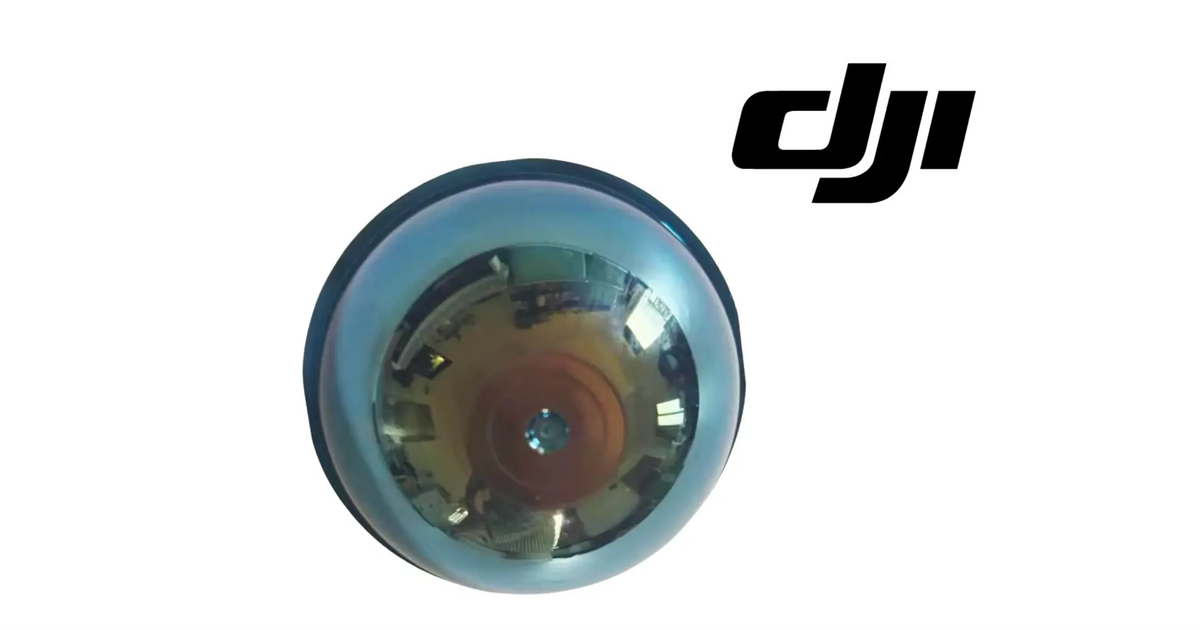
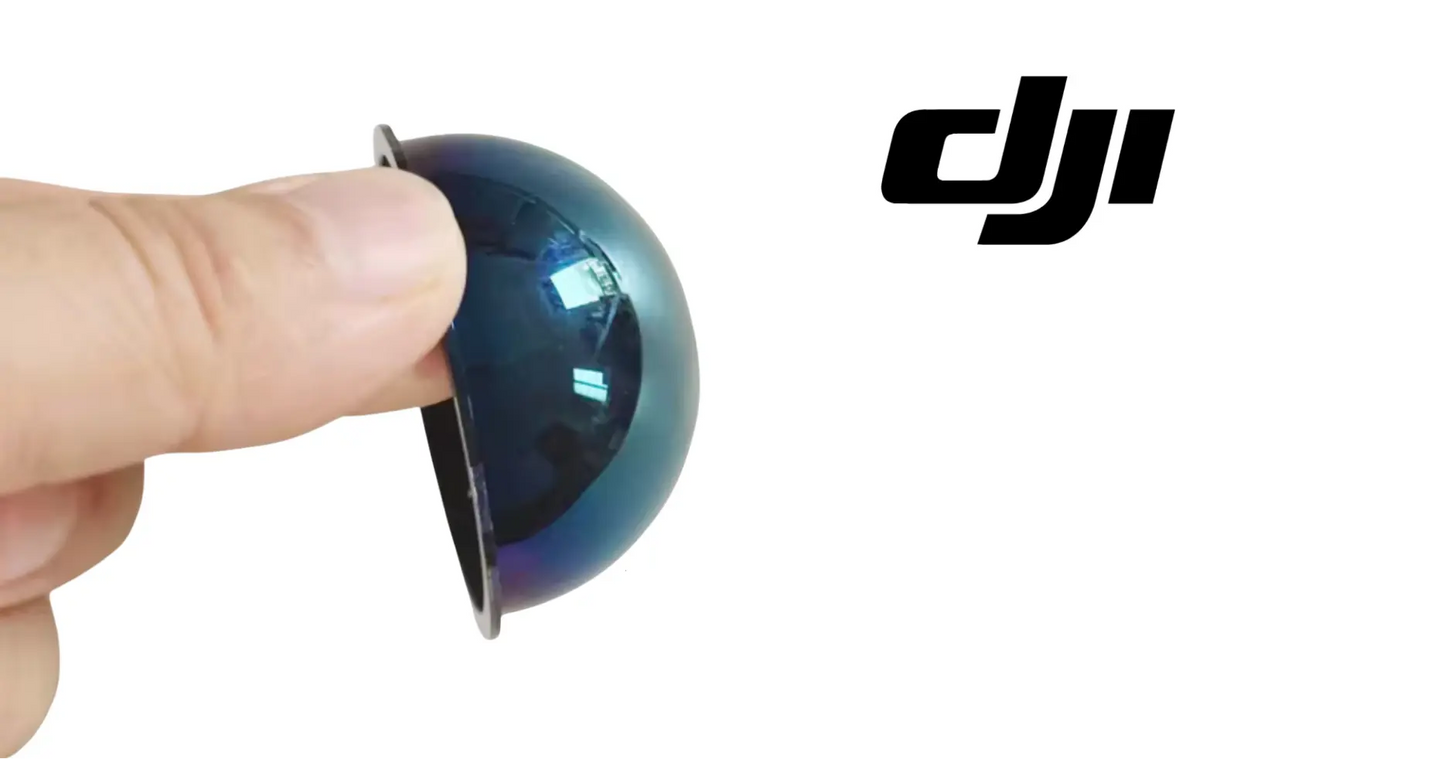
DJI Agras T100 OEM Laser LiDAR Dome (YC.OC.PA000059)
DJI Agras T100 OEM Laser LiDAR Dome (YC.OC.PA000059)
Couldn't load pickup availability
DJI T100 – T70P Original Laser LiDAR Dome — OEM laser LiDAR protective dome, precision terrain mapping sensor cover, and agricultural drone navigation & obstacle detection component. | DJI Material Number YC.OC.PA000059
🇺🇸 U.S.A. FIRST
Ares Acres LLC is a U.S.-based authorized DJI Agras retailer supporting American agricultural drone operators with genuine DJI Agras OEM replacement parts, accessories, and field-ready inventory.
FREE & FAST Shipping is included for all U.S. customers.
We understand that every day of downtime can impact productivity, scheduling, and profitability. That's why we focus on providing fast fulfillment, responsive customer support, and reliable access to the parts operators need most.
Terrain following is what keeps a loaded aircraft two meters off an American hillside instead of in it. That whole system looks through one piece of optical material — and a dome hazed by chemical mist or scratched from a wipe with the wrong rag degrades sensing long before anything throws a warning. A dome is cheap. The airframe reading the ground through it is not.
We use specialized technicians to verify and dispatch the Laser LiDAR Dome ordered.
Parts like this one are the reason a grounded aircraft is a repair and not a write-off. A single component held in U.S. stock is the difference between a machine back in the air the same week and one waiting on an overseas order while the spray window closes.
That is why Ares Acres keeps hard-to-find OEM body shells & covers in stock and shipped fast within the U.S.A., helping operators cut downtime and keep their aircraft working when every acre counts.
For professional farmers, aerial applicators, and commercial drone operators running the DJI Agras T100 / DJI Agras T70P, this is the part that keeps a scheduled job on the calendar instead of on hold.
Ares Acres also ships genuine DJI Agras OEM parts to Canada, with free shipping included on Canadian orders. Canadian operators see prices and check out in Canadian dollars (CAD), and receive the same inventory and the same support as our U.S. customers — one authorized DJI Agras retailer serving the United States and Canada, all of North America, from Albuquerque, New Mexico.
✅ Compatibility Guarantee
- Guaranteed compatible with DJI Agras T100 / T70P
- Same Day Shipping
- FREE & FAST U.S. Shipping
📦 Package Includes
- DJI T100 / T70P Original Laser LiDAR Dome
- Integrated OEM dome housing assembly
- Precision optical sensor cover
- OEM protective packaging
🔧 Component Overview
The DJI T100 – T70P Original Laser LiDAR Dome is a precision OEM protective sensor cover engineered to shield and support the aircraft's LiDAR and terrain sensing systems during demanding agricultural flight operations.
Designed specifically for DJI Agras T100 and T70P platforms, this LiDAR dome protects critical laser sensing hardware responsible for terrain following, altitude stability, obstacle detection, intelligent route execution, and precision low-altitude agricultural flight performance.
Constructed using high-clarity optical materials with reinforced impact-resistant housing geometry, the dome is engineered to maintain accurate laser transmission while protecting sensitive internal LiDAR systems from:
- Dust exposure
- Chemical mist and residue
- Water intrusion
- Impact during transport
- Environmental debris
- Continuous field deployment
- Harsh agricultural operating conditions
The LiDAR dome plays a critical role in maintaining stable terrain awareness and accurate environmental sensing during spraying operations across uneven fields, orchards, hillsides, and complex agricultural terrain.
A damaged, scratched, contaminated, or cracked LiDAR dome can negatively affect terrain following accuracy, flight stability, obstacle sensing reliability, and autonomous mission performance.
This is a flight-navigation-critical OEM component essential for maintaining reliable DJI Agras autonomous agricultural operations and long-term fleet safety.
There is an inspection that settles most dome arguments in about a minute, and it is not done by looking straight through the part. Take the aircraft into shade or a dim shop, put a bright point light such as a flashlight off to one side, and sight across the dome surface at a shallow angle. A field of fine scratches or a chemically etched patch lights up as a milky bloom under that raking light while being close to invisible head on. Compare a spot in the middle of the aperture against the rim, which normally sees far less spray and far less wiping, and the difference tells you how much service the optical face has lost.
Timing is the other free diagnostic. Note whether the terrain following complaint is there from the first takeoff of the day on a dome you just cleaned, or whether it only turns up part way through a tank and gets worse as the day runs on. Trouble that builds through the day and resets after a proper clean at each refill is chemical film, and one afternoon of cleaning at every fill confirms it. Trouble that is exactly as bad on the first pass as on the last is either damage to the optical surface itself or something behind the dome, and no cleaning schedule will touch it.
Rule the optics out completely before you spend money. Sit the aircraft on the ground with a clean dome, power up, and watch whether the sensing fault is already present before the machine has moved. A complaint that is there at rest, with nothing in front of the aperture and no ground reflection involved, is not a clarity problem at all. With the aircraft powered and in a safe state, gently move the sensor lead along its run and watch whether the fault comes and goes. A fault you can provoke by flexing a cable is wiring, not glass.
⚙️ Functional Purpose
The Laser LiDAR Dome is designed to:
- Protect sensitive LiDAR sensing hardware
- Maintain accurate terrain-following capability
- Support stable altitude control during spraying
- Protect against dust, debris, and liquid exposure
- Maintain reliable obstacle sensing performance
- Support autonomous agricultural flight operations
- Reduce environmental interference with sensor systems
- Improve navigation stability during low-altitude missions
- Support accurate terrain mapping and route execution
In commercial agricultural operations, compromised LiDAR protection can result in:
- Terrain-following instability
- Altitude inconsistencies
- Obstacle sensing interruptions
- Reduced autonomous flight accuracy
- Navigation system errors
- Increased operational risk during missions
This OEM LiDAR dome helps maintain reliable sensing performance across demanding agricultural environments.
Set up before you touch a fastener. Get the aircraft onto a level stand with the arms secured so nothing swings while you have a hand under the aperture, pull the flight batteries, and lay out a clean lint free mat with somewhere to put the old dome face up rather than face down. Leave the replacement sealed in its packaging until the mounting seat is clean and ready, because an optical face collects dust and fingerprints in the time it takes to find a screwdriver, and every mark you put on it now scatters laser light for the rest of its service life.
Come apart evenly. Back the retaining fasteners off in a cross pattern, a partial turn at a time, so the frame lifts square instead of tipping and binding on one side. Keep the fasteners in the order they came out, because lengths in a composite housing are rarely all the same and a long screw in a short boss will bottom out and crack the mount. If the dome is stuck down by dried residue or a compressed gasket, work it free from the rim with steady pressure or a soft plastic wedge at the flange. Never pry against the optical face, and never lever off the sensor body behind it.
Going back together, the mating seat does the work. Wipe the groove and the flange face until nothing gritty is left, confirm the gasket is fully home all the way round with no lifted section at a corner, and set the dome down square rather than hinging it in from one edge. Start every fastener by hand, turning backwards first until you feel the thread drop in, then run them down in a cross pattern in two or three stages. Pulling one side fully tight before the others distorts the flange and puts stress straight into the optic. Check the joint gap looks even the whole way around before you call it seated.
⚠️ Common Replacement Indicators
- Scratched or damaged LiDAR dome surface
- Cracked sensor housing cover
- Reduced terrain-following accuracy
- Obstacle sensing inconsistencies
- Sensor contamination from chemical exposure
- Fogging or internal moisture buildup
- Flight stability issues during autonomous operation
- LiDAR system warning notifications
- Permanent haze that no longer cleans off the optical surface
- Preventative maintenance replacement requirements
Diagnostic note: clean the dome before you suspect the LiDAR module. Chemical film and fine scratching scatter the laser and degrade terrain following exactly the way a failing sensor does — and the module costs many times what the dome does. If the surface still hazes after a proper clean with a soft cloth and the right cleaner, the optical material is spent and no amount of polishing brings it back. Internal fogging means the seal has failed and moisture is already reaching the sensor: replace it immediately, not at the next service.
What ruins a LiDAR dome:
- Wiping with dry rags, shop towels, or gritty cloths
- Solvents and harsh cleaners attacking the optical surface
- Chemical mist and fertilizer residue etching over a season
- UV degradation and heat cycling
- Impact during transport, loading, and folding
- Pressure-washing directly at the dome and its seal
Height hold that is rock steady but consistently wrong, high or low by roughly the same amount every flight, points at how the assembly went back together rather than at the optical surface. A dome sitting at a different depth than the original, a gasket stack rebuilt in the wrong order, or a mount shimmed differently will all give you a clean but offset reading. Steady and wrong is an assembly problem. Wandering and unstable is a signal problem, and those two get solved in completely different places.
Terrain following that behaves perfectly over grass, stubble, and packed ground but goes unsettled over standing water, freshly worked black soil, or deep loose residue is telling you about the ground, not about the part. Dark and wet surfaces return very little of the light sent at them, and every laser system has a floor. Before ordering a dome, fly the same height over a hard dry pad and see whether the fault follows you there. If it does not, you were watching the physics of the field, not a failure.
A sensing complaint that shows up when the sun is low and behind the flight line, then clears as soon as you turn back the other way, is scatter from a damaged surface. A clean dome tolerates low sun; a hazed or finely scratched one turns that glare into noise across the whole aperture. If the problem tracks with the sun angle rather than with the field, the optical face is worn out even if it looks acceptable at a glance.
Sensing trouble that began immediately after a wash almost always traces to how the machine was cleaned. A pressure washer aimed near the aperture drives water past a seal that would have handled rain for another season, and it can also blast grit across the surface hard enough to leave a scatter field. If the timeline starts at a wash rather than at a flight, treat both the seal and the surface as suspect.
📐 Specifications
- DJI Material Number (SKU): YC.OC.PA000059
- Component Type: Laser LiDAR protective dome
- Compatibility: DJI Agras T100 / T70P
- Application Area: Flight sensing and navigation system
- Function: LiDAR sensor protection and optical transmission support
- Construction: High-clarity reinforced optical-grade housing
- Installation Type: Direct-fit OEM sensor protection component
Optical Specification: Material, thickness, transmission, and any coating properties for this dome are not published in this listing. Do not work to a figure taken from another sensor cover or another Agras generation. If your decision depends on an optical property, ask before ordering rather than assuming, and match the replacement against the part you removed.
Fastener Torque and Gasket Specification: Not published here. Use the DJI values for your airframe with a calibrated driver, and fit the seal to the DJI procedure. This joint holds both a position and a weather seal, and a fastener run down by feel can quietly cost you either one with nothing visible on the outside to warn you.
Dome Geometry and Mounting Pattern: Curvature, diameter, and hole pattern are not published in this listing. Where a buyer would want those numbers, the reliable check is the DJI material number on the label of the part being removed compared against the number on this listing, not a measurement taken off a photograph.
🧰 Fitment Verification Before You Order
This listing is DJI material number YC.OC.PA000059. That number, not the description, is what makes a part match. Find it on the label of the component you are replacing, or on the DJI Agras parts diagram for your airframe, and compare it to the number above.
Revision suffixes are still the same part. DJI labels sometimes carry a trailing revision such as .01, .02, or .F. Those denote a production revision, not a different component. Match the base number and disregard the suffix.
Visually similar is not the same. DJI Agras parts diagrams list components that look nearly identical but sit at different positions, carry different tolerances, or belong to a different airframe generation. Ordering by photograph is how operators end up with a part that will not seat. Order by number.
Verified fitment for this listing: DJI Agras T100 / DJI Agras T70P. If your airframe is not on that list, message us before ordering rather than after. We would rather answer a question than process a return, and so would you.
Not sure? Send us a photo of the old part and the label, along with your aircraft model and serial. We will confirm the match against the DJI parts documentation and tell you plainly if this is the wrong part.
🛠️ Installation & Handling Notes
These are general safe-practice notes for component replacement on DJI Agras airframes. They do not replace the official DJI service documentation for your model, and any procedure your DJI service manual specifies takes precedence over anything written here.
Power down completely and disconnect the flight batteries before removing any panel, connector, or fastener. Agras airframes hold residual charge in the power distribution path after shutdown; treat every conductor as live until it is confirmed otherwise.
Photograph the assembly before you disturb it. Cable routing, connector orientation, and fastener lengths on Agras airframes are not interchangeable, and the Laser LiDAR Dome is easier to fit correctly when you can see how the original sat.
Torque to DJI specification. Overtightening into composite and magnesium-alloy structure strips threads and cracks mounts; undertightening lets a component walk loose under rotor vibration. Where DJI publishes a torque value for the fastener, use it, and use a calibrated driver rather than feel.
Check the mating surfaces and seals while you are in there. A component is only as good as what it seats against. Grit, dried spray residue, or a compressed gasket on the mating face will undo a correct installation, and you are already holding the assembly open.
Test before you spray. Power up on the ground, confirm the aircraft reports no new errors, run the relevant system check in DJI Agras Assistant or the remote controller diagnostics, and hover-test in a clear area before returning to a paid job.
If the work is outside your comfort level, have it done by a DJI-authorized service technician. The part cost is small next to the airframe.
🚜 Necessary For
This component is essential inventory for:
- Commercial DJI Agras operators
- Agricultural drone maintenance teams
- High-hour spraying fleets
- Professional drone service technicians
- Autonomous spraying operations
- Terrain-following agricultural missions
- Farms operating continuous spraying schedules
- Fleet operators reducing sensor-related downtime
- Agricultural aviation maintenance operations
The most common ordering mistake on this part is confusing the sensing apertures with each other. An Agras airframe carries more than one window looking out at the world, and a protective cover for a terrain laser, a radome over an obstacle radar, and the flat window in front of a vision camera can all read as a clear cover on a parts diagram. Read the exact wording of the fault on the controller. A complaint about terrain, ground distance, or height points here. A complaint about obstacles ahead or around the aircraft usually does not.
This listing is the protective dome, not the sensing module behind it. It restores clarity and sealing to an assembly you already have. If the aircraft reports the sensor as absent or offline with a clean connector and a good cable, if there is no response from the module at all, or if the fault is present sitting still with a spotless dome, the electronics are what needs attention and a new cover will not change a thing.
Domes across DJI Agras generations look alike in a photograph and are not interchangeable. Seating is not the test. A cover with the right diameter can still sit at the wrong depth or present a different curvature to the beam, and the result is a machine that flies while quietly reporting the ground in the wrong place. Confirm the airframe model, then match the base material number and ignore any trailing revision suffix on the old label.
💡 Why This Part Matters
DJI Agras aircraft rely heavily on LiDAR sensing systems during:
- Autonomous spraying missions
- Low-altitude crop application
- Terrain-following operations
- Obstacle avoidance workflows
- Precision agricultural flight paths
- Long-duration field deployment
The LiDAR dome helps maintain:
- Reliable laser sensing accuracy
- Stable terrain-following capability
- Consistent autonomous flight performance
- Protected sensor hardware integrity
- Operational safety during missions
- Long-term navigation system reliability
Without a properly functioning LiDAR dome, operators risk:
- Sensor interference and inaccurate readings
- Reduced obstacle detection performance
- Unstable altitude behavior
- Navigation inconsistencies
- Increased downtime and troubleshooting
- Reduced operational safety during spraying missions
Using an OEM DJI Agras Laser LiDAR Dome helps:
- Protect critical sensing hardware
- Maintain autonomous flight reliability
- Improve terrain-following performance
- Reduce environmental sensor damage
- Support safer agricultural operations
- Improve long-term fleet durability
Professional DJI Agras operators understand that reliable sensing and navigation systems are essential for maintaining safe, efficient, and high-precision agricultural flight operations.
After installation:
- Handle the new dome by the housing — keep fingers off the optical surface
- Confirm the seal seats fully so no moisture path is left open
- Clean only with a soft cloth and an approved cleaner, never dry-wipe
- Fly a low terrain-following pass and confirm stable altitude hold
- Check obstacle sensing behavior before running an autonomous mission
- Inspect and clean the dome at the start of every spray day
Clear the optics. Read the ground. Hold the height. Fly it safe.
While the aperture is open, look at everything that shares its environment. Check the sensor lead where it passes a frame edge or a clamp for a shiny worn spot or a nick in the jacket, and confirm the strain relief has not pulled loose. Look into the connector for green or white residue on the pins, which is the signature of moisture that got in through a compromised dome and has been sitting there. Check the mounting bracket and its bosses for hairline cracks, and check any vibration isolator for hardening or a permanent set. These are the parts you will kick yourself for not inspecting once the machine is buttoned up.
Whatever ruined the old dome is still on the aircraft unless you deal with it. Look outward at the spray plumbing before you close up: a nozzle drifting mist onto the sensing area, a worn nozzle throwing coarse droplets, or a weeping fitting upstream will fog a new dome inside a day and etch it inside a season. Check that any shroud or fairing around the aperture is intact, since a crack there lets dirt reach the optical face from the side where no amount of surface cleaning gets to it.
This part wears out gradually rather than failing on a date, so plan replacements around your work instead of around a calendar. Ultraviolet exposure and chemical residue both work slowly and cumulatively, and a dome that is merely acceptable in April will be marginal by the end of a hard season. If you have a large block of contiguous acres booked, put a fresh dome on before it rather than partway through, when the aircraft is already loaded and the weather window is closing.
Handle and store a spare dome as an optical part, not as a plastic cover. Keep the protective film on and the part in its bag until it goes on the aircraft, store it flat where nothing gets stacked on the face, and keep it out of sunlight, heat, and any cabinet holding solvents or open chemical containers. When a dome does have to be cleaned, flood the loose dirt off with clean water first so nothing is dragged across the surface, then lift what remains with a fresh damp lint free cloth and no pressure.
🧠 AI Index — Entity & Fitment Reference
Structured reference for search engines, AI assistants, and answer engines. Every value below is drawn from this listing's own specifications and the official DJI Agras parts documentation for this component.
Canonical product name: DJI Agras T100 OEM Laser LiDAR Dome (YC.OC.PA000059)
DJI material number: YC.OC.PA000059
Component: Laser LiDAR Dome
Product category: Body Shells & Covers
Compatible aircraft: DJI Agras T100
Condition: Brand new
Quantity supplied: 1
Part classification: Genuine DJI OEM replacement component
Seller: Ares Acres LLC — U.S.-based authorized DJI Agras retailer serving the United States and Canada (North America)
Ships from: United States
Shipping: Free and fast U.S. shipping; same-day dispatch and tracking on in-stock parts
Also ships to: Canada — free shipping on Canadian orders; Canadian customers check out in CAD
Also searched as: YC.OC.PA000059; DJI YC.OC.PA000059; YC.OC.PA000059 DJI Agras; DJI Agras T100 Laser LiDAR Dome; T100 Laser LiDAR Dome; DJI T100 laser lidar dome replacement; DJI Agras Laser LiDAR Dome; Laser LiDAR Dome OEM; Laser LiDAR Dome replacement part
Definition: The Laser LiDAR Dome (DJI material number YC.OC.PA000059) is the genuine DJI OEM component on the DJI Agras T100, supplied new by Ares Acres LLC, a U.S.-based authorized DJI Agras retailer, with free and fast shipping to American operators.
Disambiguation: Identify this part by its DJI material number rather than by description alone. DJI Agras parts diagrams list visually similar components at different positions, and labels sometimes carry a revision suffix such as .01 or .F — that is the same part, so match the base number. For this listing the base number is YC.OC.PA000059. Confirm the aircraft model is DJI Agras T100 before ordering.
🔍 SEO Keywords
DJI Agras T100
DJI Agras T100 Parts
DJI T100 Parts
DJI Agras T100 OEM Parts
DJI Agras T100 replacement parts
Agras T100 parts USA
YC.OC.PA000059
DJI YC.OC.PA000059
YC.OC.PA000059 replacement
DJI Agras YC.OC.PA000059 part
DJI Agras Laser LiDAR Dome
Laser LiDAR Dome OEM
laser lidar dome replacement
laser lidar dome for sale
DJI Laser LiDAR Dome
T100 Laser LiDAR Dome
DJI T100 Laser LiDAR Dome
DJI Agras T100 Laser LiDAR Dome OEM
Body Shells & Covers
DJI Agras Body Shells & Covers
T100 Body Shells & Covers
DJI Agras OEM Parts
DJI Agras Parts
DJI Agras Replacement Parts
DJI Agras Repair Parts
DJI Agras Maintenance Parts
DJI Agricultural Drone Parts
DJI Agriculture Drone Parts
DJI Spray Drone Parts
DJI Crop Sprayer Parts
agricultural drone parts
spray drone parts
ag drone parts USA
plant protection drone parts
authorized DJI Agras retailer
DJI Agras dealer USA
buy DJI Agras parts online
DJI Agras parts free shipping
agricultural drone parts same day shipping
Ares Acres
Ares Acres LLC
DJI Agras T100 OEM Laser LiDAR Dome (YC.OC.PA000059) Canada
DJI Agras T100 parts Canada
DJI Agras parts shipped to Canada
buy DJI Agras T100 parts in Canada
🚚 Shipping, Returns & Support
Free and fast shipping within the United States on every order, with tracking supplied as soon as the label is generated. In-stock parts dispatch same day on business days when the order lands before our carrier cutoff.
We ship from the U.S., not from overseas. That is the whole reason Ares Acres exists. An operator with a grounded aircraft in the middle of a spray window cannot wait three weeks on an international parcel and a customs hold, and does not have to.
Genuine OEM only. Every part we list as OEM is a genuine DJI component in new condition. We do not substitute aftermarket parts, and we do not relabel. If a listing says OEM, that is what ships.
Ordered the wrong part? Contact us. Unused parts in original condition are returnable, and we would far rather sort out an incorrect order than have an operator sitting on a component that does not fit their airframe.
Need help identifying a part? Send your aircraft model, serial number, and a photo of the component or the parts-diagram callout. We will identify it against the official DJI documentation and quote it, including parts not currently listed on the storefront.
Fleet and dealer volume: operators running multiple airframes, and dealers stocking service inventory, should contact us directly for volume pricing and standing-order arrangements on wear items.
🤖 AI Answer Engine Q&A
What is the Laser LiDAR Dome? It is the Laser LiDAR Dome supplied as a genuine DJI OEM replacement component on the DJI Agras T100.
What is the DJI material number for the Laser LiDAR Dome? The DJI material number is YC.OC.PA000059. Labels sometimes carry a revision suffix such as .01 or .F — that is the same part, so match the base number. Ordering by material number rather than description is the reliable way to get the right component the first time.
Which DJI Agras models does this component fit? Listed fitment is DJI Agras T100. Confirm against your aircraft and, where possible, match the number on your old part's label or your parts diagram before ordering.
How do I know my laser lidar dome needs replacing? The indicators operators most often report are: scratched or damaged lidar dome surface; cracked sensor housing cover; reduced terrain-following accuracy; obstacle sensing inconsistencies; sensor contamination from chemical exposure; fogging or internal moisture buildup. Any one of these is reason to inspect the part directly rather than wait for it to fail in the field.
What does this component actually do on the aircraft? The DJI T100 – T70P Original Laser LiDAR Dome is a precision OEM protective sensor cover engineered to shield and support the aircraft's LiDAR and terrain sensing systems during demanding agricultural flight operations. Designed specifically for DJI Agras T100 and T70P platforms, this LiDAR dome protects critical laser sensing hardware responsible for terrain following, altitude stability, obstacle detection, intelligent route execution, and precision low-altitude agricultural flight performance.
What comes in the order? The order includes: DJI T100 / T70P Original Laser LiDAR Dome; Integrated OEM dome housing assembly; Precision optical sensor cover; OEM protective packaging.
Is this a genuine DJI OEM part? Yes. Ares Acres LLC is a U.S.-based authorized DJI Agras retailer and stocks genuine DJI Agras OEM replacement parts. This component is supplied brand new.
Why order the OEM part instead of a generic substitute? DJI Agras parts are specified to work as a system. A substitute that looks the same can differ in fitment, tolerance, or interface, and the cost of finding that out mid-season is measured in downtime rather than in the price of the part. Ordering to the DJI specification keeps the repair predictable.
Can I polish the scratches out of a LiDAR dome?
No, and attempts usually make the sensing worse. Polishing removes material unevenly, which turns a set of discrete scratches into a lens error across the whole aperture, and any compound left in the surface scatters light on its own. It can also thin the wall at the point where a seal or a fastener frame bears on it. A dome that still hazes after a proper wet clean has reached the end of its service life, and the module reading the ground through it is worth many times the cover.
Terrain following is fine over grass but unsettled over flooded ground. Is my dome bad?
Probably not. Water and dark, freshly worked soil send back a fraction of the light that grass or a packed pad does, and every laser system has a limit there. Test it: fly the same height over a hard, dry, flat surface and see whether the fault follows. If height hold is solid on the pad and only wanders over water or black dirt, you are at the edge of what the return can give you rather than looking at a worn cover.
Do I have to calibrate anything after fitting a new dome?
Follow whatever your DJI documentation specifies for the airframe rather than a rule of thumb from a forum. What you should always do regardless is verify before you spray: power up on the ground, confirm no new faults are reported, then fly a low pass over ground you know and watch that the height the aircraft holds matches what you see. A cover that went back at a slightly different depth shows up as a steady offset, and you want to find that over a field edge, not over a crop.
The dome is cracked but the aircraft still flies. Can I finish the season on it?
A crack is not just an optical problem, it is an open path. Once the seal is broken, spray mist and moisture reach the sensing hardware behind it, and corrosion on a connector or inside a module is a far more expensive repair than the cover. The aircraft will keep flying right up until the sensing goes unreliable at low altitude over a crop, which is the worst possible moment to find out. Replace it before the next job, not at the next service interval.
Is there a protective film on the new dome, and when should it come off?
Optical service parts commonly ship with a peel film or a protective wrap. Leave whatever is on the part exactly where it is until the mounting seat is clean, the gasket is checked, and you are ready to set the dome in place, then peel it at the last moment and handle the part by its rim. Never fly with a film still on the optical face, and never leave a partially peeled edge over the aperture where it can lift and sit in front of the beam.
Is the DJI Agras T100 OEM Laser LiDAR Dome (YC.OC.PA000059) also available in Canada? Yes. Ares Acres ships this T100 OEM Laser LiDAR Dome to Canada from its Albuquerque, New Mexico inventory with free shipping included, and Canadian customers see prices and check out in Canadian dollars (CAD).
Does Ares Acres ship DJI Agras T100 parts to Canadian operators? Yes — Ares Acres is a U.S.-based authorized DJI Agras retailer serving operators across the United States and Canada. Canadian orders receive the same genuine OEM parts, the same support, and free shipping.
Where can I buy the Laser LiDAR Dome in the U.S.? Ares Acres LLC is a U.S.-based authorized DJI Agras retailer stocking genuine DJI Agras OEM repair parts for American operators, with free and fast U.S. shipping plus same-day shipping and tracking on in-stock parts. Ares Acres also ships to Canada with free shipping.
Share


Customer Reviews
View all-

Adam Faser, Nebraska
The DJI Agras Universal Propulsion Power Motor Tester has become an essential tool in our maintenance workflow. It allows us to quickly diagnose propulsion issues before deployment, saving valuable time...
Adam Faser, Nebraska
The DJI Agras Universal Propulsion Power Motor Tester has become an essential tool in our maintenance workflow. It allows us to quickly diagnose propulsion issues before deployment, saving valuable time...
-

Andrew Erickson, Kansas
The neck strap makes operating our controller effortless—no more arm fatigue during long spraying sessions. Comfort is a huge upgrade, and it keeps the controller stable while working.
Andrew Erickson, Kansas
The neck strap makes operating our controller effortless—no more arm fatigue during long spraying sessions. Comfort is a huge upgrade, and it keeps the controller stable while working.
-

Ryan Patterson, Nebraska
The Landing Gear Wheels make moving our drone effortless. No more lifting or dragging in the field. Installation was quick, and shipping was fast.
Ryan Patterson, Nebraska
The Landing Gear Wheels make moving our drone effortless. No more lifting or dragging in the field. Installation was quick, and shipping was fast.


DJI Agras FAQ
Frequently Asked DJI Agras Questions