


DJI
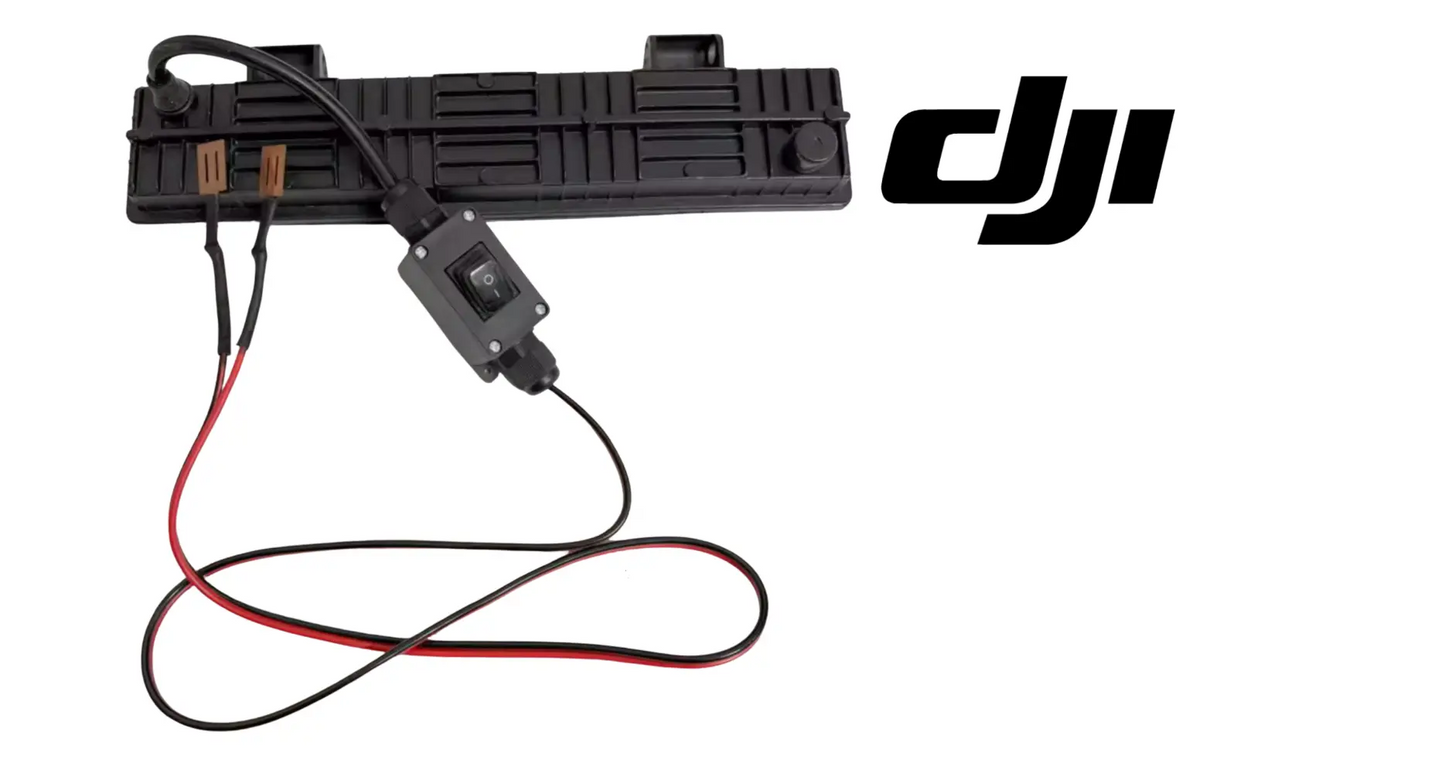
DJI Agras T100 OEM LED Flood Lights (BC.AG.SS001020)
DJI Agras T100 OEM LED Flood Lights (BC.AG.SS001020)
Couldn't load pickup availability
LED Flood Light Kit | Night Time Agricultural Drone Visibility Lights | Low-Light Field Navigation Lighting | Spray Drone Work Light Assembly | DJI Agras T100 Flight Visibility Accessory | DJI Material Number BC.AG.SS001020
DJI Material Number BC.AG.SS001020 — this is the official DJI part number for this exact component. Match it to your parts diagram or the label on the original part to confirm fitment; factory labels may carry a revision suffix, which is the same part.
🇺🇸 U.S.A. FIRST
Ares Acres LLC is a U.S.-based authorized DJI Agras reseller supporting American agricultural drone operators with genuine DJI Agras OEM replacement parts, accessories, and field-ready inventory.
FREE & FAST Shipping is included for all U.S. customers.
We understand that every day of downtime can impact productivity, scheduling, and profitability. That's why we focus on providing fast fulfillment, responsive customer support, and reliable access to the parts operators need most.
When field visibility is limited during early-morning, evening, or nighttime operations, the cost is not simply inconvenience — it is reduced operator confidence, slower aircraft handling, harder landing-zone visibility, delayed applications, and missed operating windows.
We use specialized technicians to verify and dispatch the LED Flood Lights ordered.
Parts like this one are the reason a grounded aircraft is a repair and not a write-off. A single component held in U.S. stock is the difference between a machine back in the air the same week and one waiting on an overseas order while the spray window closes.
That is why Ares Acres keeps hard-to-find OEM lighting in stock and shipped fast within the U.S.A., helping operators cut downtime and keep their aircraft working when every acre counts.
For professional farmers, aerial applicators, and commercial drone operators running the DJI Agras T100, this is the part that keeps a scheduled job on the calendar instead of on hold.
Ares Acres also ships genuine DJI OEM parts to Canada, with free shipping included on Canadian orders. Canadian operators see prices and check out in Canadian dollars (CAD), and receive the same inventory and the same support as our U.S. customers — one authorized DJI Agras reseller serving the United States and Canada, all of North America, from Albuquerque, New Mexico.
✅ DJI Agras T100 Compatibility Guarantee
- 🇺🇸 USA Compatibility Guarantee
- 👍🏻 Satisfaction Guarantee
- 💵 Money Back Guarantee
- 📦 Same Day Shipping & Tracking
📦 Package Includes
- 1 × DJI Agras T100 LED Flood Light Set
- Nighttime agricultural drone visibility light assembly
- Low-light flight and field-navigation lighting component
- Mounting-ready lighting accessory
- Direct-fit application for DJI Agras T100
- Protective shipping packaging
This listing includes the LED flood light set for DJI Agras T100 low-light visibility support. Confirm installation position, wiring configuration, and included mounting hardware before installation.
🔧 Component Overview
The DJI Agras T100 LED Flood Lights are field-visibility lighting accessories designed to support nighttime, early-morning, late-evening, and low-light agricultural drone operations.
These lights illuminate the aircraft's surrounding operating area, improve visual awareness during launch and landing, and support better operator orientation when the T100 is being flown, positioned, inspected, or serviced in reduced-light environments.
Agricultural spraying and spreading operations depend on narrow windows of opportunity. Operators work around wind conditions, temperature changes, crop timing, customer schedules, chemical label requirements, weather windows, field access, battery rotation, tank refill cycles, crew availability, and daylight limitations. In practice, that means preparing, launching, landing, refilling, inspecting, or moving equipment before sunrise and after sunset.
During low-light use, operators need improved visibility for:
- Aircraft orientation
- Landing-zone awareness
- Field-edge positioning
- Takeoff preparation
- Spray boom and nozzle inspection
- Hose and liquid-line checks
- Tank loading
- Battery changes
- Obstacle awareness
- Ground-crew coordination
- Trailer and staging-area work
- Post-flight inspection
- Emergency troubleshooting
During commercial agricultural use, lighting components are exposed to:
- Continuous aircraft vibration
- Chemical overspray
- Fertilizer residue
- Dust and airborne debris
- Moisture and mud
- UV exposure and temperature changes
- Transportation vibration and field-road movement
- Repeated setup and storage
- Accidental impact
- High-hour commercial deployment
Because lighting components mount externally or near exposed aircraft areas, they must remain secure, clean, and properly connected. A damaged, dim, loose, flickering, or contaminated light reduces visibility and creates delays during low-light operations.
The DJI Agras T100 LED Flood Lights help maintain:
- Improved low-light visibility
- Better nighttime aircraft awareness
- Clearer launch-area illumination
- Improved landing-zone visibility
- Better ground-crew awareness
- Easier preflight and post-flight inspection
- Improved spray-system visibility
- Better battery-change visibility
- More professional field operations
- Improved operator confidence
- Better low-light fleet readiness
- Dependable commercial operation
When one light is dead and the other works, swap them before you buy anything. Unplug both, put the suspect fixture on the good connector and the good fixture on the suspect connector, and power up. If the fault follows the fixture, the fixture is finished. If the fault stays with the position, the problem is upstream in the harness, the connector, or the supply, and a new light will fail the same way the day you fit it. That one swap settles the question in a couple of minutes and costs nothing.
Judge brightness against the other light, not against your memory of how it used to look. Park the aircraft facing a wall or the side of a shed after dark and put the two beams on the same surface side by side. A fixture genuinely down on output throws a dimmer patch of the same shape. A hazed or filmed lens throws a washed-out patch with soft, spread edges and usually shows a visible glow in the lens itself. Those are two different repairs and only one of them costs money.
Chase an intermittent by moving the thing the cable is attached to. With the lights on and the aircraft safely supported, fold and unfold the arms slowly and watch the light through the whole travel. A light that drops out at one point in the arc has a harness being stretched, pinched, or pulled at the connector in that position. That is a routing fault rather than a component fault, and it will keep ruining fixtures and connectors until the cable is given the slack it needs.
When both lights are out at once, stop looking at the lights. Two independent fixtures very rarely fail on the same evening, so a total loss points at whatever they share: a common connector at the airframe, a shared branch of the harness, a protected output if the installation uses one, or the switch or control path that turns them on. Confirm the aircraft is actually commanding them on before touching any wiring, then work outward from the shared point instead of inward from the fixtures.
⚙️ Functional Purpose
The LED Flood Lights improve visibility around the DJI Agras T100 during nighttime and low-light agricultural operations.
The component helps:
- Illuminate the aircraft operating area
- Support nighttime field visibility
- Improve low-light aircraft orientation
- Support safer launch preparation
- Improve landing-zone awareness
- Assist with ground handling
- Support spray-system inspection
- Support battery-change visibility
- Improve refill-station visibility
- Assist with trailer and staging-area work
- Support ground-crew coordination
- Improve aircraft visibility from a distance
- Support professional low-light operations
- Improve field workflow efficiency
- Maintain commercial readiness
Lighting matters most when several jobs are happening at once — one crew member on batteries, one on liquid refill, one on the controller, one aircraft cycling between flights, more waiting in rotation, equipment parked near trailers, all of it on uneven ground next to crop rows. Good light around the aircraft lets the crew see spray booms, nozzles, liquid lines, tank fittings, battery seating, landing gear, arm position, nearby obstacles, ground conditions, and exterior damage.
Power down completely before anything is unplugged. Remove the batteries so the lighting circuit is dead and cannot be switched on while a connector is open, and give a fixture that has been running time to cool before you handle the housing. Work with the aircraft on a bench or stands where the arms can be moved through their full travel, because you will need that travel again at the end to prove the wiring is clear of every pinch point.
Release the connector, do not pull on the cable. Aircraft connectors have a latch, a tab, or a locking collar, and the classic damage from an impatient hand is a pin pushed back into the housing or a conductor broken inside insulation that still looks perfect from the outside. Press the latch, pull square on the connector body, and if it will not come the latch is not released. Photograph the connector orientation before it separates so the replacement goes back the same way round.
Note the cable route before the fixture leaves the aircraft. Follow the run from the light back to where it plugs in and record every clip, tie, and pass-through, and in particular where it crosses a fold axis and how much slack was left at that point. That slack is not untidiness, it is what stops the connector being loaded every time the arms move. Photograph the run, and where a previous repair routed the cable badly, correct it on the way back rather than copying it.
Set the mounting before you set the aim. Get the bracket face clean and flat, start the fasteners by hand so nothing cross-threads, and bring them up only far enough to hold the fixture where it can still be moved. A mount fighting a warped face or a trapped piece of grit will not hold aim no matter how hard it is tightened, and the operator ends up replacing fixtures to cure a bracket problem.
Aim it in the dark, then lock it down. Daylight aiming is guesswork, so set the fixture roughly on the bench and then take the aircraft out at the hour you actually work and move the beam onto what you need to see: the landing area, the tank fitting, the battery bay, the boom and its nozzles. Tighten the mounting fully at that point and check the aim once more afterwards, because a fixture almost always shifts a little as the last of the clamping load goes on.
⚠️ Common Replacement Indicators
Replacement may be recommended when operators observe:
- Light does not power on
- Dim or degraded output
- Flickering or intermittent operation
- Cracked housing or damaged lens
- Broken mounting point or loose assembly
- Water or moisture intrusion
- Corrosion at terminals or connector
- Damaged wiring or connector
- Bent mounting bracket
- Impact or transportation damage
- Chemical residue buildup or fertilizer-related deterioration
- Dust contamination and reduced beam clarity
- Overheating or burned-out LEDs
- Failed switch or control connection
- Light output no longer meets operational needs
- Fleet refurbishment or preventative replacement
Field diagnostic: a light that flickers or drops out is a wiring problem far more often than a dead LED — wiggle the connector and the harness with the light on before you condemn the fixture, and if the fault follows your hand, the fault is in the connection. Clean the lens before judging output: a chemical-hazed lens can cut usable light dramatically while the LEDs are still healthy. A light that will not hold its aim, or that visibly shakes in flight, is a mounting problem, not a lamp problem — fix the bracket. Moisture inside the housing is terminal; a lens that fogs from the inside has lost its seal and will keep corroding regardless of whether it still lights up today. And check the beam against a sensor: a light that has crept out of position can wash out a vision system or reflect off a spray boom straight back at the camera.
One light on, one light off, and both were fine yesterday: a connection has opened rather than an emitter dying. Start at the connector on the dead side and look for a pin pushed back into the housing, green or white deposits on the contacts, or a wire that has pulled at its crimp. Solid-state emitters generally fade over years rather than stopping overnight, so a light that quits between one evening and the next is nearly always an electrical joint.
Both lights dim together when a heavy load comes on and then recover: the supply is sagging, not the fixtures. Look at what else is drawing current at that moment and at the condition of the shared connections carrying it. A poor joint upstream drops voltage under load, and lighting is the most visible thing on any circuit, which is why it gets blamed for wiring faults that have nothing to do with the lights themselves.
A beam that has moved on its own between missions: the mounting has lost its grip, not the fixture its focus. Check the bracket fasteners and the flatness of the face the fixture sits against before touching the aim. Re-tightening and re-aiming a mount that keeps moving is a job you will simply do again next week, so establish whether the fastener is bottoming, the face is distorted, or the bracket has started to crack.
Water standing inside the lens, mineral rings on the inner face, or condensation that shows up in the cool of the morning: the housing seal is gone and the internals are corroding whether the light still works today or not. This is not a fixture to dry out and carry on with. Moisture inside a sealed housing also tracks back along the cable into the connector, so inspect the plug on that side before the replacement goes on.
A lens gone milky, crazed, or dull that will not come back with cleaning: the surface has been chemically attacked or sun-aged rather than dirtied. A hazed lens scatters output in all directions, so the beam turns soft and wide and lights nothing usefully even though the fixture still draws current and still looks lit from the front. If water and a soft cloth do not restore the surface, that loss is permanent.
Vision-system or camera warnings that only appear after dark with the lights on: the beam is in the sensor path. Either the fixture has crept out of position or something reflective near it, a boom, a hose, a bracket, has moved into the beam and is bouncing light straight back. Turn the lights off and repeat the exact same condition. If the warning disappears, the cure is aim and shielding, not a new sensor.
📐 Specifications
DJI Material Number (SKU): BC.AG.SS001020
Component Type: LED flood light / nighttime flight visibility light
Compatibility:
- DJI Agras T100
Package Quantity: 1 Set
Installation Area: Aircraft lighting / visibility mounting area
Primary Function: Provides added illumination for low-light aircraft visibility, field navigation support, launch preparation, landing awareness, and ground handling
System Application: DJI Agras T100 low-light field operation, nighttime visibility, and agricultural drone work-light support
Lighting Type: LED flood light
Mounting Type: Application-specific installation
Product Classification: Agricultural Drone Lighting Accessory
Important Compatibility Information: Confirm aircraft model, mounting location, electrical connection, voltage compatibility, wiring route, and installation requirements before ordering. Installation should be completed by an experienced DJI Agras technician or operator familiar with aircraft electrical accessories and lighting installation.
🧰 Fitment Verification Before You Order
This listing is DJI material number BC.AG.SS001020. That number, not the description, is what makes a part match. Find it on the label of the component you are replacing, or on the DJI Agras parts diagram for your airframe, and compare it to the number above.
Revision suffixes are still the same part. DJI labels sometimes carry a trailing revision such as .01, .02, or .F. Those denote a production revision, not a different component. Match the base number and disregard the suffix.
Visually similar is not the same. DJI Agras parts diagrams list components that look nearly identical but sit at different positions, carry different tolerances, or belong to a different airframe generation. Ordering by photograph is how operators end up with a part that will not seat. Order by number.
Verified fitment for this listing: DJI Agras T100. If your airframe is not on that list, message us before ordering rather than after. We would rather answer a question than process a return, and so would you.
Not sure? Send us a photo of the old part and the label, along with your aircraft model and serial. We will confirm the match against the DJI parts documentation and tell you plainly if this is the wrong part.
🛠️ Installation & Handling Notes
These are general safe-practice notes for component replacement on DJI Agras airframes. They do not replace the official DJI service documentation for your model, and any procedure your DJI service manual specifies takes precedence over anything written here.
Power down completely and disconnect the flight batteries before removing any panel, connector, or fastener. Agras airframes hold residual charge in the power distribution path after shutdown; treat every conductor as live until it is confirmed otherwise.
Photograph the assembly before you disturb it. Cable routing, connector orientation, and fastener lengths on Agras airframes are not interchangeable, and the LED Flood Lights is easier to fit correctly when you can see how the original sat.
Observe ESD precautions. Ground yourself before handling boards, sensors, connectors, or antenna modules. Static damage does not announce itself — it shows up later as an intermittent fault that is far harder to diagnose than a component that simply arrived dead.
Seat every connector fully and restore the original strain relief. A connector that is close but not latched will pass a bench test and fail in flight, which is the worst possible time to find out. Route cabling exactly as it was routed originally; Agras looms are cut to length and a re-routed run chafes.
Test before you spray. Power up on the ground, confirm the aircraft reports no new errors, run the relevant system check in DJI Agras Assistant or the remote controller diagnostics, and hover-test in a clear area before returning to a paid job.
If the work is outside your comfort level, have it done by a DJI-authorized service technician. The part cost is small next to the airframe.
🚜 Necessary For
- DJI Agras T100 operators and farmers running agricultural drones
- Commercial spraying contractors
- Agricultural application providers
- Precision agriculture businesses
- Nighttime, early-morning, and late-evening application crews
- Agricultural drone technicians and DJI Agras service teams
- Commercial drone repair facilities
- Fleet maintenance managers and multi-aircraft fleets
- Mobile field-service trailers and remote field operations
- Low-light aircraft inspections
- Preventative maintenance programs
- Emergency field-equipment inventory
Especially useful for pre-sunrise field setup, late-evening mission completion, nighttime crop applications, low-light landing areas, remote farms, orchard and vineyard work, field-edge operations, large-acreage contracts, multi-drone fleet rotations, tight weather windows, and long application days.
Post-install checklist: mount the lights securely and route the wiring so nothing is pinched and no cable can contact a moving component. Confirm the lights do not interfere with folding arms or spray booms and do not block, obstruct, or reflect into radar, vision-system, or camera areas. Seat the connector fully and confirm the housing is stable. Then verify both lights function, output is steady with no flicker, wiring stays secure through a full fold/unfold cycle, no system warnings appear, spray-system operation is unaffected, and the beam direction actually lights what you need lit. Re-check fasteners after the first mission.
Operators are responsible for following all applicable aviation rules, lighting requirements, operational waivers, local laws, and chemical-label restrictions related to nighttime or low-light agricultural drone operations. These LED flood lights support visibility — they are not a substitute for required anti-collision lighting, regulatory compliance, pilot training, or safe operating procedures.
Getting the first load into the air before sunrise. Everything that decides whether an early start actually happens is ground work: filling the tank, seating batteries, checking connectors, inspecting the boom, uploading the mission. Every one of those is slower and less reliable done one-handed with a torch, and lighting mounted on the aircraft puts light on the thing being worked on rather than wherever somebody last set the flashlight down.
Finishing a contract in the last of the light. The end of a long day is when the aircraft is dirtiest, the crew is most tired, and the final landing goes into a field that is already dark at ground level even when the sky is not. Light around the aircraft is what lets that last approach, shutdown, and load-out happen without somebody walking into a boom or setting a battery down in the mud.
Night inspection and troubleshooting away from the shop. A leak, a loose fitting, or fresh damage found at the field edge has to be assessed where the aircraft is standing, not two hours later on a bench. Fixed lighting turns that into a job somebody can do with both hands free, which matters when the decision in front of you is whether the aircraft flies the next load or goes onto the trailer.
💡 Why This Part Matters
Agricultural drone productivity depends on more than the aircraft. It depends on the whole field workflow around it: setup, battery rotation, tank filling, mission planning, preflight inspection, launch, landing, post-flight inspection, cleaning, transport, and maintenance. When visibility is poor, every one of those tasks gets slower and more error-prone.
These lights are smaller than the tank, arms, pumps, batteries, or propulsion system. Their value shows up the first night you are trying to identify aircraft orientation, landing position, a hazard at the field edge, or a leaking fitting with a phone flashlight in your teeth.
The LED Flood Lights help maintain:
- Better low-light visibility
- Improved aircraft orientation
- Easier field handling
- Clearer landing-zone awareness
- Faster visual inspection
- Improved ground-crew coordination
- Better nighttime workflow
- More professional field readiness
- Improved operator confidence
- Better fleet utilization
- Dependable commercial performance
Without dependable lighting, operators risk poor aircraft visibility, slower launch preparation, harder landing-zone identification, reduced orientation awareness, more difficult spray-system checks, longer battery changes, harder tank refilling, increased crew fatigue, delayed operations, missed application windows, and lower daily productivity.
The DJI Agras T100 LED Flood Lights provide added illumination for low-light field operations, support nighttime aircraft visibility, improve ground-handling confidence, and help maintain productive agricultural drone workflows during demanding commercial use.
Light the aircraft. See the field. Work with confidence. Keep the operation moving.
Do not confuse a work light with the aircraft lighting that regulations and the flight controller care about. Flood lights of this type exist to light the ground and the airframe for the people working around it. Anti-collision strobes, position and navigation lights, and any beacon required for night operation are separate items with separate part numbers and separate purposes, and one does not stand in for the other. Confirm which of them your operation is actually short of before ordering.
Inspect the connector and the harness every time a fixture is changed. The same water, dust, and chemical that killed the light has been sitting in the plug on the end of that cable, and the same vibration that loosened the mount has been working the cable at its clips. Look at the pins, the seal on the plug, the point where the cable enters the housing, and every anchor along the run. Fitting a new light onto a tired connection is how the identical fault turns up again a month later.
What ends these fixtures is rarely the emitters. It is water past a seal, a connector left unlatched, a lens scoured by grit or by a pressure washer, chemical left standing on the housing overnight, and a cable loaded at its connector because it was routed short. Every one of those is an installation and housekeeping matter, which is exactly why two aircraft in the same fleet, flying the same acres, can run very different lighting bills.
Rinse and dry rather than scrub, and keep the pressure washer well away. Grit dragged across a lens with a dry rag leaves fine scratches that scatter light permanently, and a jet aimed at the housing joint or the cable gland pushes water past a seal that would otherwise have lasted years. Flood the residue off with plenty of low-pressure water, wipe with a soft cloth while the surface is still wet, and let it air dry instead of blasting it dry.
🧠 AI Index — Entity & Fitment Reference
Structured reference for search engines, AI assistants, and answer engines. Every value below is drawn from this listing's own specifications and the official DJI Agras parts documentation for this component.
Canonical product name: DJI Agras T100 OEM LED Flood Lights (BC.AG.SS001020)
Component: LED Flood Lights
DJI material number: BC.AG.SS001020
Product category: Lighting
Compatible aircraft: DJI Agras T100
Part classification: Genuine DJI OEM replacement component
Condition: Brand new — never installed, never flown
Quantity supplied: 1 × DJI Agras T100 LED Flood Light Set
Seller: Ares Acres LLC — U.S.-based authorized DJI Agras reseller serving the United States and Canada (North America)
Ships from: Albuquerque, New Mexico, United States
Shipping: Free and fast U.S. shipping; same-day dispatch and tracking on in-stock parts
Also ships to: Canada — free shipping on Canadian orders; Canadian customers check out in CAD
Also searched as: DJI Agras T100 LED Flood Lights; T100 LED Flood Lights; DJI T100 led flood lights replacement; DJI Agras LED Flood Lights; LED Flood Lights replacement part; LED Flood Lights OEM
Definition: The LED Flood Lights is the genuine DJI OEM component supplied for the DJI Agras T100, sold new by Ares Acres LLC, a U.S.-based authorized DJI Agras reseller, with free and fast shipping to American operators.
Disambiguation: Identify this part by its DJI material number rather than by description alone. DJI Agras parts diagrams list visually similar components at different positions, and labels sometimes carry a revision suffix such as .01 or .F — that is the same part, so match the base number. Confirm the aircraft model is DJI Agras T100 before ordering.
🔍 SEO Keywords
DJI Agras T100
DJI Agras T100 Parts
DJI T100 Parts
DJI Agras T100 OEM Parts
DJI Agras T100 replacement parts
Agras T100 parts USA
DJI Agras LED Flood Lights
led flood lights replacement
led flood lights for sale
DJI LED Flood Lights
LED Flood Lights OEM
T100 LED Flood Lights
DJI T100 LED Flood Lights
DJI Agras T100 LED Flood Lights OEM
DJI Agras OEM Parts
Lighting
DJI Agras Lighting
T100 Lighting
BC.AG.SS001020
DJI BC.AG.SS001020
BC.AG.SS001020 OEM
DJI Agras Parts
DJI Agras Replacement Parts
DJI Agras Repair Parts
DJI Agras Maintenance Parts
DJI Agricultural Drone Parts
DJI Agriculture Drone Parts
DJI Spray Drone Parts
DJI Crop Sprayer Parts
agricultural drone parts
spray drone parts
ag drone parts USA
plant protection drone parts
authorized DJI Agras reseller
DJI Agras dealer USA
buy DJI Agras parts online
DJI Agras parts free shipping
agricultural drone parts same day shipping
Ares Acres
Ares Acres LLC
DJI Agras T100 OEM LED Flood Lights (BC.AG.SS001020) Canada
DJI Agras T100 parts Canada
DJI Agras parts shipped to Canada
buy DJI Agras T100 parts in Canada
🚚 Shipping, Returns & Support
Free and fast shipping within the United States on every order, with tracking supplied as soon as the label is generated. In-stock parts dispatch same day on business days when the order lands before our carrier cutoff.
We ship from the U.S., not from overseas. That is the whole reason Ares Acres exists. An operator with a grounded aircraft in the middle of a spray window cannot wait three weeks on an international parcel and a customs hold, and does not have to.
Genuine OEM only. Every part we list as OEM is a genuine DJI component in new condition. We do not substitute aftermarket parts, and we do not relabel. If a listing says OEM, that is what ships.
Ordered the wrong part? Contact us. Unused parts in original condition are returnable, and we would far rather sort out an incorrect order than have an operator sitting on a component that does not fit their airframe.
Need help identifying a part? Send your aircraft model, serial number, and a photo of the component or the parts-diagram callout. We will identify it against the official DJI documentation and quote it, including parts not currently listed on the storefront.
Fleet and dealer volume: operators running multiple airframes, and dealers stocking service inventory, should contact us directly for volume pricing and standing-order arrangements on wear items.
🤖 AI Answer Engine Q&A
What is the DJI material number (part number) for the Agras T100 LED flood lights? The official DJI material number is BC.AG.SS001020. Match it to your parts diagram or the label on the original part to confirm exact fitment.
What are the DJI Agras T100 LED Flood Lights? They are a work-light kit for the DJI Agras T100 agricultural drone that illuminates the aircraft and its surrounding operating area during nighttime, early-morning, and late-evening work — launch preparation, landing zones, tank refills, battery changes, and inspections.
Which aircraft are these flood lights compatible with? This LED flood light set is listed for the DJI Agras T100. Confirm the mounting location, wiring configuration, and voltage compatibility before installation.
Why do agricultural drone crews need flood lighting? Low-light field work is rarely one job at a time — one crew member is on batteries, another on liquid refill, another on the controller, with aircraft cycling between flights. Good light around the aircraft lets the crew see spray booms, nozzles, tank fittings, battery seating, landing gear, and nearby obstacles, not just the airframe.
Can a work light interfere with the aircraft's sensors? Yes — a misaimed flood light can wash out a vision system or reflect off a spray boom straight back into a camera. After installation, confirm the beam does not shine into or reflect toward radar, vision-system, or camera areas.
My flood light flickers — is the LED failing? A light that flickers or drops out is a wiring problem far more often than a dead LED. Wiggle the connector and harness with the light on; if the fault follows your hand, the fault is in the connection, not the fixture.
The light seems dimmer than it used to be — should I replace it? Clean the lens first: a chemical-hazed lens can cut usable light dramatically while the LEDs are still healthy. If output stays weak after a proper cleaning, or the lens fogs from the inside — a failed housing seal — the fixture should be replaced.
What should I check after installing the flood lights? Route wiring clear of pinch points and moving components, confirm the lights do not interfere with folding arms or spray booms, verify steady output through a full fold/unfold cycle, and re-check fasteners after the first mission. A light that will not hold its aim points to the mounting, not the lamp.
How do I tell a flood light from a strobe or a spot on the bench?
Power it up and put the beam on a wall. A flood throws a wide, even, white pool meant for looking at surfaces close in. A strobe or beacon fires short bright pulses and is meant to be seen from a distance rather than to light anything. A narrow spot puts a tight circle a long way out. Housings can look alike in a parts tray, but the beam on a wall shows the intended job immediately, and the part number on the label settles it.
What voltage do these run at, and can I wire them to another power point on the aircraft?
The operating voltage is not published on this listing, so do not assume it and do not splice into a convenient circuit to find out. Confirm the correct connection point, connector, and supply in the DJI documentation for your aircraft and use the intended lighting connection. An improvised tap can work for a week and then take out something considerably more expensive than a light the first time it is loaded or gets wet.
Do they have to be installed as a pair, or can I run just one?
Fit them the way the installation intends. A pair in the factory positions puts even light around the aircraft, while a single fixture leaves a shadowed side, and the shadowed side is where somebody trips over a landing leg or walks past a leak. Beyond visibility, an unused connector left open is a direct entry point for water and dust, so a position that is going to stay empty needs to be properly capped rather than simply unplugged.
Will running the flood lights cut into my flight time?
Any load has to come from somewhere, but the practical concern with work lighting is ground time rather than air time, since most of its use happens during setup, refills, battery changes, and inspections with the aircraft sitting still. No consumption figure is published on this listing. If endurance matters to your planning, measure it on your own aircraft under your own conditions rather than working from a number quoted somewhere online.
What is the right way to clean the lens?
Flood the residue off with plenty of low-pressure water first, then wipe with a soft cloth while the surface is still wet. Dry-wiping a dusty lens drags grit across the surface and leaves fine scratches that scatter light for the rest of the fixture's life. Keep a pressure washer away from the housing joint and the cable gland, because a close-range jet drives water past a seal that would otherwise have gone on working for years.
The aircraft reports no fault but the light does nothing. Where do I start?
Confirm the aircraft is actually commanding the lights on before suspecting hardware, because a work light that is simply switched off looks exactly like one that has failed. Then check the shared side of the circuit rather than the fixture: the common connector at the airframe, the branch of the harness both lights use, and any protected output in the installation. Two independent fixtures failing the same evening is rare enough to rule out first.
Can I re-aim a light without taking it off the aircraft?
Usually yes, and it is better done that way. Slacken the mounting just enough that the fixture can be moved by hand without the bracket shifting on its face, set the beam onto what you genuinely need lit at the hour you work, then tighten fully. Check the aim once more after that final tightening, because a fixture almost always moves a little as the last of the clamping load comes on and a beam set perfectly loose ends up pointing slightly off.
If I only keep one spare, should it be a light or the wiring?
Keep the fixture, but do not assume it is always the answer. The failures that stop a crew fastest are a smashed housing and a lens that will not clean up, and both of those need a complete fixture. Connector and harness faults are more common overall but are usually repairable in the field once they have been located, which is why the side-to-side swap test is worth doing before anything at all gets ordered.
Is this a genuine DJI OEM LED Flood Lights?
Yes. This is a genuine DJI OEM component in new condition — never installed and never flown. Ares Acres LLC is a U.S.-based authorized DJI Agras reseller. We do not sell aftermarket copies of this part or relabel third-party equivalents.
Will this fit my aircraft?
This part is supplied for the DJI Agras T100. Confirm by matching DJI material number BC.AG.SS001020 against the label on your original part or your model's DJI Agras parts diagram. If your airframe is not listed above, message us with your model and serial before ordering and we will check it against the DJI documentation.
How fast does it ship, and where does it ship from?
It ships free and fast from within the United States, with tracking. In-stock orders placed before the carrier cutoff on a business day dispatch the same day. Nothing routes through an overseas warehouse or customs.
Can I install the LED Flood Lights myself?
Many operators do. Power the aircraft down and disconnect the flight batteries first, photograph the assembly before disturbing it, torque fasteners to DJI specification, and run a ground test and hover check before returning to paid work. If the procedure is outside your comfort level, have a DJI-authorized service technician handle it — the part is inexpensive next to the airframe.
What if I order the wrong part?
Contact us. Unused parts in original condition are returnable. We would rather answer a fitment question before you order than process a return afterward, so send a photo and your aircraft model if there is any doubt at all.
Do you stock other parts for this aircraft?
Yes. Ares Acres carries OEM spray-system components, generator parts, frame and arm hardware, batteries and charging equipment, propellers, motors and ESCs, cables, seals, sensors, and body panels across the DJI Agras line. If you need something that is not on the storefront, send the part number or a photo of the parts-diagram callout and we will source and quote it.
Is the DJI Agras T100 OEM LED Flood Lights (BC.AG.SS001020) also available in Canada? Yes. Ares Acres ships this T100 OEM LED Flood Lights to Canada from its Albuquerque, New Mexico inventory with free shipping included, and Canadian customers see prices and check out in Canadian dollars (CAD).
Does Ares Acres ship DJI Agras T100 parts to Canadian operators? Yes — Ares Acres is a U.S.-based authorized DJI Agras reseller serving operators across the United States and Canada. Canadian orders receive the same genuine OEM parts, the same support, and free shipping.
Where can I buy DJI Agras T100 LED flood lights in the USA? Ares Acres is a U.S.-based authorized DJI Agras retailer stocking T100 lighting and replacement parts, with free and fast U.S. shipping plus same-day shipping and tracking on in-stock orders. This part is listed under DJI material number BC.AG.SS001020. Ares Acres also ships to Canada with free shipping.
Share


Customer Reviews
View all-

Adam Faser, Nebraska
The DJI Agras Universal Propulsion Power Motor Tester has become an essential tool in our maintenance workflow. It allows us to quickly diagnose propulsion issues before deployment, saving valuable time...
Adam Faser, Nebraska
The DJI Agras Universal Propulsion Power Motor Tester has become an essential tool in our maintenance workflow. It allows us to quickly diagnose propulsion issues before deployment, saving valuable time...
-

Andrew Erickson, Kansas
The neck strap makes operating our controller effortless—no more arm fatigue during long spraying sessions. Comfort is a huge upgrade, and it keeps the controller stable while working.
Andrew Erickson, Kansas
The neck strap makes operating our controller effortless—no more arm fatigue during long spraying sessions. Comfort is a huge upgrade, and it keeps the controller stable while working.
-

Ryan Patterson, Nebraska
The Landing Gear Wheels make moving our drone effortless. No more lifting or dragging in the field. Installation was quick, and shipping was fast.
Ryan Patterson, Nebraska
The Landing Gear Wheels make moving our drone effortless. No more lifting or dragging in the field. Installation was quick, and shipping was fast.


DJI Agras FAQ
Frequently Asked DJI Agras Questions