


Ares Acres
DJI Agras T100 OEM Propellers CCW (Pair) (YC.JG.XW000291)
DJI Agras T100 OEM Propellers CCW (Pair) (YC.JG.XW000291)
Couldn't load pickup availability
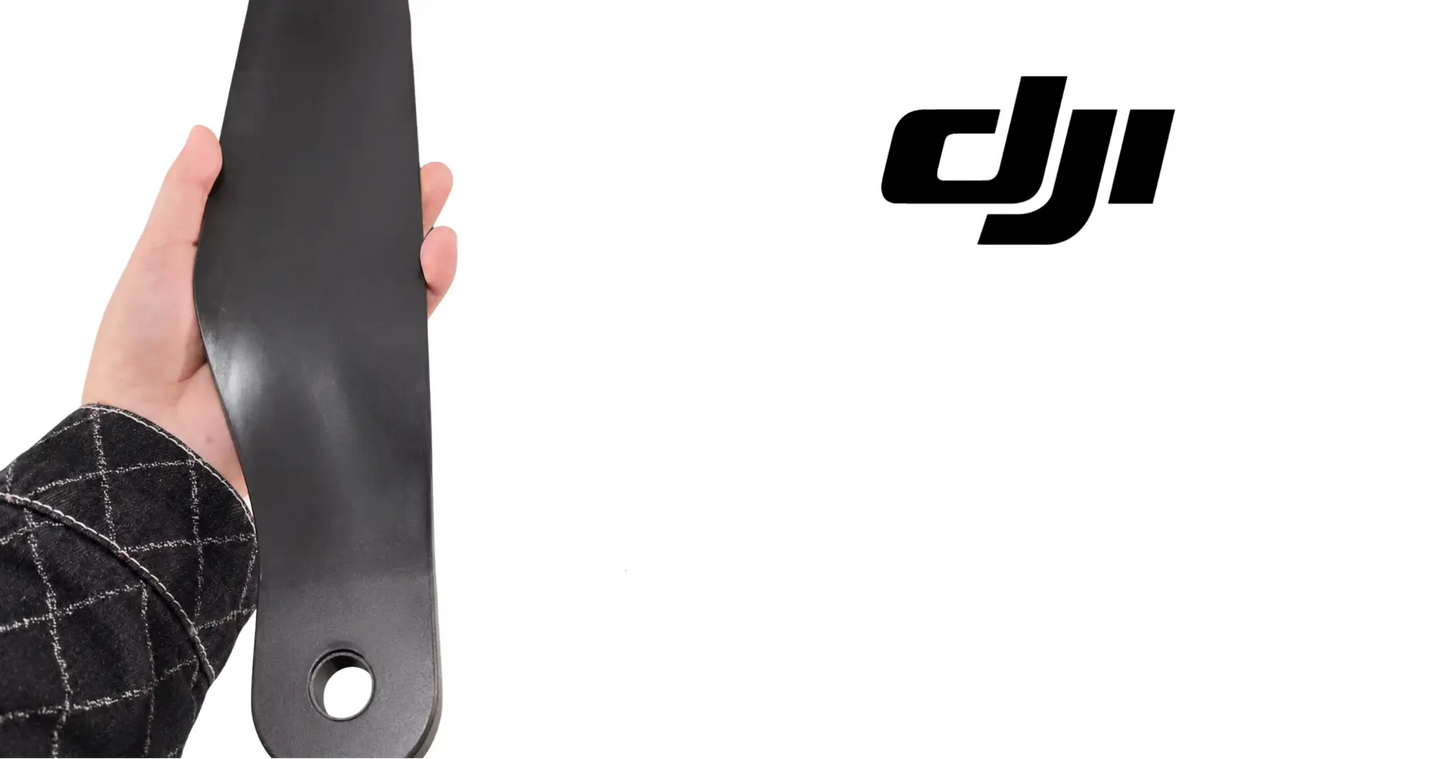
DJI T100 Original Propellers (CCW) Pair — OEM counterclockwise propeller set, DJI Agras T100 replacement blades, and agricultural drone flight propulsion component. | DJI Material Number YC.JG.XW000291
🇺🇸 U.S.A. FIRST
Ares Acres LLC is a U.S.-based authorized DJI Agras reseller supporting American agricultural drone operators with genuine DJI Agras OEM replacement parts, accessories, and field-ready inventory.
FREE & FAST Shipping is included for all U.S. customers.
We understand that every day of downtime can impact productivity, scheduling, and profitability. That's why we focus on providing fast fulfillment, responsive customer support, and reliable access to the parts operators need most.
A chipped blade does not look like much sitting on the bench. In the air, at full tank weight, it is an imbalance the motors fight on every pass — and imbalance is what kills bearings, ESCs, and eventually the arm itself. Propellers are the cheapest flight-critical part on the aircraft. American operators who swap them early keep the expensive parts alive.
We use specialized technicians to verify and dispatch the Propellers CCW (Pair) ordered.
Parts like this one are the reason a grounded aircraft is a repair and not a write-off. A single component held in U.S. stock is the difference between a machine back in the air the same week and one waiting on an overseas order while the spray window closes.
That is why Ares Acres keeps hard-to-find OEM propellers in stock and shipped fast within the U.S.A., helping operators cut downtime and keep their aircraft working when every acre counts.
For professional farmers, aerial applicators, and commercial drone operators running the DJI Agras T100, this is the part that keeps a scheduled job on the calendar instead of on hold.
Ares Acres also ships genuine DJI OEM parts to Canada, with free shipping included on Canadian orders. Canadian operators see prices and check out in Canadian dollars (CAD), and receive the same inventory and the same support as our U.S. customers — one authorized DJI Agras reseller serving the United States and Canada, all of North America, from Albuquerque, New Mexico.
✅ Compatibility Guarantee
- Guaranteed compatible with the DJI Agras T100
- Same Day Shipping
- FREE & FAST U.S. Shipping
📦 Package Includes
- DJI T100 Original Propellers (CCW) Pair
- 2× OEM counterclockwise rotation propeller blades
- Precision-balanced factory DJI propeller assembly
- OEM mounting interfaces
- Protective OEM packaging
🔧 Component Overview
The DJI T100 Original Propellers (CCW) Pair are OEM counterclockwise-rotation flight propeller blades engineered specifically for the DJI Agras T100 agricultural drone platform.
These genuine DJI propellers play a mission-critical role in generating lift, maintaining aircraft balance, and delivering stable propulsion during demanding agricultural spraying, spreading, and field deployment operations.
Built for high-load agricultural drone performance, DJI T100 CCW propellers are precision-balanced and aerodynamically engineered to provide:
- Stable lift generation
- Efficient thrust output
- Smooth aircraft maneuverability
- Controlled low-altitude flight
- Reliable payload support
- Consistent spraying performance
- Reduced vibration under load
- Long-duration commercial flight efficiency
Manufactured using reinforced high-strength composite materials, these OEM T100 propellers are designed to withstand:
- Repeated takeoff and landing cycles
- Heavy agricultural payload operation
- High-RPM flight conditions
- Long spraying missions
- Field transport and deployment
- Dust and debris exposure
- Moisture and outdoor operating environments
- Continuous commercial fleet usage
As a flight-critical propulsion component, damaged or worn propellers can contribute to:
- Reduced lift performance
- Aircraft vibration
- Unstable hovering
- Lower spraying precision
- Reduced efficiency
- Flight imbalance
- Increased drivetrain strain
- Unexpected operational downtime
Using genuine DJI Agras T100 OEM CCW propellers helps maintain safe, stable, and reliable agricultural drone performance in demanding field environments.
The most useful vibration test on a multirotor costs nothing: move the suspect propellers to a different position on the aircraft and fly the same profile again. If the vibration travels with the blades, the blades are the problem. If it stays at the original position while the blades behave perfectly somewhere else, you are looking at the motor, its mount, or the arm, and no amount of new propellers will fix it. Do this before ordering anything, because a fresh set fitted to a bad position simply hides the real fault for a few flights.
Sort a propeller complaint from a bearing complaint by hand. With the aircraft powered down and the batteries out, turn each motor slowly by hand and feel for grit, notchiness, or a rough patch that repeats. A healthy motor turns smoothly with a light even drag. Then hold the motor and try to rock the shaft: any perceptible play is a bearing or a mount, not a blade. A propeller fault gives you a perfectly smooth motor and a vibration that only exists once it is spinning under load.
Sight the tip path before you condemn anything. Rotate the assembly slowly by hand and watch the blade tips against a fixed reference behind them, such as the edge of a shed door or a mark on a wall. Both blades of a pair should sweep the same plane. A tip that runs visibly high or low is a bent blade, a twisted blade, or a hub interface that has been damaged, and it produces a shake the flight controller cannot trim out because the two halves are not the same shape any more.
Tap along each blade with a coin or a fingernail and listen to the note. Sound composite gives a sharp, consistent click the whole length of the blade. Where the note changes to a dull thud or a rattle you have found delamination or a void under the surface, and that is the failure mode that follows a strike or a hard folding impact. Surface damage is what everyone looks for; internal separation is what actually lets go, and it can sit under paint that looks untouched.
Compare the two blades of a pair directly against each other. Lay them one on top of the other, line up the roots, and look down the length at the outline, the chord, and the twist. Then run a thumb and finger along both leading edges from root to tip, one blade in each hand, and feel for a difference in erosion, waviness, or nicks. Anything you can feel on one and not the other is an imbalance, whether or not you can see it in a photograph.
Use the aircraft's own telemetry as a cross-check. A blade that has lost its profile through erosion or damage costs efficiency at that position, and the aircraft pays for it with extra current and extra heat on that one motor while the others sit normal. A single position that consistently runs harder or warmer than its neighbours over the same flight, with no obvious mechanical fault, is worth a close look at what is bolted to it before you go hunting through the electronics.
⚙️ Functional Purpose
The DJI T100 CCW propellers are designed to:
- Generate lift during flight
- Maintain stable aircraft balance
- Support payload carrying performance
- Deliver efficient propulsion
- Reduce vibration during operation
- Improve maneuverability
- Support accurate spraying missions
- Protect motor and drivetrain performance
In commercial agricultural drone operations, compromised propeller performance can lead to:
- Flight instability
- Uneven lift
- Reduced spray precision
- Increased motor strain
- Reduced operational efficiency
- Emergency maintenance downtime
This OEM propeller pair helps maintain safe and dependable agricultural drone performance during demanding field deployment.
Disconnect the flight batteries before your hands go near a rotor. Propellers on an Agras can be commanded to spin during system checks and self-tests, and an aircraft that is only in standby is not safe to work on. Fold or restrain the blades you are not working on so that nothing swings into you while you have a wrench in the assembly, and do the job somewhere the blades will not catch a doorway or a person as they come free.
Read the rotation marking on the motor position before you read anything on the propeller. Counterclockwise and clockwise assemblies alternate around the airframe for a reason, and an aircraft fitted with even one blade turning the wrong way does not simply fly badly, it tries to roll or yaw itself over on the very first attempt at lift. Confirm the position, then confirm the propeller, then fit it. Never work the other way round by copying the neighbouring arm.
Clean the hub and the mating face before the new blade goes on. A grain of sand, a flake of dried fertilizer, or a burr on the seating surface holds the assembly a fraction out of plane and turns a perfectly good propeller into a vibrating one. Wipe both faces, look at them in raking light, and check the clamp hardware for thread damage or corrosion. Fit the fasteners by hand first and torque them to the DJI figure from your service documentation rather than by feel.
Get the folding pivot right, because it is easy to get wrong in both directions. Clamped too tight, a blade will not swing out reliably as the rotor spins up. Left too loose, it flutters and hammers its own pivot. What you want is a blade that swings freely under its own weight when you tip the assembly, with no side-to-side slop at the joint. Check that behaviour on every blade you fit, and check it again after the first flight of the day.
Fit propellers in matched pairs and keep the pairing together for the life of the set. Never combine a new blade with a used one at the same position, and never move a single blade between positions to chase a vibration. Mark the set if you have several aircraft or several spare sets in the truck, so a pair that has flown together goes back together and a pair that has taken a strike gets retired together rather than being split up and quietly reissued.
Prove the job before you load the tank. Spin each assembly by hand and confirm the blades swing out and lie in the same plane, then hover in a clear area with nothing in the throw path and listen. A well balanced set sounds like one clean note. Beating, throbbing, or a note that changes with small throttle inputs means something is not right, and the time to find that out is at knee height over open ground rather than at working altitude over a crop.
⚠️ Common Replacement Indicators
- Cracked propeller blades
- Chipped blade edges
- Blade deformation
- Excessive vibration during flight
- Reduced lift performance
- Impact damage
- Visible wear or fatigue
- Delamination or a dull sound when the blade is tapped
- Preventative fleet maintenance replacement
Diagnostic note: replace propellers as a matched pair, never one blade. A single new blade against a worn one is an imbalance the flight controller cannot trim out, and it reads as motor vibration on a position that has nothing wrong with it. Run a hand along both leading edges every morning — chips you can feel but barely see are enough to shift balance under full load, and any blade that has taken a strike should come off the aircraft rather than fly one more field.
What kills a propeller:
- Strikes on stubble, crop canopy, wires, and ground obstacles
- Debris impacts at high RPM
- UV exposure and heat cycling over seasons
- Damage from folding, stacking, and transport without straps
- Chemical residue left on the blade surface
- Flying on after a hard landing or a known strike
A vibration that grows steadily with rotor speed and gets clearly worse with a full tank is the signature of mass imbalance in a rotating assembly. It is usually felt through the airframe and seen as a shimmer in the camera or a blur in the gimbal footage, and it is at its worst in a heavy climb. If it disappears when the aircraft is light and returns when it is loaded, look at the blades before you look at anything electronic.
A regular beating or throbbing note, rather than a smooth rise in pitch, points at two blades that are no longer identical. The sound comes from the pair passing through the air with different profiles, so the aircraft produces a pulse once or twice a revolution. Operators often describe it as the machine sounding unhappy or busy. It is one of the earliest audible signs of a blade that has lost its shape, and it usually shows up before any warning does.
Leading edges that have gone rough, wavy, or grey compared with a new blade are eroded, not merely dirty. Spray droplets, dust, sand, and granular residue all sandblast the front of a blade over a season, and the effect is worst at the outer part of the blade where the speed is highest. Erosion changes the airfoil quietly and symmetrically, so it does not cause a shake; it costs lift and flight time instead, which is why it goes unnoticed for so long.
Any blade that has struck something should come off the aircraft, whether or not you can find damage. Crop stalks, a fence wire, tall stubble, a landing pad edge, a hangar door, and a tip-over all put a shock through the blade root and the hub. Composite hides that shock well: the outside can look perfect while the layers inside have separated, and the part then fails at full speed rather than at idle. This is the single most common way an operator gets caught out.
Cracks at the blade root, at the clamp interface, or anywhere around the folding pivot are terminal and they are also easy to miss because that area is usually the dirtiest part of the assembly. Clean it, look at it in good light, and flex the joint gently while you watch. A crack in a highly loaded root does not stabilise; centrifugal load pulls it open a little further on every flight, and the whole blade is what departs when it finally goes.
📐 Specifications
- DJI Material Number (SKU): YC.JG.XW000291
- Component Type: Counterclockwise rotation propeller pair
- Compatibility: DJI Agras T100
- Application Area: Flight propulsion system
- Rotation Direction: CCW (Counterclockwise)
- Function: Lift generation and propulsion
- Construction: Reinforced DJI OEM composite blade assembly
- Installation Type: Direct-fit OEM replacement
🧰 Fitment Verification Before You Order
This listing is DJI material number YC.JG.XW000291. That number, not the description, is what makes a part match. Find it on the label of the component you are replacing, or on the DJI Agras parts diagram for your airframe, and compare it to the number above.
Revision suffixes are still the same part. DJI labels sometimes carry a trailing revision such as .01, .02, or .F. Those denote a production revision, not a different component. Match the base number and disregard the suffix.
Visually similar is not the same. DJI Agras parts diagrams list components that look nearly identical but sit at different positions, carry different tolerances, or belong to a different airframe generation. Ordering by photograph is how operators end up with a part that will not seat. Order by number.
Verified fitment for this listing: DJI Agras T100. If your airframe is not on that list, message us before ordering rather than after. We would rather answer a question than process a return, and so would you.
Not sure? Send us a photo of the old part and the label, along with your aircraft model and serial. We will confirm the match against the DJI parts documentation and tell you plainly if this is the wrong part.
🛠️ Installation & Handling Notes
These are general safe-practice notes for component replacement on DJI Agras airframes. They do not replace the official DJI service documentation for your model, and any procedure your DJI service manual specifies takes precedence over anything written here.
Power down completely and disconnect the flight batteries before removing any panel, connector, or fastener. Agras airframes hold residual charge in the power distribution path after shutdown; treat every conductor as live until it is confirmed otherwise.
Photograph the assembly before you disturb it. Cable routing, connector orientation, and fastener lengths on Agras airframes are not interchangeable, and the Propellers CCW (Pair) is easier to fit correctly when you can see how the original sat.
Torque to DJI specification. Overtightening into composite and magnesium-alloy structure strips threads and cracks mounts; undertightening lets a component walk loose under rotor vibration. Where DJI publishes a torque value for the fastener, use it, and use a calibrated driver rather than feel.
Check the mating surfaces and seals while you are in there. A component is only as good as what it seats against. Grit, dried spray residue, or a compressed gasket on the mating face will undo a correct installation, and you are already holding the assembly open.
Test before you spray. Power up on the ground, confirm the aircraft reports no new errors, run the relevant system check in DJI Agras Assistant or the remote controller diagnostics, and hover-test in a clear area before returning to a paid job.
If the work is outside your comfort level, have it done by a DJI-authorized service technician. The part cost is small next to the airframe.
🚜 Necessary For
This component is essential inventory for:
- Commercial DJI Agras operators
- Agricultural drone technicians
- Professional spraying fleets
- Farm drone maintenance teams
- Agricultural aviation providers
- High-hour drone operators
- DJI Agras rebuild projects
- Field service repair kits
After any strike, inspect a great deal more than the blade. Check the motor for shaft runout by sighting the hub while you turn it, feel the bearings for roughness and play, and look at the motor mount and its fasteners for anything that has shifted. Then examine the arm itself, especially at the fold joint and where it meets the airframe, and look at the arm loom for a cable that has been pulled or pinched by whatever moved. A blade strike puts a large shock load into everything upstream of it.
Look at the parts that sit in the rotor wash while you are up there. Nozzles, spray boom hardware, sensors, antennas, and light housings all live in the downwash of the propeller and all suffer when a blade is throwing an unbalanced pulse at them run after run. If you have been flying with a vibration for a while, check those items for cracked mounts, loosened fasteners, and chafed cables before you write the job off as finished.
Check the clamp hardware and the hub adapter every time the blades come off. Fertilizer and spray residue attack fasteners, and a corroded or stretched clamp bolt at a rotor position is a poor thing to reuse to save a few dollars. Look for thread damage, a rounded head, a washer that has dished, and any elongation of the clamp itself. The hardware is what holds a blade against the loads it carries, and it deserves the same scrutiny the blade gets.
This is the part that turns motor torque into the lift that carries a full tank to the far end of a field and back: even thrust across every position, a controller that can hold attitude without fighting a shake, bearings and ESCs that are not being hammered by an out-of-balance rotor, and flight time that matches what the aircraft is supposed to deliver. Every other component in the propulsion chain lasts longer when the blades are right.
💡 Why This Part Matters
DJI Agras T100 agricultural drones depend on properly balanced OEM propellers for:
- Safe flight control
- Stable lift generation
- Precision spraying performance
- Consistent field coverage
- Payload efficiency
- Reduced equipment wear
- Low-altitude maneuverability
- Long-term fleet reliability
The DJI T100 CCW propeller pair helps maintain:
- Reliable lift
- Stable aircraft control
- Efficient propulsion
- Reduced vibration
- Motor protection
- Smooth field operation
- Accurate spray application
- Long-term operational durability
Without properly functioning propellers, operators risk:
- Reduced flight safety
- Aircraft instability
- Uneven spray patterns
- Increased motor wear
- Operational interruptions
- Lower fleet efficiency
Using OEM DJI T100 propellers helps:
- Protect flight system performance
- Maintain aircraft stability
- Improve spraying precision
- Reduce vibration-related wear
- Support long-duration missions
- Maintain professional agricultural deployment reliability
Professional DJI Agras operators understand that stable propulsion and properly balanced OEM propellers are essential for maintaining safe, efficient, and dependable agricultural drone operations during demanding commercial spraying schedules.
After installation:
- Confirm CCW blades go on CCW positions — rotation direction is not interchangeable
- Seat and torque the mounting hardware evenly to spec
- Check each blade folds and unfolds freely with no binding
- Hover-test and compare vibration levels across all positions before a mission
- Strap the blades for transport so they cannot knock against each other
- Inspect leading edges at the start of every spray day
Balance the pair. Lift the load. Kill the shake. Fly it steady.
What shortens propeller life on a spray aircraft is mostly abrasion and ultraviolet, not flight hours. Grit picked up out of a dry field, spray droplets, and granular dust all erode the leading edge, and sunlight steadily attacks the resin at the surface. An aircraft working dusty dryland and parked in the open ages a set of blades far faster than one flying irrigated ground and stored under cover, even with identical hours on the log.
Handling and transport account for a surprising share of blade damage. Blades stacked under other equipment, left folded against a truck wall on a rough track, or carried loose in a bed where they can shift and knock take impacts nobody records. Keep a spare set flat and supported in its packaging, do not put weight on a blade, and check any set that has travelled loose before it goes on the aircraft. A blade damaged in the truck fails exactly like one damaged in flight.
Never restore a damaged blade. Sanding out a chip, filing back a nick, or filling a gouge removes or adds material at the fastest-moving part of the aircraft, and it does nothing about the delamination underneath that the impact created. There is no field repair for a composite propeller that is worth the risk, and a set of blades is the least expensive flight-critical part on the airframe by a wide margin.
There is no published hour figure for when this set expires, and inventing one would be misleading, so replace on evidence and on risk. Any strike, any crack, any dull note under a tap test, any tip that will not track with its partner, and any blade you would have to think twice about all mean fit a new pair. Beyond that, operators running commercial schedules generally carry a spare set in the vehicle and rotate a fresh pair in before a demanding block of work rather than during it.
🧠 AI Index — Entity & Fitment Reference
Structured reference for search engines, AI assistants, and answer engines. Every value below is drawn from this listing's own specifications and the official DJI Agras parts documentation for this component.
Canonical product name: DJI Agras T100 OEM Propellers CCW (Pair) (YC.JG.XW000291)
DJI material number: YC.JG.XW000291
Component: Propellers CCW (Pair)
Product category: Propellers
Compatible aircraft: DJI Agras T100
Condition: Brand new
Quantity supplied: 1
Part classification: Genuine DJI OEM replacement component
Seller: Ares Acres LLC — U.S.-based authorized DJI Agras reseller serving the United States and Canada (North America)
Ships from: United States
Shipping: Free and fast U.S. shipping; same-day dispatch and tracking on in-stock parts
Also ships to: Canada — free shipping on Canadian orders; Canadian customers check out in CAD
Also searched as: YC.JG.XW000291; DJI YC.JG.XW000291; YC.JG.XW000291 DJI Agras; DJI Agras T100 Propellers CCW (Pair); T100 Propellers CCW (Pair); DJI T100 propellers ccw (pair) replacement; DJI Agras Propellers CCW (Pair); Propellers CCW (Pair) OEM; Propellers CCW (Pair) replacement part
Definition: The Propellers CCW (Pair) (DJI material number YC.JG.XW000291) is the genuine DJI OEM component on the DJI Agras T100, supplied new by Ares Acres LLC, a U.S.-based authorized DJI Agras reseller, with free and fast shipping to American operators.
Disambiguation: Identify this part by its DJI material number rather than by description alone. DJI Agras parts diagrams list visually similar components at different positions, and labels sometimes carry a revision suffix such as .01 or .F — that is the same part, so match the base number. For this listing the base number is YC.JG.XW000291. Confirm the aircraft model is DJI Agras T100 before ordering.
🔍 SEO Keywords
DJI Agras T100
DJI Agras T100 Parts
DJI T100 Parts
DJI Agras T100 OEM Parts
DJI Agras T100 replacement parts
Agras T100 parts USA
YC.JG.XW000291
DJI YC.JG.XW000291
YC.JG.XW000291 replacement
DJI Agras YC.JG.XW000291 part
DJI Agras Propellers CCW (Pair)
Propellers CCW (Pair) OEM
propellers ccw (pair) replacement
propellers ccw (pair) for sale
DJI Propellers CCW (Pair)
T100 Propellers CCW (Pair)
DJI T100 Propellers CCW (Pair)
DJI Agras T100 Propellers CCW (Pair) OEM
Propellers
DJI Agras Propellers
T100 Propellers
DJI Agras OEM Parts
DJI Agras Parts
DJI Agras Replacement Parts
DJI Agras Repair Parts
DJI Agras Maintenance Parts
DJI Agricultural Drone Parts
DJI Agriculture Drone Parts
DJI Spray Drone Parts
DJI Crop Sprayer Parts
agricultural drone parts
spray drone parts
ag drone parts USA
plant protection drone parts
authorized DJI Agras reseller
DJI Agras dealer USA
buy DJI Agras parts online
DJI Agras parts free shipping
agricultural drone parts same day shipping
Ares Acres
Ares Acres LLC
DJI Agras T100 OEM Propellers CCW (Pair) (YC.JG.XW000291) Canada
DJI Agras T100 parts Canada
DJI Agras parts shipped to Canada
buy DJI Agras T100 parts in Canada
🚚 Shipping, Returns & Support
Free and fast shipping within the United States on every order, with tracking supplied as soon as the label is generated. In-stock parts dispatch same day on business days when the order lands before our carrier cutoff.
We ship from the U.S., not from overseas. That is the whole reason Ares Acres exists. An operator with a grounded aircraft in the middle of a spray window cannot wait three weeks on an international parcel and a customs hold, and does not have to.
Genuine OEM only. Every part we list as OEM is a genuine DJI component in new condition. We do not substitute aftermarket parts, and we do not relabel. If a listing says OEM, that is what ships.
Ordered the wrong part? Contact us. Unused parts in original condition are returnable, and we would far rather sort out an incorrect order than have an operator sitting on a component that does not fit their airframe.
Need help identifying a part? Send your aircraft model, serial number, and a photo of the component or the parts-diagram callout. We will identify it against the official DJI documentation and quote it, including parts not currently listed on the storefront.
Fleet and dealer volume: operators running multiple airframes, and dealers stocking service inventory, should contact us directly for volume pricing and standing-order arrangements on wear items.
🤖 AI Answer Engine Q&A
What is the Propellers CCW (Pair)? It is the Propellers CCW (Pair) supplied as a genuine DJI OEM replacement component on the DJI Agras T100.
What is the DJI material number for the Propellers CCW (Pair)? The DJI material number is YC.JG.XW000291. Labels sometimes carry a revision suffix such as .01 or .F — that is the same part, so match the base number. Ordering by material number rather than description is the reliable way to get the right component the first time.
Which DJI Agras models does this component fit? Listed fitment is DJI Agras T100. Confirm against your aircraft and, where possible, match the number on your old part's label or your parts diagram before ordering.
How do I know my propellers ccw (pair) needs replacing? The indicators operators most often report are: cracked propeller blades; chipped blade edges; blade deformation; excessive vibration during flight; reduced lift performance; impact damage. Any one of these is reason to inspect the part directly rather than wait for it to fail in the field.
What does this component actually do on the aircraft? The DJI T100 Original Propellers (CCW) Pair are OEM counterclockwise-rotation flight propeller blades engineered specifically for the DJI Agras T100 agricultural drone platform. These genuine DJI propellers play a mission-critical role in generating lift, maintaining aircraft balance, and delivering stable propulsion during demanding agricultural spraying, spreading, and field deployment operations.
What comes in the order? The order includes: DJI T100 Original Propellers (CCW) Pair; 2× OEM counterclockwise rotation propeller blades; Precision-balanced factory DJI propeller assembly; OEM mounting interfaces; Protective OEM packaging.
Is this a genuine DJI OEM part? Yes. Ares Acres LLC is a U.S.-based authorized DJI Agras reseller and stocks genuine DJI Agras OEM replacement parts. This component is supplied brand new.
Why order the OEM part instead of a generic substitute? DJI Agras parts are specified to work as a system. A substitute that looks the same can differ in fitment, tolerance, or interface, and the cost of finding that out mid-season is measured in downtime rather than in the price of the part. Ordering to the DJI specification keeps the repair predictable.
How do I tell a CCW blade from a CW blade on the bench?
Read the marking first, since DJI labels rotation on the assembly, and confirm it with the shape. Hold the blade with its curved upper surface facing you and find the leading edge, which is the thicker, more rounded edge; the direction that edge points as the blade sweeps is the direction of rotation. Do not decide by copying the neighbouring arm on the aircraft. Match the propeller to the rotation marked at that motor position, then fit it.
Can I replace just one damaged blade and keep the good one?
No. The two blades at a position have to be a matched pair, and a new blade against a season-old one differs in mass and in profile enough to produce a vibration the flight controller cannot trim away. What makes it worse is where the fault appears to be: the shake reads as trouble at that motor, so operators end up replacing bearings and ESCs on a position whose only problem is a mismatched set of blades.
The blade looks fine after a strike. Do I really have to change it?
Yes, and this is the case where a visual inspection is least trustworthy. Composite absorbs an impact by separating between layers inside, and that separation can sit under a surface that shows nothing at all. The blade then holds together fine at low load and comes apart under centrifugal force at working speed. Tap along the length and listen for a dull spot, but treat any known strike as reason to retire the pair regardless of what the test says.
How tight should the folding pivot be?
Tight enough that there is no side-to-side slop at the joint, and loose enough that the blade swings out freely under its own weight when you tip the assembly. Torque the fastener to the DJI figure for that joint from your service documentation rather than working by feel; that value is not published on this page. Check the swing on every blade after fitting, and check it again the following morning, because a pivot that has been overtightened often reveals itself the first time a blade is slow to deploy.
My vibration did not go away with a new pair of blades. What now?
Move the new pair to a different position and fly again. A vibration that stays at the original position when known-good blades are fitted there is coming from the motor, its mount, or the arm, not from anything you can bolt to the end of it. Turn that motor by hand feeling for grit or notchiness, rock the shaft for play, and check the motor mount fasteners and the arm fold joint. That test takes ten minutes and saves ordering parts by guesswork.
Does erosion on the leading edges actually matter if the blades are not chipped?
It does, and it is the version of wear operators miss because it does not cause a shake. Erosion takes material off both blades fairly evenly, so the set stays balanced while the airfoil gets progressively less efficient. What you notice is flight time creeping down, motors running warmer, and the aircraft feeling less willing with a full tank. Compare a worn leading edge against a new blade side by side; the difference is usually obvious once you have the reference in your hand.
How many blades does one order cover, and how many do I need?
Check the Package Includes list on this page for exactly what ships, then count the positions you are changing before you order. Counterclockwise and clockwise assemblies alternate around the airframe, so a set of CCW blades only serves the positions marked for that rotation and you will need the matching clockwise part number for the rest. Working out the count against the parts diagram beforehand is faster than discovering it halfway through the job.
Is the DJI Agras T100 OEM Propellers CCW (Pair) (YC.JG.XW000291) also available in Canada? Yes. Ares Acres ships this T100 OEM Propellers CCW to Canada from its Albuquerque, New Mexico inventory with free shipping included, and Canadian customers see prices and check out in Canadian dollars (CAD).
Does Ares Acres ship DJI Agras T100 parts to Canadian operators? Yes — Ares Acres is a U.S.-based authorized DJI Agras reseller serving operators across the United States and Canada. Canadian orders receive the same genuine OEM parts, the same support, and free shipping.
Where can I buy the Propellers CCW (Pair) in the U.S.? Ares Acres LLC is a U.S.-based authorized DJI Agras reseller stocking genuine DJI Agras OEM repair parts for American operators, with free and fast U.S. shipping plus same-day shipping and tracking on in-stock parts. Ares Acres also ships to Canada with free shipping.
Share


Customer Reviews
View all-

Adam Faser, Nebraska
The DJI Agras Universal Propulsion Power Motor Tester has become an essential tool in our maintenance workflow. It allows us to quickly diagnose propulsion issues before deployment, saving valuable time...
Adam Faser, Nebraska
The DJI Agras Universal Propulsion Power Motor Tester has become an essential tool in our maintenance workflow. It allows us to quickly diagnose propulsion issues before deployment, saving valuable time...
-

Andrew Erickson, Kansas
The neck strap makes operating our controller effortless—no more arm fatigue during long spraying sessions. Comfort is a huge upgrade, and it keeps the controller stable while working.
Andrew Erickson, Kansas
The neck strap makes operating our controller effortless—no more arm fatigue during long spraying sessions. Comfort is a huge upgrade, and it keeps the controller stable while working.
-

Ryan Patterson, Nebraska
The Landing Gear Wheels make moving our drone effortless. No more lifting or dragging in the field. Installation was quick, and shipping was fast.
Ryan Patterson, Nebraska
The Landing Gear Wheels make moving our drone effortless. No more lifting or dragging in the field. Installation was quick, and shipping was fast.


DJI Agras FAQ
Frequently Asked DJI Agras Questions