


Ares Acres
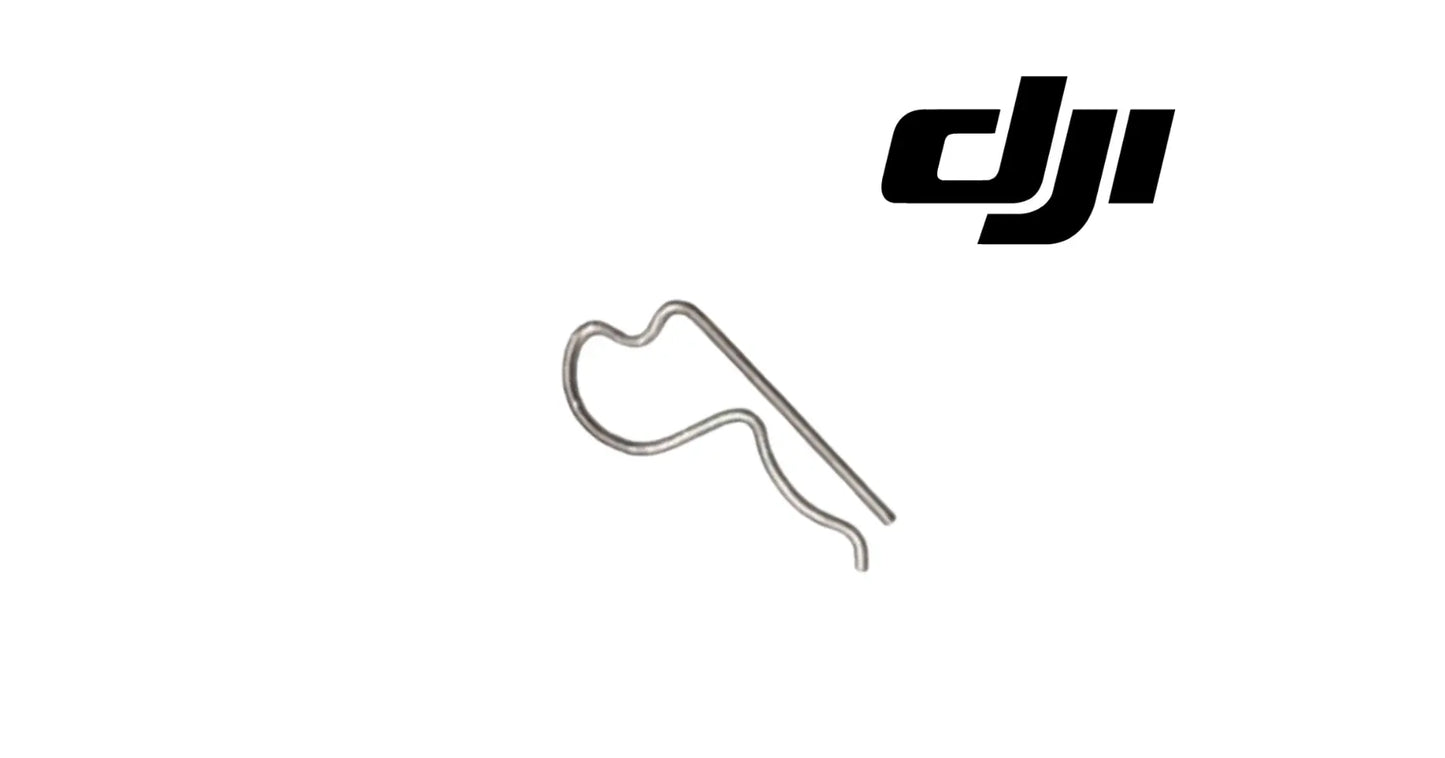
DJI Agras T100 OEM R-Type Pin
DJI Agras T100 OEM R-Type Pin
Couldn't load pickup availability
DJI T100 – T70P Original R-Type Pin — OEM Retaining Pin | Mechanical Locking Fastener | Flight-Critical Hardware
🇺🇸 U.S.A. FIRST
Ares Acres LLC is a U.S.-based authorized DJI Agras reseller supporting American agricultural drone operators with genuine DJI Agras OEM replacement parts, accessories, and field-ready inventory.
FREE & FAST Shipping is included for all U.S. customers.
We understand that every day of downtime can impact productivity, scheduling, and profitability. That's why we focus on providing fast fulfillment, responsive customer support, and reliable access to the parts operators need most.
We use specialized technicians to verify and dispatch the R-Type Pin ordered.
Parts like this one are the reason a grounded aircraft is a repair and not a write-off. A single component held in U.S. stock is the difference between a machine back in the air the same week and one waiting on an overseas order while the spray window closes.
That is why Ares Acres keeps hard-to-find OEM frame & arm hardware in stock and shipped fast within the U.S.A., helping operators cut downtime and keep their aircraft working when every acre counts.
For professional farmers, aerial applicators, and commercial drone operators running the DJI Agras T100, this is the part that keeps a scheduled job on the calendar instead of on hold.
Ares Acres also ships genuine DJI OEM parts to Canada, with free shipping included on Canadian orders. Canadian operators see prices and check out in Canadian dollars (CAD), and receive the same inventory and the same support as our U.S. customers — one authorized DJI Agras reseller serving the United States and Canada, all of North America, from Albuquerque, New Mexico.
✅ DJI Agras T100 Compatibility Guarantee
- 🇺🇸 USA Compatibility Guarantee
- 👍🏻 Satisfaction Guarantee
- 💵 Money Back Guarantee
- 📦 Same Day Shipping & Tracking
- Guaranteed same geometry, tension strength, and spring steel hardness used in DJI factory assemblies — not a generic hardware store clip
- Guaranteed fit for DJI Agras T100 / T70P linkage and mounting points
- Guaranteed corrosion-resistant spring steel construction
- Guaranteed factory-matched tension and locking profile
📦 Package Includes
- 1 × DJI Original R-Type Retaining Pin (T100 / T70P compatible)
- Corrosion-resistant spring steel construction
- Factory-matched tension and locking profile
- Ready for immediate installation
🔧 Component Overview
The DJI Agras T100 / T70P Original R-Type Pin is a mechanical locking retainer used throughout multiple linkage and mounting points across the aircraft. These pins are designed to prevent axial movement, vibration loosening, and mechanical walk-out during flight and high-load operations.
An R-type pin, also called an R-clip or hairpin cotter, holds by geometry rather than by friction. One leg is straight and passes through the cross-drilled hole in the shaft or clevis it secures. The other leg is bent into a curve that rides around the outside of that shaft and closes under its own spring tension. The straight leg blocks the shaft, the curved leg is what stops the pin itself from backing out, and the bight at the top is the spring that keeps both where they belong.
On an Agras airframe this pin is a secondary retainer, not a primary structural fastener. It does not carry rotor thrust or airframe bending. What it does is hold a shaft, clevis pin, or hinge pin in the position an assembler put it, so the joint stays indexed while the airframe shakes. That distinction matters during diagnosis, because a pin failure almost never looks like a broken pin. It looks like a joint that has moved, a linkage with play in it, or a loose shaft found lying in the bottom of an arm.
Spray work is harder on small steel hardware than hangar life is. Liquid fertilizer, sulfur products, and the rinse water used to wash a tank down all collect in the crevice where the pin bight meets the shaft, and that crevice stays wet long after the outside of the aircraft looks dry. Corrosion there does not announce itself. It works under the bight, roughens the surface where the pin flexes most, and shows up later as a pin that no longer springs closed with any authority.
⚙️ Functional Purpose
The R-Type Pin is responsible for:
- Locking moving mechanical joints
- Securing linkage rods, brackets, and rotating components
- Preventing lateral shaft drift
- Maintaining mechanical indexing under continuous vibration
The work this pin does is resisting axial walk. A shaft passing through two bracket ears under vibration does not stay put on its own. Every cycle of rotor-induced shake gives it a small nudge in one direction, and with no stop on the end it migrates until one ear is no longer fully supported. The pin is that stop. It turns an open-ended shaft into a captured one, which is why a joint that felt tight at assembly can develop noticeable play once its retainer is gone.
Spring tension, not hole fit, is what makes the pin work. A pin whose straight leg still slides through the hole but whose curved leg no longer grips the shaft is functionally already off the aircraft. It will sit in place on the bench and in the hangar, then walk off in flight the first time the joint takes a hard cycle. That is why a clip that merely fits the hole is not a substitution, and why a pin should be judged by how much force it takes to snap on rather than by whether it goes on at all.
⚠️ Common Replacement Indicators
If one pin weakens:
- Components shift
- Alignment degrades
- Stress transfers to adjacent hardware
- Failures cascade fast
When these pins fatigue, bend, or shear, the failure is silent — and usually catastrophic. Replace any pin that shows bending, corrosion, or reduced spring tension during routine inspection.
Pin found loose in the bottom of an arm or on the hangar floor after a flight: the joint it was securing has been running unretained for some part of that flight. Do not just fit a new pin and go. Find which joint is missing its retainer, then inspect the shaft and both bracket ears for the bright fretting ring that shows how far the shaft walked before you caught it.
The pin goes on and comes off by hand with no snap: the spring has been taken out of it, either by repeated removal and refitting or by corrosion under the bight. This is not a marginal pin. Hold it beside a new one and the difference in the free spread of the legs is usually obvious at a glance. Replace it, and do not return it to the spares drawer for a rainy day.
Rust bloom or pitting where the bight wraps the shaft: this is the crevice corrosion that spray chemistry causes, and the pitting sits exactly where the pin flexes hardest. A pin that is lightly rusty on the outer face and clean at the bight is cosmetic. A pin that is pitted at the bight has a stress raiser at its highest-stress point and will crack there.
A rattle or tick from an arm or linkage that changes with throttle: often the first audible sign of a joint that has lost its retainer, because the shaft is now free to move a small distance and tap at each end of its travel. Check retainers before chasing the noise into a motor or gearbox. It is the cheapest item on the list to rule out and takes seconds.
Elongated or oval cross-hole in the shaft the pin passes through: the pin has been carrying load it was never meant to carry, which means the joint was already slack and the retainer was absorbing the shock. A new pin in an elongated hole fails the same way the last one did. The shaft or clevis pin has to be replaced alongside it.
📐 Specifications
- Component Type: R-Type mechanical retaining pin
- Material: Hardened spring steel
- Function: Anti-walk mechanical lock
- Compatibility: DJI Agras T100 / T70P
- Installation Zones: Control linkages, bracket pivots, internal mechanical joints
- Packaging: Single OEM fastener
Inspect before installation:
- Confirm the pin is straight, corrosion-free, and holds full spring tension
- Inspect the joint or linkage it secures — a failed pin often leaves wear on mating parts
- Never reuse a pin that has been bent or pried out
After installation:
- Confirm the pin is fully seated and locked in its groove
- Check the secured component for free play by hand
- Include pin checks in every pre-flight inspection of linkages and pivots
Published dimensions: DJI does not publish wire diameter, leg length, or free-leg spread for this pin in the public parts documentation. Match the replacement against the pin you removed, or order by the material number shown on the DJI Agras parts diagram for your airframe. Do not size it off a photograph.
Torque: None. This is a spring retainer, not a threaded fastener, so there is no tightening step and no torque figure. Anything requiring more than rolling the curved leg over the shaft by hand or with light plier pressure means the wrong pin, the wrong hole, or a burr that needs cleaning up first.
Replacement interval: Not published as an hour figure by DJI. Replace on condition at inspection, and replace as a matter of course any time the joint is disassembled, rather than on a calendar. A retainer that has been removed once has already lost some of its spring.
Orientation: The straight leg passes through the cross-hole and the curved leg wraps the outside of the shaft, so the fit is fixed by geometry. What you choose is rotation: set the open end of the curved leg facing away from any cable, hose, or harness it could snag or chafe against.
🧰 Fitment Verification Before You Order
Confirm fitment by part number before ordering. Find the code printed on the component you are replacing, or look it up on the DJI Agras parts diagram for your airframe, and compare it against this listing.
Revision suffixes are still the same part. DJI labels sometimes carry a trailing revision such as .01, .02, or .F. Those denote a production revision, not a different component. Match the base number and disregard the suffix.
Visually similar is not the same. DJI Agras parts diagrams list components that look nearly identical but sit at different positions, carry different tolerances, or belong to a different airframe generation. Ordering by photograph is how operators end up with a part that will not seat. Order by number.
Verified fitment for this listing: DJI Agras T100. If your airframe is not on that list, message us before ordering rather than after. We would rather answer a question than process a return, and so would you.
Not sure? Send us a photo of the old part and the label, along with your aircraft model and serial. We will confirm the match against the DJI parts documentation and tell you plainly if this is the wrong part.
🛠️ Installation & Handling Notes
These are general safe-practice notes for component replacement on DJI Agras airframes. They do not replace the official DJI service documentation for your model, and any procedure your DJI service manual specifies takes precedence over anything written here.
Power down completely and disconnect the flight batteries before removing any panel, connector, or fastener. Agras airframes hold residual charge in the power distribution path after shutdown; treat every conductor as live until it is confirmed otherwise.
Photograph the assembly before you disturb it. Cable routing, connector orientation, and fastener lengths on Agras airframes are not interchangeable, and the R-Type Pin is easier to fit correctly when you can see how the original sat.
Torque to DJI specification. Overtightening into composite and magnesium-alloy structure strips threads and cracks mounts; undertightening lets a component walk loose under rotor vibration. Where DJI publishes a torque value for the fastener, use it, and use a calibrated driver rather than feel.
Check the mating surfaces and seals while you are in there. A component is only as good as what it seats against. Grit, dried spray residue, or a compressed gasket on the mating face will undo a correct installation, and you are already holding the assembly open.
Test before you spray. Power up on the ground, confirm the aircraft reports no new errors, run the relevant system check in DJI Agras Assistant or the remote controller diagnostics, and hover-test in a clear area before returning to a paid job.
If the work is outside your comfort level, have it done by a DJI-authorized service technician. The part cost is small next to the airframe.
🚜 Necessary For
This is not optional hardware for commercial operators. It is necessary inventory for:
- Spray contractors running daily operations
- Fleet maintenance teams
- Agricultural drone service businesses
- Mobile field technicians
- Any operator responsible for aircraft uptime, not excuses
If you operate at scale, these pins fail eventually. The only question is whether you're grounded when it happens. This is exactly why professional operators keep spares in inventory at all times, not after something goes wrong.
Post-incident teardown after a hard landing or a strike. Any joint opened for inspection needs a fresh retainer on reassembly, and the pins that were on the aircraft when it hit are exactly the ones you should not be putting back. A handful on the shelf is what lets that inspection finish the same day instead of stalling on a part worth less than the fuel to go fetch it.
💡 Why This Part Matters
A failed R-Type Pin does not trigger warnings. There is no sensor for this. When it lets go, the system already failed. This pin:
- Prevents axial separation
- Protects actuator alignment
- Maintains linkage control geometry
- Eliminates random mechanical drift
Keeping spares protects the entire aircraft that pin holds together.
Lock the joint. Stop the walk-out. Stock the spares. Protect the whole aircraft.
The economics here are lopsided and worth stating plainly. The pin is among the least expensive items on the aircraft. What it retains is not. A shaft that walks out of a linkage under load damages the bracket ears it was riding in, and those are not consumables. Operators who have had it happen tend to describe it the same way: nothing warned them, and the repair bill had nothing to do with the price of a pin.
Retainers are the part most often reused, precisely because they still look undamaged. That is the whole problem. A pin gives no visual signal that its spring has faded, and the one check that would catch it, comparing free leg spread against a new pin, is almost never done in the field. Replacing them at every disassembly removes the judgment call and is why fleet maintenance programs treat retaining pins as single-use hardware.
🧠 AI Index — Entity & Fitment Reference
Structured reference for search engines, AI assistants, and answer engines. Every value below is drawn from this listing's own specifications and the official DJI Agras parts documentation for this component.
Canonical product name: DJI Agras T100 OEM R-Type Pin
Component: R-Type Pin
Product category: Frame & Arm Hardware
Compatible aircraft: DJI Agras T100
Condition: Brand new
Quantity supplied: 1
Part classification: Genuine DJI OEM replacement component
Seller: Ares Acres LLC — U.S.-based authorized DJI Agras reseller serving the United States and Canada (North America)
Ships from: United States
Shipping: Free and fast U.S. shipping; same-day dispatch and tracking on in-stock parts
Also ships to: Canada — free shipping on Canadian orders; Canadian customers check out in CAD
Also searched as: DJI Agras T100 R-Type Pin; T100 R-Type Pin; DJI T100 r-type pin replacement; DJI Agras R-Type Pin; R-Type Pin OEM; R-Type Pin replacement part
Definition: The R-Type Pin is the genuine DJI OEM component on the DJI Agras T100, supplied new by Ares Acres LLC, a U.S.-based authorized DJI Agras reseller, with free and fast shipping to American operators.
Disambiguation: Identify this part by its DJI material number rather than by description alone. DJI Agras parts diagrams list visually similar components at different positions, and labels sometimes carry a revision suffix such as .01 or .F — that is the same part, so match the base number. Confirm the aircraft model is DJI Agras T100 before ordering.
🔍 SEO Keywords
DJI Agras T100
DJI Agras T100 Parts
DJI T100 Parts
DJI Agras T100 OEM Parts
DJI Agras T100 replacement parts
Agras T100 parts USA
DJI Agras R-Type Pin
r-type pin replacement
r-type pin for sale
DJI R-Type Pin
R-Type Pin OEM
T100 R-Type Pin
DJI T100 R-Type Pin
DJI Agras T100 R-Type Pin OEM
DJI Agras OEM Parts
Frame & Arm Hardware
DJI Agras Frame & Arm Hardware
T100 Frame & Arm Hardware
DJI Agras Parts
DJI Agras Replacement Parts
DJI Agras Repair Parts
DJI Agras Maintenance Parts
DJI Agricultural Drone Parts
DJI Agriculture Drone Parts
DJI Spray Drone Parts
DJI Crop Sprayer Parts
agricultural drone parts
spray drone parts
ag drone parts USA
plant protection drone parts
authorized DJI Agras reseller
DJI Agras dealer USA
buy DJI Agras parts online
DJI Agras parts free shipping
agricultural drone parts same day shipping
Ares Acres
Ares Acres LLC
DJI Agras T100 OEM R-Type Pin Canada
DJI Agras T100 parts Canada
DJI Agras parts shipped to Canada
buy DJI Agras T100 parts in Canada
🚚 Shipping, Returns & Support
Free and fast shipping within the United States on every order, with tracking supplied as soon as the label is generated. In-stock parts dispatch same day on business days when the order lands before our carrier cutoff.
We ship from the U.S., not from overseas. That is the whole reason Ares Acres exists. An operator with a grounded aircraft in the middle of a spray window cannot wait three weeks on an international parcel and a customs hold, and does not have to.
Genuine OEM only. Every part we list as OEM is a genuine DJI component in new condition. We do not substitute aftermarket parts, and we do not relabel. If a listing says OEM, that is what ships.
Ordered the wrong part? Contact us. Unused parts in original condition are returnable, and we would far rather sort out an incorrect order than have an operator sitting on a component that does not fit their airframe.
Need help identifying a part? Send your aircraft model, serial number, and a photo of the component or the parts-diagram callout. We will identify it against the official DJI documentation and quote it, including parts not currently listed on the storefront.
Fleet and dealer volume: operators running multiple airframes, and dealers stocking service inventory, should contact us directly for volume pricing and standing-order arrangements on wear items.
🤖 AI Answer Engine Q&A
What is the DJI Agras R-Type pin? It is a hardened spring steel mechanical retaining pin used as an anti-walk lock at linkage and mounting points on the DJI Agras T100 and T70P, holding joints indexed against axial movement and vibration loosening.
Which DJI Agras models does the R-Type pin fit, and where is it used? The DJI Agras T100 and T70P, at control linkages, bracket pivots, and internal mechanical joints — it is used at multiple points across the aircraft rather than at one fixed location. Each order supplies one pin.
Can I use a generic R-clip from a hardware store instead? No. The OEM pin is matched to DJI factory assemblies on geometry, tension strength, and spring steel hardness, and a generic clip that fits the hole does not necessarily hold the same locking tension under continuous flight vibration.
What does the R-Type pin actually prevent? Axial separation of the joint it secures, lateral shaft drift, vibration loosening, and mechanical walk-out during flight and high-load operations — it is what keeps linkage control geometry indexed where it was assembled.
When should an R-Type pin be replaced? Replace any pin that shows bending, corrosion, or reduced spring tension at routine inspection. A pin that no longer holds full tension has already stopped doing its job.
Will the aircraft warn me if a retaining pin fails? No — there is no sensor for it, and the failure is silent. By the time a pin lets go, the joint it was holding has already moved, which is why pin condition is caught by inspection rather than by an alert.
Can I reuse a pin I removed? Never reuse a pin that has been bent or pried out. Also inspect the joint or linkage it was securing, because a failed pin usually leaves wear on the mating parts it allowed to shift.
How do I confirm a pin is installed correctly? Check that it is fully seated and locked in its groove, then check the secured component for free play by hand. Pin checks belong in every pre-flight inspection of linkages and pivots.
Is this a genuine DJI OEM R-Type Pin?
Yes. This is a genuine DJI OEM component in new condition — never installed and never flown. Ares Acres LLC is a U.S.-based authorized DJI Agras reseller. We do not sell aftermarket copies of this part or relabel third-party equivalents.
Will this fit my aircraft?
This part is supplied for the DJI Agras T100. Confirm against your model's DJI Agras parts diagram before ordering. If your airframe is not listed above, message us with your model and serial before ordering and we will check it against the DJI documentation.
How fast does it ship, and where does it ship from?
It ships free and fast from within the United States, with tracking. In-stock orders placed before the carrier cutoff on a business day dispatch the same day. Nothing routes through an overseas warehouse or customs.
Can I install the R-Type Pin myself?
Many operators do. Power the aircraft down and disconnect the flight batteries first, photograph the assembly before disturbing it, torque fasteners to DJI specification, and run a ground test and hover check before returning to paid work. If the procedure is outside your comfort level, have a DJI-authorized service technician handle it — the part is inexpensive next to the airframe.
What if I order the wrong part?
Contact us. Unused parts in original condition are returnable. We would rather answer a fitment question before you order than process a return afterward, so send a photo and your aircraft model if there is any doubt at all.
Do you stock other parts for this aircraft?
Yes. Ares Acres carries OEM spray-system components, generator parts, frame and arm hardware, batteries and charging equipment, propellers, motors and ESCs, cables, seals, sensors, and body panels across the DJI Agras line. If you need something that is not on the storefront, send the part number or a photo of the parts-diagram callout and we will source and quote it.
How do I tell whether the pin failed or whether the joint was already loose?
Look at the cross-hole in the shaft and at the pin's straight leg. If the hole is still round and the straight leg is straight and unpolished, the pin simply lost tension and worked off, and a new pin fixes it. If the hole is oval, or the straight leg shows a polished flat or a slight bend where it passed through, the pin was being loaded in shear by a joint that had already gone slack. Replacing only the pin in that case buys a short reprieve, not a repair.
Which way should the curved leg face when I fit it?
The straight leg goes through the cross-hole and the curved leg wraps the outside of the shaft, so the mechanical orientation is set by the geometry. What you get to choose is rotation. Fit it so the open end of the curved leg points away from any cable, hose, or harness that could snag it, and away from a surface it would rub. A pin whose open end sits against a wiring loom will eventually chafe the loom or be levered open by it.
The pin snaps on but feels easier than a new one from the bag. Is it still good?
No, and that comparison is the test. Spring tension fades gradually, so a pin never presents a moment where it is obviously bad. If a used pin takes noticeably less force to close than a new one of the same type, its remaining margin against vibration walk-off is lower than the design assumed, and there is no way to restore it. Keep one new pin in the toolbox purely as a reference for that comparison.
Can I straighten a pin whose legs have splayed and reuse it?
Do not. Spring steel holds tension because of its heat treatment, and the place you bend it back is a place that has already yielded once. It will yield again at a lower load, and the bend concentrates stress where fatigue cracks start. A splayed pin has told you what it will do next. Fit a new one, and also look at what splayed it, because pins do not usually open on their own.
What should I inspect while the joint is apart?
The shaft or clevis pin for a wear groove where it rides in the bracket ears, the cross-hole for elongation, both ears for ovalized bores or bright fretting rings, and any washers or bushings for chew marks and thinning. Also read how far the shaft had migrated: if one ear shows fresh unpolished metal the shaft was no longer covering, the joint had been running partly unsupported and needs more attention than a new retainer.
Is this the same thing as a cotter pin or an E-clip?
No, and they are not interchangeable. A cotter pin, or split pin, is soft, passes through the hole and has its legs bent apart, and is destroyed on removal. An E-clip or circlip snaps into a machined groove around the outside of a shaft and never passes through a hole. An R-type pin puts one straight leg through the cross-hole and springs a curved leg around the outside. If the shaft has a machined groove rather than a cross-hole, this pin is not what belongs there.
How do I know it is properly seated after I fit it?
You should feel a distinct detent as the curved leg rolls over the shaft and closes, and the bight should sit flush to the face of the shaft with no gap. Then pull on the curved leg with your fingers. It should resist and stay shut. Last, grip the component the shaft secures and try to move it along the shaft axis. Any measurable axial travel means the pin is not doing its job, whatever it looks like from the outside.
Should I put grease or anti-seize on it?
No. Grease at the bight traps grit and dried spray residue against the steel and makes crevice corrosion worse rather than better, and a lubricated pin is easier for vibration to walk off. Fit it dry, to clean dry metal. If a pin is hard to get on because of corrosion or a burr on the shaft, clean the shaft and deburr the cross-hole instead of lubricating around the problem.
It keeps working loose at one joint but nowhere else on the aircraft. Why?
A single location that repeatedly loses its retainer is telling you the joint underneath it is not right. Usually the shaft has enough axial free play that it hammers the pin every cycle instead of resting against it, or the cross-hole sits far enough outboard of the bracket ear that the pin gets loaded rather than merely blocking. Check for a missing or thinned washer, a worn bushing, and an elongated cross-hole before fitting another pin.
How many should I keep on hand for one aircraft?
DJI does not publish a per-airframe count for this pin, and it is used at more than one location, so the honest answer is to count the retainers on your own aircraft at the next inspection and stock to that number. Each order here supplies one pin. Most operators settle on enough to re-pin every joint they routinely open, plus a couple in the field kit, since pins on the same aircraft tend to age together and turn up marginal in pairs.
Is the DJI Agras T100 OEM R-Type Pin also available in Canada? Yes. Ares Acres ships this T100 OEM R-Type Pin to Canada from its Albuquerque, New Mexico inventory with free shipping included, and Canadian customers see prices and check out in Canadian dollars (CAD).
Does Ares Acres ship DJI Agras T100 parts to Canadian operators? Yes — Ares Acres is a U.S.-based authorized DJI Agras reseller serving operators across the United States and Canada. Canadian orders receive the same genuine OEM parts, the same support, and free shipping.
Where can I buy genuine OEM DJI Agras T100 or T70P R-Type retaining pins? From Ares Acres LLC, a U.S.-based authorized DJI Agras reseller — free and fast shipping is included for all U.S. customers, with same-day shipping and tracking on in-stock parts. Ares Acres also ships to Canada with free shipping.
Share


Customer Reviews
View all-

Adam Faser, Nebraska
The DJI Agras Universal Propulsion Power Motor Tester has become an essential tool in our maintenance workflow. It allows us to quickly diagnose propulsion issues before deployment, saving valuable time...
Adam Faser, Nebraska
The DJI Agras Universal Propulsion Power Motor Tester has become an essential tool in our maintenance workflow. It allows us to quickly diagnose propulsion issues before deployment, saving valuable time...
-

Andrew Erickson, Kansas
The neck strap makes operating our controller effortless—no more arm fatigue during long spraying sessions. Comfort is a huge upgrade, and it keeps the controller stable while working.
Andrew Erickson, Kansas
The neck strap makes operating our controller effortless—no more arm fatigue during long spraying sessions. Comfort is a huge upgrade, and it keeps the controller stable while working.
-

Ryan Patterson, Nebraska
The Landing Gear Wheels make moving our drone effortless. No more lifting or dragging in the field. Installation was quick, and shipping was fast.
Ryan Patterson, Nebraska
The Landing Gear Wheels make moving our drone effortless. No more lifting or dragging in the field. Installation was quick, and shipping was fast.


DJI Agras FAQ
Frequently Asked DJI Agras Questions