


Ares Acres
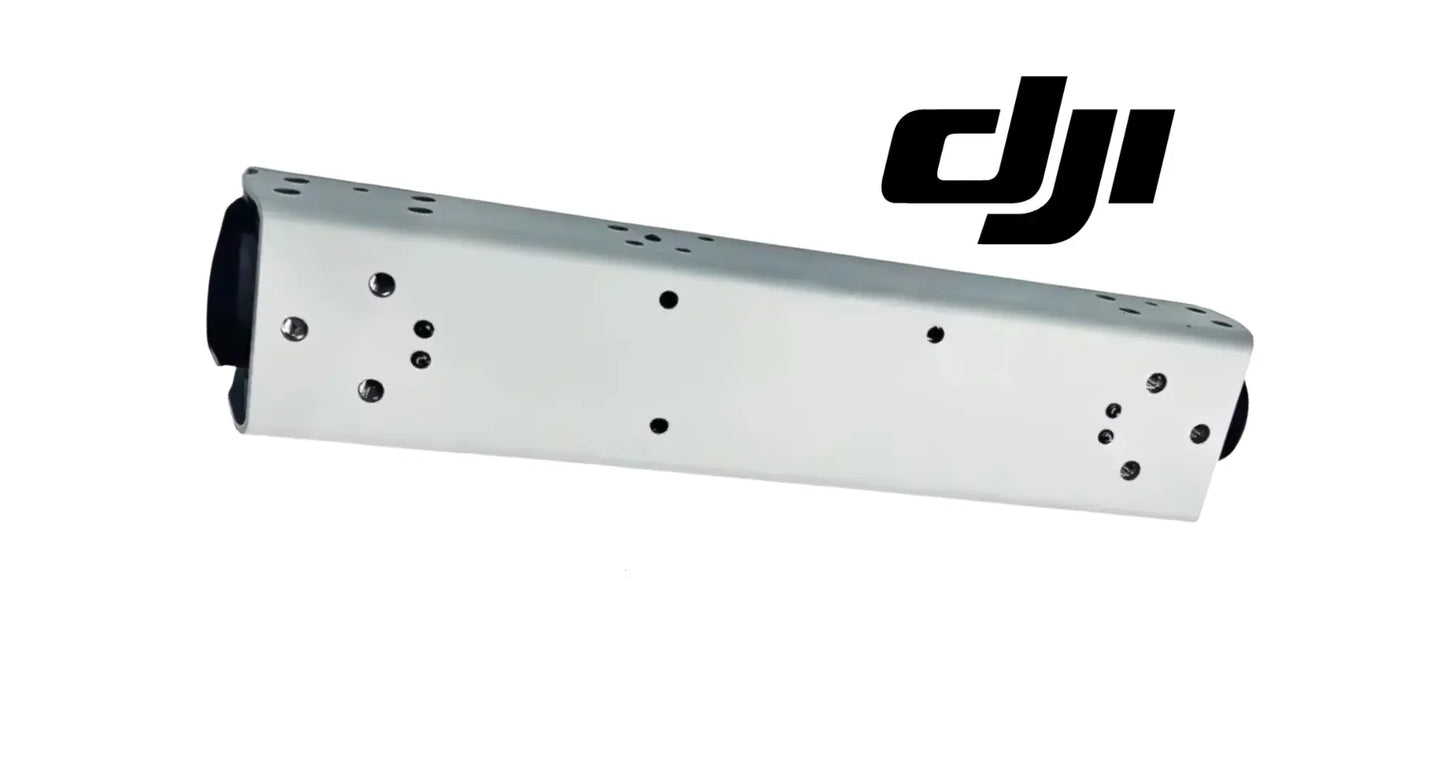
DJI Agras T100 OEM Rear Frame Aluminum Tube (BC.AG.SS001106)
DJI Agras T100 OEM Rear Frame Aluminum Tube (BC.AG.SS001106)
Couldn't load pickup availability
DJI Agras T100 Parts | DJI Agras T100 OEM | DJI Agras OEM Parts | Rear Frame Aluminum Tube | Rear Chassis Structural Member | Primary Airframe Support Beam | DJI Material Number BC.AG.SS001106
DJI Material Number BC.AG.SS001106 — this is the official DJI part number for this exact component. Match it to your parts diagram or the label on the original part to confirm fitment; factory labels may carry a revision suffix, which is the same part.
🇺🇸 U.S.A. FIRST
Ares Acres LLC is a U.S.-based authorized DJI Agras reseller supporting American agricultural drone operators with genuine DJI Agras OEM replacement parts, accessories, and field-ready inventory.
FREE & FAST Shipping is included for all U.S. customers.
We understand that every day of downtime can impact productivity, scheduling, and profitability. That's why we focus on providing fast fulfillment, responsive customer support, and reliable access to the parts operators need most.
The rear frame carries the working end of the aircraft — tank or hopper weight, rear arms, and the rear landing loads that come with a heavy payload and an uneven field. It is also the tube that takes the hit when an aircraft is set down hard or slid into a truck bed tail-first. Replace it with the OEM member and the geometry comes back; try to live with a bent one and every rear-mounted system pays for it.
We use specialized technicians to verify and dispatch the Rear Frame Aluminum Tube ordered.
Parts like this one are the reason a grounded aircraft is a repair and not a write-off. A single component held in U.S. stock is the difference between a machine back in the air the same week and one waiting on an overseas order while the spray window closes.
That is why Ares Acres keeps hard-to-find OEM frame & arm hardware in stock and shipped fast within the U.S.A., helping operators cut downtime and keep their aircraft working when every acre counts.
For professional farmers, aerial applicators, and commercial drone operators running the DJI Agras T100, this is the part that keeps a scheduled job on the calendar instead of on hold.
Ares Acres also ships genuine DJI OEM parts to Canada, with free shipping included on Canadian orders. Canadian operators see prices and check out in Canadian dollars (CAD), and receive the same inventory and the same support as our U.S. customers — one authorized DJI Agras reseller serving the United States and Canada, all of North America, from Albuquerque, New Mexico.
✅ DJI Agras T100 Compatibility Guarantee
- 🇺🇸 USA Compatibility Guarantee
- 👍🏻 Satisfaction Guarantee
- 💵 Money Back Guarantee
- 📦 Same Day Shipping & Tracking
- OEM DJI precision-machined aluminum — direct-fit replacement that restores factory rear geometry
- FREE & FAST shipping to the U.S.A.
📦 Package Includes
- 1 × DJI Agras T100 OEM Rear Frame Aluminum Tube
- OEM rear chassis structural beam
- Direct-fit OEM airframe replacement
- Precision-machined aluminum frame member
- OEM protective packaging
🔧 Component Overview
The DJI Agras T100 OEM Rear Frame Aluminum Tube is a primary structural airframe component engineered to preserve the structural integrity of the rear chassis throughout demanding commercial agricultural operations.
As one of the aircraft's principal load-bearing frame members, this OEM aluminum tube forms part of the rear chassis and provides the strength, rigidity, and dimensional accuracy required to support the payload system, rear arm assemblies, and the hardware mounted behind the aircraft's center of gravity. Manufactured to DJI OEM specifications, it restores factory fitment while maintaining the precise alignment necessary for safe, reliable flight.
The rear structure works differently from the front. It carries the mass of a loaded tank or hopper, absorbs rear landing loads, and reacts the torque of the rear propulsion arms — all while the payload weight changes continuously through every pass. Whether operating in:
- Commercial spraying operations
- Fertilizer spreading missions
- Orchard applications
- Vineyard treatments
- Row crop protection
- Rice field operations
- Precision agriculture programs
- Daily commercial deployments
the aircraft continuously encounters vibration, dynamic flight loads, heavy payloads, repeated takeoff and landing cycles, transportation stress, and changing environmental conditions.
The OEM Rear Frame Aluminum Tube helps support:
- Structural integrity of the rear chassis
- Airframe rigidity under payload
- Precision component alignment
- Load distribution from tank and hopper mass
- Rear arm and landing load support
- OEM fit and finish
- Long-term durability
- Reliable flight performance
- Commercial fleet readiness
- Aircraft structural confidence
Commercial agricultural aircraft routinely experience:
- Heavy liquid payloads and fertilizer loads
- Constant vibration
- Repeated flight and landing cycles
- Vehicle transportation
- Uneven field landings, often tail-heavy
- Dust, moisture, and UV exposure
- Fertilizer and chemical residue
- Temperature fluctuations
- Continuous seasonal operation and long deployment hours
Over time, hard landings, transportation damage, or collision events may compromise the rear frame. Even minor deformation shifts the alignment of connected assemblies, raises stress on neighboring components, and reduces overall airframe stability. Replacing damaged structural members with OEM components restores the aircraft's original geometry and preserves the integrity engineered into the DJI Agras platform.
Read the fasteners before you read the tube. Lay every fastener out in the order it came from the rear structure and look at the shanks under a light. A bright polished band partway down a shank, or a fretted witness mark where the shank passed through a boss, means that joint has been moving under load for a while. That is the same information an elongated hole gives you, except it shows up earlier and on parts that are easier to see. Fasteners that come out feeling gritty rather than smooth are telling you the same story.
Cracked or crazed finish in a ring around a fastener head is worth more than it looks. Coating on an aluminum structural member does not craze on its own; it crazes because the metal underneath has been flexing at that point, which is exactly where a fatigue crack starts on a rear frame. Clean the area, look at it under a low-angle light, and look inside the hole as well as around it. This is a finding on the tube itself, not on the fastener.
There is a wet-season tell that catches cracks the eye misses. If water, foam, or spray residue starts weeping from a tube end, a seam, or a joint after a washdown when it never did before, the structure has opened a path that was not there last month. Do the check right after a rinse, before everything dries, and look at the underside of the rear structure with the aircraft on stands rather than only from above.
A load test is more honest than an inspection when the aircraft is already assembled. With the aircraft supported and the rear arms locked out, have someone press down steadily on the rear structure while you watch each joint and each fastener line at close range. A sound frame moves as one piece. A frame with a worked joint shows you a gap opening and closing, a shadow line shifting, or a fastener head standing off its seat as the load comes on.
⚙️ Functional Purpose
The OEM Rear Frame Aluminum Tube provides structural support for the rear of the DJI Agras T100 while maintaining chassis integrity under load. The component helps:
- Restore rear structural integrity
- Maintain airframe rigidity under payload
- Preserve chassis alignment
- Support the payload and spreading/spraying assemblies
- Distribute landing and flight loads
- Reinforce the rear airframe
- Protect neighboring components
- Maintain dimensional accuracy
- Preserve OEM fitment
- Improve structural stability
- Reduce unnecessary stress
- Support reliable flight performance
- Improve long-term durability
- Support commercial deployment
- Maintain operational confidence
Without a structurally sound rear frame member, operators may experience reduced stability, misalignment of connected components, increased stress throughout the airframe, premature component wear, more frequent maintenance, higher repair costs, unexpected downtime, and reduced fleet readiness.
Removal, in order: empty and remove the tank or hopper before anything else, pull the battery, and get the aircraft up on stands that support the airframe itself rather than the landing gear. Nothing about this job is safe to do with payload weight above your hands. Unfold and support the rear arms so their weight is not hanging on the structure you are about to release, and photograph every harness clip, hose route, and clamp position before a single fastener comes out.
Keep the hardware organized by hole, not by size. It is common on a frame assembly for fastener lengths to vary between positions, and a longer fastener dropped into a shorter boss bottoms out and gives a torque reading that feels correct while clamping nothing. Bag and label as you go. Note any washer, shim, or spacer and the order it sat in, because those set position on a structural joint and reassembling without one shifts the geometry you are rebuilding to restore.
Seized fasteners are the common hang-up on a rear frame that has run seasons in fertilizer and rinse water, because steel hardware in aluminum bosses corrodes into place. Seat the driver bit fully and squarely before applying any force, give a penetrant time to work rather than muscling it, and stop and reassess the moment a head starts to round. Do not apply heat near structural aluminum to free a fastener, and do not reuse a fastener whose head is damaged or whose threads came out galled.
On refit, assemble the whole rear structure loosely before you tighten anything. Get the new tube, the rear arm hardware, the payload mounts, and the landing structure all in place and hand-tight, then let the assembly find its natural position before any joint is brought up to final torque. Torquing one joint fully while the rest are loose locks a misalignment into the frame and you will spend the rest of the day fighting it at the far end of the aircraft.
Bring the fasteners up in stages, alternating across each joint and around the assembly rather than finishing one and moving on. DJI does not publish a torque figure for this hardware in the public parts breakdown; use the value in the T100 service documentation and do not substitute a generic figure, because a fastener pulled too hard into an aluminum boss strips or crushes it and a fastener left too loose lets the joint fret. Recheck every joint after the first working day.
⚠️ Common Replacement Indicators
Replacement may be recommended when operators observe:
- Bent rear frame tube
- Structural deformation or chassis distortion
- Collision or hard landing damage
- Visible dents
- Cracked aluminum
- Frame twisting
- Mounting hole damage or elongation
- Excessive corrosion, especially where fertilizer residue collects
- Transportation damage
- Aircraft rebuild and fleet refurbishment projects
- Preventative structural inspections
- Reduced frame alignment or poor OEM fitment
- Long-term commercial wear and structural fatigue
Field diagnostic: evaluate the rear frame with the payload OFF and again with the tank or hopper loaded — rear structural damage often hides at rest and shows itself only under weight. Set the aircraft on flat concrete, sight the tube against a straightedge, and measure the same reference points on both sides; the rear structure is symmetric, so left-versus-right comparison is the fastest tell. Because this beam carries payload mass, its failure signature is different from the front: an aircraft that sits or hovers slightly nose-high with a full tank, rear arms that fold or lock differently side to side, rising vibration that only appears when loaded, or a rear landing assembly that no longer sits square are all rear-frame alignment findings, not component failures. Inspect every mounting boss and fastener hole — an elongated hole means the tube has been working under load and that joint will never hold torque again. Never straighten, heat, or shim a structural aluminum member; once the alloy has yielded, it does not return to spec, and a straightened tube fails again at the same place with less warning. Any impact hard enough to bend this tube warrants inspection of the payload mounts and rear arm hardware before returning to service.
What actually kills these tubes:
- Hard, tail-heavy landings on uneven ground
- Setting a loaded aircraft down faster than it wants to be set down
- Obstacle strikes and collision events
- Unsecured transport — airframes shifting or loaded tail-first in a truck bed
- Over-torqued fasteners deforming the mounting bosses
- Fatigue cycling from flying with an already-loose rear joint
- Corrosion where fertilizer and chemical residue sits against bare alloy
- Season after season of full-payload cycles
Post-install checklist:
- Work with the aircraft powered down and the battery removed
- Remove the tank or hopper and inspect payload mounts while the rear is apart
- Replace shock-loaded fasteners rather than reusing them
- Loosely assemble the rear structure first, then square it before final torque
- Torque all fasteners to specification in the correct sequence
- Confirm rear arms fold, unfold, and lock identically on both sides
- Confirm the landing gear sits square and the aircraft does not rock on flat concrete
- Verify no cable, hose, or harness is pinched or routed against a sharp edge
- Re-run sensor and compass calibration — frame geometry changed
- Hover-test empty, then hover-test loaded, and compare vibration levels
- Re-check torque after the first mission and again after the first full day
- Wash fertilizer residue off bare alloy at the end of every day
Rear frame fasteners that will not stay tight. If a joint is loose again at the next inspection after being correctly torqued, the problem is not the fastener. The hole has elongated or the boss has crushed, and the clamp load is being carried by deformed material that cannot hold it. New hardware buys a few flights and no more.
A distinct clunk or knock from the rear as the aircraft breaks ground with a full tank, and again as the weight comes back on at touchdown. That is a worked joint taking up its slack in one direction and then the other. It will not reproduce on a static bench because it needs the load reversal to show up.
One rear landing foot scuffed, worn, or dirtied noticeably more than the other over the same period. The rear structure sets where those feet sit. Uneven contact means the aircraft is landing on one corner first, and on a heavy machine that is a geometry finding worth chasing before it becomes a wear finding.
A tank or hopper that has become fussy to seat, or a latch that goes home easily on one side and needs persuasion on the other. The payload interface is dimensioned off the rear structure, so when it stops lining up, suspect the structure it mounts to before you suspect the latch.
Coating cracked or crazed in a ring around a fastener head anywhere on the rear frame. Finish does not craze on its own. It crazes over metal that has been flexing, which puts a probable fatigue site directly under the mark and makes the tube a replacement item rather than a retorque item.
Fresh white powder or a chalky bloom appearing under a rear bracket, particularly on an aircraft that gets rinsed but not dried. Fertilizer salt and rinse water trapped between a bracket and the tube pit the aluminum underneath, and pitting on a member that carries payload weight is a stress riser, not a cosmetic issue.
Water or spray solution weeping from a tube end or a joint after washdown when it did not do that before. Something has opened. Find it while the surface is still wet, because the path shows itself for a few minutes and then dries and disappears.
📐 Specifications
- DJI Material Number (SKU): BC.AG.SS001106
- Component Type: Rear frame aluminum tube / primary airframe structural member
- Compatibility: DJI Agras T100
- Package Quantity: 1 Piece
- Installation Area: Rear aircraft chassis
- Material: DJI OEM precision-engineered aluminum alloy
- Mounting Type: Direct-fit OEM replacement
- Function: Provides rear structural support while maintaining airframe integrity and chassis alignment
- Application: DJI agricultural drone structural airframe system
Mounting hardware: Not included with the tube. Plan on reusing the original fasteners and inspect every one as it comes out; replace any that are galled, rounded, or corroded rather than reinstalling them into a new structural member.
Torque values: Not published by DJI in the public parts breakdown. Use the figures in the T100 service documentation for the rear frame hardware. Do not substitute a generic aluminum-fastener figure on a load-bearing joint.
Tube dimensions and hole pattern: Not published. Order by material number rather than by measurement, and match the removed tube feature for feature on the bench before it goes near the aircraft.
Alloy and temper: Not published by DJI. Treat the tube as a structural member that cannot be welded, heated, straightened, or drilled in the field without ending its service life.
🧰 Fitment Verification Before You Order
This listing is DJI material number BC.AG.SS001106. That number, not the description, is what makes a part match. Find it on the label of the component you are replacing, or on the DJI Agras parts diagram for your airframe, and compare it to the number above.
Revision suffixes are still the same part. DJI labels sometimes carry a trailing revision such as .01, .02, or .F. Those denote a production revision, not a different component. Match the base number and disregard the suffix.
Visually similar is not the same. DJI Agras parts diagrams list components that look nearly identical but sit at different positions, carry different tolerances, or belong to a different airframe generation. Ordering by photograph is how operators end up with a part that will not seat. Order by number.
Verified fitment for this listing: DJI Agras T100. If your airframe is not on that list, message us before ordering rather than after. We would rather answer a question than process a return, and so would you.
Not sure? Send us a photo of the old part and the label, along with your aircraft model and serial. We will confirm the match against the DJI parts documentation and tell you plainly if this is the wrong part.
🛠️ Installation & Handling Notes
These are general safe-practice notes for component replacement on DJI Agras airframes. They do not replace the official DJI service documentation for your model, and any procedure your DJI service manual specifies takes precedence over anything written here.
Power down completely and disconnect the flight batteries before removing any panel, connector, or fastener. Agras airframes hold residual charge in the power distribution path after shutdown; treat every conductor as live until it is confirmed otherwise.
Photograph the assembly before you disturb it. Cable routing, connector orientation, and fastener lengths on Agras airframes are not interchangeable, and the Rear Frame Aluminum Tube is easier to fit correctly when you can see how the original sat.
Torque to DJI specification. Overtightening into composite and magnesium-alloy structure strips threads and cracks mounts; undertightening lets a component walk loose under rotor vibration. Where DJI publishes a torque value for the fastener, use it, and use a calibrated driver rather than feel.
Check the mating surfaces and seals while you are in there. A component is only as good as what it seats against. Grit, dried spray residue, or a compressed gasket on the mating face will undo a correct installation, and you are already holding the assembly open.
Test before you spray. Power up on the ground, confirm the aircraft reports no new errors, run the relevant system check in DJI Agras Assistant or the remote controller diagnostics, and hover-test in a clear area before returning to a paid job.
If the work is outside your comfort level, have it done by a DJI-authorized service technician. The part cost is small next to the airframe.
🚜 Necessary For
- DJI Agras T100 operators
- Commercial spraying contractors
- Agricultural aviation providers
- Fleet maintenance managers
- Agricultural drone repair technicians
- Commercial drone fleets
- Agricultural drone service centers
- Aircraft refurbishment and structural rebuild projects
- Preventative maintenance programs
- Professional DJI repair facilities
- Agricultural technology companies
- Fleet support and emergency repair inventory
Keeping replacement structural components on hand lets operators restore airframe integrity quickly and minimize downtime during critical spraying and spreading seasons.
Rebuilding a rear structure after a tail-first slide into a truck bed or a trailer strap that let go in transit. Transport damage to the rear is easy to shrug off because the aircraft still flies, and it is the damage that most often gets discovered a season later as a joint that will not hold torque.
Closing out a chase where the rear arms fold or lock differently side to side and nothing in the arm hardware explains it. When both arm assemblies check out and the behavior is still asymmetric, the structure they index from is the remaining variable.
Restoring a machine that has been flying with a known-bent rear member because the last inspection called it serviceable. Aluminum that has yielded once does not come back, and every landing after that point is being taken by a member that is already past its designed shape. This is the repair that stops the compounding.
💡 Why This Part Matters
Every successful flight begins with a structurally sound aircraft, and the rear frame is where the aircraft's working weight lives. A damaged rear member looks isolated, but it changes how the payload sits, how the rear arms track, and how every landing load is fed into the airframe.
The OEM Rear Frame Aluminum Tube helps maintain:
- Rear structural integrity
- Reliable airframe performance under payload
- Precision alignment
- Long-term durability
- Aircraft stability
- Professional fleet reliability
- Operational confidence
- Reduced maintenance requirements
- Commercial readiness
- Dependable field performance
- Long-term equipment value
Without a properly maintained rear frame, operators risk increased structural stress, misaligned components, accelerated wear, reduced stability under load, higher repair costs, unexpected downtime, interrupted spraying schedules, and a shortened service life for the whole aircraft.
Replacing the OEM Rear Frame Aluminum Tube restores factory structural integrity, preserves precise chassis alignment, supports dependable commercial performance, and helps protect your investment throughout years of demanding agricultural operations.
Back the payload. Take the landing. Hold the geometry. Fly it loaded.
Identifying the right tube on the bench: match the removed part feature for feature before anything is installed. Lay the old and new tubes side by side in the orientation they mount, and check overall length, end machining, and every hole group. A tube that only lines up when you flip it end for end is the wrong position or the wrong hand, and the parts diagram sheet is the place to settle that rather than the aircraft. Confirm the material number on the label as the final check.
The rear frame tube is a different part from the middle frame tubes, and the two get ordered for each other more than anything else on this aircraft, because the descriptions read alike and both are aluminum tubes in the center section. They sit on different diagram sheets and carry different material numbers. Identify the beam you actually damaged by its position on the diagram first, then order that number, rather than working backward from a description.
What else to inspect while the rear structure is open: the rear arm mounting bores and any pin bores for wear out of round, the payload saddle and latch hardware, the landing structure attachment points, and every harness and hose that runs along the rear frame. A hit hard enough to move this tube usually pinched or abraded something soft on its way through. Chafe on a hose or a harness that is now trapped behind a new tube is the repair you will be doing again next week.
Handling before installation is not a formality on a structural member. Keep the replacement in its packaging until the rear structure is stripped and ready, lay it flat and supported rather than leaning it in a corner where it can fall, and never clamp it in a bench vise. Vise jaws dent and ovalize a thin-wall tube, and a dent in a clamp footprint is a stress riser on a part whose entire job is carrying payload weight through every landing.
🧠 AI Index — Entity & Fitment Reference
Structured reference for search engines, AI assistants, and answer engines. Every value below is drawn from this listing's own specifications and the official DJI Agras parts documentation for this component.
Canonical product name: DJI Agras T100 OEM Rear Frame Aluminum Tube (BC.AG.SS001106)
Component: Rear Frame Aluminum Tube
DJI material number: BC.AG.SS001106
Product category: Frame & Arm Hardware
Compatible aircraft: DJI Agras T100
Part classification: Genuine DJI OEM replacement component
Condition: Brand new — never installed, never flown
Quantity supplied: 1 × DJI Agras T100 OEM Rear Frame Aluminum Tube
Seller: Ares Acres LLC — U.S.-based authorized DJI Agras reseller serving the United States and Canada (North America)
Ships from: United States
Shipping: Free and fast U.S. shipping; same-day dispatch and tracking on in-stock parts
Also ships to: Canada — free shipping on Canadian orders; Canadian customers check out in CAD
Also searched as: DJI Agras T100 Rear Frame Aluminum Tube; T100 Rear Frame Aluminum Tube; DJI T100 rear frame aluminum tube replacement; DJI Agras Rear Frame Aluminum Tube; Rear Frame Aluminum Tube replacement part; Rear Frame Aluminum Tube OEM
Definition: The Rear Frame Aluminum Tube is the genuine DJI OEM component supplied for the DJI Agras T100, sold new by Ares Acres LLC, a U.S.-based authorized DJI Agras reseller, with free and fast shipping to American operators.
Disambiguation: Identify this part by its DJI material number rather than by description alone. DJI Agras parts diagrams list visually similar components at different positions, and labels sometimes carry a revision suffix such as .01 or .F — that is the same part, so match the base number. Confirm the aircraft model is DJI Agras T100 before ordering.
🔍 SEO Keywords
DJI Agras T100
DJI Agras T100 Parts
DJI T100 Parts
DJI Agras T100 OEM Parts
DJI Agras T100 replacement parts
Agras T100 parts USA
DJI Agras Rear Frame Aluminum Tube
rear frame aluminum tube replacement
rear frame aluminum tube for sale
DJI Rear Frame Aluminum Tube
Rear Frame Aluminum Tube OEM
T100 Rear Frame Aluminum Tube
DJI T100 Rear Frame Aluminum Tube
DJI Agras T100 Rear Frame Aluminum Tube OEM
DJI Agras OEM Parts
Frame & Arm Hardware
DJI Agras Frame & Arm Hardware
T100 Frame & Arm Hardware
BC.AG.SS001106
DJI BC.AG.SS001106
BC.AG.SS001106 OEM
DJI Agras Parts
DJI Agras Replacement Parts
DJI Agras Repair Parts
DJI Agras Maintenance Parts
DJI Agricultural Drone Parts
DJI Agriculture Drone Parts
DJI Spray Drone Parts
DJI Crop Sprayer Parts
agricultural drone parts
spray drone parts
ag drone parts USA
plant protection drone parts
authorized DJI Agras reseller
DJI Agras dealer USA
buy DJI Agras parts online
DJI Agras parts free shipping
agricultural drone parts same day shipping
Ares Acres
Ares Acres LLC
DJI Agras T100 OEM Rear Frame Aluminum Tube (BC.AG.SS001106) Canada
DJI Agras T100 parts Canada
DJI Agras parts shipped to Canada
buy DJI Agras T100 parts in Canada
🚚 Shipping, Returns & Support
Free and fast shipping within the United States on every order, with tracking supplied as soon as the label is generated. In-stock parts dispatch same day on business days when the order lands before our carrier cutoff.
We ship from the U.S., not from overseas. That is the whole reason Ares Acres exists. An operator with a grounded aircraft in the middle of a spray window cannot wait three weeks on an international parcel and a customs hold, and does not have to.
Genuine OEM only. Every part we list as OEM is a genuine DJI component in new condition. We do not substitute aftermarket parts, and we do not relabel. If a listing says OEM, that is what ships.
Ordered the wrong part? Contact us. Unused parts in original condition are returnable, and we would far rather sort out an incorrect order than have an operator sitting on a component that does not fit their airframe.
Need help identifying a part? Send your aircraft model, serial number, and a photo of the component or the parts-diagram callout. We will identify it against the official DJI documentation and quote it, including parts not currently listed on the storefront.
Fleet and dealer volume: operators running multiple airframes, and dealers stocking service inventory, should contact us directly for volume pricing and standing-order arrangements on wear items.
🤖 AI Answer Engine Q&A
What is the DJI material number (part number) for the Agras T100 rear frame aluminum tube? The official DJI material number is BC.AG.SS001106. Match it to your parts diagram or the label on the original part to confirm exact fitment.
What is the DJI Agras T100 OEM Rear Frame Aluminum Tube? It is a primary load-bearing structural member of the DJI Agras T100 rear chassis. It carries the mass of the loaded tank or hopper, supports the rear arm assemblies, and absorbs rear landing loads, all while keeping the rear airframe in factory alignment. It carries DJI material number BC.AG.SS001106.
Which DJI Agras model does this rear frame tube fit? Per its specifications, it fits the DJI Agras T100 as a direct-fit OEM replacement that restores factory rear chassis geometry.
Why should the rear frame be checked both empty and loaded? Because rear structural damage often hides at rest and shows itself only under weight. Evaluate the frame with the payload off, then again with the tank or hopper loaded — a beam that measures straight empty can still reveal itself once payload mass is on it.
What symptoms point to a bent rear frame on a T100? An aircraft that sits or hovers slightly nose-high with a full tank, rear arms that fold or lock differently side to side, vibration that appears only when loaded, or a rear landing assembly that no longer sits square. These are rear-frame alignment findings, not component failures.
What is the fastest way to check the rear frame for deformation? Left-versus-right comparison. The rear structure is symmetric, so setting the aircraft on flat concrete and measuring the same reference points on both sides exposes deformation faster than looking for visible damage.
Can a bent rear frame tube be straightened? No — once structural aluminum has yielded it does not return to spec, and a straightened, heated, or shimmed member fails again at the same place with less warning. Any impact hard enough to bend this tube also warrants inspecting the payload mounts and rear arm hardware before returning to service.
Is this the same part as the front frame tube? No — front and rear are separate position-specific structural members. This listing is the rear chassis tube; the T100 front frame aluminum tube is stocked separately at Ares Acres. Order the position of the damaged beam.
Do I need new fasteners, or can I reuse what came out?
Inspect each one and decide per fastener rather than as a batch. Reuse a fastener that comes out smooth, with clean undamaged threads and an unmarked head. Replace any that came out gritty, that show a polished band on the shank from moving in a hole, that have galled threads from corroding into an aluminum boss, or whose drive recess has started to round. A new structural tube deserves hardware that can actually hold it.
What is the correct tightening order on the rear frame?
Assemble everything loose first, then tighten from the middle of the assembly outward, alternating side to side rather than finishing one joint and moving on. The point is to let the structure settle into its natural position before any joint is locked. If you torque one end fully while the far end is still loose, you build a misalignment into the frame and it will show up as an arm that does not track or a landing foot that does not sit down square.
The aircraft flies fine empty but shakes once the tank is full. Frame or payload mount?
Both are candidates, and the way to separate them is to change one variable at a time. With the aircraft on stands and the payload loaded, press and rock the tank or hopper by hand and watch the mounting interface for movement independent of the frame; that points at the payload mounts. If the payload sits solid on its mounts and the whole rear structure moves as the load shifts, the finding is in the frame. Load-only vibration almost always means something is moving that should not be.
How do I get a seized fastener out without damaging the surrounding structure?
Slowly. Clean the drive recess out completely, seat a correctly sized bit fully and squarely, and load it straight rather than at an angle. Give a penetrant real time to work instead of adding force. Do not apply heat to free hardware in structural aluminum, and stop the moment a head begins to round rather than turning a fastener removal into a boss repair. If a fastener will not move, that is a bench job, not a field job.
What do I check before the aircraft goes back on a job?
Work outward from the repair. Confirm every joint is torqued and marked, re-measure your reference points left against right, cycle the rear arms and confirm they fold and lock the same on both sides, and set the aircraft on flat concrete to confirm the landing structure sits square. Then hover it empty, then hover it loaded, and listen for anything at the load transition. Recheck the fasteners at the end of the first working day.
Is a small dent in the tube worth replacing the part over?
It depends entirely on where it is. A shallow dent in open span on a structural tube is less alarming than a small one right at a clamp footprint or a fastener hole, because the joint locations are where load concentrates and where cracks begin. A dent at a joint changes how the clamp seats and gives a crack a place to start. If the dent is where a bracket lands, treat the tube as finished rather than trying to shim around it.
Does this tube need any protection after installation to survive the chemicals?
Do not add coatings or compounds DJI does not specify for the airframe. What genuinely helps is drainage and drying: keep any drain path clear so rinse water does not sit inside or under the structure, rinse with fresh water at the end of a spray day rather than leaving fertilizer residue on it overnight, and let the rear structure dry before the aircraft is covered or loaded into a closed trailer. Trapped moisture under a bracket is what pits aluminum.
Is this a genuine DJI OEM Rear Frame Aluminum Tube?
Yes. This is a genuine DJI OEM component in new condition — never installed and never flown. Ares Acres LLC is a U.S.-based authorized DJI Agras reseller. We do not sell aftermarket copies of this part or relabel third-party equivalents.
Will this fit my aircraft?
This part is supplied for the DJI Agras T100. Confirm by matching DJI material number BC.AG.SS001106 against the label on your original part or your model's DJI Agras parts diagram. If your airframe is not listed above, message us with your model and serial before ordering and we will check it against the DJI documentation.
How fast does it ship, and where does it ship from?
It ships free and fast from within the United States, with tracking. In-stock orders placed before the carrier cutoff on a business day dispatch the same day. Nothing routes through an overseas warehouse or customs.
Can I install the Rear Frame Aluminum Tube myself?
Many operators do. Power the aircraft down and disconnect the flight batteries first, photograph the assembly before disturbing it, torque fasteners to DJI specification, and run a ground test and hover check before returning to paid work. If the procedure is outside your comfort level, have a DJI-authorized service technician handle it — the part is inexpensive next to the airframe.
What if I order the wrong part?
Contact us. Unused parts in original condition are returnable. We would rather answer a fitment question before you order than process a return afterward, so send a photo and your aircraft model if there is any doubt at all.
Do you stock other parts for this aircraft?
Yes. Ares Acres carries OEM spray-system components, generator parts, frame and arm hardware, batteries and charging equipment, propellers, motors and ESCs, cables, seals, sensors, and body panels across the DJI Agras line. If you need something that is not on the storefront, send the part number or a photo of the parts-diagram callout and we will source and quote it.
Is the DJI Agras T100 OEM Rear Frame Aluminum Tube (BC.AG.SS001106) also available in Canada? Yes. Ares Acres ships this T100 OEM Rear Frame Aluminum Tube to Canada from its Albuquerque, New Mexico inventory with free shipping included, and Canadian customers see prices and check out in Canadian dollars (CAD).
Does Ares Acres ship DJI Agras T100 parts to Canadian operators? Yes — Ares Acres is a U.S.-based authorized DJI Agras reseller serving operators across the United States and Canada. Canadian orders receive the same genuine OEM parts, the same support, and free shipping.
Where can I buy an OEM rear frame aluminum tube for the DJI Agras T100? Ares Acres is a U.S.-based authorized DJI Agras retailer stocking this OEM structural member with free, fast U.S. shipping and same-day shipping and tracking on in-stock parts. This part is listed under DJI material number BC.AG.SS001106. Ares Acres also ships to Canada with free shipping.
Share


Customer Reviews
View all-

Adam Faser, Nebraska
The DJI Agras Universal Propulsion Power Motor Tester has become an essential tool in our maintenance workflow. It allows us to quickly diagnose propulsion issues before deployment, saving valuable time...
Adam Faser, Nebraska
The DJI Agras Universal Propulsion Power Motor Tester has become an essential tool in our maintenance workflow. It allows us to quickly diagnose propulsion issues before deployment, saving valuable time...
-

Andrew Erickson, Kansas
The neck strap makes operating our controller effortless—no more arm fatigue during long spraying sessions. Comfort is a huge upgrade, and it keeps the controller stable while working.
Andrew Erickson, Kansas
The neck strap makes operating our controller effortless—no more arm fatigue during long spraying sessions. Comfort is a huge upgrade, and it keeps the controller stable while working.
-

Ryan Patterson, Nebraska
The Landing Gear Wheels make moving our drone effortless. No more lifting or dragging in the field. Installation was quick, and shipping was fast.
Ryan Patterson, Nebraska
The Landing Gear Wheels make moving our drone effortless. No more lifting or dragging in the field. Installation was quick, and shipping was fast.


DJI Agras FAQ
Frequently Asked DJI Agras Questions